









- bhavya gada
- No Comments
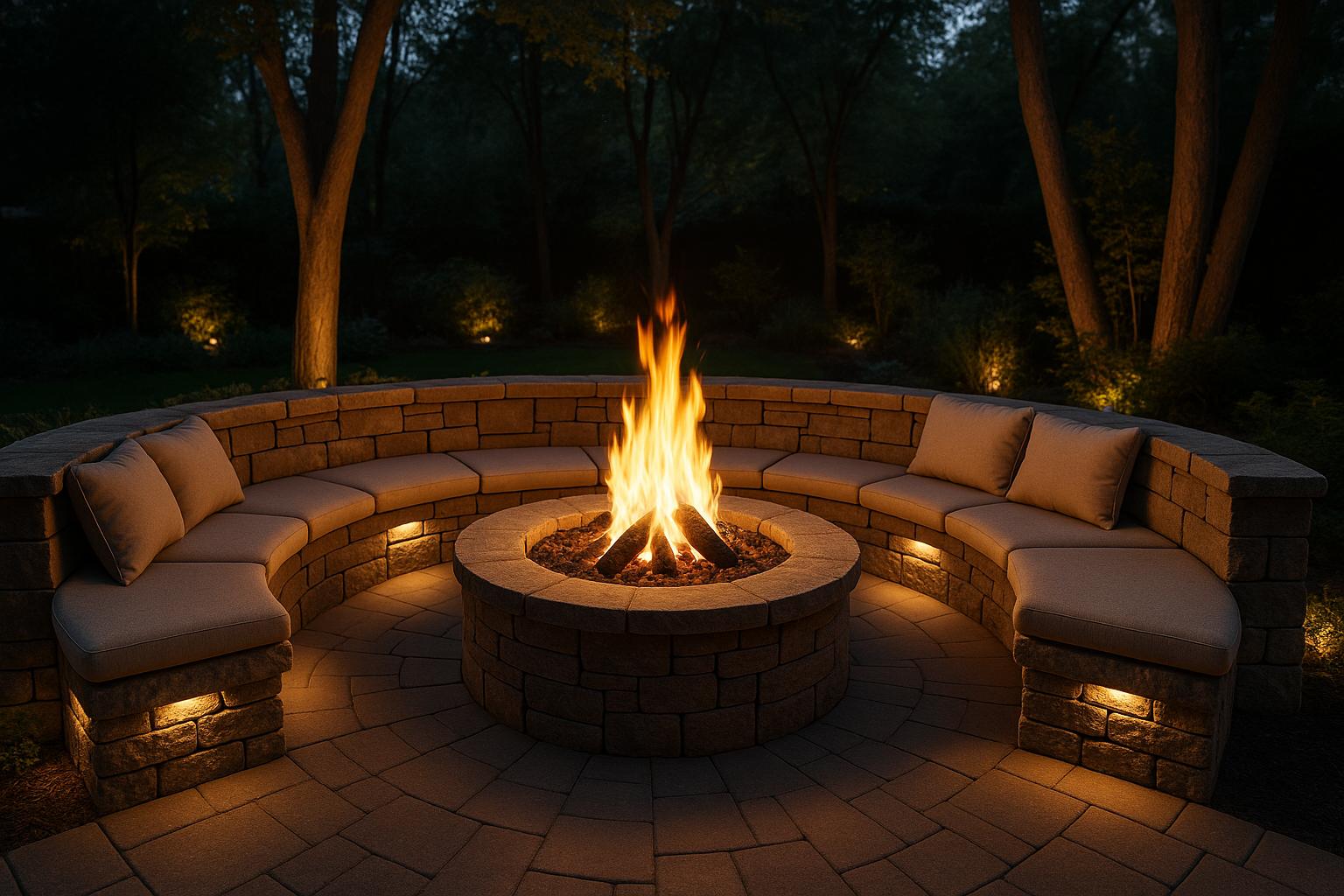
Built-in seating around fire features creates a functional and inviting outdoor space. It saves money on seasonal furniture, withstands the elements, and enhances property value. To get started, focus on:
- Planning the layout: Measure your space, maintain safe distances (4-6 feet from the fire pit), and ensure proper clearance for movement.
- Choosing durable materials: Options include natural stone, concrete blocks, brick, or weather-resistant wood accents.
- Building properly: Lay a stable foundation, construct secure seat walls, and finish with comfortable capstones.
- Adding comfort and lighting: Use cushions, backrests, and LED lighting for ambiance and safety.
- Maintaining the structure: Clean, seal, and inspect regularly to prevent damage.
Professional installation ensures safety, durability, and a polished look. Services like Pro Landscapes MD specialize in creating long-lasting fire pit seating areas tailored to your needs.
HOW TO BUILD A BACKYARD SEATING AREA WITH FIRE PIT | OUR BIGGEST DIY PROJECT YET
Planning the Seating Layout
Getting your seating layout right means balancing safety, comfort, and visual appeal.
Measuring Your Space and Fire Pit
Start by measuring your outdoor space with a tape measure. Look for a flat, level surface that’s clear of trees, bushes, and nearby structures[3]. Once you’ve measured the length and width of your usable area, sketch a simple overhead map on paper, marking key features like trees, property lines, and utilities.
Most fire pits are 36 to 44 inches in diameter, and larger pits will need more space to accommodate seating[1]. For example, a 36-inch fire pit typically requires a circular area of about 15-16 feet in diameter when you include the recommended seating distance.
To outline your fire pit area, drive a stake into the ground at the center of your chosen location. Attach garden twine to the stake and extend it outward to your desired fire pit radius – around 18-22 inches for a 36-44 inch pit. Use the twine and spray paint to mark the fire pit boundary[2]. Then, extend your markings an additional 5-6 feet outward to define the seating area[1].
When deciding on your layout, consider how the space will be used. Circular layouts are ideal for social gatherings, requiring a minimum 20-foot diameter to ensure 3-4 feet of clearance between seating and the fire, plus 4-6 feet behind the seating for easy movement[5]. For smaller spaces, linear designs work well, offering a sleek look that pairs nicely with modern architecture. Linear layouts need at least 12×16 feet of space and are often more budget-friendly due to simpler construction[5].
With your fire pit and seating area outlined, it’s time to focus on safe spacing.
Setting Safe Distances
When planning your seating, maintain a 4-6 foot distance between the fire pit and the seating area[1]. This spacing helps protect against excessive heat, minimizes the risk of accidental contact with flames, and ensures proper airflow for the fire pit to function efficiently.
To establish this buffer, use a tape measure to mark the distance from the outer edge of the fire pit. Design your seating – whether it’s benches, chairs, or seat walls – within this perimeter. For seat walls, allow 18-24 inches of clearance between the inner edge of the bench and the fire pit coping for comfortable legroom and safe movement[4]. Seat walls should ideally be 16-18 inches high and 16-20 inches deep for maximum comfort[4].
Don’t forget to account for circulation space. Leave 4-6 feet behind the seating so people can walk around freely without disrupting those who are seated[5]. This extra room prevents congestion and ensures a smooth flow of movement, especially during gatherings.
Once your layout is planned, double-check these measurements against local regulations.
Checking Local Fire Codes
Local fire codes and regulations are essential to follow when designing your seating layout. These rules dictate minimum distances from structures, property lines, and vegetation, as well as the materials and ventilation requirements for fire pits[3].
Before finalizing your layout, contact your local building department or fire marshal to confirm the specific requirements in your area. Some areas may require more than 4-6 feet of clearance, limit the height of seat walls, or mandate particular construction materials. Permanent installations might also need permits. Ignoring these regulations can lead to fines, forced removal, or liability issues if an accident occurs.
Keep fire pits at least 10-15 feet away from trees and vegetation to prevent heat damage and reduce fire risks. Before digging, contact your local utility locating service to identify underground utilities. Document these requirements and any key features of your space, such as trees, structures, or utilities.
When positioning your seating, take advantage of natural elements like views or windbreaks. For summer comfort, consider placing your fire pit and seating in the shade of mature trees. Use your overhead sketch as a guide to ensure everything is laid out safely and efficiently[3].
Selecting Materials for Built-In Seating
Picking the right materials for built-in seating is essential for creating a durable and visually appealing outdoor space. The materials you choose should withstand heat, handle weather changes, and complement the overall design of your fire pit area. Below, we’ll explore some popular material options that balance practicality with aesthetics.
Material Options
Natural Stone
Natural stone is a top-tier choice for fire pit seating. Options like flagstone and stacked stone are excellent at resisting heat and develop a timeless charm as they age. These materials are built to endure temperature shifts without cracking and typically cost between $5 and $15+ per square foot. To maintain their longevity, it’s recommended to seal them every 1–3 years and clean them annually.
Concrete Blocks
For a cost-effective and versatile option, concrete blocks are hard to beat. Priced between $1 and $3 per block, they are durable, heat-resistant, and easy to work with. Modern finishes can mimic the look of natural stone, making them a great fit for contemporary designs. Concrete blocks allow for endless customization, letting you create seating in virtually any shape. However, sealing is crucial to prevent water absorption, especially in regions with freeze-thaw cycles. DIY projects using concrete blocks generally cost $500 to $1,500, while professional installations with premium materials can exceed $5,000.
Brick
Brick offers a classic and adaptable aesthetic at a mid-range cost of $2 to $8 per brick. It’s durable, weather-resistant, and often looks better as it ages. While brick seating may require occasional maintenance, such as repointing mortar joints, this process is straightforward and ensures the structure remains solid over time.
Weather-Resistant Woods
Woods like cedar, redwood, and ipe add a natural touch when used as caps on seating walls. These materials work especially well when paired with stone or metal fire features, creating a striking contrast. For safety and longevity, wood accents are best used as decorative elements or seat caps on stone or concrete structures, rather than as primary components near the fire.
Pro Landscapes MD incorporates high-quality materials such as Techo-Bloc, Allen Block, and El Dorado Stone in their hardscaping projects, ensuring both durability and aesthetic appeal for outdoor spaces.
Here’s a quick comparison of the key attributes of these materials:
| Material | Cost Range | Durability | Heat Resistance | Maintenance Level | Best For |
|---|---|---|---|---|---|
| Natural Stone | $5–15+ per sq ft | Very High | Excellent | Moderate (seal every 1–3 years) | High-end installations, rustic designs |
| Concrete Blocks | $1–3 per block | High | Excellent | Low (seal periodically) | Budget-friendly projects, modern designs |
| Brick | $2–8 per brick | High | Good | Moderate (repoint as needed) | Traditional styles, versatile aesthetics |
| Wood Accents | Varies | Moderate | Low | Moderate | Seating caps, decorative touches |
Materials located closest to the fire pit are exposed to higher temperatures and should be inspected regularly for cracks or damage. In areas with harsh winters, proper drainage is essential to prevent ice buildup, which can lead to structural issues like heaving.
Matching Materials to Your Fire Feature
Creating a cohesive look between your fire pit and seating is key to designing a unified outdoor space. For example, if your fire pit is made of natural stone, using the same or a complementary stone for the seating ties the design together. Similarly, concrete blocks can be used for both the fire pit and seating to maintain a seamless, modern aesthetic.
Earthy tones like gray, tan, and brown blend effortlessly with outdoor environments, complementing vegetation while defining the seating area. Modern designs often favor smooth concrete surfaces and clean lines, while traditional setups benefit from the warmth of stacked stone or rustic brick. Adding decorative elements like stone veneer can further elevate the look. Circular seating arrangements are particularly inviting, as they ensure equal distance from the fire and promote balanced sightlines.
Mixing materials can enhance both style and functionality. For instance, stone seating paired with wood accents – like armrests or backs – introduces a touch of warmth while maintaining durability. The choice of cap materials, whether flat stone, concrete, or decorative brick, impacts both the visual appeal and the comfort of the seating. As a general guideline, seat walls should be 16–18 inches high and 16–20 inches deep for optimal comfort.
Professional installation ensures all these elements come together seamlessly, delivering a space that’s both functional and visually stunning.
Building Built-In Seating
Creating sturdy and attractive built-in seating around your fire feature involves three key steps: laying a solid foundation, building the walls, and finishing with cap stones. Each phase is crucial to ensuring your seating is durable, functional, and visually appealing for years to come.
Preparing the Foundation
The first step in this process is establishing a strong foundation. Without it, your seating could face issues like settling, cracking, or instability over time. Start by excavating the area to a depth of 4–6 inches, clearing away grass, roots, and debris that might compromise the structure.
Once the area is clear, compact the soil thoroughly using a tamper or compactor to eliminate air pockets. Afterward, spread a 2–3 inch layer of crushed stone – preferably 3/4 inch size – for drainage and stability. Compact the stone evenly to create a firm platform capable of distributing weight effectively.
Next, add a 1–2 inch layer of paver sand, leveling it with a straight 2×4. Lightly compact this layer to minimize shifting when you start laying the materials. If the ground is uneven, adjust the gravel and sand depths accordingly to achieve a level surface.
For those who want added precision, services like Pro Landscapes MD can assist with grading and leveling to ensure your foundation is smooth and stable, setting the stage for a long-lasting hardscaping project.
Building the Seat Walls
With your foundation ready, you can begin constructing the seat walls. Start by laying the first course of stones or blocks, checking their level in all directions. Small errors at this stage can become more pronounced as the walls grow taller, so take your time to get it right.
To ensure stability, stagger the joints between courses by offsetting each stone at least halfway. This interlocking pattern helps distribute weight and stress evenly. Use construction adhesive or mortar between the layers to secure them, especially in climates with freeze-thaw cycles where movement is more likely.
Apply adhesive in a continuous bead along the top of each course, keeping it about an inch from the edges to prevent excess from squeezing out. Press each stone firmly into place, twisting slightly to spread the adhesive evenly. For mortar joints, a Type S mortar mix is recommended for its strength and weather resistance. Keep the joint thickness consistent – ideally between 3/8 and 1/2 inch – for a clean, professional finish.
If your seating design includes curves, you may need to cut stones or blocks to achieve smooth lines. A masonry saw or angle grinder with a diamond blade works well for this task. Modular systems from brands like Techo-Bloc, Allen Block, and El Dorado Stone can simplify the process, offering easy alignment and added stability.
Once your seat walls are built and secure, it’s time to move on to the finishing touch: installing the caps.
Installing Caps
Cap stones serve two purposes: they provide a smooth, comfortable surface for sitting and protect the underlying structure from water damage. This final step transforms your project into an inviting space for gatherings.
Choose cap materials that are at least 16–20 inches deep to ensure comfortable seating. Options include flat natural stone, concrete pavers, or specialized wall caps. Look for surfaces that are smooth enough to sit on comfortably but textured enough to prevent slipping when wet. Avoid sharp edges or overly rough textures.
Before securing the caps, dry-fit them to check alignment and ensure they overhang the wall by 1–2 inches. This overhang not only gives the seating a polished look but also directs water away from the structure, protecting the mortar joints below.
Apply a continuous bead of adhesive or mortar along the top course of the wall, then firmly press each cap stone into place. Make sure they are level both front-to-back and side-to-side, with consistent joints of about 1/4 to 3/8 inch. For added flair, consider using contrasting materials for the caps. For example, weather-resistant wood like cedar, redwood, or ipe can add warmth and visual interest when paired with stone or concrete bases. If you opt for wood, secure it with masonry screws or outdoor-rated adhesive, and seal it to protect against the elements.
Allow the adhesive to cure for 24–48 hours to ensure the caps are firmly bonded. Once cured, your built-in seating will be ready to provide a comfortable and durable gathering space around your fire feature for years to come.
For the best results, consider hiring professional hardscaping contractors. Their expertise ensures that every step – from foundation to finishing – is done with precision, giving you a seating area that’s both sturdy and visually appealing.
sbb-itb-843f8be
Improving Comfort and Functionality
Once your built-in seating design is complete, the next step is to make it a space where people actually want to relax. By adding thoughtful features and lighting, you can transform your seating into a cozy outdoor retreat.
Let’s explore some ways to enhance comfort and usability.
Adding Extra Features
Start with outdoor cushions made from high-density foam, ideally 4–5 inches thick. Opt for performance fabrics like Sunbrella with removable covers for easy maintenance.
Consider integrating backrests and armrests for extra support. A seat height of 16–18 inches works well for most people, ensuring universal comfort[4].
Built-in storage is another smart addition. Hinged bench tops or storage cubbies with drainage can keep essentials like blankets or outdoor gear neatly organized[5].
Side tables and drink holders are small but impactful additions. Side tables can be extensions of the seat wall, crafted from matching materials like stone or concrete, or they can be removable wooden or metal pieces. For drink holders, you can carve them into armrests or install cup holders directly onto the seating structure. Adding a small shelf or ledge behind the seating area for personal items, along with hooks on armrests or nearby posts for hanging bags or jackets, boosts convenience. Use stainless steel hardware for these features to prevent rust and wear over time[1][3].
Wood accents can bring a touch of warmth to your seating area. Weather-resistant woods like cedar, redwood, or ipe are great options. If you use wood, keep it at least 8–10 feet away from fire features and treat it with fire-retardant sealers for added safety.
Installing Lighting for Safety and Ambiance
Lighting plays a dual role in enhancing both safety and ambiance. Low-voltage LED lighting is an energy-efficient way to illuminate your space.
Place pathway lights every 6–8 feet to guide movement, and use uplighting to accentuate the contours of your seating area. This not only ensures safety but also adds a decorative touch.
Recessed lighting, installed in seat walls or armrests, provides a subtle glow and a sleek, modern look. LED strips under seat overhangs create a striking floating effect, especially at night[5]. For these installations, plan ahead during construction to bury low-voltage wiring in conduit beneath the surface. If your seating area is already built, solar-powered lights offer an easy, eco-friendly alternative.
String lights or bistro lights suspended overhead can create a cozy canopy of light. Use warm-colored bulbs (2,700K–3,000K) for a welcoming atmosphere – cooler tones can feel too harsh[3].
Step lights are essential for nighttime safety, illuminating changes in elevation. Position them to angle downward, lighting the ground without causing glare. To take it a step further, landscape lighting can highlight nearby plants or architectural features, adding depth and character to your outdoor space[5].
For the best results, layer different types of lighting. Combine ambient lighting for overall visibility, task lighting for activities like tending the fire, and accent lighting to showcase design elements. This layered approach ensures your space is both functional and visually appealing.
To elevate your seating area even further, consider adding tech-friendly touches like low-glare audio systems, wall switches for gas fires, or app-enabled timers to control warmth levels[4]. These features add convenience without disrupting the natural beauty of your outdoor space.
For a polished finish, professional installation can make all the difference. Services like Pro Landscapes MD specialize in integrating lighting with hardscaping, ensuring that wiring and fixtures are perfectly positioned for both performance and aesthetics. With their expertise, your seating area will be ready to impress from day one.
Maintaining Built-In Seating
Your built-in seating is designed to last, but regular care is essential to protect it and ensure it stays safe and sturdy. Stone and masonry seating, in particular, gains character over time, and a little upkeep can go a long way in preserving its look and structure.
Cleaning and Sealing
Routine cleaning is key to preventing wear and tear. Use a soft-bristled brush, mild soap, and water to scrub away dirt, debris, and ash. Aim to clean at least twice a year – once in the spring after winter and again in the fall before cold weather sets in.
For tougher grime, a pressure washer can help. Keep the setting below 1,500 PSI to avoid damaging mortar joints or stone surfaces. If you live in a humid area like Maryland, consider cleaning more frequently to prevent algae and moss buildup. Always let the seating dry completely before applying any protective treatments.
Sealing is another important step. A good penetrating sealer shields the stone from water and weather damage while allowing it to breathe. Apply sealer every 2–3 years under normal conditions, or annually if the seating faces heavy use or is close to a fire pit. Follow the manufacturer’s instructions carefully, and let the sealer cure for 24–48 hours. Always test it on a small area first to ensure compatibility.
Once cleaning and sealing are done, move on to inspecting for any signs of damage.
Inspecting and Repairing
Inspect your seating twice a year, ideally in spring and fall. Check for cracks in the stone or mortar joints, which could indicate settling or freeze-thaw damage. Press lightly on the stones to see if any feel loose or unstable. Look for gaps, erosion, or white mineral deposits (efflorescence), which suggest moisture issues.
Small cracks under 1/4 inch can usually be sealed with flexible masonry caulk made for outdoor use. For larger cracks or deteriorated mortar, you’ll need to repoint – remove the damaged mortar and apply new layers. Be sure to let it cure properly before exposing it to moisture.
If you find loose or shifted stones, you may need to disassemble the affected area, relevel the foundation, and reset the stones with fresh mortar and adhesive. For significant structural problems, calling a professional is your best bet. Pro Landscapes MD, for example, specializes in hardscaping repairs in central Maryland and can ensure your seating meets local building codes.
Once inspections and repairs are complete, shift your focus to seasonal maintenance.
Seasonal Maintenance
Maryland’s climate, with its freeze-thaw cycles, can be tough on masonry. Water that seeps into porous stone expands when it freezes, causing cracking and surface flaking (spalling).
In spring, check for damage caused by winter. Clean the surfaces, repoint any damaged mortar, and reseal if necessary. Clear away debris and ensure proper drainage.
During summer, keep an eye out for new cracks or shifting stones. Remove organic matter like leaves or moss, and make sure drainage systems are functioning well. Summer is also a good time to tackle any major repairs.
Fall is all about prepping for winter. Inspect the seating thoroughly, clean it, reapply sealer, and address any cracks. Remove leaves and debris that might trap moisture, and make repairs before freezing temperatures arrive.
In winter, avoid using salt-based de-icers near your seating, as they can damage the stone. Instead, opt for sand or kitty litter to improve traction. Watch for ice dams that could direct water toward the seating. Once winter ends, inspect for new freeze-thaw damage.
Year-round, applying a quality sealer can help minimize water absorption. Make sure the foundation drains properly, as poor drainage is a leading cause of freeze-thaw issues. A hydrophobic sealer designed for freeze-thaw protection can offer added peace of mind.
Keep a basic toolkit handy for maintenance tasks. Essentials include a soft-bristled brush, stone cleaner, pressure washer, masonry sealer, flexible masonry caulk, mortar mix, a pointing trowel, a level, and safety gear like gloves and goggles. For winter, stock up on sand or kitty litter for traction.
Many homeowners find it helpful to maintain a log of inspections, cleaning dates, sealer applications, and repairs. This record not only tracks the condition of your seating but also helps you plan future maintenance.
While you can handle tasks like cleaning, sealing, and minor crack repairs on your own, larger issues often require a professional touch. For extensive repairs – such as repointing large sections, fixing structural settling, or replacing damaged stones – consulting experts like Pro Landscapes MD ensures your seating remains safe, functional, and visually appealing.
Conclusion
Adding built-in seating to your fire feature transforms your backyard into an inviting space where friends and family can gather. From mapping out your layout and choosing materials to ensuring a sturdy foundation and ongoing care, every step plays a role in creating a lasting and functional outdoor retreat.
The advantages of built-in seating extend far beyond just looks. Stone benches, for instance, offer durability, require minimal upkeep, and age gracefully. A thoughtfully designed fire pit with integrated seating can become a year-round destination, with many homeowners enjoying cozy evenings even in the colder months of December and January.
When planning your project, prioritize comfort and proper spacing. Circular layouts encourage conversation and provide balanced views, making them ideal for social settings. On the other hand, linear designs are perfect for smaller spaces or contemporary aesthetics, maximizing seating without compromising style.
For a seamless and safe installation, professional expertise is key. Pro Landscapes MD specializes in designing and building fire pits with integrated seating across central Maryland, including areas like Howard County, Montgomery County, Carroll County, Frederick County, Prince George’s County, and Baltimore County. Their team of hardscaping professionals handles every detail – from preparing the foundation and ensuring proper grading to selecting the best materials and adding the finishing touches – so your seating blends perfectly with your fire feature.
With extensive experience and a dedication to quality, Pro Landscapes MD uses premium materials like Techo-Bloc, Allen Block, and El Dorado Stone to deliver results that stand the test of time. Their comprehensive approach includes everything from initial design consultations to installation and ongoing maintenance. Whether you’re envisioning a classic semicircle bench, a large family-friendly fire ring, or a sleek modern lounge, their team can bring your ideas to life while ensuring durability and structural integrity.
Once your design is complete and expertly installed, reach out to Pro Landscapes MD to schedule a consultation and get a free proposal for your fire pit and built-in seating project. Their dedication to creating stunning, functional outdoor spaces ensures you’ll enjoy countless evenings of warmth, connection, and added property value with your new backyard centerpiece.
FAQs
What should I consider when designing built-in seating around a fire feature?
When designing built-in seating around a fire feature, placement and spacing are key to ensuring both comfort and safety. Aim to position seating between 3 to 6 feet from the fire, depending on the fire feature’s size. This provides enough warmth without making the space feel too intense. Also, leave enough room for easy movement so the area doesn’t feel cramped.
Material choice plays a big role in both durability and style. Natural stone, brick, or pavers are great options – they’re sturdy and can enhance the overall look of your outdoor space. Don’t overlook seating dimensions either: a bench height of 18–20 inches and a depth of 16–18 inches tends to work well for most people, offering a comfortable seating experience.
If you’re looking for a polished, cohesive design, consider reaching out to professionals like Pro Landscapes MD. They specialize in crafting custom seating and fire features that merge practicality with style, creating outdoor spaces that feel like an extension of your home.
What are the best materials to use for durable and stylish built-in seating around a fire pit?
When deciding on materials for built-in seating around your fire pit, focus on options that combine durability, weather resistance, and visual appeal. Stone remains a favorite due to its longevity and timeless charm. Choices like natural stone, flagstone, or stone veneer can complement your fire pit and create a cohesive look. If you’re after a sleek, modern vibe, concrete is a solid option that can be tailored with different finishes or colors. For those leaning toward a more rustic aesthetic, brick offers a classic touch and works beautifully with traditional fire pit designs.
To protect your seating from the elements, consider sealing materials like stone or concrete to guard against moisture and temperature fluctuations. Adding cushions made from weather-resistant fabrics not only boosts comfort but also ensures durability in outdoor settings. By selecting the right materials, you’ll craft a cozy and enduring space perfect for gathering around the fire.
What steps should I take to maintain and ensure the safety of built-in seating around a fire feature?
To ensure your built-in seating around the fire feature stays safe and durable, consistent upkeep is essential. Begin by checking for cracks, loose stones, or any structural problems, especially after storms or extreme weather. Fixing these issues quickly can stop them from getting worse.
Keep the seating clean by removing dirt, debris, and soot regularly. If the seating is made of stone or masonry, use a mild cleaner and steer clear of harsh chemicals that might stain or damage the material. For wood seating, make sure it’s sealed or treated to handle heat and outdoor exposure.
Also, double-check that the fire feature itself is in good working condition and positioned far enough from the seating to avoid heat-related damage or safety risks. With the right care, your built-in seating can stay attractive and practical for years to come.
Chat with Us