









- bhavya gada
- No Comments
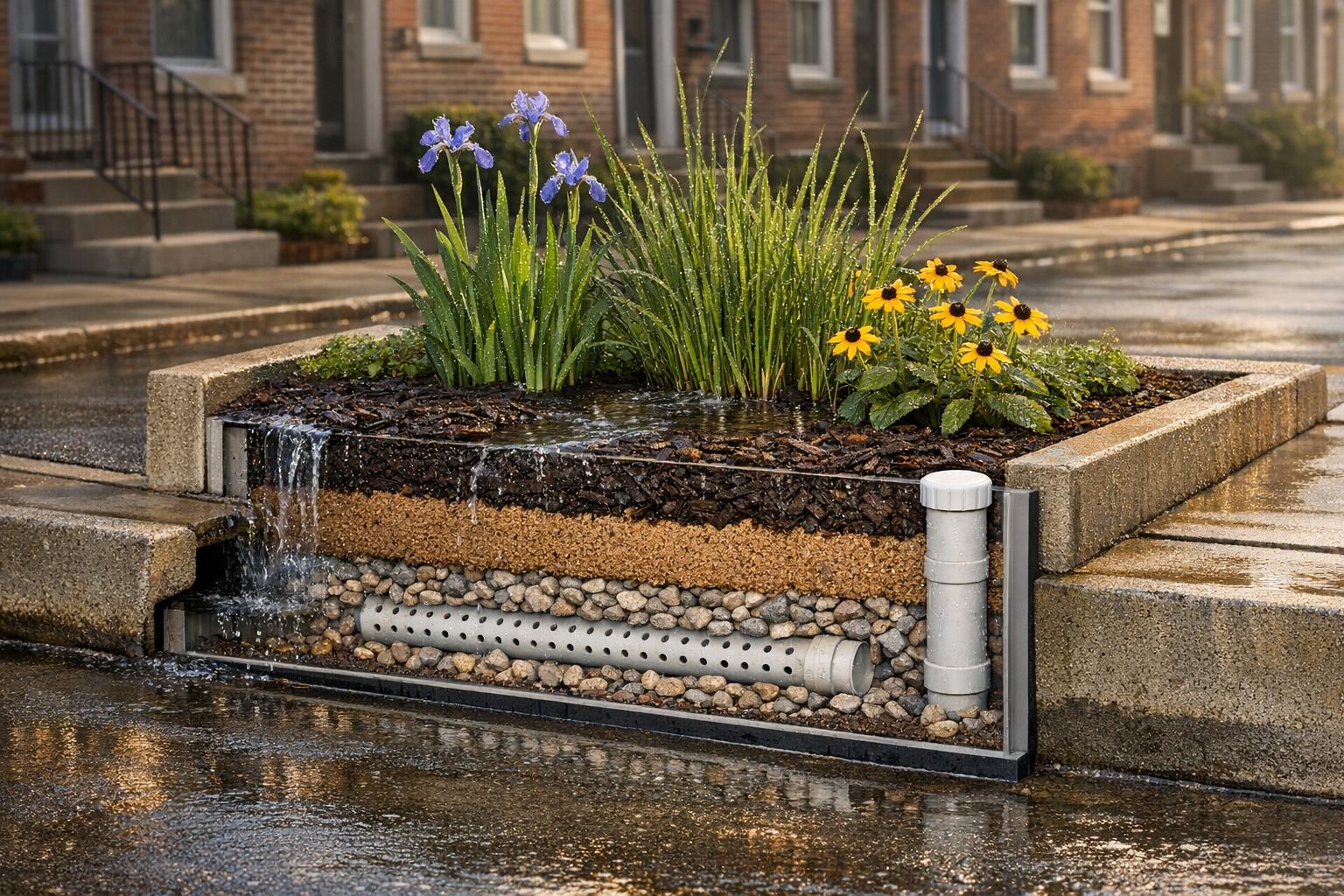
Stormwater runoff is a growing concern in Maryland, bringing pollutants like oil, sediment, and fertilizers into local waterways. Advanced bio-filtration systems offer a highly effective solution to treat runoff efficiently, even in compact urban areas.
Here’s what you need to know:
- What It Is: Bio-filtration uses plants, microbes, and engineered soil layers to filter and treat stormwater.
- Why It Matters: High-rate systems can handle flow rates up to 175 inches/hour, treating large volumes in small spaces.
- Key Components: Multi-layered media (mulch, planting soil, sand, gravel) combined with native plants and underdrain systems.
- Maintenance: Regular upkeep, like replenishing mulch and monitoring drainage, ensures long-term efficiency.
This guide covers design tips, installation practices, and maintenance strategies tailored for Maryland’s strict stormwater regulations. Whether you’re managing a commercial property or a residential space, advanced bio-filtration can help protect local waterways while meeting compliance requirements.
Filterra® Bio-retention & Bio-filtration System Overview
Key Components of Advanced Bio-Filtration Systems
Bio-Filtration System Components and Specifications for Maryland
Advanced bio-filtration systems are designed to treat stormwater effectively by combining several essential components. For property owners in central Maryland, understanding these components is key to making informed decisions about system design and performance expectations.
Filter Media and Layers
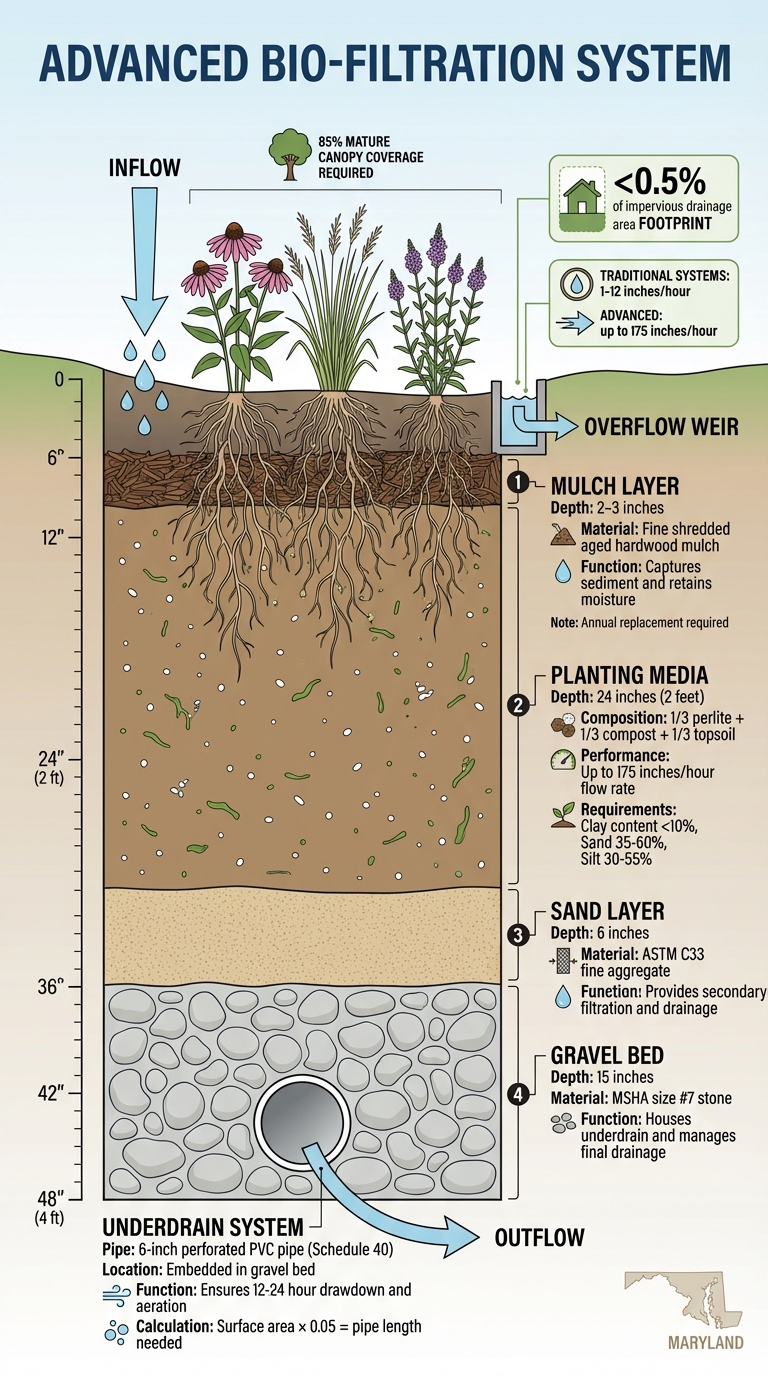
At the heart of any bio-filtration system is its multi-layered filter media, each layer serving a specific purpose. Starting at the surface, the mulch layer – typically 2–3 inches of fine-shredded aged hardwood mulch – captures sediment and debris. This type of mulch is preferred because it stays in place, unlike bark nuggets or wood chips, which tend to float and wash away. As the mulch decomposes, it releases organic matter that supports the biological processes necessary for breaking down pollutants [2].
Beneath the mulch lies the planting media, which in Montgomery County is a mix of one-third perlite, one-third compost, and one-third topsoil. This 2-foot-thick layer not only filters water but also absorbs pollutants through chemical processes. Advanced systems stand out due to their engineered high-flow media, capable of treating water at rates of up to 175 inches per hour – far surpassing traditional systems that handle just 1–12 inches per hour. This efficiency allows the system to manage large volumes of water while requiring less than 0.5% of the impervious drainage area [2].
Underneath the planting media, a 6-inch ASTM C33 sand layer provides additional filtration and helps transition water to the next layer. At the base of the system, a 15-inch gravel bed (using MSHA size #7 stone) houses the underdrain system, which typically consists of a 6-inch perforated PVC pipe. This setup ensures water drains within 12–24 hours, preventing standing water, keeping the filter media aerated, and preparing the system for the next storm [1].
| Component | Maryland Specification | Primary Function |
|---|---|---|
| Mulch | 2–3 inches fine shredded hardwood | Captures sediment and retains moisture |
| Planting Media | 2 feet (1/3 perlite, 1/3 compost, 1/3 topsoil) | Filters pollutants and supports biological treatment |
| Sand Layer | 6 inches ASTM C33 fine aggregate | Provides secondary filtration and drainage |
| Gravel Bed | 15 inches MSHA size #7 stone | Houses underdrain and manages final drainage |
| Underdrain | 6-inch perforated PVC pipe | Ensures 12–24 hour drawdown and aeration |
"Properly maintaining the mulch layer will extend the service life of the bioretention soil media indefinitely in both conventional or high-rate systems." – Alex MacLeod, P.E., Mindy Hills, CPSWQ, David Corr, and Vaikko Allen [2]
Once the media layers are in place, the next step involves selecting vegetation that complements the filtration process.
Vegetation and Plant Selection
Plants play a crucial role in the long-term success of bio-filtration systems, especially for stormwater challenges in Maryland. Vegetation helps absorb pollutants through root systems, promotes evapotranspiration, and prevents soil compaction by creating micro-channels during shrink–swell cycles [2]. These micro-channels enhance infiltration, while the rhizosphere – the area surrounding plant roots – hosts microorganisms that break down pollutants into less harmful substances.
Native plant species are strongly recommended for Maryland systems, as they adapt well to the local environment and support ecological balance. Montgomery County guidelines require a mix of trees, shrubs, and herbaceous plants, with herbaceous plants making up 40% of the total count and mature canopies covering 85% of the filter area. Typically, 2–3 shrubs are planted for every tree, and systems must achieve an 85% plant survival rate within 18 months to gain approval [1]. Certain invasive species, such as Norway Maple, Japanese Barberry, and English Ivy, are prohibited to maintain system integrity.
With the right combination of media and vegetation, the final element to consider is the inflow and overflow system, which ensures smooth water management during peak flows.
Inflow and Overflow Systems
A well-designed inflow and overflow system is essential for managing water effectively and preventing system overload during heavy storms. Inflow systems must distribute water evenly to avoid "short-circuiting", where water bypasses key treatment zones, reducing the system’s efficiency and potentially causing anaerobic conditions [5].
Many systems in Maryland include a grass filter strip for pretreatment, which captures coarse sediment before water enters the bio-filter. Additionally, a structural overflow weir is often installed to handle peak flows from large storm events, such as those occurring every 10 years. For high-rate systems capable of processing water at up to 175 inches per hour, the underdrain must be precisely sized to prevent backups that could lead to surface flooding or bypassing [4]. In areas with thermally sensitive watersheds, systems are designed to drain within 12 hours to minimize the impact of heated runoff on nearby streams [1].
Design Principles for High-Performance Bio-Filters
Advanced bio-filters rely on precise layering and material selection to deliver effective stormwater treatment, especially in areas like Maryland where environmental and urban constraints demand tailored solutions.
Filter Depth and Media Composition
The depth and composition of the filter media are critical for efficient performance. In central Maryland, a standard bio-filter design includes a 24-inch planting media layer. This layer is a balanced mix of coarse horticultural perlite, high-grade compost, and topsoil. The topsoil requires careful monitoring – clay content must stay below 10% to avoid clogging. Sand should make up 35–60% of the mix, with silt content between 30–55% to maintain proper filtration [1].
For areas with thermally sensitive watersheds, bio-filters are designed for a 12-hour drawdown period to protect aquatic ecosystems [1]. Advanced engineered media can significantly reduce the footprint of these systems to less than 0.5% of the impervious area, making them particularly useful in urban settings where space is at a premium. Traditional systems, by contrast, can take up as much as 10% of available space [2].
Preventing Clogging and Ensuring Longevity
A well-maintained mulch layer plays a vital role in capturing sediment and shielding the engineered media. This layer should be replaced annually to maintain system efficiency.
Plant roots are another key element, as they form micro-channels that sustain infiltration rates over time [2]. During installation, heavy machinery should never drive over the media to avoid compressing the pore structure, which would severely limit the filter’s lifespan [3]. Additionally, keeping the media moisture above 45% is essential. Dry media can crack and form channels, allowing untreated water to bypass filtration zones [3]. These practices ensure the system remains effective and durable over the long term.
Eco-Friendly Practices and Environmental Considerations
Optimizing bio-filter design not only enhances performance but also amplifies environmental benefits. Sustainable practices begin with material selection. The compost used in the media must be high-grade, free of stones and contaminants, while the perlite provides structural stability without introducing harmful chemicals. Adding 1–2% stable compost fines accelerates biological activity, helping the system reach full treatment capacity faster [3].
Choosing native plants is another eco-conscious strategy. These plants are naturally suited to Maryland’s climate, reducing maintenance needs while supporting biodiversity. Native species also promote a thriving rhizosphere, where plant roots foster an environment rich in microorganisms – up to ten times more than the surrounding soil [2]. In industrial settings, maintaining media temperatures below 130°F is crucial for controlling odors and ensuring treatment efficiency remains above 90% [3].
Installation Best Practices for Central Maryland Properties
When it comes to installing stormwater management systems in central Maryland, success hinges on meeting local standards and tailoring the design to the unique characteristics of the site. Maryland’s diverse soil conditions and stringent stormwater regulations call for careful planning to ensure long-term functionality.
Site Assessment and Planning
The first step is a detailed site evaluation. This involves analyzing soil types, water flow, and catchment boundaries to confirm the system can handle surface runoff effectively [6]. Soil borings are essential to verify that the water table is deeper than 6 feet and slopes do not exceed 15% [1]. Additionally, areas with mature trees are generally off-limits to avoid damaging established root systems [1].
During the assessment, it’s crucial to identify catchment areas and ensure they comply with jurisdictional limits. For instance, in Montgomery County, bio-filtration systems are limited to treating water quality volumes from catchment areas of 1.0 acre or less [1]. Once these details are clear, the next step is to align the new system with existing drainage infrastructure for a seamless integration.
Integration with Existing Drainage Solutions
After completing the site evaluation, the focus shifts to integrating the bio-filter with current stormwater systems to boost overall performance. To prevent issues like mulch erosion, water entering the grass filter strip should not exceed a velocity of 3 feet per second, while flow across the filter bed should stay below 1 foot per second [1].
Most bio-filtration systems in Maryland require a 6-inch diameter perforated PVC pipe underdrain system (Schedule 40), embedded in a gravel bed, to ensure proper drainage and aeration of the soil media [1]. To calculate the required length of underdrain piping, multiply the surface area of the system by 0.05 [1]. For larger storm events, flow splitters are used to direct only the necessary water quality volume to the bio-filter, while bypassing excess runoff from a 10-year frequency storm [1]. Structural overflows or graded grassed swales should also be included to redirect extra runoff away from the bio-filtration area [1].
Compliance with Local Regulations
Projects in central Maryland must adhere to several regulatory frameworks, including Phase II of the National Pollution Discharge Elimination Program (NPDEP), the Water Pollution Control Act, and the Maryland Stormwater Design Manual. Each county enforces its own specific rules – Howard County and Prince George’s County have dedicated environmental services divisions to oversee these policies [6][7].
"The state of Maryland has been a leader in stormwater management designs, and BMP’s from the state and from Maryland counties like Montgomery have set the norms for many states."
– Bruce Schundler [1]
A key requirement for permitting is a formal landscape plan, which must be sealed by a registered landscape architect [1]. Post-installation, an 85% plant survival rate over an 18-month period is necessary for the as-built plans to gain final approval from local authorities [1]. Additionally, underdrain piping must include clean-outs that extend 6 inches above the planting media, equipped with removable waterproof caps to allow for regular maintenance [1].
sbb-itb-843f8be
Maintenance Strategies for Long-Term Effectiveness
Keeping your system in good shape after installation and integration with existing drainage is key to maintaining its performance over time. Consistent care helps preserve its efficiency and treatment capacity.
Routine Inspections and Media Replacement
The mulch layer plays a crucial role in protecting your system, so it needs regular attention. Plan to replenish the mulch annually, ensuring it stays at a depth of 2–3 inches [2]. This layer traps sediment and debris, preventing clogs in the underlying media. Opt for fine-shredded aged hardwood mulch – skip bark nuggets or wood chips, as they tend to float away during storms [2].
When it comes to the filter media, its lifespan largely depends on how well the mulch is maintained. If the mulch is consistently refreshed, the underlying media might not need replacing, thanks to its ability to regenerate biologically [2]. However, organic media like wood chips typically last two to four years before they degrade and require replacement [3]. It’s also important to check your underdrain clean-outs – PVC pipes extending 6 inches above the media with waterproof caps – at least twice a year to clear any blockages [1].
Maintaining the right moisture levels in the media is essential for supporting the bacteria that break down pollutants. Every two weeks, perform a squeeze test on a 12-inch sample of the media – if it’s dry, irrigate [3]. Keep the moisture level above 45% to sustain microbial activity [3]. Additionally, monitor the pH monthly (aim for a range of 5.5 to 8.5) and track media temperature weekly, ensuring monthly averages stay below 120°F to prevent rapid degradation [3].
Beyond the media, taking care of the vegetation is equally important for the system’s long-term success.
Vegetation Care
Healthy plants aren’t just decorative – they’re essential for keeping the system functioning properly. Their roots create tiny channels in the media, helping to prevent compaction and maintain infiltration capacity [2]. Interestingly, microorganism populations are about 10 times denser in the rhizosphere (the area around the roots) than in the surrounding soil [2]. During dry spells, particularly in summer, supplemental irrigation is critical since the media drains quickly after storms [2]. Choose plants with fibrous root systems – like small grasses, shrubs, or ornamental trees – for the best results [4]. For example, in Maryland, regulations require an 85% plant survival rate after 18 months for final approval, making regular watering and care during the establishment period essential [1].
A well-maintained biofilter with healthy vegetation can reduce odors and volatile organic compounds by over 90% [3].
Taking care of the plants goes hand-in-hand with monitoring the system’s drainage performance.
Monitoring Water Infiltration Rates
Your system is designed to drain within 12 to 24 hours after a storm, ensuring it’s ready for the next rainfall [1]. You can test this by timing how long it takes for water to clear after a storm. If drainage slows, it could indicate media densification or clogging.
Watch for signs like surface cracking or channeling, which suggest the treatment media isn’t working as it should [3]. Every six months, measure the static pressure drop to keep an eye on media densification [3]. Also, avoid driving heavy machinery over the bio-filtration area, as this can severely damage its infiltration capacity [3].
| Maintenance Parameter | Target Value/Range | Check Frequency |
|---|---|---|
| Mulch Depth | 2–3 inches | Annual replenishment |
| Media Moisture | > 45% | Every 2 weeks |
| Media pH | 5.5 – 8.5 | Monthly |
| Media Temperature | < 120°F (average) | Weekly |
| Drawdown Time | 12 – 24 hours | After major storms |
In areas with thermally sensitive watersheds, aim for a stricter 12-hour drawdown time to prevent heated runoff from harming local streams [1]. If infiltration rates drop despite keeping the mulch in good condition, adding 1–2 feet of fresh media to the top can sometimes extend the system’s lifespan [3].
Pro Landscapes MD: Advanced Bio-Filtration Services in Maryland

Pro Landscapes MD tackles Maryland’s water management challenges with customized bio-filtration solutions designed for the region’s specific needs.
Custom Bio-Filtration Solutions
Pro Landscapes MD creates bio-filtration systems that address issues like standing water, soil erosion, and foundation damage in central Maryland. Their high-rate biofiltration systems are designed to handle flow rates of up to 175 inches per hour while using less than 0.5% of the impervious drainage area. This approach ensures compliance with local regulations and is especially effective for urban properties with limited space in Howard, Montgomery, and Baltimore Counties [2].
For properties where space is tight, they offer pre-packaged concrete containment systems and regional designs [2]. Their services include the design, installation, inspection, and repair of bioretention cells, rain gardens, and bio-filters [8]. They also bring expertise in creating Koi ponds, natural rock edge ponds, and garden ponds with waterfalls, using EPDM rubber liners and carefully placed natural stone [9]. This attention to detail has made a tangible difference for their clients.
Client Success Stories
Homeowners across Maryland appreciate Pro Landscapes MD’s ability to combine advanced bio-filtration techniques with broader drainage solutions. Their work with systems like French drains, dry riverbeds, and stormwater management has delivered results in areas from Ellicott City to Silver Spring. Their reputation for quality and reliability is matched by their dedication to sustainable practices.
Eco-Friendly Approach
Sustainability is central to Pro Landscapes MD’s bio-filtration projects. They use native plants suited to Maryland’s climate and certified mulch free from harmful chemicals, ensuring that the filtration media remains effective over time [2]. By incorporating environmental pavers, they design outdoor spaces that not only manage stormwater efficiently but also enhance the beauty of the property. This eco-conscious approach ensures that functionality and aesthetics work hand in hand.
Conclusion
Advanced bio-filtration techniques provide Maryland property owners with an effective and eco-conscious way to tackle stormwater management challenges. These high-rate systems efficiently treat stormwater in compact spaces, removing pollutants like suspended solids, phosphorus, and metals before they can harm local waterways.
For these systems to work efficiently, proper design, installation, and upkeep are essential. Vegetation plays a key role by keeping the filtration media permeable through root growth and preventing compaction. Routine maintenance, such as replacing mulch and checking infiltration rates, ensures the system remains reliable and efficient over time.
Homeowners and commercial property managers in Central Maryland gain multiple benefits, including reduced upkeep, compliance with regulations, and enhanced property value. These systems also adapt well to different landscapes, addressing issues like standing water and erosion without disrupting the surroundings.
Pro Landscapes MD specializes in creating tailored bio-filtration solutions for properties in Howard, Montgomery, Baltimore, and nearby areas. Their team ensures systems meet Maryland’s regulations, sources the right planting media, and provides ongoing maintenance to keep everything running smoothly. Whether you’re working with a compact urban lot or a sprawling commercial property, their environmentally friendly approach delivers both practical and environmental benefits.
Reach out to Pro Landscapes MD today to upgrade your stormwater management with advanced bio-filtration systems.
FAQs
Is a high-rate bio-filter right for my property?
A high-rate bio-filter is a great choice for properties that require compact stormwater treatment while achieving effective pollutant removal. These systems are designed to handle large water volumes in tight spaces, making them especially useful in urban settings or areas with limited room. Whether this option works for your property depends on factors like drainage area, water flow, and specific site conditions. To ensure it aligns with your needs and complies with local rules, it’s best to consult with a professional.
How do I know if my site meets Maryland requirements?
To make sure your site aligns with Maryland’s standards for bio-filtration and stormwater management, you’ll need to refer to the Maryland Stormwater Design Manual and the Bioretention Manual. Some key considerations include proper placement, correct sizing, maintaining a slope between 1% and 4%, ensuring adequate flow capacity, and selecting appropriate vegetation. Avoid locations that are prone to clogging, and always check that you’re meeting local zoning and environmental rules. For complete compliance, consult both the Maryland Department of the Environment and your county’s specific regulations.
What are the biggest maintenance mistakes to avoid?
The most frequent maintenance missteps often involve not cycling bio-filtration media long enough before use, neglecting regular cleaning or replacing filter components, and choosing materials that can clog or harm the system. Steering clear of these issues will help your system run smoothly and stay in great shape over time.
Chat with Us