









- bhavya gada
- No Comments
Mulch is a game-changer for Maryland shade gardens. It helps plants thrive by conserving moisture, regulating soil temperature, suppressing weeds, and improving soil health as it breaks down. Proper mulching can reduce water evaporation by up to 70% and minimize soil erosion by 99%. The key is applying a 1–3 inch layer and keeping it 3 inches away from plant trunks to prevent rot.
Key Benefits:
- Weed Control: Blocks sunlight to stop weeds from sprouting.
- Moisture Retention: Reduces water loss and improves absorption.
- Temperature Regulation: Shields roots from extreme heat or cold.
- Soil Improvement: Adds organic matter for healthier soil.
- Erosion Prevention: Protects soil during heavy rains.
Best Mulch Types:
- Shredded Hardwood: Affordable, resists compaction, great for general use.
- Pine Needles: Ideal for acid-loving plants like azaleas.
- Leaf Mulch: Nutrient-rich but decomposes quickly.
- Living Groundcovers: Long-term solution for low-maintenance gardens.
For Maryland gardeners, choosing the right mulch and applying it correctly can make all the difference in creating a thriving, low-maintenance shade garden.
Benefits of Mulch in Maryland Shade Gardens
Weed Suppression
Mulch creates a natural barrier that blocks sunlight, preventing weed seeds from sprouting [2]. This is especially helpful in shade gardens, where plants often compete with tree roots for essential nutrients and water. In Maryland’s temperate climate, applying mulch in the fall is particularly important to stop winter weeds from taking root and producing thousands of seeds before spring [2].
Water Conservation and Moisture Retention
While Maryland’s humid summers typically bring plenty of moisture, dry spells can still stress shade-loving plants. Mulch helps by slowing water evaporation, reducing competition from turfgrass for moisture, and allowing rain to reach plant roots more effectively than compacted soil [2]. To achieve these benefits, maintain a mulch depth of 1–3 inches – any deeper could lead to water deprivation and shallow root growth [4].
Temperature Regulation
Maryland’s fluctuating temperatures can be tough on shade plants. Mulch acts like an insulating blanket, stabilizing soil temperature throughout the year and shielding plant roots and crowns from extreme highs and lows [2]. This insulation not only protects plants from temperature shocks but also works hand in hand with mulch’s ability to retain moisture and improve soil quality, ensuring steady growth even during sudden weather changes.
Soil Health and Nutrient Improvement
Organic mulch does more than cover the ground – it breaks down over time, improving soil structure and adding organic matter that supports beneficial microorganisms in shaded areas [2]. Using recycled yard waste as mulch can revitalize Maryland soil while cutting down on the need for store-bought fertilizers [4]. If plants mulched with wood chips start showing yellowing leaves, applying 1–2 pounds of nitrogen per 1,000 square feet can help address nutrient deficiencies [1].
Erosion Prevention and Stormwater Management
Frequent heavy rains in Maryland can lead to topsoil erosion and runoff problems. Mulch acts as a shield, improving water absorption, reducing soil compaction, and preventing erosion during storms [2]. In areas with regular water flow, shredded bark works best since larger mulch pieces can float away during heavy rains [2]. This erosion control not only protects your shade garden but also helps minimize nutrient runoff, which can otherwise harm the Chesapeake Bay‘s water quality [1]. These practical benefits make mulch an essential tool for Maryland shade gardens.
Best Mulch Types for Maryland Shade Gardens
Shredded Hardwood Mulch
Shredded hardwood bark is a top pick for Maryland shade gardens. It holds up well against heavy rains, resists compacting, and is budget-friendly [1][2]. Annette Cormany, Master Gardener Coordinator at the University of Maryland Extension, explains:
"Shredded bark mulch is the most popular choice for flower, tree, and shrub beds. It resists compaction, looks good, and is readily available." [2]
This mulch is especially effective around trees and shrubs, offering dependable weed control and helping the soil retain moisture. However, keep in mind that hardwood bark contains high levels of manganese, which can harm plants if the soil pH drops below 5.0 [1]. To avoid issues, it’s a good idea to test your soil every 3–4 years [5].
Pine Needles for Acid-Loving Plants
For gardens with acid-loving plants like azaleas and rhododendrons, pine needles are an excellent choice. They decompose slowly, releasing a pleasant fragrance, and naturally enhance soil acidity as they break down [1][6]. A 2–3 inch layer of pine needles works best for these types of gardens [1]. While they require less frequent replenishment due to their slow decay, pine needles can be pricier or harder to source compared to shredded hardwood. Still, their ability to support acidic soil conditions makes them ideal for certain plants.
Living Mulch: Groundcovers
Low-growing groundcovers like vinca or pachysandra offer a more permanent alternative to traditional mulch. Acting as "living mulch", they provide cooling, retain moisture, and reduce the need for annual reapplication [2][6]. Plus, they support pollinators and beneficial insects. Annette Cormany highlights their value:
"Plant groundcovers or a mix of perennials and groundcovers around trees to create a plant community that supports pollinators, beneficial insects, and wildlife." – Annette Cormany, Principal Agent Associate and Master Gardener Coordinator, University of Maryland Extension [2]
While groundcovers require more effort to establish compared to spreading mulch, they offer long-term savings and lower maintenance once they take hold. This makes them an excellent choice for creating a sustainable, wildlife-friendly shade garden. Each mulch option plays a role in improving soil health and reducing the time spent on garden upkeep.
7 Big Benefits of Using Mulch
sbb-itb-843f8be
Comparison of Organic Mulch Types
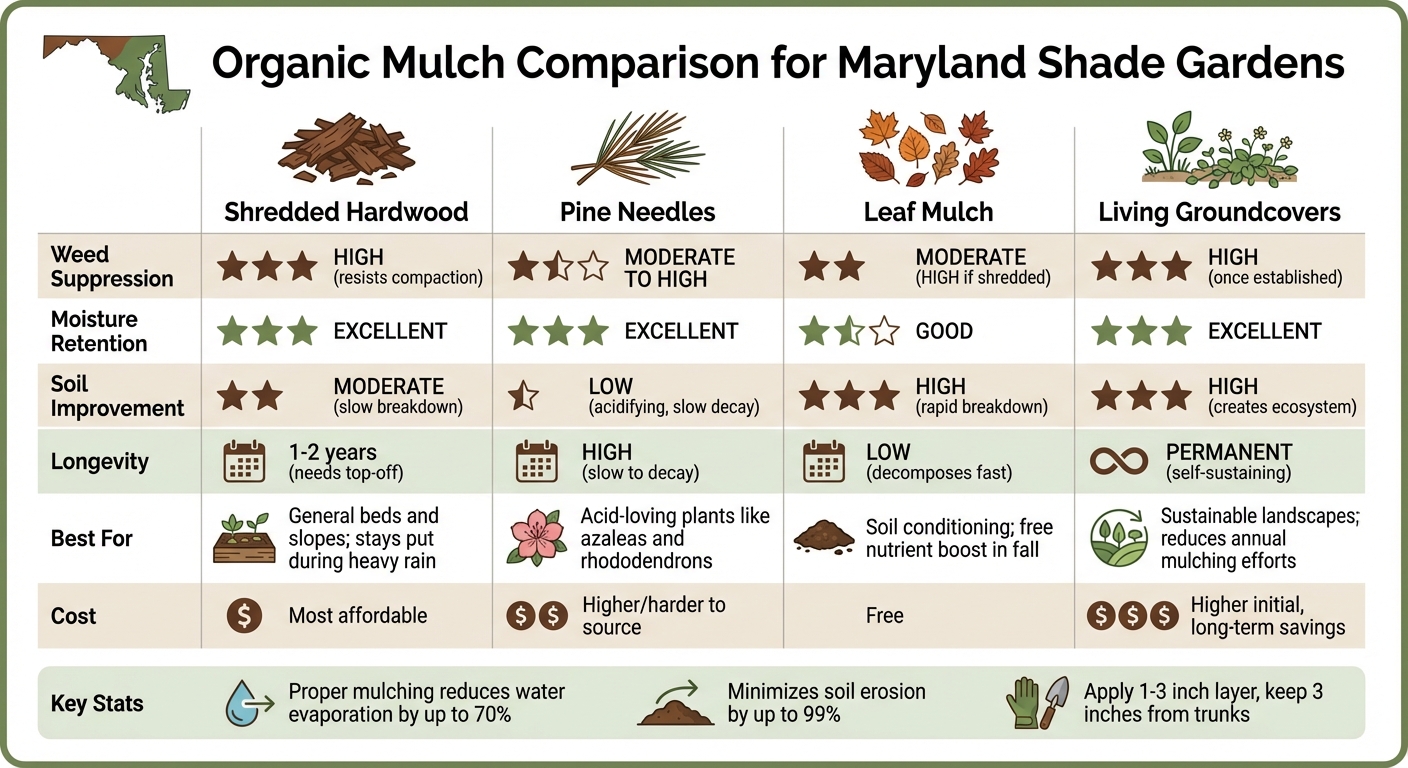
Comparison of Organic Mulch Types for Maryland Shade Gardens
Organic Mulch Comparison Table
Selecting the right mulch for your Maryland shade garden depends on your specific needs. Each type of organic mulch brings its own set of benefits, including weed control, moisture retention, soil enrichment, and durability. The table below provides a quick overview to help you decide which option works best for your garden.
| Mulch Type | Weed Suppression | Moisture Retention | Soil Improvement | Longevity | Best For Maryland Shade Gardens |
|---|---|---|---|---|---|
| Shredded Hardwood | High; resists compaction | Excellent | Moderate (slow breakdown) | 1–2 years (needs top-off) | General beds and slopes; stays put during heavy rain |
| Pine Needles | Moderate to High | Excellent | Low (acidifying, slow decay) | High (slow to decay) | Acid-loving plants like azaleas and rhododendrons |
| Leaf Mulch | Moderate (High if shredded) | Good | High (rapid breakdown) | Low (decomposes fast) | Soil conditioning; free nutrient boost in fall |
| Living Groundcovers | High (once established) | Excellent | High (creates ecosystem) | Permanent (self-sustaining) | Sustainable landscapes; reduces annual mulching efforts |
Shredded hardwood bark is one of the most affordable and widely available choices in Maryland, making it a go-to for general gardening needs. It’s particularly useful for areas prone to heavy rain, as it stays in place well[1]. For gardeners working with acid-loving plants like azaleas or rhododendrons, pine needles are a better match due to their slight acidifying properties. If reducing maintenance is a priority, living groundcovers offer a long-term solution by creating a self-sustaining ecosystem. On the other hand, leaf mulch provides a cost-effective, nutrient-rich option in the fall, though it requires frequent replenishment due to its rapid decomposition rate[1][2].
How Pro Landscapes MD Can Help Your Shade Garden

Custom Mulch Application and Landscaping Services
Pro Landscapes MD specializes in professional mulch application throughout central Maryland. By maintaining a mulch layer between 1–3 inches, they help balance moisture retention and oxygen availability in your garden’s soil[1][2].
They carefully choose mulch types based on the specific needs of your garden. For general flower beds and tree areas, they use shredded hardwood mulch, which resists compaction and stays put even during Maryland’s heavy rains. For acid-loving plants like azaleas and rhododendrons, they opt for pine needles, which provide the slight acidity these plants thrive on[1][2]. To avoid issues like floating mulch during storms, they steer clear of chunky nugget mulch in areas with regular water flow[2].
Their team ensures a 3-inch clearance around tree trunks to prevent moisture buildup that can lead to decay[1]. Additionally, they only use organic materials that have been aged for at least six months, reducing the risk of nitrogen depletion, which can cause plants to yellow[4].
Eco-Friendly Landscaping Solutions
Pro Landscapes MD goes beyond basic landscaping by focusing on eco-friendly practices to improve your shade garden. Serving areas like Howard, Montgomery, Carroll, Frederick, Prince George’s, and Baltimore counties, they bring sustainable methods to every project. For instance, they use finished compost as a 1-inch mulch layer, which enriches the soil over time while naturally releasing nutrients as it breaks down[1]. Their water conservation techniques include maintaining proper mulch depth to minimize evaporation and suppress weeds that compete for water, reducing the need for extra irrigation[1][4].
The company also encourages environmentally sound alternatives, like planting living groundcovers that support pollinators and wildlife by creating self-sustaining plant communities[2]. During the fall, they repurpose shredded fallen leaves as an eco-friendly and cost-effective mulch option. Their horticulture experts avoid harmful practices, such as using synthetic landscape fabrics that hinder root growth or recycled tire mulch that can leach harmful chemicals into the soil[1][2]. With this holistic approach, Pro Landscapes MD ensures your shade garden not only thrives but also contributes to Maryland’s local ecosystem and helps protect the water quality of the Chesapeake Bay.
Conclusion
Mulch plays a key role in tackling the challenges of Maryland’s shade gardens. Studies highlight that proper mulching can reduce water evaporation by up to 70% and minimize soil erosion by up to 99%[3]. This not only nurtures your plants but also helps protect the Chesapeake Bay watershed. Organic options like shredded hardwood and pine needles break down over time, enriching the soil, suppressing weeds, and regulating temperature fluctuations.
To get the best results, mulch needs to be applied correctly. A layer between 1 to 3 inches thick, with a 3-inch gap around trunks and stems, is ideal[1][2]. This method prevents moisture buildup that can lead to rot and disease, while still delivering benefits like weed control, water retention, and improved soil health. Precision in application sets the stage for thriving gardens and sustainable care.
Pro Landscapes MD brings this expertise to shade gardens across central Maryland. Their team of horticulture specialists carefully selects the right organic mulch for your garden, applies it with precision, and follows eco-friendly practices that benefit Maryland’s environment.
Take the next step in protecting your shade garden. Visit Pro Landscapes MD to schedule a consultation and create a healthier, more resilient landscape.
FAQs
How often should I add fresh mulch to my shade garden in Maryland?
To keep your Maryland shade garden in top shape, it’s a good idea to refresh your mulch annually, usually in the spring. This helps maintain the ideal 2–4 inch layer that shields the soil, locks in moisture, and keeps temperatures steady.
When adding new mulch, take a moment to loosen any compacted spots. This simple step boosts airflow and ensures water can penetrate more easily. With regular care, your garden will stay lush and thriving all year long.
How should I apply mulch around trees in Maryland shade gardens?
Properly applying mulch around trees is key to protecting their bark, improving soil quality, and conserving moisture – especially in Maryland’s shade gardens. To start, clear away any weeds or grass from the tree’s root zone. Opt for organic mulch like shredded hardwood or pine bark, which breaks down over time and naturally enriches the soil.
Spread the mulch evenly, aiming for a depth of 2–4 inches, but be sure to leave a 2–3-inch gap between the mulch and the tree trunk. This gap prevents moisture buildup, which can lead to decay. Avoid the common mistake of piling mulch into a mound or “volcano” shape against the trunk, as this can suffocate roots and cause rot. Keep your mulch layer effective by refreshing it yearly and loosening any compacted areas.
If you’re looking for professional help, Pro Landscapes MD can take care of the mulching process, ensuring your trees and shade garden stay healthy and well-protected.
Can groundcovers replace mulch in Maryland shade gardens?
Groundcovers, sometimes referred to as "living mulch", are a great way to control weeds and keep moisture in shaded gardens. That said, they usually can’t completely take the place of traditional organic mulch. Mulch offers additional perks like helping to regulate soil temperature, breaking down to release nutrients, and providing better erosion control – all of which are especially useful in Maryland’s climate. To get the best results, try combining groundcovers with mulch to improve soil health and conserve water in shady spots.
Chat with Us