









- bhavya gada
- No Comments
When planning outdoor projects in Maryland, sourcing hardscape materials locally offers practical advantages. Local materials are better suited to Maryland’s climate, help manage water drainage effectively, and blend naturally with the region’s landscapes. They also reduce costs, simplify logistics, and support compliance with local regulations. Here’s a quick overview of the key benefits:
- Durability in Maryland’s Climate: Local materials like bluestone and flagstone withstand freeze-thaw cycles and stay cooler in summer.
- Improved Drainage: Permeable pavers reduce water pooling and enhance runoff management.
- Natural Aesthetic Fit: Materials like flagstone and fieldstone complement Maryland’s wooded and hilly terrains.
- Lower Costs: Shorter transportation distances cut shipping fees, making local materials more affordable.
- Regulatory Compliance: Local suppliers ensure materials meet Maryland’s permitting and safety standards.
- Reduced Carbon Footprint: Sourcing nearby reduces emissions tied to long-distance shipping.
Choosing local materials ensures your project is durable, cost-effective, and aligned with Maryland’s unique needs. Local experts like Pro Landscapes MD can guide you through material selection and installation to achieve the best results.
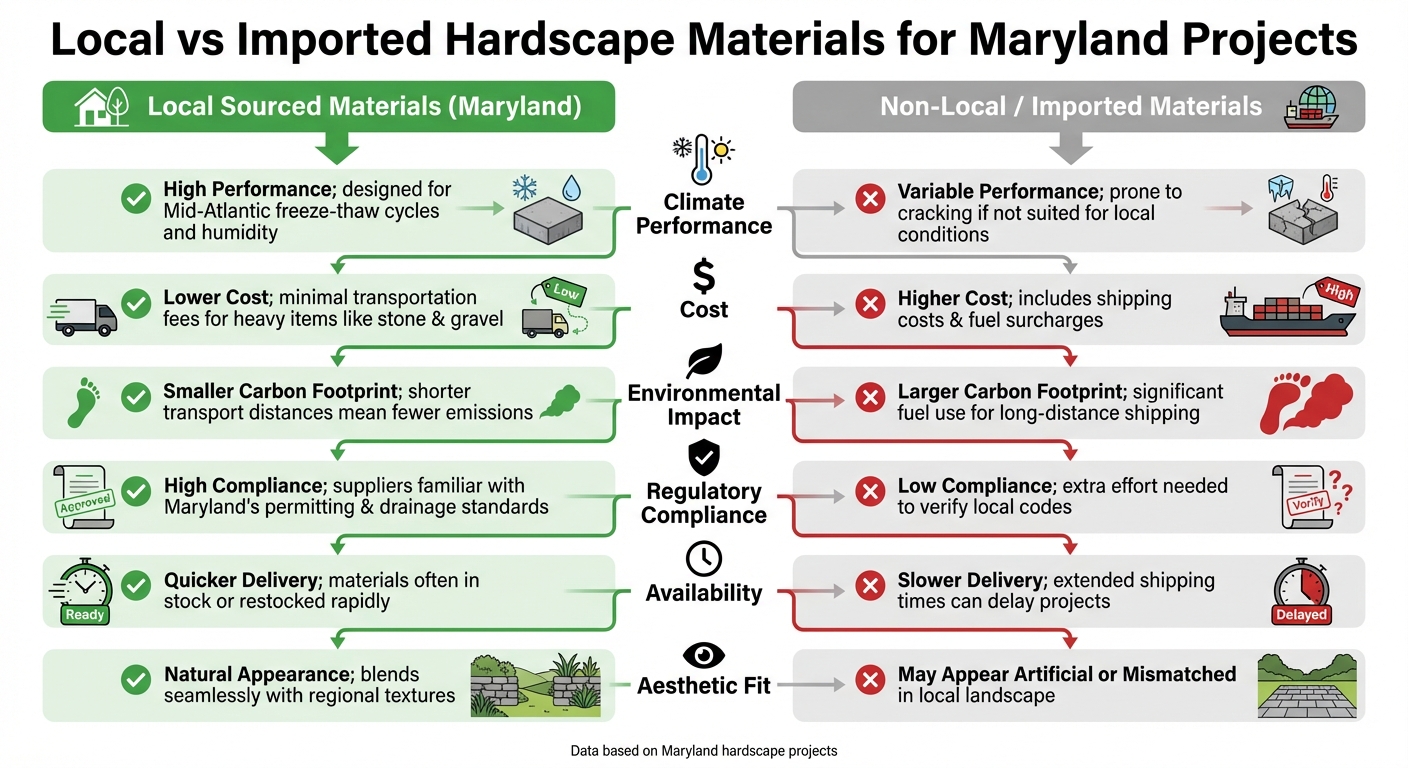
Local vs Imported Hardscape Materials: Performance and Cost Comparison
1. Better Performance in Maryland’s Climate
Maryland’s climate can be tough on hardscape materials, with its intense freeze-thaw cycles in winter and scorching heat in summer. That’s why local suppliers focus on materials specifically designed to handle these conditions.
Dense natural stones like granite and bluestone are excellent choices for Maryland’s fluctuating temperatures. Their low water absorption helps prevent freeze damage, allowing them to maintain their structural integrity over time. These stones are built to last, even in challenging weather.
If you’re looking for a material that’s resistant to water infiltration and freeze-thaw damage, low-porosity options like porcelain tiles are a smart pick. For areas exposed to direct sunlight, travertine is a standout. It naturally resists heat, staying cool to the touch – perfect for pool decks and sunny patios where other materials might become uncomfortably hot.
Interlocking pavers offer a practical solution for Maryland’s clay-heavy soils. Unlike rigid surfaces, these pavers can shift slightly with the ground and can be easily realigned using polymeric sand. This flexibility makes maintenance simple and avoids the need for costly replacements, which are often required for cracked concrete.
Local suppliers, familiar with Maryland’s unique challenges, often suggest options like permeable pavers. These materials not only handle the region’s extreme weather but also improve drainage and water management, making them a reliable choice for homeowners.
sbb-itb-843f8be
2. Improved Drainage and Water Management
Maryland’s frequent, heavy rains can put a lot of strain on hardscape installations. Local suppliers are well aware of these conditions and offer materials specifically designed to handle the region’s water challenges.
Given Maryland’s unpredictable weather, proper drainage is a must. Permeable concrete pavers are a smart option for homeowners in areas like Columbia, where managing water flow is crucial. Unlike standard pavers that push water off and create pooling, permeable pavers allow water to filter through into the soil. This feature makes them perfect for driveways and large walkways, where standing water can quickly become an issue.
For patios and walkways, flagstone is another excellent choice. Its natural slip-resistant surface provides added safety during wet weather conditions.
Local professionals also offer customized grading and drainage evaluations to ensure that materials and installation techniques are tailored to your property’s specific needs. This is especially important in areas like Howard County, where the combination of varying soil types and terrain can lead to water pooling near foundations or soil erosion. For example, Pro Landscapes MD specializes in drainage assessments and grading solutions to address these unique challenges.
3. Better Match with Regional Landscapes
Using locally sourced hardscape materials ensures your outdoor spaces blend naturally with Maryland’s unique environment. These materials reflect the region’s soil, plants, and terrain, creating a seamless and grounded look for your property.
Take flagstone, for example. Its earthy shades of blue-gray, buff, and brown are a favorite in Maryland – especially in areas like Howard County. These tones pair beautifully with wooded surroundings and rolling hills, while the irregular shapes of flagstone mimic the state’s natural terrain. It’s an ideal choice for properties with mature trees or sloped landscapes.
For rural homes or traditional settings, fieldstone provides a weathered, rustic charm that feels right at home in garden walls or patios. On the other hand, neighborhoods like Clarksville and Highland often favor travertine for its light, Mediterranean-inspired tones, or bluestone for its sleek, sophisticated look, perfect for entryways and patios.
Maryland’s architectural styles also play a role in material selection. In planned communities like Columbia, concrete pavers are a go-to for modern walkways and driveways, offering versatility and function. Meanwhile, limestone, with its soft, neutral hues, adds a polished touch to retaining wall caps and garden borders. By choosing materials that resonate with the local landscape, your hardscape will feel cohesive and natural rather than out of place.
Aligning your material choices with your neighborhood’s character – whether it’s pavers for suburban developments or fieldstone for rural estates – enhances both the visual appeal of your property and its harmony with the surrounding area. If you’re looking for expert advice on matching your hardscape to Maryland’s landscape, Pro Landscapes MD can help bring your vision to life while staying true to the region’s character.
4. Lower Costs and Reduced Transportation
Using local hardscape materials can significantly cut project expenses by reducing shipping distances and simplifying management. When materials travel shorter distances, you save on hefty freight charges that come with importing stone from far-off quarries. Local companies often handle everything in-house – permitting, excavation, and installation – minimizing coordination headaches and extra fees.
Materials like flagstone and bluestone are commonly available nearby, keeping supply chains steady and prices consistent. This means you avoid paying premium rates for exotic stones that need to be transported from faraway locations. For homeowners sticking to a budget, concrete pavers are a cost-effective choice. These are widely produced locally and are especially popular in areas like Columbia. Because the supply chain is so reliable, local firms can easily combine material sourcing with on-site work, ensuring a smoother process.
Choosing local materials doesn’t just save money – it also helps the environment. Shorter transportation routes mean less truck traffic and reduced fuel consumption, which lowers carbon emissions. For example, getting a pallet of bluestone from a Maryland quarry uses much less diesel fuel compared to shipping it cross-country.
There are long-term savings, too. Since materials like flagstone and bluestone are well-established in Maryland’s local supply network, finding matching pieces for future repairs or expansions is easier and avoids the high costs of special orders. These financial and environmental perks pave the way for even more benefits, especially when combined with local expertise and sustainable practices.
5. Local Expertise and Regulatory Compliance
Beyond cost and performance advantages, working with local professionals ensures your project aligns with all necessary regulations. Hardscape experts in Maryland are well-versed in various building codes, permits, and installation requirements. For example, in Howard County, larger retaining walls must meet heightened safety standards, while Carroll County may enforce different rules for managing drainage and soil pressure. These experts navigate jurisdictional nuances with ease, keeping your project compliant from the planning stages through completion. Their expertise seamlessly combines design solutions with regulatory needs, ensuring everything fits together perfectly.
Local contractors also have a deep understanding of material-specific regulations. For instance, fire pits must use non-combustible materials like granite or bluestone to meet safety codes. Pool patios, on the other hand, require slip-resistant and heat-resistant materials such as travertine or interlocking pavers. Retaining walls demand proper drainage to handle Maryland’s soil and weather conditions. These requirements tie back to Maryland’s environmental challenges, which were previously discussed. Local professionals know exactly which materials meet these standards and how to install them correctly to ensure functionality and safety.
By handling permitting, excavation, and installation in-house, local contractors eliminate delays and keep projects running smoothly. This proactive approach ensures that all local building codes are addressed before breaking ground, saving time and avoiding costly errors later.
Here’s a quick overview of key regulatory requirements and the materials that meet them:
| Hardscape Feature | Key Regulatory/Technical Requirement | Recommended Local Material |
|---|---|---|
| Retaining Walls | Adequate drainage and structural support for height | Natural stone, segmental block, or brick |
| Firepits | Non-combustible materials and heat resistance | Granite, bluestone, or interlocking block |
| Pool Patios | Slip-resistance and heat-resistance | Travertine, marble, or interlocking pavers |
| Walkways | Durability for heavy foot traffic and weather resistance | Bluestone or interlocking pavers |
Local contractors serving areas like Ellicott City, Clarksville, and Glenwood also account for environmental factors unique to each region. Whether it’s managing the wooded terrain of Howard County or addressing drainage challenges in specific neighborhoods, their expertise ensures that materials are chosen with both regulatory standards and Maryland’s Mid-Atlantic climate in mind. The result? A hardscape that’s not only durable but also fully compliant with local requirements.
6. Reduced Environmental Impact
Local sourcing doesn’t just make sense for your wallet and project performance – it’s also a smart choice for the environment. By working with regional suppliers, you can significantly cut down on carbon emissions. Why? Because shorter transportation distances mean less fuel consumption and fewer greenhouse gas emissions.
Take Maryland, for example. Materials like Flagstone and Fieldstone are widely available and commonly used in the area. These natural stones require less industrial processing compared to manufactured alternatives, which helps lower their overall carbon footprint even further [1][3]. While quarrying does have some environmental impact, opting for regionally sourced materials helps keep that impact to a minimum [3].
The benefits go beyond just transportation. Local materials are naturally better suited to Maryland’s environment. For instance, native soils and mulches are ideal for supporting local vegetation and ensuring proper drainage. Plus, materials designed to withstand the Mid-Atlantic’s freeze-thaw cycles last longer, reducing waste over time [2].
Choosing local stone and gravel doesn’t just make your hardscape more durable – it also gives your design a look that feels authentically tied to Maryland. By reflecting the area’s natural colors and textures, your property blends seamlessly into its surroundings. And the best part? You’re reducing the environmental toll of importing materials from far away [2].
At Pro Landscapes MD, the focus is on sustainable outdoor solutions. By emphasizing local sourcing and eco-friendly practices, they help protect Maryland’s environment while delivering hardscapes that are both beautiful and built to last. Whether you’re a homeowner or a property manager, choosing local materials is a step toward greener, more sustainable landscaping.
Comparison Table
The table below highlights how locally sourced materials stack up against imported options:
| Factor | Locally Sourced Materials | Non-Local / Imported Materials |
|---|---|---|
| Climate Performance | High; designed for Mid-Atlantic freeze-thaw cycles and humidity. | Variable; prone to cracking if not suited for local conditions. |
| Cost | Lower; less expensive due to minimal transportation fees for heavy items like stone and gravel. | Higher; includes shipping costs and fuel surcharges. |
| Environmental Impact | Smaller carbon footprint; shorter transport distances mean fewer emissions. | Larger carbon footprint; significant fuel use for long-distance shipping. |
| Regulatory Compliance | High; local suppliers are familiar with Maryland’s permitting and drainage standards. | Low; extra effort needed to verify compliance with local codes. |
| Availability | Quicker; materials are often in stock or restocked rapidly. | Slower; extended shipping times can delay projects. |
| Aesthetic Fit | Natural; blends seamlessly with Howard County’s regional textures. | May appear artificial or mismatched in the local landscape. |
Opting for local materials offers clear benefits for hardscape projects in Maryland. They’re better suited to the region’s climate, more cost-effective, and readily available. Plus, working with local suppliers and contractors ensures compliance with Maryland’s specific permitting and drainage requirements, saving time and potential complications. Whether it’s about environmental responsibility or following modern landscaping and hardscaping trends, local options clearly stand out as the smarter choice.
Conclusion
Sourcing materials locally in Maryland offers practical and environmental advantages. From materials built to handle the Mid-Atlantic’s freeze-thaw cycles to reduced transportation costs and faster project timelines, local sourcing is a smart choice for homeowners and property managers alike. Materials like bluestone and flagstone not only blend seamlessly with Maryland’s natural landscapes but also help create outdoor spaces that feel genuine and enduring.
Beyond aesthetics and functionality, choosing local materials is a step toward environmental responsibility. Shorter transportation distances mean reduced emissions and a smaller carbon footprint for your project. As Pantano Outdoor Supply explains, "Choosing local landscaping materials isn’t just a smart design choice – it’s an investment in sustainability, durability, community, and overall project success" [2].
By opting for materials suited to Maryland’s specific climate and regulations, you gain the benefit of durability and expert guidance. Local contractors, familiar with areas like Howard County and Carroll County, understand which materials perform best, helping you avoid unnecessary expenses and future repairs.
Pro Landscapes MD specializes in serving central Maryland, offering design and installation services for patios, walkways, retaining walls, and drainage solutions. Their deep understanding of local conditions and materials makes them a trusted partner for your hardscaping needs. Visit their website at https://prolandscapesmd.com to explore how they can bring your outdoor vision to life with locally sourced, sustainable materials.
Whether it’s a patio in Columbia or a retaining wall in Ellicott City, prioritizing local materials and expertise ensures your project is built to last.
FAQs
Which local hardscape material is best for my yard?
When choosing the best hardscape material for your yard, it all comes down to your specific needs and preferences. For Maryland’s climate, natural stone and pavers stand out as top choices. These materials are known for their durability and timeless beauty, making them ideal for outdoor spaces.
Popular options include flagstone, limestone, and engineered pavers. Flagstone and limestone bring a natural, elegant look, while engineered pavers combine functionality with a polished appearance. Both options can enhance the visual appeal of your yard while standing up to the elements.
Do permeable pavers work in Maryland clay soil?
Yes, permeable pavers can function effectively in Maryland’s clay soil with the right design modifications. Adjustments might include digging deeper to access less compacted soil layers or incorporating underdrain systems. These steps help manage the slower infiltration rates of clay soil while leveraging its natural ability to filter pollutants efficiently.
What permits might my hardscape project need in Maryland?
In Maryland, certain hardscape projects – like patios, retaining walls, walkways, outdoor kitchens, fire pits, or driveways – might require permits. This is particularly important if the work involves major land disturbance or structural elements. Be sure to review your local county regulations to stay compliant before kicking off your project.
Chat with Us