









- bhavya gada
- No Comments
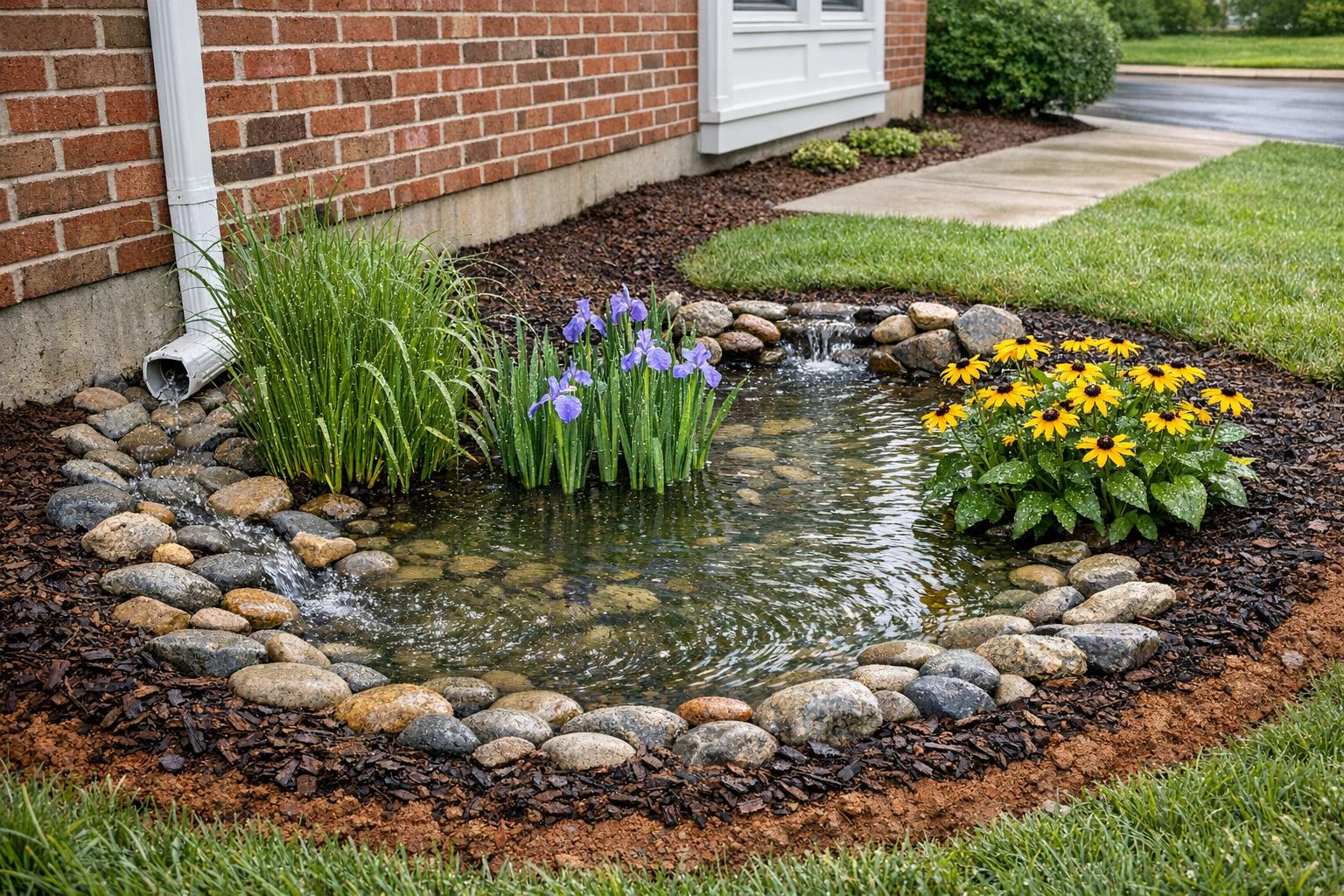
Rain gardens are a smart way to tackle common drainage issues like standing water, soggy yards, and stormwater runoff. These planted depressions absorb rainwater, reduce flooding, and filter pollutants before they reach waterways. In Maryland, where clay-heavy soil and impervious surfaces worsen drainage problems, rain gardens provide an effective solution. They help prevent foundation damage, control pollution, and even support local wildlife.
Key Takeaways:
- Fix standing water: Rain gardens soak up excess water, preventing pooling and foundation damage.
- Reduce runoff pollution: They trap up to 90% of nutrients and chemicals from stormwater.
- Combat erosion: Slows water flow to prevent stream bank erosion and flooding.
- Low-cost option: DIY rain gardens cost $3–$5 per square foot, far cheaper than other drainage systems.
- Supports wildlife: Native plants attract pollinators and improve soil health.
By addressing Maryland’s unique challenges – like clay soil and increasing rainfall – rain gardens are a practical way to manage drainage while improving property health.
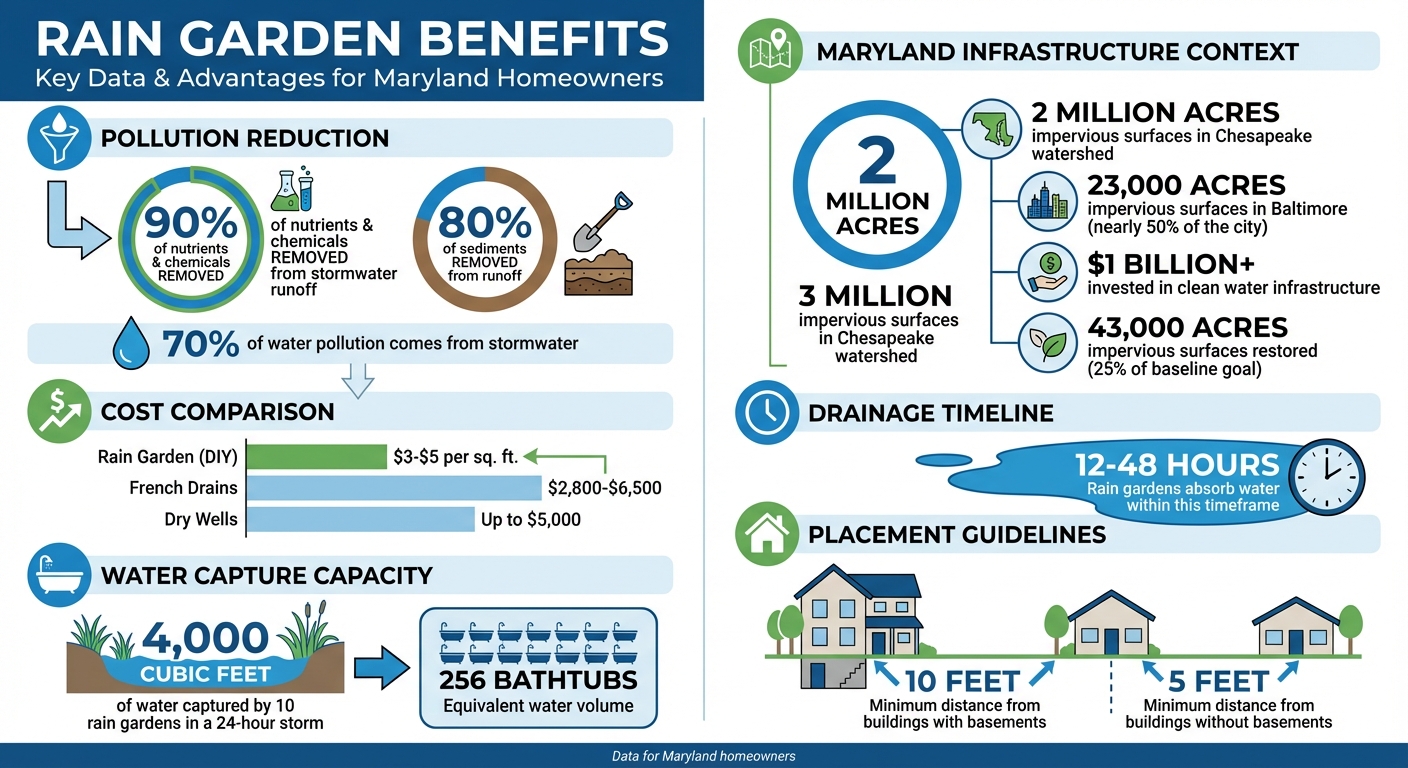
Rain Garden Benefits: Key Statistics for Maryland Homeowners
How to Install a Rain Garden in 10 Easy Steps
sbb-itb-843f8be
Maryland’s Drainage Problems
Maryland homeowners face a tough combination of challenges when it comes to managing water drainage. The state’s unique conditions, combined with human development and shifting weather patterns, create a perfect storm of issues. Understanding these factors is key to identifying solutions like rain gardens, which help manage Maryland’s stormwater effectively.
How Clay-Heavy Soils Affect Drainage
Maryland’s soil composition plays a big role in its drainage problems. When clay content in the soil exceeds 50%, it becomes a major obstacle to water absorption. According to the University of Maryland Extension:
"Soils high in clay (more than 50%) feel sticky, don’t drain well, and become rock hard when dry." [4]
This means that when clay-heavy soil dries out, it hardens to the point where water struggles to penetrate during future rainfalls. A simple test can confirm this: dig a 12-inch hole, fill it with water, and see how fast it drains. If it takes longer than 1 inch per hour, the soil is likely compacted or rich in clay [4].
Development makes this problem worse. Construction activities often compact soil and strip away the topsoil layer, reducing the spaces where water can flow. This leaves water to pool on the surface instead of being absorbed [4].
Problems from Impervious Surfaces
On top of natural soil challenges, human-made surfaces add another layer of difficulty. Hard surfaces like roads, sidewalks, and parking lots prevent water from soaking into the ground. In Maryland’s Chesapeake watershed, nearly 2 million acres of land are covered by these impervious surfaces [5]. Baltimore alone has about 23,000 acres – almost half the city – paved over with asphalt and concrete [5]. The Maryland State Highway Administration also maintains over 17,000 lane miles of roads (excluding Baltimore City), further blocking water absorption [5].
Instead of soaking into the ground, rainwater rushes into drains and gutters, carrying pollutants into local waterways. As researchers note:
"Research has long shown that stormwater runoff from roads contains higher concentrations of pollutants than almost any other sources." [5]
Climate change is making things even harder. Maryland is experiencing more frequent and intense rainstorms, which dump large amounts of water in short periods. This overwhelms drainage systems that weren’t built to handle such extremes. While Maryland has invested over $1 billion in clean water infrastructure and restored nearly 43,000 acres of impervious surfaces as of 2025, this only accounts for about 25% of the state’s baseline restoration goal [5].
The aging infrastructure adds to the problem. For example, in January 2026, a sewer system near the Potomac River, built in the 1960s, collapsed under the pressure of heavy rainfall. This failure released 243 million gallons of raw sewage [6].
"The intensity is a really important part of it… It is absolutely a climate problem that will continue to get worse." – Gussie Maguire, Maryland staff scientist, Chesapeake Bay Foundation [6]
Rain gardens offer a practical way to tackle these combined challenges. By capturing runoff and allowing water to naturally infiltrate the soil, they help reduce the strain on Maryland’s drainage systems.
Common Drainage Problems Rain Gardens Fix
Rain gardens are a practical response to Maryland’s drainage challenges, offering solutions that address water management and pollution concerns.
Rain gardens are designed to handle common drainage problems by capturing runoff from impervious surfaces like roofs and driveways. These planted depressions allow water to naturally infiltrate the soil, reducing pooling and promoting healthier water cycles [7].
Standing Water and Foundation Damage
Pooling water near your home can lead to foundation damage over time. Rain gardens act as collection points, redirecting water away from structures and letting it seep into the ground within 12 to 48 hours. This prevents water from lingering and forming puddles close to your house [8]. To ensure effectiveness, place rain gardens at least 10 feet from buildings with basements and 5 feet from those without [10]. The plants used – such as native grasses, flowering perennials, and shrubs – have deep roots that break up compacted soil, improving water absorption [7].
Stormwater Runoff and Pollution Control
Rain gardens also combat stormwater runoff, which can wash harmful pollutants like motor oil, fertilizers, pesticides, and animal waste into local waterways. Using a process called bioretention, the plants, soil, and microorganisms in rain gardens trap or break down these contaminants before they reach groundwater [1]. In fact, rain gardens can remove up to 90% of nutrients and chemicals and up to 80% of sediments from runoff. Considering that stormwater contributes to 70% of water pollution, this is a significant benefit [8].
Daniel Gonzalez II, Associate Research and Extension Specialist at UCANR, explains:
"Rain gardens improve water quality by filtering pollutants like fertilizers, pesticides, animal waste, dirt, chemicals, oil, and bacteria from stormwater runoff." [1]
Even a modest residential rain garden of 100 to 400 square feet can make a noticeable difference. For example, Bartholdi Gardens in Washington, D.C., installed 10 rain gardens that capture 4,000 cubic feet of water during a single 24-hour storm – equivalent to 256 bathtubs of water that would otherwise burden the city’s sewer system [9].
Besides improving water quality, rain gardens help reduce the physical damage caused by fast-moving runoff.
Stream Bank Erosion and Flood Prevention
Rapid water flow can erode stream banks and contribute to downstream flooding. Rain gardens address these issues by following the "Slow it, Spread it, Sink it" principle [10]. They temporarily hold runoff, reducing its speed and volume, which helps prevent erosion and flooding.
Alicia Springer, UC Master Gardener, highlights the importance of proper design:
"Any effective rain garden landscaping should discourage standing water and allow flow to infiltrate the soil within a day or two." [10]
For properties on slopes, adding swales – vegetated channels lined with river rock and gravel – can direct water safely away from foundations toward infiltration areas. Native plants like sedges (Carex) and rushes (Juncus) stabilize the soil, while boulders provide extra support during heavy flows [10]. When multiple properties in a neighborhood adopt rain gardens, the collective impact can ease the strain on municipal flood control systems.
Additional Benefits of Rain Gardens
Rain gardens do more than just address drainage challenges – they also bring environmental perks and financial savings, making them a smart choice for homeowners in Maryland.
Groundwater Recharge and Environmental Perks
Rain gardens are excellent for managing stormwater runoff. By collecting water from hard surfaces like driveways and rooftops, they allow it to gradually seep into the ground, helping replenish groundwater supplies. This process supports the natural water cycle and benefits local ecosystems, including streams and the Chesapeake Bay [1][11][12].
Planting native species in rain gardens adds another layer of benefit. Deep-rooted plants like Purple Coneflower and Black-eyed Susan improve soil quality while providing essential food sources – nectar, seeds, and fruits – for pollinators, birds, and other wildlife throughout the year [13][14]. As Penn State Extension explains:
"Rain gardens mimic the natural absorption and filtering abilities of a forest, meadow, or prairie while creating habitat for a variety of plants and animals" [13].
These gardens also serve as cooling spots for amphibians and reptiles during hot weather, thanks to the retained moisture [13]. By improving groundwater recharge, rain gardens help protect water quality and reduce stress on Maryland’s often-overloaded drainage systems. These ecological benefits can also lead to long-term financial savings.
Affordable and Low-Maintenance Drainage Solutions
Rain gardens aren’t just good for the environment – they’re also a budget-friendly way to manage drainage. Installing a rain garden costs about $3–$5 per square foot if done as a DIY project, which is far less expensive than alternatives like French drains ($2,800–$6,500) or dry wells (up to $5,000) [15][16].
Once established, rain gardens require minimal maintenance after the first year, unlike traditional drainage systems that often need ongoing cleaning or repairs [15]. This combination of affordability and low upkeep makes them an attractive option for sustainable landscaping in Maryland.
Planning Your Rain Garden in Maryland
Creating a rain garden that works well in Maryland starts with careful planning. Maryland’s clay-heavy soils and specific climate conditions require a tailored approach to handle drainage challenges effectively.
Selecting the Best Location for Your Rain Garden
Where you place your rain garden plays a huge role in its success. Look for areas where water naturally flows or pools after a rainstorm, especially spots where runoff from rooftops, driveways, or patios collects.
Before digging, make sure to contact Miss Utility to mark any underground utilities. Position your rain garden 5 to 15 feet away from your home’s foundation to avoid water seepage into basements or crawl spaces. Steer clear of tree roots and septic drain fields as well.
For Maryland homeowners, the Rain Garden app (available for iPhone and Android) can be a great tool. It provides soil drainage maps and calculators to help you size your garden based on specific local conditions. A thorough site assessment will ensure your garden absorbs water effectively without turning into a stagnant puddle.
When digging, aim for a depth of 18–36 inches, including a 6-inch ponding area. If you’re dealing with clay soils, amend the soil with a mix of 50–60% sand, 20–30% low-clay topsoil, and 20–30% compost. This blend improves infiltration and nourishes plants. Use the excavated subsoil to build a berm on the downhill side to help retain water.
Why Native Plants Matter in Rain Gardens
Native plants are the backbone of a successful Maryland rain garden. Plants like Cardinal Flower, Joe Pye Weed, and Black-Eyed Susan have deep root systems that not only absorb water efficiently but also support local wildlife. Catherine Neal, a horticulture specialist, emphasizes their importance:
"The rugged, deep root systems of meadow plants allow them to survive drought and floods and enrich the soil" [17].
Organize your plantings based on how much moisture they can tolerate. For the center of the garden, where water collects, choose water-loving plants like Cardinal Flower, Blue Flag Iris, and Swamp Milkweed. On the outer edges and slopes, go with plants that prefer drier conditions, such as Purple Coneflower, Black-Eyed Susan, and Little Bluestem. If your rain garden is larger, consider adding shrubs like Winterberry Holly and Inkberry Holly, which can handle varying moisture levels.
Incorporating a mix of trees, shrubs, and groundcovers creates layers of vegetation that boost water transpiration. For example, deciduous trees can significantly reduce runoff during summer, while native plants generally require less upkeep and provide food for pollinators and other wildlife.
By carefully planning and selecting the right plants, your rain garden will not only manage runoff effectively but also contribute to Maryland’s ecological health.
If you’re looking for expert help with planning and designing your rain garden, Pro Landscapes MD offers professional guidance to address drainage issues while enhancing your outdoor space.
Conclusion
Rain gardens offer a practical way to tackle Maryland’s drainage challenges. They help manage stormwater runoff, filter out pollutants, replenish groundwater, reduce flooding, and support local wildlife. As the Neighborhood Design Center explains, "Rain gardens aren’t just pretty – they’re practical. They reduce stormwater runoff, filter pollutants, and create habitat for pollinators and other wildlife" [2].
In Edmonston, Maryland, nearly 90 rain gardens installed by August 2025 have already reduced property damage caused by flooding, even during severe storms [2]. When designed correctly, rain gardens provide long-term benefits by improving water infiltration far more effectively than traditional lawns [1].
To achieve these results, careful planning is essential. This includes conducting percolation tests, determining the right size, and ensuring the garden drains within 24–48 hours. Meeting local regulations is also critical, especially for incentives like Montgomery County‘s $10 per square foot RainScapes Rewards rebate [3]. Expert advice can make all the difference in creating a garden that works efficiently.
Pro Landscapes MD specializes in addressing central Maryland’s unique drainage and soil conditions, serving areas like Howard County, Montgomery County, Carroll County, Frederick County, Prince George’s County, and Baltimore County. Their expertise in drainage and landscape design ensures homeowners can build rain gardens that not only solve water issues but also improve the look of their property.
Whether you’re dealing with persistent standing water or looking to make an eco-friendly change, a well-designed rain garden can address both immediate drainage concerns and broader environmental goals. For professional help with planning and installation, reach out to Pro Landscapes MD.
FAQs
How big should my rain garden be?
When planning a rain garden, it should be built to handle runoff from a typical 1-inch storm. The ponding zone – the area that temporarily holds water – needs to be sized to accommodate this volume. For best results, position the garden at least 10 feet away from building foundations, ensuring it’s on a gently sloped, permeable surface to allow water to absorb efficiently.
Will a rain garden work in Maryland clay soil?
Yes, a rain garden can work in Maryland’s clay soil, but it requires some tweaks. Clay soil tends to drain poorly because it’s compacted, so you’ll need to make adjustments. You can amend the soil with organic material to improve its structure or install an underdrain system to help with water flow. These steps will ensure your rain garden works as intended.
Do I need a permit or rebate approval for a rain garden?
Before diving into building a rain garden, you might need to secure a permit or get approval for a rebate. Many rebate programs have specific requirements, such as obtaining prior approval, providing proper documentation, and adhering to environmental site design standards. Make sure to review your local guidelines thoroughly to confirm your project aligns with all necessary criteria before you begin construction.
Chat with Us