









- bhavya gada
- No Comments
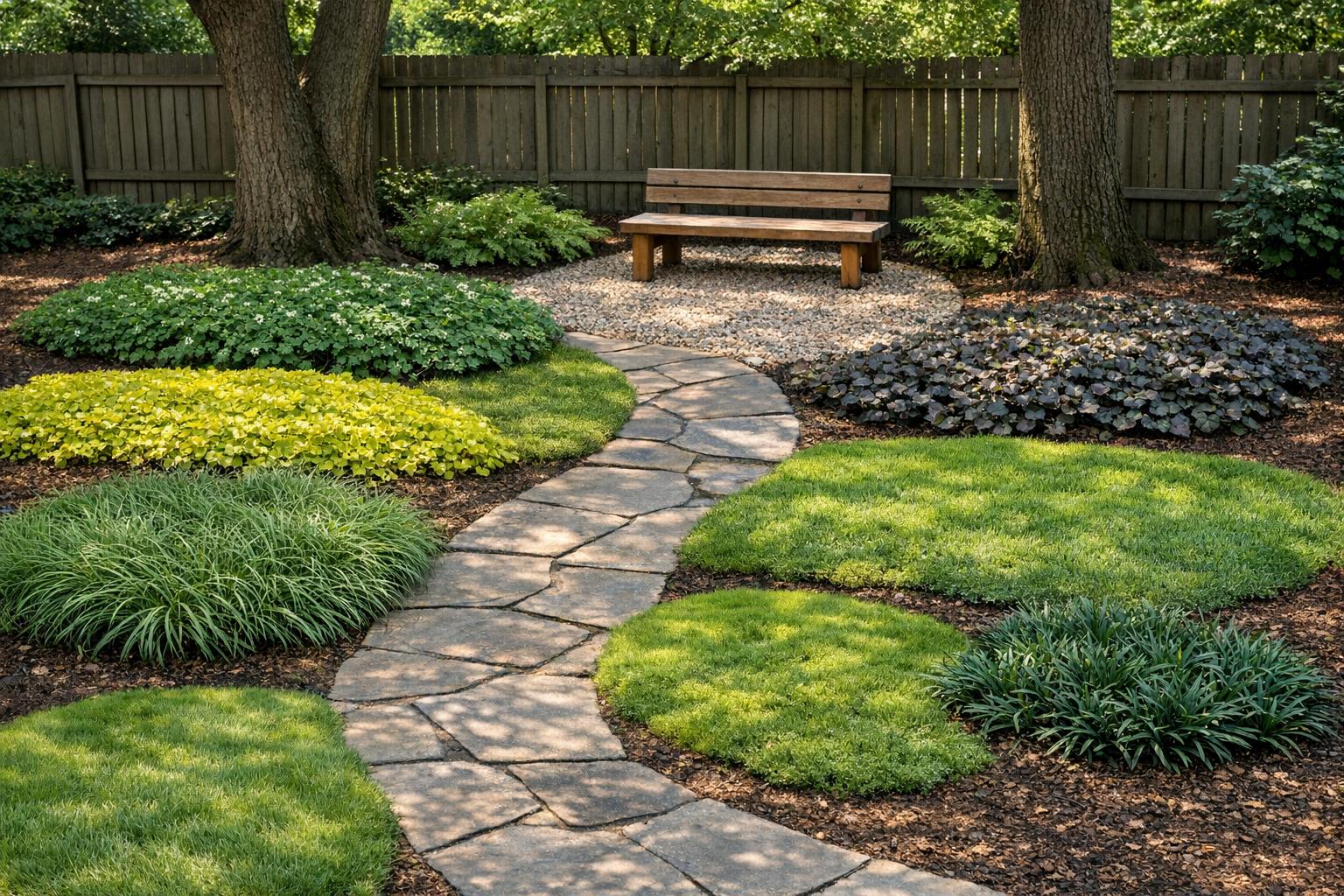
Finding it hard to maintain grass in shady areas? You’re not alone. Grass needs sunlight to thrive, and shaded spots often end up patchy or bare. Luckily, there are low-maintenance, water-saving options that work beautifully in shaded yards. Here are eight alternatives to grass that require less effort and water, while still keeping your yard lush and green:
- Sedges (Carex species): Grass-like perennials that thrive in shade, need minimal watering, and require just one trim a year.
- Mondo Grass: Evergreen groundcover perfect for dry, shaded areas with no mowing required.
- Fine Leaf Fescues: Cool-season grasses that handle shade well and need less water and mowing.
- Pennsylvania Sedge: A low-growing sedge that works well in deep shade and requires minimal care.
- Bottlebrush Grass: A native option for shaded areas with unique seed heads and low water needs.
- Mazus (Mazus reptans): A creeping groundcover with purple-blue flowers, ideal for partial shade and low water use.
- Vinca and Pachysandra: Evergreen groundcovers that suppress weeds and thrive in deep shade.
- Mulch Beds and Hardscaping: Non-plant options like mulch or gravel that eliminate the need for watering or mowing.
Each option is designed to reduce maintenance and water use while performing well in low-light conditions. Whether you’re aiming for a soft, natural look or a more structured landscape, these choices can transform your shaded yard into a beautiful and practical space.
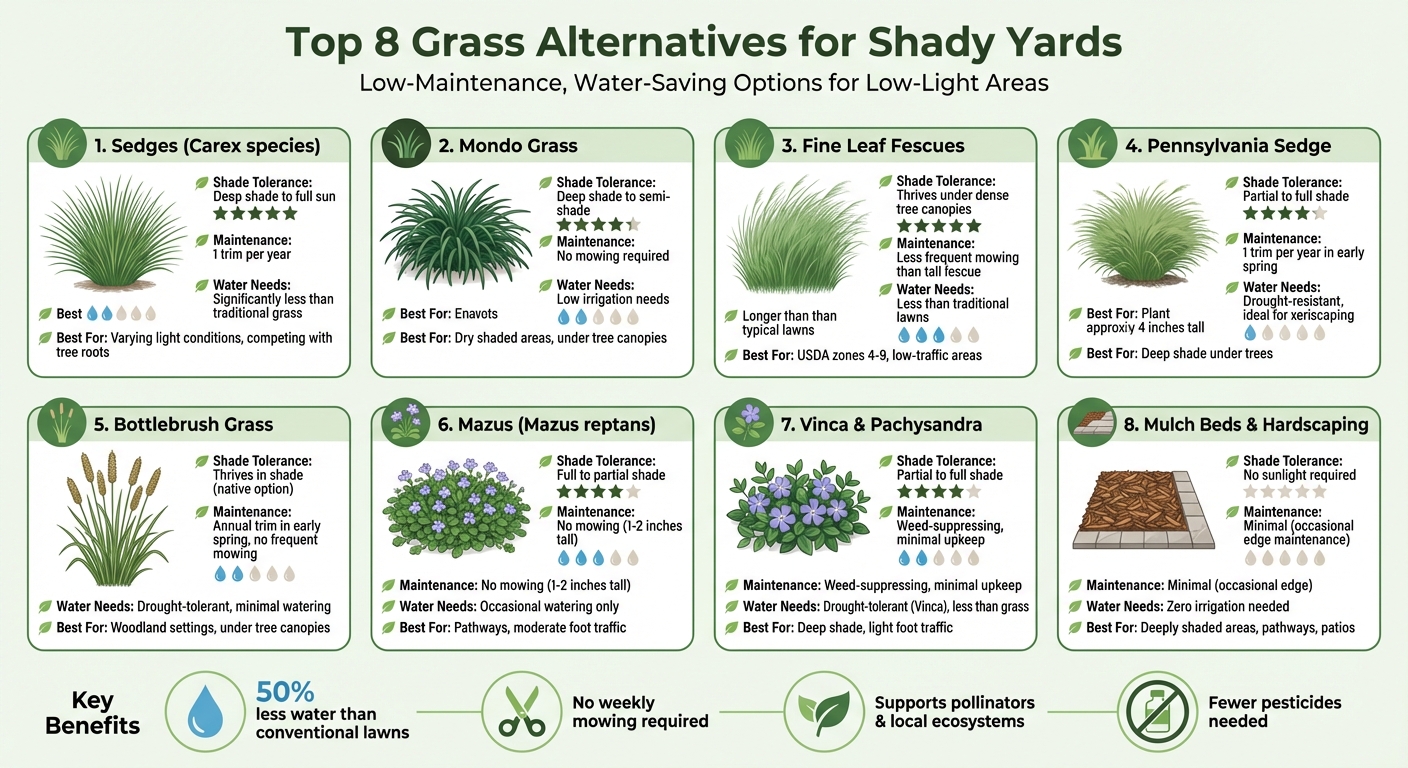
8 Shade-Tolerant Grass Alternatives Comparison Chart
How to Replace a Lawn with Shade Perennials | Ask This Old House

sbb-itb-843f8be
1. Sedges (Carex Species)
Sedges are hardy, grass-like perennials that thrive where traditional lawns struggle, making them a great choice for shaded areas [2]. Unlike standard turfgrass, which typically requires full sun, sedges are well-suited to low-light conditions and can even compete effectively with tree roots for moisture and nutrients.
Shade Tolerance
Sedges excel in environments where turfgrass would fail [2]. They flourish in areas with minimal sunlight, such as deep shade or dappled light beneath tree canopies. While their primary strength lies in shade tolerance, many sedge species can also handle full sun if they receive sufficient water [2]. This adaptability makes them a practical solution for yards with varying light conditions, offering a low-maintenance option for challenging spaces.
Low Maintenance
These plants grow slowly, needing just one trim per year in early spring to maintain a tidy appearance [2][1]. During the initial planting phase, it’s important to weed and mulch thoroughly to reduce competition from invasive plants [1]. Their minimal care requirements align well with Maryland’s efforts to conserve resources and encourage sustainable landscaping.
Water Efficiency
Compared to traditional turfgrass, which can consume thousands of gallons of water during summer months, sedges require significantly less irrigation [2][1]. They adapt well to different soil types and are ideal for xeriscaping, a landscaping approach focused on reducing water use [1]. This makes them a natural fit for Maryland’s 2021 Low-Impact Landscaping Law, which promotes water conservation [1].
Aesthetic Appeal
Sedges provide a lawn-like texture with a variety of green shades and delicate flower spikes that attract beneficial insects [2][1]. Their fine, uniform growth creates a "fake lawn" effect that’s visually pleasing and easy to maintain [1][2]. For quick ground coverage, plant clumps 6–8 inches apart [2]. Species such as Pennsylvania sedge (Carex pensylvanica) offer an elegant, fine-textured look for woodland areas, while Wood’s sedge (Carex woodii) forms dense mats, making it ideal for covering larger spaces [1].
2. Mondo Grass (Ophiopogon)
Mondo Grass (Ophiopogon japonicus) is a hardy evergreen groundcover that thrives in dry, shaded areas, particularly under tree canopies. Its dense clumps of dark green, arching leaves make it a great alternative for areas where traditional turfgrass struggles. Here’s why Mondo Grass stands out:
Shade Tolerance
Mondo Grass thrives in areas where other plants falter, especially in deep shade or semi-shaded locations. It’s perfect for spots like the base of walls or beneath mature trees, where sunlight is limited, and turfgrass often fails.
Low Maintenance
Forget about mowing – Mondo Grass grows naturally into a dense, carpet-like cover. Unlike traditional lawns that require constant trimming, its clumps gradually spread over time. For quicker coverage, plant clumps 6–8 inches apart and let them grow together.
Water Efficiency
If conserving water is a priority, Mondo Grass is a smart choice. Unlike traditional lawns that guzzle water during summer, this plant stays lush and green with far less irrigation, making it ideal for landscaping services.
Aesthetic Appeal
With its dark green, arching leaves, Mondo Grass brings a timeless elegance to any garden. Its uniform texture mimics the look of an untamed yet polished lawn, creating a refined and cohesive appearance that homeowners love.
3. Fine Leaf Fescues
Fine leaf fescues are an excellent choice for shaded landscapes, offering a hardy and low-water alternative to traditional turfgrass. These cool-season grasses thrive in USDA hardiness zones 4 through 9 and perform well even under dense tree canopies – where many other grasses struggle.
Shade Tolerance
One of the standout qualities of fine leaf fescues is their ability to flourish in low-light conditions. They can handle competition from tree roots and are particularly effective in areas prone to soil erosion. Lawn Love highlights that Chewings and red fescues are especially adept at thriving in shaded environments, making them a reliable option for spots where sunlight is limited.[3]
Low Maintenance
If you’re looking for a low-maintenance grass, fine fescues are an ideal choice. According to the University of Maryland Extension, these grasses require less frequent mowing compared to tall fescue.[1] They also need minimal inputs like fertilizer, herbicides, or fungicides. When left unmowed during summer, they can grow to over 4 inches, creating a windswept, natural look. However, for best results, avoid mowing during hot, dry periods and plan for occasional dethatching to manage thatch accumulation.
Water Efficiency
Fine fescues are well-suited to drought-prone areas, needing significantly less water than traditional lawns. Their deep root systems allow them to tap into moisture reserves during dry spells. While they aren’t quite as drought-tolerant as tall fescue, they excel in shaded areas where water may be scarce.[2][3]
Aesthetic Appeal
These grasses create a soft, fine-textured lawn with a refined, natural appearance. When left unmowed, their clumpy, windswept look adds a unique character to your yard while also shading the soil to help retain moisture. That said, fine fescues aren’t ideal for high-traffic areas, so they’re best reserved for low-traffic, shaded spaces. For more variety in shaded landscapes, you might also consider options like Pennsylvania Sedge.
4. Pennsylvania Sedge (Carex pensylvanica)
Pennsylvania Sedge is a great option for those tricky spots under trees where regular grass just doesn’t thrive. The University of Maryland Extension highlights this sedge as ideal for shady areas, pointing out its "grass-like appearance" and the fact that it doesn’t need frequent mowing [1].
Beyond its practicality, this sedge brings a mix of low-maintenance care and water-saving perks to shaded landscapes in the Mid-Atlantic.
Shade Tolerance
This plant thrives in deep shade and handles the tough competition for nutrients and water posed by tree roots. It grows beautifully in partial to full shade, creating a lush, green carpet in areas that might otherwise look bare or patchy.
Low Maintenance
Pennsylvania Sedge is about as low-maintenance as it gets. It only needs a single trim each year, usually in early spring before new growth starts. It’s drought-resistant, adapts to various soil types, and rarely requires fertilizer. Plus, it’s not prone to pests or diseases, making it an easy-care choice.
Water Efficiency
If water conservation is a priority, this sedge is a perfect fit. It’s well-suited for xeriscaping and doesn’t demand constant watering like traditional turfgrass, which can guzzle thousands of gallons during summer months. Its natural drought tolerance makes it especially useful in spots under trees where irrigation can be tricky [2].
Aesthetic Appeal
When left to grow naturally, Pennsylvania Sedge reaches about 4 inches tall, offering a soft, windswept look. Its fine, green foliage stays vibrant throughout the growing season, creating a relaxed, meadow-like vibe. The subtle color variations in its leaves add texture and charm to shaded areas [2].
5. Bottlebrush Grass (Elymus hystrix)
Bottlebrush Grass is a fantastic option for adding greenery to shaded areas where traditional turf struggles. According to the University of Maryland Extension, this native grass thrives in low-light conditions, making it an excellent fit for spots under tree canopies or in woodland settings [1].
Shade Tolerance
This grass stands out for its ability to grow in shaded environments. While grasses like switchgrass or little bluestem demand full sun, Bottlebrush Grass flourishes in the shade, offering a rare native solution for areas where sunlight is limited [1].
Low Maintenance
Bottlebrush Grass is incredibly easy to care for. It doesn’t need fertilizers often, and a simple annual trim in early spring – cutting back about two-thirds of the stalk – encourages fresh growth. Unlike traditional lawns, it doesn’t respond well to frequent mowing, so it’s best left to grow naturally [1][3].
Water Efficiency
This grass is also well-suited for drought-prone areas. It adapts to a variety of soil types and requires little additional watering, even during extended dry periods. If you’re looking for a plant that conserves water and can thrive without an irrigation system, this is a solid choice [1][3].
Aesthetic Appeal
With its unique seed heads and varied heights, Bottlebrush Grass adds visual interest to any landscape. Beyond its beauty, it supports local wildlife and helps boost biodiversity, making it a win for both aesthetics and the environment [1].
6. Mazus (Mazus reptans)
Mazus reptans, often called Creeping Mazus, is a fantastic low-water ground cover option for partially shaded areas. This plant grows close to the ground, forming a thick, lush mat that requires very little care. Its ability to spread easily and thrive with minimal effort makes it a great choice for shaded landscapes where traditional grass may struggle.
Shade Tolerance
Creeping Mazus thrives in areas with full to partial shade, though it benefits from a few hours of filtered sunlight. While it can handle heavy shade, the plant may grow more sparsely and produce fewer of its striking purple-blue flowers in such conditions.
Low Maintenance
This ground cover grows to just 1–2 inches tall, eliminating the need for mowing. Its no-mow nature fits perfectly with efforts to create more sustainable landscapes. Once established, Mazus reptans can handle moderate foot traffic and naturally spreads, making it an excellent choice for pathways or lightly used areas. Forget about constant edging or trimming – this plant takes care of itself.
Water Efficiency
Compared to traditional grass lawns, Mazus reptans is much less thirsty. It only needs occasional watering during its establishment phase or during particularly dry periods. This makes it a great alternative for shaded spots where water conservation is a priority.
Aesthetic Appeal
With its dense green foliage and charming purple-blue flowers, Creeping Mazus adds a subtle yet beautiful touch to any garden. Its low profile allows it to complement other garden features without overwhelming the space, making it a versatile option for borders, beds, and more.
7. Vinca and Pachysandra
When grass struggles in shady areas – leaving behind bare spots, yellowing patches, or even fungal problems – Vinca minor (commonly known as Periwinkle) and Pachysandra procumbens (Allegheny Spurge) step in as dependable alternatives. These evergreen ground covers thrive in partial to full shade, where turfgrass often fails due to competition with tree roots and limited sunlight. They also share the added benefit of being low-water plants that perform well in challenging conditions.
Shade Tolerance
These plants shine in places where grass can’t. Vinca minor creates a dense, evergreen mat under trees and on shaded slopes, while Pachysandra procumbens spreads through rhizomes, forming a thick, lush carpet even in deep shade. If you’re planting Pachysandra, aim for well-drained, organically rich, and slightly acidic soil to help it thrive.
Low Maintenance
"This is a beautiful flowering grass alternative that is very prolific and tolerates drought and shade." – Linda Langelo, Horticulture Specialist, Colorado State University
Once established, both Vinca and Pachysandra are excellent at suppressing weeds and require very little upkeep. Pachysandra is tough enough for light foot traffic, making it a good choice for pathways or lightly used spaces. To keep them contained, consider using an edge barrier, and the only seasonal task might be clearing away dead leaves after a freeze to keep the area looking neat.
Water Efficiency
One of Vinca minor’s standout features is its drought tolerance. Unlike traditional lawns that can guzzle thousands of gallons of water during summer, Vinca requires far less. While Pachysandra prefers moist, well-drained soil, both plants significantly cut down on irrigation compared to grass.
Aesthetic Appeal
Vinca minor adds charm to shady spaces with its glossy leaves and delicate lavender-blue, violet, or white flowers that bloom in spring. Pachysandra procumbens, on the other hand, features soft blue-green foliage with subtle purple and white highlights. Together, these plants create year-round greenery in zones 4 to 9, transforming shady problem areas into eye-catching parts of your landscape.
8. Mulch Beds and Hardscaping
When traditional grass struggles to grow in shaded areas, structural ground treatments like mulch beds and hardscaping can step in as practical and visually appealing alternatives. These options replace patchy turf with low-maintenance, well-defined spaces that thrive in challenging conditions.
Shade Tolerance
Unlike turfgrass, mulch and hardscaping don’t rely on sunlight, making them perfect for deeply shaded spots. A 2- to 3-inch layer of wood mulch around a tree’s dripline not only protects the tree but also enhances the overall landscape. Hardscaping materials like decomposed granite (DG) and pea gravel are equally effective, transforming neglected shady corners into functional pathways, patios, or even rock gardens.
Low Maintenance
Mulch and hardscaping require far less upkeep than traditional lawns. Mulch beds naturally suppress weeds and protect tree trunks from potential damage caused by lawn equipment. To create a mulch bed, you can lay down a barrier like newspaper or unwaxed cardboard, add organic material, and top it with mulch. This method smothers existing grass while keeping the soil intact. Hardscaping, on the other hand, only needs occasional edge maintenance, making it a hassle-free option.
Water Efficiency
Both mulch and hardscaping significantly reduce water usage compared to traditional lawns. Mulch helps retain soil moisture, limits evaporation, and enriches the soil as it decomposes. Hardscaping materials like DG and pea gravel require no irrigation at all. Plus, permeable paving allows water to soak into the ground, cutting down on stormwater runoff and naturally filtering the water. In Maryland, the 2021 Low-Impact Landscaping Law encourages water-efficient designs like these, even in communities with HOA restrictions.
Aesthetic Appeal
Mulch beds give your yard a clean, organized look, creating defined borders and garden "islands" that can frame entryways or separate landscape zones. Pea gravel adds texture and color variety, while decomposed granite offers a natural, rustic look that blends beautifully with woodland settings. For those looking for custom solutions, Pro Landscapes MD specializes in designing shaded spaces with features like flagstone walkways, paver patios, stone steps, and fire pits. Using edge barriers to contain materials ensures a polished, professional finish that enhances any outdoor space.
Conclusion
Shaded yards don’t need to rely on traditional turf to thrive. The alternatives discussed here offer practical advantages, from performing well in low-light areas to significantly reducing maintenance needs. For instance, native lawn alternatives can use 50% less water than conventional lawns once established, and many shade-friendly groundcovers eliminate the need for weekly mowing, aeration, or dethatching [4]. Plus, these plants contribute to local ecosystems by supporting pollinators and requiring fewer pesticides or fertilizers.
When choosing an alternative, consider factors like the level of shade, soil moisture, foot traffic, and competition from trees. As Christa Carignan from the University of Maryland Extension points out:
"While an established native or new landscape can be beautiful and eventually save you time and money, it’s not easy" [1].
The process involves removing turf, preparing the soil, and giving groundcovers up to three years to fully mature.
Homeowners in Maryland have additional support through the Low-Impact Landscaping Law, enacted in 2021. This law protects those opting for pollinator gardens or water-efficient options over lawns, even in HOA-governed communities [1]. However, selecting the right native species for central Maryland’s climate and avoiding invasive plants often found at garden centers can be tricky. Professional guidance is key to making the right choices and ensuring a successful transition.
For homeowners in Howard, Montgomery, Carroll, Frederick, Prince George’s, and Baltimore Counties, Pro Landscapes MD offers expert services tailored to shaded properties. Their team of horticulturists can evaluate your yard, recommend suitable native plants, and handle all aspects of the transformation process – from removing existing turf to preparing the soil and maintaining the new landscape during the critical early years. They also provide hardscaping solutions like flagstone paths and paver patios for areas where plants may not thrive.
Reach out to Pro Landscapes MD to transform your shaded yard into a beautiful, low-maintenance space that works in harmony with your environment.
FAQs
What is the best option for deep shade under trees?
Lungwort (Pulmonaria) is a fantastic plant for areas with deep shade, such as under trees. It flourishes in low-light settings, producing flowers that last a long time and showcasing eye-catching foliage, making it a perfect fit for shaded spots.
Can any of these handle foot traffic?
Yes, some grass alternatives for shady yards, such as Pennsylvania sedge and specific ornamental grasses, can handle foot traffic. These options are not only sturdy but also add a touch of beauty, making them a practical choice for areas with light to moderate activity.
How long does it take for new plantings to fill in?
New plantings usually need anywhere from a few weeks to several months to fill in, and this timeline can vary based on the type of plant and its environment. Growth speed is often affected by factors such as sunlight exposure, the quality of the soil, and how consistently the plants are watered.
Chat with Us