









- bhavya gada
- No Comments
Native plants are perfect for Maryland gardens. They save time, reduce maintenance, and support local wildlife. Species like Black-Eyed Susan, Wild Bergamot, and Swamp Milkweed thrive naturally with less water and no chemicals. These plants improve soil, attract pollinators, and create healthier ecosystems. By choosing native plants, you can build a beautiful, low-maintenance garden that benefits nature and your property.
Key Highlights:
- Low Maintenance: Require less water and no chemical fertilizers.
- Wildlife Support: Attract bees, butterflies, and birds.
- Soil Health: Prevent erosion and enrich soil naturally.
- Top Choices: Black-Eyed Susan, Cardinal Flower, Goldenrod, and more.
Ready to transform your garden? Start with these native plants to create a thriving, eco-friendly space.
10 Best-Performing Native Plants in my Garden
sbb-itb-843f8be
Benefits of Native Plants for Wildlife and Organic Gardening
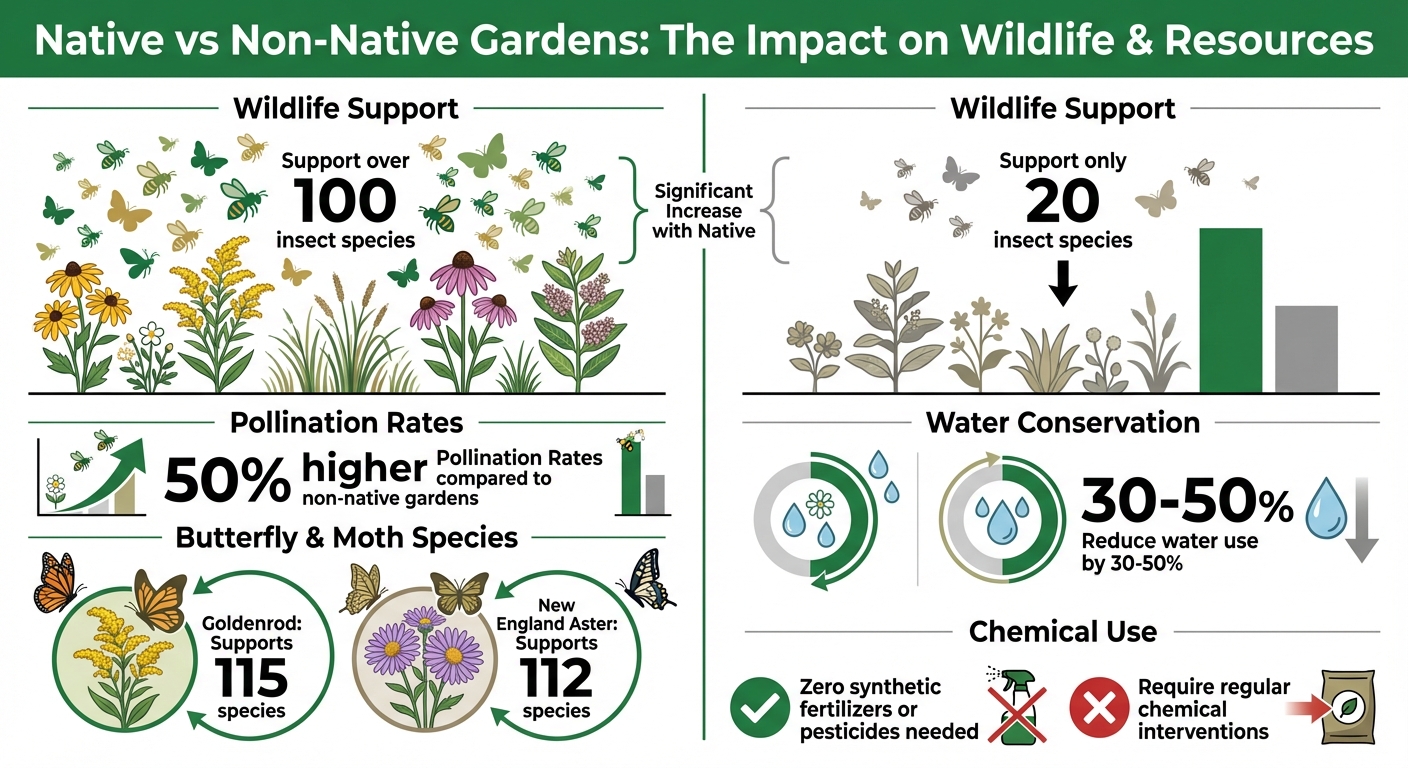
Native vs Non-Native Gardens: Wildlife Support and Water Conservation Benefits
Native plants are a natural fit for organic gardening because they create a self-sustaining ecosystem that works in harmony with local wildlife. These plants have evolved alongside Maryland’s native species, offering essential food sources at just the right times. For instance, milkweeds are critical host plants for monarch butterfly larvae, while goldenrod and New England aster extend nectar availability into late fall, long after most other plants have stopped blooming [1]. This perfectly timed support helps drive pollination. In fact, studies show that pollination rates in native gardens can increase by as much as 50% compared to gardens with non-native plants [1].
A Maryland extension report highlights that native gardens can support over 100 insect species, compared to just 20 in non-native gardens [1]. Plants like Black-Eyed Susan and Wild Bergamot are particularly effective at attracting bees and butterflies thanks to their abundant, easy-to-access blooms. These examples illustrate how native plants create a thriving, interconnected garden ecosystem.
Another major advantage of native plants is their ability to minimize the need for synthetic chemicals. Because they are naturally adapted to Maryland’s soil, climate, and pest conditions, these plants develop their own defenses without requiring chemical interventions. For example, Goldenrod and Spiderwort can thrive in poor soils while resisting diseases naturally. Experts from the University of Maryland Extension recommend native plants as part of integrated pest management strategies. Wild Bergamot, for instance, not only deters certain pests but also attracts beneficial predatory wasps that help keep other garden pests in check [1].
On top of pest control, native plants improve soil health and conserve water. Their deep root systems prevent erosion, boost microbial activity, and enhance overall soil quality. Plus, their drought tolerance can cut water use in gardens by 30–50%. Swamp Milkweed, for example, can adapt to a range of moisture levels and thrives without additional irrigation [2].
Table: Key Attributes of Native Plants
All plants listed are low-maintenance and suited to Maryland’s environment.
| Plant Name | Wildlife Support | Soil Needs | Bloom Time |
|---|---|---|---|
| Black-Eyed Susan | Pollinators, seeds | Dry to moist | Summer |
| Wild Bergamot | Pollinators, bees | Dry to moist | Summer |
| Cardinal Flower | Hummingbirds | Moist/wet | Summer |
| Swamp Milkweed | Monarch butterflies | Wet | Summer |
| Goldenrod | Late-season pollinators | Dry to moist | Late summer–fall |
| New England Aster | Butterflies, late-season bees | Average | Fall |
| Eastern Columbine | Hummingbirds, bees | Average, well-drained | Spring |
| Spiderwort | Bees | Average to moist | Spring–summer |
Top Native Plants for Organic Maryland Gardens
Maryland’s mix of hot, humid summers and mild winters creates the perfect environment for native plants that thrive without much effort. These plants not only adapt well to the local climate but also support wildlife and require little maintenance – making them ideal for organic gardening.
Black-Eyed Susan (Rudbeckia hirta)
With its bright yellow petals and dark centers, Black-Eyed Susan is a standout in any garden. It’s hardy, tolerates a variety of soil conditions (from dry to moist), and provides nectar for summer pollinators like bees and butterflies.
Wild Bergamot (Monarda fistulosa)
Wild Bergamot brings soft lavender-pink flowers to your garden, along with a steady stream of bees, butterflies, and even hummingbirds during its summer bloom. This plant spreads over time, naturally filling in garden spaces while adding color and pollinator support.
Cardinal Flower (Lobelia cardinalis)
Known for its dramatic red blooms, Cardinal Flower thrives in moist soils, making it perfect for rain gardens or streamside planting. It’s a favorite for migrating hummingbirds during the summer months.
Swamp Milkweed (Asclepias incarnata)
Swamp Milkweed plays a critical role in supporting Monarch butterflies, serving as the host plant for their larvae. Its pink flower clusters thrive in wet or poorly drained soils, attracting a variety of pollinators throughout the summer.
Eastern Columbine (Aquilegia canadensis)
Eastern Columbine is a springtime gem, offering red and yellow blooms that provide early nectar for bees and hummingbirds. This plant thrives in semi-shaded areas, making it a great choice for woodland gardens.
Goldenrod (Solidago spp.)
Goldenrod is a powerhouse for pollinators, supporting 115 species of butterflies and moths. Its bright yellow blooms appear in late summer and fall, providing essential nectar when other flowers have faded.
"Native species – especially pollinators – require native plants, as they’re the best sources of nectar and pollen for bees, butterflies and more", says Environment America [3].
New England Aster (Symphyotrichum novae-angliae)
With its striking purple blooms, New England Aster is another fall favorite. It supports 112 species of butterflies and moths, offering vital forage for pollinators preparing for winter.
Spiderwort (Tradescantia virginiana)
Spiderwort adds a unique touch with its blue-purple flowers that bloom for just one day – but continuously from spring through summer. It’s a reliable source of pollen for native bees and thrives in semi-shaded areas, adding texture and seasonal interest to your garden.
How Pro Landscapes MD Can Help with Native Plant Installation

Turn your Maryland property into a thriving haven for native plants with the help of Pro Landscapes MD. Their team of professionals brings a wealth of horticultural knowledge to every project, ensuring that your native plants not only take root but also support local ecosystems from the very beginning.
By focusing on the natural strengths of native plants, Pro Landscapes MD ensures each installation is set up for success. Their process begins with a detailed site assessment, taking into account factors like soil composition, sunlight, drainage, and existing wildlife activity. This careful planning allows them to place each plant in the perfect spot. From there, they handle everything – preparing the soil with organic materials, employing planting techniques that encourage healthy root systems, and using eco-friendly methods to create a sustainable garden environment.
For properties dealing with drainage issues in central Maryland, Pro Landscapes MD integrates solutions like French drains, grading, and stormwater management into their native plant installations. These measures prevent water buildup and direct excess runoff to rain gardens filled with moisture-loving plants like Swamp Milkweed. The result? Functional, water-managing ecosystems that look beautiful and work naturally.
Hardscaping is another way Pro Landscapes MD enhances native gardens. Features like retaining walls, garden borders, and flagstone pathways add structure and help define planting areas. These elements not only improve the garden’s overall appearance but also prevent erosion and give plants like Goldenrod and New England Aster the space they need to thrive. Clients often note how these integrated designs boost both the beauty and vitality of their gardens.
Pro Landscapes MD serves communities across central Maryland and Washington, DC, combining local expertise with eco-conscious practices to create gardens that are as sustainable as they are stunning. Their low-maintenance, organic designs support native plants and wildlife, helping to foster healthier ecosystems throughout the region.
Conclusion
Native plants can turn Maryland gardens into thriving, low-maintenance ecosystems. Opting for species like Black-Eyed Susan, Wild Bergamot, Cardinal Flower, and Goldenrod not only supports pollinators and songbirds but also reduces the need for synthetic fertilizers and pesticides. Since these plants are naturally suited to Maryland’s soils and climate, they require less water and upkeep compared to non-native varieties.
The impact of native gardening goes far beyond your backyard. These gardens help filter pollutants, manage stormwater runoff, and even absorb carbon. When adopted on a larger scale, native landscapes contribute to protecting wildlife and promoting climate resilience across entire communities.
Making the switch is easier than you might think. Start by replacing sections of your lawn with native trees, shrubs, and perennials that match your site’s conditions. Many local nurseries in Maryland offer native plant selections, and demonstration gardens like Linthicum Walks in Anne Arundel County provide inspiration with over 25 native species on display.
FAQs
Which native plants work best for my yard’s sun and soil?
If you’re looking to create a thriving garden in Maryland, consider native plants like Black-eyed Susan, Butterfly Weed, and Purple Coneflower. These plants are perfectly adapted to Maryland’s sun, soil, and climate, requiring minimal maintenance while flourishing under organic care. They’re not just beautiful additions to your garden – they’re also a natural fit for the local environment.
How do I start replacing part of my lawn with native plants?
If you’re looking to swap out part of your lawn for native plants, start by identifying species that thrive in Maryland’s climate and soil conditions. Consider factors like sunlight exposure and moisture levels when planning your garden layout. To prepare the area, remove the grass and loosen the soil to create a welcoming environment for your new plants. When planting, make sure to place each one at the right depth, water them thoroughly, and apply mulch to help retain moisture. For ongoing care, occasional watering and weeding will keep your native garden healthy and flourishing.
How long do native plants take to look established?
Native plants in Maryland gardens typically take 1 to 3 years to look well-established and reach their full maturity. The timeline can vary based on the specific plant species and the growing conditions in your garden. Providing consistent care and following proper planting techniques can encourage these plants to grow and thrive more efficiently.
Chat with Us