









- bhavya gada
- No Comments
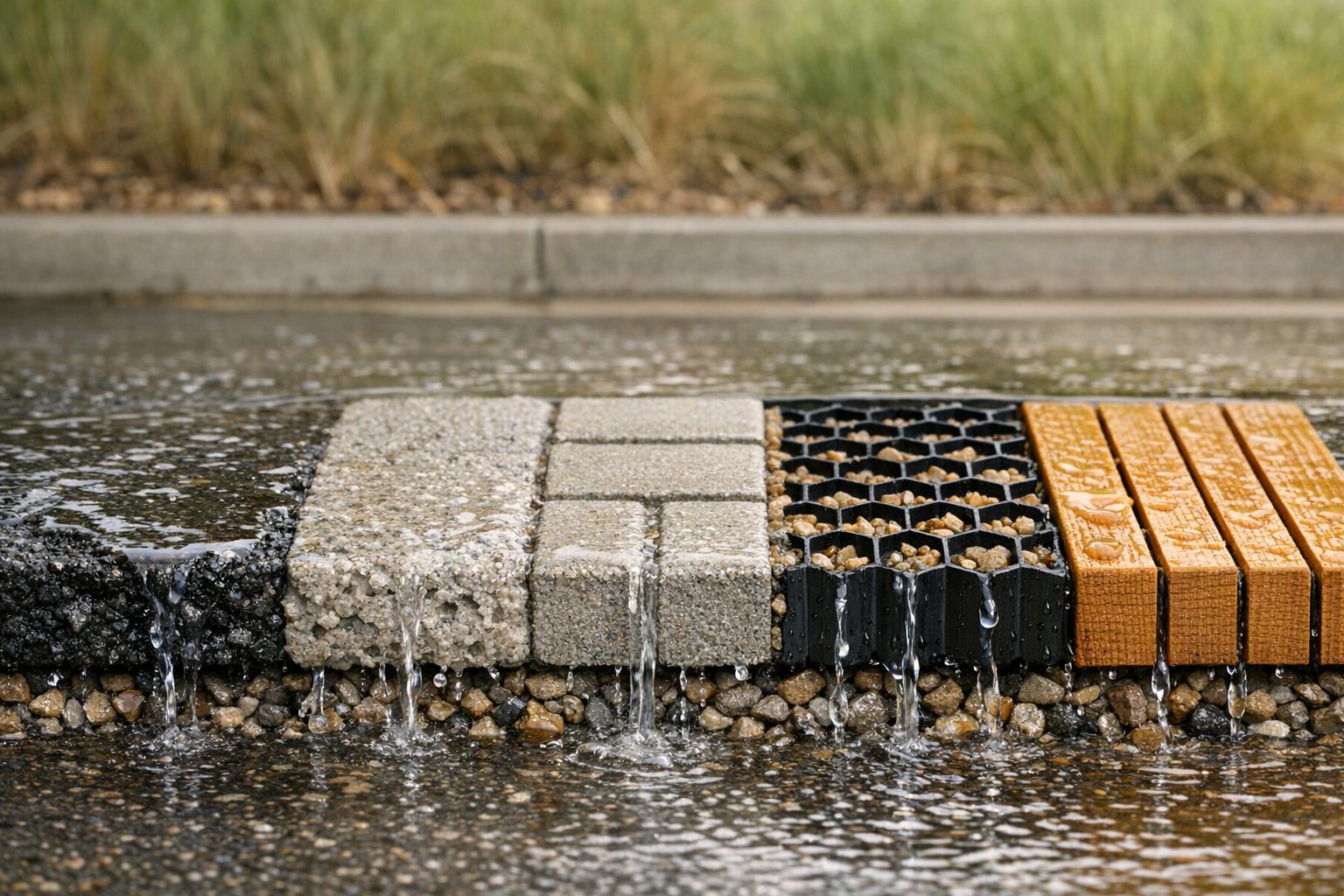
Want to manage stormwater effectively while improving your outdoor spaces? Permeable pavers are a smart solution. They allow water to seep into the ground, reducing runoff, filtering pollutants, and even preventing flooding. Here’s a breakdown of the top 5 materials for permeable pavers and how they can help:
- Porous Asphalt: Looks like regular asphalt but allows water to pass through. Works well for driveways and parking lots but requires regular vacuuming to prevent clogging.
- Pervious Concrete: Offers high infiltration rates and is great for low-speed areas like patios and walkways. Needs proper installation and maintenance to avoid sediment buildup.
- Permeable Interlocking Concrete Pavement (PICP): Concrete pavers with gaps for water flow. Ideal for residential and light-traffic areas with up to 90% runoff reduction.
- Plastic Permeable Pavers: Lightweight grids made from recycled plastic. Perfect for low-traffic areas like overflow parking and driveways.
- Wood Permeable Pavers: Combine a natural aesthetic with functionality, suitable for patios and garden paths.
Each material has unique strengths, from reducing road salt usage in winter to recharging groundwater supplies. Keep reading to find the best option for your property and learn about key installation tips.
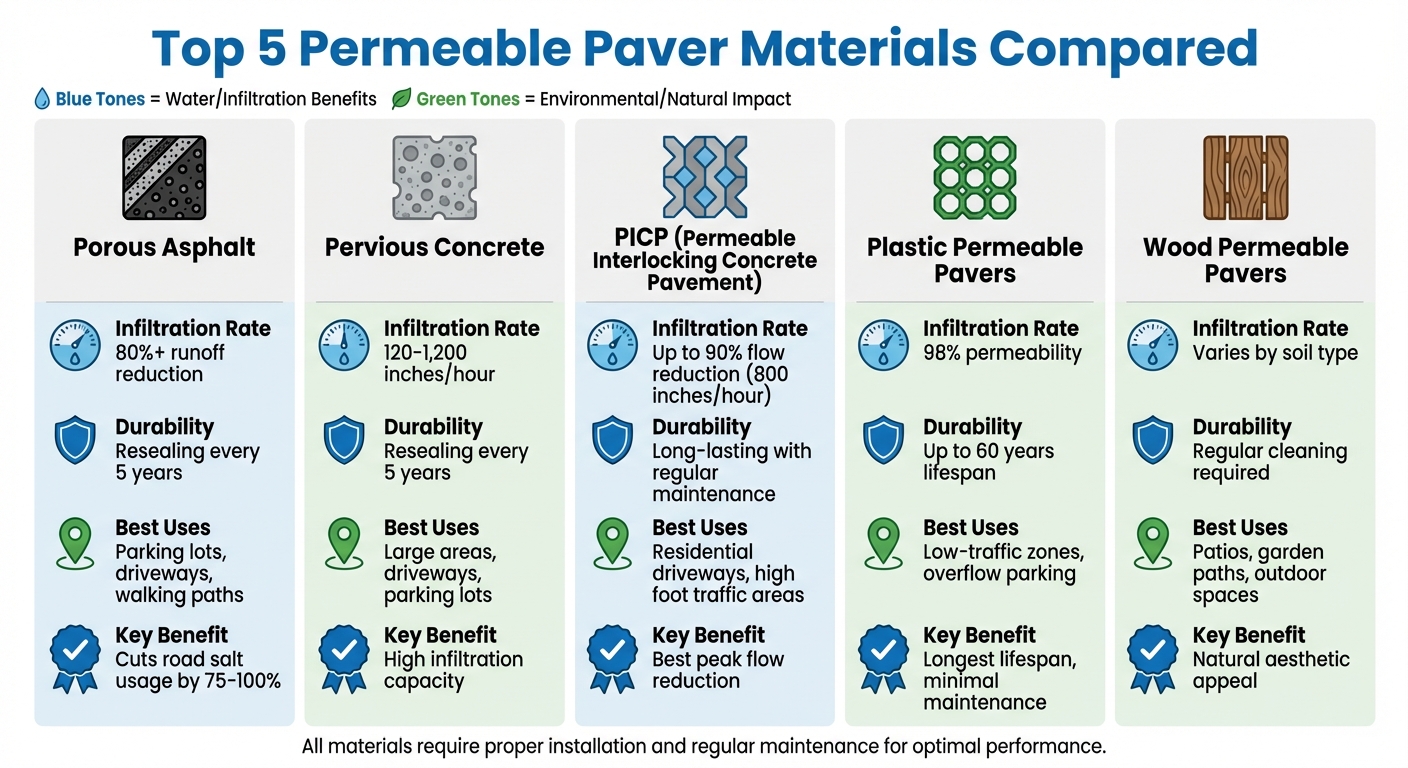
Permeable Paver Materials Comparison: Infiltration Rates, Durability & Best Uses
Stormwater BMP: Permeable Pavement – Installation
sbb-itb-843f8be
1. Porous Asphalt
Porous asphalt looks like traditional asphalt but is designed with interconnected voids to manage water flow. By leaving out fine aggregates, it creates spaces that allow rainwater to pass through into a stone reservoir below. From there, the water gradually seeps into the soil, making it a practical solution for stormwater management on residential properties.
Infiltration Rate
With a well-designed stone reservoir, porous asphalt systems can reduce surface runoff by 80% or more [2]. While Permeable Interlocking Concrete Pavement (PICP) can sometimes hit flow reductions of up to 90%, porous asphalt still delivers excellent results in most residential settings. However, regular upkeep is critical. Vacuuming the surface at least twice a year prevents sediment and debris from clogging the voids, ensuring the system continues to function effectively.
Durability
The main issue with porous asphalt isn’t that the material wears out – it’s that the voids can get clogged over time. Dirt, sand, and other debris can block water from passing through, so regular cleaning is essential. As noted earlier, vacuuming helps maintain its ability to handle water flow. For added durability, it’s best to install porous asphalt on slopes no steeper than 5% to avoid shifting. Strength can also be improved by adding polymers or admixtures, making it suitable for areas with heavier traffic. This balance of durability and maintenance makes it a reliable choice for many residential applications.
Ideal Applications
With proper care, porous asphalt works well in a variety of settings, including driveways, walking paths, parking lots, and low-traffic residential roads. It’s especially useful in colder climates like Maryland, where research from the University of New Hampshire Stormwater Center highlights its ability to manage snowmelt effectively and reduce the need for road salt [1]. Beyond homes, it’s a good option for overflow parking, alleys, and recreational areas where standing water might otherwise be an issue.
Environmental Impact
Porous asphalt supports stormwater management while also helping to cool outdoor spaces. By encouraging water evaporation, it reduces the urban heat island effect. Additionally, it naturally filters out contaminants before they reach groundwater. In dry regions, such as parts of Southern California, porous asphalt has been tested for its ability to recharge groundwater supplies and reduce pollutants. Some systems even allow the captured water to be stored underground, where it can be used for fire suppression in areas with limited water access [2].
2. Pervious Concrete
Pervious concrete is designed with reduced fine aggregates, creating voids that allow rainwater to flow through the surface into an underlying stone reservoir. This design helps water gradually seep into the ground, making it an excellent choice for managing stormwater on residential properties.
Infiltration Rate
The infiltration rate of pervious concrete depends on its mix design and porosity. According to ACI Committee 522, rates can range from 120 to 1,200 inches per hour [2]. This flexibility means the mix can be adjusted for specific uses. For example, lighter mixes are ideal for walkways and patios, while polymer-enhanced mixes can handle the demands of driveways. This high infiltration capacity ensures durability when installed correctly.
Durability
Proper installation is key to the longevity of pervious concrete. A 3-foot soil layer beneath the stone reservoir and slopes limited to 5% are recommended to prevent shifting and maintain performance [2]. For areas with heavier loads, polymers or admixtures can be added to increase strength without compromising water permeability. Regular maintenance, such as cleaning, is crucial to avoid clogging and ensure long-term functionality.
Ideal Applications
Pervious concrete is most effective in low-volume, low-speed areas like residential driveways, walking paths, parking stalls, and alleys. It’s particularly beneficial in cold climates, as it reduces the need for road salt and manages snowmelt efficiently [1]. In drier regions, it has been tested for its ability to recharge groundwater and reduce pollutants [2]. However, it’s less suitable for high-traffic areas or locations prone to windborne debris unless a strict cleaning routine is followed. For safety, installations should be placed 50 to 100 feet away from water supply wells [2].
Environmental Impact
Pervious concrete offers more than just structural advantages – it provides environmental benefits as well. By filtering contaminants, it helps improve groundwater quality in community basins. In some residential retrofits, permeable surfaces like this have boosted groundwater recharge by over 50 acre-feet annually [2]. Additionally, in regions with limited water access, the stormwater collected in the stone reservoir can even be used for fire suppression [2]. This makes pervious concrete a practical, eco-friendly choice for stormwater management in Maryland residential projects.
3. Permeable Interlocking Concrete Pavement (PICP)
Permeable Interlocking Concrete Pavement (PICP) stands out as an effective solution for managing stormwater. This system uses concrete pavers with carefully designed gaps that channel water into a gravel reservoir below. The gravel layer not only stores water but also filters it, allowing rain and snowmelt to seep into the soil instead of overwhelming storm drains [2].
Infiltration Rate
One of PICP’s key strengths is its ability to control stormwater flow. According to the Interlocking Concrete Pavement Institute (ICPI), these systems can reduce peak water flow by as much as 90% [2]. The combination of paver gaps and the gravel reservoir creates a natural filtration system that helps remove pollutants, improving groundwater quality [2].
Durability
The lifespan of a PICP system largely depends on proper installation and consistent upkeep. For best results, install the system on slopes no steeper than 5% and ensure at least a 3-foot clearance from bedrock. Maintenance is equally important – vacuuming the surface twice a year helps prevent debris from clogging the gaps, which could limit water infiltration [2]. However, areas prone to heavy debris or windborne dust may require more frequent cleaning to maintain functionality.
Ideal Applications
PICP works well in spaces designed for pedestrians and light vehicle use. Common applications include residential driveways, walkways, patios, alleys, parking stalls, and low-traffic residential streets [2]. To safeguard water quality, maintain a horizontal buffer of at least 50 feet – preferably 100 feet – between PICP installations and water supply wells [2].
Environmental Impact
PICP offers environmental benefits beyond stormwater control. By promoting evaporation, it helps lower surrounding temperatures and combats the urban heat island effect [2]. Its improved drainage capabilities can also reduce the need for road salt during icy winters [1]. Additionally, in emergencies, the stored stormwater within the gravel reservoir can serve as a water source for fire suppression [2]. For homeowners in Maryland, Pro Landscapes MD provides expert PICP installation services, offering both eco-friendly paver solutions and advanced drainage systems tailored to central Maryland’s needs.
4. Plastic Permeable Pavers
Plastic permeable pavers, crafted from recycled HDPE, are designed as interlocking grids that stabilize gravel or soil while allowing water to infiltrate the surface completely [3]. Thanks to the high strength-to-weight ratio of this recycled material, these pavers are lightweight for easy handling during installation, yet sturdy enough to perform effectively.
Infiltration Rate
These pavers ensure full permeability across their entire surface. Water flows directly through the open cells into a carefully prepared stone base, where it filters into the ground. This process not only helps replenish groundwater supplies but also prevents stormwater runoff from overwhelming drainage systems.
Durability
Plastic pavers are built to last. They resist cracking, chipping, and damage from heavy loads or temperature fluctuations. To maximize their lifespan, proper installation is key. This includes excavating to a depth that accommodates the paver height and a 4–8 inch base of clean, crushed stone. Adding a porous landscape fabric between the native soil and stone base helps prevent soil migration. Keeping the fill material level with the grid surface protects the paver ribs from wear caused by tires.
Ideal Applications
These pavers are perfect for residential driveways, walkways, parking areas, and overflow parking spaces. Their lightweight design makes installation straightforward, and individual sections can be replaced as needed without disturbing the surrounding area. When filled and installed correctly, they create a stable, firm surface that complies with ADA guidelines for wheelchair accessibility. Additionally, their porous structure helps absorb sound waves, which can reduce traffic noise in residential settings.
Environmental Impact
Plastic permeable pavers support eco-friendly initiatives by contributing to LEED certification points under the "Sustainable Sites" and "Water Efficiency" categories [3]. By repurposing plastic waste and filtering pollutants before water enters local waterways, these systems promote reduced landfill waste and better water quality. Their enhanced drainage capabilities can also minimize the need for road salt during winter months [1].
Pro Landscapes MD provides expert hardscaping services across central Maryland. Up next, we’ll take a look at wood permeable pavers, a solution that combines natural beauty with effective stormwater management.
5. Wood Permeable Pavers
Wood permeable pavers, often made from wood composites in an interlocking grid design, combine a natural look with the functionality of directing stormwater into an underlying stone reservoir.
Infiltration Rate
These pavers guide stormwater through intentional gaps, channeling it into a stone reservoir beneath the surface. The rate at which water infiltrates depends largely on the soil type. For example, sandy soils absorb water much quicker than clay-based soils. This process not only reduces surface runoff but also replenishes underground aquifers [4].
Durability
Wood pavers crafted from wood-look porcelain offer greater durability compared to traditional wood composites. The kiln-fired porcelain material resists issues like cracking, chipping, and general wear. However, like all permeable pavement systems, their longevity can be impacted by sediment clogging the surface over time. Regular vacuuming helps maintain water flow and extends the system’s lifespan [5] [6].
Ideal Applications
Wood permeable pavers work beautifully in residential spaces like patios, garden paths, and outdoor living areas. They provide the warmth and charm of natural wood without the maintenance challenges of traditional lumber. These pavers are an excellent choice for enhancing outdoor spaces where a soft, organic aesthetic complements the surrounding environment.
Environmental Impact
These pavers play a key role in sustainable water management by reducing runoff and recharging groundwater. They allow precipitation to filter into the ground gradually, cutting down on peak discharge rates that can overwhelm stormwater systems [2] [7]. Their permeable design also supports pollutant filtration by trapping sediments and encouraging natural chemical and biological processes in the spaces between the materials. By enabling water to soak into the soil rather than flow into streets and drains, wood permeable pavers lessen the strain on municipal stormwater systems while helping maintain groundwater levels.
Material Comparison Table
Below is a detailed comparison of materials commonly used for stormwater control in residential areas. Each material offers unique benefits and challenges, making it essential to choose based on specific needs.
| Material | Infiltration Rate | Durability | Best Uses | Environmental Impact |
|---|---|---|---|---|
| Porous Asphalt | 80%+ runoff reduction [2] | Needs resealing about every 5 years [10] | Parking lots, walking paths, recreational surfaces | Cuts road salt usage by 75–100% [7]; aids groundwater recharge |
| Pervious Concrete | 120–1,200 inches per hour [2]; drops to 5.1 inches per hour with sediment [8] | Requires resealing roughly every 5 years [10] | Large areas, driveways, parking lots | Reduces need for detention ponds due to high infiltration [2][7] |
| Permeable Interlocking Concrete Pavement (PICP) | 800 inches per hour in stable areas; drops to 31 inches per hour near disturbed soil [8] | Durable with regular resealing and inspections [10] | Residential and commercial zones, high foot traffic areas | Can reduce peak flow by up to 90% [2]; effectively removes sediments and nutrients [4] |
| Plastic Permeable Pavers | 98% permeability rate [10] | Can last up to 60 years with minimal maintenance [10] | Low-traffic zones, overflow parking, emergency lanes | Offers biological pollutant treatment when vegetation-filled [7]; eliminates routine 5-year resurfacing needs [10] |
| Wood Permeable Pavers | Infiltration varies by soil type (better in sandy soils) | Requires regular cleaning to avoid sediment buildup | Patios, garden paths, outdoor spaces | Naturally filters pollutants and helps recharge groundwater [2][7] |
This table highlights how each material balances performance with maintenance. Plastic permeable pavers excel in durability, while PICP performs exceptionally well with infiltration rates of 800 inches per hour in stable conditions, though rates can drop significantly near disturbed soils [8]. Across all materials, regular upkeep – like removing 0.5–0.75 inches of accumulated sediment – can dramatically improve infiltration efficiency [8].
Research emphasizes the importance of placement and care:
"This study showed that [8] the location of permeable pavements and [9] maintenance of permeable pavements were critical to maintaining high surface infiltration rates." – Eban Zachary Bean, North Carolina State University [8]
For winter conditions, porous asphalt stands out as an eco-friendly option, requiring only 0–25% of the salt typically used on traditional surfaces [7]. This makes it a smart choice for areas with harsh winters.
Conclusion
Permeable pavers offer Maryland homeowners a practical way to manage stormwater effectively. They help reduce runoff, filter out pollutants, recharge groundwater, and even minimize localized flooding. When installed and maintained properly, these systems can last between 20 and 30 years [4], making them a solid long-term investment. They address both environmental challenges and property concerns, all while preserving property value.
Choosing the right material is a key part of the process. The selection should consider specific site conditions like soil type, slope, traffic levels, and maintenance needs. For instance, porous asphalt works well in colder climates because it requires less salt, permeable interlocking concrete pavers (PICP) are perfect for high-traffic areas with runoff reductions up to 90% [2], and plastic pavers are ideal for low-traffic spaces.
Equally important is ensuring the installation is done correctly. Professional installation is crucial to meet Maryland’s environmental regulations and avoid expensive repairs down the line. Properly layering materials like the stone reservoir, filter fabric, and grading is critical for the system to function as intended.
If you’re in Howard, Montgomery, Carroll, Frederick, Prince George’s, or Baltimore Counties, Pro Landscapes MD can help. They specialize in expert permeable paver installation and stormwater management. Visit prolandscapesmd.com to schedule your consultation today.
FAQs
Which permeable paver is best for my soil type?
The right permeable paver largely depends on the hydrologic soil group (HSG) of your site. If your soil falls into HSG A or B, you’re in luck – these soil types are great for permeable pavements because they allow water to infiltrate efficiently. For well-drained soils, permeable interlocking concrete pavers are a solid choice, while pervious concrete works well for larger areas. However, if your soil has poor drainage, additional measures like subsurface drainage systems may be necessary. It’s always a good idea to consult a professional to figure out the best option for your specific project.
How do I prevent permeable pavers from clogging?
To keep permeable pavers functioning properly, regular maintenance is essential. Start by clearing away debris such as leaves, grass clippings, and sediment to ensure the pores remain open. Plan to vacuum sweep the surface once or twice a year to prevent buildup.
After heavy storms, take a moment to check for proper drainage and clean any areas that might be blocked. In winter, skip using sand for ice control – it can clog the pavers. Instead, opt for gravel. When clearing snow, use a rubber-tipped shovel or a raised plow blade to avoid damaging the surface. These simple steps can go a long way in preserving your pavers.
Can permeable pavers handle freeze-thaw and snowmelt?
Permeable pavers are built to handle freeze-thaw cycles effectively – if they’re designed and installed correctly. Materials like porous asphalt are known for their ability to resist freezing temperatures and exposure to road salt. Similarly, interlocking concrete pavers, when properly constructed, prove to be a reliable option for colder climates. The key to their durability lies in proper installation, which ensures they can withstand these challenging conditions.
Chat with Us