









- bhavya gada
- No Comments
An eco-friendly patio can last longer and require less upkeep when built with durable materials like permeable pavers, natural stone, or flagstone. These materials help manage water naturally, reduce runoff, and minimize environmental impact. Regular maintenance, such as cleaning with natural solutions, addressing drainage issues, and sealing surfaces, ensures your patio remains in great condition for years.
Key takeaways:
- Materials: Use permeable pavers, natural stone, or recycled composites for durability.
- Cleaning: Opt for natural cleaners (e.g., vinegar and water) and avoid harsh chemicals.
- Drainage: Install French drains or rain gardens to handle water effectively.
- Landscaping: Use native plants and mulch to protect patio edges and reduce erosion.
- Repairs: Choose recycled or locally sourced materials for eco-friendly fixes.
Consistent care, seasonal inspections, and sustainable upgrades are essential to keeping your patio functional and environmentally friendly over time.
How To Clean Stone Patios – Environmentally friendly
sbb-itb-843f8be
Regular Cleaning and Maintenance
Keeping your eco-friendly patio in great condition doesn’t require a lot of effort – just a bit of consistent care. This not only helps maintain your investment but also aligns with environmentally friendly practices. Shane Chapman from The Ultimate Deck Shop explains:
Eco-friendly patios require less maintenance over time, thanks to the durability and quality of materials used, like recycled plastic composites or natural stone [3].
Below are some practical and sustainable ways to care for your patio.
Natural Cleaning Agents
Skip the harsh chemicals and opt for natural solutions. A simple mix of 50% white vinegar and 50% water works wonders for dissolving surface grime on natural stone or pavers, all while being safe for plants and soil [6]. These non-toxic options are especially beneficial for permeable surfaces, as they help protect groundwater.
Low-Impact Cleaning Methods
For regular cleaning, use a garden hose with a narrow nozzle and combine it with manual scrubbing using a deck brush and biodegradable soap. This method efficiently removes dirt while conserving water and protecting surface quality [6].
- Patios in shady areas should be cleaned every 3–6 months to prevent algae buildup.
- Sheltered patios may only need deep cleaning every 1–2 years [6].
Adjust your cleaning technique based on the material. Softer surfaces like brick or soft stone require gentler pressure, while concrete or block paving can handle more force. This prevents unnecessary wear and tear.
Annual Cleaning and Sealing
Plan for a thorough spring cleaning to get rid of winter buildup. According to the World Academy of Science, Engineering and Technology, deep cleaning every 6 to 12 months is ideal. If you spot white mold or mildew, consider cleaning more frequently [6].
After cleaning, reseal your patio every 2 to 3 years to guard against UV rays and water damage. Some premium sealants can even last up to five years [6]. Make sure the surface is completely clean and dry before applying a sealant. For tiled patios, remember to reseal the grout every 3 to 6 years to keep water from seeping into the base layer.
These simple steps will keep your patio looking great and functioning well for years to come.
Material-Specific Care Tips
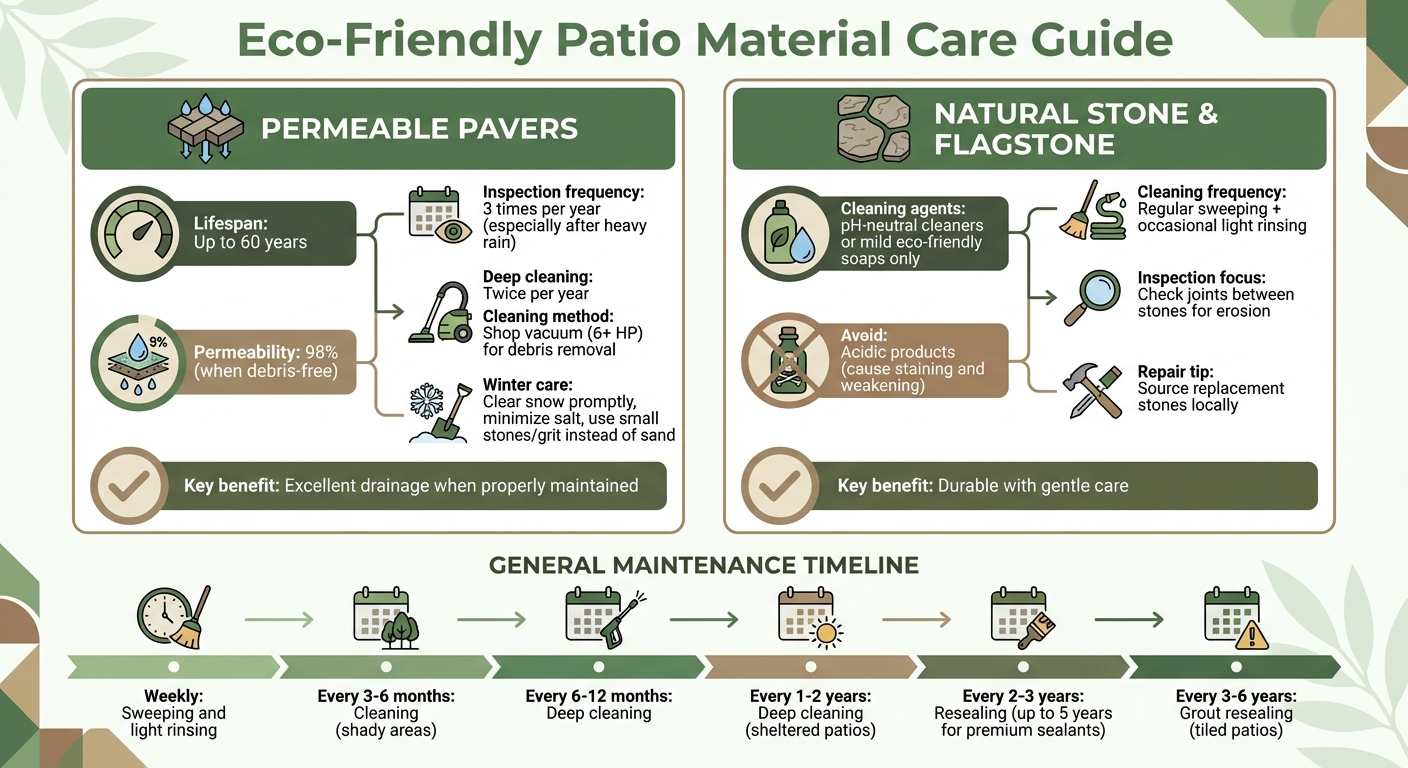
Eco-Friendly Patio Material Maintenance Guide and Care Schedule
Eco-friendly patio materials each have their own maintenance needs. What works for one material might not suit another – like how cleaning techniques for permeable pavers could damage natural stone. To keep your patio in top shape, it’s important to understand the specific care each material requires.
Permeable Paver Maintenance
With proper care, high-quality permeable paver systems can last up to 60 years and maintain up to 98% permeability when free of debris [7]. Stick to basic yard maintenance routines to remove surface debris, and inspect the patio at least three times a year – especially after heavy rains – to check for pooling water, which might indicate blockages below the surface.
For deeper cleaning, aim for twice a year. A shop vacuum with at least 6 horsepower works well to clear debris from between pavers. For compacted material, gently loosen it before vacuuming. If your system includes gravel-filled plastic grids, a garden hose with a power-washing attachment can help remove stubborn dirt. In winter, clear snow promptly and minimize salt use to avoid damaging the surface. Instead of sand, use small stones or grit for traction to prevent clogging the system [7].
While permeable pavers thrive with thorough debris removal, natural stone requires a softer touch to maintain its appearance and durability.
Natural Stone and Flagstone Care
Natural stone and flagstone need a more delicate cleaning routine compared to synthetic materials. Stick to pH-neutral cleaners or mild, eco-friendly soaps to avoid staining or weakening the stone, which acidic products can cause. Regular sweeping and occasional light rinsing with a hose help prevent organic buildup and stains. During seasonal inspections, pay attention to the joints between stones for signs of erosion. Addressing issues early keeps the structure intact.
If repairs are necessary, sourcing replacement stones locally is a smart move. It not only keeps the look consistent but also cuts down on transportation emissions, supporting more sustainable practices.
Eco-Friendly Upgrades for Longevity
Making thoughtful upgrades to your patio not only extends its lifespan but also reduces its environmental footprint. By managing water effectively, supporting local plant life, and using sustainable materials, you can protect your patio while contributing to a healthier environment. Let’s dive into methods for improving drainage, landscaping, and repairs.
Drainage and Water Management
Water can be a patio’s worst enemy. Without proper drainage, it can erode the foundation or lead to uneven settling. Installing features like French drains or dry riverbeds helps direct water away from the patio, safeguarding its structure. Pairing these systems with permeable surfaces allows rainwater to filter into the ground naturally, preventing pooling and runoff.
Rain gardens are another great option. Positioned near patio edges, they use native shrubs and perennials to capture and filter water, reducing pollution from runoff [1]. For smaller spaces, rain barrels or cisterns are excellent alternatives. These systems collect water from gutters, providing an eco-friendly irrigation source while keeping your patio foundation dry [1][5].
Eco-Friendly Landscaping Around Patios
The right landscaping can do more than just beautify your patio – it can actively protect it. Native plants, which are well-suited to local climates, grow deep roots that absorb excess water and stabilize soil, reducing erosion along patio edges [1][4]. Once established, these plants require little maintenance, cutting down on watering needs and eliminating the need for chemical fertilizers. Supporting native plants also has broader benefits, like helping address the alarming decline in the U.S. honey bee population, which has dropped by 50% over the past 75 years [1].
Adding mulch around your patio borders is another simple yet effective strategy. Mulch helps retain soil moisture, suppresses weeds, and enriches the soil as it decomposes [4]. This not only keeps the area around your patio healthy but also prevents weed growth that can damage pavers by causing them to crack or shift. Together, these landscaping efforts enhance both the appearance and durability of your patio.
Recycled Materials for Repairs
When it comes to repairs, opting for recycled materials is a smart way to maintain an eco-conscious approach. Using recycled aggregates like crushed concrete or asphalt for base repairs diverts waste from landfills while reducing the demand for new raw materials [9].
For surface repairs, composite materials made from recycled plastics and wood fibers are a durable choice. These materials resist decay, warping, and pest damage without the need for chemical treatments [3][8]. Plus, manufacturing these products uses 75% less energy compared to creating new plastic [8]. David Sorokovsky from Quantum Industrial Solutions highlights this advantage:
Advanced sustainable materials are designed to last longer, reducing the frequency of repairs and replacements [9].
Globally, countries like India and the Netherlands have demonstrated the durability of recycled plastics in infrastructure projects, such as road construction. These materials have shown greater resistance to temperature changes and require less maintenance over time [9].
For a seamless upgrade, Pro Landscapes MD offers expert solutions in drainage, landscaping, and sustainable repairs, ensuring your patio remains both durable and environmentally conscious.
Routine Prevention Strategies
Focusing on material-specific care and environmentally conscious upgrades is important, but routine prevention acts as your patio’s ultimate shield against long-term damage. These consistent efforts can significantly extend your patio’s lifespan and save you from expensive repairs down the road.
Weekly Sweeping and Rinsing
Make it a habit to sweep your patio weekly. Removing leaves, dirt, and other debris prevents moisture from building up, which can lead to stains and gradual deterioration. A quick sweep not only keeps your patio clean but also reduces the need for heavy-duty restoration later.
Follow up the sweeping with a light rinse to clear away any lingering dust and to keep the joints in permeable paver systems free from clogs. For an eco-friendly twist, consider using water collected in rain barrels or buckets placed under your downspouts [1][2]. This is especially important for permeable pavers, as debris in the joints can block drainage and reduce their effectiveness.
"Regular upkeep, like sweeping and occasional gentle washing, will keep your patio looking its best without the need for intensive maintenance work." – The Ultimate Deck Shop [3]
If you notice spills or stains, clean them immediately using biodegradable cleaning products. Natural solutions not only protect your patio materials but also help maintain the health of surrounding soil, avoiding the damage caused by harsh chemicals [3][2].
These straightforward weekly practices set the stage for more thorough seasonal evaluations.
Seasonal Inspections and Repairs
Beyond weekly maintenance, seasonal inspections are essential for spotting early signs of wear and tear. Spring is a particularly important time for this, as winter’s freeze-thaw cycles can cause heaving, cracking, or shifting in your patio’s surface [3]. Take a walk around your patio at the start of the season, checking for uneven stones, cracks, or soil erosion along the edges [1][3]. Addressing these issues early can save you from costly repairs later.
A simple water test can help you assess your patio’s drainage. Pour water on different sections of the surface – if it pools instead of draining through, it may be time to clean the joints or address the base layer [1]. Additionally, adjust smart irrigation systems or solar lighting to align with the season’s weather patterns [3]. Tighten any loose fasteners on composite decking and reseal natural stone to prevent small problems from escalating.
For expert guidance on maintaining and improving your eco-friendly patio, the team at Pro Landscapes MD is available to help keep your outdoor space both functional and beautiful.
Conclusion
Creating patios that last and align with eco-friendly principles hinges on smart practices and thoughtful care. Regular maintenance, attention to material-specific needs, and sustainable upgrades all play a role in extending the life of your outdoor space while minimizing environmental impact. For example, using natural cleaning products and gentle washing methods not only protects your patio materials but also prevents harmful chemicals from seeping into nearby soil and plants.
The choice of materials and how you care for them are equally important. Natural stones like sandstone and limestone are known for their durability and require less upkeep compared to synthetic options [10]. Permeable pavers, paired with gravel or sand bedding, help manage surface runoff and support groundwater recharge, which benefits both your patio’s longevity and the surrounding ecosystem [11]. When repairs are necessary, opting for reclaimed or locally sourced materials can significantly reduce environmental strain – recycled stone, for instance, can lower the environmental impact by up to 50% [10].
"Re-using materials has got to be the best way forward – there’s probably enough hard material already to provide for all our gardens." – Rebecca Matthews Joyce, RHS Principal Advisor on Environmental Policy [10]
It’s also worth noting that embodied carbon can account for a staggering 75% to 95% of greenhouse gas emissions in landscape architecture projects [10]. Every sustainable choice you make, whether it’s selecting certified timber or installing solar-powered lighting, contributes to reducing your patio’s carbon footprint while enhancing its longevity. Together, these practices ensure your outdoor space remains both stunning and environmentally conscious.
For expert advice on eco-friendly patio design and maintenance in central Maryland, consider reaching out to Pro Landscapes MD.
FAQs
Which patio material is best for my yard’s drainage?
The best materials for patio drainage include permeable pavers and natural stone. These options let water pass through easily, helping to prevent pooling and encouraging proper water runoff. Good drainage not only keeps your patio functional but also extends its lifespan.
How can I stop algae and mildew from coming back?
To keep algae and mildew from making a comeback on your patio, opt for a cleaning product specifically designed to tackle and inhibit their growth. Improving drainage and ensuring good airflow in damp, shaded spots can help reduce the conditions they thrive in. Additionally, regular upkeep with eco-friendly, non-toxic patio cleaners can keep your patio looking fresh while being gentle on the environment.
When should I add a French drain or rain garden?
If your yard often deals with water pooling or waterlogging, especially after heavy rain, installing a French drain can help redirect that excess water effectively. Another option is to create a rain garden, which not only helps manage stormwater runoff but also adds a touch of natural beauty while being environmentally friendly.
Chat with Us