









- bhavya gada
- No Comments
Maryland faces rising challenges from urbanization and climate change, with impervious surfaces increasing runoff and pollution in waterways like the Chesapeake Bay. Innovative stormwater retrofit solutions are addressing these issues, improving water management and pollution reduction in urban and residential areas. Here’s a quick overview of the most effective options:
- High-Rate Biofilters (HRBF): Compact systems ideal for urban areas, filtering 80-95% of pollutants like nitrogen and phosphorus.
- Bioretention Areas and Rain Gardens: Natural soil and plant-based systems reduce runoff by up to 65% and peak flow by 90%, while filtering key pollutants.
- Smart Pond Technology: Automated systems adjust water levels in real-time, improving pollutant removal by 70-90% and reducing flood risks.
- Algal Treatment Systems: Use algae to absorb dissolved nutrients, preventing harmful blooms and reducing nitrogen and phosphorus levels.
- Permeable Pavers: Replace traditional surfaces, allowing water to seep into the ground, reducing runoff, and improving water quality.
These technologies not only meet Maryland’s strict stormwater regulations but also help reduce long-term costs and improve local water systems. Below, we dive into how each solution works, their benefits, and real-world examples of their implementation.
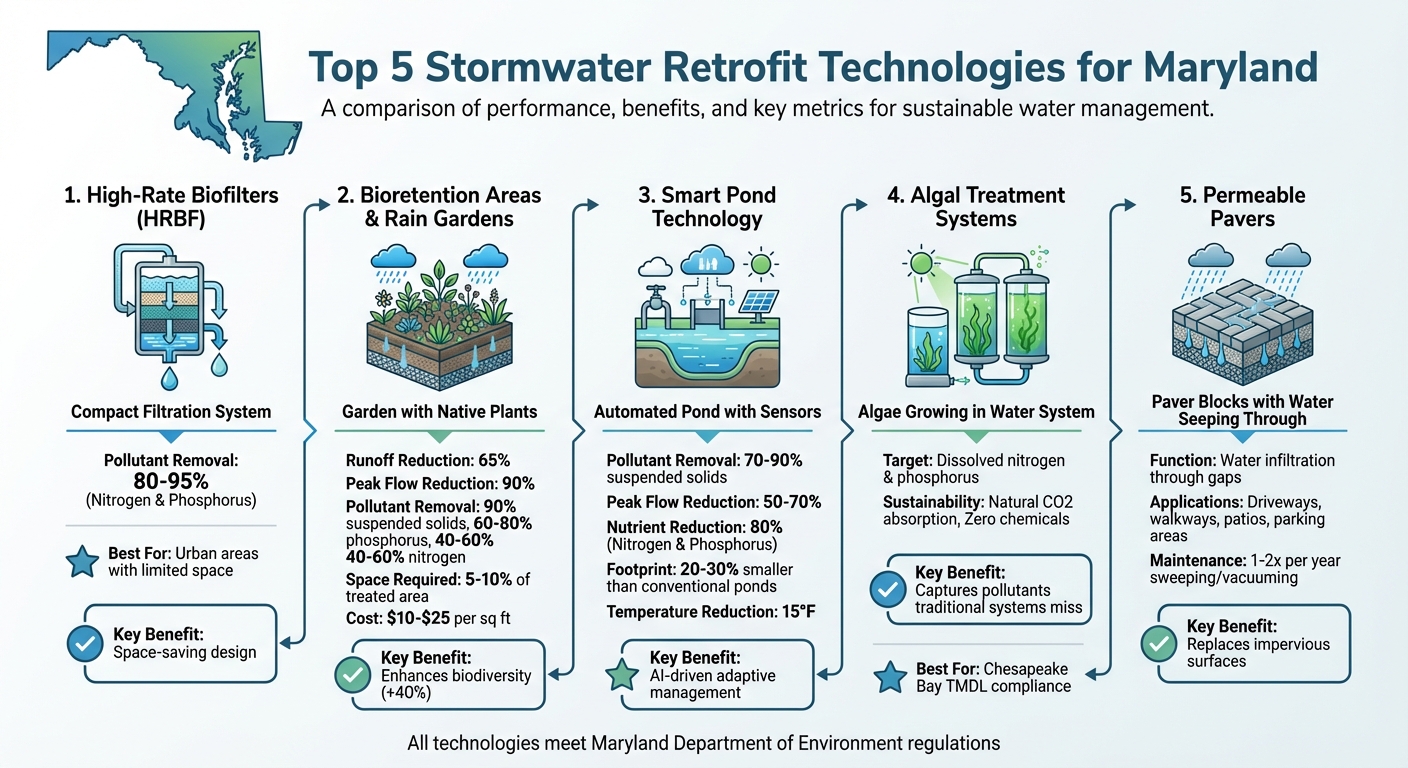
Maryland Stormwater Retrofit Technologies Comparison: Effectiveness and Benefits
Smart Ponds will Outthink Mother Nature
sbb-itb-843f8be
1. High-Rate Biofilters (HRBF)
Maryland is tackling increasing regulatory and environmental challenges, and HRBF systems are emerging as an efficient solution to manage stormwater runoff.
High-rate biofilters are compact systems that direct runoff through layers of filtering media. Their space-saving design makes them ideal for urban and residential areas where space is limited.
Effectiveness in Stormwater Runoff Reduction
HRBF systems filter stormwater through specialized media layers that trap pollutants like nitrogen and phosphorus. This process not only helps protect local watersheds but also plays a role in restoring the Chesapeake Bay. During heavy rains, these systems quickly treat large volumes of water, reducing the chances of overflow and pollution.
This efficiency makes HRBF systems a smart choice for areas where space and environmental compliance are both critical concerns.
Suitability for Urban and Residential Areas
The small size of HRBF systems is a major advantage in densely populated areas. They allow property owners to meet Maryland Department of the Environment regulations without sacrificing valuable land for development or other uses.
Environmental Benefits
By intercepting and removing pollutants before they reach waterways, HRBF systems address urban stormwater issues head-on. This approach helps improve water quality over time while requiring minimal upkeep.
Easy Installation and Maintenance
HRBF systems are built with modular, prefabricated components, making installation quick and minimally invasive. Ongoing maintenance involves routine inspections and occasional cleaning to ensure optimal performance. This straightforward upkeep aligns well with Maryland’s strict stormwater management standards.
2. Bioretention Areas and Rain Gardens
Bioretention areas and rain gardens are landscape features designed to manage stormwater runoff using a mix of soil, plants, and natural microbes. These systems help slow down water flow, filter pollutants through vegetation and specialized soil layers, and allow water to soak into the ground instead of overwhelming drainage systems. Typically, stormwater flows into a shallow depression planted with native species, where it passes through layers of mulch, planting soil, and drainage materials. An underdrain system handles any overflow during heavy storms.
In Maryland, these features are widely used to meet the requirements of the Stormwater Management Act. Their design provides measurable results in reducing runoff and filtering pollutants.
Effectiveness in Stormwater Runoff Reduction
Research from the University of Maryland shows that rain gardens can reduce runoff volume by 65% and peak flow by 90% in urban settings [10]. These systems are also effective at removing pollutants, filtering out up to 90% of total suspended solids, 60-80% of phosphorus, and 40-60% of nitrogen from stormwater [9].
For example, in 2018, Baltimore installed 20 bioretention rain gardens in the Gwynns Falls watershed. This project reduced annual runoff by 1.2 million gallons and cut total suspended solids by 82% (from 150 mg/L to 27 mg/L). Led by engineer Maria Quinlan from the Baltimore Department of Public Works, the effort involved excavating 1,500 square feet at each site, planting 5,000 native shrubs, and adding gravel underdrains. The results included a 45% reduction in phosphorus, contributing to Chesapeake Bay restoration goals.
Suitability for Urban or Residential Areas
These systems are particularly well-suited for urban and residential areas due to their small footprint. Rain gardens typically require just 5-10% of the treated impervious area, making them ideal for compact urban lots in places like Baltimore or for residential yards in areas like Bethesda or Ellicott City. Beyond their functional benefits, they integrate seamlessly into the landscape and can even enhance the aesthetic appeal of a property.
In 2021, Montgomery County installed a 0.5-acre bioretention basin at Paint Branch High School. This system captures 85% of the 2-year storm event (3.5 inches of rain) and removes 71% of total nitrogen. Managed by Dr. Emily Thompson, the project included soil amendments to a depth of 4 feet and the planting of 2,000 perennials. It now infiltrates 1.1 million gallons of water annually, improving the health of nearby streams.
Environmental Sustainability
Bioretention areas and rain gardens offer additional benefits beyond stormwater management. They recharge groundwater, create habitats for pollinators by incorporating native plants like switchgrass and inkberry holly, and help mitigate urban heat islands. Montgomery County’s retrofits have shown a 40% increase in biodiversity after installation, aligning with Maryland’s broader green infrastructure goals [6].
These systems also use 90% fewer chemicals compared to traditional retention ponds and contribute to carbon sequestration – up to 2 tons per acre annually through plant roots [6]. In Frederick County, bioretention projects filtered out 60% of nutrients, directly supporting Chesapeake Bay restoration efforts [5]. These features not only improve local ecosystems but also help meet Maryland’s regulatory stormwater targets.
Ease of Implementation and Maintenance
Installing a residential bioretention system typically takes 1–4 weeks and costs $10–$25 per square foot. Annual maintenance requires 2–4 hours of work and costs $500–$1,000 [7]. Maryland offers incentives, such as MDE grants, which can lower costs by 20-50%. Companies like Pro Landscapes MD simplify the process in Howard County by integrating these systems with other drainage solutions, such as French drains.
Maryland’s temperate climate also supports these systems, with the University of Maryland Extension reporting 95% survival rates for native plants with minimal care. For long-term performance, the Maryland Stormwater Design Manual recommends 3–5 feet of engineered soil depth. With these advantages, bioretention systems are becoming an essential component of stormwater retrofits, especially when implemented by experienced contractors.
3. Smart Pond Technology
Smart Pond Technology brings a modern twist to managing detention ponds by incorporating automation and real-time monitoring. These systems use sensors and automated controls to dynamically adjust water levels based on weather conditions and rainfall forecasts. Unlike traditional fixed outlet structures, smart ponds can regulate drawdown rates, allowing them to capture more pollutants during dry periods while creating additional storage capacity ahead of storms. As part of Maryland’s stormwater retrofit strategy, smart ponds build on the success of other methods like HRBF and rain gardens, adapting to changing rainfall patterns with precision.
Effectiveness in Stormwater Runoff Reduction
Smart ponds deliver impressive results compared to traditional systems. They can remove 70–90% of total suspended solids and reduce peak flows by 50–70%, outperforming conventional ponds by as much as 25% during 2-year storm events[1][2]. These systems are also highly effective at removing nutrients, with pilot projects in Prince George’s County achieving 80% reductions in nitrogen and phosphorus thanks to extended retention times[5]. This performance aligns with Maryland’s strict stormwater management regulations.
Their effectiveness shines during heavy rainfall. For example, Towson University in Baltimore County uses an adaptive pond system powered by AI-driven predictive draining to manage 1.5 inches of rain per hour[3]. With Maryland experiencing more intense storms, the reliability of these systems is becoming increasingly important.
Suitability for Urban or Residential Areas
Smart ponds are particularly well-suited to urban and residential areas where space is often limited. These systems require a 20–30% smaller footprint than conventional ponds by optimizing storage efficiency through automated controls[4]. A standout example is the Columbia Gateway retrofit in Howard County, where smart ponds equipped with IoT sensors manage runoff from 10 acres of impervious surfaces while reducing flood risks by 40%[3]. This project received approval from the Maryland Department of the Environment (MDE), showing how effectively smart ponds can integrate into commercial developments.
Residential neighborhoods also benefit from these compact systems. In areas like Clarksville, smart ponds are incorporated into community spaces, meeting Maryland’s 2022 Stormwater Management Guidelines for developments with densities over 0.2 units per acre[4]. Their smaller size makes them ideal for suburban areas like Bethesda and Ellicott City, where space is tight but stormwater regulations remain rigorous.
Environmental Sustainability
Smart ponds contribute to broader environmental goals beyond managing stormwater. By varying water levels, they create favorable conditions for wetland vegetation and enhance habitat diversity. They also tackle thermal pollution, a key issue for Chesapeake Bay tributaries. For instance, installations in Prince George’s County have reduced water temperatures by 15°F before discharge[5]. This temperature control and habitat improvement support ongoing Chesapeake Bay restoration efforts.
Experts from the Chesapeake Stormwater Network highlight smart ponds’ "adaptive management in variable climates", emphasizing their 50% greater resilience to intense storms compared to static systems.
The ability to adapt to shifting weather patterns makes smart ponds a critical tool as Maryland faces evolving precipitation trends.
Ease of Implementation and Maintenance
Smart pond retrofits are not only effective but also relatively easy to implement. Upgrading an existing pond with smart technology typically takes 4–6 weeks. The process involves adding modular sensor kits and automated gates to existing infrastructure. While upfront costs are 15–20% higher, lifecycle savings can reach 30%[6]. Annual maintenance costs range from $2,000 to $5,000 per acre, which is often lower than conventional ponds due to remote monitoring apps that reduce the need for frequent site visits[7].
Maryland’s MDE requires bi-annual inspections, as seen in Frederick County installations[7]. Modern features like self-cleaning sensors address common maintenance issues, such as fouling. Companies like Pro Landscapes MD are actively implementing these systems in Howard and Montgomery Counties, integrating them with drainage grading and other stormwater solutions[6]. In Carroll County, retrofitted smart ponds have achieved zero non-compliance in post-installation audits, meeting MDE’s 2020 Enhanced BMP criteria[8].
4. Algal Treatment Systems
Algal Turf Scrubbers (ATS) are a standout example of algal treatment systems, using photosynthesis to capture dissolved nitrogen and phosphorus – pollutants that traditional sediment traps often miss. These systems play a crucial role in helping Maryland meet Chesapeake Bay TMDL requirements.
Effectiveness in Stormwater Runoff Reduction
One of the key strengths of algal systems is their ability to target dissolved nutrients that other stormwater technologies might overlook. While many approaches focus on removing sediment-bound pollutants, algal systems excel at extracting dissolved nitrogen and phosphorus. Through photosynthesis, algae absorb these nutrients, reducing their levels in the water and addressing a critical gap in Maryland’s stormwater management efforts. This process not only prevents harmful algal blooms but also supports long-term, environmentally responsible water management.
Environmental Sustainability
Algal treatment systems contribute to Maryland’s environmental goals by reducing reliance on chemicals and capturing CO2 naturally. According to the Maryland Environmental Policy Act (MEPA), sustainability involves minimizing harm to natural resources and building resilience to climate change. These systems align perfectly with these principles, as they use a biological process that eliminates the need for chemical additives. Additionally, because they operate through photosynthesis, they absorb carbon dioxide, offering a dual benefit when assessing the greenhouse gas impact of stormwater projects.
Ease of Implementation and Maintenance
To implement algal treatment systems, it’s essential to consider factors like sunlight availability, space, and existing infrastructure. In densely populated areas, such as Leisure World in Montgomery County, retrofitting requires careful planning to balance performance with practical concerns like structural stability and sediment accumulation. Regular harvesting of algae is necessary to maintain system efficiency, with schedules adjusted based on seasonal growth patterns.
5. Permeable Pavers and Porous Surfaces
Permeable pavers are a smart way to manage stormwater in Maryland. Instead of letting water rush off into drains, these pavers allow it to seep through small gaps, filtering into the ground. They’re recognized as a Best Management Practice (BMP) for watershed protection and play a key role in efforts to improve water quality in the Chesapeake Bay.
How They Reduce Stormwater Runoff
Permeable pavers direct water into a gravel reservoir beneath the surface. This reservoir temporarily holds the water, allowing it to slowly soak into Maryland’s soils or be redirected through an underdrain system. Along the way, the water is naturally filtered as it passes through the layers, removing pollutants before they can contaminate nearby waterways. This not only reduces the amount of runoff but also improves water quality.
Perfect for Urban and Residential Areas
These pavers are versatile enough to work in both urban and residential settings across Maryland. Whether it’s a driveway, walkway, patio, or parking area, permeable pavers replace traditional surfaces that typically block water absorption. In densely developed areas like Montgomery County or Howard County, they help property owners meet stormwater management requirements while still maintaining functional and visually appealing outdoor spaces.
Installation and Maintenance Made Simple
Installing permeable pavers takes some preparation, including excavation, laying a gravel base, and precise grading to ensure proper water flow and structural stability. Professional installation is crucial to get it right. Once installed, maintenance is straightforward: occasional sweeping or vacuuming – usually once or twice a year – keeps sediment from clogging the gaps between pavers. Companies like Pro Landscapes MD specialize in installing these systems and offer complete stormwater management solutions. This approach aligns with Maryland’s broader stormwater retrofit strategies, ensuring long-lasting benefits for the environment and local communities.
Working with Experienced Contractors
Partnering with seasoned professionals is key to ensuring stormwater retrofits are installed correctly and meet Maryland’s rigorous safety and performance standards. Experienced contractors bring a trained eye to detect issues like dam embankment failures and sediment buildup – problems that property owners might easily miss [11]. Their expertise is especially valuable when tackling the complexities of modern stormwater projects.
Take the upcoming Leisure World Stormwater Pond Retrofit Project as an example. Scheduled for construction in Spring 2025, this $800,000 initiative by the Montgomery County Department of Environmental Protection highlights the importance of professional execution. Originally built in 1982, the pond will undergo significant upgrades, including sediment removal, replacing an outdated corrugated metal spillway with a 48-inch concrete pipe, and installing a new concrete riser structure. These improvements aim to treat 12.3 acres of impervious surfaces within a 22.5-acre drainage area, helping to protect the Northwest Branch watershed [11]. Projects like this emphasize the need for durable materials and skilled installation.
Experienced contractors play a critical role in ensuring the long-term stability of stormwater systems. By replacing failing components with durable upgrades like concrete structures, they address Maryland’s stormwater challenges head-on. Their expertise also helps manage large impervious areas more effectively. Early inspections are another key benefit, helping to prevent emergencies and avoid costly repairs. For instance, a 2020 inspection in Montgomery County uncovered dam embankment issues that required immediate temporary fixes, followed by a full retrofit [11]. Regular assessments like these are essential to catch potential problems before they escalate.
For property owners in central Maryland, Pro Landscapes MD offers expert stormwater system installations across Howard, Montgomery, Carroll, Frederick, Prince George’s, and Baltimore Counties. Combining technical expertise with practical landscaping skills, they deliver systems that are not only reliable but also enhance the visual appeal of properties.
Conclusion
Maryland property owners now have access to effective stormwater retrofit technologies that can deliver both environmental and financial benefits. Solutions like bioretention cells, permeable pavers, and rain gardens not only help filter out nutrients, metals, and sediments before they reach waterways, but they also support compliance with state regulations and reduce stormwater utility fees.
The financial advantages are clear. Take the Somerset Community in Prince George’s County as an example. Back in 1995, they incorporated bioretention cells and shallow swales across their 60-acre, 199-home development. This approach saved $300,000 in infrastructure costs compared to traditional detention ponds. Even better, by reclaiming land that would have been used for large ponds, they created six additional lots, generating $240,000 in revenue. Altogether, the project saved $916,382 – about $4,600 per lot. Research also shows that Low Impact Development (LID) designs can reduce construction costs by 20% compared to conventional methods [12].
These technologies also simplify property management. Features like rain gardens and permeable surfaces eliminate the need for large, fenced detention ponds, freeing up space for other uses like recreation or further development. Bioretention cells are designed to drain within 24 hours, which helps prevent standing water and mosquito breeding. Maintenance is minimal, involving basic tasks like pruning plants or cleaning porous pavement [12].
For property owners in central Maryland looking to adopt these solutions, Pro Landscapes MD provides installation services across Howard, Montgomery, Carroll, Frederick, Prince George’s, and Baltimore Counties. Their expertise combines stormwater management with landscaping, ensuring compliance with Maryland’s regulations while enhancing property value.
FAQs
Which stormwater retrofit is best for my site?
The ideal stormwater retrofit hinges on factors like your site’s location, terrain, and specific stormwater management objectives. For flat areas close to impervious surfaces, options like rain gardens or bioretention areas are effective at filtering and slowing down runoff. On the other hand, larger sites – such as stormwater ponds – might require structural updates, including riser replacements or spillway enhancements. To determine the best approach for your property, it’s wise to consult with stormwater experts who can tailor solutions to your needs.
Do stormwater retrofits reduce utility fees in Maryland?
The information provided doesn’t clarify if stormwater retrofits lead to a direct reduction in stormwater utility fees in Maryland. To get accurate details, it’s a good idea to check with local regulations or reach out to your utility provider.
What maintenance do rain gardens, smart ponds, and permeable pavers need?
Rain gardens, smart ponds, and permeable pavers need consistent care to work efficiently and stay in good condition over time. Essential tasks include clearing out sediment, maintaining plant health, and checking structural elements to fix any problems early. Keeping up with these efforts ensures these systems continue to handle stormwater effectively while preserving their visual appeal and environmental advantages.
Chat with Us