









- bhavya gada
- No Comments
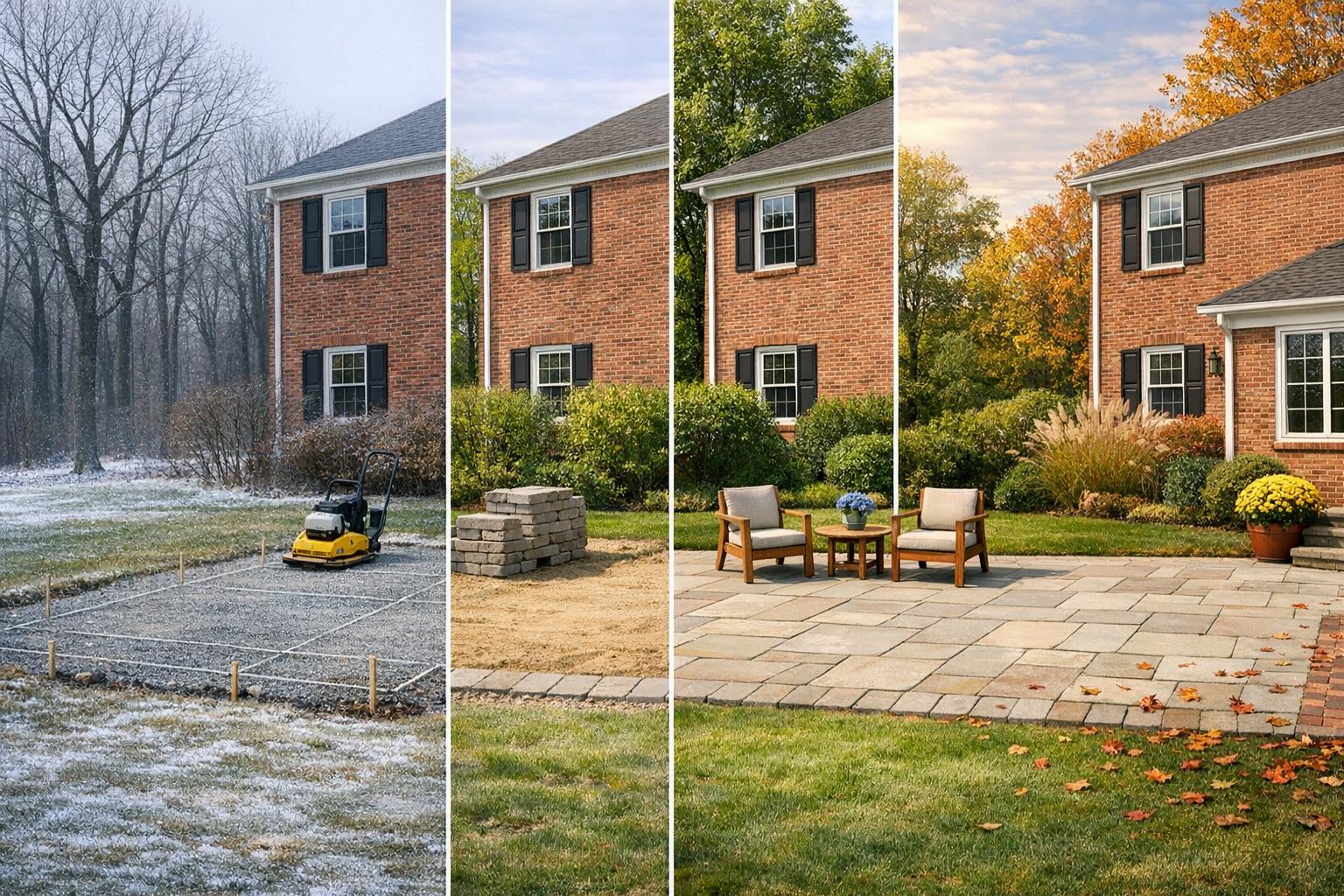
When it comes to patio installation in Maryland, the timing can significantly impact costs, project speed, and overall results. Maryland’s weather and seasonal contractor availability make certain times of the year better for this type of work. Here’s what you need to know:
- Spring: Mild temperatures make it great for soil preparation, but frequent rain can delay progress. Contractor schedules fill up fast, so book early.
- Summer: Dry weather allows for faster installation, but high demand and heat can increase costs and make conditions challenging.
- Fall: Cooler, predictable weather offers fewer delays and potential cost savings. It’s ideal to finish before frost sets in.
- Winter: Low demand means discounts and flexible scheduling, but frozen ground can complicate work. Projects started in winter are ready for use by spring.
Each season has its pros and cons, so your choice should depend on your priorities – whether it’s saving money, avoiding delays, or having your patio ready by a specific time.
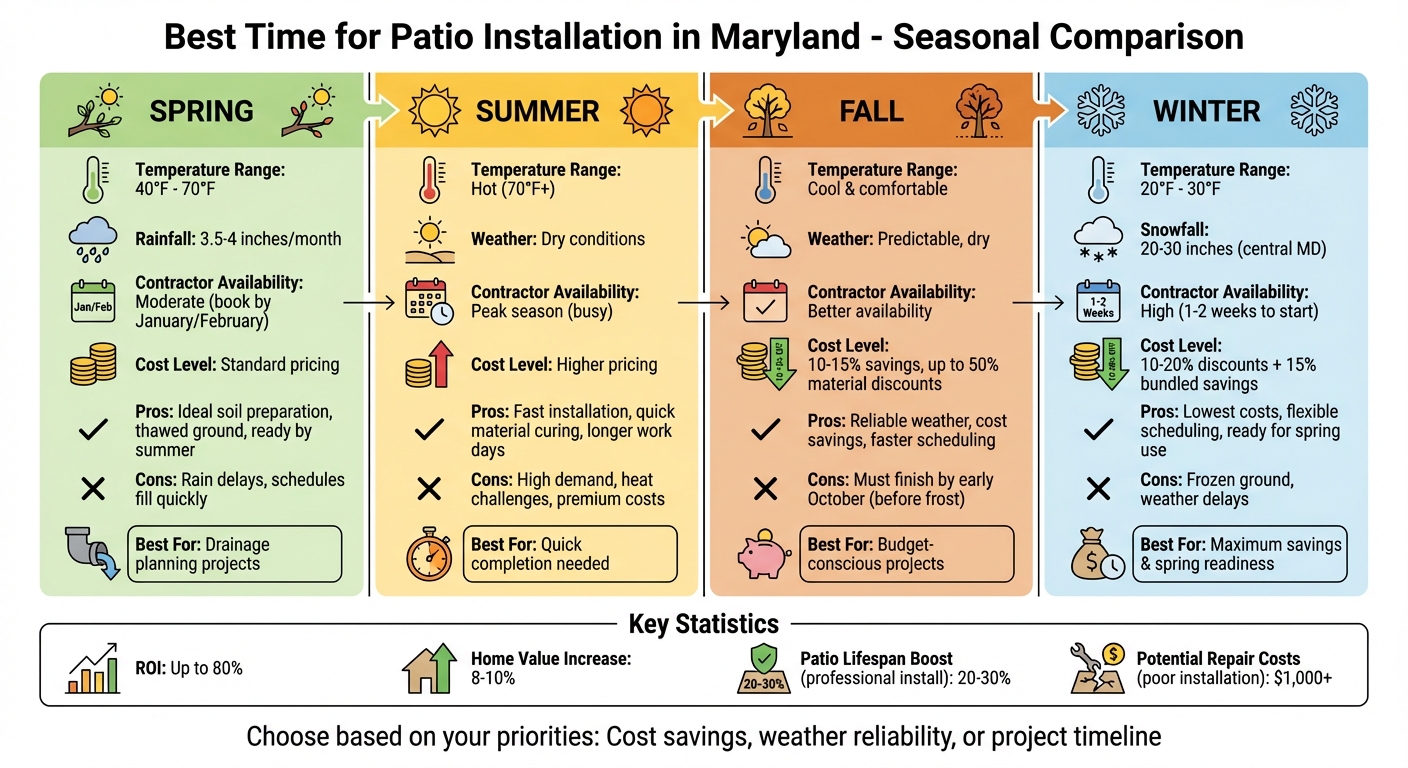
Best Season for Patio Installation in Maryland: Seasonal Comparison Guide
Spring: Planning and Precision
Spring Weather Conditions
Spring temperatures, typically ranging from 40°F to 70°F, provide ideal conditions for excavation and grading. The thawed soil during this season ensures a solid base can be prepared, while moderate humidity helps materials settle properly. However, spring isn’t without its challenges. Rainfall averages between 3.5 to 4 inches per month, which can disrupt work schedules. Heavy rain often halts excavation and base preparation, as muddy conditions could compromise the foundation’s integrity. Despite these setbacks, spring remains a popular time to kick off patio projects, giving homeowners a chance to enjoy their outdoor spaces by summer. Keep in mind, though, that these favorable conditions also mean contractors’ schedules fill up quickly.
Contractor Availability and Scheduling
Spring signals the start of Maryland’s busy construction season, with contractors booking up rapidly. If you wait until April or May to schedule, you might face delays of weeks – or even months – before your project can begin. To avoid this, aim to book your contractor as early as January or February. Early planning not only ensures availability but also provides the necessary time to handle permits and HOA approvals. Maryland jurisdictions often require specific permits for patio installations, so check local building codes and neighborhood regulations before proceeding[5]. Working with experienced professionals, like Pro Landscapes MD, can streamline the process and help you secure your preferred timeline. Once your project is scheduled, it’s time to focus on preparing for Maryland’s unpredictable spring rains.
Drainage and Soil Preparation
Spring rains make proper drainage planning a must for patio projects. Without effective drainage, water can pool around your patio, leading to potential issues like erosion, foundation settling, or even basement flooding. Contractors typically evaluate your yard’s slope and water flow to implement solutions such as French drains, proper grading, or permeable pavers. The thawed soil in spring also allows for thorough compaction of base layers, ensuring long-term stability. A well-designed patio with robust drainage not only enhances your outdoor living space but can also boost your home’s resale value by 8% to 10% and deliver an ROI of over 80%[5].
sbb-itb-843f8be
Summer: Quick Installation with Heat Concerns
Summer Installation Benefits
Longer summer days make it easier to complete patio installations faster. For simple designs, concrete patios can often be finished in no time[6].
Heat and Material Handling
Maryland’s summer heat can challenge construction, but paver materials are designed to adapt to temperature shifts, helping to minimize cracking risks[6]. As BMA Landscaping Services explains:
Whether you live in a region with hot summers, cold winters, or fluctuating temperatures, paver patios can handle it all[6].
This durability makes pavers a practical choice, especially during the heat of summer.
Peak Season Cost Management
Summer is the peak season for patio projects, which often means higher prices. Concrete patios tend to have a lower upfront cost compared to pavers[6]. To keep expenses under control, make sure you get a written contract that outlines the project scope, materials, and timeline milestones[6]. It’s also essential to confirm that your contractor includes a proper drainage system – typically, a one-inch drop in elevation for every two feet of length – to manage those inevitable summer thunderstorms[6].
Fall: Better Weather and Lower Costs
Fall Weather Benefits
Maryland’s fall weather offers the perfect setting for patio installations. The cooler temperatures during autumn make it easier for crews to work efficiently, often speeding up project timelines [8]. Plus, pavers and concrete set more reliably in these moderate conditions, minimizing risks tied to extreme heat or cold. These weather advantages also mean contractors are more readily available, which can lead to cost savings.
Cost Savings and Contractor Availability
Fall is considered the off-peak season, which translates to lower prices, flexible scheduling, and even material discounts – sometimes as high as 50% [7][8]. Homeowners can typically save 10–15% by steering clear of the high-demand spring and summer months [7]. Contractors often have more open schedules in the fall, allowing projects to start sooner without the delays common during the busier seasons.
If you’re working within a budget, consider focusing on the core patio structure in the fall and saving extras for later. Features like integrated LED lighting (costing $500 to $2,000) or built-in BBQs (ranging from $3,000 to $10,000) can be added down the road [7].
Frost Prevention and Project Timing
Proper timing is essential to ensure your patio lasts. Aim to complete your project by early October to avoid issues caused by late-fall frost [7]. Materials that aren’t set correctly can lead to costly repairs, such as fixing concrete cracks that might exceed $1,000 [7]. Starting your patio project early in the season ensures it’s ready for events like Thanksgiving gatherings [8].
If landscaping is part of your plan, fall is also a great time to plant. Cooler weather gives plants a chance to establish strong roots before the ground freezes [8]. To make the most of these benefits, schedule a design consultation as soon as possible to lock in your contractor’s availability.
Winter: Off-Season Discounts and Flexibility
Winter Cost Savings and Scheduling
Winter in Maryland isn’t just about chilly temperatures – it’s also the perfect time to save on patio installations. Since demand is at its lowest, contractors often offer 10-20% discounts on labor and materials to keep their crews busy during the slower months [2]. Beyond that, bundled service discounts can shave off an additional 15% [1]. These savings come from reduced competition, lower material costs, and off-season promotions.
Scheduling is another major perk of winter installations. Unlike the packed schedules of spring and summer, winter projects can typically begin within 1-2 weeks of your consultation [2]. Even permitting becomes faster – Charles County’s wait times drop from 4-6 weeks in spring to just 1-2 weeks in winter, while St. Mary’s County even offers same-day permits during the off-season [2]. This flexibility is especially helpful for custom projects, like paver patios, where contractors in areas like Howard, Montgomery, and Baltimore Counties have more open slots to handle intricate designs. However, Maryland’s winter weather means careful planning is essential to make the most of these benefits.
Working Around Winter Weather
Winter in Maryland comes with its own set of challenges. Snowfall averages 20–30 inches in central areas, and temperatures often dip to 20–30°F, which can slow material setting and make excavation tricky when the ground freezes [3][4]. For a successful winter installation, timing is key. November is often the sweet spot – temperatures are cool but the ground hasn’t frozen yet [2].
Experienced contractors know how to adapt to these conditions. They plan excavation work for warmer days and use heated enclosures or tarps to protect materials during curing. When outdoor conditions aren’t ideal, indoor prep work, like cutting pavers, keeps the project moving. Snow removal and proper gravel bases help prevent mud-related delays, and many contractors aim to complete 80% of the work before the holidays to avoid the worst of winter storms [1]. Additionally, drainage planning is critical during winter to handle moisture effectively as temperatures fluctuate. With the right approach, your patio project can overcome winter’s challenges and be ready for spring.
Preparing for Spring and Summer Use
One of the biggest advantages of a winter installation is having your patio ready to go by the time spring rolls around. A patio completed in January will be fully set and ready for use by May, just in time for barbecues and outdoor gatherings [1]. Plus, winter installations avoid the delays caused by spring rains and muddy conditions that can push projects into summer.
Another bonus? Winter work protects dormant landscaping, so there’s no need to reseed or replant damaged areas [1]. By starting in winter, you’ll not only beat the rush but also ensure your outdoor space is ready for immediate use when warm weather arrives. No waiting, no hassle – just a fully prepared patio to enjoy as soon as spring begins.
Seasonal Comparison: Choosing the Right Time
Season-by-Season Comparison Table
Picking the best season for your patio installation means weighing factors like weather, contractor availability, and costs. The table below breaks down the pros and cons of each season, helping you decide based on your project’s unique needs.
| Season | Weather Conditions | Contractor Scheduling | Cost Considerations | Key Advantages | Main Considerations |
|---|---|---|---|---|---|
| Spring | Mild temperatures with occasional rain | Moderate availability | Standard pricing | Ideal for drainage and soil preparation | Rain may cause delays |
| Summer | Warm to hot with mostly dry days | Busy peak season for contractors | Higher pricing | Fast curing of materials | Heat can be challenging for workers |
| Fall | Comfortable and relatively dry | Better availability as demand decreases | Often lower than summer | Reliable weather for consistent progress | Must finish before frost sets in |
| Winter | Cold with possible snow | Low demand allows quicker scheduling | Typically discounted | Budget-friendly and ready for spring use* | Frozen ground can complicate work |
*Modern materials and techniques ensure quality even in cold weather.
How to Choose Based on Your Priorities
Using the table as a guide, consider what matters most to you – whether it’s cost, scheduling, or weather conditions. For those focused on budget and quick scheduling, winter is a great option. As the Yavapai County Contractors Association notes:
Winter is a great time to work on your paver and other hardscape projects since the construction is less disruptive when your yard is not in regular use [9].
Modern interlocking paver systems are designed to work year-round, so winter installations are just as reliable [9].
If you’re looking for balanced weather and steady progress, fall is a strong choice. Spring is perfect for projects requiring soil preparation, though rain might slow things down. Summer offers fast material curing but comes with higher costs and potential heat challenges.
Planning Tips for Maryland Patio Installation
Weather Monitoring and Forecasts
Maryland’s unpredictable weather can throw a wrench into patio installation plans, so keeping an eye on forecasts is essential. The National Oceanic and Atmospheric Administration (NOAA) offers detailed local weather data, including precipitation patterns, temperature changes, and frost dates. This information is key for scheduling critical tasks like base preparation and material setting, which require dry conditions.
For spring and fall projects, extended forecasts can help you prepare for unexpected rain. Winter installations demand extra attention to ground temperature predictions to ensure the soil isn’t frozen before excavation starts. By identifying stable weather windows, you can minimize delays and keep the project on track.
Permits and Scheduling
Maryland’s seasonal variations make timing your permits just as important as the installation itself. Permit requirements differ across counties, so it’s crucial to understand local regulations. For example, Montgomery County mandates permits for all decks, with review times that can take up to 17 days [11]. Prince George’s County often requires at least three weeks for processing [10]. If your patio includes features like stairway lighting, hot tubs, or spas, separate electrical permits will also be necessary [11].
Additionally, many subdivisions in Maryland require HOA approval before construction begins [11]. Your contractor should hold a valid Maryland Home Improvement Contractor’s (MHIC) license [11]. To streamline the process, use county eServices or ePlans systems, which offer faster submissions and real-time tracking [10][11]. Montgomery County even provides a "Residential Fast Track" option, which can issue permits in just a few hours for qualifying projects [11].
Planning ahead and handling permits efficiently ensures your project can start without unnecessary delays.
Working with Professional Contractors
Hiring licensed professionals can make all the difference in navigating Maryland’s patio installation challenges. Contractors can take care of permit applications, schedule inspections (which usually require at least 24-hour notice), and adapt to local weather conditions [11].
Companies like Pro Landscapes MD specialize in patio installations across Howard, Montgomery, Carroll, Frederick, Prince George’s, and Baltimore counties. Their team holds the required MHIC licenses and has extensive experience with county-specific regulations. This expertise helps avoid common issues like permit delays or drainage complications. Partnering with seasoned professionals ensures your patio project is managed efficiently and built to withstand Maryland’s unique conditions.
Conclusion
Pick the season that aligns with your goals: spring offers favorable soil conditions and early contractor availability, summer ensures quicker installations but often comes with higher costs, fall provides pleasant weather with reduced pricing, and winter offers flexible scheduling and potential discounts.
These seasonal factors underscore the importance of hiring professionals in Maryland’s unpredictable climate. Poor installation can lead to costly freeze-thaw damage – sometimes exceeding $1,000 in repairs – while expert work can boost your patio’s lifespan by 20–30% and deliver up to an 80% ROI [7].
Pro Landscapes MD brings local expertise to central Maryland, managing everything from permits and stabilizing clay-heavy soil to precise grading and drainage planning. Their approach ensures your patio is built to endure the region’s challenging conditions.
Weigh your priorities – cost, weather, or timing – and partner with experienced professionals. Reach out to Pro Landscapes MD to plan your project and get expert advice tailored to Maryland’s unique seasonal demands.
FAQs
How far ahead should I book a patio install in Maryland?
Scheduling your patio installation in Maryland at least 1 to 2 days in advance is a smart move. This gives you enough time to account for proper planning, factor in weather conditions, and manage the specific details of your project’s complexity.
What permits or HOA approvals might I need for a patio?
Before you start installing a patio, it’s important to check if you need building permits from your local government. If you live in a neighborhood governed by a Homeowners Association (HOA), you might also need their approval. These steps help ensure your project aligns with local building codes and HOA rules. Reach out to your local authorities and HOA to confirm what’s required before beginning your project.
How do I prevent drainage problems around a new patio?
To avoid drainage problems, make sure your patio is sloped correctly to guide water away from the surface. Adding drainage systems like French drains or stormwater solutions can prevent water from pooling or seeping underneath, which could lead to long-term damage. For a tailored approach, consider reaching out to a professional landscaping or hardscaping service, such as Pro Landscapes MD, to design and install an effective drainage system suited to your property.
Chat with Us