









- bhavya gada
- No Comments
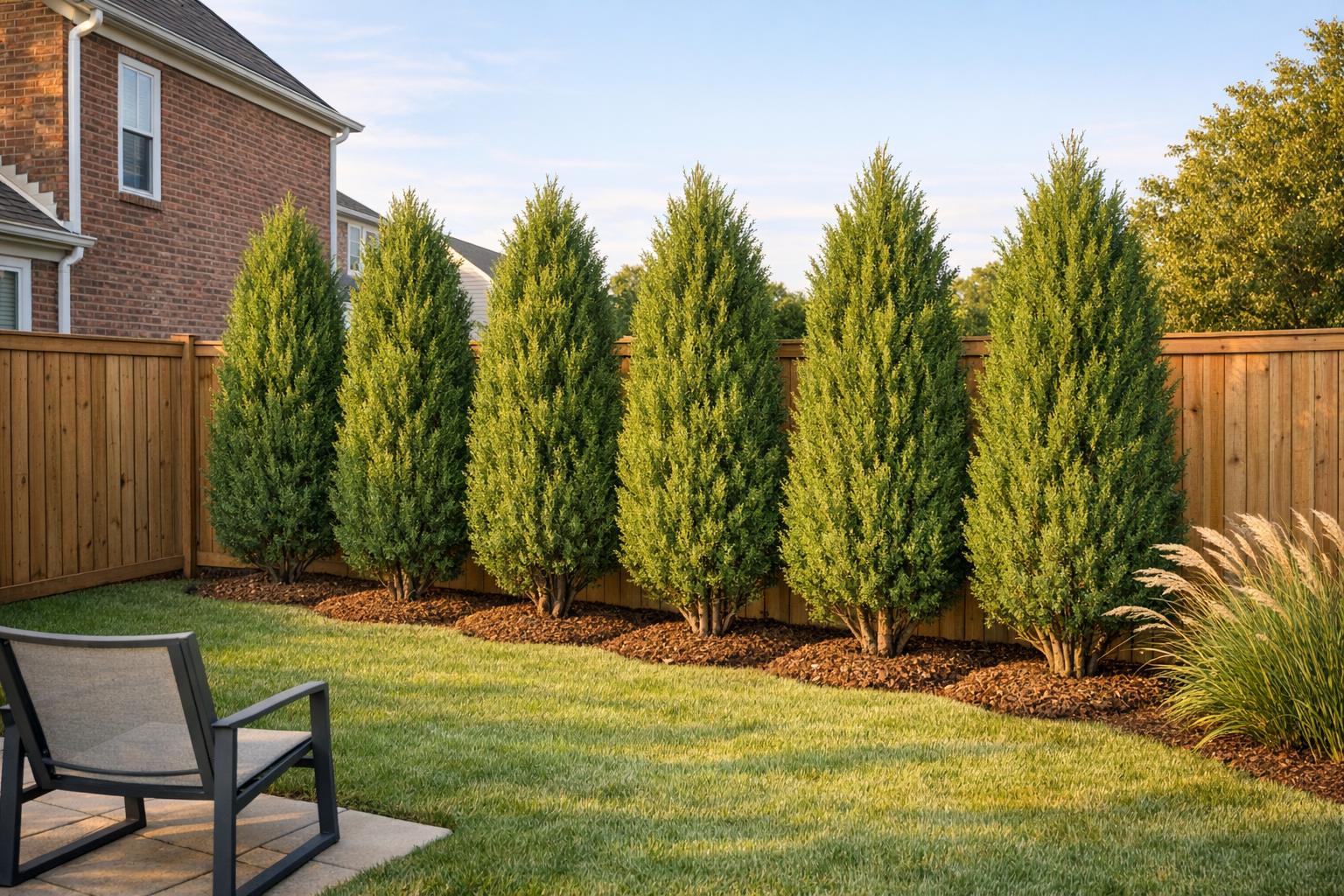
Looking to protect your yard from harsh winds while keeping your space functional? Choosing the right trees for windbreaks is key, especially for smaller yards in Maryland’s climate zones (6b–8a). Here’s a quick guide to the best options:
- Green Giant Arborvitae: Slim, fast-growing, and deer-resistant, perfect for year-round wind protection.
- Eastern White Pine: A native evergreen with soft needles, great for wind and noise reduction but requires space.
- Norway Spruce: Dense and tall, offering strong windbreaks but needing ample room.
- Eastern Red Cedar: Compact, durable, and suited for poor soils, ideal for tight spaces.
- Leyland Cypress: Rapid growth and dense coverage, but requires regular pruning and care.
- White Spruce: Balanced size and steady growth, reliable for windbreaks in various soil conditions.
- American Arborvitae: Slim and easy to plant closely, forming a natural green wall.
Key Tip: Native species like Eastern Red Cedar and Eastern White Pine thrive in Maryland’s soil and climate, often requiring less maintenance. Proper landscaping services and planting techniques ensure effective windbreaks while supporting local wildlife and reducing energy costs.
For compact yards, prioritize trees with narrower spreads like Arborvitae or Eastern Red Cedar. If space allows, consider taller options like Norway Spruce or White Pine for broader coverage. Always measure your space and consider soil drainage before planting.
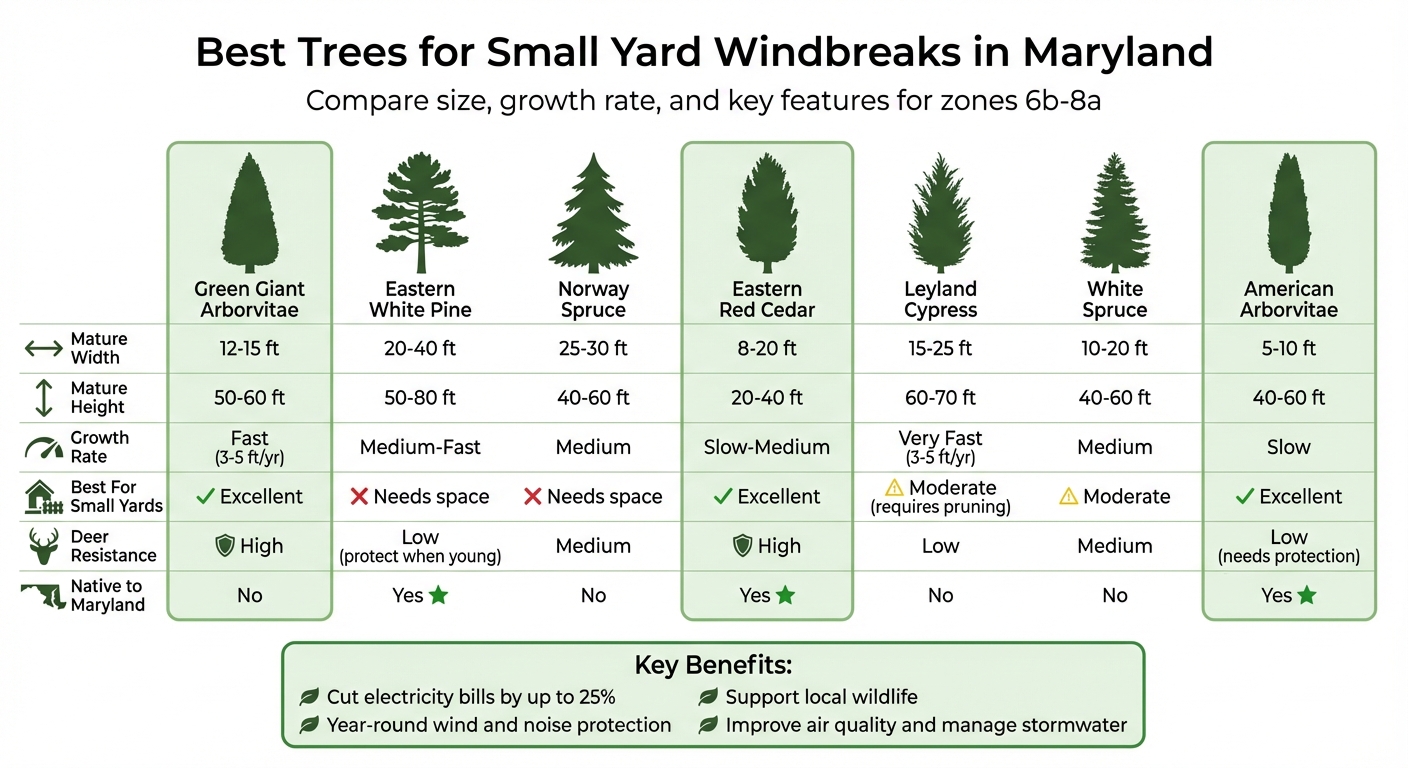
Best Windbreak Trees for Small Maryland Yards: Size and Growth Comparison Chart
What are the best Evergreens for wind break plantings?
sbb-itb-843f8be
1. Green Giant Arborvitae (Thuja standishii x plicata)
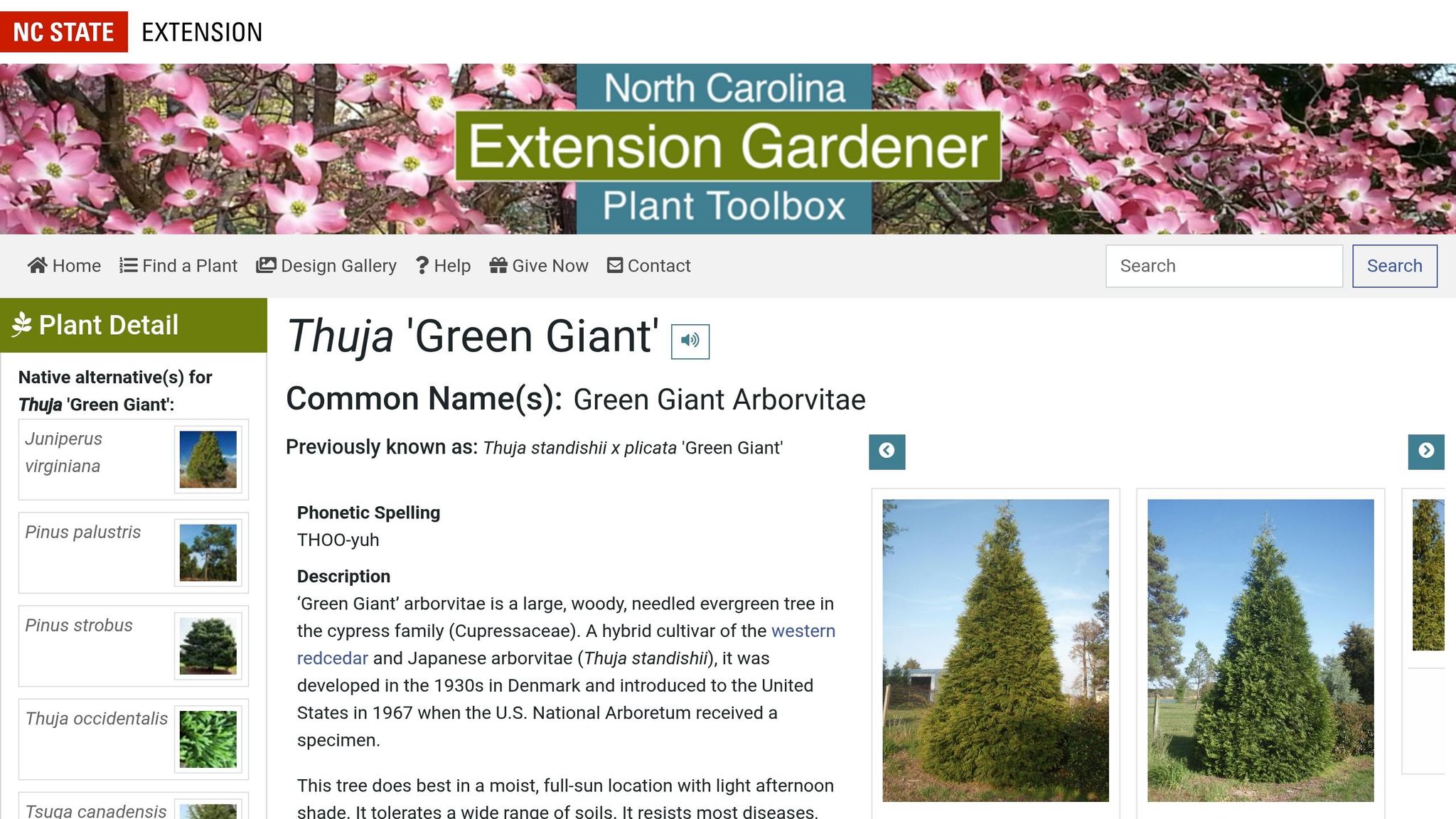
The Green Giant Arborvitae is a fantastic option for creating windbreaks in smaller Maryland yards. This hybrid evergreen boasts dense foliage and a slim profile, making it a practical choice for properties with limited room. Unlike artificial barriers, these trees provide long-lasting and sturdy protection [4].
Mature Width
One of the standout features of the Green Giant Arborvitae is its compact width. Its slim shape allows for close planting without overwhelming tight spaces, ensuring it delivers effective wind protection even in smaller yards. Its modest spread makes it a reliable year-round shield against the wind [1].
Growth Rate
This tree is known for its fast growth, which means you can establish a functional windbreak much quicker compared to other options. Starting with 3-foot specimens can help save on costs, and regular pruning keeps them appropriately sized for smaller yards [6]. Planting them in clusters further boosts their ability to block wind effectively [5].
Deer Resistance
Thanks to its dense foliage, the Green Giant Arborvitae is less likely to suffer from deer damage [3]. This makes it a practical choice for maintaining the integrity of your windbreak in Maryland’s residential areas.
Hardiness and Adaptability
Green Giant Arborvitae is well-suited to Maryland’s varied climate, thriving in regions from the Piedmont to the Coastal Plain. Trees that match Maryland’s climate and soil require minimal upkeep once they’re established [1][7]. Providing enough rooting space also enhances their stability and wind resistance [5]. These traits make the Green Giant Arborvitae a dependable choice for residential windbreaks.
2. Eastern White Pine (Pinus strobus)
The Eastern White Pine is a native evergreen tree in Maryland, known for its soft, feathery needles that provide excellent wind protection. Its open, rounded canopy helps deflect wind and dampen noise, making it a practical choice for windbreaks in residential areas [1][8]. This tree’s ability to combine substantial growth with effective wind shielding makes it ideal for smaller Maryland yards.
Its airy structure offers a less dense alternative to other evergreens, making it a good fit for tighter spaces.
Mature Width
At full maturity, the Eastern White Pine spreads 20–40 feet wide [8]. If you’re planting in a smaller yard, plan ahead to ensure there’s enough room for its growth without needing frequent pruning.
Growth Rate
These trees typically grow to a height of 50–80 feet [8]. Early pruning can help control their height and width, keeping them manageable and effective as windbreaks even in compact settings.
Hardiness (USDA Zones)
Eastern White Pines thrive in USDA zones 3–8, which includes Maryland’s diverse climate from the western mountains (zone 5b) to the southern coastal areas (zone 8a) [2]. With proper care, they can live for over 200 years, providing consistent shelter for wildlife and even helping to lower winter energy costs when used as a windbreak [1][9].
Deer Resistance
Young Eastern White Pines are a favorite snack for deer, so it’s important to protect them with guards or cages until they grow taller than browsing height. Adding 2–3 inches of mulch around the base – while keeping it a few inches away from the trunk – can also help protect the roots and retain moisture [2].
3. Norway Spruce (Picea abies)
The Norway Spruce is a dense evergreen that stands out as an excellent windbreak, thanks to its thick branching and impressive height. Reaching 40–60 feet tall, it offers year-round protection from strong winds and even helps reduce noise levels around your property. Integrating these trees with Baltimore hardscaping can further enhance your outdoor privacy. With its sturdy pyramidal shape and full coverage, this tree is a solid defense against harsh winter weather.
However, it’s important to note that the Norway Spruce requires plenty of space to thrive. If your property is on the smaller side, careful planning is necessary to avoid overcrowding other plants or structures. Let’s take a closer look at its growth rate, hardiness, and mature size.
Growth Rate
The Norway Spruce grows at a medium pace. While it won’t provide immediate wind protection, it establishes itself steadily and becomes an effective barrier within a few years. One of its strengths is its ability to thrive in a variety of soil types and moisture levels, making it a dependable choice for windbreaks and property buffers [10].
Additionally, its ability to adapt to different climates makes it a versatile option for many regions.
Hardiness
Although specific USDA hardiness zone details for the Norway Spruce aren’t always highlighted in Maryland-specific guides, this evergreen is well-suited to Maryland’s climate, including the cooler areas of the state. When choosing windbreak trees, it’s always a good idea to select species that can handle local soil and weather conditions effectively.
Mature Width
With a mature width of 25–30 feet, the Norway Spruce needs plenty of room to spread out. Before planting, make sure to measure your space carefully to accommodate its full size. While it’s an outstanding windbreak, narrower alternatives like the American Arborvitae might be a better fit for smaller yards where space is limited.
4. Eastern Red Cedar (Juniperus virginiana)
The Eastern Red Cedar is a native evergreen to Maryland and a fantastic option for small yard windbreaks. Growing to heights of 20 to 40 feet, this tree offers year-round protection against wind without consuming too much space [2]. Its compact shape and dense foliage make it effective at blocking wind, noise, and even air pollution – all while maintaining a slim profile compared to larger conifers [11].
This tree’s toughness is impressive. It thrives in poor, compacted, or sandy soils and handles drought and salt exposure with ease. That makes it a great choice for coastal areas or properties near salted roads [2]. Even in challenging soil or weather conditions, the Eastern Red Cedar performs reliably.
Here are some details that highlight why it’s ideal for tight spaces:
Mature Width
The Eastern Red Cedar typically grows 8 to 20 feet wide [11]. Its compact structure is perfect for smaller yards, avoiding the sprawling branches that can break in strong winds. Its upright growth also prevents it from overwhelming your space or interfering with nearby structures [11].
Deer Resistance
If deer are a concern in your area, this tree is a solid pick. It’s well-suited for regions with heavy deer activity, particularly in Maryland, where it can withstand "severe" deer browsing pressure [2]. However, it’s best to avoid planting it near Crab Apple trees, as it can host Cedar-Apple Rust and Cedar-Hawthorn Rust, which harm fruit-bearing trees [3].
Hardiness (USDA Zones)
As a native species, the Eastern Red Cedar is perfectly adapted to Maryland’s climate. To ensure it establishes strong roots, deep watering during the first 2–3 years is recommended [2].
5. Leyland Cypress (Cupressocyparis leylandii)
The Leyland Cypress is a popular choice for those seeking a fast-growing evergreen tree to create privacy or a windbreak. Known for its impressive growth rate of 3 to 5 feet per year, it quickly forms a dense barrier, offering year-round protection from wind and noise. Its symmetrical, pyramidal shape adds to its appeal as a functional and attractive option.
That said, it’s worth noting that this tree might not be the best fit for smaller yards in Maryland. With a mature width of 15 to 25 feet, it can outgrow compact spaces if not carefully managed. Regular pruning is a must to maintain its size and prevent it from overwhelming your yard.
Growth Rate
The Leyland Cypress’s rapid growth is a double-edged sword. While it ensures a quick windbreak, it also requires consistent trimming to keep overgrowth in check and maintain its shape.
Deer Resistance
One downside is its low resistance to deer. In central Maryland, where deer are common, they often feed on the lower branches, especially during the winter when food is scarce. To protect young trees, consider using physical barriers or applying deer repellents until the trees grow tall enough to avoid browsing.
Disease Concerns and Maintenance
This tree has some vulnerabilities to watch out for, particularly in Maryland’s climate. Diseases like Seiridium and Botryosphaeria canker are known issues, which can affect its health over time. For these reasons, many experts recommend native species as alternatives. Native trees are generally better suited to local soil and weather conditions, requiring less maintenance in the long run.
Up next, we’ll explore another option that works well for compact windbreaks.
6. White Spruce (Picea glauca)
White Spruce is a dependable evergreen that combines strength and versatility, making it a solid choice for windbreaks in Maryland. It thrives in the state’s climate and adapts well to different soil conditions [1].
Mature Size
Reaching heights of 40 to 60 feet, White Spruce maintains a proportional width, making it a great fit for residential yards. Its balanced size ensures it can provide effective coverage without overwhelming smaller spaces [4].
Growth Rate
This tree grows at a medium pace [4], giving homeowners time to plan their landscape while gradually forming a sturdy windbreak. Its steady growth ensures long-term reliability in various environments.
Hardiness (USDA Zones)
White Spruce is suited for USDA zones 2 through 6 [4], thriving in a range of soil types. This resilience makes it a practical and reliable addition to Maryland’s landscapes [1].
7. Arborvitae (Thuja occidentalis)
American Arborvitae stands out as a practical and attractive choice for windbreaks, thanks to its dense evergreen foliage that offers year-round protection. This native tree thrives in Maryland’s climate and can be planted closely to form a natural "green wall" that effectively shields against wind[12].
Mature Size and Form
Arborvitae typically grows to a height of 40–60 feet[4]. Its slim, columnar shape makes it ideal for smaller spaces, allowing homeowners to plant multiple trees close together for a compact yet effective windbreak.
Growth Rate
This tree grows at a slow and steady pace, which makes it easier to maintain and gives homeowners time to adjust their landscaping as needed[4].
Deer Resistance
One drawback of Arborvitae is its appeal to deer. To protect these trees, especially in areas with high deer populations, measures like burlap wrapping are essential. Richard Sweeney, a Landscape Architect at Level Green Landscaping, points out that Japanese Cedar is a "super durable" alternative that deer tend to avoid[12]. For Arborvitae, using burlap during winter and maintaining consistent moisture, fertilizer, and mulch can help safeguard young trees and support their health[12].
Hardiness (USDA Zones)
Arborvitae thrives in USDA zones 3 through 7[4], making it a reliable choice for Maryland’s diverse climate conditions.
Tree Comparison Table
Compare mature widths to choose the best windbreak tree for your small Maryland yard:
| Tree Species | Mature Width |
|---|---|
| Green Giant Arborvitae | Varies by cultivar; generally wider in spread |
| Eastern White Pine | Significantly wide |
| Norway Spruce | Significantly wide |
| Eastern Red Cedar | Moderately wide |
| Leyland Cypress | 15–20 feet[8] |
| White Spruce | Moderately wide |
| American Arborvitae (Thuja occidentalis) | 5–10 feet[8] |
The American Arborvitae, with its compact 5–10‑foot spread, is perfect for tight spaces. On the other hand, Eastern White Pine and Norway Spruce need much more room due to their significant width. Leyland Cypress offers a middle ground with a 15–20‑foot spread[8]. The exact widths of Green Giant Arborvitae, Eastern Red Cedar, and White Spruce depend on their cultivar and local growing conditions, but each brings unique advantages for creating a windbreak. This guide helps you pick the right tree to match your yard’s size while ensuring effective wind protection.
Conclusion
Windbreak trees offer multiple benefits: they lower heating costs, boost privacy, manage stormwater, improve air quality, and provide habitat for local wildlife. When strategically placed, they can even cut your electricity bill by up to 25% during the summer months [3].
Choosing trees that thrive in Maryland’s climate zones (5b to 8a) ensures they require less upkeep, resist pests more effectively, and better support native ecosystems [1] [2] [9]. Whether your property lies in the sandy Coastal Plain, the rolling Piedmont, or the rocky Appalachian foothills, selecting species suited to your specific environment means less maintenance and more reliable wind protection over time.
Proper planning is key. Placement, spacing, and planting techniques all play a role in creating an effective windbreak. A professional site assessment can ensure your windbreak performs at its best, tailored to Maryland’s unique conditions.
Pro Landscapes MD specializes in windbreak design and installation, serving Howard, Montgomery, Carroll, Frederick, Prince George’s, and Baltimore Counties. From Ellicott City to Bethesda, their team helps homeowners choose the right trees for their soil, yard size, and exposure. They handle everything – from site evaluation to planting and ongoing care advice.
Ready to create a protected, energy-efficient yard? Visit Pro Landscapes MD to get expert help with designing and installing the perfect windbreak for Maryland’s climate.
FAQs
How many windbreak trees do I need for a small yard?
For a smaller yard, planting 2 to 4 trees is usually sufficient to establish a good windbreak. The specific number will depend on the type of trees you select and how much coverage you’re aiming for. To get the best outcome, pick tree species that match your yard’s size and thrive in Maryland’s climate.
How far apart should I plant arborvitae or cedar for a windbreak?
When creating a windbreak, plant arborvitae or cedar trees with a spacing of about 3 to 4 feet apart. This ensures they grow healthily and maintain their proper shape. Depending on the specific variety and its mature size, you may need to adjust the spacing slightly. Always check the mature width of the species you select to determine the best distance between trees.
What’s the best windbreak tree if deer are a problem in Maryland?
The Eastern Redcedar stands out as an excellent choice for a deer-resistant windbreak tree in Maryland. This tough, aromatic evergreen thrives in hot conditions, handles salty environments and poor soils with ease, and is rarely bothered by deer. Its resilience makes it a great option for establishing windbreaks, even in smaller residential spaces.
Chat with Us