









- bhavya gada
- No Comments
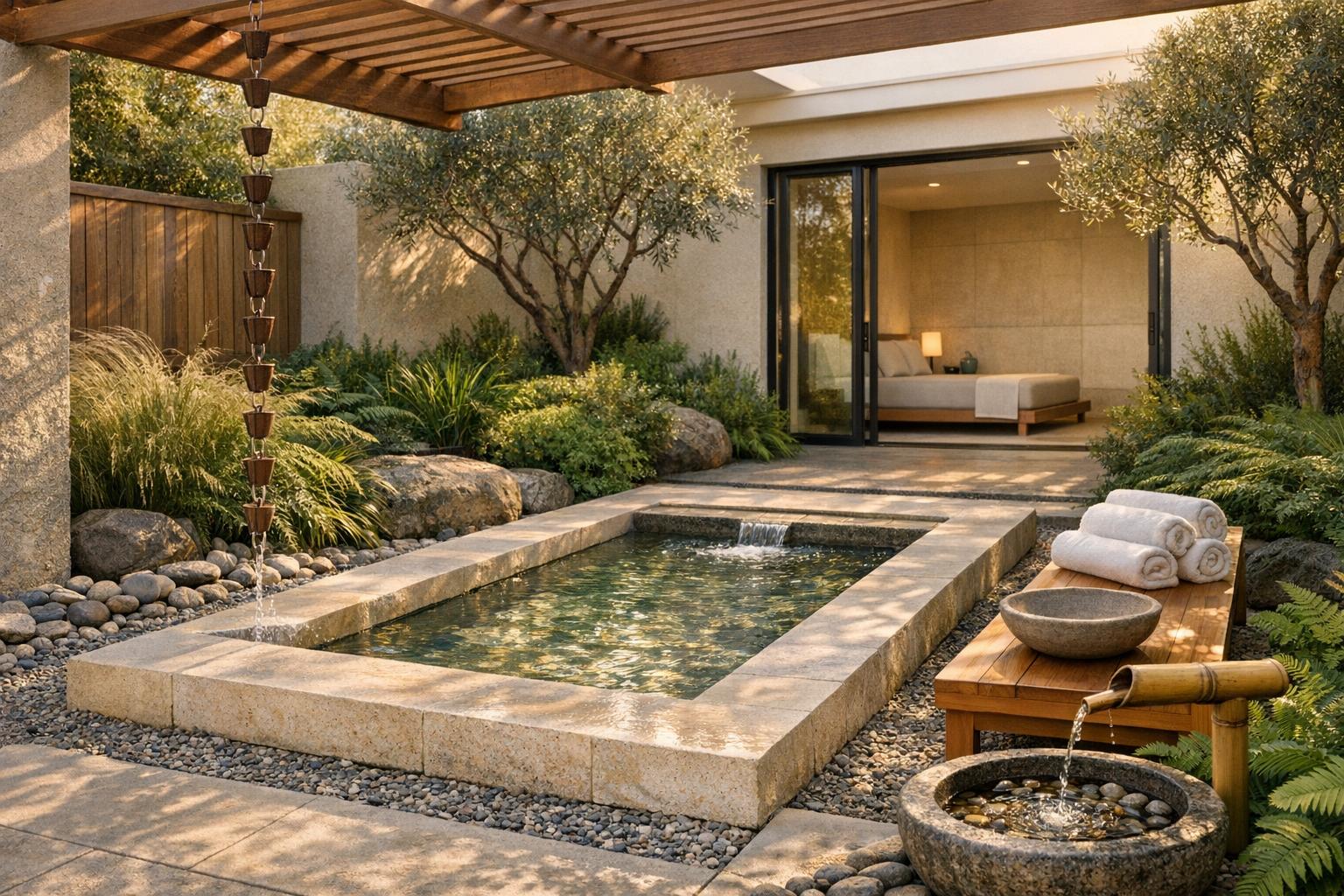
Biophilic design integrates natural elements like light, water, and organic materials to create tranquil outdoor spa spaces. These designs reduce stress, enhance well-being, and meet the growing demand for eco-conscious experiences. Here are five key trends shaping outdoor spa designs:
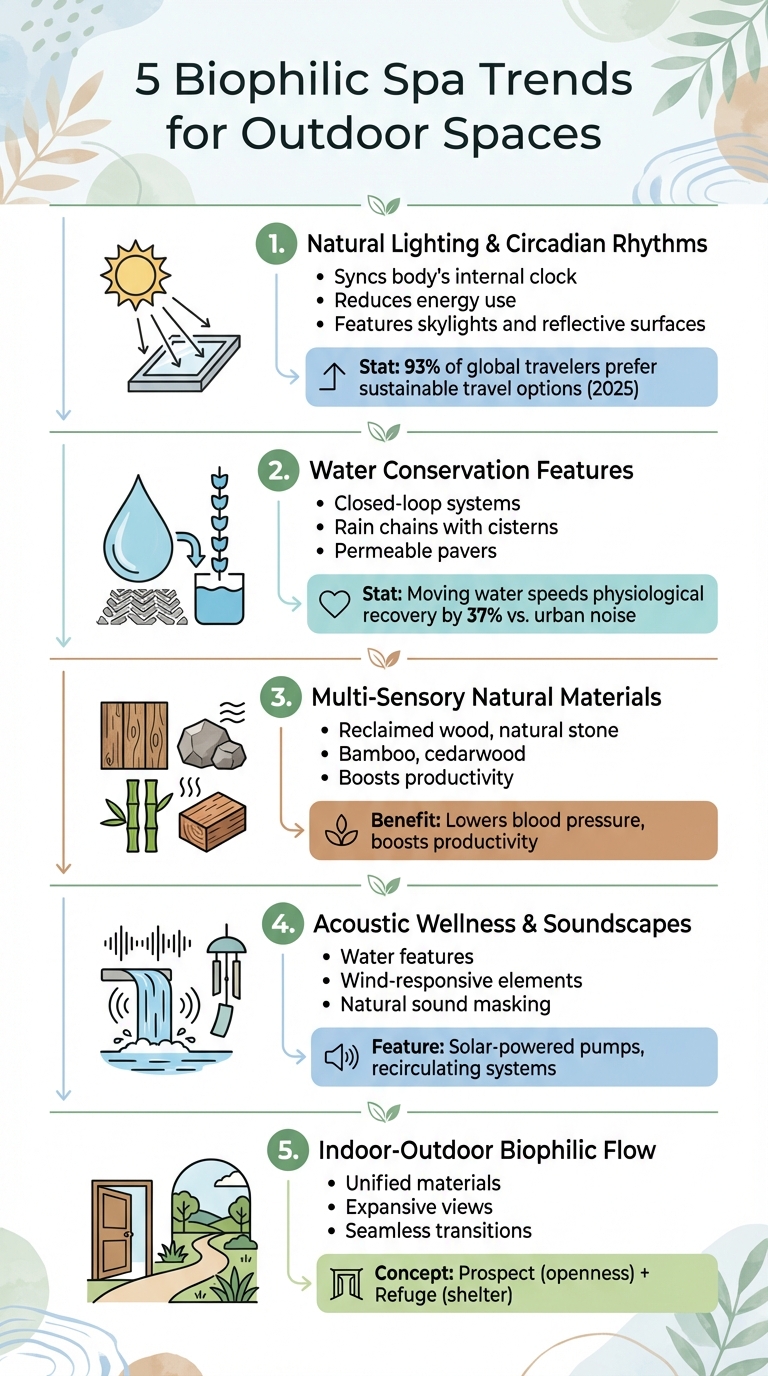
- Natural Lighting: Syncs with circadian rhythms, improves mood, and reduces energy use with features like skylights and reflective surfaces.
- Water Conservation: Efficient systems like rain chains, cisterns, and permeable pavers conserve water while adding aesthetic and sensory value.
- Natural Materials: Reclaimed wood, stone, and bamboo offer tactile and visual richness while blending with local surroundings.
- Acoustic Wellness: Natural soundscapes, such as water features and wind-responsive elements, promote relaxation and mask noise.
- Indoor-Outdoor Flow: Seamless transitions between spaces using unified materials, expansive views, and sensory details enhance the connection to nature.
These trends focus on creating spaces that feel calming, functional, and aligned with nature. Pro Landscapes MD specializes in designing such spaces across Maryland, combining eco-friendly practices with local materials to craft restorative outdoor environments.
5 Biophilic Spa Design Trends for Outdoor Spaces
How to Use the Principles of Biophilic Design in Your Interiors
sbb-itb-843f8be
1. Natural Lighting and Circadian Rhythms
Natural light in outdoor spa spaces does more than just brighten the area – it plays a key role in syncing your body’s internal clock. By mimicking the sun’s natural progression, thoughtfully designed lighting helps regulate your sleep-wake cycles. For instance, bright light in the morning, often found in active spaces like yoga studios or pools, signals your body to wake up and feel energized. As the day transitions, warmer, softer lighting in relaxation areas helps your body wind down naturally [3].
This concept ties into what designers call "Dynamic and Diffuse Light." It involves using varying intensities of light and shadow to create a sense of movement and depth throughout the day [2]. This interplay of brightness and shade mirrors natural ecosystems, triggering a calming response in the body. The results? Lower blood pressure, reduced stress, slower heart rates, and even a boost in creativity.
Sustainability and Eco-Friendliness
Incorporating natural light into spa designs through skylights, light wells, and expansive windows doesn’t just look good – it also reduces the need for artificial lighting, cutting energy use [1][3]. A great example is Six Senses Vana in India, which underwent a redesign in 2024. They swapped diesel systems for clean energy and redesigned guest spaces to maximize natural daylight and integrate greenery. This change reflects the growing trend in wellness tourism, where 93% of global travelers in 2025 expressed a preference for sustainable travel options [3]. Beyond energy savings, this approach blends natural elements seamlessly into the design, enriching both the visual appeal and tactile experience of the space.
Aesthetic Integration with Outdoor Spaces
Using reflective surfaces like mirrors or polished stone can help distribute natural light into darker corners, creating a brighter and more cohesive space without additional fixtures [1]. A great example of this is the Bamford Wellness Spa at London’s 1 Hotel Mayfair, which debuted in 2024. The spa combines reclaimed wood, natural stone, and even a chandelier made from living moss, creating a tranquil, nature-inspired retreat. Here, sunlight interacts beautifully with organic textures, revealing the unique patterns in wood grain and stone that artificial lighting often misses [3]. Fire pits also add a natural source of flickering light during the evening, enhancing the outdoor ambiance as guests relax under the stars [5]. These thoughtful design elements elevate the sensory experience across the spa.
Enhancement of Sensory Experiences
The way natural light interacts with textures and shadows enhances the sensory connection to the environment. It warms the skin, highlights the shimmer of water features, and adds depth to the space, making outdoor spa areas feel vibrant and alive. This constantly shifting natural ambiance ensures that every visit feels fresh and unique, offering a deeper connection to the surrounding landscape.
2. Water Conservation Features
Outdoor spas are going beyond basic efficiency by incorporating water-saving technologies as core design elements. For instance, closed-loop systems in modular water fountains recirculate water, ensuring minimal waste while maintaining their tranquil ambiance. Another creative solution is the use of rain chains paired with cisterns. At CHI, The Spa at Shangri-La Rasa Sayang Resort in Penang, Malaysia, the spa villa courtyard features three rain chains set on a gravel bed. These chains capture rooftop rainwater, creating a soft trickling sound that transforms functional drainage into a relaxing sensory experience [6].
Sustainability and Eco-Friendliness
In November 2025, Trilling Landscape Design & Build implemented a regenerative water system for an estate in Westlake Village. Designer Heather Trilling directed all the roof runoff into a hidden underground cistern, which now irrigates the gardens throughout the year without relying on municipal water [4].
"It’s invisible luxury – sustainability you can feel, not see" [4].
Permeable pavers around spa areas allow water to seep into the ground, filtering out pollutants and replenishing local aquifers. Features like engineered wetlands and reflection pools serve dual purposes: they recharge groundwater while adding beauty to the spa setting. These eco-conscious designs not only conserve water but also elevate the overall aesthetic of the space.
Aesthetic Integration with Outdoor Spaces
Innovative water features like water scrims – thin sheets of water that reflect light and sky – offer striking visuals with minimal water use. The Kogod Courtyard at the National Portrait Gallery in Washington, D.C., uses this method with a system that can drain quickly when the space is needed for events [6]. Rain gardens and seasonal arroyos, which activate only during rainfall, bring guests closer to nature while efficiently managing drainage. Catie Ryan, Director of Projects at Terrapin Bright Green, highlights the importance of thoughtful design:
"small features can celebrate water as a precious resource" [6].
Here, strategic placement often matters more than the size of the feature.
Enhancement of Sensory Experiences
The sound of moving water can speed up physiological recovery by as much as 37% compared to urban noise [7]. Features like bubbling fountains, shallow wading pools, and hand-carved stone waterfalls provide a multi-sensory experience – blending soothing sounds, captivating visuals, and tactile elements. These designs not only mask disruptive noises but also help lower heart rates and reduce stress. Research shows that biophilic water patterns can enhance focus and improve memory [6], making them an essential part of creating restorative spa environments.
Practicality for Outdoor Spa Environments
Biophilic principles ensure that these designs balance utility with natural beauty. AI-driven irrigation systems, for example, adjust watering schedules based on live weather data, avoiding waste during or after rain. Compact and well-placed water features require less energy and maintenance yet still deliver powerful restorative effects [6]. In areas with limited water resources, designers can use light reflections or recorded water sounds to simulate the calming effects of water without actual consumption. Early collaboration with mechanical, electrical, and plumbing teams ensures that water features meet dual objectives, like managing rainwater or controlling humidity, while enhancing the overall guest experience.
3. Multi-Sensory Natural Materials
Building on the biophilic design trend, using natural materials in outdoor spa settings brings a deeper connection to nature. Materials like reclaimed wood, natural stone, bamboo, and cedarwood are redefining outdoor spa design by offering sensory-rich experiences. These elements provide an organic feel and authenticity that synthetic options simply can’t match.
Aesthetic Integration with Outdoor Spaces
Incorporating materials that align with the local environment helps create a unique identity for the space. As Bill Browning, Founder of Terrapin Bright Green, puts it, using local geology in design fosters a "distinct sense of place" [5]. For example, stone floors with natural veining capture light in ways that change throughout the day, adding dynamic visual interest. Handcrafted materials or those with natural imperfections bring texture and depth, avoiding the sterile look of manufactured finishes. For areas requiring durability, designers are turning to innovative alternatives like wood-patterned concrete, which balances the look of natural materials with the strength to endure heavy use and harsh weather. This approach complements the natural lighting and water features already discussed.
Enhancing Sensory Experiences
Natural materials do more than look good – they engage the senses in ways that promote relaxation and reduce stress. Cedarwood, for instance, emits a calming fragrance while naturally resisting decay in humid conditions [3]. Textured stone walkways offer a cool, grounding sensation underfoot, while reclaimed wood adds warmth to the touch. Vertical gardens and living moss walls not only soften hard surfaces but also absorb noise and help regulate temperature. Research indicates that incorporating natural elements into built environments can lower blood pressure and boost productivity [5].
Biophilic designer Oliver Heath captures this idea perfectly:
"When we design with nature in mind, we create spaces that don’t just look good, they feel good" [3].
Sustainability and Eco-Friendliness
In recent years, sustainability has become a key focus for travelers, with 93% of global travelers in 2025 expressing a preference for eco-conscious choices [3]. Reclaimed wood offers a sustainable option that also adds character and history to a space when treated for outdoor use. Bamboo, known for its rapid growth, is ideal for pergolas or decorative screens, blending functionality with environmental responsibility. These choices reflect a growing trend in eco-luxury, where wellness and sustainability go hand in hand.
Practicality for Outdoor Spa Environments
Outdoor spa materials must stand up to the elements, and natural options often excel in this regard. Natural stone is a durable choice for high-traffic areas, providing both longevity and a tactile connection to the earth. Cedarwood, with its natural resistance to rot, is perfect for humid environments without requiring chemical treatments. Combining different textures – like smooth stone flooring with rugged wood walls – creates a layered sensory experience while ensuring each material serves a practical purpose. By choosing materials suited to the local climate and requiring minimal processing, designers create spa environments that feel like a natural extension of their surroundings rather than an artificial addition [2]. These thoughtful material choices reinforce the spa’s commitment to biophilic design and environmental responsibility.
4. Acoustic Wellness with Natural Soundscapes
Natural soundscapes play a key role in creating a calming atmosphere at outdoor spas. The soft trickle of water, the gentle rustle of bamboo, and the sound of wind weaving through trees can instantly soothe the nervous system and promote relaxation. Paired with thoughtful lighting and natural materials, these sounds transform the space into a "living sanctuary" where tranquility begins the moment guests arrive. Together, these elements enhance the biophilic design of your spa, creating a harmonious and immersive experience.
Enhancing the Senses
Natural sounds do more than just fill the air – they anchor guests in the present. Features like courtyard fountains or waterfalls provide a steady, soothing backdrop that can mask unwanted noises, offering privacy without the need for physical barriers. When combined with tactile materials like cool stone or the interplay of light and shadow, these sounds enrich the overall sensory experience, allowing guests to feel fully immersed in their surroundings.
Completing the Outdoor Aesthetic
Just as natural materials and lighting elevate the ambiance, soundscapes complete the sensory design. Water features, for example, provide both visual appeal and acoustic benefits. A multi-tiered waterfall integrated into a stone wall or garden edge can turn hardscaping into a stunning centerpiece. By adjusting the flow rate and surface texture, designers can create a range of auditory effects – from a soft, calming trickle to a more energetic cascade. Wind-responsive elements like ornamental grasses, bamboo, or carefully planted trees add another layer of sound, evolving throughout the day to create a dynamic and ever-changing environment.
Eco-Conscious Soundscapes
Sustainability is an essential consideration, even for auditory features. Modern water elements can be designed with solar-powered pumps and recirculating systems to minimize water usage. Platforms like EcoStruxure enable spa operators to efficiently manage water systems and energy use, ensuring the soundscape remains eco-friendly. For example, in drier climates, a shallow reflecting pool can reduce evaporation while maintaining visual and auditory appeal. This thoughtful approach reflects the growing demand for sustainable wellness, with 93% of global travelers seeking eco-conscious experiences [3].
Practical and Flexible Design
One of the great advantages of acoustic wellness features is their adaptability. Small additions, like a fountain in an existing courtyard or wind chimes near a treatment area, can significantly enhance the atmosphere without requiring major renovations. When staff share the intention behind these design elements, it deepens guests’ connection to the space. Soundscapes can also guide transitions between spa zones – imagine moving from a garden deck filled with birdsong to a secluded treatment area where soft water sounds dominate. These thoughtful touches ensure a seamless and restorative wellness journey for every guest.
5. Indoor-Outdoor Biophilic Flow
In biophilic design, creating a seamless indoor-outdoor flow is all about bridging interior and exterior spaces to deliver a unified, nature-connected experience. For spa environments, this means designing spaces where guests can move effortlessly between indoor and outdoor settings while maintaining a strong connection to the natural world. Achieving this balance requires more than just adding outdoor elements – it involves carefully blending materials, sightlines, and sensory details to blur the boundaries between the two environments. This harmony enhances the spa’s overall atmosphere and deepens the guest’s connection to nature.
Aesthetic Integration with Outdoor Spaces
One way to create this seamless connection is by extending interior materials into outdoor spaces. For example, using stone or wood flooring indoors and carrying it out to patios or courtyards unifies the two areas. A standout project by Trilling Landscape Design & Build in Pacific Palisades perfectly illustrates this approach. In 2025, they used terrazzo flooring that flowed from the interior directly into an outdoor courtyard, creating what designer Heather Trilling described as a blend of "indoor polish with outdoor texture" [4].
"The boundary between interior and exterior has blurred entirely." – Heather Trilling, Landscape Designer + Contractor [4]
Another key element is aligning indoor views with outdoor focal points. Whether it’s a serene meditation garden, a striking water feature, or a grove of native trees, these visual anchors enhance the feeling of connection as guests transition between spaces.
Enhancement of Sensory Experiences
Beyond aesthetics, sensory elements play a crucial role in reinforcing the indoor-outdoor flow. Thoughtfully designed spaces engage all the senses. Herbs, natural textures, and the soft sounds of nature enhance the experience, while expansive windows and skylights bring in natural light, connecting the indoors with the outdoors.
The concept of "Prospect and Refuge" enriches this sensory integration. Open garden decks (prospect) offer expansive views and a sense of freedom, while cozy treatment rooms (refuge) provide a feeling of safety and intimacy. This balance mirrors the way nature provides both openness and shelter, creating a deeply calming environment.
Sustainability and Eco-Friendliness
Modern biophilic design also prioritizes sustainability by incorporating regenerative practices that benefit the local environment. For instance, Trilling Landscape Design & Build designed a system in Westlake Village that collects roof runoff in a hidden cistern, providing irrigation for gardens year-round. Features like permeable surfaces allow rainwater to naturally seep into the soil, supporting long-term ecological health.
Natural ventilation systems bring in fresh air and create gentle breezes, reinforcing the connection to the outdoors. Living walls and vertical greenery not only improve air quality and provide natural cooling but also offer acoustic insulation, enhancing the overall comfort of the space.
Practicality for Outdoor Spa Environments
Practical design elements ensure that these indoor-outdoor spaces remain functional and comfortable in all seasons. Climate-adaptive features like retractable shades, misting systems, and radiant outdoor flooring help maintain a pleasant environment regardless of the weather.
Technology also plays a role, with innovations like voice-activated fire pits and app-controlled climate sensors working in the background. These features ensure guests can enjoy the natural surroundings without distraction, while spa operators benefit from efficient, easy-to-manage systems. By blending practicality with nature, these spaces deliver both beauty and functionality.
How Pro Landscapes MD Can Help

Pro Landscapes MD brings modern design trends – like natural lighting and multi-sensory materials – to life by crafting outdoor spa features through thoughtful landscaping and hardscaping. Their work centers on using natural materials and eco-conscious practices to create spaces that not only look beautiful but also support ecological health. The goal? Outdoor environments that feel restorative and immersive, just like a spa should.
A key component of their approach is the use of environmental pavers. These pavers allow rainwater to seep back into the soil naturally, reducing runoff and replenishing the local water table. Pairing these with natural stone elements – think flagstone walkways, river stones, and other raw materials – adds an authentic, grounded feel to patios and pathways. These designs reflect Maryland’s local geology, creating a seamless connection between the space and its natural surroundings for a richer, more biophilic experience.
Water conservation is another cornerstone of their work. Pro Landscapes MD incorporates design features like rain gardens and dry riverbeds to manage stormwater effectively. Rain gardens slow and filter water during storms, while dry riverbeds, modeled after seasonal streams, guide water flow and gradually return it to the ground. These features don’t just serve a practical purpose – they also add texture and visual appeal, changing with Maryland’s seasons to keep the space engaging year-round.
Serving areas like Bethesda, Potomac, Columbia, Ellicott City, and Annapolis, Pro Landscapes MD integrates nature into outdoor living spaces with a blend of functionality and beauty. Their drainage solutions, which include French drains, grading, and stormwater management, address everyday concerns while staying true to regenerative design principles. The result? Outdoor spa environments that balance practicality with natural elegance, offering both eco-friendliness and aesthetic charm.
Conclusion
The five trends – natural lighting, water conservation, multi-sensory materials, acoustic wellness, and seamless indoor-outdoor flow – take outdoor spa spaces far beyond just looking good. They help calm the nervous system, ease anxiety, and amplify the benefits of wellness treatments. These nature-focused designs create spaces where healing happens effortlessly.
This move toward thoughtful biophilic design is part of a larger shift in wellness, where making eco-conscious choices is central to crafting meaningful restorative experiences. In these spaces, every decision – whether it’s the materials used, the placement of water features, or the choice of lighting – serves a purpose. It’s not just about aesthetics; it’s about creating a functional environment for renewal.
Pro Landscapes MD uses these trends to turn Maryland properties into true wellness retreats. With a deep understanding of environmental pavers, natural stonework, and water-saving features like rain gardens and dry riverbeds, they design outdoor spaces that feel connected to nature. Whether you’re in Bethesda, Columbia, Ellicott City, or Annapolis, their team tailors each project to reflect Maryland’s natural beauty while creating spaces that prioritize both tranquility and sustainability.
Transform your property into an outdoor spa that nurtures personal well-being and respects the environment. Reach out to Pro Landscapes MD today to explore how their landscaping and hardscaping expertise can bring your vision of a restorative retreat to life.
FAQs
What biophilic spa features work best for a small backyard?
In smaller backyards, vertical gardens or living walls are a fantastic way to introduce greenery without using up valuable ground space. Adding a compact water feature, like a small fountain, can provide calming sounds and a touch of elegance. Incorporating natural materials – such as stone or wood – into the design, even in smaller setups, helps create a stronger connection to the outdoors. Together, these elements transform limited spaces into peaceful, nature-inspired retreats.
How can I add water sounds without using much water?
Creating a calming outdoor atmosphere with the sound of water doesn’t have to mean wasting resources. You can install low-flow fountains that use minimal water while still producing that serene trickling sound. Alternatively, consider sound machines specifically designed to mimic water sounds. These solutions let you enjoy a peaceful ambiance while being mindful of water conservation.
What natural materials hold up best outdoors in Maryland weather?
Natural materials, such as locally sourced timber and native drought-resistant plants, are perfect for outdoor spaces in Maryland. They align with the region’s climate, offering both long-lasting durability and the ability to withstand local environmental conditions.
Chat with Us