









- bhavya gada
- No Comments
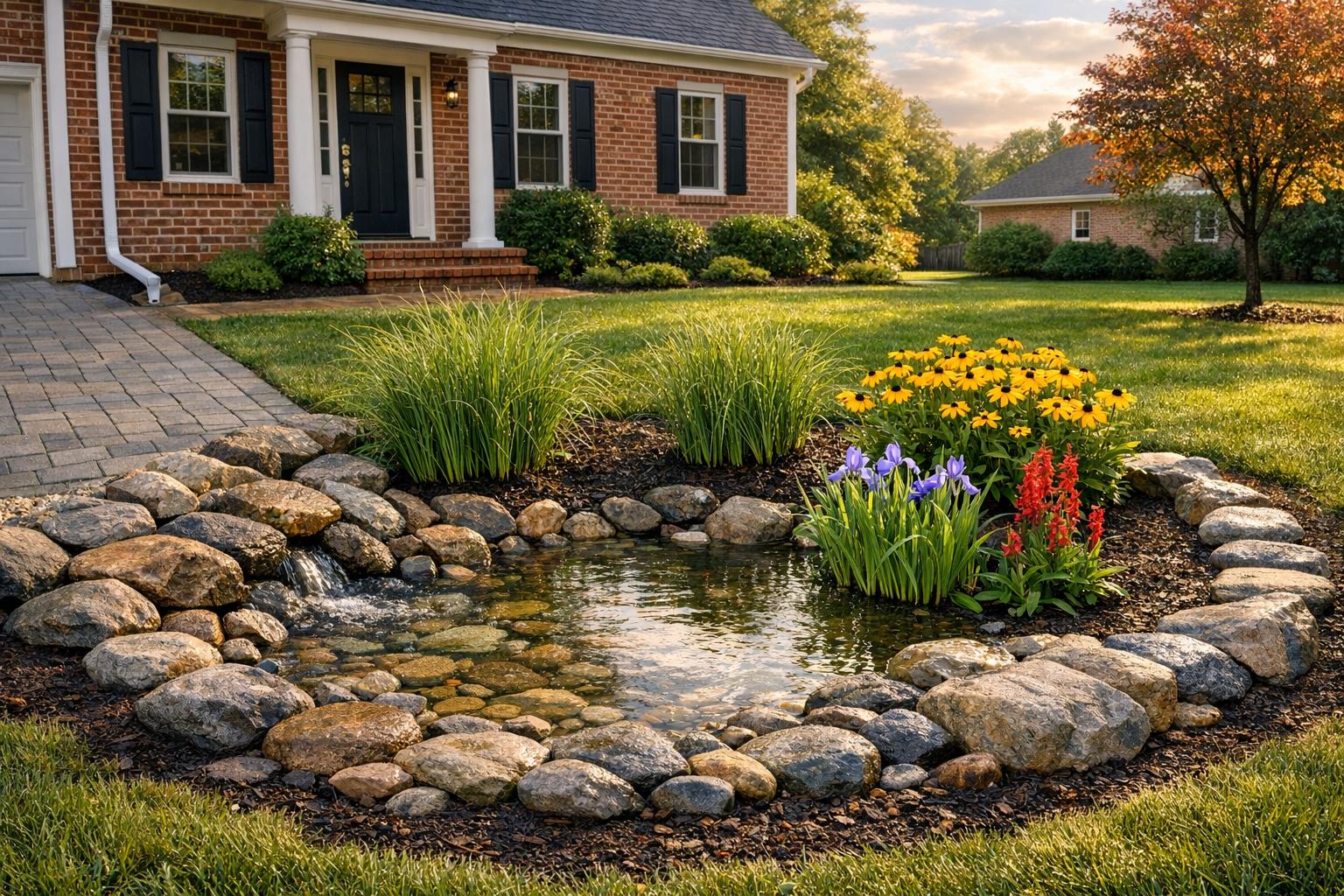
Stormwater runoff is a growing issue for Maryland homeowners. It causes flooding, erosion, and water pollution while damaging properties. Bioretention cells, also known as rain gardens, offer a practical solution by collecting and filtering runoff where it occurs. These systems reduce pollutants, manage water flow, and recharge groundwater, all while blending into landscaping.
Key Takeaways:
- Pollutant Removal: Removes up to 98% of heavy metals and reduces nitrogen and phosphorus significantly.
- Flood Prevention: Temporarily holds and infiltrates runoff, reducing peak flow and downstream flooding.
- Groundwater Recharge: Infiltrates up to 90% of annual rainfall under the right conditions.
- Maintenance: Requires regular upkeep, including mulch replacement, plant care, and debris removal.
- Installation Costs: $1.50–$6.00 per square foot, depending on soil conditions and drainage needs.
For Maryland homeowners, bioretention cells are an effective way to manage stormwater while meeting local regulations. Proper planning, installation, and maintenance ensure long-term performance and compliance.
Stormwater BMP: Bioretention / Rain Garden – Installation
sbb-itb-843f8be
How Bioretention Cells Address Stormwater Problems
Maryland faces a pressing need for effective stormwater management, and bioretention cells offer a natural and efficient solution. These systems combine filtration, water storage, and soil infiltration to manage runoff, prevent damage, and reduce pollution. Let’s dive into how they work to remove pollutants and control stormwater peaks.
Removing Pollutants from Runoff
Bioretention cells rely on a multi-layered design that includes 2 to 4 inches of double-shredded hardwood mulch, engineered soil, and plant roots. This setup captures suspended solids, traps heavy metals, and supports microbes that break down organic contaminants [1][2].
These systems are highly effective at removing pollutants. They can eliminate 95%–98% of heavy metals like cadmium, zinc, and lead, reduce total nitrogen by 40%, cut nitrate-nitrogen levels by 15%–75%, and lower phosphorus by up to 65% during the critical first flush of rainfall – the initial inch of rain that carries the most pollutants [2]. By targeting this first flush, bioretention cells significantly improve water quality.
Reducing Flooding and Managing Peak Flow
Bioretention cells are designed to handle stormwater peaks by temporarily holding runoff during storms. Their surface depressions collect water, which then infiltrates into the ground or drains out through an engineered underdrain system. This process helps restore peak flow rates to levels seen before development, reducing on-site flooding and minimizing downstream problems.
"Bioretention cells can reduce peak runoff rates, infiltrate up to 90% of the annual rainfall, and greatly improve the quality of stormwater runoff." – Albert Jarrett, Ph.D., Pennsylvania State University [2]
When properly designed, a bioretention cell with a surface depression of 9 to 12 inches can manage runoff from an area 7.5 times larger than the cell itself. Even in areas with slow-draining soils, engineered underdrains ensure excess water is handled safely [2].
Recharging Groundwater and Reducing Runoff Volume
In addition to filtering and slowing water, bioretention cells help recharge groundwater. Water infiltrates into the ground, replenishing local aquifers and reducing overall runoff volume. Under the right soil conditions, these systems can infiltrate 85%–90% of annual stormwater runoff [2]. This reduces pressure on municipal drainage systems and keeps more water on-site.
Native plants, shrubs, and trees play a key role in this process. They absorb water biologically and enhance the aesthetic appeal of the area. For soils that can’t absorb all the water, engineered underdrains provide a slow, controlled release, preventing sudden surges that could lead to flooding or erosion downstream.
Planning and Installing Bioretention Cells
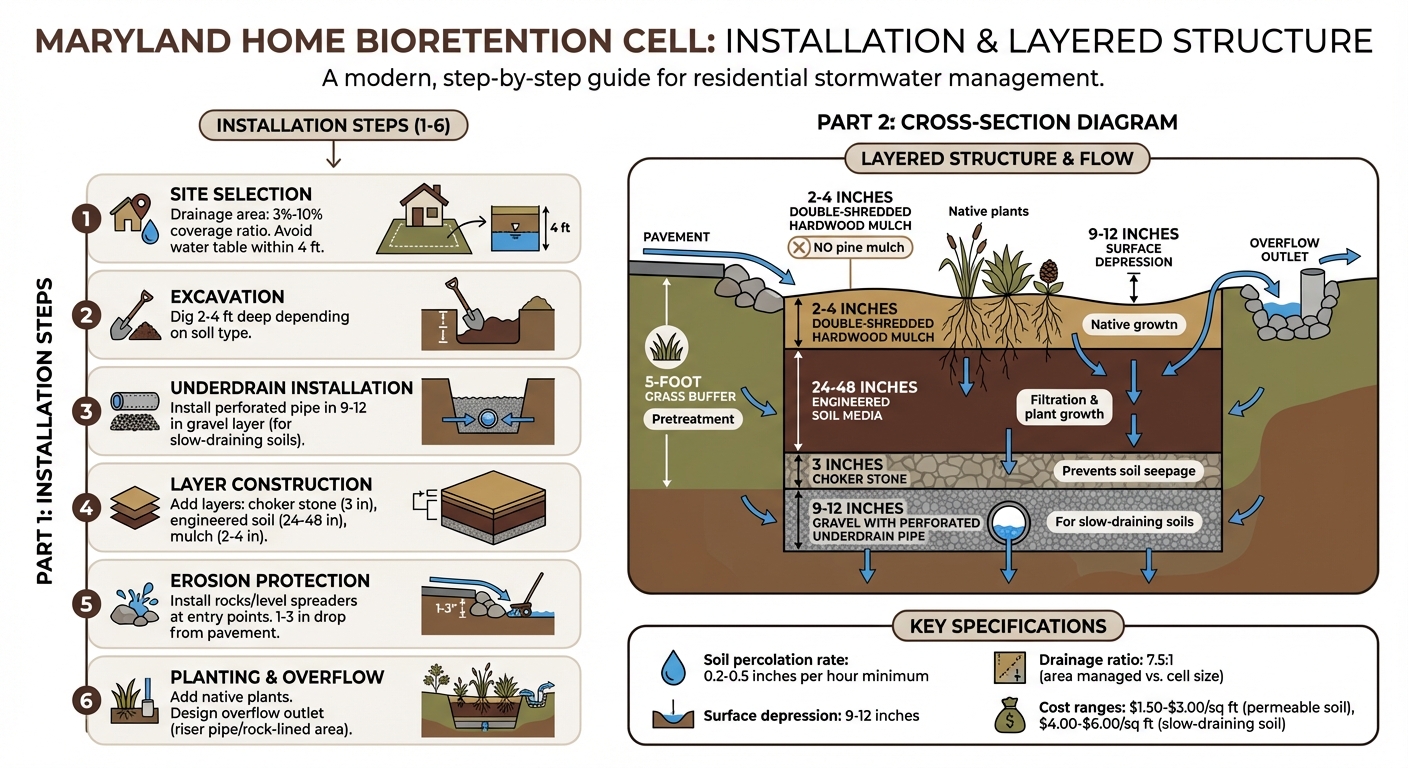
Bioretention Cell Installation Steps and Layer Structure for Maryland Homes
Installing a bioretention cell takes careful planning to ensure it works effectively in the long run. Proper preparation helps homeowners in Maryland maximize benefits like pollutant removal, reduced flooding, and groundwater recharge. Key steps include assessing site conditions, following correct installation methods, and often consulting professionals to handle technical details and local regulations. Once the overall plan is set, the next step is identifying the best location to take advantage of natural runoff patterns.
Choosing the Right Location
The success of a bioretention cell hinges on finding the ideal spot on your property. Look for areas where runoff naturally gathers, such as near driveways, patios, or rooftops. These locations let the cell capture water before it causes erosion or pooling.
Avoid areas with a seasonally high water table within 4 feet of the soil surface or designated wetlands. Before finalizing the location, conduct soil tests to check how well the soil drains. If the percolation rate is below 0.2 to 0.5 inches per hour, you’ll need an underdrain system. This system is especially important for Maryland’s clay soils, which tend to drain slowly. As a rule of thumb, the bioretention cell’s surface area should cover 3% to 10% of the drainage area it serves to handle runoff efficiently.
Installation Steps
Building a bioretention cell involves creating layers that work together to filter and manage stormwater. Start by excavating 2 to 4 feet deep, depending on your soil type. For slow-draining soils, install a perforated underdrain pipe set within a 9- to 12-inch gravel layer at the bottom. Place about 3 inches of choker stone above the gravel to keep soil from seeping into it. Then, add 24 to 48 inches of engineered soil media for filtration and plant growth. Top it off with 2 to 4 inches of double-shredded hardwood mulch, avoiding pine mulch, which tends to float away during heavy rain.
Protect water entry points with rocks or level spreaders to prevent erosion, and ensure there’s a 1- to 3-inch drop from surrounding pavement to the cell’s surface. Include a pretreatment area, like a 5-foot grass buffer, to catch sediment and reduce clogging. Don’t forget to design an overflow outlet – such as a riser pipe or rock-lined area – for managing excess water during storms. When choosing plants, opt for a mix of native species that can handle both wet and dry conditions. Steer clear of trees with invasive roots, as they could damage the underdrain system. Following these steps ensures the cell performs well in filtering pollutants and controlling water flow.
Working with Professional Landscapers
For more complex projects, or to meet local regulations, professional help can make a big difference. Companies like Pro Landscapes MD bring the expertise needed to meet performance standards and comply with local rules. They handle tasks like percolation tests to determine if an underdrain system is required, calculate the correct cell size (often using a 7.5:1 ratio to manage the first inch of rainfall), and design effective overflow structures to prevent erosion during storms.
Costs vary based on soil conditions. For permeable soils, construction typically costs $1.50 to $3.00 per square foot, while slowly draining soils requiring excavation and underdrains range from $4.00 to $6.00 per square foot. This customized approach ensures the cell meets county-specific requirements and optimizes stormwater management. Pro Landscapes MD serves central Maryland communities, including Howard, Montgomery, Prince George’s, and Baltimore counties, offering solutions that help property owners stay compliant with EPA and local Low-Impact Development guidelines while protecting the Chesapeake Bay watershed.
Maintaining Bioretention Cells
Keeping bioretention cells functioning properly doesn’t stop at installation. Regular maintenance is key to ensuring they perform effectively and stay compliant with stormwater management requirements. Simple but consistent upkeep – like monthly inspections and post-storm checks – goes a long way in preventing clogs caused by trash, organic debris, or sediment. These efforts help maintain efficiency and make long-term management more manageable.
Regular Maintenance Tasks
Monthly inspections and cleanups after storms with over an inch of rainfall are essential. Focus on clearing debris from inlets, forebays, and underdrains. Replenishing mulch is another important task: apply triple-shredded hardwood mulch (up to 3 inches) once or twice a year. This not only keeps the area looking neat but also helps suppress weeds and improve water quality. Stick to hardwood mulch – pine mulch isn’t recommended.
Vegetation also needs attention. Prune overgrown plants, remove invasive species, and replace any dead or unhealthy plants as needed. During Maryland’s typically dry summers, watering plants between storms helps them thrive. Plan for vegetation replacement roughly every 10 years as part of their natural lifecycle.
Inspect swales and inflows for signs of erosion. If you notice washouts, repair them promptly and consider adding erosion-control measures like rocks or additional plantings to stabilize the soil. Underdrains should be flushed at least once a year to remove sediment buildup. If drainage issues persist, the soil media may need replacing, especially if it’s clogged with fine sediments or saturated with heavy metals.
Long-Term Performance Considerations
Adding a 5-foot grass buffer strip at the inlet can help filter out suspended sediments before they reach the bioretention media, significantly extending the system’s lifespan. However, if water remains standing for more than 48 hours, it’s a sign that the soil media or underdrain may require attention.
When properly maintained, bioretention cells can handle up to 85–90% of annual stormwater runoff, remove 95–98% of heavy metals like cadmium, zinc, and lead, and reduce total nitrogen by 40% and phosphorus by up to 65% [2]. These impressive results hinge on consistent maintenance.
In some areas, such as Takoma Park, Maryland, homeowners can benefit from stormwater fee credits of up to 50% for installing and maintaining bioretention facilities [3]. To qualify, keep thorough records of all inspections and maintenance work.
Pros and Cons of Bioretention Cells
Understanding the maintenance involved can help you weigh the benefits and challenges of bioretention cells:
| Feature | Advantages (Pros) | Disadvantages (Cons) |
|---|---|---|
| Pollutant Removal | Removes 95–98% of heavy metals and reduces nitrogen and phosphorus significantly | Sediment buildup can clog the system without proper grass buffers |
| Water Management | Handles up to 90% of annual rainfall and supports groundwater recharge | Requires specific soil percolation rates or underdrains |
| Aesthetics | Adds visual appeal as a garden-like feature | Needs regular weeding, mulching, and plant replacement every 10 years |
| Compliance | Helps meet LID standards and may reduce stormwater fees | Involves monthly and post-storm inspections |
| Versatility | Works for both residential and commercial properties | Unsuitable for steep slopes or areas with heavy sediment loads |
"The more a bioretention cell is treated as a garden, the more apt it is to be attractive and flourish."
- Albert Jarrett, Ph.D., Professor Emeritus, Pennsylvania State University
For homeowners in central Maryland who prefer expert help, Pro Landscapes MD offers a range of services tailored to bioretention cell maintenance. Their team handles everything from routine inspections and mulch replenishment to underdrain flushing and soil media replacement. With their support, your bioretention cell can continue to meet local stormwater standards and deliver the benefits outlined above.
Conclusion
Main Points
Bioretention cells provide Maryland homeowners with a reliable way to tackle stormwater issues. These systems are designed to capture and filter runoff, preventing flooding and keeping pollutants from reaching nearby waterways. They’re effective at both pollutant removal and allowing water to soak back into the ground, making them a practical choice for managing runoff[2].
In addition to improving water quality, bioretention cells help safeguard properties by reducing peak water flow and minimizing erosion. Unlike traditional stormwater systems, these setups blend seamlessly with landscaping, combining functionality with aesthetic appeal.
To ensure they perform well over time, regular upkeep is key. Simple tasks like monthly inspections, annual mulch replacement, and occasional flushing of the underdrain can keep the system running smoothly for decades. Plus, vegetation generally only needs replacing about once every 10 years[2].
The benefits of a professionally installed bioretention cell speak for themselves.
Getting Started with Pro Landscapes MD

If you’re ready to protect your home and enhance your landscape, Pro Landscapes MD is here to help. They specialize in designing, installing, and maintaining bioretention cells. With their expertise in stormwater management, grading, drainage, and native plant landscaping, they’ll ensure your system complies with local regulations and works as intended.
Whether you’re looking to install a new bioretention cell or need maintenance services like mulch replacement, underdrain flushing, or soil media updates, Pro Landscapes MD has the skills and experience to keep your system in top shape. Reach out to them today to see how bioretention cells can protect your property, enhance water quality, and create a greener, more sustainable landscape for your Maryland home.
FAQs
Do I need an underdrain for my yard?
Yes, underdrains are often a smart choice for bioretention systems, especially in residential stormwater management. They help channel excess water away, avoiding water buildup that could harm plants and soil. Without an underdrain, your system might struggle with waterlogging, which can make it less effective. To ensure the best results, consider consulting a professional to evaluate your yard’s soil and runoff conditions and determine if an underdrain is necessary.
How do I know if my soil drains well enough?
To find out if your soil drains properly, try an infiltration test. Dig a hole, fill it with water, and monitor how long it takes to drain. If the water soaks into the ground completely within 48 hours, your soil likely has good drainage.
Will a rain garden attract mosquitoes?
A rain garden might invite mosquitoes if it’s not well-maintained or if water is left to sit for extended periods. But with the right design and consistent care – like maintaining proper drainage and preventing standing water – the chances of attracting mosquitoes are quite low.
Chat with Us