









- bhavya gada
- No Comments
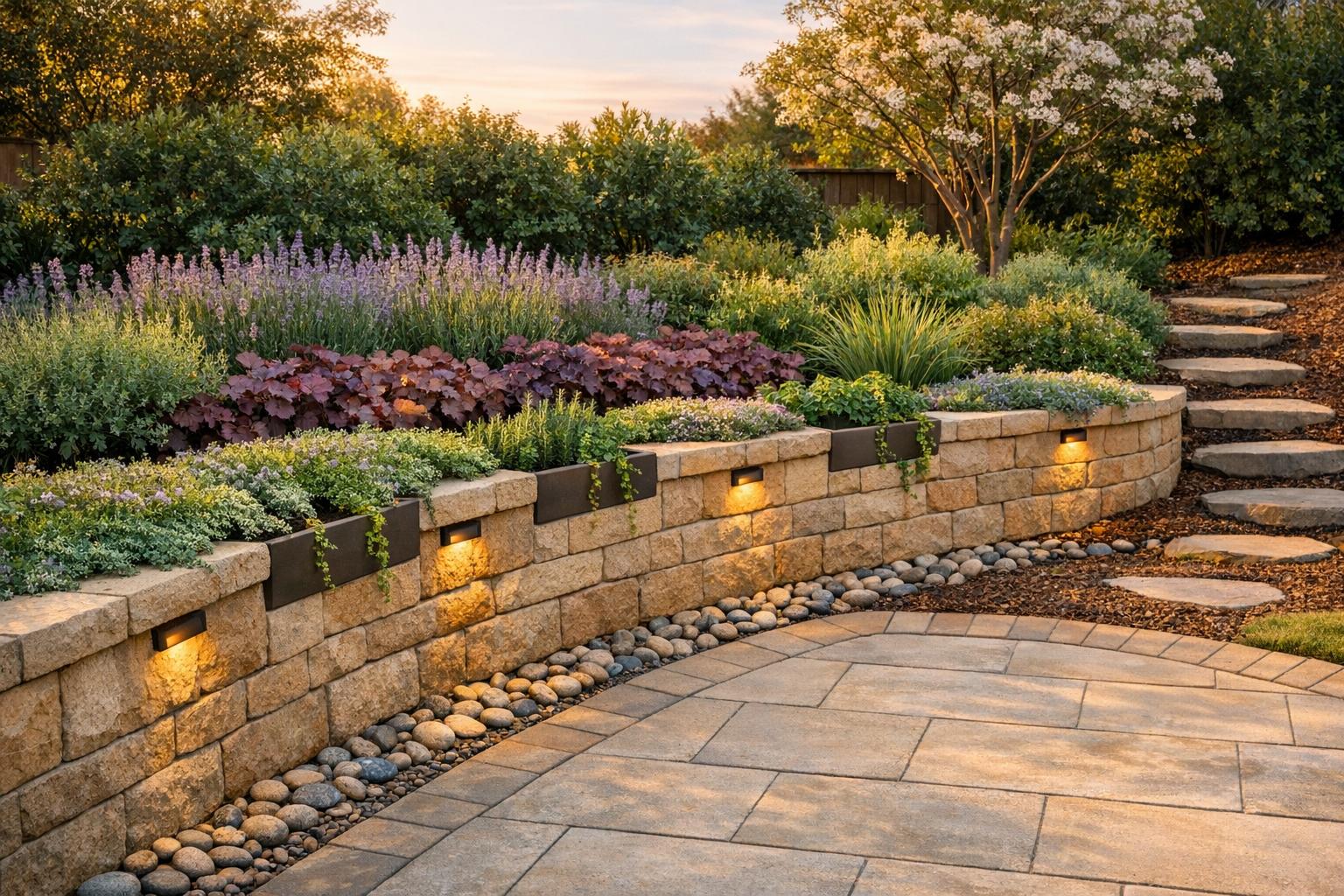
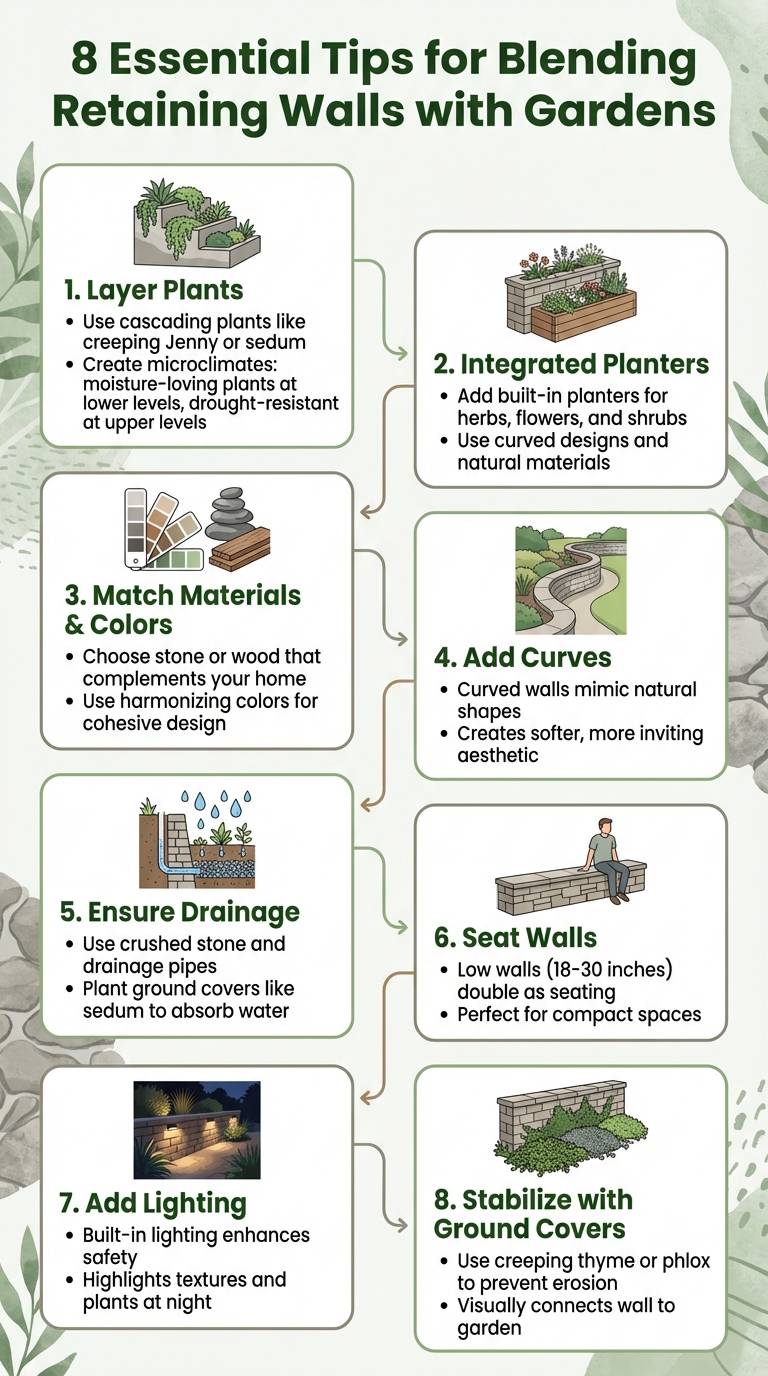
Retaining walls can transform sloped landscapes into functional and visually appealing spaces. Here’s how you can make them blend seamlessly with your garden:
- Layer Plants: Use cascading plants like creeping Jenny or sedum to soften rigid lines. Terraced walls create microclimates for different plant types – moisture-loving plants thrive at lower levels, while drought-resistant ones suit upper levels.
- Integrated Planters: Built-in planters add texture and provide growing spaces for herbs, flowers, or shrubs. Curved designs and natural materials enhance the look while supporting drainage.
- Match Materials and Colors: Choose materials like stone or wood that complement your home and garden. Use colors that harmonize with your landscape for a cohesive design.
- Add Curves: Curved walls mimic natural shapes, creating a softer, more inviting aesthetic while reducing excavation needs.
- Ensure Drainage: Use crushed stone and drainage pipes to prevent water buildup and wall damage. Ground covers like sedum can stabilize soil and absorb water.
- Seat Walls: Low walls double as seating and garden borders, adding functionality to compact spaces.
- Lighting: Built-in lighting enhances safety and highlights textures, plants, and features at night.
- Stabilize with Ground Covers: Plants like creeping thyme or phlox prevent erosion and visually connect the wall to the garden.
8 Essential Tips for Blending Retaining Walls with Gardens
1. Layer Plants for Terraced Effects
Natural Appearance
Cascading plants can turn a retaining wall into something that feels like it belongs in the landscape. Think about plants like creeping Jenny or sweet potato vine – they spill over edges, breaking up rigid lines and giving the impression that nature is slowly taking over.
If you’re building or modifying your wall, consider adding planting pockets. These small spaces can house rock-loving plants like sedum, thyme, or moss, which thrive in stone gaps. For dry-stack walls, these pockets are perfect for alpine plants and also help with drainage. These touches not only soften the hardscape but also create opportunities to design multiple planting zones across the wall’s levels.
Better Garden Function
Terraced walls aren’t just pretty – they’re practical too. Each level creates a unique microclimate, allowing you to choose plants that thrive in specific conditions. For example:
- Lower terraces: These areas tend to collect runoff, making them ideal spots for moisture-loving plants like ferns, hostas, and astilbe.
- Middle sections: These stay drier and are perfect for drought-tolerant varieties like lavender, salvia, and daylilies.
- Upper levels: With plenty of sunlight, these are great for growing edibles like tomatoes, basil, and sage, or for planting ornamental grasses that sway beautifully in the breeze.
By using these microclimates, you can create a garden that feels cohesive while also making the most of the space.
Connecting Hardscape and Softscape
The key to blending walls with gardens is creating a seamless visual flow. Use taller plants at the back of each terrace and shorter ones toward the front to ensure every layer stands out. At the edges of the wall, trailing plants like ivy or million bells (Calibrachoa) can spill over, softening the look of concrete or modular blocks.
To protect the wall’s structure, be mindful of where you plant shrubs and trees. Keep smaller shrubs at least 3 feet away, larger shrubs 6 feet away, and trees 15 feet from the wall to avoid root damage [7]. These simple steps help maintain both the beauty and durability of your terraced design.
2. Build Integrated Planters
Natural Appearance
Built-in planters can transform a retaining wall into a seamless part of your garden. By breaking up flat surfaces with tiered and textured elements, they make the space feel more dynamic and alive. Using materials like dry-stone construction or gabion baskets encourages plants to grow in cracks and crevices, helping the wall blend naturally into the surrounding landscape [4][8].
Better Garden Function
Integrated planters offer practical growing spaces at various heights, making it simpler to organize plants by type. Herbs and flowers can be placed in eye-level planters for easy access and enjoyment, while lower sections can house larger shrubs or vegetables. To maximize sunlight and space, stagger plants so taller ones don’t overshadow smaller species [6].
Curved designs, rather than straight lines, create a softer, more inviting look and provide varied planting areas [10]. Plus, the built-in structure eliminates the need for separate containers or raised beds, saving both space and money. These planters also set the stage for incorporating sustainable gardening techniques.
Eco-Friendly Practices
Dry-stacking stones without mortar not only supports natural drainage but also creates pockets for plants to root [4][8]. For a more sustainable approach, consider systems like plantable cells (e.g., the Permacrib system) or vertical garden membranes. These use geotextiles to form planting pockets and can be irrigated with stored rainwater, reducing water usage [4].
Opting for native plants such as Agastache, Winterfat, and Big Sage can further conserve water, as they require minimal irrigation once established. These plants also attract local pollinators and wildlife [5]. Additionally, some modern block systems, like AB Fieldstone, are made with recycled materials and designed for eco-friendly planting [9][10]. These choices not only enhance sustainability but also create a cohesive connection between the wall and the garden.
Connecting Hardscape and Softscape
Integrated planters do more than organize your garden – they help unite hardscape features with lush greenery. Using the same materials for planters, pathways, or fire pits creates a sense of harmony across your landscape [8]. To soften the edges where stone meets soil, consider plants like ivy or Million Bells, which naturally spill over the sides [6].
Adding trellises to planter walls introduces vertical greenery, as climbing vines grow upward and blend the hardscape with the garden [6]. When building multiple tiers, compact soil in layers of 4 to 8 inches to prevent settling or shifting over time [10]. This careful planning ensures your integrated planters remain both functional and visually appealing.
3. Match Materials and Colors
Natural Appearance
Choosing the right materials and colors for your retaining wall can help it blend beautifully with your garden. Materials like natural stone, granite, limestone, or sandstone work well in traditional cottage-style gardens filled with roses and sprawling flower beds [8][1]. For a more rustic vibe, dry-stack stone or boulders are excellent options. These can even serve as "living walls" where moss and hardy flowers can thrive [8][2].
Color plays a big role in defining your outdoor space. For instance, white or cream-colored concrete and stone create a clean, bright backdrop that makes drought-resistant palms and colorful shrubs stand out [8][2]. On the other hand, black timber or dark-stained wood fades into the background, letting your garden’s colors take center stage [2]. Gray stone walls pair beautifully with purple flowers and lush greenery, adding a softer touch to modern landscapes [8].
Once you’ve established a natural look with your materials and colors, make sure all the elements in your space work together to create a cohesive design.
Connecting Hardscape and Softscape
To create harmony between your retaining wall and the rest of your garden, use similar materials and colors throughout your outdoor space. For example, matching the stone of your retaining wall to other features like fire pits, pizza ovens, or patios can tie everything together seamlessly [8][3]. This approach, often referred to by professionals as a "complete composition", helps unify the overall design [11].
As Gardenista points out:
"The material you select should complement the architectural style of the house and other hardscape elements." – Gardenista [3]
You can also carry the wall’s color and texture into nearby garden accents to reinforce the design. Another way to soften the look is by adding staggered rows of plants at the top of the wall. This creates interesting variations in height and texture, naturally drawing attention away from any plain surfaces [6]. For an extra touch of cohesion, consider painting brick walls to match your home’s exterior trim. A shade like "Dove White" can seamlessly connect the wall with your home’s overall aesthetic [2].
4. Add Curves for Natural Flow
Natural Appearance
Curved retaining walls bring a softer, more flowing look to your outdoor space, mimicking the irregular shapes found in nature. Unlike sharp right angles, these walls follow the natural contours of a sloped lawn, transforming a purely functional structure into a sculptural feature. When designed to align with your land’s curves, they blend effortlessly with the surrounding environment.
Patricia Benner, Principal at Benner Landscape Design, highlights this appeal:
"It has a nice, organic flow and makes the seating feel integrated with its surroundings."
Curved walls pair beautifully with cascading plants. Greenery like creeping Jenny, sweet potato vine, or fig ivy drapes naturally over the curves, softening the structure and reinforcing the sense of nature reclaiming the space. This combination of hardscape and softscape creates a seamless and inviting look.
Better Garden Function
Curved retaining walls aren’t just about looks – they also improve the functionality of your garden. They can define different garden zones or create smooth transitions between formal and wilder, less maintained areas. Circular or curved walls are ideal for framing focal points such as a striking tree or a vibrant flower bed. Plus, when built at bench height, these walls can double as seating around patios or fire pits, encouraging people to linger and enjoy the setting.
Eco-Friendly Practices
Curved walls often work in harmony with the natural topography of your yard, reducing the need for heavy excavation and minimizing soil disruption. By following the land’s natural contours, you can lower grading costs and improve soil stability.
Using natural materials like boulders or dry-stack stones enhances this eco-conscious approach. The gaps between stones allow for effective drainage while supporting vegetation growth. These "living walls" not only provide insulation but also create habitats for beneficial insects and birds. Gabion walls, made with wire mesh filled with stone, are another sustainable option. They offer excellent drainage, use locally sourced rubble, and integrate seamlessly with the garden’s natural beauty. This thoughtful design approach combines functionality with a commitment to environmental harmony.
5. Ensure Proper Drainage with Gravel and Plants
Better Garden Function
Managing water effectively is key to keeping your retaining wall stable and functional. Without proper drainage, water can accumulate behind the wall, creating pressure that might lead to bulging, leaning, or even collapse – especially during Maryland’s freeze-thaw cycles.
To prevent this, fill the space behind the wall with angular crushed stone. This type of stone creates natural drainage channels, allowing water to flow downward instead of pooling against the wall. For taller walls (over 4 feet), include a perforated drainage pipe within the gravel. Slope the pipe at 2% and add weep holes every 4 feet to release pressure in specific areas.
Additionally, place nonwoven geotextile fabric between the soil and gravel backfill. This fabric filters out fine soil particles while letting water pass through, ensuring the drainage system stays clear and functional.
"A retaining wall is only as strong as its drainage system." – MM Concrete
These steps not only safeguard your wall but also set the stage for integrating plants into your design.
Connecting Hardscape and Softscape
Once your drainage system is in place, plants can further enhance the overall functionality and aesthetic of your garden. Ground covers like creeping juniper or sedum help stabilize soil on slopes while soaking up excess water before it reaches the wall. At the base of the wall, add a 2–3 inch layer of decorative gravel mulch. This not only supports drainage but also creates a seamless visual connection between the wall and your garden beds.
For a natural look, consider planting drought-tolerant species such as stonecrop (Sedum) or pinks (Dianthus) in the gaps of dry-stack or natural stone walls. These hardy plants thrive in the well-drained spaces between stones, blending the hardscape with the surrounding greenery while helping manage surface runoff. Tailor your plant choices to moisture conditions: drought-resistant options like Agastache or Big Sage work well on higher, drier terraces, while ferns thrive in lower, wetter spots.
sbb-itb-843f8be
6. Use Seat Walls as Garden Borders
Better Garden Function
Seat walls are a clever way to combine form and function in your garden. Much like layered plantings or built-in planters, they create a balanced outdoor environment that’s both practical and visually appealing. For compact Maryland yards, these low walls – typically between 18 and 30 inches tall – serve as dual-purpose structures. They define garden borders while offering informal seating, cutting down on the need for extra patio furniture and making the most of limited space.
"A low wall – no larger than 30 inches – can double as a perfect, informal seating opportunity in the garden. Installing a low garden wall along a path can add structure and guide visitors through the space. It can also create a perfect opportunity for plants to spill and cascade, creating a wonderful tension between the two hard and soft elements." – Christian Douglas, Landscape Designer [15]
For added comfort and style, top the wall (ideally 18–20 inches high) with a smooth stone layer. This flat surface not only enhances the seating experience but also gives the wall a polished, finished appearance. Placing these walls along pathways can subtly guide visitors through your garden while creating welcoming spots to pause and take in the surroundings. It’s a simple yet effective way to merge structure with lush, cascading greenery.
Connecting Hardscape and Softscape
Beyond their practical benefits, seat walls can tie your garden’s design together beautifully. To create a natural harmony between the stone and the garden, consider softening the edges with cascading groundcovers like creeping Jenny. This approach works especially well along pathways, where the contrast between structured stone and flowing foliage adds visual depth and charm.
For a cohesive look, match the materials of your seat wall to other hardscape elements like walkways or fire pits. Natural materials such as stacked stone or fieldstone are excellent choices, particularly if you incorporate rocks uncovered during excavation. To maintain the wall’s integrity, keep small shrubs at least 3 feet away and large trees at least 15 feet away, while allowing flowers and groundcovers to grow close to its base [7].
Pro Landscapes MD specializes in designing and installing seat walls that seamlessly blend into your outdoor space, enhancing both its functionality and beauty.
7. Add Lighting for Nighttime Appeal
Better Garden Function
Lighting can transform retaining walls into striking nighttime features while improving safety. Much like layered plants, well-placed lighting enhances both the look and utility of your space. In areas with sloped terrain, like many Maryland landscapes, lighting is essential for safety. Built-in path lights, for example, brighten steps and transitions, ensuring safer movement after dark.
"Mood lighting is a surefire way to bring in a wow factor to your wall. Not only do lights work as safety mechanisms – especially important in a sloped area – they also add ambiance to your outdoor space." – Architectural Digest [2]
To save time and money, plan for integrated wiring during the wall’s construction phase. Running electrical lines at this stage is far simpler and more cost-effective than adding them later [2].
Connecting Hardscape and Softscape
Lighting also bridges the gap between hardscape elements, like retaining walls, and softscape features, such as plants. Uplighting at the wall’s base can emphasize the natural textures of stone and highlight nearby greenery, adding depth and character to your landscape [16]. LED strip lighting along the wall’s edge can accentuate both the stonework and any cascading plants [16].
For walls made of materials like fieldstone or granite, lighting brings out subtle textures and color variations that might otherwise go unnoticed. This interplay of light, stone, and greenery creates a polished and inviting evening atmosphere. Pro Landscapes MD specializes in designing lighting systems that blend seamlessly with retaining walls and garden features, ensuring your outdoor space shines after sunset.
8. Stabilize with Ground Covers
Better Garden Function
Ground covers play a crucial role in stabilizing soil and preventing erosion, especially around retaining walls. On slopes, wind and rain can wash away loose soil, but low-growing plants like creeping phlox or sedum help keep the earth in place [5][8]. Unlike trees, whose aggressive roots may damage wall structures, these plants stay near the surface, making them a safer choice.
In Maryland’s sloped landscapes, this natural stabilization is especially important. Ground covers form a dense layer that not only holds the soil but also suppresses weeds. This means less time spent on maintenance and a reduced need for chemical treatments [14]. As a bonus, they create a seamless blend between hardscape elements like walls and the surrounding greenery.
Connecting Hardscape and Softscape
Cascading plants such as creeping Jenny or trailing rosemary can soften the rigid lines of retaining walls by creating a natural transition into garden beds [16][19]. This type of planting at the "toe level" anchors taller walls visually, making them feel more integrated into the overall design [18].
For rustic stone walls, consider adding moss or hardy flowers in the crevices to create a "living wall" effect [8]. Fast-growing plants like English ivy can even cover an entire wall, turning a functional structure into an eye-catching green feature [2][4]. Repeating similar colors and textures along the wall’s base can guide the eye naturally from stone to soil [17][18].
Eco-Friendly Practices
Native ground covers are a smart choice for eco-conscious gardeners. These plants are naturally suited to local conditions, requiring less water, fertilizer, and upkeep [14]. Their deep roots not only strengthen the soil around retaining walls but also provide habitats for pollinators and other beneficial insects [20]. On slopes where water tends to drain quickly, drought-tolerant options like stonecrop or creeping thyme are ideal [16][14].
To make the most of your ground covers, consider installing a drip irrigation system. This ensures water reaches the roots directly, reducing waste [14]. Adding organic mulch, such as bark chips, around the plants helps retain moisture and enrich the soil over time [14]. By choosing locally adapted ground covers, you can seamlessly integrate your wall into its natural surroundings. If you’re unsure where to start, Pro Landscapes MD can help you select the best native plants for Maryland’s climate while ensuring your retaining wall remains stable for years to come.
👉 20 Retaining Wall Ideas to Create Flat Space in Your Yard | Landscaping Shorts
Conclusion
Incorporating retaining walls into your garden design can be straightforward if you approach them as part of the overall landscape rather than as standalone structures. Focus on blending the wall with your surroundings by using plants of varying heights, selecting materials that match your home’s style, and designing with gentle curves to create a natural flow. Ground covers not only stabilize the soil but also soften the wall’s edges, while features like seat walls or integrated planters add both practicality and charm.
Pay attention to drainage and secure necessary permits and engineering approvals to prevent costly repairs down the line. For walls exceeding 3 to 4 feet in height, most local regulations mandate permits and professional engineering approval [5][3]. Combining effective drainage solutions with solid construction methods is crucial, especially given Maryland’s challenging weather conditions.
Maryland’s freeze–thaw cycles demand careful planning. Dig foundations below the frost line and use compacted gravel to reduce soil movement. This is particularly important in areas with heavy clay soil, which expands and contracts with moisture changes [21][13][4].
For homeowners in central Maryland considering a retaining wall project, Pro Landscapes MD offers a full range of design and installation services. Their team handles everything from securing permits to selecting materials and implementing drainage systems. With their expertise, your retaining wall will not only enhance your garden’s aesthetics but also withstand Maryland’s climate, serving as a durable and functional feature for 40 to 50 years or more [5][12].
FAQs
What plants are best to soften a retaining wall?
Trailing plants such as ivy or Million Bells (Calibrachoa) are fantastic for adding a touch of softness to a retaining wall. These plants spill over the top edge, cascading gracefully downward to create a flowing, natural appearance. This effect helps the wall blend seamlessly into the surrounding garden, giving it a more harmonious and organic feel.
How do I prevent water from building up behind my retaining wall?
To keep water from accumulating behind your retaining wall, it’s crucial to have proper drainage in place. Install drainage pipes or weep holes to let water escape, which helps reduce pressure on the wall. Construct the wall with a slight back slope to direct runoff away from the structure, and opt for permeable materials to aid water flow. Make it a habit to clear debris from drainage outlets and check for any blockages to ensure water continues to flow effectively.
When do I need a permit or engineer for a retaining wall?
If you’re planning to build a retaining wall that’s 4 feet or taller, or one that involves structural support, load surcharges, or water management, you’ll likely need both a permit and an engineer’s expertise. These requirements ensure the wall complies with safety standards, remains stable, and adheres to local regulations.
Chat with Us