









- bhavya gada
- No Comments
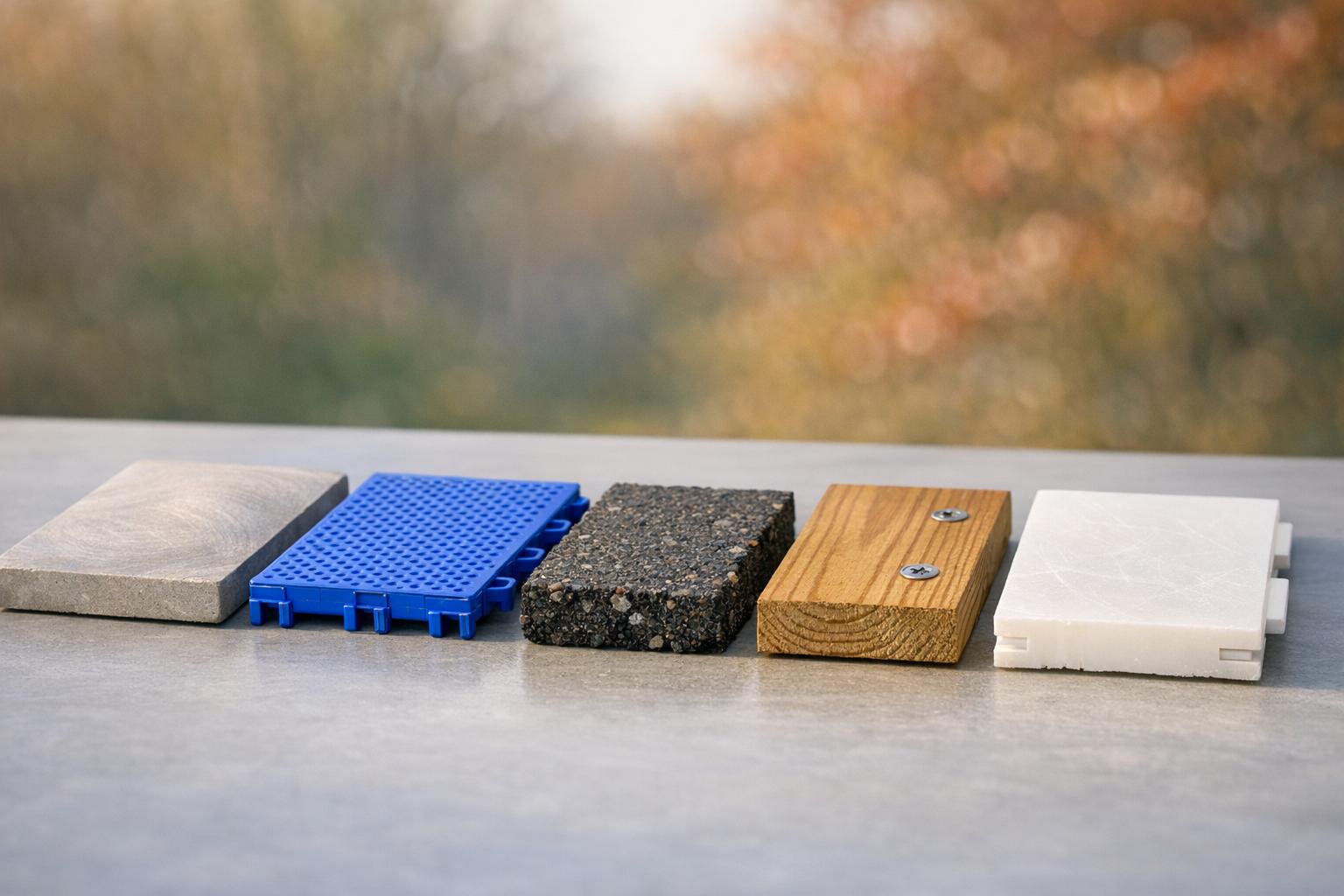
Choosing the right skating rink flooring depends on durability, maintenance, and cost, especially in Maryland’s tough four-season climate. Here’s a quick breakdown of the five most common materials:
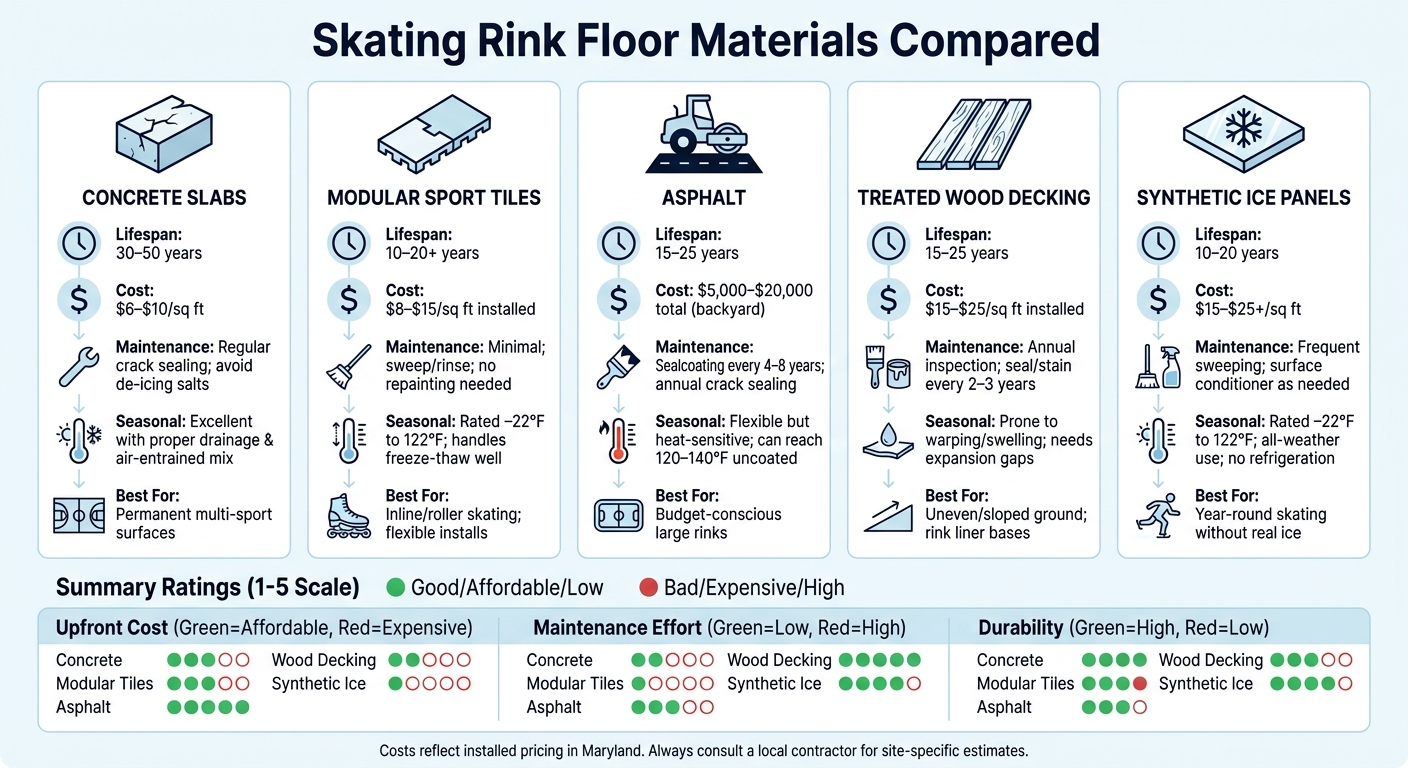
- Concrete Slabs: Long-lasting (30–50 years) with proper installation but requires crack sealing and has higher upfront costs ($6–$10/sq ft).
- Modular Sport Tiles: Easy to install, customizable, and weather-resistant; costs range from $8–$15/sq ft installed.
- Asphalt: Budget-friendly ($5–$20k for backyard rinks) but requires regular upkeep like sealcoating every 4–8 years.
- Treated Wood Decking: Ideal for uneven ground but needs frequent maintenance and costs $15–$25/sq ft installed.
- Synthetic Ice Panels: All-season use but expensive ($15–$25+/sq ft) with higher skate friction.
Quick Comparison
| Material | Lifespan | Cost (per sq ft) | Maintenance Needs | Seasonal Suitability |
|---|---|---|---|---|
| Concrete Slabs | 30–50 years | $6–$10 | Regular crack sealing | Great with proper drainage |
| Modular Sport Tiles | 10–20+ years | $8–$15 | Minimal, easy to clean | Handles wide temperature range |
| Asphalt | 15–25 years | $5–$20k (total) | Sealcoating every 4–8 yrs | Flexible, but heat-sensitive |
| Treated Wood Decking | 15–25 years | $15–$25 | Annual inspections, sealing | Susceptible to warping |
| Synthetic Ice Panels | 10–20 years | $15–$25+ | Frequent cleaning | All-weather use |
For Maryland’s freeze-thaw cycles, concrete with proper drainage or modular tiles over a stable base are top choices. Each option balances cost, durability, and maintenance differently, so pick based on your needs and budget.
Skating Rink Floor Materials Compared: Cost, Lifespan & Maintenance
5 Best Roller Skating Surfaces to Skate On
sbb-itb-843f8be
1. Concrete Slabs
Concrete is a popular option for outdoor skating rinks, thanks to its durability and long lifespan. When installed and maintained correctly, a concrete surface can last anywhere from 30 to 50 years, making it a cost-effective choice over time. Here’s a closer look at how concrete performs in terms of durability, seasonal adaptability, maintenance, and cost.
Durability
Concrete slabs used for skating are built to withstand significant stress. With compressive strengths ranging from 3,000 to 5,000 psi, they can handle skates, heavy foot traffic, and even maintenance equipment. Most recreational rinks use a 4- to 6-inch-thick slab reinforced with welded wire mesh or rebar, laid over a compacted gravel base. This setup helps prevent cracking and improves the slab’s structural integrity over its lifespan.
Seasonal Performance
In areas like Maryland, where freeze-thaw cycles are common, certain design elements are essential for durability. Air-entrained concrete, which contains tiny air bubbles, helps absorb pressure from freezing water. A well-drained granular subbase adds further protection by improving water drainage. To minimize cracking, control joints are placed every 8–12 feet, allowing the slab to expand and contract with temperature changes. Additionally, a slight perimeter slope – around 1–2% – prevents water from pooling, reducing the risk of surface damage.
Maintenance
Keeping a concrete rink in good shape involves regular maintenance. Sweeping, power washing, and sealing small cracks are key tasks. Using a flexible concrete sealant on cracks prevents water from seeping in and causing winter damage. De-icing salts should be avoided, as they can lead to surface scaling and spalling. Instead, sand is a safer alternative for improving traction when necessary.
Cost
The cost of installing a basic outdoor concrete slab typically ranges from $6 to $10 per square foot. Factors like slab thickness, reinforcement, site preparation, and local labor rates can influence the final price. While concrete has a higher initial cost compared to asphalt, its longer lifespan and lower maintenance needs make it more economical over time – especially over a 20- to 30-year period. Plus, the slab’s versatility allows it to double as a multi-use surface during warmer months, supporting activities like basketball or pickleball and adding even more value to the investment.
2. Modular Sport Tiles
Modular sport tiles are interlocking polypropylene panels designed to create a seamless skating surface over concrete or asphalt. These tiles snap together easily, making them a go-to option for inline and roller skating rinks, backyard courts, and community recreational spaces. Since they don’t require curing like poured concrete, they’re ready to use immediately. Plus, they come in various colors, layouts, and pre-applied line markings, adding a layer of customization. Let’s break down their benefits and what to keep in mind.
Durability
Top-tier modular sport tiles – offered by brands like Sport Court, VersaCourt, and Mateflex – are crafted from UV-stabilized, high-impact polypropylene. This material is built to resist fading, cracking, and becoming brittle, even with prolonged use. With proper care, these tiles typically last 10 to 20+ years under residential or light commercial conditions. One major perk? If a tile gets damaged, you can simply unsnap it and replace it – no need for jackhammers or messy patchwork.
Seasonal Performance
These tiles are designed to handle a wide range of temperatures, from −22°F to 122°F, making them ideal for regions like Maryland, where summers can be sweltering, and winters bring freeze-thaw cycles. Their interlocking structure allows for natural expansion and contraction as temperatures change, preventing buckling or cracking. Many tiles feature a perforated or open-grid surface, which helps channel rainwater and snowmelt, ensuring the surface dries quickly and avoids standing water damage. For larger installations, leaving perimeter expansion gaps is a smart move to prevent buckling during hot summer days.
Maintenance
Keeping modular sport tiles in good shape is simple. Regularly sweep or use a leaf blower to clear debris from the perforations. For dirt and grime, a garden hose or gentle pressure wash works perfectly. Since the lines and colors are molded into the tiles, there’s no need for sealing, repainting, or recoating. During snowy months, opt for plastic shovels or snow blowers with rubber blades to avoid scratching the surface. If your yard slopes toward the rink, consider improving the grading and drainage. Companies like Pro Landscapes MD specialize in this and can help reduce debris buildup caused by Maryland’s unpredictable weather.
Cost
The cost of modular sport tiles generally falls between $4 and $8 per square foot for materials, with premium options ranging from $8 to $12 per square foot. When you factor in installation – including base preparation, edging, and labor – the total cost typically ranges from $8 to $15 per square foot. If you already have a sturdy concrete or asphalt base, expenses stay closer to the tile price, with minimal added costs. For a residential rink sized between 1,000 and 1,500 square feet, expect to invest in the low five-figure range. While pricier than basic asphalt, modular tiles are far less expensive than synthetic ice and offer lower long-term maintenance costs compared to painted surfaces.
3. Asphalt and Coated Surfaces
Asphalt is a popular choice for outdoor skating rinks, thanks to its availability, ability to cover large areas efficiently, and lower upfront costs compared to concrete. While plain asphalt works, it performs much better when paired with an acrylic or polyurethane sport coating. These coatings, similar to those used on outdoor tennis or basketball courts, enhance the surface by improving smoothness, traction, color, and weather resistance. This combination is especially well-suited to Maryland’s challenging seasonal climate.
Durability
A properly constructed asphalt rink – featuring hot-mix asphalt over a compacted aggregate base (commonly 2–3 inches of asphalt over 4–6 inches of crushed stone) – can last structurally for 15–25 years. However, the skating surface itself typically requires maintenance every 5–10 years. Factors like thermal expansion, freeze-thaw cycles, and heavy use can lead to cracking and surface wear. Fortunately, a quality sport coating acts as a protective layer, absorbing wear and UV damage, which helps preserve the asphalt beneath. High-traffic areas tend to wear out first, but spot recoating these sections can help delay the need for a full recoat.
Seasonal Performance
Maryland’s climate, with its hot summers and cold winters, presents specific challenges for asphalt surfaces. Asphalt’s flexibility allows it to handle ground movement better than concrete, reducing the likelihood of cracking. However, dark, uncoated asphalt can reach temperatures of 120–140°F in summer, which softens the surface and speeds up wear. Applying a light-colored acrylic coating can help keep the surface cooler and more comfortable. In winter, water infiltration is the main concern. When water seeps into cracks, freezes, and expands, it can worsen the damage. Sealing cracks annually before the first freeze is the best way to prevent this issue.
Maintenance
Maintaining an asphalt rink is relatively simple: sweeping, rinsing, and inspecting the surface regularly for cracks are key tasks. Annual pressure washing can remove grime and mildew, particularly in shaded areas. The most critical maintenance step is recoating the sport surface every 4–8 years, depending on the level of use and UV exposure. For more extensive repairs, such as fixing cracks or improving drainage around the rink, hiring a hardscape contractor experienced in both paving and drainage is a smart move. Companies like Pro Landscapes MD can assist with grading, installing French drains, and leveling the yard to ensure proper water runoff – an essential step to prolong the life of the pavement in Maryland’s wet seasons.
Cost
Asphalt is typically the most budget-friendly hard surface option for larger rinks. Preparing the base and grading costs around $2–$6 per square foot, while asphalt paving adds another $3–$8 per square foot, and applying a sport coating system costs approximately $1–$4 per square foot. For a backyard rink, the total installation cost generally falls between $5,000 and $20,000, depending on factors like site conditions, soil quality, and drainage requirements. This price is usually lower than that of a reinforced concrete slab in most parts of the U.S. When comparing long-term costs, don’t forget to account for recoating cycles and occasional crack repairs over a 15–20 year period.
Next, we examine treated wood decking for skating rinks.
4. Treated Wood Decking
Treated wood decking offers a practical alternative to the hard surfaces we’ve discussed so far. Instead of acting as the skating surface itself, a pressure-treated wood platform creates a raised, level foundation for rink liners and either natural ice or refrigeration systems. This setup works well for backyard rinks, especially on uneven or sloped ground where pouring a concrete slab might be too expensive or just not feasible.
Durability
Modern pressure-treated wood, treated with ACQ, CA, or MCA copper-based preservatives, is built to resist rot, decay, and insect damage, making it suitable for outdoor use. A well-built treated wood platform can last 15–25 years, depending on the type of wood, treatment, and how well the structure is ventilated. For areas in contact with soil, it’s essential to use ground-contact rated lumber and pair it with hot-dipped galvanized or stainless steel fasteners to prevent rust caused by the rink’s wet-dry cycles. To ensure stability under the weight of ice and water, joists should be spaced 12 inches on center, instead of the typical 16 inches.
Seasonal Performance
Wood naturally reacts to changing weather – expanding, contracting, and sometimes warping. In places like Maryland, with humid summers and freeze-thaw winters, these movements can lead to uneven joints, which may create bumps under the rink liner. This can compromise ice quality and even pose safety risks for skaters. To address this, design the deck with a slight pitch of ⅛ to ¼ inch per foot to help water drain away and reduce frost heave. Consistent expansion gaps between boards can also prevent raised screw heads that might puncture liners or snag skates.
Maintenance
A wood rink base needs annual inspections, both before and after the skating season. Check for soft or rotting boards, loose fasteners, and any areas that may have shifted out of alignment. Power-washing once a year removes algae and mildew that can make the wood slippery. Applying a high-quality exterior sealant or stain every 2–3 years to exposed areas (outside the liner’s footprint) helps slow down moisture absorption and UV damage. For rinks that are flooded each winter, it’s crucial to inspect and repair edge boards or caulking before setup to prevent water from seeping into the substructure.
Cost
The materials for treated wood decking typically cost $2–$4 per square foot for the boards alone. When you factor in framing, footings, and labor, the total installed cost usually falls between $15–$25 per square foot. For a backyard rink of 200–400 square feet, you’re looking at a budget in the range of $3,000–$12,000, depending on the complexity of the base and local labor costs. While this can be comparable to the cost of a basic concrete slab for smaller rinks, the long-term maintenance expenses (like sealing and replacing boards) can even out the costs over time.
For homeowners in central Maryland, companies like Pro Landscapes MD (prolandscapesmd.com) can integrate a wood rink platform into a larger outdoor project. They can handle tasks like grading, drainage, and hardscaping to ensure the surrounding landscape manages runoff effectively and keeps the wood base dry during off-seasons.
Next, we’ll look at synthetic ice panels as another option for building outdoor skating rinks.
5. Synthetic Ice Panels
Synthetic ice panels are interlocking sheets made from HDPE or UHMW-PE, designed to mimic the experience of skating on real ice. The best part? They don’t require cold temperatures, water, or refrigeration. Simply lay them down, and you’re ready to skate. This makes them a fantastic option for outdoor rinks, particularly in areas like Maryland, where natural ice is only reliable for a few weeks each winter.
Durability
High-quality synthetic ice panels can last 10–20 years, depending on factors like panel thickness (usually ⅜–¾ inches), material quality, and traffic levels. For outdoor use, UV-stabilized UHMW-PE panels are the ideal choice. They hold up better against sun exposure, resisting fading, warping, and brittleness compared to standard HDPE. To ensure longevity, a flat and sturdy base – such as a finished concrete slab or compacted asphalt – is essential. Uneven surfaces can stress the panel joints and lead to faster wear. Many panels are reversible, so flipping them can effectively double their lifespan. High-traffic areas, such as near goal creases or entrances, may show wear sooner, but individual panels can be replaced without redoing the whole surface.
Seasonal Performance
These panels are engineered to handle temperatures ranging from −22°F to 122°F, making them suitable for both Maryland’s sweltering summers and chilly winters. In hotter weather, the surface may soften slightly, producing more plastic shavings and requiring more frequent cleaning. In colder conditions, the surface firms up, reducing drag and improving performance. Snow can be shoveled off without damaging the panels – just avoid using metal-edged tools that could scratch or gouge the surface. For climates with significant temperature swings, it’s crucial to leave expansion gaps around the perimeter during installation. This prevents buckling as the panels expand and contract with temperature changes.
Maintenance
Keeping synthetic ice in top shape is simple but requires regular attention. Frequent sweeping or vacuuming removes the plastic shavings created during skating. Dirt and grime can be cleared with occasional wet mopping or light pressure-washing. If the glide starts to feel sluggish, applying a compatible surface conditioner can restore performance. Skates will need sharpening about twice as often as they would on real ice due to the higher friction of the synthetic surface. Stick to the manufacturer’s cleaning recommendations and avoid abrasive pads or harsh chemicals, which could damage the panels. Consistent care ensures long-lasting performance and sets the stage for evaluating the financial commitment.
Cost
Synthetic ice has the highest upfront cost of all the rink options discussed here. Entry-level panels for home use typically cost $8–$15 per square foot, while premium commercial-grade UHMW-PE panels with infused lubricants can run $15–$25+ per square foot – and that’s just for the panels. Installation labor and base preparation add to the total expense. However, operating costs are minimal. There’s no need for refrigeration, water, or significant energy use, making synthetic ice more cost-effective over time, especially for smaller residential or community rinks.
For property owners in central Maryland looking to incorporate a rink into a larger outdoor space, Pro Landscapes MD (prolandscapesmd.com) offers services like grading, drainage, and hardscaping to create the flat, well-drained base that synthetic ice requires. While the initial investment is steep, synthetic ice panels offer low maintenance costs and unmatched flexibility compared to other rink materials.
Pros and Cons of Each Material
When it comes to choosing the right flooring material, it’s all about balancing trade-offs. Factors like your budget, the maintenance you’re willing to handle, and Maryland’s unique climate – complete with freeze-thaw cycles and humid summers – will play a big role in your decision.
Here’s a quick breakdown of the pros and cons for each material:
| Material | Pros | Cons |
|---|---|---|
| Concrete Slabs | Long-lasting (30+ years); minimal maintenance; great for multi-sport use | Hard surface; cracks if drainage or subgrade prep is poor; repairs are tough and pricey |
| Modular Sport Tiles | Good grip and shock absorption (10–25% range); easy to replace damaged sections; excellent drainage | Higher upfront cost ($3–$7/sq ft, plus base); needs a perfectly flat, stable base; can expand in heat |
| Asphalt | Affordable upfront cost ($3–$7/sq ft installed); softer underfoot than concrete | Softens in hot summers; requires sealcoating every 3–5 years; shorter lifespan than concrete |
| Treated Wood Decking | Warm underfoot; visually appealing; easy to attach rink boards | High maintenance (sealing, staining, replacing boards); prone to swelling, warping, or rotting; slippery biofilm can form |
| Synthetic Ice Panels | Usable all year; no refrigeration required; reversible panels last longer | Very high upfront cost ($15–$25+/sq ft); 10–30% more blade friction than real ice; frequent cleaning needed for smooth glide |
This table makes one thing clear: the best material depends on your priorities – whether that’s durability, cost, or ease of maintenance – and Maryland’s climate challenges can’t be ignored.
Installation Matters
No matter which material you choose, proper grading and drainage are critical. Poor preparation leads to cracking, uneven surfaces, and premature wear, especially in Maryland’s climate. For expert help, Pro Landscapes MD (prolandscapesmd.com) specializes in grading, land leveling, and drainage installation to ensure your outdoor rink pad stands the test of time.
If you’re after a permanent, multi-sport solution, consider combining a reinforced concrete slab with modular sport tiles. The concrete provides a stable foundation, while the tiles enhance traction and comfort. On a tighter budget? Asphalt can work too – just make sure to stick to a regular sealcoating schedule to extend its lifespan.
Conclusion
Each material discussed has its own strengths and limitations. Choosing the right skating rink surface depends on how you plan to use it, the site’s characteristics, and how much effort you’re willing to put into maintenance. For example, concrete is a great choice for permanent, multi-use surfaces, offering durability that can last over 30 years with minimal upkeep when installed correctly. Modular sport tiles, on the other hand, provide unmatched flexibility, making them perfect for year-round roller or inline skating. Plus, they’re easy to replace section by section. If you’re looking for a cost-effective option, asphalt is a good starting point, but it does require regular sealcoating every 3–5 years to withstand Maryland’s fluctuating weather. Treated wood decking works well for smaller or elevated rinks but demands the most ongoing maintenance. Lastly, synthetic ice panels offer a great all-season alternative, delivering up to 90–95% of the glide of natural ice, though they come with a higher upfront cost.
No matter which material you choose, proper grading and drainage are essential for long-term performance.
If you’re looking to create a skating rink that fits seamlessly into your outdoor space, Pro Landscapes MD can help. They’ll evaluate your yard’s slope, soil type, sun exposure, and existing hardscapes to recommend the best surface for your property. Beyond the rink itself, they can also handle essential features like French drains, retaining walls, and grading to protect your rink and the surrounding area from water damage and frost heave. Plus, with their expertise in patios, seat walls, natural stone steps, and outdoor kitchens, they can design a space that transforms from a winter skating rink into a functional outdoor living area for the rest of the year – making the most of your property.
FAQs
What rink floor works best for Maryland winters?
For Maryland winters, materials like Techo-Bloc, concrete pavers, or natural stone are excellent choices. These options are built to endure harsh weather conditions and the freeze-thaw cycles common in the area. Their durability and flexibility make them reliable for long-term use. Plus, modular systems help maintain a strong, low-maintenance surface. Pro Landscapes MD specializes in installing these tough, weather-resistant hardscaping solutions, ensuring skating rinks in the region perform well season after season.
How important is drainage under a rink floor?
Proper drainage beneath a rink floor is essential to avoid problems such as flooding, erosion, structural damage, and even pest infestations caused by standing water. Experts at Pro Landscapes MD emphasize the need to manage water flow, grading, and erosion control effectively. Installing solutions like French drains can help channel water away from the rink and its surroundings, ensuring the area remains stable and functional over time.
Can I upgrade an existing pad with tiles or synthetic ice?
Upgrading an existing pad with tiles or synthetic ice starts with evaluating the base’s condition. The surface needs to be sturdy and level, which often means conducting a site assessment, possibly excavating, and creating a stable foundation – crushed stone is a common choice. Problems like uneven grading or poor drainage can affect how well the surface performs. To avoid complications, it’s a good idea to consult a professional who can confirm whether the base is properly prepared to handle the new surface.
Chat with Us