









- bhavya gada
- No Comments
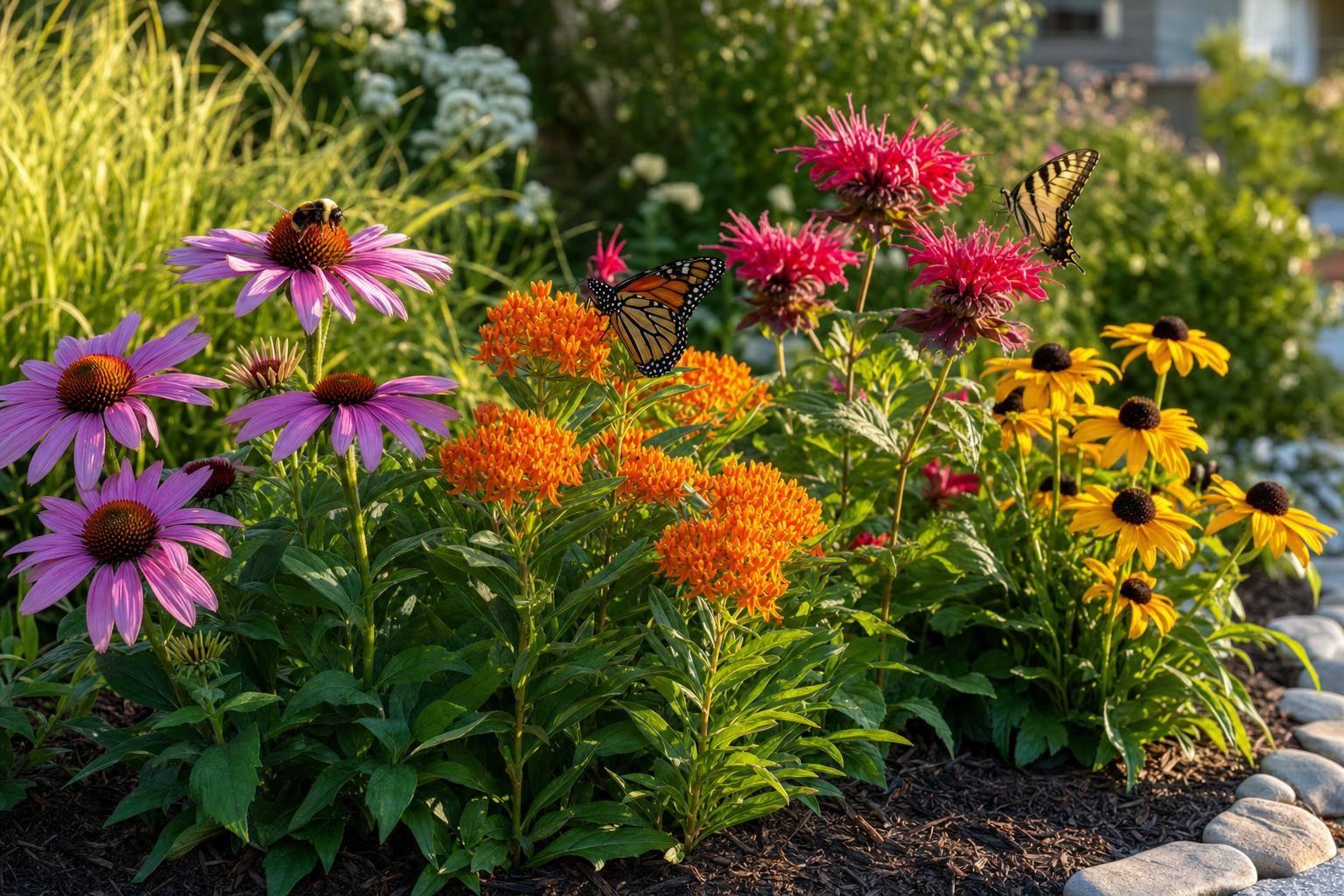
If I want a sunny Maryland pollinator garden that works, I need native plants that match the site, bloom across the season, and give insects food and cover. In this case, full sun means 6+ hours of direct sun a day, and the best plant mix usually includes summer flowers, fall bloomers, a few shrubs, and native grasses.
Here’s the short version:
- For summer bloom: Black-Eyed Susan, Butterfly Weed, Coreopsis, and Wild Bergamot
- For late-season flowers: Blazing Star, Goldenrod, and native Asters
- For structure: New Jersey Tea, Virginia Sweetspire, Oakleaf Hydrangea, Little Bluestem, and Broomsedge
- For dry spots: Butterfly Weed and Little Bluestem
- For moist spots: Virginia Sweetspire, Swamp Milkweed, Joe Pye Weed, and Oakleaf Hydrangea
- For pollinator support into fall: Goldenrod and Asters matter a lot because they bloom from August into November
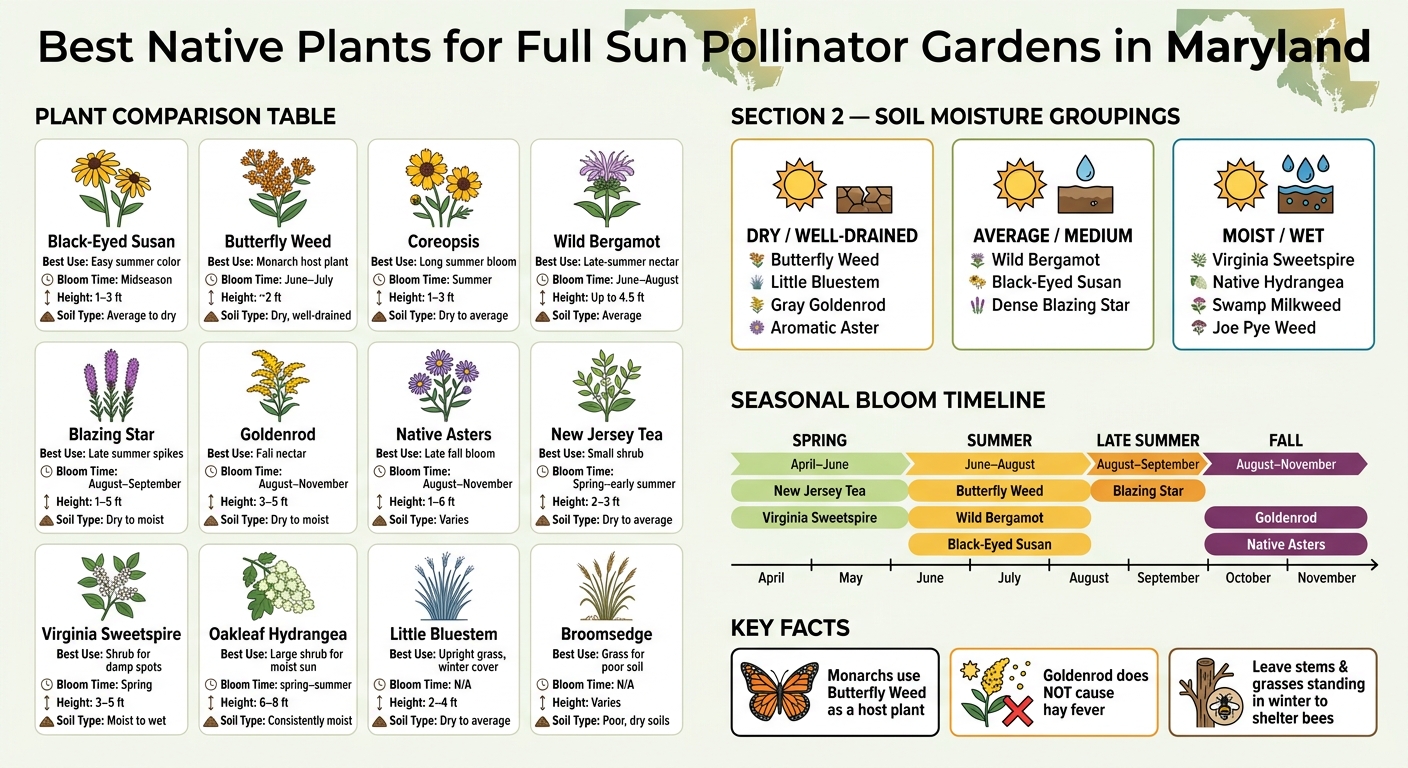
A few facts stand out. Monarchs use Butterfly Weed as a host plant. Goldenrod is not what causes hay fever. And leaving stems and grasses standing through winter gives bees and other insects places to shelter.
The main idea is simple: I should match each plant to the sun, soil moisture, and bed size instead of forcing plants into the wrong spot. That usually means less watering after year one, less cleanup, and a garden that stays active from spring through fall.
Quick Comparison
| Plant | Best Use | Bloom Time | Height | Soil |
|---|---|---|---|---|
| Black-Eyed Susan | Easy summer color | Midseason | 1–3 ft | Average to dry |
| Butterfly Weed | Monarch host plant | June–July | About 2 ft | Dry, well-drained |
| Coreopsis | Long summer bloom | Summer | 1–3 ft | Dry to average |
| Wild Bergamot | Mid-to-late summer nectar | June–August | Up to 4.5 ft | Average |
| Blazing Star | Late summer flower spikes | August–September | 1–5 ft | Dry to moist, by species |
| Goldenrod | Fall nectar | August–November | 3–5 ft | Dry to moist, by species |
| Native Asters | Late fall bloom | August–November | 1–6 ft | Varies |
| New Jersey Tea | Small shrub | Spring to early summer | 2–3 ft | Dry to average |
| Virginia Sweetspire | Shrub for damp spots | Spring | 3–5 ft | Moist to wet |
| Oakleaf Hydrangea | Large shrub for moist sun | Late spring to summer | 6–8 ft | Consistently moist |
| Little Bluestem | Upright grass, winter cover | N/A | 2–4 ft | Dry to average |
| Broomsedge | Grass for poor soil | N/A | Varies | Poor, dry soils |
If I’m planning a bed in Maryland, the best approach is to start with bloom timing, then sort plants by dry, average, or moist soil, and finish by placing short plants in front and tall plants in back.
Native Plants for Full Sun Pollinator Gardens in Maryland
How to Create a Pollinator Garden with Native Plants
sbb-itb-843f8be
Best Native Flowers for Full Sun Pollinator Gardens
The flowers below are some of the most dependable picks for full-sun pollinator beds in Maryland.
Summer Bloomers: Black-Eyed Susan, Butterfly Weed, Coreopsis, and Wild Bergamot
Black-Eyed Susan (Rudbeckia hirta) is Maryland’s state flower. It blooms in midseason, grows 1–3 ft tall, and does well in average to dry soil.
Butterfly Weed (Asclepias tuberosa) is a smart pick if Monarchs visit your yard. It serves as a host plant for Monarch larvae and also draws bees and butterflies [2]. It grows to about 2 ft, likes dry, well-drained soil, and blooms from June through July. It is also naturally deer-resistant.
Coreopsis (Coreopsis spp.) blooms through most of summer, handles dry to average soil, and grows 1–3 ft tall.
Wild Bergamot (Monarda fistulosa) helps bridge the late-summer stretch. It blooms from June through August, reaches up to 4.5 ft, and draws bees, butterflies, hummingbirds, and clearwing moths. It is also deer-resistant.
As summer starts to taper off, late-blooming plants take over and keep pollinators fed into fall.
Tall and Late-Season Plants: Blazing Star, Goldenrod, and Asters
Late summer and fall still call for nectar, and this is where Blazing Star, Goldenrod, and Asters come in.
Blazing Star (Liatris spp.) blooms from August through September. L. squarosa stays compact at 1–2 ft and does well in drier soils, while L. spicata grows 3–5 ft and can handle average to moist conditions. Check your soil before you buy so you pick the right species.
Goldenrod (Solidago spp.) is not the source of hay fever [2]. It blooms from August through November, grows 3–5 ft tall, and provides late-season nectar for migrating Monarchs and native bees [2]. Soil range depends on the species, from dry to moist, so there’s a good chance one will fit your yard.
Native Asters (Symphyotrichum spp.) finish the season, blooming from August through November at heights of 1–6 ft. Asters provide late-season nectar for migrating Monarchs [2]. They also act as host plants for the Pearl Crescent butterfly.
How to Combine Flowering Natives for Bloom All Season
Mix early, mid, and late bloomers so nectar stays available from spring through fall. A simple combo works well: Butterfly Weed, Coreopsis, and Wild Bergamot for summer, then Goldenrod and Asters for the late-season handoff. That way, pollinators aren’t left with an empty buffet.
In a small foundation bed or island planting, go with compact, clump-forming species. Black-Eyed Susan, Scaly Blazing Star (L. squarosa at 1–2 ft), and a compact Goldenrod like ‘Golden Fleece’ keep the planting neat without crowding.
If you’re working with a larger meadow-style border, you can fit taller plants like Wild Bergamot and New England Aster (Symphyotrichum novae-angliae), which can reach 4–6 ft.
Once bloom timing is in place, add shrubs and grasses to tie the garden together.
Native Shrubs and Grasses That Add Structure in Full Sun
Shrubs and grasses give a pollinator garden its backbone. They help the bed look tidy after blooms fade, add height and shape in winter, and support soil in sunny Maryland planting areas. Once the flowering layer is in place, these plants help fill out the bed with form, cover, and habitat.
Native Shrubs for Sun: New Jersey Tea, Virginia Sweetspire, and Oakleaf Hydrangea
New Jersey Tea (Ceanothus americanus) is a small shrub that usually reaches 2–3 ft tall and spreads 3–5 ft wide. It does best in dry to average, well-drained soil. It also serves as a nectar source for native bees and other helpful insects.
Virginia Sweetspire (Itea virginica) is a bit larger, growing 3–5 ft tall and up to 6 ft wide. That makes it a good fit for grouped plantings along a fence or at the back of a bed. It handles moist to wet soil well and adds strong fall leaf color.
Oakleaf Hydrangea (Hydrangea quercifolia) can take full sun, but only if the soil stays consistently moist. It can grow to 6–8 ft and brings extra winter appeal with its peeling bark and dried flower heads. In the right spot, it also works well as a screen.
Native Grasses: Little Bluestem and Broomsedge
Little Bluestem (Schizachyrium scoparium) grows 2–4 ft tall and has a narrow, upright shape that works neatly with flowering perennials without crowding them. In summer, the foliage is blue-green. By fall, it turns a reddish-bronze and stays that way through winter. Its stems give stem-nesting bees, including leaf-cutter and mason bees, places to nest. It also has deep roots that help hold soil in place and usually needs little to no fertilizer.
Broomsedge (Andropogon virginicus) plays a similar part, especially in poor soils where many plants have a hard time. It’s a smart pick for erosion-prone edges or lean soil.
Leave both grasses standing through winter to shelter overwintering insects.
Once you’ve picked your structure plants, match them to the bed’s sun, soil, and spacing.
How to Design and Plant a Full Sun Pollinator Garden in Maryland
Once you’ve picked your plants, the next step is simple: put each one where it has the best shot at doing well. Think in terms of sun, soil moisture, and plant height.
Match Plants to Soil Moisture, Drainage, and Bed Size
Check the bed in both the morning and afternoon to make sure it gets 6+ hours of direct sun.
Then work with the site you already have. Don’t fight the drainage if you don’t have to. Hot, dry spots are a good fit for Butterfly Weed and Little Bluestem. Damp low areas make more sense for Virginia Sweetspire and Native Hydrangea. When the plant fits the place, the rest of the layout tends to fall into place.
| Moisture Level | Good Plant Choices |
|---|---|
| Dry / Well-Drained | Butterfly Weed, Little Bluestem, Gray Goldenrod, Aromatic Aster |
| Average / Medium | Wild Bergamot, Black-Eyed Susan, Dense Blazing Star |
| Moist / Wet | Virginia Sweetspire, Native Hydrangea, Swamp Milkweed, Joe Pye Weed |
Arrange Plant Heights for a Clean, Orderly Look
For a tidy planting, put shorter plants like Black-Eyed Susan along the front edge. Set medium-height perennials such as Wild Bergamot and Dense Blazing Star in the middle. Taller flowers, shrubs, and grasses should go toward the back.
That one move makes the bed look more planned and keeps smaller plants from getting swallowed up.
Watering, Cutback Timing, and Low-Pesticide Care
Even natives that handle dry spells well still need steady watering during their first growing season. After that, most of them need much less extra water.
Hold off on cutting everything back in fall. Stems and leaves left in place through winter give insects a place to shelter. The University of Maryland Extension says it this way:
"Pollinator gardens require less maintenance and perhaps to some can look unkempt. But unpruned perennials and ornamental grasses, leaves, and other garden debris are overwintering places for many of the insects we enjoy seeing in summer." [1]
Wait until late winter or early spring to clean up the garden. If you need to tidy things earlier, move cut stems to a quiet corner instead of hauling them away right off the bat.
And when it comes to pest control, less is more:
"Avoid using pesticides in your garden whenever possible because pesticides not only kill the problem pest, but beneficial insects and pollinators are also harmed." [2]
That kind of care helps protect the very pollinators this garden is meant to support.
Conclusion: Putting Together a Full Sun Native Pollinator Garden in Maryland
A full-sun pollinator garden works best when you get three things right: plant choice, bloom timing, and site match. Start with native plants that fit your space. That means matching each plant to your soil moisture and drainage, not just picking what looks good at the garden center.
Then build the garden so something is blooming from spring through fall. That steady rotation helps feed pollinators across the season instead of giving them a short burst of flowers and then nothing.
Native shrubs and grasses also matter. They give the planting bed shape, hold visual interest in winter, and provide shelter for overwintering insects. And once native plants settle in, they often need less water, fertilizer, and upkeep. That’s a big plus after the first growing season.
If your site needs work before planting, Pro Landscapes MD can handle prep such as drainage, grading, or hardscaping connected to the planting bed.
FAQs
How do I know if my yard is full sun?
In Maryland, a site counts as full sun when it gets at least six hours of direct sunlight per day during the growing season.
If your yard gets less light than that, choose native plants that do well in partial sun or shade. That simple switch can do a better job of helping pollinators.
Which native plants are best for dry vs. moist soil?
For dry, well-drained soil, butterfly weed, wild bergamot, and black-eyed Susans are strong picks for full sun. They handle sunny spots well and fit sites that don’t stay damp for long.
If your soil is moist or wet, swamp milkweed and New York ironweed are better matches. Joe-Pye weed also does best in sunny, moist areas.
Pro Landscapes MD can help design, plant, and maintain native species that fit your soil conditions.
How can I keep pollinators fed from spring through fall?
Choose a mix of native plants that bloom at different times during the growing season. The goal is simple: keep flowers available from early spring until the first frost. When bloom times overlap, pollinators have a steadier food source instead of short bursts followed by gaps.
For example, milkweed helps meet summer nectar needs, while ironweed and goldenrod supply late-season energy.
Chat with Us