









- bhavya gada
- No Comments
Outdoor kitchens in Maryland face tough challenges: scorching grill heat, freezing winters, and high humidity. Picking the right materials ensures safety, durability, and long-term savings. Here’s what you need to know:
- Key Materials: Granite, porcelain slabs, 304-grade stainless steel, and concrete are top options for heat resistance and weather durability.
- Climate Considerations: Maryland’s freeze-thaw cycles, humid summers, and UV exposure can damage porous or non-outdoor-grade materials.
- Maintenance: Granite and concrete need periodic sealing, while porcelain and stainless steel require minimal upkeep.
- Costs: Material prices vary – porcelain is budget-friendly ($25–$75/sq ft), while granite and stainless steel can reach $200/sq ft.
Quick Tip: Use 304-grade stainless steel fasteners and marine-grade hinges to prevent rust in Maryland’s humid climate.
Choosing the right materials not only keeps your outdoor kitchen functional but also adds value to your home. Let’s dive into the details.
DIY Deck (Part 18): How to build a Fireproof charcoal BBQ grilling station for your deck?
sbb-itb-843f8be
Step 1: Evaluate Heat Exposure and Climate Requirements
When planning your outdoor kitchen, understanding heat sources and local weather conditions is essential to choosing materials that balance durability with visual appeal.
Identify Heat Sources in Your Kitchen Layout
Start by pinpointing areas like grills and fire pits. These generate intense heat, so the materials nearby need to handle high temperatures without cracking or warping. Each zone in your kitchen may require specific solutions. For example, surfaces close to grills or fire features should use materials such as natural stone, brick, or metal inserts for added protection and longevity. Metal inserts, often made from steel or copper, can shield surrounding masonry from direct flames, preventing structural damage and extending the life of your setup. To ensure safety and durability, professional installation is key – it provides proper ventilation and fireproof layering, reducing heat-related risks.
"The materials you select determine not only how your fire feature looks, but also how well it performs, how long it lasts, and how safe it is." – Chris Darr, Xscape 2 Nature [1]
Account for Maryland’s Seasonal Weather Patterns
Maryland’s climate presents unique challenges. Daily temperature swings from 50°F to 80°F can cause materials to expand and contract, while the freeze-thaw cycles in winter may lead to cracking or spalling in porous surfaces like unsealed concrete or stone. High humidity and frequent rain increase the risk of metal corrosion and mold growth on porous materials. In summer, surface temperatures can climb past 150°F, breaking down sealers on natural stone and causing UV damage to materials with resin binders. To combat these issues, re-seal granite or concrete every 6–12 months to prevent moisture damage and sealer degradation. Additionally, lighter-colored materials can help reduce heat retention, making surfaces more comfortable for cooking and dining [4].
Step 2: Review Heat-Resistant Material Options
Once you’ve determined the heat exposure and climate conditions for your outdoor kitchen, it’s time to explore heat-resistant materials. Each option comes with its own set of benefits, maintenance requirements, and price points. Here’s a breakdown to help you decide:
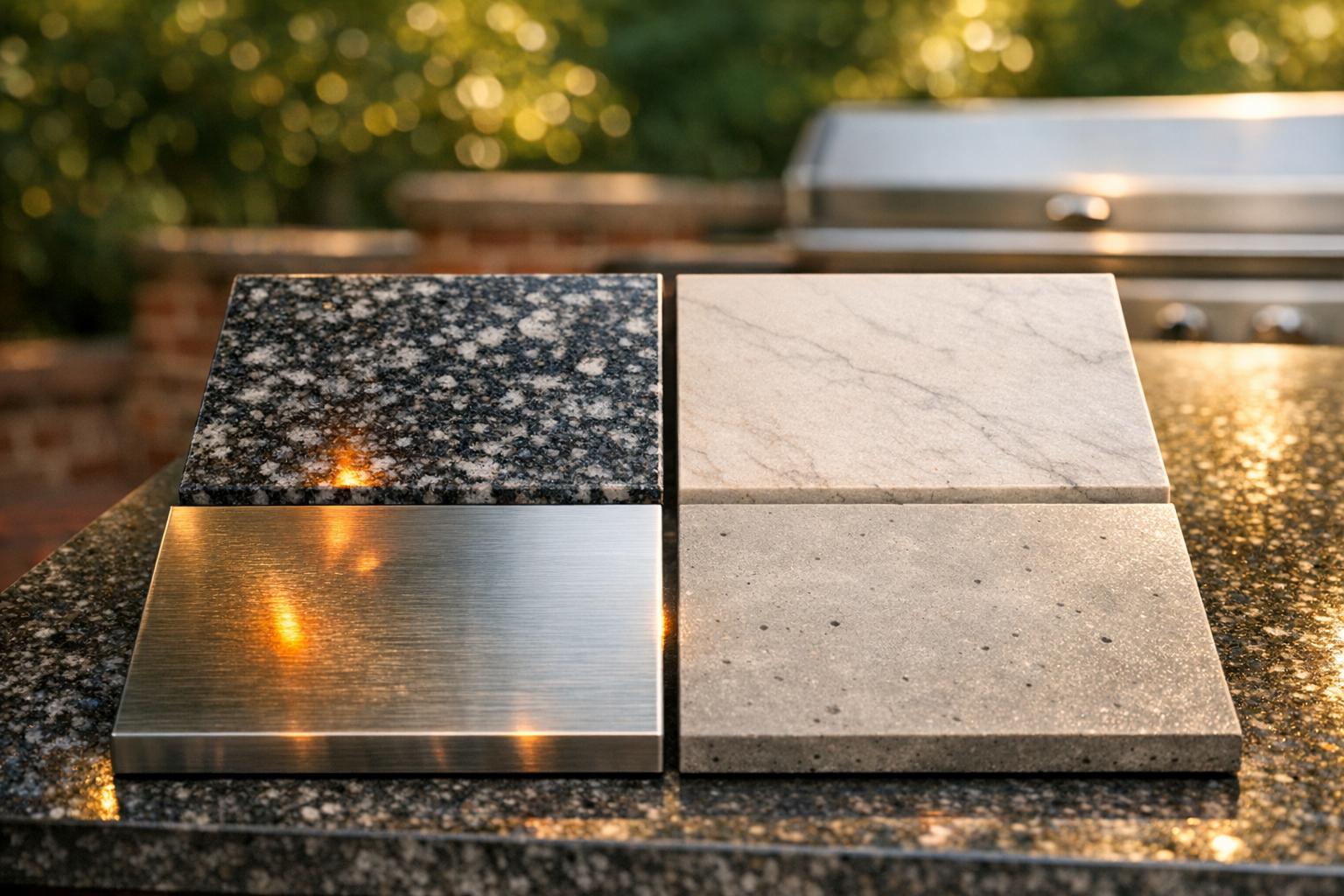
Porcelain slabs (also called sintered stone) are built to endure tough outdoor environments. They can handle temperatures over 1,000°F, making them a smart choice for areas near grills and fire pits [4]. Thanks to their nonporous surface, porcelain won’t absorb moisture during humid summers or freeze-thaw cycles in winter, so sealing isn’t necessary. Plus, UV rays won’t fade its color over time. Cost: $65–$175/sq ft [4].
Granite, a natural stone, is another favorite for outdoor kitchens because of its durability and heat resistance. It can tolerate high temperatures without cracking or discoloring and resists fading under direct sunlight [4]. Lighter shades of granite absorb less heat, keeping surfaces cooler during hot weather. However, it does require periodic sealing to protect against moisture and stains. Cost: $50–$200/sq ft [4].
304-Grade Stainless Steel (containing 18% chromium and 8% nickel) is prized for its excellent heat tolerance and rust resistance [2]. It’s easy to clean and doesn’t need sealing. However, under direct sunlight, stainless steel can become extremely hot, sometimes exceeding 150°F on summer days [4]. A quick tip: use a magnet to confirm you’re getting 304-grade steel – if it sticks, the material is likely lower-grade 430 steel, which is more prone to rust. Cost: $70–$200/sq ft [4].
Concrete offers unmatched design versatility and heat resistance, making it ideal for custom shapes and integrated features. Using Glass Fiber Reinforced Concrete (GFRC) can create thinner, lighter slabs that resist cracking better than traditional concrete [4]. However, in Maryland’s climate, freeze-thaw cycles can cause hairline cracks if moisture gets trapped. To prevent this, sealing every 6 to 12 months is recommended. Cost: $50–$150/sq ft [4].
Step 3: Compare Materials by Performance and Cost
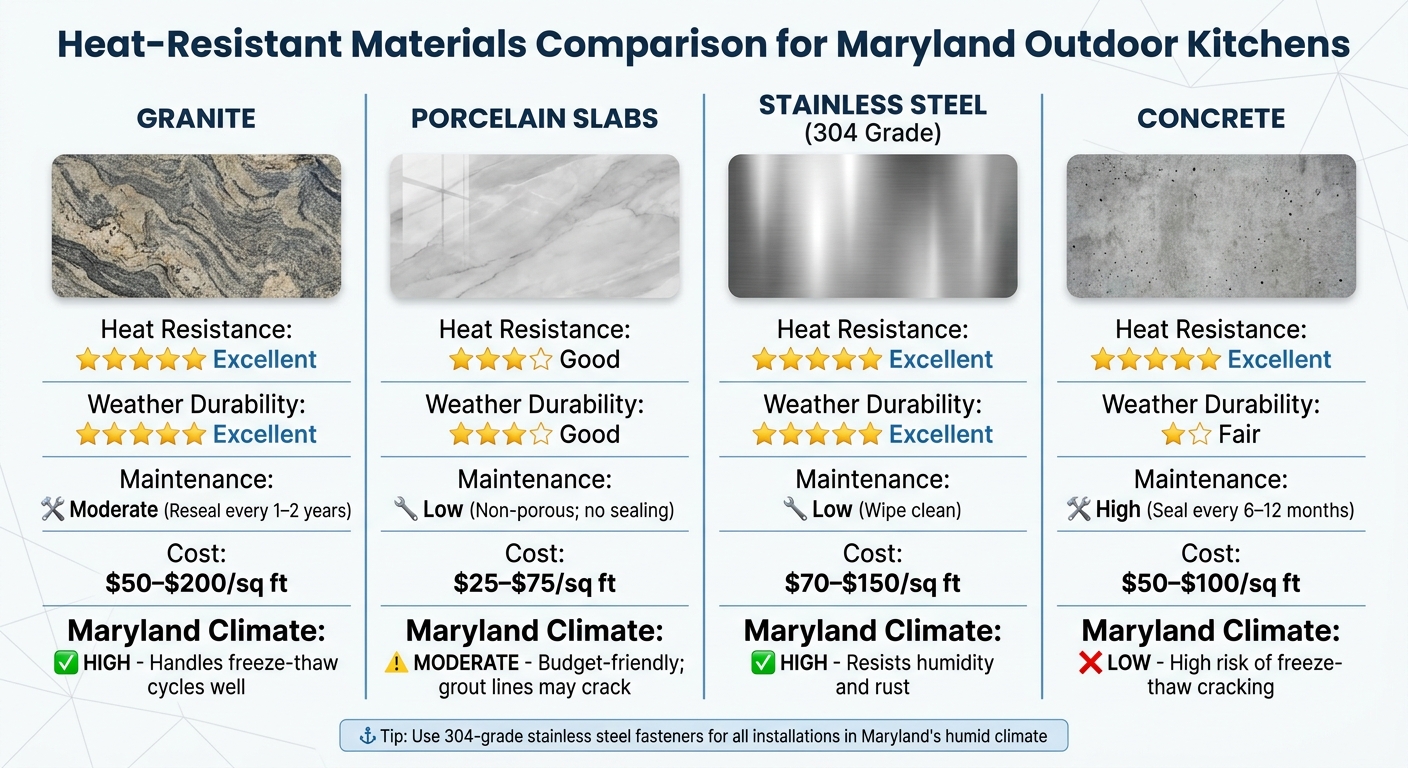
Heat-Resistant Materials Comparison for Outdoor Kitchens in Maryland
When choosing materials for your outdoor kitchen in Maryland, it’s crucial to evaluate how well they perform under the state’s unique weather conditions. This step involves balancing initial costs with long-term maintenance needs and durability in Maryland’s variable climate. The table below offers a quick overview to help with your decision-making.
Material Comparison Table
Here’s a breakdown of four popular heat-resistant materials for outdoor kitchens, comparing their performance, maintenance requirements, and suitability for Maryland’s climate:
| Material | Heat Resistance | Weather Durability | Maintenance | Cost per sq ft | Maryland Climate Suitability |
|---|---|---|---|---|---|
| Granite | Excellent | Excellent | Moderate (Reseal every 1–2 years) | $50–$200 | High: Handles freeze-thaw cycles well |
| Porcelain Slabs | Good | Good | Low (Non-porous; no sealing) | $25–$75 | Moderate: Budget-friendly; grout lines may crack |
| Stainless Steel (304 Grade) | Excellent | Excellent | Low (Wipe clean) | $70–$150 | High: Resists humidity and rust |
| Concrete | Excellent | Fair | High (Seal every 6–12 months) | $50–$100 | Low: High risk of freeze-thaw cracking |
Porcelain slabs stand out as the most affordable option, with prices ranging from $25 to $75 per square foot. However, if you’re planning for the long haul, granite offers superior durability in Maryland’s freeze-thaw climate, even though it comes with a higher upfront cost. On the other hand, concrete might seem budget-friendly initially, but its porous nature makes it prone to water damage and cracking during freezing temperatures, leading to costly repairs over time.
Additionally, don’t overlook the smaller details. Maryland’s high humidity can cause standard zinc-plated screws to rust, so it’s wise to invest in 304 stainless steel fasteners and marine-grade hinges for better longevity [2].
Step 4: Test and Seal Materials for Local Weather
Before committing to your chosen materials, it’s crucial to test their durability under Maryland’s challenging weather conditions. The state’s humid summers and freezing winters can take a toll on construction materials, so verifying their integrity upfront can save you from costly repairs down the road.
Start with stainless steel. To confirm you’re working with high-quality 304-grade stainless steel, use a magnet. If the magnet doesn’t stick, you’ve got 304-grade, which resists rust. If it does stick, the material is likely 430-grade, which is more prone to corrosion. Stick to 304-grade fasteners and opt for marine-grade hinges to ensure longevity.
For stone surfaces like granite or concrete, test for porosity before installation. Simply pour a few drops of water on the surface. If the water beads up, the seal is intact. If it absorbs into the material, the surface is vulnerable to water penetration. This can lead to freeze-thaw damage, especially in Maryland’s winters, where temperatures often drop below 32°F for long stretches. Such conditions can cause cracks or spalling, which compromises the material’s integrity [2][4].
To protect porous materials like granite and concrete, apply a sealant every 6–12 months. Before resealing, clean the surfaces with a pH-neutral cleaner to avoid harming the finish [3]. Make it a habit to inspect these materials twice a year for early signs of wear, such as hairline cracks in grout, rusted hardware, or loose fasteners caused by thermal expansion and contraction [3][2]. Addressing these issues promptly prevents water intrusion and potential structural damage.
For engineered stone, UV stabilization is a must. Without it, standard resins can yellow or warp after just 1–2 years of sun exposure. Look for materials that use aliphatic polyurethane binders, which hold up better under UV rays [2][4]. This is especially important for outdoor countertops, which can reach surface temperatures exceeding 150°F during the summer. UV stabilization not only preserves the material’s appearance but also ensures its safety and performance [4].
Material Selection Tips from Pro Landscapes MD

For Maryland’s unique climate, pairing galvanized steel frames with granite or quartzite countertops is a reliable choice for an outdoor kitchen. This combination holds up well against the area’s high humidity and fluctuating temperatures, which typically range from 50°F to 80°F [2][4].
If you’re looking for a low-maintenance countertop option, porcelain slabs like Dekton or Neolith are excellent alternatives. These materials resist the sealing and yellowing problems often associated with standard engineered quartz. Plus, they are durable and require minimal upkeep. Expect installation costs to range from $65 to $175 per square foot [4].
To combat Maryland’s humid conditions, it’s essential to use 304-grade or marine-grade stainless steel fasteners and hinges. These materials help prevent corrosion, ensuring your kitchen stays in top shape for years to come [2].
Pro Landscapes MD emphasizes the importance of proper structural support for heavy materials. For instance, a 10-ft granite bar – weighing between 350 and 500 pounds – needs a specially engineered foundation to avoid cracking. Additionally, installations should include a drainage slope of at least 1/8 inch per foot to direct water away from your home and prevent pooling issues [4].
While professional installation can add 15%–30% to your total costs, it ensures the outdoor kitchen complies with Maryland’s building codes and can handle the region’s demanding weather. Beyond functionality, a well-designed outdoor kitchen can also offer a strong financial return, recouping 60%–80% of its cost when you sell your home [4].
FAQs
What countertop stays coolest in direct sun?
Porcelain slabs, like Dekton and Neolith, are standout choices for outdoor countertops. Thanks to their UV stability and heat resistance, they can handle direct sunlight with ease. This makes them a durable and practical option for outdoor kitchen setups, while also ensuring the space remains comfortable to use.
Do I need expansion gaps around grills and fire pits?
Including expansion gaps around grills and fire pits in your outdoor kitchen is a smart move. These gaps help accommodate the natural expansion and contraction that happens with heat, reducing the risk of cracks or damage to surrounding materials. Since grills and fire pits produce intense heat, proper spacing is crucial for maintaining both the safety and durability of your setup.
How do I winterize outdoor kitchen surfaces in Maryland?
Maryland winters can be tough on outdoor kitchens, so taking the right steps to protect surfaces is key. Start by cleaning all surfaces thoroughly to get rid of dirt, debris, and any buildup that could cause damage over time. For materials like natural stone, which tend to be porous, it’s crucial to apply a sealant. This helps keep water from seeping in and causing cracks during freezing temperatures.
Another important step is using weatherproof covers. Cover appliances, countertops, and other surfaces to shield them from snow, ice, and moisture. Additionally, check that your outdoor kitchen has proper drainage. Standing water can freeze and lead to serious damage, so ensuring water flows away from surfaces is a must.
By following these steps, you can keep your outdoor kitchen looking great and working well, even during harsh winter months.
Chat with Us