









- bhavya gada
- No Comments
Retaining walls fail when water builds up behind them. The solution? Proper drainage. French drains are a reliable way to manage water behind retaining walls, especially in areas like Maryland with clay-heavy soils and freeze-thaw cycles. Without drainage, water creates hydrostatic pressure, leading to cracks, bulges, or complete wall failure.
Key Takeaways:
- What French Drains Do: They collect and redirect groundwater away from retaining walls using gravel, perforated pipes, and geotextile fabric.
- Why They’re Needed: Prevents hydrostatic pressure and frost damage, especially in clay soils.
- Installation Basics: Place the pipe behind the wall’s base with a steady slope toward an outlet.
- Maintenance Tips: Check for clogs, inspect outlets, and ensure downspouts don’t overload the drain.
French drains are indispensable for retaining wall stability. Maryland’s climate and soil conditions make proper drainage even more critical to prevent costly damage.
How To Install French Drain For Concrete Retaining Wall 2021
sbb-itb-843f8be
What French Drains Are and How They Work
A French drain is a type of subsurface drainage system installed behind retaining walls to collect and redirect groundwater away from the structure [2]. Without this system in place, waterlogged soil behind the wall can create increasing lateral pressure, potentially compromising the wall’s integrity.
"Proper drainage is vital to prevent water buildup behind the wall. Without it, excess moisture saturates the backfill and dramatically increases hydrostatic pressure." – Rochester Concrete Products [2]
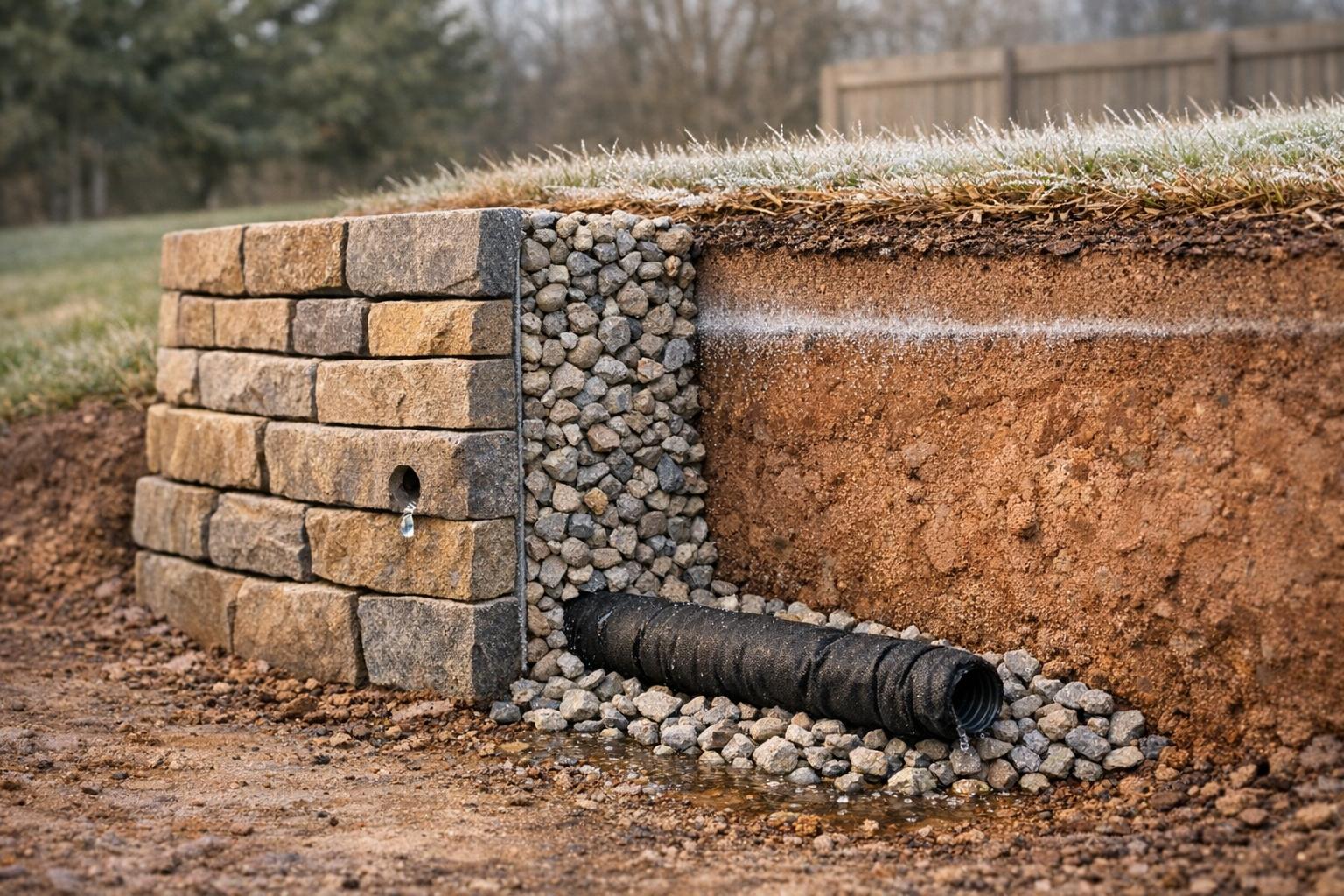
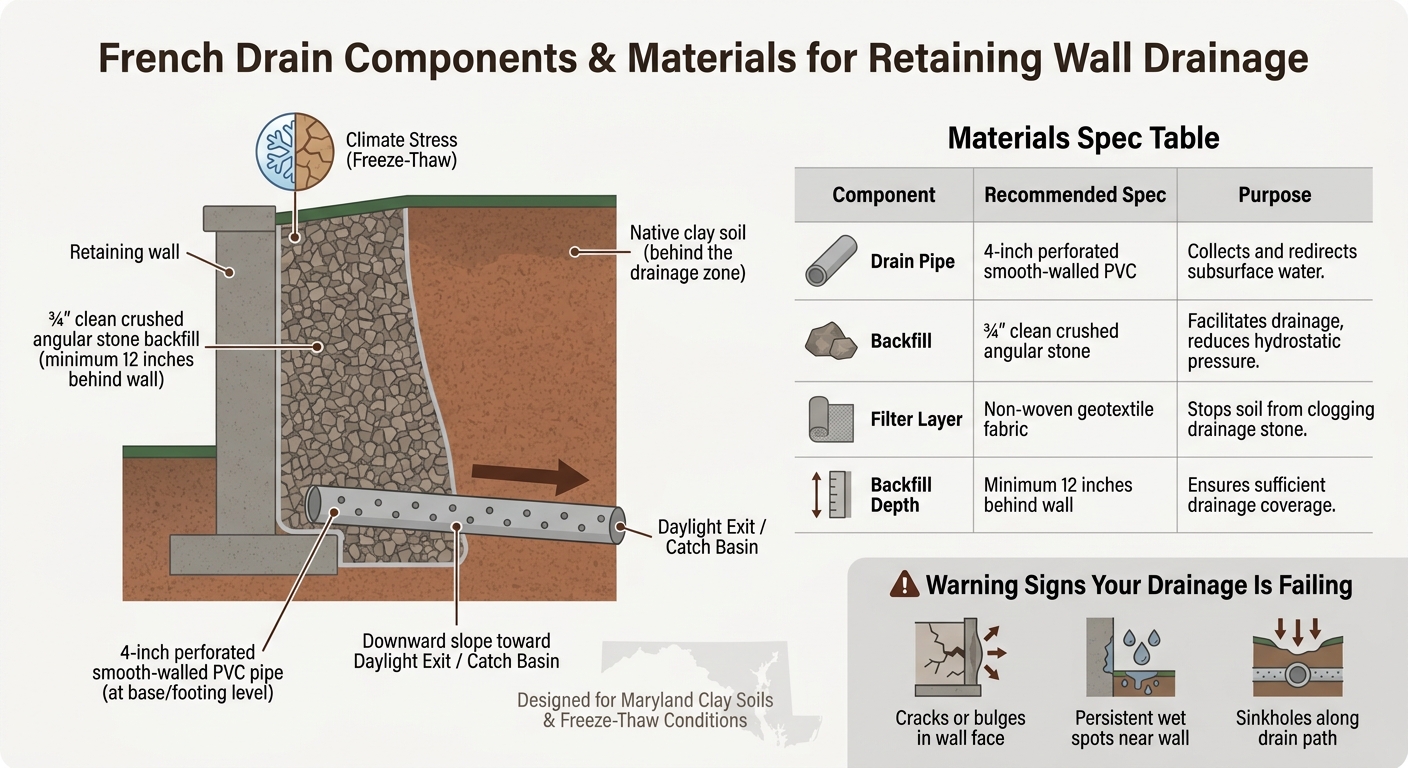
The setup of a French drain involves three main elements: permeable gravel, a perforated pipe, and a geotextile fabric. Together, these components guide water downward and away from the wall’s foundation, reducing hydrostatic pressure.
Key Components of a French Drain
Each part of a French drain is carefully designed to ensure it works effectively.
| Component | Recommended Material | Role |
|---|---|---|
| Pipe | 4″ perforated PVC or corrugated plastic | Collects and directs subsurface water |
| Backfill | ¾″ clean crushed stone | Channels water efficiently to the pipe |
| Filter Fabric | Non-woven geotextile | Prevents soil from clogging the drainage system |
| Outlet | Daylight exit or catch basin | Safely discharges water away from the structure |
The perforated pipe is placed at the base of the wall on the soil-retention side, just behind the lowest course of the wall. Surrounding the pipe is clean, angular crushed stone, which resists compaction and ensures water flows freely to the pipe. To prevent clogging, a geotextile fabric either lines the trench or wraps the pipe, blocking fine soil particles from entering the system.
For proper drainage, the pipe must slope consistently downward toward an outlet, such as a daylight exit or catch basin. In areas like Maryland, where winters can cause water to freeze and expand, proper discharge management is critical to prevent pipe damage. This understanding of French drain components lays the groundwork for comparing them to other drainage solutions.
French Drains vs. Other Drainage Options
Effective water management behind a retaining wall often requires multiple strategies, as no single solution can address every scenario. French drains are excellent at handling water that has already seeped into the soil behind the wall, but other methods serve different purposes.
- Weep holes, for example, are spaced 6–10 feet apart and relieve pressure at specific points rather than across the entire base of the wall.
- Swales and surface drains catch runoff before it reaches the wall, diverting surface water effectively. However, they can’t manage subsurface moisture trapped in the backfill.
This distinction is particularly relevant in central Maryland, where clay-heavy soils hold moisture longer due to their low permeability. In such conditions, French drains are indispensable for managing water that infiltrates the soil behind the wall.
How French Drains Support Retaining Wall Stability
Hydrostatic pressure – the force exerted by water as it accumulates in saturated soil – is one of the leading causes of retaining wall failure [1]. When water builds up with nowhere to escape, it pushes laterally against the wall, eventually causing it to lean, bulge, or even crack. A well-installed French drain provides a solution by giving water a clear exit path, preventing pressure from reaching damaging levels.
Reducing Hydrostatic Pressure
French drains are specifically designed to combat the buildup of hydrostatic pressure. The gravel backfill acts as a vertical drainage system, directing water downward to a perforated pipe at the base of the wall. This setup prevents water from pooling and exerting pressure. Typically, 12–24 inches of open-graded gravel backfill is used to ensure efficient drainage [1]. However, during intense storms that can drop 2 inches of rain per hour, minimal backfill alone may not suffice, leaving walls vulnerable to sudden pressure surges. A complete French drain system intercepts and redirects water before it can cause structural strain.
Managing Maryland’s Climate Challenges
Maryland’s climate introduces additional stress factors that proper drainage systems must address. Freeze-thaw cycles in winter and early spring can freeze trapped water, causing it to expand. This process, known as frost jacking, gradually shifts wall caps forward over time [1].
"For freeze–thaw regions, controlled drainage prevents frost jacking that nudges caps forward season after season." – Christie Brooks, Real Estate Market Writer [1]
Maryland’s dense clay soils further complicate matters by holding onto moisture longer than sandy soils. This prolonged moisture retention increases hydrostatic pressure and raises the risk of efflorescence – white, chalky deposits that can stain wall surfaces [1][4]. By keeping the backfill zone as dry as possible, a French drain reduces these risks. These climate-specific challenges highlight the importance of precise French drain design for properties in Maryland.
French Drain Design and Installation for Maryland Properties
French Drains vs. Other Retaining Wall Drainage Solutions
Installing a French drain behind a retaining wall in Maryland requires careful planning, the right materials, and sometimes professional guidance. The region’s clay-heavy soil and freeze–thaw cycles make these factors even more critical.
Correct Placement and Slope
The drain pipe should sit behind the lowest course of the retaining wall on the soil-retention side, ideally at or below the footing of the wall. This positioning helps intercept subsurface water before it accumulates. The pipe must maintain a steady downward slope along its length, directing water to a daylight outlet or a downslope discharge point [2][3]. In Maryland’s dense clay soils, it’s essential to extend drainage outlets beyond the wall and avoid shaded, low-lying areas that could obstruct water flow.
Proper placement and slope are the foundation of a well-functioning system and tie directly to choosing materials that can handle Maryland’s demanding conditions.
Selecting the Right Materials
Picking the correct materials is essential for the drain’s effectiveness and longevity. For backfill, use ¾″ clean crushed angular stone, as it provides excellent drainage. Smooth-walled perforated PVC pipe works best in cold climates like Maryland, as it minimizes the risk of ice blockages. To prevent clogging, wrap the perforated pipe in non-woven geotextile fabric and place a fabric barrier between the drainage aggregate and native soil. This step prevents fine clay particles from infiltrating the system [2].
A quick field test can help identify soil type: if damp soil holds its shape when squeezed, it likely contains clay or silt and will need additional ¾″ crushed stone backfill [2].
Here’s a breakdown of recommended materials for Maryland installations:
| Component | Recommended Specification | Purpose |
|---|---|---|
| Drain pipe | 4-inch perforated smooth-walled PVC | Collects and redirects subsurface water |
| Backfill | ¾″ clean crushed angular stone | Facilitates drainage and reduces hydrostatic pressure |
| Filter layer | Non-woven geotextile fabric | Stops soil from clogging the drainage stone |
| Backfill depth | Minimum 12 inches behind the wall | Ensures sufficient drainage coverage |
These materials not only improve water management but also support the wall’s stability under Maryland’s challenging conditions.
When to Call a Professional
While smaller walls (under 6 feet) can often be handled as DIY projects, larger or more complex installations may require professional help. Walls over 6 feet, particularly those classified as Mechanically Stabilized Earth (MSE) walls, or those near driveways or buildings, demand precise drainage designs. Additionally, properties that experience heavy seasonal runoff, especially during Maryland’s spring thaw, may benefit from oversized or dual-layer drain pipes to handle peak water flow [2].
For tailored French drain solutions in central Maryland, Pro Landscapes MD provides expert services designed for the region’s unique challenges. One critical rule to follow – whether you’re doing it yourself or hiring a professional – is to avoid connecting roof downspouts directly to the retaining wall’s French drain. Instead, route them to a separate drainage system to prevent overloading the drain during heavy rains [2][3].
Maintenance Tips and Warning Signs of Drainage Problems
Routine Maintenance Tasks
Keeping your drainage system in good shape requires regular attention. Over time, French drains can become clogged due to blocked discharge points or sediment sneaking past the filter fabric.
Here are some key maintenance steps to follow:
- Inspect discharge outlets regularly: These are the points where the drain pipe exits to the surface (often called "daylighting"). Debris can block these outlets, preventing the system from relieving hydrostatic pressure behind the wall. It’s especially important to check these after heavy rains to ensure they’re clear and functioning properly [1].
- Check for sediment buildup: Over time, fine particles can bypass the geotextile fabric and accumulate in the pipe. Periodic inspections of accessible drain sections can catch this issue early.
- Redirect roof downspouts: Ensure downspouts are connected to a separate drainage system to avoid overwhelming the French drain, as mentioned in the installation guidelines.
In regions like Maryland, the changing seasons add another layer of complexity. Freeze-thaw cycles can shift drainage components, so a spring inspection after the ground thaws is a smart way to identify and fix any frost-related issues before they escalate [1].
Signs of Drainage Problems
Spotting problems early can save you from expensive repairs down the line. Here are some red flags to watch for:
- Water seeping or gushing from cracks or weep holes: If you notice water forcefully escaping from the wall during or after rain, it’s a sign that hydrostatic pressure is building up because the drain can’t keep up [3].
- Water spilling over the top of the wall: This often indicates a drainage system that’s either blocked or too small to handle the water volume.
- Persistent wet spots near the wall: These suggest that the subsurface drainage isn’t working effectively.
- Sinkholes along the wall or drain path: This could point to internal erosion or a collapsed pipe.
- Cracks or bulges in the wall face: These are serious warning signs that soil pressure is no longer being managed properly. Addressing these issues promptly can prevent up to 90% of water intrusion problems and protect the wall’s structural integrity [3].
Regular maintenance and vigilance can go a long way in keeping your drainage system functioning and your property safe. Small efforts now can prevent major headaches later.
Conclusion: Building a More Stable Retaining Wall
The durability of a retaining wall depends heavily on the drainage system behind it. Without a properly installed French drain, water collects, creating hydrostatic pressure that can weaken the wall over time. This issue is particularly pronounced in Maryland, where clay-heavy soils retain water, and the freeze–thaw cycle adds mechanical stress, leading to frost-related damage. A well-designed French drain helps manage these challenges by stabilizing the backfill material and maintaining the wall’s integrity.
"Behind every durable retaining wall is more than just good-looking block – true performance lies in what’s below the surface." – Rochester Concrete Products [4]
This insight highlights the importance of precise engineering in every aspect of retaining wall construction. From choosing the right materials to ensuring proper installation techniques, every detail matters when it comes to reducing hydrostatic pressure. Key components like pipe placement, slope, and geotextile wrapping require careful attention to ensure effective drainage. For walls exceeding 4 feet in height or those supporting additional loads, such as driveways or patios, professional expertise is not just recommended – it’s often required to meet local building codes [1].
To ensure long-lasting stability and compliance with regulations, partnering with an experienced team is crucial. Pro Landscapes MD specializes in designing and installing French drains and retaining walls tailored to Maryland’s unique conditions. Whether you’re addressing signs of damage in an existing wall or planning a new project, working with professionals is the best way to safeguard your property and your investment.
FAQs
Do I need a French drain for my retaining wall?
A French drain is a smart addition for retaining walls because it redirects water efficiently, reducing hydrostatic pressure. This helps prevent water buildup behind the wall, which plays a key role in maintaining its stability over time.
Where should a French drain outlet discharge?
A French drain needs to release water into an appropriate spot, like a city storm drain, a ditch, a sump basin, or a naturally lower area that can manage water flow safely. The outlet should ideally be positioned at the lowest point in your yard to ensure effective drainage and avoid water pooling.
How can I tell if my retaining wall drainage is failing?
Signs that a drainage system might be failing include water pooling behind the wall, noticeable bulging or leaning, or visible erosion or damage to the backfill. These problems indicate that water isn’t draining properly, which can cause pressure to build up and potentially lead to structural damage.
Chat with Us