









- bhavya gada
- No Comments
If runoff keeps cutting into your yard, a gabion wall may help where plants and mulch don’t. In many Maryland yards, erosion starts on slopes, swales, driveway edges, and narrow side yards – then spreads after each heavy storm. I’d look at gabions when you need soil support, water flow through the wall, and a fix that works with grading and drains instead of against them.
Here’s the short version:
- Gabion walls hold soil by adding weight at the base of a slope.
- They let water pass through stone-filled baskets, which helps limit pressure behind the wall.
- They work best on problem spots like rear-yard drops, runoff channels, and washout-prone banks.
- They need the right layout – height, base width, stone type, and placement all matter.
- They are not a stand-alone fix. In most yards, they should tie into grading, swales, and French drains.
- Maryland’s clay and silt soils often drain poorly, so stormwater tends to run across the surface instead of soaking in.
- Short, heavy summer storms can turn a small rut into a deeper washout fast.
A few facts matter here. Clay-heavy soil can lose strength once saturated, and even a slope under 3:1 can start to fail if runoff keeps hitting the same path. Also, roof runoff from just 1 inch of rain can send a lot of water into one small area if downspouts empty near the wall line. That’s why layout and drainage matter as much as the wall itself.
What I’d keep in mind most:
- Use angular stone, not rounded rock
- Keep downspout discharge away from the wall
- Match the wall size to the slope
- Check property lines, easements, and setbacks
- Plan for inspection over time so settling or basket wear doesn’t get missed
In short, gabion walls make sense when erosion and drainage are happening in the same place and you need one system to deal with both.
DIY Gabion Retaining Wall | Stabilizing a Hillside Step by Step
sbb-itb-843f8be
Erosion Problems in Maryland Residential Yards
Yard erosion in Maryland usually doesn’t show up all at once. It starts with small warning signs: a bare patch on a slope, a shallow rut near the driveway, or a swale that looks a little deeper after every storm. But those minor issues can snowball. Over time, they can strip away topsoil, thin out lawn areas, and even cause patios, walls, or other hardscape features to shift or sink.
Common Failure Points on Slopes, Swales, and Drainage Edges
The spots most likely to fail on a residential lot are usually the steepest ones. Bare slopes left behind after construction are a common problem because the soil has no roots to help hold it in place. In narrow side yards between homes, runoff tends to funnel through the tight space, which can carve deeper ruts during heavy rain.
Driveway edges are another weak point. Water runs off the hard surface and cuts into the soil along the sides. Swales and older ditch lines can also turn into trouble areas. They’re supposed to move water away from the yard, but repeated stormwater flow can scour the channel, make it deeper, and leave it less stable. These are often the same places where gabion walls are used to keep soil in place.
How Maryland Soils and Weather Make Erosion Worse
A lot of soils in central Maryland, including in Howard, Montgomery, Baltimore, and Frederick counties, contain heavy clay and silt. That matters because these soils don’t let water pass through very well. They saturate fast, lose strength, and push more water to the surface instead of letting it soak in. Once that happens, slopes are more likely to slump and wash out.
Then there’s the weather. Maryland gets intense, short-duration storms, especially in the summer. Put heavy clay and silt together with sudden downpours, and erosion can speed up in a hurry.
How Untreated Erosion Can Damage Nearby Structures
Once soil keeps washing away, the problem moves past the lawn. Erosion strips off nutrient-rich topsoil, which grass and planting beds need to stay healthy. As that soil disappears, grass roots and ornamental plants get exposed. That often leads to die-back, more bare patches, and even more erosion.
Runoff can also wash out the compacted base under nearby features. When that happens, patios and retaining walls may settle, crack, or shift. Sediment may end up on neighboring properties or get carried into storm drains. In areas like these, structural erosion control, such as gabion walls, can help stabilize the soil and slow runoff.
How Gabion Walls Control Slope Erosion and Runoff
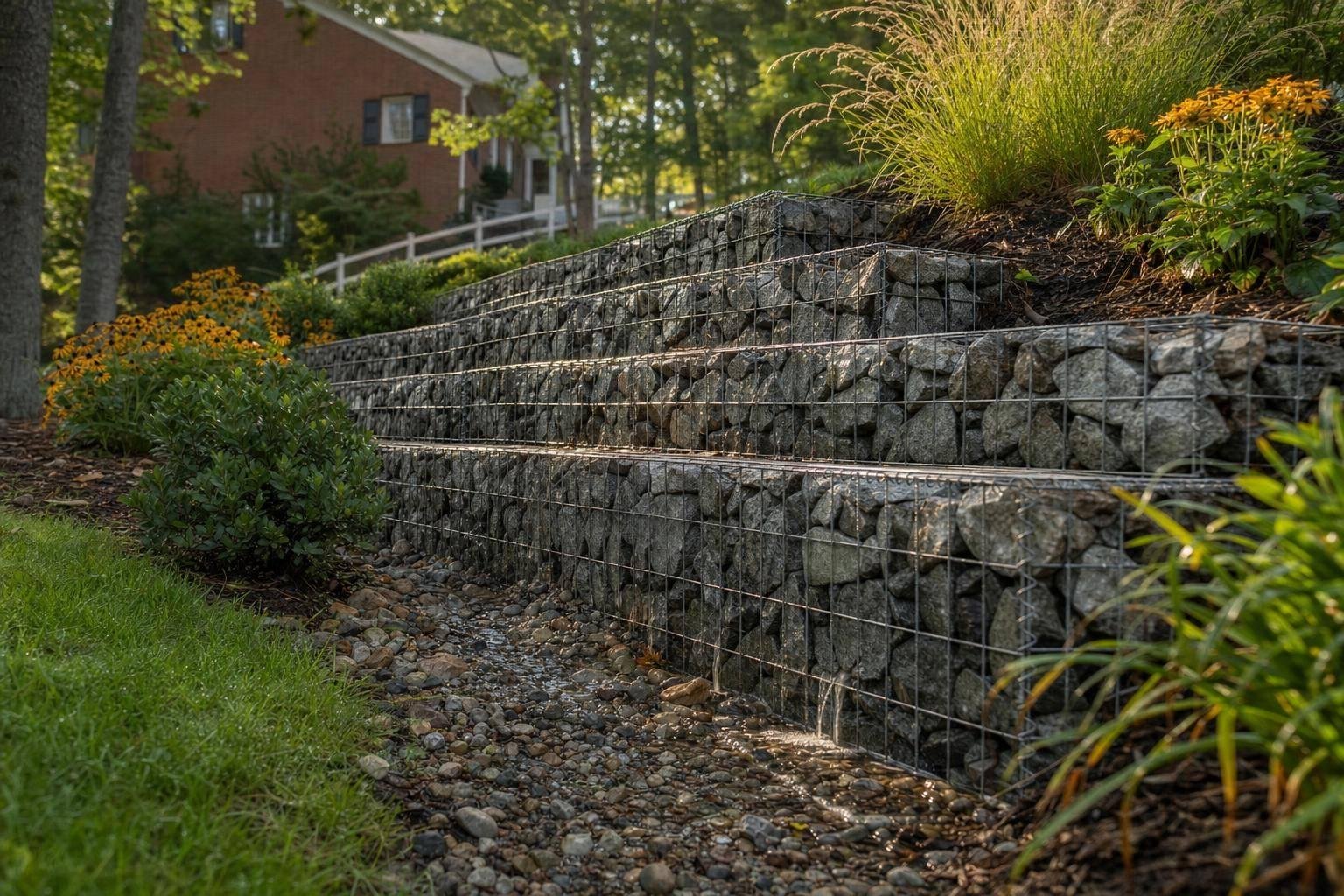
Gabion walls are a practical way to steady soil on sloped Maryland yards and banks, especially near walk-out basements, rear-yard drops, and downslope patios. Their strength comes from two jobs at once: holding the slope and draining runoff.
How Gabions Hold Soil on Sloped Yards and Banks
On slopes and banks, gabion walls hold soil in place by adding mass at the base of the grade. That extra weight helps resist movement and gives the slope more support where it needs it most. It also helps steer water away instead of letting runoff carve deeper channels into the slope.
How Stone-Filled Baskets Slow Water and Reduce Washout
Gabion walls work well in drainage-prone areas because the open stone fill lets water pass through the wall instead of building up behind it. That means less pressure on the back of the wall and a lower chance of washout. In plain terms, the wall doesn’t act like a dam.
That said, good drainage depends on fit. Wall height, basket size, and stone fill all need to match the site. If those parts are off, the wall may not drain or support the slope the way it should.
Gabion Walls vs. Other Residential Erosion-Control Options
Gabions fit sites that need both slope support and drainage. Their open design relieves pressure behind the wall, which helps them perform on runoff-heavy yards. For Maryland properties with steep grades or water moving through the yard after rain, that mix of support and drainage can make a big difference.
Gabion Wall Layout and Stone Fill Basics
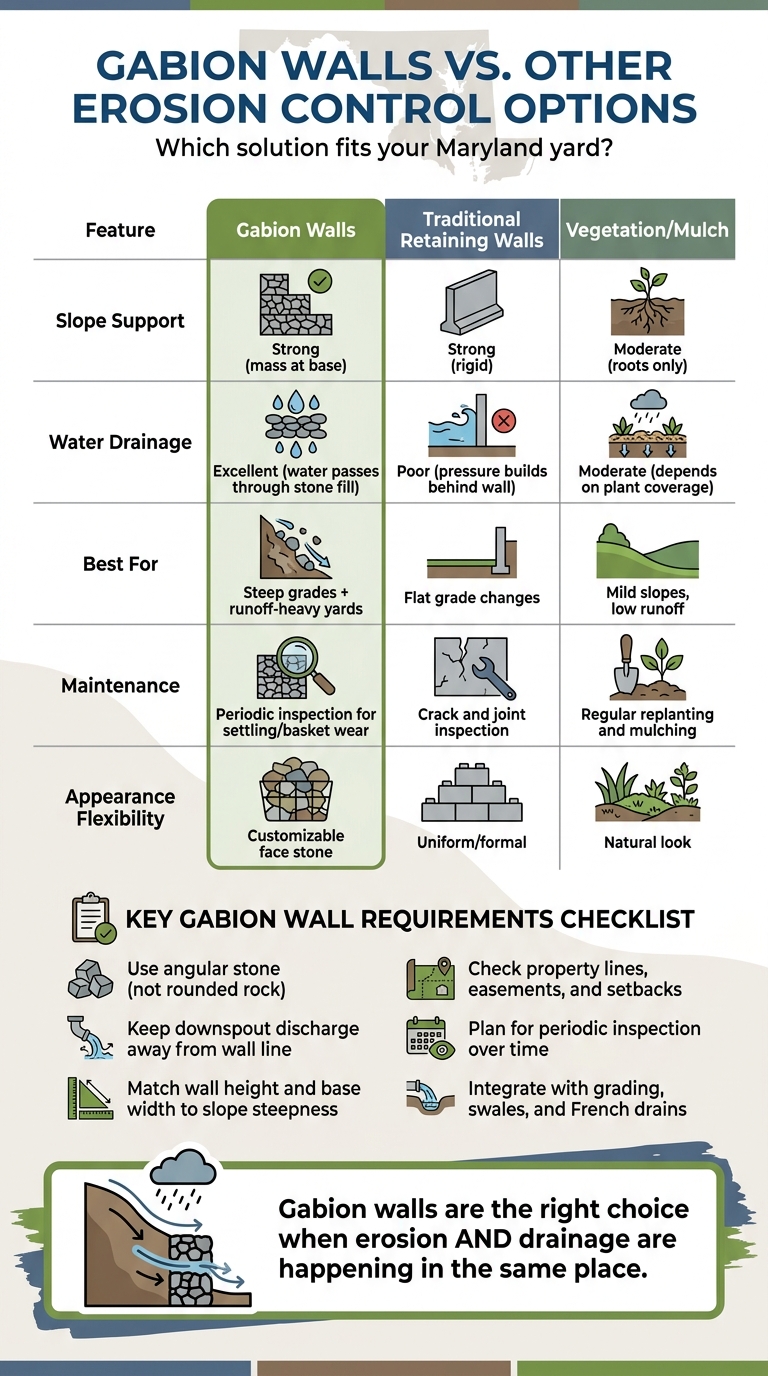
Gabion Walls vs. Other Erosion Control Options for Maryland Yards
Gabion walls help control erosion only when the layout, stone, and drainage fit the site.
Layout Decisions That Affect Stability and Drainage
After you pick the wall type, the layout does the heavy lifting. This is where a wall either helps with erosion – or ends up fighting water in the wrong way.
Match the wall height and base width to the slope. As a rule, taller walls need a wider base. On steeper grades, a stepped or terraced layout often works better than one tall run. It spreads the load and tends to handle the slope more naturally.
Placement matters just as much. The wall should let runoff move around it or through it, not slam into it. And one simple mistake can cause a lot of trouble: letting roof runoff or downspout discharge empty into the wall line. Keep that water away from the system.
Stone Fill, Basket Materials, and Appearance Options
The fill and basket materials affect both how the wall performs and how it looks in the yard.
Use angular stone. It locks together better than rounded rock and leaves open spaces that help water drain through the wall. That drainage is part of what makes gabions work.
Basket material matters too, since the wall sits outside in the weather all year. The baskets need to hold up under constant exposure, not just look good on install day.
On the appearance side, the visible face stone can be chosen to match nearby hardscaping and planting beds. That makes it easier for the wall to blend in instead of looking like a stand-alone fix.
Gabion Wall Pros and Limits: What Homeowners Should Expect
Homeowners should go in with clear expectations:
- Flexibility: Fits irregular slopes and curved runs
- Site prep: Works best with proper grading and a stable base
- Maintenance: Needs periodic inspection so settling or wear can be caught early
These details matter most when gabions are tied into grading, swales, and drainage work across the yard.
Fitting Gabion Walls Into a Complete Yard Drainage Plan
Once the wall size, stone, and base are set, the next job is fitting the gabion wall into the yard’s drainage path. Gabion walls work best as part of a system, not as the only fix. Pair them with grading, swales, French drains, and other runoff controls so water keeps moving where it should.
How Gabions Work With Grading, Drains, and Swales
Gabion walls do their best work when grading and drainage are planned at the same time. The wall can slow runoff where the problem shows up, while grading and drains move that water away from the area. That matters because it helps control flow without letting pressure build up behind the wall.
Think of it this way: the gabion handles the trouble spot, and the rest of the drainage plan guides the water out.
Property Lines, Easements, and Installation Quality
After the drainage path is mapped out, the wall location needs to stay inside the build area. Check property lines, easements, and setback limits before any digging starts. A wall in the wrong spot can block water, trap runoff, or make the structure less stable.
Placement also affects how well the whole system works. Even a well-built gabion wall can run into problems if the location is off or the installation is sloppy.
Conclusion: When Gabion Walls Are the Right Erosion-Control Choice
Gabion walls make the most sense when erosion and drainage issues need to be handled together, especially on sloped yards. For central Maryland homeowners, Pro Landscapes MD provides the grading and drainage work that supports a complete erosion-control plan.
FAQs
Do I need a gabion wall or just better drainage?
Not necessarily. A gabion wall can help control slope erosion and reduce soil loss, but it’s just one way to improve drainage.
What works best depends on your soil conditions and how water moves across the site. In many cases, a professional may suggest a custom plan that uses French drains, regrading, swales, berms, or box and pipe drain systems.
How tall should a gabion wall be for my yard?
The right height depends on your yard’s slope and any erosion issues. Since gabion walls help support the ground and handle changes in elevation, the height should come from a professional review of your site’s grade and drainage.
Pro Landscapes MD can design a wall that fits your landscape, stabilizes the area, and helps direct water flow while reducing hydrostatic pressure.
How long do gabion walls last in Maryland?
When they’re designed and installed the right way, gabion walls can last for decades.
In Maryland, drainage is a big part of that lifespan. If a wall doesn’t have backfill drainage stone and perforated drainpipes to move water away and ease hydrostatic pressure, even a well-built wall can fail in just a few years.
Chat with Us