









- bhavya gada
- No Comments
If a Maryland sand filter holds water for 24 to 72 hours after rain, I’d treat that as a clog warning. The short version is simple: I check it on a set schedule, clear sediment and leaves early, keep weeds and woody growth out, and fix erosion before it sends more material into the filter.
Here’s the full takeaway in plain language:
- Watch for ponding and slow drainage. Standing water after storms is often the first sign that the surface, inlet, or underdrain is blocked.
- Inspect on a routine. I’d do monthly visual checks during the growing season, a check after major storms, and one full yearly inspection.
- Write down what I see. I’d log the date, storm conditions, ponding, sediment, debris, erosion, plant growth, and visible damage.
- Handle the basic work early. That means removing sediment and trash, mowing or pulling weeds, clearing leaves, keeping access points open, and stabilizing bare soil.
- Match maintenance to the season. Spring often brings erosion and sediment movement. Summer brings fast plant growth. Fall brings leaf buildup. Winter can bring freeze-thaw damage and drainage trouble.
- Know when basic care is no longer enough. If cleaning does not fix repeat ponding, the filter media may need replacement or the underdrain may need repair.
A few numbers matter here. If ponding lasts beyond 24 to 72 hours, that points to a drainage problem. And if I only inspect once in a while, small issues can turn into bigger repair costs.
| Issue | What I’d do first | When I’d call a pro |
|---|---|---|
| Ponding after rain | Clear debris and surface sediment | If ponding keeps coming back |
| Slow runoff | Check inlets, outlets, and surface crusting | If cleaning does not restore drainage |
| Weeds or woody growth | Mow, trim, and remove seedlings | If roots have reached structures or drains |
| Erosion or bare spots | Add seed or mulch and stabilize soil | If washout is large or keeps returning |
If I had to sum it up in one line: clean early, inspect often, and treat repeat drainage problems as a repair issue, not just a cleanup job.
Sand Filter System Maintenance | Exact
sbb-itb-843f8be
Common Sand Filter Problems on Maryland Residential Sites
Sand filters can clog and stop draining well when sediment piles up. On Maryland residential sites, the first signs are usually ponding and slow runoff after rain. In most cases, trouble shows up during a storm or right after one.
Standing Water, Slow Drainage, and Surface Clogging
The clearest warning sign is standing water after a storm. If ponding sticks around for 24 to 72 hours, the sand bed, inlet area, or underdrain is likely blocked. Fine sediment may also have sealed the surface. If drainage takes longer than that, clogging is the likely cause. These are early maintenance warnings, not small annoyances.
You may also notice water draining more slowly after rain, along with a crusted or sealed surface. That crust forms when fine sediment settles on top and shuts the surface down.
If the water drains on time, check the system for debris, inlet blockage, and surface buildup next.
Inspection Routines and Maintenance Triggers
Once ponding, slow drainage, or surface sealing shows up, it’s time to move to a regular inspection routine. That steady rhythm helps you catch clogs, drainage trouble, and repair needs before they turn into bigger headaches.
A Basic Maryland Inspection Schedule
A simple schedule usually does the job: monthly visual checks during the growing season, a quick look after major storms, and one thorough annual inspection of all accessible parts. That yearly check should include grates, lids, access chambers, and visible inlets and outlets.
| Inspection Type | Frequency | What to Check |
|---|---|---|
| Visual walkthrough | Monthly during the growing season | Visible condition, flow, blockage, and erosion |
| Post-storm check | After major storms | Drainage, erosion, and blocked inlets or outlets |
| Structural review | Once per year | Grates, lids, access chambers, and visible inlets and outlets |
Plan post-storm checks after heavy rain, and handle the annual review during spring cleanup. That timing makes the work easier and helps you spot winter damage before the busy season starts.
What to Record During Each Inspection
A consistent O&M log gives you a clear picture of how the system is doing over time. Record the date, storm conditions, ponding, sediment, inlet/outlet debris, erosion, vegetation, and visible structural damage.
Those notes help you spot repeat trouble, schedule repairs early, and decide what kind of work the filter needs next. In many cases, the pattern becomes pretty clear: one issue points to sediment removal, another to vegetation control, and another to structural repair.
Use each inspection as a trigger for action, whether that means sediment removal, vegetation trimming, or repairs before performance starts to slip.
Core O&M Tasks: Sediment, Vegetation, and Structural Upkeep
When inspections show buildup or damage, these are the first maintenance jobs to handle.
Remove Sediment and Debris Before the Filter Clogs
Remove sediment from the sand surface, inlets, and drainage paths as soon as deposits show up. Act early. If material sits too long, it can seal the surface and slow drainage.
Pay close attention to low spots. Those areas tend to collect sediment first, and they can turn into trouble fast if they’re not cleared.
Control Grass, Weeds, and Woody Growth
Mow and remove weeds on a regular basis. Pull out self-seeded shrubs and trees from the filter bed and nearby structure so roots don’t damage underdrains, inlets, or outlets – or block them up.
On slopes, keep plant cover thick enough to stop erosion and keep sediment from washing into the filter.
Repair Erosion and Check Access Structures
Keep access points open so inspection and cleanout are easy to do. If erosion shows up near the filter, repair it right away. Bare soil should be stabilized before it washes sediment into the system.
Seasonal conditions should guide the timing. Wet periods, heavy growth, and leaf drop can all change when it makes sense to clear debris, cut back vegetation, and fix erosion.
Seasonal Timing, Rehabilitation Triggers, and O&M Summary
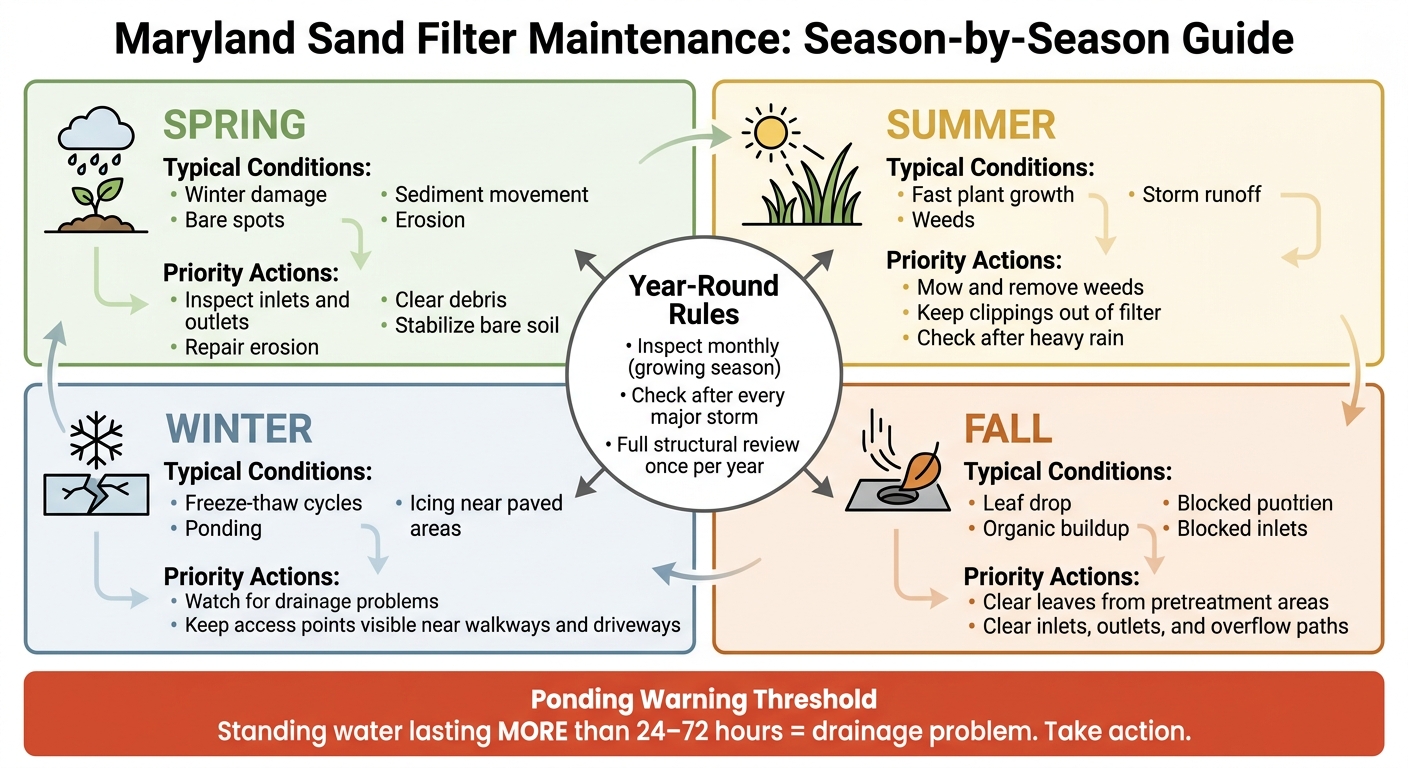
Maryland Sand Filter O&M: Season-by-Season Maintenance Guide
Season-by-Season Maintenance Priorities
Use the inspection log above to line up maintenance with the time of year. In Maryland, the weather shifts fast, and each season tends to bring a different first problem. Freeze-thaw cycles can damage surfaces, fall leaves can clog flow paths, summer growth can get out of hand, and spring runoff can move sediment and start erosion. In short, Maryland weather changes which problem shows up first.
| Season | Typical conditions | Priority maintenance actions |
|---|---|---|
| Spring | Winter damage, bare spots, sediment movement, erosion | Inspect inlets and outlets, repair erosion, clear debris, and stabilize bare soil |
| Summer | Fast plant growth, weeds, storm runoff | Mow, remove weeds, keep clippings out, and check after heavy rain |
| Fall | Leaf drop, organic buildup, blocked inlets | Clear leaves from pretreatment areas, inlets, outlets, and overflow paths |
| Winter | Freeze-thaw cycles, ponding, icing near paved areas | Watch for drainage problems and keep access points visible, especially near walkways and driveways |
When to Plan Media Replacement or Professional Repair
If routine cleaning stops fixing the drainage problem, it’s time to move from basic upkeep to repair. Some issues go beyond a simple cleanup.
For example, if ponding continues after you’ve cleared the surface, or clogging keeps coming back even with regular maintenance, sediment has probably moved deeper into the filter media. When that happens, you may need top-layer media replacement, underdrain service, or structural repair.
| Routine homeowner tasks | Professional repair tasks |
|---|---|
| Remove leaves, trash, and light sediment | Replace top-layer sand or filter media |
| Pull weeds and manage grass height | Repair or replace underdrains or structural components |
| Watch for ponding after storms | Correct grading problems that redirect runoff into the system |
| Record sediment, erosion, and damage in an O&M log | Rebuild damaged inlets, outlets, or concrete edges |
| Stabilize small bare spots with seed or mulch | Address recurring clogging, heavy sediment loading, or larger drainage failures |
Key Takeaways for Maryland Homeowners
Inspect quarterly and check again after heavy rain. Remove sediment before it seals the surface, keep vegetation trimmed, and fix erosion fast.
Small issues are usually much easier and cheaper to deal with early. Wait too long, and a minor maintenance job can turn into a backed-up system or a failed structure.
FAQs
How do I know if my sand filter is clogged?
Check how it performs during routine inspections. A clog often shows up when water sits too long in the ponding area, drains slowly after a storm, or when runoff isn’t being handled the way it should.
You may also spot signs in the pretreatment chamber. If debris, trash, or sediment starts piling up there, the filter media may be blocked.
What should I record during inspections?
Keep detailed records of every maintenance visit for your sand filter and any other stormwater system on the site. Good recordkeeping helps show that you’re meeting regulatory requirements.
Write down any issues you find, the condition of the site at the time, and what you did to fix the problem. Clear, accurate logs also make annual compliance checks easier for certified professionals.
When should I call a professional?
Call a professional when you need to keep your sand filter and stormwater system in line with Maryland requirements. A certified professional should take care of the annual compliance check and keep the right documents on file for your records.
It also makes sense to bring in professional help when you’re planning new drainage or stormwater work. The same goes for routine monitoring and maintenance, so you can confirm the system is working the way it should.
Chat with Us