









- bhavya gada
- No Comments
Weeds in Maryland shade beds usually start with three problems: wet soil, bare spots, and weak plant cover. If I want to catch trouble early, I can check 8 things: shade level, soil moisture, groundcover, drainage, bed edges, mulch depth, plant health, and seasonal cleanup.
Here’s the short version:
- Sort the bed by shade type: full shade, dappled shade, or part shade
- Check soil after rain: look for soggy pockets and dry root-heavy spots
- Watch for open ground: less than 75% to 80% cover often gives weeds room
- Look for drainage trouble: pooling water and soft soil are warning signs
- Clean bed edges: loose borders let turf and weeds move in
- Check mulch: thin or washed-out mulch lets light hit weed seeds
- Look at plant gaps: thin plants mean more exposed soil
- Inspect beds 3 times a year: late winter/early spring, late spring/early summer, and late summer/early fall
| Check | What I look for | Why it matters |
|---|---|---|
| Shade + moisture | Wet pockets, dry root zones | Both can lead to weed spread |
| Soil cover | Less than 75%–80% cover | Open soil gives weeds space |
| Drainage | Standing water, slow drying | Wet beds weaken plants |
| Edging | Ragged lawn-to-bed lines | Grass and weeds creep in |
| Mulch | Thin spots, bare soil, washout | Weed seeds get light |
| Plant health | Dieback, gaps, weak growth | Thin beds lose weed control |
| Seasonal cleanup | 3 yearly checks | Stops seed set and buildup |
| Notes | Repeat wet or thin spots | Helps spot site issues |
If the same area keeps failing, I’d stop treating it like a simple weeding problem. In many Maryland shade beds, the main issue is poor drainage, grading, tree-root competition, or all three.
12 Ground Covers for Shade That Kill Weeds (Zero Maintenance!)
The 8-step weed check
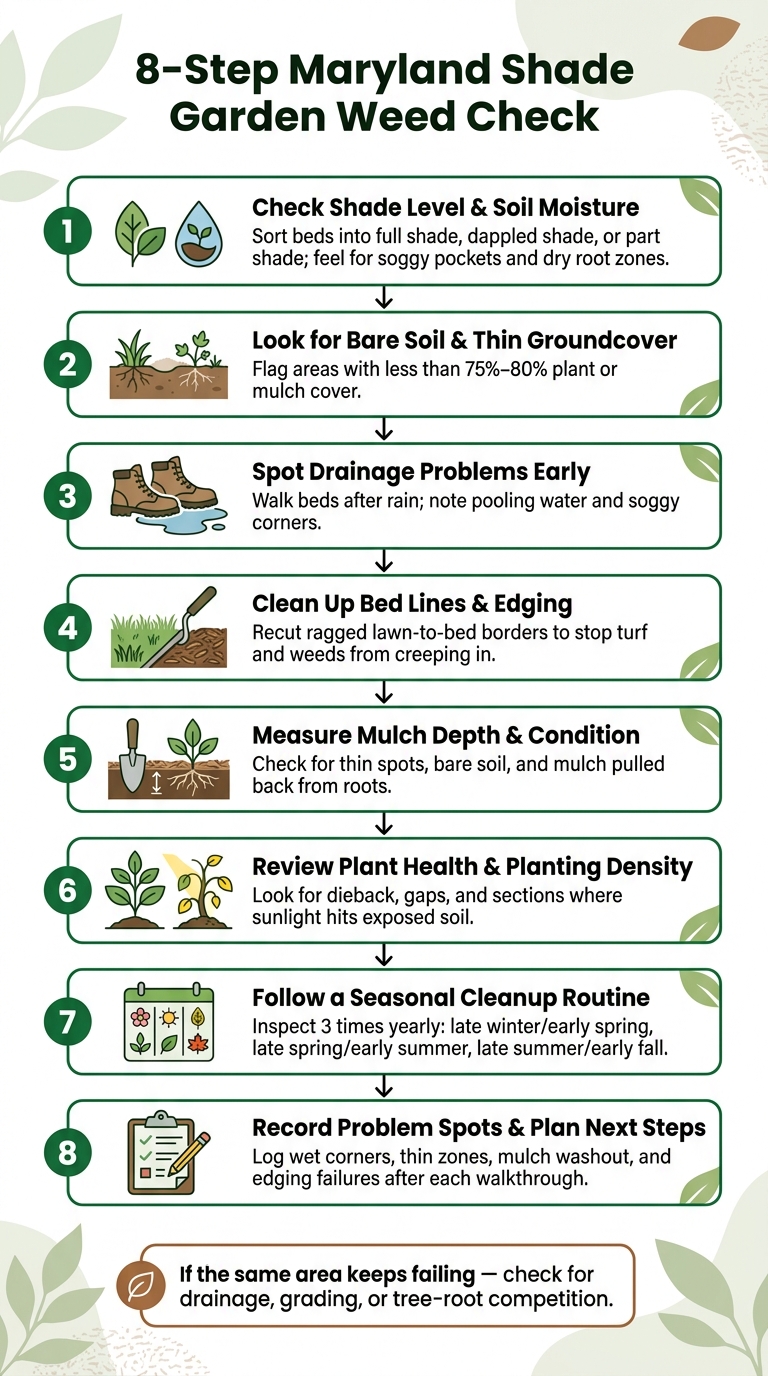
8-Step Maryland Shade Garden Weed Check
Step 1: Check shade level and soil moisture
Start by sorting each bed into one of three groups: full shade, dappled shade, or part shade. That matters because each one tends to deal with weeds a little differently.
After rain or irrigation, feel the soil in a few spots. Check for soggy pockets and dry, bare areas under tree roots. Both can make it easier for weeds to move in.
Step 2: Look for bare soil and thin groundcover
Scan for open patches around shrubs, perennials, and tree bases. If an area has less than 75% to 80% plant or mulch cover, weeds usually get an easy opening.
Flag those spots for replanting or mulch repair. In many cases, the answer is simple: add thicker shade-tolerant groundcover, replant thin areas, or top up mulch where plants still haven’t filled in.
Step 3: Spot drainage problems early
Walk the beds after rain or irrigation and look for places that stay wet too long. Pooling water and soggy corners can weaken plants and give weeds room to spread.
If one section keeps holding water, make a note for grading, drainage repair, or a French drain.
Step 4: Clean up bed lines and edging
Look closely where the lawn meets the bed. Ragged edges make it easy for turf and weeds to creep in.
Recut the border so it stays sharp and easier to maintain.
Step 5: Measure mulch depth and condition
Check for thin mulch, bare soil, and mulch that has pulled back from roots. A steady layer of mulch helps block light from reaching weed seeds.
Keep mulch away from trunks and stems so the area stays healthy and doesn’t trap too much moisture.
Step 6: Review plant health and planting density
Look for dieback and gaps where sunlight hits the soil. Dense, healthy plantings help crowd out weeds.
If one section keeps thinning, the issue may be poor soil, drainage trouble, or a plant that just isn’t a good fit for that shade level.
Step 7: Follow a seasonal weeding and cleanup routine
Check shade beds three times a year:
- Late winter to early spring: Clear dead debris and do the first cleanup before new growth starts.
- Late spring to early summer: Hand-weed before weeds set seed.
- Late summer to early fall: Check for storm damage, erosion, and a new flush of weeds.
Use these seasonal checks to watch the same trouble spots year after year.
Step 8: Record problem spots and plan next steps
After each walkthrough, write down wet corners, thin planting zones, mulch washout, and edging failures.
Use those notes to plan drainage work, edging repair, or replanting. If wet spots keep showing up, that usually points to grading or drainage trouble, not just weeds.
sbb-itb-843f8be
When a weed check reveals bigger site problems
If Steps 3, 5, or 6 keep flagging the same bed, stop treating it like a normal weed issue. At that point, it’s usually a site problem.
A bed that stays wet in the shade is often dealing with drainage or grading failure, not a simple mulch issue or a missed weeding visit.
If drainage isn’t the cause, look at tree shade and root competition next. Tree roots can compete hard for water and nutrients, which leaves groundcover too thin to crowd weeds out. In cases like that, a basic maintenance visit won’t fix the root of the problem. The bed may need drainage repair, grading, and replanting as part of a broader site fix.
Pro Landscapes MD offers drainage repair, grading, land leveling, and landscape restoration across central Maryland, including Howard, Montgomery, Carroll, Frederick, Prince George’s, and Baltimore counties.
Conclusion: Keep shaded beds cleaner with regular checks
Maryland shade gardens don’t need nonstop attention. But they do need steady check-ins.
These eight checks help you spot trouble early: thin groundcover, poor drainage, messy edging, shallow mulch, and plants that are starting to thin out before weeds get a foothold.
It also helps to keep notes after each check. That way, repeat problem areas stand out fast and are easier to fix. If the same patch keeps coming back, the issue is often drainage, soil cover, or plant density, not just a missed round of weeding.
Regular checks stop small shade-garden issues from turning into bigger weed problems.
FAQs
What weeds are most common in Maryland shade beds?
The available information doesn’t point to specific weed species that are common in Maryland shade beds. If you want a clear ID for what’s growing in your garden, Pro Landscapes MD suggests checking with the University of Maryland Extension or a local Master Gardener.
When you remove weeds, put your attention on invasive species. At the same time, try not to disturb plants that help local pollinators.
How do I know if a wet spot needs drainage repair?
Watch what happens after it rains. If water sits on the soil instead of soaking in within a reasonable amount of time, that wet area may need drainage repair.
It also helps to check low spots for compacted soil or signs of erosion. Pro Landscapes MD offers site visits and drainage fixes like French drains, dry riverbeds, and grading.
What groundcovers work best for shady Maryland beds?
Native groundcovers are a smart fit for shady Maryland beds. They help hold soil in place, keep weeds from taking over, and support local ecosystems at the same time.
Good picks include Golden Groundsel, Foamflower, Allegheny Pachysandra, Wild Ginger, and Green and Gold. Planted together, they form an attractive, hard-working living mulch that can cut down on routine maintenance.
Chat with Us