









- bhavya gada
- No Comments
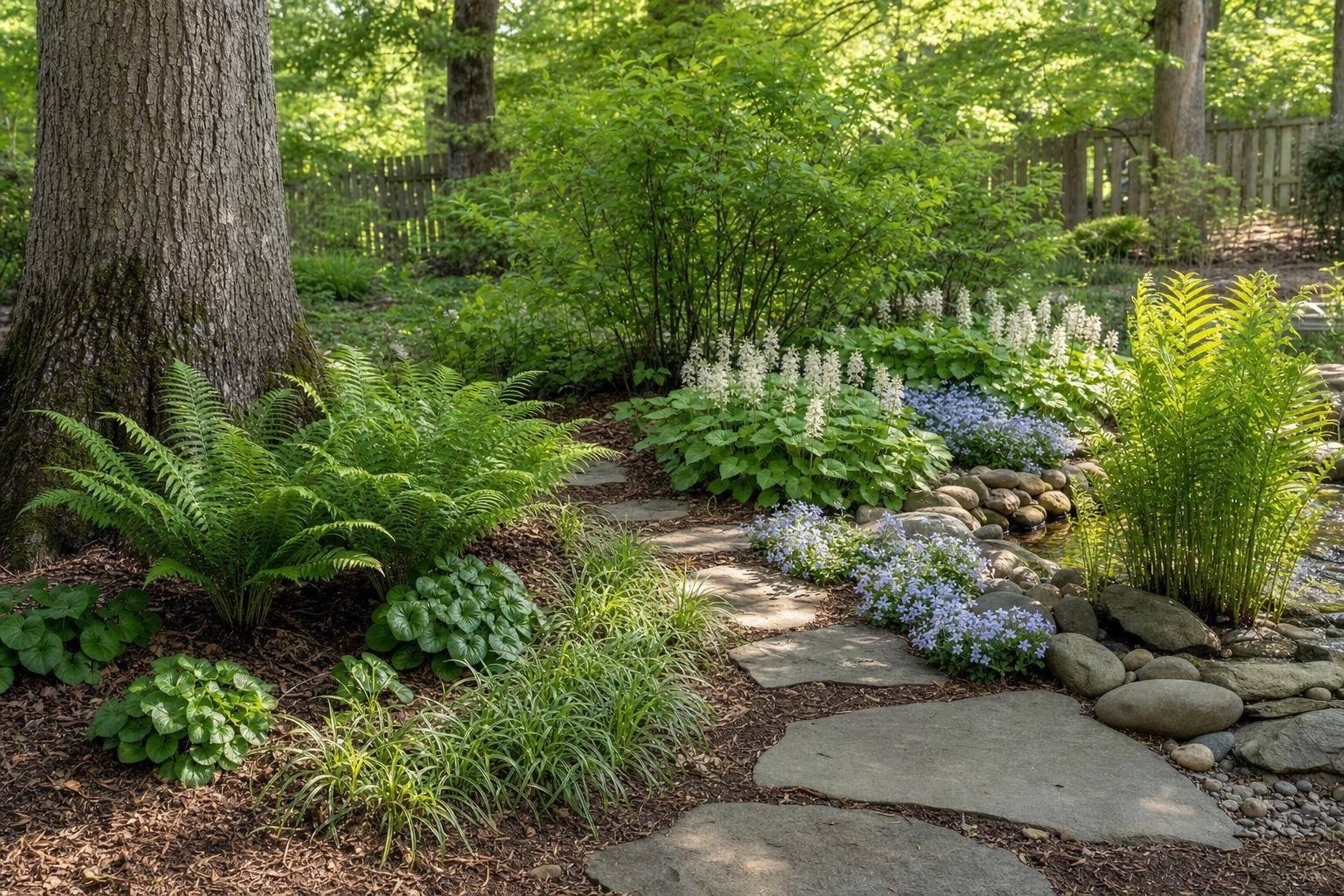
Shade in Maryland is not a planting problem. It’s a plant-matching problem. If I match light, soil moisture, and tree-root pressure first, I can build a lower-care native planting that supports bees, butterflies, birds, and seasonal cover.
Here’s the short version:
- I look at shade type first: full shade, part shade, or dappled shade.
- Then I check soil moisture: dry, average, moist, or wet.
- I treat dry shade under mature trees very differently from moist low spots.
- I mix spring, summer, and fall interest so the bed doesn’t fade after one bloom window.
- I use layers: groundcovers, perennials, and shrubs.
- I keep in mind that University of Maryland Extension points to 80% native plant cover as a target for stronger local habitat support.
A few plant groups stand out right away:
- Dry to average shade: wild columbine, coral bells, Christmas fern, woodland phlox, white wood aster, Pennsylvania sedge
- Moist shade: Virginia bluebells, golden ragwort, foamflower, wild ginger
- Shade shrubs: mapleleaf viburnum, witch hazel, mountain laurel, spicebush, winterberry, inkberry holly
If I’m planting under big oaks or maples, I focus on small root balls, mulch at 2–3 inches, and planting near the dripline, not tight against the trunk. If the area stays wet, I switch to moisture-tolerant plants instead of forcing dry-shade species to survive there.
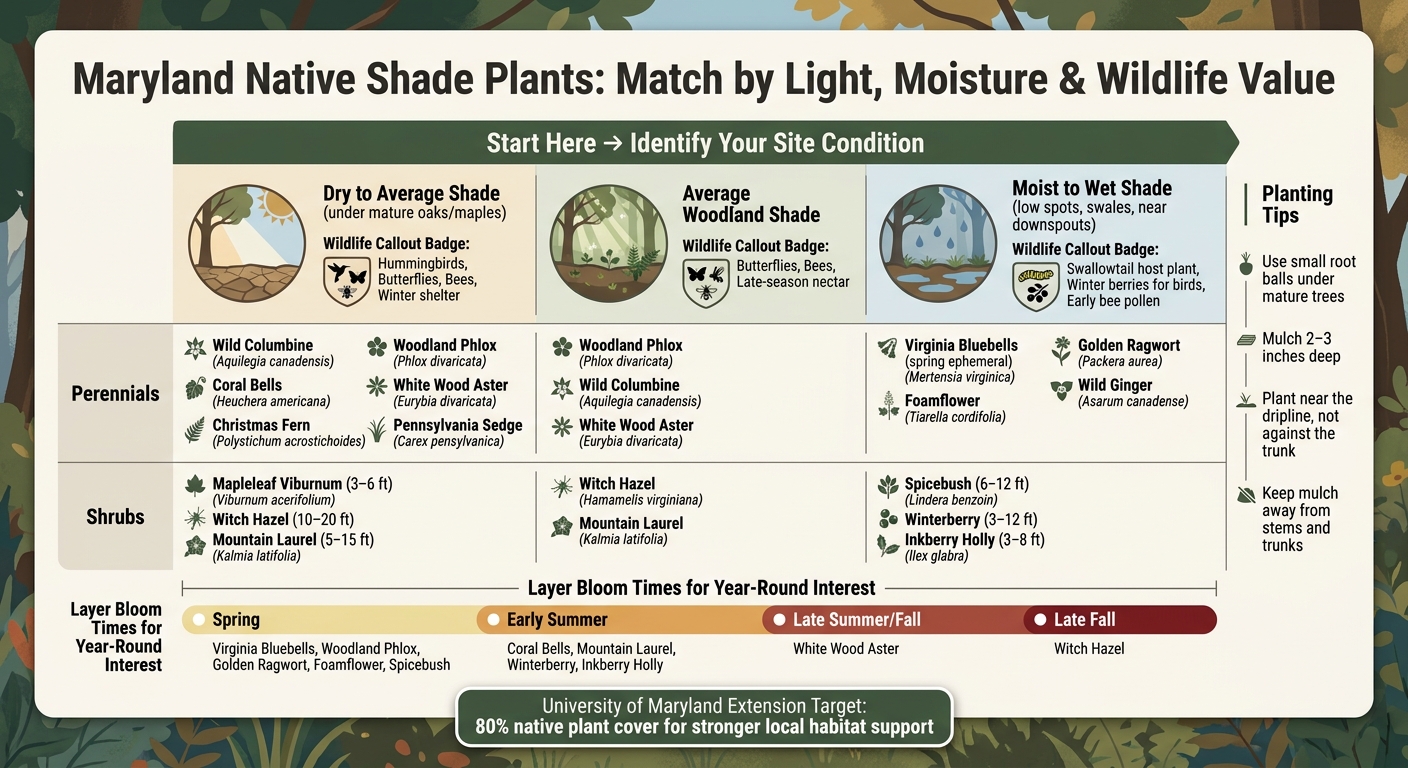
Maryland Native Shade Plants: Match by Light, Moisture & Wildlife Value
Best Bets: Native Plants for Shade
sbb-itb-843f8be
Quick Comparison
| Site condition | Best plant types | Good examples |
|---|---|---|
| Dry shade under trees | Tough perennials, low groundcovers, woodland shrubs | Christmas fern, coral bells, Pennsylvania sedge, mapleleaf viburnum |
| Average woodland shade | Mixed perennials and shrubs | woodland phlox, wild columbine, witch hazel |
| Moist shade | Spring bloomers, spreading groundcovers, wet-site shrubs | Virginia bluebells, golden ragwort, foamflower, spicebush |
| Wet or low areas | Shrubs and perennials that take steady moisture | winterberry, inkberry holly, spicebush |
So if I want a Maryland shade garden that works, I don’t start with color. I start with light, moisture, and roots – then I choose natives that fit those conditions.
Native Maryland Perennials for Shade
Perennials for Dry to Average Shade
Dry shade under mature oaks or maples can be rough planting territory. Tree roots soak up water, and the canopy often keeps rain from reaching the ground.
That’s where the right native perennials earn their spot. Wild Columbine (Aquilegia canadensis) does well in part to dappled shade with average to dry soil. It blooms in spring and brings in hummingbirds. Coral Bells (Heuchera americana) also handles dry conditions and part to full shade, with early summer flowers that draw hummingbirds.
If you need plants that fill space, a few standouts make the job easier. Christmas Fern (Polystichum acrostichoides) works well as a groundcover, stays evergreen through Maryland winters, and gives wildlife winter shelter. It’s also deer-resistant [5][6]. Woodland Phlox (Phlox divaricata) spreads through shady borders in average soil and puts on fragrant spring blooms that attract butterflies and bees [7]. White Wood Aster (Eurybia divaricata) picks up later in the year, blooming from late summer into fall [5][3]. And Pennsylvania Sedge (Carex pensylvanica) covers dry shade well while also providing nesting material for birds [6].
Perennials for Moist Woodland Shade
Some shady spots stay damp much of the time, like low areas, drainage swales, or beds near streams. Those spaces call for plants that can handle steady moisture without fuss.
Virginia Bluebells (Mertensia virginica) are spring ephemerals, which means they bloom early before the tree canopy fills in and then go dormant by summer [1][2]. Golden Ragwort (Packera aurea) gives bees an early-season pollen source, while Foamflower (Tiarella cordifolia) adds spring blooms that bees use too [6]. Wild Ginger (Asarum canadense) is a good fit for full shade and average to moist soil, especially in places with heavy deer pressure [6].
Shade Perennials for Pollinators and Season-Long Color
A shade garden doesn’t have to peak for one week and then fade into the background. The trick is simple: mix early, midseason, and late bloomers so something is happening across the growing season.
Layering perennials under trees and shrubs also adds more habitat. It turns a flat planting into a living understory, with flowers, cover, and shelter all working together.
A simple planting mix might look like this:
- Spring: Virginia Bluebells and Woodland Phlox [1][2][7]
- Midseason: Golden Ragwort and Foamflower [6]
- Late season: White Wood Aster [5][3]
| Perennial | Shade Level | Moisture | Bloom Season | Wildlife Value |
|---|---|---|---|---|
| Aquilegia canadensis (Wild Columbine) | Part to Dappled | Average to Dry | Spring | Hummingbirds [3] |
| Heuchera americana (Coral Bells) | Part to Full | Average to Dry | Early Summer | Hummingbirds [6] |
| Polystichum acrostichoides (Christmas Fern) | Part to Full | Dry to Average | N/A (Evergreen) | Winter shelter; deer-resistant [5][6] |
| Phlox divaricata (Woodland Phlox) | Part to Dappled | Average | Spring | Butterflies and bees [7] |
| Eurybia divaricata (White Wood Aster) | Part to Full | Dry to Average | Late Summer/Fall | Late-season nectar [5][3] |
| Mertensia virginica (Virginia Bluebells) | Part to Full | Moist to Average | Early Spring | Early nectar for bees; ephemeral [1][2] |
| Packera aurea (Golden Ragwort) | Part to Full | Moist to Average | Spring | Early-season pollen for bees [6] |
| Tiarella cordifolia (Foamflower) | Part to Full | Average to Moist | Spring | Bees; semi-evergreen foliage [6] |
| Asarum canadense (Wild Ginger) | Full Shade | Average to Moist | Spring (Inconspicuous) | Deer-resistant; groundcover habitat [6] |
| Carex pensylvanica (Pennsylvania Sedge) | Part to Full | Dry | N/A | Lawn alternative; nesting material [6] |
For more structure and year-round screening, use native shrubs that match the same shade and moisture conditions. Next, choose shrubs that extend cover, nesting habitat, and seasonal interest.
Native Shade-Tolerant Shrubs for Maryland Yards
Planting shrubs beneath trees adds shape, berries, and cover where lower plants tend to fade out. They also help fill that middle layer of the yard, giving birds places to nest and rest through the colder months.
Shrubs for Dry or Average Woodland Shade
Dry woodland shade can be tough. Tree roots soak up water fast, so it helps to pick shrubs that can deal with drier soil and heavy root competition.
Mapleleaf Viburnum (Viburnum acerifolium) is a strong fit for dry to average woodland shade. It usually grows 3–6 feet tall, handles full to part shade, and brings late spring flowers, fall berries for birds, and good fall color.
Witch Hazel (Hamamelis virginiana) stands out because it blooms in late fall, when almost everything else is done for the year. It offers late-season nectar, handles part to full shade, and can reach 10–20 feet, so don’t tuck it into a tight corner.
Mountain Laurel (Kalmia latifolia) gives you an evergreen choice for shaded beds and woodland edges. It grows 5–15 feet tall and does best in slightly acidic soil with a pH of 5.5–6.8 [3]. In late spring, its flowers support specialist bees [3][4].
Shrubs for Moist Shade and Low Areas
If you’re dealing with damp ground, low spots, or edges that stay wet, go with shrubs that won’t mind steady moisture.
Spicebush (Lindera benzoin) works well in moist shade and low areas. It blooms early in spring with small yellow flowers, serves as the host plant for the spicebush swallowtail butterfly, and produces berries for migrating birds in fall [6][4]. It grows 6–12 feet tall and can handle part shade all the way to deep shade in moist to wet soil.
Winterberry (Ilex verticillata) and Inkberry Holly (Ilex glabra) are both solid picks for low-lying beds or spots near downspouts. Winterberry drops its leaves but makes red berries that feed birds in winter. Inkberry Holly stays evergreen, grows a bit smaller at 3–8 feet, and is easy to place in many yard conditions. It tolerates full sun to full shade and moist to dry soil [6].
Use the table below to line up each shrub with your shade level and soil moisture.
| Shrub | Mature Size | Habit | Shade Tolerance | Moisture | Bloom | Wildlife Value |
|---|---|---|---|---|---|---|
| Viburnum acerifolium (Mapleleaf Viburnum) | 3–6′ | Deciduous | Part to Full | Dry to Average | Late Spring | Berries; fall color; nesting |
| Hamamelis virginiana (Witch Hazel) | 10–20′ | Deciduous | Part to Full | Average | Late Fall | Late-season nectar |
| Kalmia latifolia (Mountain Laurel) | 5–15′ | Evergreen | Part to Full | Average/Acidic | Late Spring | Specialist bees |
| Lindera benzoin (Spicebush) | 6–12′ | Deciduous | Part to Deep | Moist to Wet | Early Spring | Swallowtail host plant; bird berries |
| Ilex verticillata (Winterberry) | 3–12′ | Deciduous | Part Shade to Sun | Moist to Wet | Late Spring | Winter berries for birds |
| Ilex glabra (Inkberry Holly) | 3–8′ | Evergreen | Full Sun to Full Shade | Moist to Dry | Late Spring | Berries for birds; nectar |
Matching Native Shade Plants to Your Maryland Site
Getting the right plant into the right spot matters more than almost anything else in a shade garden. Two areas can look equally shady and still behave very differently. A plant that does fine in moist shade may struggle in dry shade under a mature tree. Start with the plant lists above, then match each plant to the driest, wettest, or most root-packed part of your yard.
Planting Under Mature Trees and in Dry Shade
The hardest spots in most shade gardens sit under big, established trees. Mature oaks and maples often create dry soil packed with roots, which makes planting a bit of a tight squeeze. In these areas, stick with the most drought-tolerant perennials and shrubs.
Use plants with small root balls so you can tuck them between existing roots without digging large holes. For the perennial layer, Heuchera americana (coral bells) and Polystichum acrostichoides (Christmas fern) are solid picks for dry shade. For the shrub layer, plant Viburnum acerifolium (mapleleaf viburnum).
A 2–3 inch layer of shredded hardwood mulch or leaf litter helps hold onto the moisture that is there. Just keep mulch pulled back from plant stems and tree trunks so you don’t invite rot. If deer are a problem, Polystichum acrostichoides and Heuchera americana tend to be among the less-browsed choices for dry shade.
Planting in Moist Shade, on Slopes, and at Woodland Edges
When the soil stays damp, shift away from dry-shade plants and use species that can handle runoff, swales, and seasonal wet spots. Good places to look for these conditions include low areas near downspouts, shaded swales, and the edge where lawn meets woods.
Mertensia virginica (Virginia bluebells) flowers early, before the tree canopy fills in. Then it goes dormant by midsummer. That means it helps to pair it with later-season plants so the space doesn’t look empty in summer.
Packera aurea (golden groundsel) is a smart choice for slopes, especially when you want something to help hold soil and slow runoff. In wetter spots, Lindera benzoin (spicebush) and Ilex verticillata (winterberry) both do well in moist soil and add shape at the woodland edge.
Think of this area like a forest edge in miniature. Layer canopy, understory, shrubs, and groundcovers so the planting feels natural and the shade plants settle into their own space.
When to Bring in a Professional
Some sites need a closer look before you plant anything. A shaded slope near a retaining wall, or a low corner that keeps holding water, can turn into a headache if you guess wrong. Pro Landscapes MD can assess shade, drainage, slopes, and existing hardscape to plan plantings that fit the site.
Conclusion: Getting More from Your Maryland Shade Garden
Start by watching your summer light before you plant anything. Follow how sunlight moves across the yard from May through September, and figure out if the space gets dappled shade, full shade, or partial shade. That one detail affects every plant choice that comes next.
Once you’ve pinned down the light, match your plants to soil moisture and root pressure. Dry shade under mature oaks or pines needs drought-tolerant plants. Moist low areas give you a very different plant palette.
Build in layers with shrubs, perennials, and groundcovers to echo a woodland setting and support birds and insects [1]. That layered understory is often the difference between a garden that thrives and one that merely gets by.
From there, stretch bloom time through the season. Pair spring ephemerals like Virginia bluebells with later-blooming plants so the garden still feels alive after spring flowers fade. Late-season natives like white wood aster help keep nectar available into fall. Research from the University of Maryland Extension suggests that at least 80% of your garden’s cover should be native plants to support local biodiversity [1].
Native woodland plants can turn shade into a low-input planting that supports a healthier landscape. In practice, that’s how a Maryland shade garden goes from tricky ground to a steady native planting.
FAQs
How do I tell if my shade is dry or moist?
Pay attention to the site across the year and notice what the soil does in each season. Dry shade often shows up under mature oaks or pines. The canopy can block rainfall, and tree roots compete for moisture. On top of that, the soil in these spots is often thin or compacted.
Moist shade tends to show up in low areas, near drainage paths, or along riparian edges where water gathers. Look at how long the soil stays damp after rain and whether the area sits near a steady water source.
Which native shade plants are best under large trees?
Choose native plants that can handle dry shade and root competition. Good picks include wild ginger, foamflower, Christmas fern, and Pennsylvania sedge.
Plant in the outer half of the tree’s dripline so you’re less likely to hit major roots. Then water during dry spells to help new plants get established.
How can I keep a shade garden blooming longer?
Choose a mix of species that bloom from spring through fall. The goal is simple: keep color, texture, and pollinator activity going for the whole season.
A good planting plan layers perennials, shrubs, and trees so the garden never feels flat or empty. Start with spring ephemerals, add mid-season flowering perennials, and finish with late-season nectar sources like goldenrod and asters.
Spring ephemerals are early stars, but they don’t stick around for long. After they bloom, they go dormant. That’s why it helps to pair them with later-blooming plants like garden phlox or bottlebrush grass. Those plants fill in the gaps and keep the garden looking lush instead of bare.
Chat with Us