









- bhavya gada
- No Comments
Your patio is an outdoor investment that needs care to withstand Maryland’s challenging weather. Here’s how to protect it:
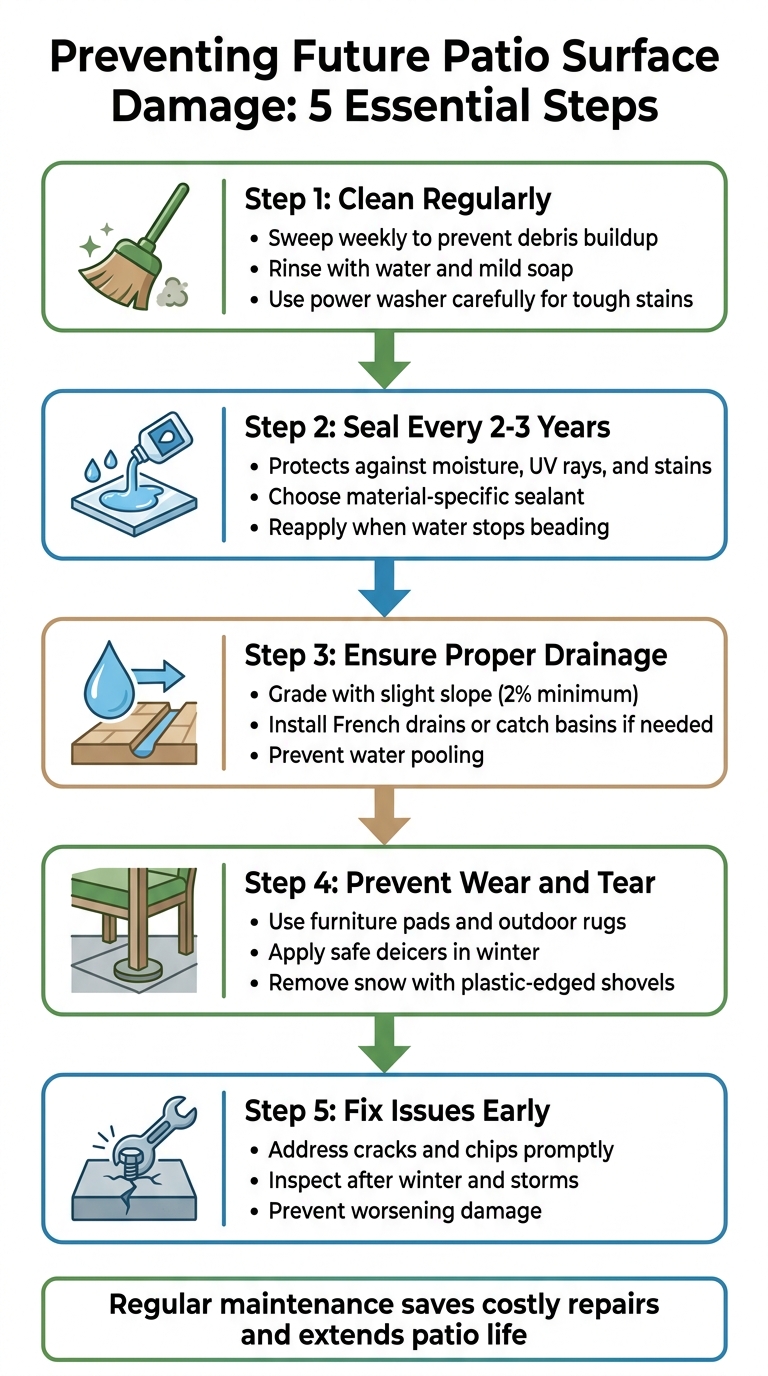
- Clean Regularly: Sweep weekly to prevent debris buildup and stains. Rinse with water and mild soap for a deeper clean. Use a power washer carefully for tough stains.
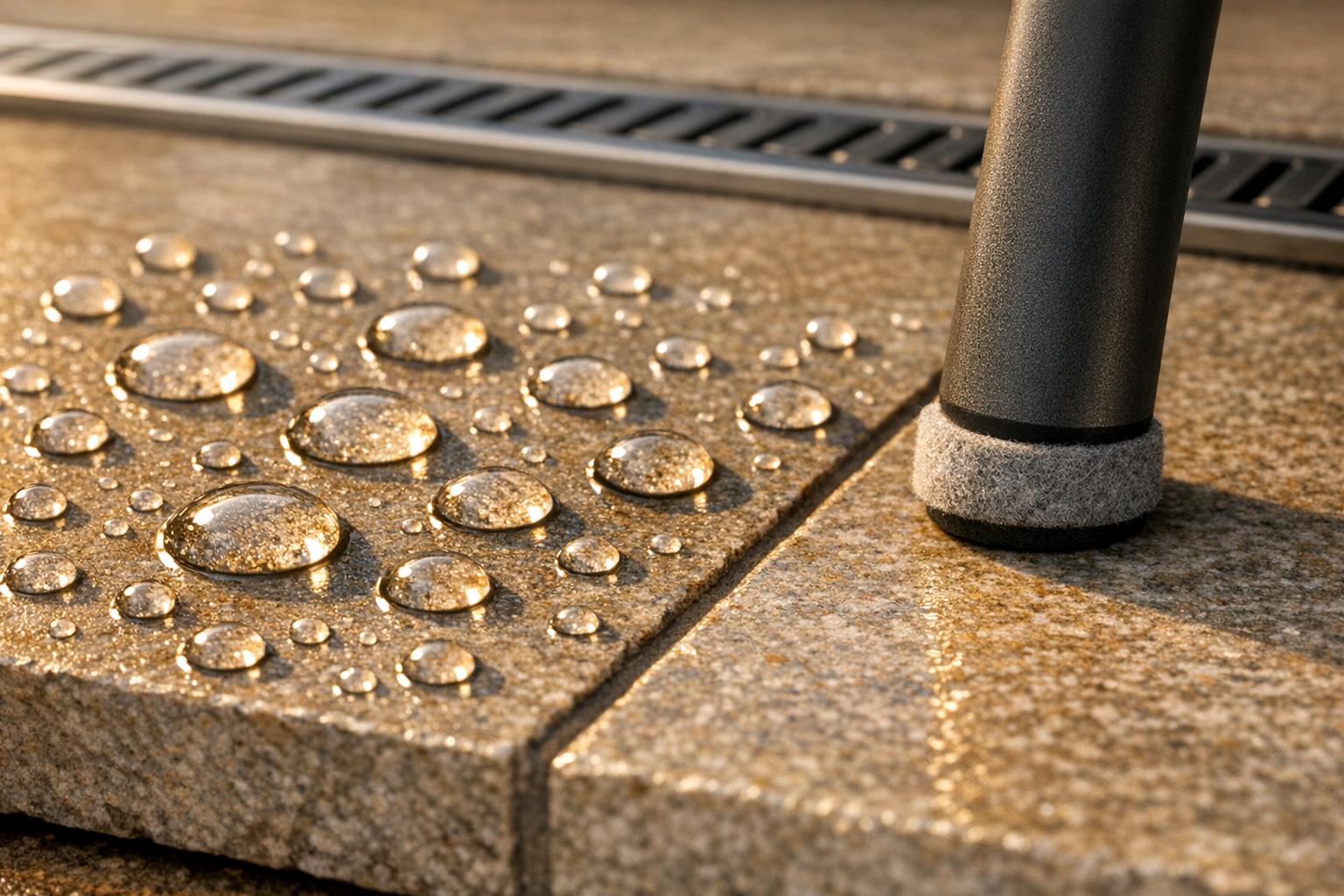
- Seal Every 2–3 Years: Sealing protects against moisture, UV rays, and stains. Choose the right sealant for your patio material and reapply when water stops beading on the surface.
- Ensure Proper Drainage: Grade the patio with a slight slope to prevent water pooling. Install drainage systems like French drains or catch basins if needed.
- Prevent Wear and Tear: Use furniture pads, outdoor rugs, and safe deicers in winter. Remove snow with plastic-edged shovels to avoid surface damage.
- Fix Issues Early: Address cracks, chips, and loose pavers promptly to prevent worsening damage.
Regular maintenance and timely repairs can save you from costly fixes and keep your patio looking great for years.
5 Essential Steps to Prevent Patio Surface Damage
Stop Water & Stains Damaging Your Patio, Walls & Stone (Long-Lasting Protection)
sbb-itb-843f8be
Regular Cleaning to Protect Patio Surfaces
Keeping your patio in good shape starts with consistent cleaning. This simple habit helps prevent surface damage and extends the life of your outdoor space. Organic debris, like leaves and twigs, can trap moisture, leading to mold, algae, and unsightly stains. A regular cleaning routine can help you avoid these problems before they take hold.
Sweeping and Rinsing
A weekly sweep is a quick and effective way to maintain your patio. Use a broom or a leaf blower to clear away leaves, berries, and other debris. This prevents moisture from accumulating, which can lead to discoloration and biological growth over time.
When it comes to spills, speed is your best friend. Surfaces like natural stone and concrete are porous, meaning they absorb liquids quickly. If you don’t clean up spills immediately, they can leave behind stains that are tough to remove. As noted, “The longer a stain sits on your hardscape, the harder it will be to remove” [2].
For deeper cleaning, a gentle wash with water and mild soap or a masonry-specific detergent works well. Start by pre-wetting the patio to protect the surface, then scrub with a stiff synthetic brush (avoid wire or steel brushes to prevent scratches). Finish by rinsing thoroughly to remove any cleaner residue, which could attract more dirt if left behind.
If stubborn stains remain after sweeping and rinsing, it’s time to bring out the power washer.
Power Washing Techniques
Power washing is a great tool for tackling tough stains and heavy grime, but technique matters. Using the wrong pressure or nozzle can damage your patio, so choose settings based on your material – whether it’s concrete, pavers, or natural stone. Too much pressure can erode surfaces or even dislodge pavers.
For a safer approach, consider a soft-wash method. This uses lower pressure combined with specialized cleaners to remove dirt without harming the surface [2]. For biological stains like algae or mildew, products such as "2010" or "EnviroKlean" can be highly effective when used alongside pressure washing. Just remember to test any new cleaner on a small, hidden area first to ensure it won’t cause discoloration or etching.
Sealing Patios for Long-Term Protection
Once your patio is clean, sealing it is the next important step. Sealants protect against moisture, UV rays, and stains while also helping to stabilize the joint sand between pavers. This reduces weed growth and moss buildup significantly [3][4]. Sealing creates a protective barrier that can withstand Maryland’s tough weather conditions.
Choosing the Right Sealant
Picking the right sealant is key to keeping your patio in great shape. For natural stone patios like flagstone, go with penetrating sealers. These soak into the stone, providing protection from the inside without altering its natural look or trapping moisture [3][4]. For concrete pavers, film-forming sealants like acrylics or polyurethanes are a better fit. They form a strong barrier to guard against stains and UV damage [4][5].
If environmental impact is a concern, water-based sealers are a smart choice. They have lower VOC levels, are easier to clean up, and leave a natural matte finish. However, for high-traffic areas like driveways or patios that see a lot of use, solvent-based or polyurethane sealers offer better durability and resistance to oil and grease [4]. Before committing, always test the sealant in a small, hidden spot since some products can darken the material noticeably [4].
Once you’ve chosen the right sealant, proper application is crucial for long-lasting protection.
Application and Maintenance
Timing and technique are everything when it comes to applying sealant. For new patios, wait 60 to 90 days before sealing to let the pavers settle and release surface salts (efflorescence) [7][8]. Sealing too soon can trap salts and moisture, which may lead to a cloudy or hazy finish [8]. Use a paver prep solution to clean the surface thoroughly and improve sealant absorption [5].
Apply two thin coats of sealant when the temperature is between 50°F and 90°F, avoiding high humidity or rain. Spray for even coverage, then roll to remove any excess [5]. The sealant should be touch-dry in about 3–4 hours, ready for use in 24 hours, and fully cured in 48–72 hours [9][10].
To maintain protection, reseal most patios every 2 to 3 years, depending on traffic and weather exposure [6][7]. High-traffic areas may require resealing every 2 years, while patios in less demanding conditions can often go up to 3 years [7]. Not sure if it’s time to reseal? Do a quick water test – if water soaks into the surface rather than beading up, it’s time for a new coat of sealant [6][7].
Proper Drainage to Prevent Water Damage
Water can be a major enemy when it comes to keeping your patio in good shape. Without proper drainage, water tends to pool on the surface, seep into the joints, and saturate the base layers. This can lead to erosion, washing away the joint sand and grout, and ultimately causing cracks and surface damage. Signs like persistent puddles, mold, uneven surfaces, or exposed aggregate are clear indicators of drainage issues. In Maryland, where winter temperatures often dip below freezing, controlling moisture is especially important. As Rochester Concrete Products puts it:
"Managing moisture is the key to preventing freeze thaw damage" [12].
To tackle these drainage problems, proper grading and engineered drainage systems are essential. Let’s dive into the first step: grading.
Grading and Land Leveling
Grading is your patio’s first defense against water damage. The surface should have a slight slope to ensure water flows away from your home and patio edges. Experts recommend a minimum slope of 2% – that’s about 0.25 inches per foot, or a 6-inch drop over 10 feet [13]. If your patio wasn’t graded correctly during installation, don’t worry – adjustments can be made. Pro Landscapes MD offers grading and land leveling services to fix negative slopes that might be directing water toward your home.
In areas with clay-heavy soil, which are common in central Maryland, improving soil drainage can also help. Techniques like aerating the soil or adding organic matter can reduce surface runoff and improve water absorption [11]. These adjustments help maintain your patio’s stability by preventing water from pooling and eroding the base layers.
When grading alone isn’t enough, engineered drainage solutions like French drains can provide additional protection.
Installing French Drains
French drains are a practical solution for managing excess groundwater beneath your patio. These systems involve perforated pipes placed in gravel trenches, which redirect water away from the patio. By channeling water to dry wells or designated drainage areas, French drains help prevent problems like frost heave and base settlement.
Catch basins can also play a role in effective drainage. These are installed at the lowest points of your patio to collect water from depressions, trap debris, and redirect it safely. Additionally, extending downspouts or using buried pipes ensures that roof runoff doesn’t end up on your patio [11].
Pro Landscapes MD specializes in creating tailored drainage solutions, including French drains, catch basins, and stormwater management systems. These systems are designed to address the specific needs of properties across central Maryland, offering long-term protection for your patio.
Protecting Patios from Everyday Wear and Weather
Even with proper drainage and sealing, heavy use and Maryland’s unpredictable weather can take a toll on your patio. Fortunately, a few simple measures can keep it looking great and help it last longer. These tips tackle both daily wear and seasonal challenges.
Using Furniture Pads and Outdoor Rugs
Scratches and chips caused by heavy furniture and foot traffic are common issues for patios. Outdoor rugs and furniture pads provide an effective buffer, protecting concrete and stone surfaces. As RugPadUSA points out:
"Concrete surfaces may seem indestructible, but they are prone to scratching, chipping, and staining just like other flooring types" [14].
When choosing rugs, go for outdoor-specific materials like polypropylene or nylon, which handle UV rays and moisture well. Pair them with rug pads made from natural rubber and felt to prevent surface damage. Avoid plastic or vinyl pads, as they can harm the patio and lose their grip over time. To keep the pad discreet, select one that’s about an inch smaller than the rug’s edge [14].
Rug pads also promote airflow, reducing the risk of mold and trapping debris that might otherwise scratch the surface. Don’t forget to clean your outdoor rugs thoroughly at the start and end of each season to prevent dirt buildup from transferring to your patio [14][15].
Snow and Ice Management
Winter can be especially harsh on patios, with risks like cracks, spalling, and surface damage from improper snow removal or deicing. Applying anti-icing treatments before snow falls can prevent ice from bonding to the surface, making cleanup easier.
When selecting a deicer, keep your patio material in mind. While rock salt is widely available and affordable, DJ’s Landscape Management warns:
"can have detrimental effects on concrete" [16].
Calcium Magnesium Acetate (CMA) is a safer option for most patio materials and is also environmentally friendly, though it tends to be pricier.
For snow removal, use plastic-edged shovels instead of metal ones to avoid gouging the surface. Also, plan where to pile snow carefully – placing it downwind of the patio can prevent it from drifting back onto cleared areas and minimize damage caused by freeze-thaw cycles [16].
Prompt Repairs for Cracks and Chips
Small cracks and chips might not seem like a big deal, but they can quickly worsen if left unaddressed. Water can seep into these tiny openings, and during Maryland’s freezing winters, the expansion of frozen water can turn minor damage into major structural issues.
After winter or heavy storms, inspect your patio for loose pavers, widening joints, or chips. Fixing these problems early prevents water infiltration and helps stop further damage. Pro Landscapes MD offers repair services to address these issues before they escalate, ensuring your patio stays in great shape for years to come.
How Pro Landscapes MD Can Help

Keeping a patio in great shape in Maryland’s tough climate takes both know-how and the right tools. Pro Landscapes MD provides expert services to help extend the life of your patio. They serve central Maryland, covering areas like Howard County, Montgomery County, Carroll County, Frederick County, Prince George’s County, and Baltimore County.
Patio Repair and Maintenance Services
Pro Landscapes MD tackles common patio problems to keep them looking and functioning their best. They handle tasks like patching holes, filling cracks, leveling sunken sections, and replacing damaged pavers. If your patio shows significant wear, they can also resurface concrete to restore its appearance and durability.
To protect against stains, cracks, and discoloration, they offer professional sealing services using top-quality masonry sealants. Since most patios benefit from sealing every two to three years, this service is a smart way to maintain both durability and curb appeal. With competitive pricing, these services deliver long-term value for your outdoor space. [1]
Drainage Solutions for Patios
Proper drainage is key to avoiding water damage. Pro Landscapes MD designs drainage systems tailored to your patio’s needs. Their solutions include grading, land leveling, French drain installation, and stormwater management to ensure water is directed away from your patio.
While installing a drainage system typically costs between $1,000 and $4,000, it can save you from repair bills that might run anywhere from $300 to $3,800 after a storm. These systems are particularly important for solid concrete patios, preventing water pooling and surface wear. [1][17]
For those looking to avoid future issues altogether, a complete patio redesign might be worth considering.
Custom Patio Design and Installation
If you’re planning to build a new patio or replace an old one, Pro Landscapes MD offers custom design and installation services built to handle Maryland’s unpredictable weather. They use durable materials like flagstone, brick pavers, and natural stone, ensuring the patio can stand up to the elements.
Their process includes installing a compacted gravel base tailored to local soil conditions, which helps prevent shifting and settling over time. They also take care of details like securing building permits and creating custom shapes with precise onsite cutting. With professional design and installation, your new patio can combine style, durability, and functionality, all at competitive pricing that delivers a solid return on investment. [1]
Conclusion
Taking care of your patio properly can make it last much longer. Regular cleaning helps avoid stubborn stains that are tough to remove. Sealing every two to three years adds a protective layer, keeping out moisture that can lead to frost damage, efflorescence, and deep oil stains. And don’t overlook good drainage – standing water can wear down grout, weaken the foundation, and cause cracks during freeze-thaw cycles. These steps are the backbone of effective patio maintenance.
Catching small problems early can save you from big headaches later. For example, filling a small crack now can prevent costly structural repairs down the line. While regular care goes a long way, professional services can handle more complex repairs and provide extra protection. Sticking to these practices consistently will help keep your patio in great shape.
FAQs
What’s the safest way to power wash my patio?
To safely clean your patio with a pressure washer, set the machine to low or medium pressure (1,500–2,500 PSI) and attach a wide-angle nozzle (25–40 degrees). Hold the nozzle 12–18 inches away from the surface and move it in a sweeping motion to prevent any damage. Always test on a small, inconspicuous area first. If you’re using a cleaning solution, rinse thoroughly afterward. For more delicate surfaces, it might be a good idea to reach out to a professional.
How can I tell if my patio needs resealing?
If you spot water soaking into your patio surface, fading or discoloration from sunlight, or problems like cracking, staining, peeling, or a lackluster look, it’s probably time to reseal. These issues suggest the protective sealant has worn off, leaving the surface vulnerable to damage. Resealing not only improves the patio’s durability but also brings back its original appearance.
Do I need a French drain or just regrading?
If your patio struggles with drainage problems, deciding between a French drain and regrading comes down to the severity of the issue. Regrading involves reshaping the soil’s slope to guide water away from the area, making it a good option for minor pooling or slight slope issues. However, for more serious problems like constant standing water, seepage, or damage that regrading alone can’t fix, installing a French drain might be the better solution. This system efficiently redirects excess water, helping to safeguard your patio.
Chat with Us