









- bhavya gada
- No Comments
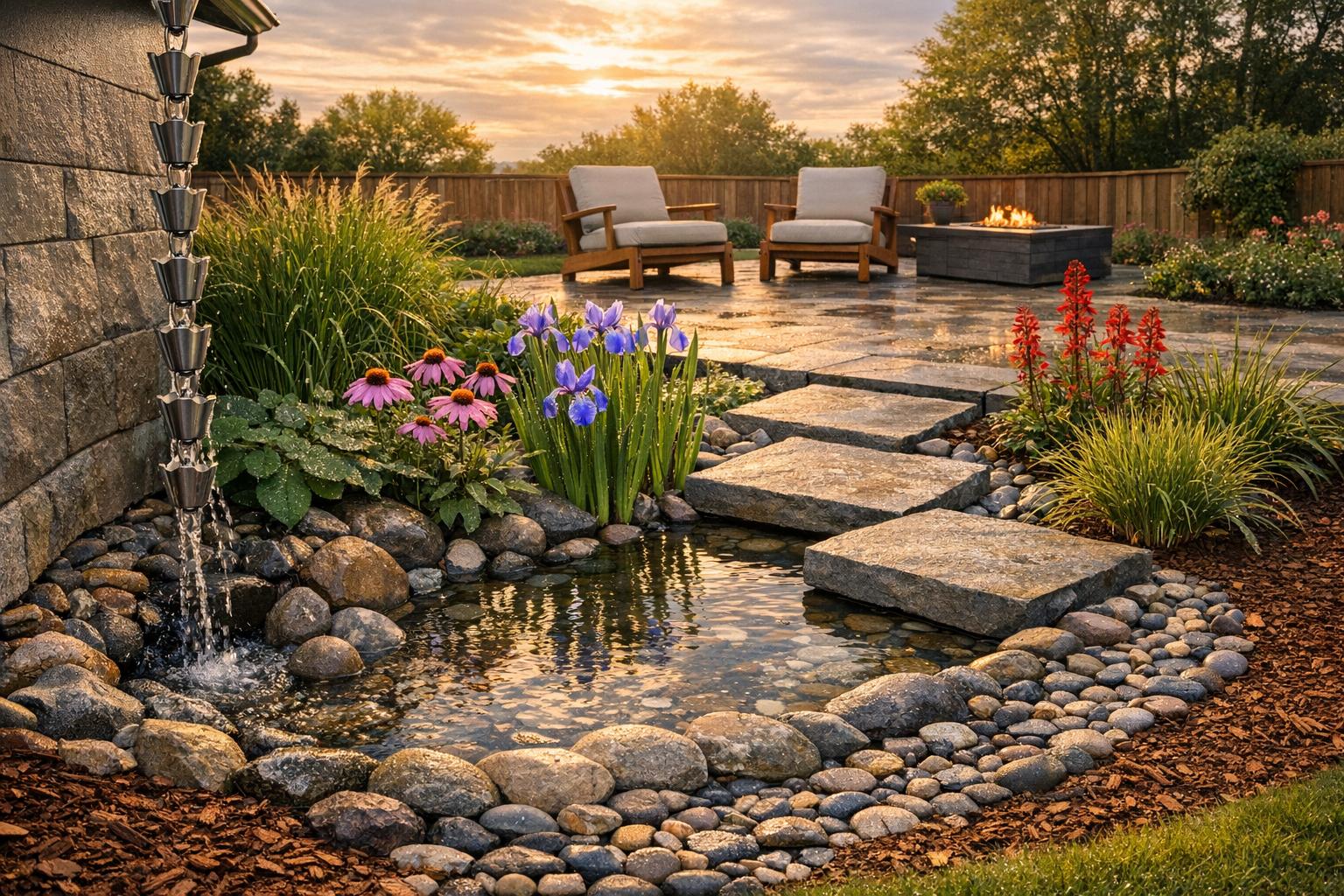
Rain gardens are a smart way to manage stormwater runoff while creating a visually appealing outdoor space. These specially designed, low-lying areas use native plants to filter pollutants, prevent water pooling, and reduce runoff into storm drains. They can absorb up to 30% more rainwater than a traditional lawn, making them an effective solution for homeowners, especially in regions like Maryland.
Key Takeaways:
- What is a Rain Garden? A shallow, planted area that captures runoff from impervious surfaces like roofs and driveways, allowing water to naturally infiltrate the ground.
- Benefits: Filters pollutants, prevents erosion, supports pollinators, and can qualify for local rebates.
- Placement: At least 10 feet away from your home or septic system to protect foundations.
- Sizing: Typically 5%-10% of the area generating runoff, with a depth of 4-8 inches.
- Soil Prep: Use a mix of 2 parts topsoil, 1 part compost, and 1 part sand for better drainage.
- Plants: Native species suited to wet and dry zones ensure low maintenance and effective water management.
Rain gardens not only improve water management but also enhance yard aesthetics with their mix of plants, textures, and colors. Proper planning, including soil tests and thoughtful design, ensures long-term success. For Maryland homeowners, professional services like Pro Landscapes MD can simplify the process and help you take advantage of rebate programs.
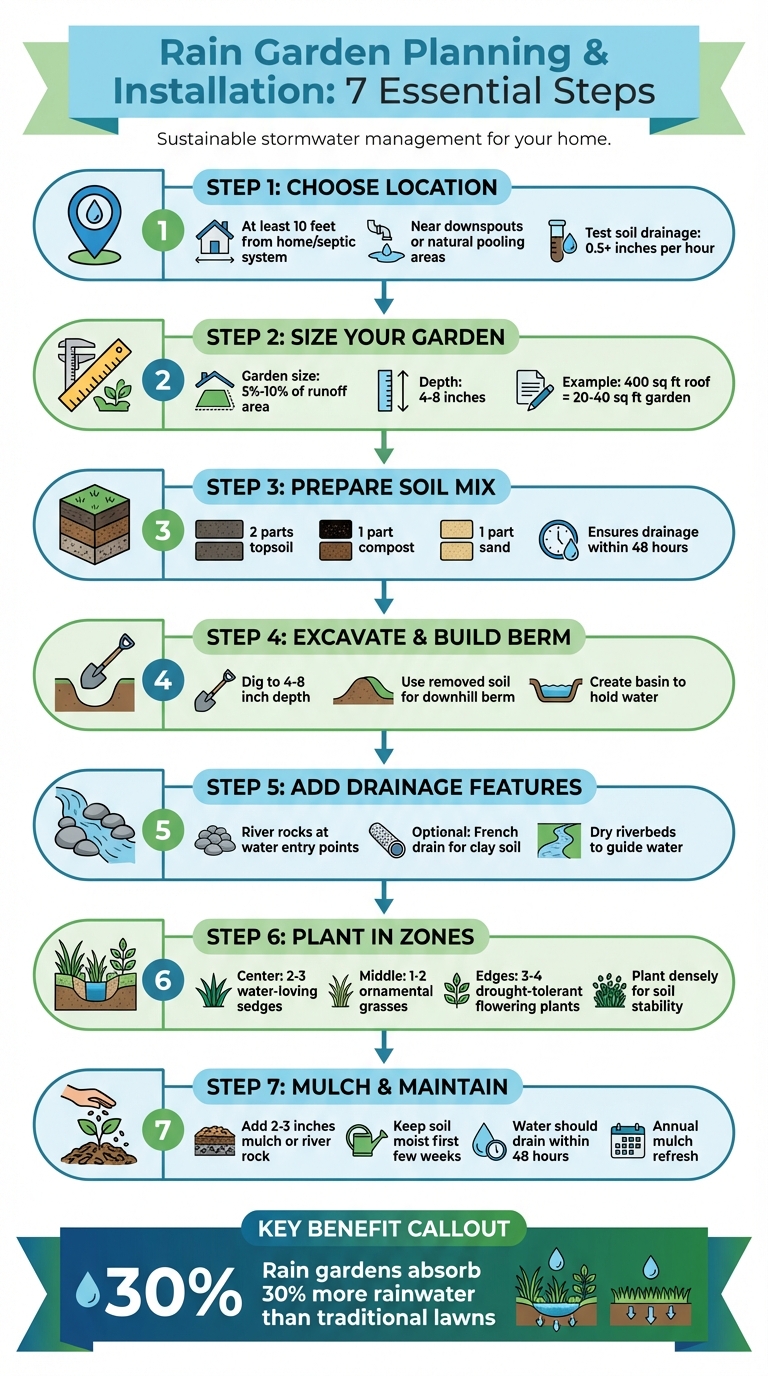
Rain Garden Planning and Installation Guide: 7 Essential Steps
How To Create a Rain Garden | Ask This Old House
sbb-itb-843f8be
Planning Your Rain Garden: Key Considerations
Before you start digging, take a close look at how water moves through your yard. The success of your rain garden depends on picking the right spot, getting the size right, and designing it to fit seamlessly with your outdoor space. Here’s what you need to know about location, size, and design to make sure your garden works well and looks great.
Choosing the Right Location
Begin by observing where water naturally pools during a rainstorm. Ideal spots are near downspouts, along driveways or pathways, or in low-lying areas where puddles tend to form. These natural collection points are perfect for capturing runoff.
"Pick a location at least 10 feet away from your home or septic system. This protects your foundation and ensures proper drainage." – Emily Fazio, Home Improvement Expert [1]
To protect your home’s foundation, keep the garden at least 10 feet away from structures. If the runoff isn’t reaching your chosen area, you can guide it there using shallow channels, dry creek beds, or even drainage pipes [1].
Before finalizing your location, test the soil’s ability to absorb water. Dig a small hole where you plan to place the garden, fill it with water, and see how long it takes to drain. Ideally, the soil should absorb at least 0.5 inches of water per hour [3]. You can also simulate rainwater flow by running a garden hose over your hardscape to confirm that water moves as expected [1].
Sizing and Dimensions
The size of your rain garden should align with your yard’s water flow. A good rule of thumb is to make the garden 5%–10% of the area generating runoff [3]. For instance, if rainwater flows from a 400-square-foot section of your roof, your rain garden should cover about 20 to 40 square feet.
Depth is just as important as surface area. Aim for a depth of 4 to 8 inches to create a basin that temporarily holds water without turning into a hazard [1]. Use the soil you dig out to build a berm on the downhill side of the garden. This helps contain water during heavy rains and prevents overflow [2].
If your soil is heavy with clay, you’ll need to improve it. Replace or amend it with a mix of 2 parts topsoil, 1 part compost, and 1 part sand [1]. This blend enhances drainage, ensuring the garden empties within 48 hours. This timeframe is crucial to avoid mosquito breeding and keep plants healthy.
Designing for Function and Appearance
With the location and size set, focus on design elements that blend practicality with visual appeal. A rain garden doesn’t have to be an eyesore. Shape it to match your yard’s style – use soft curves for a relaxed look or straight lines for a more formal feel [3][2].
Before digging, use a garden hose or string to outline different shapes and sizes. This helps you see how the garden will fit with existing features like patios, fire pits, or seating areas [3][2]. To prevent erosion where water enters the garden, add river rocks or limestone pavers. These materials create a smooth transition between hardscape and planting areas [2].
"Rain gardens can add beauty to the landscape, resulting in an increase in property value." – Qing Lana Luo, PLA, ASLA, Oklahoma State University [3]
For homes that handle heavy runoff, consider pairing your rain garden with rain barrels. These barrels collect the first flush of rooftop runoff, and any overflow can be directed into the garden during storms [1]. This setup not only improves water management but also adds an attractive feature to your yard.
Selecting Plants for Maryland Rain Gardens
Once you’ve planned your garden layout, it’s time to pick the right plants. Native plants are the backbone of a successful Maryland rain garden. Why? Because they’re built to handle the state’s unique weather patterns, swinging between heavy rain and dry spells. Plus, once they’ve settled in, they’re low-maintenance and don’t need much extra yard maintenance.
"Once established, they require little supplemental watering, and for that reason alone they make great rain garden plants." – Maggie Reiter, Lead Scientist at Sunday
For the best results, check with local plant experts for advice on species that will thrive in your area.
Native Plants for Sun and Shade
The key to success is matching plants to the garden’s moisture zones. For the ponding zone – where water collects – go with species that love wet feet. Around the edges, pick drought-tolerant plants to handle drier conditions. A good mix might include:
- 2–3 types of sedges for wet areas
- 1–2 ornamental grasses for structure
- 3–4 flowering plants for pops of color and to suit different sun levels
Planting densely, even more so than in a regular flower bed, helps stabilize soil and slows down water runoff. During the early stages, keep the soil moist to help plants establish strong roots. Watch how water moves through the garden during the first few storms to make sure everything is working as planned. This thoughtful selection and placement of plants will not only manage water effectively but also create a garden that’s visually appealing and full of texture.
Combining Colors and Textures
Of course, rain gardens aren’t just about function – they should look great too. Grouping similar plants into bold patches adds both color and texture, creating a more cohesive and striking visual effect. This approach also helps anchor the soil better. Give each plant enough room to grow its roots, but keep the overall planting dense to manage water flow efficiently.
Adding mulch or river rocks can further enhance the garden’s texture while keeping weeds at bay. The combination of sedges, grasses, and flowering plants creates layers of texture that stay attractive throughout the year, even as Maryland’s rainfall patterns change.
Soil Preparation and Drainage Enhancements
Once you’ve settled on your garden’s size and location, preparing the soil is a critical step to ensure water flows and absorbs properly. In Maryland, the naturally clay-heavy soil can block water infiltration, potentially turning your rain garden into a standing water hazard.
Start with an infiltration test: dig a small hole, fill it with water, and see how long it takes to drain. If the water sticks around for more than 48 hours, it’s time to improve the soil. A mix of 2 parts topsoil, 1 part compost, and 1 part sand works well to boost drainage while providing nutrients for plants. This step lays the groundwork for further adjustments and drainage solutions.
Excavate the garden area to a depth of 4–8 inches. If you’re dealing with serious drainage problems, you may need to dig deeper – up to 18 or even 36 inches. Use the soil you remove to create a berm (a raised edge) on the downhill side of the garden. This berm helps hold water in place and improves drainage during heavy rains.
For compacted or clay-heavy soil, consider installing a French drain beneath the garden bed. This will prevent water from pooling over time. You can also guide water into the garden using dry riverbeds made of river rocks. These not only reduce erosion but also add a decorative touch to the design.
Once the soil is ready, cover it with mulch or river rocks. This helps stabilize the surface and keeps moisture levels consistent. Before planting, test your setup by simulating rainfall with a garden hose to make sure the garden effectively captures runoff. Always position your rain garden at least 10 feet away from home foundations or septic systems, and ensure the soil slopes away from the house to avoid water damage. And don’t forget – dial 811 before you dig to locate underground utility lines. It’s not just a good idea; it’s the law.
Building and Maintaining Your Rain Garden
Step-by-Step Construction Process
Start by clearing the designated area and ensuring the bed has a consistent depth of 4 to 8 inches. To test the grading, use a garden hose to simulate rainfall and confirm that runoff flows toward the intended catchment zone.
When planting, think in zones. Place water-loving plants in the central basin where moisture will collect, and position drought-tolerant species along the drier edges. This arrangement helps stabilize the soil and manage runoff effectively. Planting densely – more so than in a traditional flower bed – further supports soil stability and slows water flow.
Finish by adding a 2- to 3-inch layer of mulch or river rock. This not only helps retain moisture but also keeps weeds in check. After construction, regular care is essential to maintain your rain garden’s effectiveness.
Maintenance Tips for Longevity
Once your rain garden is built, proper upkeep ensures it remains both functional and visually appealing. During the first few weeks, make sure the soil stays moist to help native plant roots establish themselves. After that, these plants typically need very little additional watering.
Keep an eye on how quickly water drains. Ideally, standing water should soak into the ground within 48 hours [1]. If water begins to linger, it could indicate compacted soil or clogged layers, which will need attention. Regularly remove weeds to keep the garden functioning as intended. Replace any plants that don’t survive, and refresh the mulch layer every year to suppress weeds and protect the soil. By following these straightforward steps, your rain garden will continue to thrive and perform well for years.
Pro Landscapes MD: Expert Rain Garden Services

Pro Landscapes MD specializes in designing and building rain gardens across central Maryland, covering areas like Montgomery, Howard, and Baltimore Counties, as well as the greater Washington, D.C. region. Their work blends practical stormwater management with visually appealing designs, all rooted in established rain garden principles. With a team of professionals trained in landscape design and horticulture, they bring a level of expertise that sets them apart. As they explain, "Very few other landscapers will have gone to college for landscape design/horticulture, which puts our business and skill set ahead of the competition" [5].
Their process takes Maryland’s unique soil and climate challenges into account. For areas with heavy clay soil, they enhance water infiltration by amending the soil. Every project begins with a thorough site analysis, including percolation tests and grading evaluations, to ensure proper drainage and protect the property’s structure.
To complement these assessments, Pro Landscapes MD incorporates advanced drainage solutions. They design features like dry riverbeds, French drains, and swales that not only manage stormwater but also add a natural, artistic touch to outdoor spaces. As they put it, "Dry Riverbeds & Rain Gardens: These features help manage stormwater while adding an artistic, natural element to your landscape" [5].
Their commitment to sustainability is evident in their use of at least 75% native plants for every project. These plants thrive in Maryland’s climate, don’t require fertilizers, and support local pollinators [6][7]. This eco-friendly approach also helps homeowners qualify for Montgomery County‘s RainScapes Rewards Rebate program, which offers $10 per square foot for rain gardens that meet the program’s requirements, including a minimum size of 75 square feet [6].
Pro Landscapes MD goes the extra mile by offering free site visits and proposals, guiding clients through both the design process and available local rebate programs [5]. Their sustainable, expertly crafted rain gardens not only manage stormwater efficiently but also enhance the beauty and functionality of outdoor living spaces.
Conclusion
Bringing in expert services ensures your rain garden not only handles stormwater effectively but also enhances your outdoor space. As we’ve explored, rain gardens are a practical way to manage stormwater while adding aesthetic value to your yard. When designed correctly, they replicate the natural infiltration abilities of forests and meadows. Success starts with meticulous planning – like conducting percolation tests to confirm your soil drains within 24 hours and selecting native plants that thrive in Maryland’s climate.
Precision is key. Aim to size your rain garden at about 10%–16% of the associated impervious area[8][4]. Proper grading, engineered soil mixes, and thoughtful plant placement all work together to filter out pollutants and avoid standing water, which can attract mosquitoes.
Professional installation can save you from common pitfalls, such as skipping the percolation test or using the wrong soil mix. As Sustainable Design Group explains, "The most common installation issues come from skipping the perc test, placing systems too close to foundations, using the wrong soil mix in rain gardens, and neglecting sediment maintenance"[4]. These mistakes can compromise both the garden’s performance and your home’s safety.
In addition to managing stormwater, rain gardens can increase your property’s value and might even make you eligible for local municipal rebates. Regular upkeep will keep your rain garden functioning efficiently for years, turning it into a beautiful, functional part of your landscape. For precise execution, consider working with professionals like Pro Landscapes MD to bring your vision to life and make the most of your Maryland property.
FAQs
Do I need a permit to install a rain garden in Maryland?
If you’re planning to install a rain garden in Maryland, you might need a permit, especially if it involves stormwater management measures. It’s a good idea to consult your local authorities to find out if any approvals are necessary before beginning construction. Since regulations can differ depending on the area, make sure you verify the specific requirements for your location.
What should I do if my yard’s soil drains too slowly for a rain garden?
If your soil doesn’t drain quickly enough for a rain garden, there are ways to improve its ability to absorb water. You can mix in materials like sand or gravel to help with drainage, install dry wells to handle excess water, or use permeable paving to allow water to seep through. Be sure to place the rain garden at a safe distance from your home or septic system. To further aid water flow and avoid standing water, consider adding a gentle slope or incorporating drainage features into the design.
How do I connect downspouts to a rain garden without causing erosion?
To link downspouts to a rain garden without triggering erosion, it’s crucial to manage water flow carefully. Start by using a splash pad or a rock outlet to slow the water and reduce its force, preventing soil from washing away. Incorporating a level spreader or creating a gentle slope can help distribute the runoff more evenly across the garden.
For added stability, reinforce the inlet area with mulch or native plants. These will not only absorb water but also reduce soil disturbance. Lastly, make sure the rain garden is sized appropriately to handle the volume of runoff effectively.
Chat with Us