









- bhavya gada
- No Comments
Retaining walls are an effective solution to prevent soil erosion and manage water flow on sloped or uneven terrain. They stabilize soil, protect against sediment loss, and safeguard properties from damage caused by erosion, landslides, or poor drainage. By creating barriers, they redistribute soil pressure and integrate drainage systems to redirect water safely.
Key Points:
- Erosion Risks: Soil erosion can weaken foundations, expose utilities, and destabilize slopes.
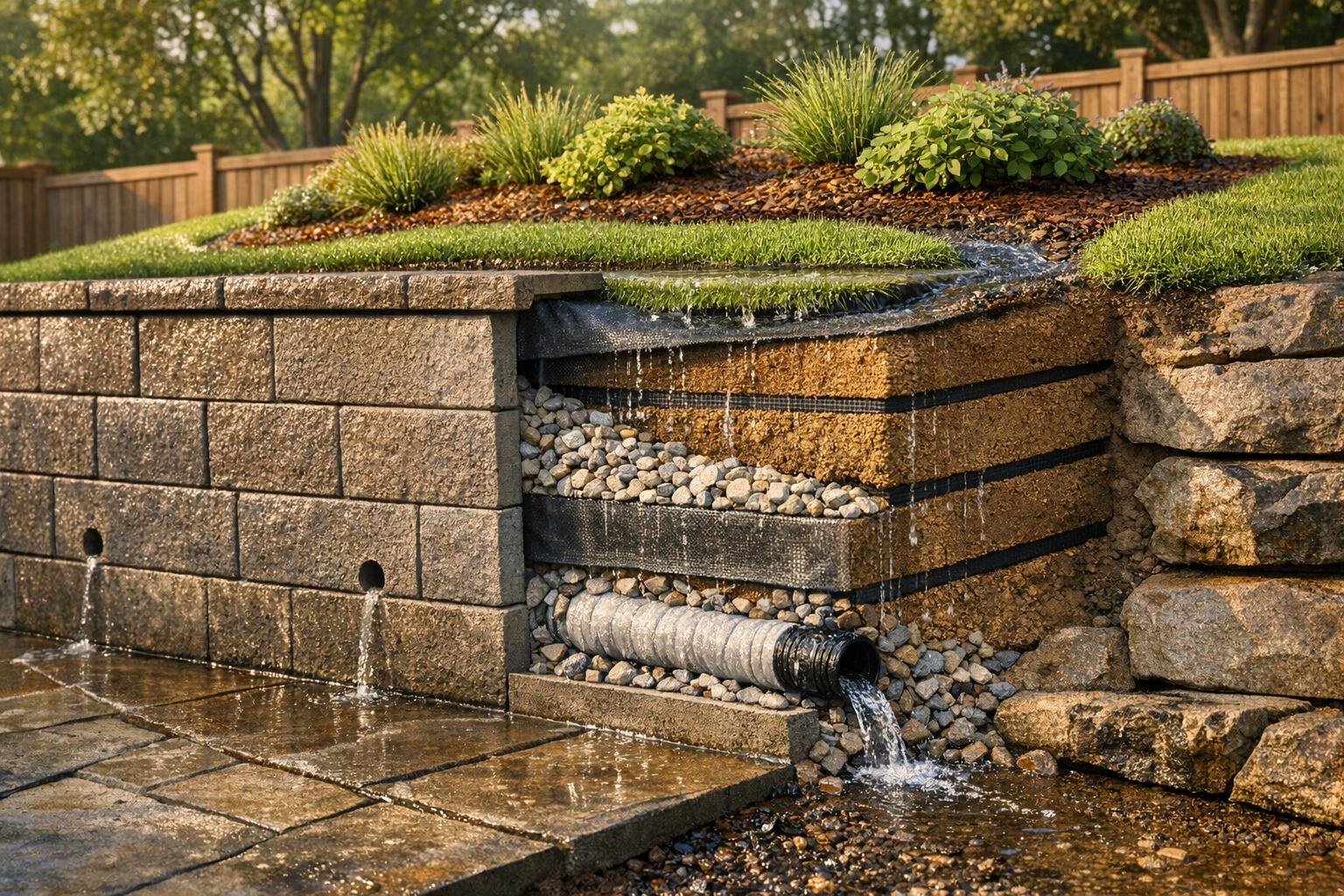
- How Retaining Walls Work: They hold soil in place, manage water flow, and reduce hydrostatic pressure using features like weep holes and drainage systems.
- Materials: Options include concrete blocks, natural stone, timber, or gabion walls, each suited for specific site conditions and longevity needs.
- Design Considerations: Factors like soil type, slope grade, wall height, and drainage systems are critical for durability.
- Additional Benefits: Retaining walls help manage stormwater, reduce runoff, and create usable outdoor spaces.
Proper installation and site-specific planning are essential to ensure retaining walls perform effectively while enhancing property functionality.
How Retaining Walls Work
How Retaining Walls Stabilize Slopes
Retaining walls act as structural barriers, redistributing the forces that naturally push soil downhill on sloped terrain. Gravity pulls soil downward, and without support, this leads to gradual erosion and displacement. A retaining wall holds the soil in place by relying on its weight and structural design to counter these forces.
The wall’s height and construction materials play a big role in its effectiveness. For taller walls, geogrid reinforcement is often used to spread the soil’s weight more evenly. Additionally, a solid leveling pad – protected by materials like riprap or weirs – provides a strong foundation. This combination not only stabilizes the slope but also reduces erosion by managing how soil stress is distributed. With the slope secured, the next focus is managing water flow effectively.
Managing Water Flow and Sediment Loss
Once the soil is stabilized, retaining walls address another critical issue: water management. Without proper drainage, water can collect behind the wall, increasing pressure and threatening its stability. To prevent this, many walls incorporate hollow-core block designs that allow water to drain both horizontally and vertically, reducing the risk of buildup.
Stormwater is directed into swales, drainpipes, or detention ponds, ensuring runoff is controlled. High-speed water flow can lead to severe erosion, but features like graded grass slopes or riprap at the base help slow and disperse the water. This prevents sediment loss and keeps downstream drainage systems from being overwhelmed. By managing water flow, retaining walls protect the landscape from erosion and maintain its structural integrity.
sbb-itb-843f8be
Controlling Erosion with Drainage and a Boulder Retaining Wall
Design Considerations for Retaining Walls
Retaining Wall Materials Comparison: Cost, Lifespan, and Best Uses
Choosing the Right Materials
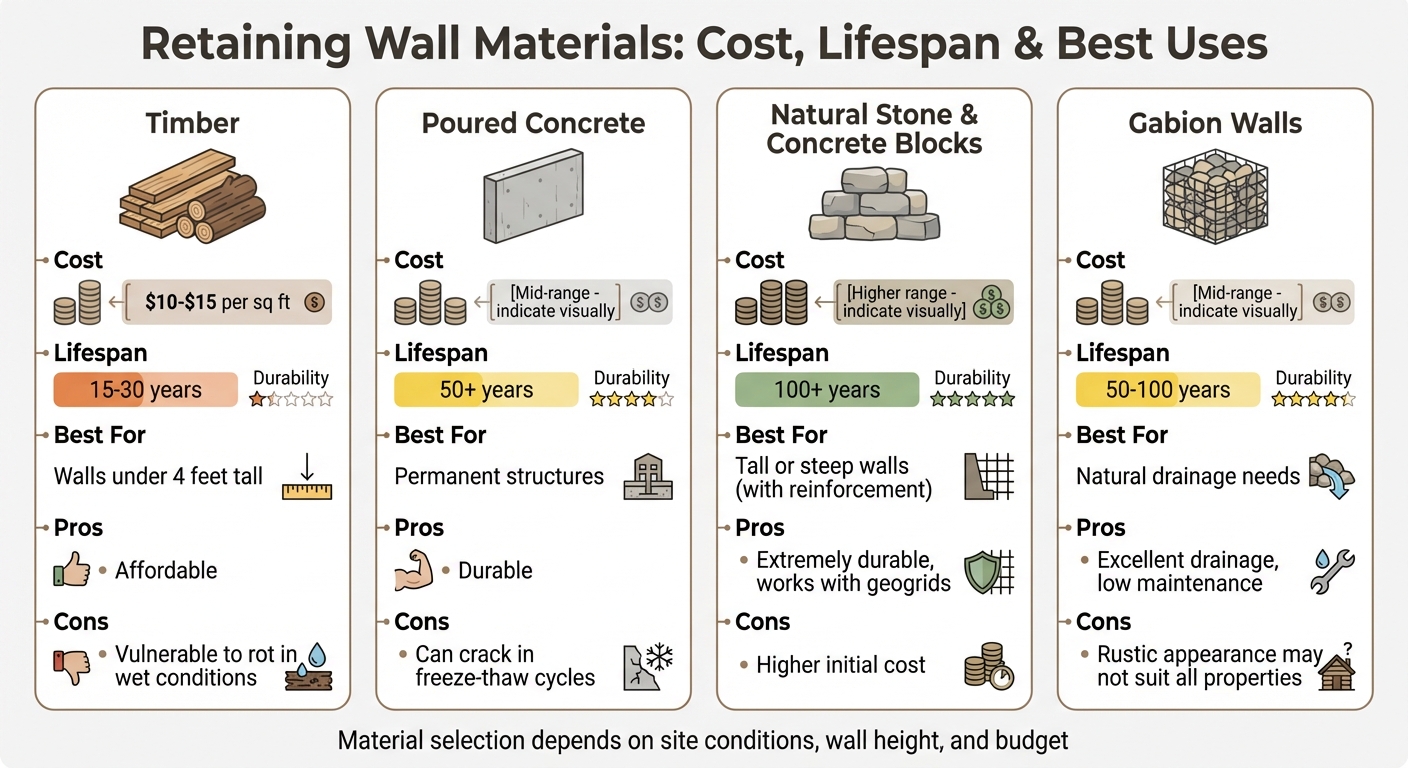
The material you use for your retaining wall plays a big role in how well it performs over time. Natural stone and interlocking concrete blocks are great options, lasting over 100 years and working seamlessly with reinforcements like geogrids or tiebacks for taller or steeper walls [2][3].
If you’re considering timber, it’s affordable at $10–$15 per square foot and works well for walls under 4 feet tall. However, it only lasts 15–30 years and is vulnerable to rot, especially in wet conditions [2][3]. Gabion walls, which are wire baskets filled with stone, offer excellent natural drainage and require little maintenance, lasting 50 to 100 years [2][3]. On the other hand, poured concrete has a lifespan of 50+ years but can crack in freeze-thaw cycles, a common issue in many parts of the U.S. [2].
"The longevity of retaining walls is influenced by material quality, design techniques, and environmental conditions, with high-quality materials enhancing durability." – Mike Wyzykowski, Erosion Management Services [3]
But materials are just one piece of the puzzle. The conditions at your site are equally critical to the wall’s success.
Site-Specific Design Factors
To build a retaining wall that lasts, you need to consider the unique characteristics of your site. Soil type and slope grade are key factors. For instance, clay-heavy soils expand and contract with moisture changes, which can create pressure that pushes against the wall. Sandy soils drain better but might require deeper foundations to prevent settling. Getting a professional soil assessment before starting your project helps address these challenges and ensures the wall is designed to handle your site’s specific conditions.
Wall height is another important factor. Taller walls or those on steep slopes often need extra reinforcement, such as soil anchors or cantilevered designs. Without this kind of planning, even the highest-quality materials won’t prevent long-term failure.
Integrating Drainage Systems
One of the biggest threats to retaining walls is hydrostatic pressure – water building up behind the wall. This pressure can overwhelm the structure if not managed properly. Solutions like French drains, weep holes, and free-draining backfill can prevent water buildup. While gabion baskets and interlocking blocks naturally allow water to drain, all wall types benefit from specific drainage measures.
"Inadequate drainage systems and improper backfilling can accelerate soil erosion around these structures, weakening their stability." – Mike Wyzykowski, Erosion Management Services [3]
Other Benefits of Retaining Walls
Reducing Stormwater Runoff
Retaining walls do more than just stabilize slopes – they also help manage stormwater effectively. By converting steep slopes into flat terraces, these walls slow down surface water flow, giving the soil more time to absorb it. This reduces erosion and helps keep the surrounding area intact.
Additionally, features like perforated pipes and stone backfill work behind the scenes to gather and redirect subsurface water. This careful water management not only protects the wall itself but also safeguards nearby foundations and properties. Plus, it helps reduce the strain on local stormwater systems during heavy downpours, offering a practical solution to water runoff challenges.
Installation and Professional Services
Key Installation Best Practices
Building a retaining wall that effectively manages erosion requires careful planning and execution. Start with a thorough site assessment – analyzing the slope, soil type, and drainage conditions before beginning excavation [4]. The depth of the trench is crucial for stability, so aim for a depth that’s about one-third of the wall’s total height. For example, a 6-ft wall should have a trench approximately 2 ft deep [5].
Drainage is another critical factor. Incorporate weep holes, perforated drainage pipes, and aggregate backfill to reduce hydrostatic pressure, which can otherwise lead to wall failure [4][5]. To ensure water flows effectively, drainage channels should have a slope of about 2% (or 1/4 inch per foot) [5].
Material selection should match the site’s specific conditions. Gravity walls, which rely on the weight of stone or concrete, are ideal for shorter walls. For walls taller than 3–4 ft or those on steep slopes, consider cantilevered or anchored systems for added support [5]. Using geogrid reinforcement can also increase the wall’s lateral soil resistance by up to 30% [1][5]. Additionally, taller walls often require building permits and must comply with local codes, making professional expertise a valuable asset [4][5].
Following these best practices ensures a retaining wall that not only prevents erosion but also enhances the property’s visual appeal – qualities that Pro Landscapes MD incorporates into every project.
Why Choose Pro Landscapes MD

Pro Landscapes MD specializes in retaining wall installations tailored to central Maryland’s unique terrain and weather conditions. Their expertise extends to understanding how different soil types – whether clay-heavy or sandy – affect wall stability. For instance, clay soil retains more water and exerts greater pressure on structures compared to sandy soil [4]. This makes customized design approaches essential.
Serving areas like Howard County, Montgomery County, Carroll County, Frederick County, Prince George’s County, and Baltimore County, Pro Landscapes MD ensures every project complies with local regulations while addressing Maryland’s frequent heavy rains. Their process includes structural reinforcements, advanced drainage solutions, and premium materials like concrete blocks and natural stone, resulting in walls that are both sturdy and visually appealing. From the initial assessment to the final installation, their team transforms challenging landscapes into secure, functional, and attractive outdoor spaces – all with a focus on quality and customer satisfaction.
Conclusion
Retaining walls play a key role in controlling erosion by stabilizing slopes and managing water flow. They help prevent sediment loss while creating functional outdoor spaces on properties with uneven or challenging terrain. Whether you’re dealing with steep slopes, excessive rainfall, or unstable soil, a well-designed retaining wall can tackle these problems while also improving the overall look of your property.
However, proper construction is just as important as the design itself. Professional installation ensures that the right wall system is selected and that effective drainage is integrated. Factors like soil composition, slope angle, and local weather conditions demand tailored solutions that experienced professionals are best equipped to provide.
In addition to erosion control, retaining walls bring a range of practical benefits. They create level areas perfect for patios, gardens, or pools, improve accessibility with built-in steps, and can include safety features like fences or railings. Decorative touches can also be added to blend functionality with style, making the wall a seamless part of the landscape.
Maryland homeowners can rely on Pro Landscapes MD for expertly designed retaining walls that address local erosion concerns. Covering areas such as Howard County, Montgomery County, Carroll County, Frederick County, Prince George’s County, and Baltimore County, their team ensures all projects meet local regulations and are built to withstand the region’s frequent heavy rains. From the initial assessment to the final installation, their focus on quality and customer satisfaction guarantees walls that are both durable and visually appealing.
A professionally constructed retaining wall not only safeguards your property but also enhances your outdoor living experience.
FAQs
Do I need a permit for my retaining wall?
If your retaining wall is taller than 3 feet (36 inches), supports surcharge loads, crosses property lines, or is built on problematic soils, you’ll need a permit. These rules follow Montgomery County regulations. Be sure to review your local requirements to stay compliant before beginning construction.
What drainage does a retaining wall need?
Proper drainage is essential for a retaining wall to avoid water buildup and minimize pressure on the structure. Some commonly used methods include:
- Weep holes: Small openings that allow water to escape through the wall.
- Drain pipes: Installed behind the wall to channel water away effectively.
- French drains: A gravel-filled trench with a perforated pipe that redirects water away from the wall.
These solutions work together to keep the wall stable and help prevent damage caused by excess moisture.
How do I choose the best wall material?
When deciding on the right material for a retaining wall, there are a few key factors to keep in mind:
- Purpose and Site Conditions: Choose a material that addresses the specific needs of your site, such as managing erosion or providing flood control.
- Durability: The material should be able to handle soil pressure and withstand weather conditions. Concrete, for instance, offers excellent strength and longevity.
- Appearance: Consider how the material complements the overall look of your landscape.
- Budget and Maintenance: Find a balance between what you’re willing to spend and the material’s durability and upkeep requirements.
For the best results, it’s a good idea to consult with a professional who can guide you toward the most suitable option for your project.
Chat with Us