









- bhavya gada
- No Comments
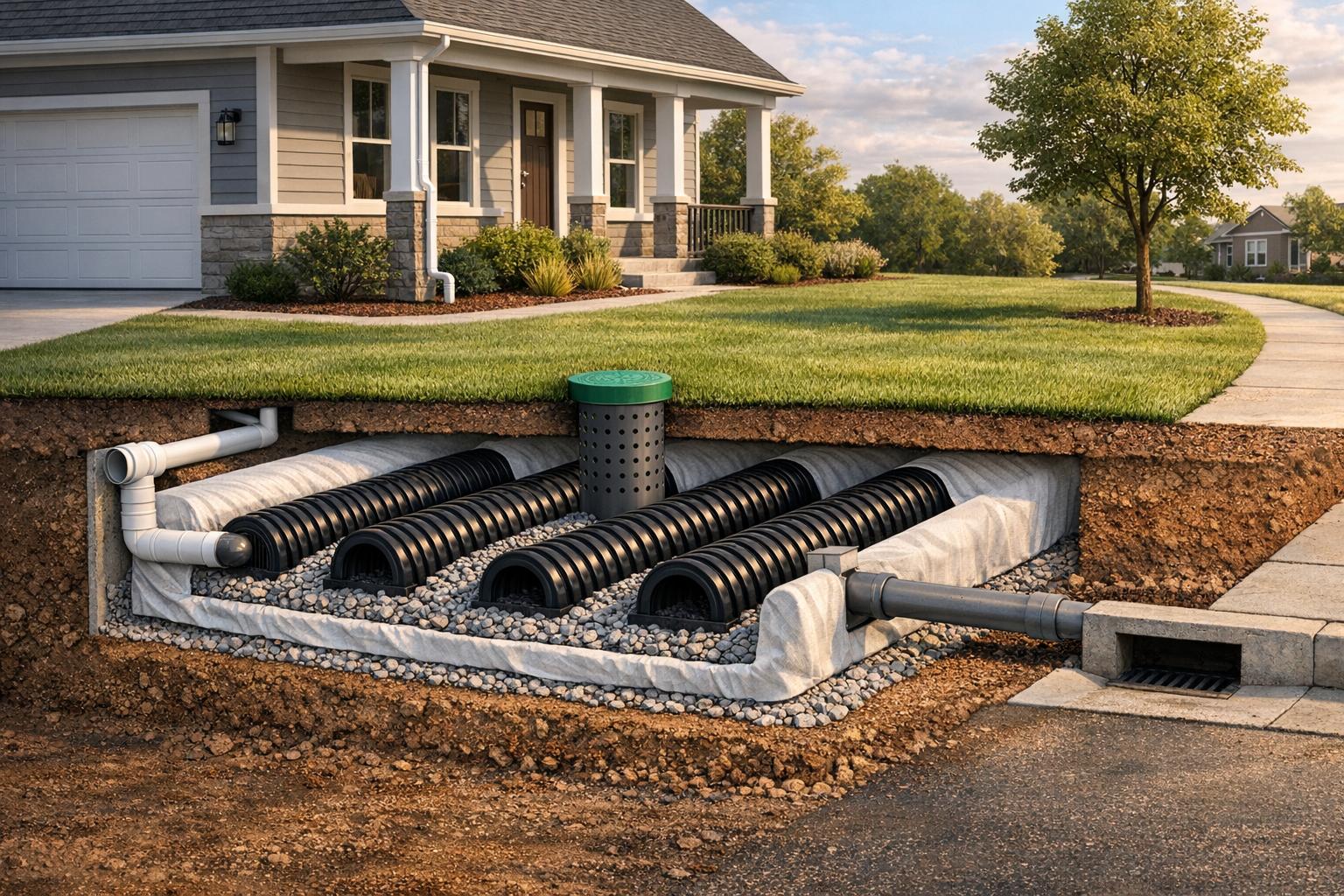
Underground detention systems are a smart way to handle stormwater runoff without sacrificing outdoor space. These systems, installed beneath driveways or lawns, temporarily store rainwater and release it gradually, reducing flooding risks and protecting your property. Here’s a quick overview of what you need to know:
- What They Are: Buried reservoirs, like chambers or vaults, that manage water runoff.
- Key Benefits: Prevents water pooling, protects foundations, and frees up surface space.
- Cost: Expect to invest $10,000–$50,000 for a typical residential system.
- Installation: Requires excavation, proper soil assessment, and compliance with local permits.
- Maintenance: Regular inspections and sediment removal ensure long-term efficiency.
Whether you’re addressing drainage problems or planning upgrades, these systems are a practical, long-lasting solution for managing stormwater effectively.
How to Install a Detention Tank – When Vertical Drains Won’t Work Do This!
sbb-itb-843f8be
Planning Your Retrofit Project
Getting your retrofit project off the ground involves tackling drainage issues, understanding local permit requirements, and setting a realistic budget.
Evaluating Your Property’s Drainage Needs
Start by observing your property during and after rainfall. Look for areas where water pools, signs of erosion, or basement flooding. Use markers to map out how water flows across your property.
Next, calculate your contributing drainage area (CDA) – the total square footage of surfaces like roofs, driveways, and patios that don’t absorb water. For instance, if your home has a 3,000 sq ft roof and a 2,000 sq ft driveway, your CDA totals 5,000 sq ft. This area will help you determine how much runoff your system needs to manage, typically for 1–2 inches of rain. Conduct a percolation test to check how well your soil absorbs water. Sandy soils drain quickly, while clay-heavy soils may need additional features like underdrains or liners. Chamber systems generally require at least 6 inches of crushed stone for bedding and soil with a bearing capacity of 2–4 ksf, depending on the cover depth [2].
Also, measure the vertical space available on your property. The depth from the finished grade to the outlet invert (where water exits) will determine which system works best for your site [7]. Tools like Contech‘s DYODS calculator can help you size your system based on your CDA, soil type, and available depth [2][6].
Understanding Local Regulations and Permits
Familiarize yourself with local rules. For example, Maryland’s 2011 Stormwater Management Regulations under COMAR 26.08.02 require permits for projects affecting 5,000 sq ft or more. You’ll need to submit plans addressing water quality volume and recharge needs [2][3]. Requirements vary by county – some may only need grading permits, while others demand full stormwater management approval. Expect permit processing to take 4–8 weeks, with fees ranging from $500 to $2,000. Reach out to your local Department of Public Works early to avoid delays.
Budgeting and Hiring Contractors
For a typical Maryland property with a 2,000–5,000 sq ft drainage area, plan to spend between $10,000 and $50,000. This estimate includes excavation, system components, permits, landscaping restoration, and testing. It’s wise to set aside an additional 10–20% for unexpected costs.
When choosing contractors, focus on those licensed in Maryland for excavation and stormwater work, with at least five years of relevant experience. Confirm they have proper insurance, a strong compliance record with the Maryland Department of the Environment (MDE), and knowledge of low-impact development (LID) techniques. Pro Landscapes MD, serving counties like Howard, Montgomery, and Baltimore, offers services such as French drains, stormwater management, and grading. Collect bids from at least three contractors, compare warranties (typically 5–10 years), and request references from similar projects. A professional site assessment, costing $1,000–$2,000, can ensure your system meets water quality volume (WQv) requirements and help you avoid costly errors [4][5]. Once your budget is set and a capable contractor is selected, you can move forward with designing your detention system.
Designing the Underground Detention System
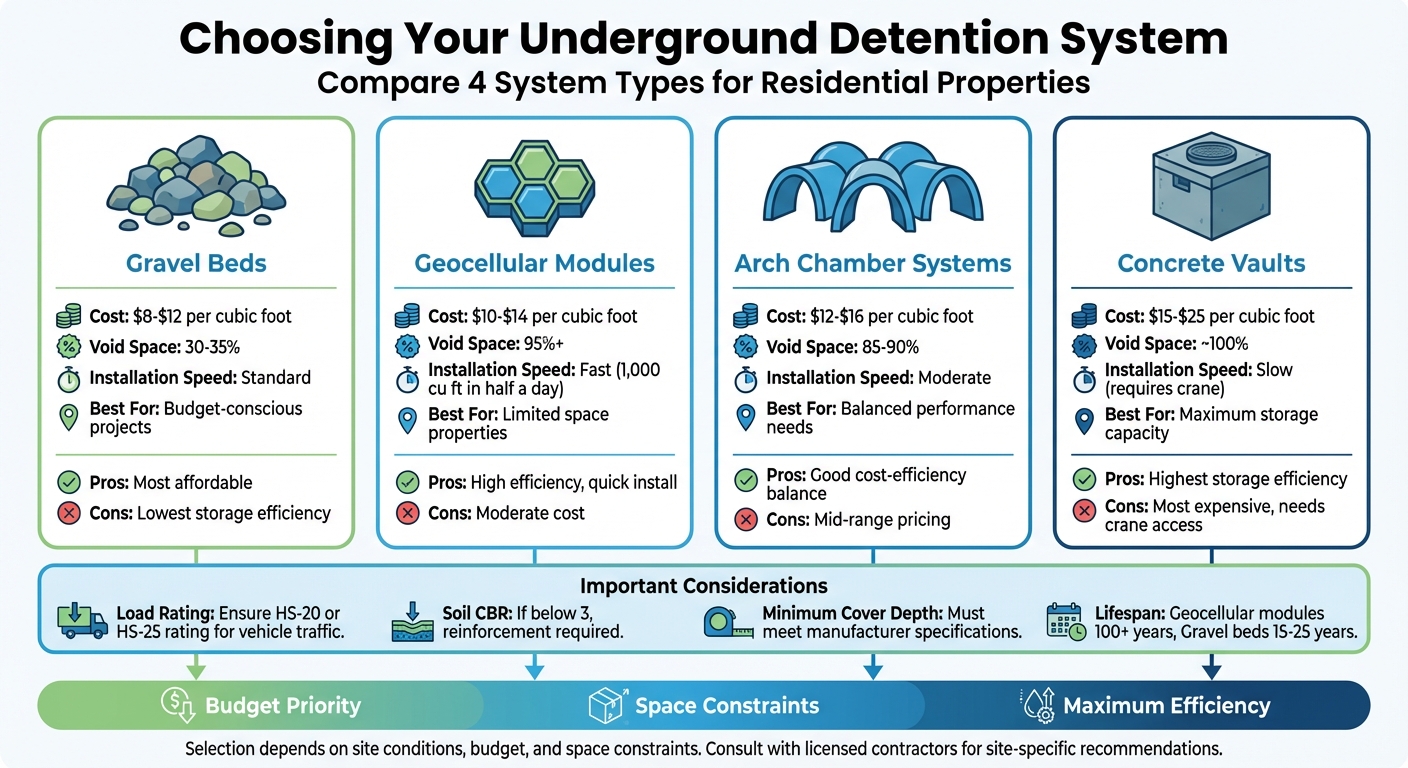
Underground Detention System Types: Cost, Efficiency & Installation Comparison
Once you’ve completed your site evaluation and permitting strategy, it’s time to focus on the design phase. This is where you tailor the system to your property’s specific stormwater challenges. You’ll decide on the most suitable components, determine storage needs, and incorporate environmentally-friendly features.
Selecting the Right System Type
There are four main system types to consider, each with its own strengths and price points for residential retrofits:
- Gravel Beds: These are the most budget-friendly, costing between $8–$12 per cubic foot. However, they provide only 30–35% void space, limiting storage efficiency.
- Geocellular Modules: Offering over 95% void space, these modules are quick to install (1,000 cubic feet can be completed in half a day) and cost around $10–$14 per cubic foot.
- Arch Chamber Systems: These strike a balance between cost and efficiency, with 85–90% void space and a price range of $12–$16 per cubic foot.
- Concrete Vaults: These provide nearly 100% void space but are the most expensive, costing $15–$25 per cubic foot. They also require crane access for installation.
Your choice largely depends on your site conditions. For example, geocellular modules are ideal for properties with limited space, as they can store more water in a smaller area. If the system will support heavy vehicle traffic, ensure it meets HS-20 or HS-25 load ratings. As the AQUA RainWater Engineering Team points out:
Every product has a minimum cover depth… Drop below that minimum and the rating doesn’t hold, no matter how beefy the modules are [1].
Additionally, check your soil’s California Bearing Ratio (CBR). If the CBR is below 3, you may need to reinforce the soil with geotextile fabric or use lime stabilization to ensure the system can handle the load [1].
Calculating Size and Layout
Sizing and laying out the system relies on the data from your CDA analysis. Use NOAA Atlas 14 rainfall data to design for Maryland’s 2-, 10-, 25-, and 100-year storm events. For simpler residential sites, the Modified Rational Method can estimate storage needs. More complex sites with multiple drainage areas might require advanced hydrograph routing software like HydroCAD, StormShed, or PCSWMM [1].
To calculate detention volume, determine the difference between the stormwater runoff generated and the permitted discharge over the storm’s duration. This process often requires adjustments – a smaller outlet orifice slows water release but increases storage requirements. Don’t forget to include the minimum cover depth, which is the soil layer between the system’s top and the finished grade. Also, revisit your soil’s CBR to confirm if reinforcement is necessary [1].
Adding Eco-Friendly Components
Elevate your design by incorporating sustainable features that improve water quality and manage runoff more effectively. Low Impact Development (LID) strategies can be a great addition:
- Dry Wells: These can capture roof runoff directly from downspouts before it reaches the main detention system.
- Rain Gardens: Planting native vegetation helps filter pollutants and allows water to infiltrate slowly.
- Permeable Pavers: These allow water to seep through driveways or patios, reducing surface runoff.
Some jurisdictions may require proof that LID solutions are not feasible before permitting traditional detention systems. Be sure to include access ports for inspecting and maintaining inlets, outlets, and pretreatment devices like sediment traps.
Companies like Pro Landscapes MD specialize in integrating stormwater solutions with features like environmental pavers, helping homeowners meet both regulatory and sustainability goals. These eco-friendly upgrades not only improve system performance but also extend its lifespan. For instance, geocellular modules can last over 100 years, while gravel beds may lose efficiency after 15–25 years due to sediment buildup [1].
Installing the Underground Detention System
With the design finalized and permits in hand, it’s time to bring your underground detention system to life. This phase transforms the plans into a functioning system, ensuring stormwater is managed effectively.
Site Preparation and Excavation
The first step is excavation, which involves digging the designated area exactly as outlined in the engineering design. It’s crucial to confirm that the groundwater level is low enough; high groundwater can compromise the effectiveness of sand filters. Heavy machinery is used to excavate to the required depth, factoring in both the system itself and the cover layer that will sit between the system’s top and the finished grade.
Once the area is excavated, the trench’s sides and bottom are lined with filter fabric. This step helps prevent erosion and clogging over time. In some areas, regulations may require a sand layer at the base to enhance water discharge quality and reduce pollution. Additionally, the excavation must include space for catch basins or manholes, which will channel stormwater into the underground reservoir. These preparations ensure a solid foundation for the system’s components.
System Installation and Connection
With the site ready, the detention system components are installed according to the layout. This includes connecting the system to the existing drainage network, such as inlet and outlet pipes. Once everything is in place, water flow tests are conducted to confirm the system is functioning as intended.
Pro Landscapes MD, a company specializing in stormwater management in central Maryland, offers comprehensive services for this phase. They handle everything from excavation and grading to seamlessly integrating detention systems with existing drainage. Their expertise ensures the system works in harmony with your property’s landscape.
Final Inspections and Compliance
After installation, final inspections are conducted before backfilling begins. Inspectors check that the system matches the design specifications, including detention capacity, proper filter fabric placement, secure pipe connections, and accessible maintenance ports. Once the system passes inspection, the site is carefully backfilled with compacted soil. A final inspection ensures the finished grade aligns with the original plans, marking the completion of the installation process.
Maintaining Your Underground Detention System
Once your underground detention system is in place, keeping up with regular maintenance is key to ensuring it works efficiently over time. Skipping maintenance can reduce storage capacity by 20–30%, increasing the risk of drainage failures[8].
Regular Maintenance Tasks
After any storm with over 1 inch of rainfall, check the system’s inlets, outlets, and manholes for debris. During wet seasons, make it a habit to inspect these areas monthly. Clear out leaves, branches, and other debris immediately to avoid blockages.
For systems that use metal pipes, look for corrosion at the joints every quarter. Use a flashlight and a probe rod to get a closer look. If you have a vault-style system, vacuum it periodically to clear out sediment buildup. Stone storage beds and grid systems require extra attention since sediment removal is more difficult. Keeping detailed inspection records with a standard form will help you spot recurring problems and address them early.
Fixing Common Problems
Even with regular upkeep, issues can still occur. Sediment buildup is the most common problem, often showing up as slower drainage after storms. If sediment depth exceeds 6 inches, it’s time to call in professionals. For smaller blockages, tools like high-pressure water jets, snake tools, or vacuums can help clear the system.
Be on the lookout for warning signs like gurgling noises, water backups, or ponding, as these can indicate blockages. Avoid using chemical cleaners – they can harm both your system and the environment. If you notice cracks in concrete vaults or a significant drop in storage capacity (over 10%), stop any DIY fixes and contact a professional to prevent further damage.
Professional Inspection Schedule
In addition to routine maintenance, professional inspections are essential for keeping your system in top shape. Schedule these inspections twice a year – once in the spring and again in the fall. Professionals use tools like CCTV, hydro-jetting, and flow rate verification to catch and address issues early, potentially cutting the need for major repairs by up to 50%[8].
Pro Landscapes MD offers a range of drainage repair and stormwater management services across central Maryland, including Howard County and Montgomery County. Their team handles complex tasks like deep sediment removal (which typically costs between $2,500 and $5,000), pipe repairs, and ensuring compliance with local regulations. Annual professional maintenance generally costs between $1,000 and $3,000, which is a smart investment compared to the high costs of emergency repairs. Regular professional care not only extends the life of your system but also protects your home’s drainage infrastructure.
Conclusion
Combining thoughtful planning, precise design, professional installation, and ongoing maintenance, a well-done retrofitting project can provide long-term solutions for stormwater management.
Upgrading your property with an underground detention system offers a smart way to manage stormwater while saving surface space. By moving water storage below ground, you free up valuable outdoor areas for landscaping, driveways, or recreational spaces – a key benefit in urban areas where land costs can reach between $30 and $80 per square foot[1].
These systems also enhance safety and curb appeal while improving functionality. Underground detention eliminates risks like drowning hazards and mosquito breeding grounds, making your yard safer and more enjoyable. During heavy rains, the system temporarily stores excess water and releases it gradually, reducing peak runoff and protecting your property as well as downstream infrastructure. Modern geocellular systems, made from durable, chemically inert materials, are designed to maximize storage capacity within the excavated area[1].
With stricter MS4 permit requirements under the federal NPDES program now in place, underground detention has become a go-to solution for stormwater management rather than a luxury option[1]. Whether you’re addressing drainage concerns or planning property upgrades, retrofitting with an underground detention system is a forward-thinking choice. Homeowners in central Maryland can turn to Pro Landscapes MD for expert support throughout the process, from initial planning to ensuring compliance, to achieve a system that’s both effective and durable.
With proper planning, skilled installation, and regular upkeep, your underground detention system can safeguard your property and preserve your outdoor spaces for years to come.
FAQs
Will an underground detention system work in clay soil or with high groundwater?
Underground detention systems can encounter specific hurdles when installed in areas with clay soil or high groundwater levels. Clay soil, known for its low permeability, can hinder water infiltration, potentially affecting the system’s efficiency. On the other hand, high groundwater levels can exert additional pressure on the system, which might lead to structural concerns.
To address these challenges, careful planning is essential. Using appropriate materials, incorporating effective drainage solutions, and applying waterproofing measures can make a significant difference. Additionally, working with local experts ensures the design is tailored to the unique conditions of the site and adheres to all relevant regulations.
How do I know what size detention system my yard needs?
To figure out the right size detention system for your yard, you’ll need to think about a few key factors: how much drainage is required, the volume of stormwater runoff, and the specific conditions of your property. Bringing in professionals can make this process much easier – they’ll calculate everything based on details like the size of your property, the type of soil, the slope of the land, and local rainfall patterns.
Don’t forget to check local regulations and permit requirements, as these can dictate minimum system specifications. Experts with experience in this area can guide you toward a system that fits your yard’s needs while also meeting Maryland’s standards.
How often does an underground detention system need maintenance?
Regular maintenance is key to ensuring underground detention systems work as they should and to avoid expensive repairs down the line. Routine inspections, particularly after storms, are crucial for spotting issues like debris, sediment buildup, blockages, or structural damage. Cleaning components such as inlets, outlets, and storage chambers when necessary keeps everything running smoothly. Staying on top of maintenance not only ensures the system performs efficiently but also helps it last longer.
Chat with Us