









- bhavya gada
- No Comments
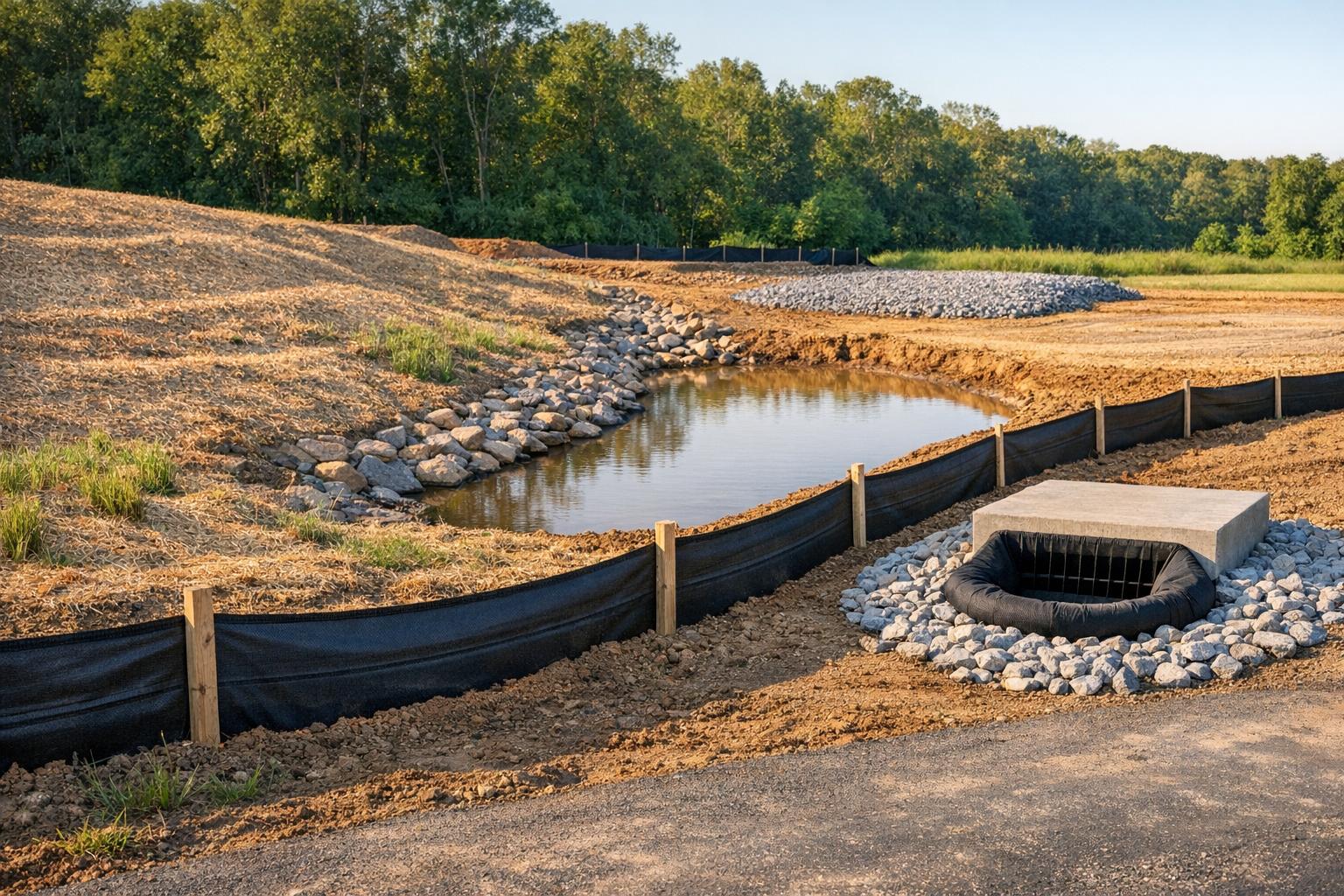
Stormwater management is critical for controlling runoff, reducing erosion, and maintaining water quality during construction projects. Maryland’s updated guidelines, introduced in November 2023, emphasize protecting permanent stormwater systems like retention ponds and rain gardens from sediment damage during construction. These updates also require stricter inspection protocols to ensure compliance and long-term effectiveness.
Key points include:
- Best Management Practices (BMPs): Tools like silt fences, sediment basins, and vegetative buffers to manage runoff and prevent sediment displacement.
- Environmental Site Design (ESD): Techniques like rain gardens, dry riverbeds, and permeable paving to mimic natural water cycles and filter pollutants.
- Grading and Drainage: Proper land leveling to direct water flow and protect stormwater systems from sediment buildup.
Maryland’s regulations now demand detailed inspection reports and updated plans to comply with these standards, ensuring better stormwater control and erosion prevention. Pro Landscapes MD offers services that align with these requirements, combining grading, drainage, and eco-friendly landscaping to protect properties and waterways.
Stormwater Strategies: Erosion & Sediment Control
sbb-itb-843f8be
Stormwater Management Techniques for Erosion Control
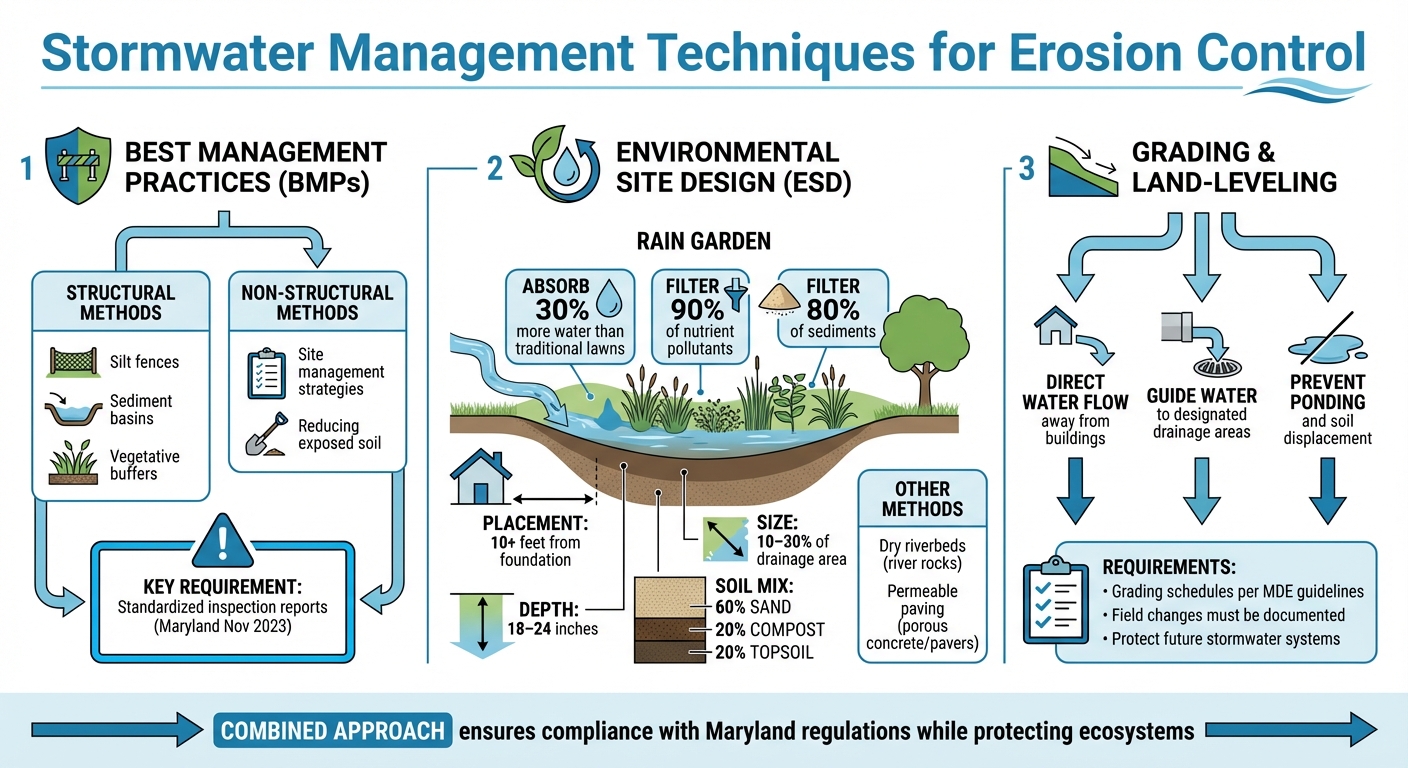
Three Core Stormwater Management Techniques for Erosion Control
When it comes to controlling runoff and sediment displacement during construction, several techniques can help achieve effective stormwater management. These methods balance practicality with environmental considerations to minimize erosion and protect water quality.
Best Management Practices (BMPs)
Best Management Practices (BMPs) blend structural and non-structural methods to manage runoff and keep sediment contained within construction sites. Structural BMPs include tools like silt fences, sediment basins, and vegetative buffers, which physically intercept soil particles before they can reach nearby waterways. On the other hand, non-structural practices focus on site management strategies, such as reducing the amount of exposed soil at any given time.
Maryland’s updated guidance, issued in November 2023, emphasizes the protection of permanent BMPs like detention basins, retention ponds, and drainage systems. It also requires standardized inspection reports to ensure these systems remain functional and free from sediment buildup until the site is fully stabilized.
Environmental Site Design (ESD) Methods
Environmental Site Design (ESD) focuses on managing stormwater at its source by mimicking natural water cycles. One popular method is the installation of rain gardens (also called bioretention systems). These shallow, planted depressions capture runoff from surfaces like roofs and driveways, filtering water through specially prepared soil. Rain gardens are highly effective, absorbing up to 30% more water than traditional lawns and filtering out as much as 90% of nutrient pollutants and 80% of sediments from runoff [2].
For a successful rain garden, it’s important to place it at least 10 feet away from a home’s foundation and conduct a percolation test to ensure proper drainage – ideally about one inch per hour. The garden should be excavated 18 to 24 inches deep and sized to cover 10% to 30% of the drainage area it serves. A soil mix of 60% sand, 20% compost, and 20% topsoil helps maximize infiltration. Planting native species like purple coneflowers, black-eyed Susans, and blue flag irises not only stabilizes the soil but also enhances the garden’s effectiveness.
Other ESD techniques include dry riverbeds and permeable paving. Dry riverbeds, made with river rocks, create natural-looking channels that slow down water flow and encourage it to soak into the ground. Permeable surfaces, such as porous concrete or interlocking pavers, allow water to pass through instead of running off, reducing both the volume and speed of water that could contribute to erosion downstream.
Grading and Land-Leveling Approaches
Proper grading is essential for directing water flow away from buildings and toward designated drainage areas, significantly lowering erosion risks. The process works best when paired with sediment control measures to prevent uncontrolled runoff.
Maryland Department of the Environment (MDE) guidelines now require grading schedules to safeguard future stormwater management systems from sediment damage. Any changes made in the field must also be promptly updated in compliance reports. Professional grading ensures that slopes, swales, and drainage channels are built to specifications, preventing issues like ponding, channelized flow, or soil displacement.
Together, these strategies create a well-rounded approach to managing stormwater and controlling erosion during construction projects. By combining BMPs, ESD methods, and careful grading, construction sites can meet erosion control goals while protecting surrounding ecosystems.
Objectives of Stormwater Management in Erosion Plans
Incorporating stormwater management into erosion plans is crucial for ensuring the safety of construction projects and maintaining environmental balance over time.
Maintaining Pre-Development Runoff Patterns
A key objective is to preserve the way water naturally flows across the landscape before construction begins. When development disrupts these natural drainage patterns, it can lead to problems like flooding in downstream areas or depriving other regions of much-needed water. By mimicking the original grading and drainage, stormwater management helps maintain these natural runoff patterns, protecting the ecosystems that depend on them.
Additionally, stormwater management plays a critical role in maintaining water quality and groundwater health.
Meeting Water Quality and Recharge Standards
Another important goal is safeguarding water quality and ensuring that groundwater supplies remain viable. Construction runoff often contains sediment, nutrients, and pollutants that harm waterways. To combat this, tools like rain gardens and permeable surfaces work to filter out contaminants while aiding groundwater recharge.
These efforts go hand in hand with protecting downstream channels and reducing flood risks.
Channel Protection and Flood Prevention
Protecting channels and preventing floods is another cornerstone of effective erosion planning. Rapid stormwater runoff can erode banks and destabilize channels, creating hazards for both construction sites and nearby communities. Solutions like detention basins, retention ponds, and graded swales help slow down water flow, allow sediments to settle, and lower the risk of peak flooding. For example, Maryland’s November 2023 Department of the Environment guidance emphasizes the need to protect permanent best management practices (BMPs) during construction to ensure long-term channel stability and flood control.
Maryland Regulations and Compliance Requirements
Maryland has a detailed regulatory framework for construction and landscaping projects that disturb soil or impact stormwater systems. The Maryland Department of the Environment (MDE) oversees these regulations, managing both the Stormwater Management Program and the Soil Erosion and Sediment Control requirements. This framework ensures projects align with strategies designed to control stormwater and minimize erosion effectively.
Maryland Stormwater Regulations Overview
Maryland’s stormwater laws focus on implementing and maintaining Stormwater Best Management Practices (BMPs) to manage runoff and protect the environment. Contractors and property owners are required to safeguard permanent stormwater infrastructure during and after development. To help navigate these requirements, the MDE offers detailed guidance and training materials, ensuring that erosion and sediment control measures meet state standards while protecting water quality downstream.
Plan Approval Process
Proper documentation plays a crucial role in gaining regulatory approval in Maryland. Since 2024, the MDE has required comprehensive Quality Inspection Reports to verify that erosion and sediment control measures are effective and compliant. These reports must include detailed inspection protocols, demonstrating how control measures are functioning throughout the construction phase. By meeting these documentation standards, property owners can streamline the approval process and ensure smoother site inspections.
Recent Changes to Stormwater Policies
In November 2023, Maryland introduced key updates to its stormwater policies. The MDE issued new guidance emphasizing the protection of Stormwater BMPs during construction. Permanent structures like bioretention cells and infiltration trenches must now be shielded from sediment buildup and soil compaction while construction is ongoing [1]. Additionally, the 2024 Quality Inspection Report protocols require more detailed records of erosion control measures, setting a higher standard for compliance documentation [1]. These changes highlight a growing focus on protecting stormwater systems during the construction phase to ensure they remain effective long after a project is completed. Property owners should update their plans to include measures like construction sequencing or physical barriers that align with these new requirements.
Pro Landscapes MD‘s Stormwater and Erosion Control Services
Pro Landscapes MD offers expert stormwater management and erosion control solutions to properties across central Maryland. Their team ensures all projects comply with Maryland Department of the Environment (MDE) regulations while maintaining the integrity of the property. By combining technical knowledge with practical solutions, they deliver results that align with Maryland’s regulatory requirements.
Grading and Drainage Services
Effective stormwater management starts with proper grading. Pro Landscapes MD addresses runoff challenges by offering land leveling, yard grading, and drainage installations that guide water away from problem areas. Their drainage systems – such as French drains, drain pipe installations, and repairs – are designed to prevent standing water and soil erosion. By studying the natural topography of each site, they develop grading plans that slow water flow and direct it to designated collection points.
Eco-Friendly Landscaping Practices
Pro Landscapes MD integrates sustainable landscaping techniques that manage stormwater while enhancing the property’s aesthetic. Their permeable paver installations allow rainwater to seep into the ground, reducing runoff from hard surfaces. They also design and install dry riverbeds, which are vegetated channels featuring rock check dams to naturally filter and slow stormwater. Additionally, they create rain gardens using native plants like Switchgrass, Black-eyed Susan, and Blue flag iris. These plants have deep root systems that improve soil structure and promote water absorption.
Customer Project Examples
Pro Landscapes MD’s expertise is evident in the results they deliver for property owners across central Maryland. One satisfied customer shared:
"They came through with everything promised. I love the stacked stones we placed around our trees and flowerbed."
From installing permeable paver patios in Ellicott City to creating bioswales in Bethesda and implementing grading solutions in Columbia, Pro Landscapes MD combines functionality with beauty. Their use of retaining walls, garden walls, and strategic landscape designs not only protects properties from water damage but also meets Maryland’s environmental standards.
Conclusion
Blending stormwater management with erosion control is key to safeguarding Maryland’s water quality and ensuring property stability. Combining temporary measures with permanent systems helps prevent sediment buildup in drainage systems during construction while ensuring that Best Management Practices (BMPs) remain effective long after the project wraps up. This approach tackles both short-term construction challenges and long-term environmental requirements, streamlining construction processes and supporting regulatory adherence.
Maryland’s updated guidance [1] underscores the importance of protecting permanent BMPs during construction and requires thorough inspection reports to avoid early system failures. These updates highlight the critical role of accurate documentation and thoughtful planning. Adhering to these standards ensures the application of practices that maintain water quality and site integrity.
Successful stormwater management incorporates elements like grading, drainage, permeable surfaces, and vegetated channels to minimize runoff and control erosion. When aligned with Environmental Site Design (ESD) principles, these methods meet Maryland’s water quality and recharge standards while preserving the natural landscape. They also perform effectively during heavy rains, reducing sediment pollution in nearby waterways.
Pro Landscapes MD applies these principles to offer customized stormwater and erosion control solutions that align with Maryland’s regulatory requirements, cutting down on maintenance costs and protecting natural resources.
FAQs
How can I protect permanent stormwater BMPs during construction?
Keeping permanent stormwater Best Management Practices (BMPs) in good condition during construction requires careful planning and proactive steps. Here’s how you can ensure they remain effective:
- Regular Inspections: Check BMPs frequently, especially after rainfall, to catch and fix any signs of erosion or damage early.
- Mark and Fence Off BMPs: Clearly identify areas like retention basins or filter systems with signs and fencing to prevent accidental disturbances.
- Train Construction Teams: Educate workers on the role and importance of BMPs so they understand how to avoid causing damage.
- Maintain BMP Integrity: Use appropriate measures to ensure these systems remain intact and functional throughout the project.
By following these practices, you can safeguard BMPs and ensure they continue to perform as intended.
Which ESD method works best for my site’s soil and drainage?
The most effective Erosion and Sediment Control (ESC) method varies based on factors like your site’s soil type, slope, and water flow patterns. Some commonly used techniques include planting native vegetation to stabilize slopes, installing French drains to redirect water, and constructing retaining walls for managing steep grades. In Maryland, regulations emphasize early stabilization strategies such as seeding and mulching to prevent erosion. For the best results, it’s a good idea to consult professionals who can customize these methods to suit the unique conditions of your site.
What do Maryland’s 2023–2024 inspection report rules require?
Maryland’s inspection rules for 2023–2024 require active sites to undergo sediment control inspections every two weeks. These inspections are designed to ensure adherence to erosion and sediment control standards. Additionally, approved plans must always be kept on-site for reference and compliance.
Chat with Us