









- bhavya gada
- No Comments
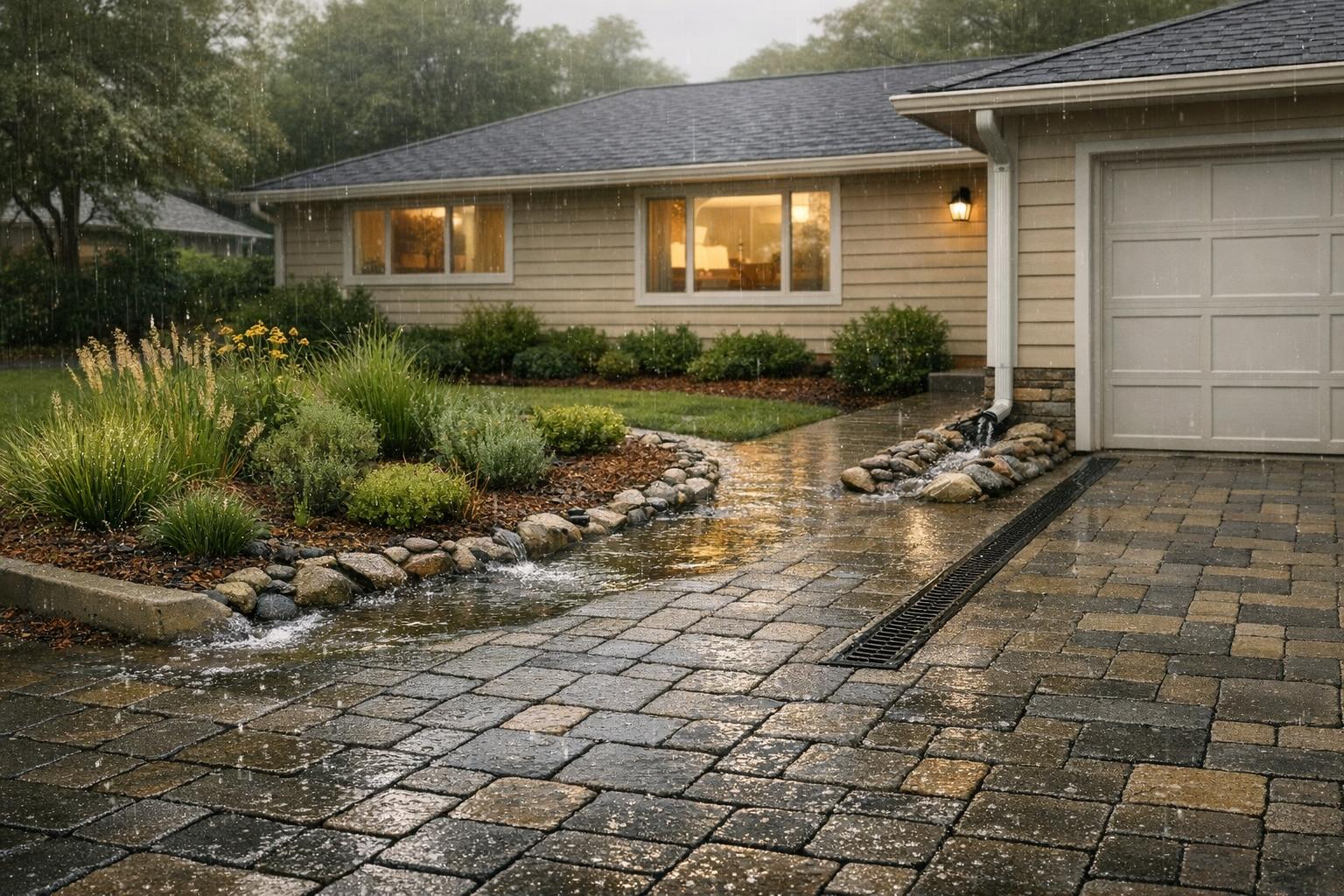
Stormwater retrofitting upgrades older properties to better manage rainwater, reduce runoff, and minimize pollution. Many properties in Maryland were built before modern stormwater regulations, leading to issues like flooding, erosion, and water damage. By integrating techniques such as rain gardens, permeable pavers, or French drains, property owners can address these problems while complying with Maryland’s strict water management guidelines.
Key Points:
- Why It’s Needed: Older properties often lack proper systems, causing runoff issues.
- Benefits: Reduces damage, improves water quality, and may qualify for fee credits.
- Techniques: Options include rain gardens, permeable pavers, and French drains.
- Regulations: Maryland requires compliance with specific guidelines and permits.
- Maintenance: Regular upkeep is essential to keep systems effective and compliant.
Whether you’re tackling flooding or improving drainage, stormwater retrofits offer practical solutions tailored to your property’s needs.
MDE Stormwater Regulations and Design Manual Updates Listening Session – October 22 (2025)
sbb-itb-843f8be
Maryland Stormwater Regulations
The Maryland Department of the Environment (MDE) is the key agency responsible for managing the state’s Stormwater Management Program. Their role includes setting standards for controlling runoff on both residential and commercial properties. If you’re planning a retrofit, understanding these guidelines is essential to ensure compliance with state regulations.
Regulations for Residential and Commercial Properties
Maryland’s stormwater rules depend on the type of property and the scope of the project. The MDE provides detailed Stormwater Design Guidance, which outlines the technical requirements for stormwater management practices. This guidance is the go-to resource for understanding acceptable retrofit methods, design criteria, and performance benchmarks.
Retrofit projects, whether for homes or businesses, must align with Maryland’s environmental objectives, particularly reducing pollutants that flow into the Chesapeake Bay. For accurate and legally compliant information, always refer to the official MDE guidance.
Permits and Approval Process
Once you understand the regulatory framework, the next step is navigating the permit process. Start by reviewing MDE’s Stormwater Management Design Guidance to identify the permits you’ll need. Requirements vary based on factors like project size, location, and the chosen retrofit methods. Smaller residential projects might qualify for a simplified process, but larger commercial retrofits usually involve more extensive documentation and review.
It’s a good idea to contact your local jurisdiction’s stormwater management office early in the planning stages. Approval timelines can differ, so preparing detailed site plans, drainage calculations, and retrofit designs ahead of time can help speed up the review process. Working with professionals who know Maryland’s regulations can also make a big difference in ensuring your submission is complete and compliant. For expert help with designing and navigating stormwater retrofits, you can check out Pro Landscapes MD.
How to Design a Stormwater Retrofit for Existing Properties
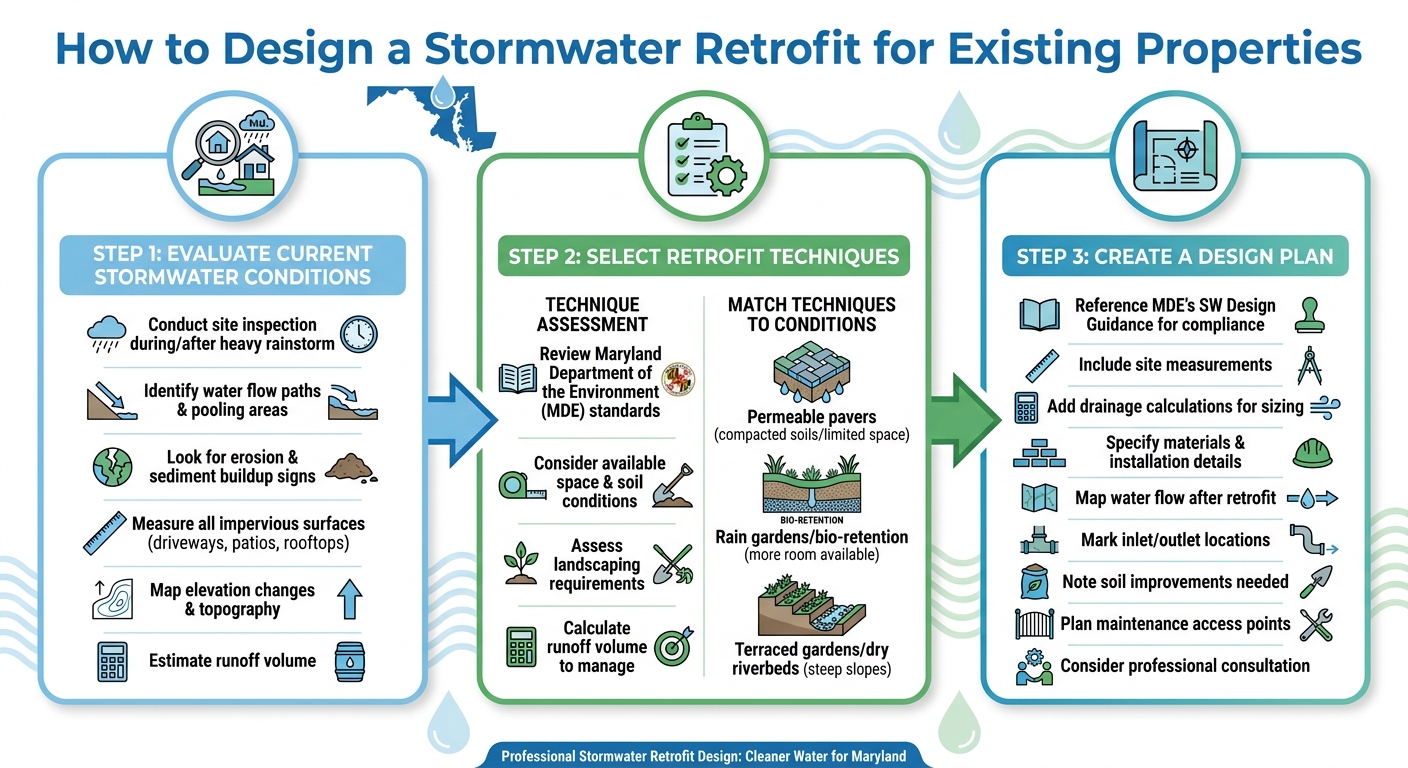
3-Step Stormwater Retrofit Design Process for Maryland Properties
Designing a stormwater retrofit begins with assessing how water currently moves through your property. Once you understand the issues, you can select the right solutions and create a plan that meets Maryland’s guidelines while addressing your drainage concerns.
Evaluate Current Stormwater Conditions
Start with a site inspection during or right after a heavy rainstorm. This will show you exactly where water flows, pools, or causes problems. As you walk around, pay attention to natural drainage paths, areas with standing water, and signs of soil erosion or sediment buildup. These clues highlight where your property struggles to handle runoff.
Next, measure all impervious surfaces – like driveways, patios, and rooftops – where water can’t soak into the ground. Understanding the size of these areas and the property’s topography helps estimate runoff volume and pinpoint where water collects. Mapping elevation changes will also help you figure out the best spots for retrofits.
Select Retrofit Techniques
With your evaluation complete, choose retrofit methods that address your property’s specific needs. Maryland’s stormwater standards, outlined by the Maryland Department of the Environment (MDE), provide guidance on acceptable techniques and their performance requirements. When deciding on methods, consider factors like the available space, soil conditions, landscaping, and the amount of runoff you need to manage.
For properties with compacted soils or limited space, permeable pavers can work well by allowing water to infiltrate where traditional pavement can’t. If you have more room, rain gardens or bio-retention areas can manage runoff while adding to your property’s aesthetic. On steep slopes, terraced rain gardens or dry riverbeds can slow water flow and prevent erosion. Match the techniques to your property’s unique conditions.
Create a Design Plan
Using your site assessment and chosen techniques, develop a detailed design plan. This plan should combine all your findings into a clear guide for installation while ensuring compliance with Maryland’s regulations. Reference the MDE’s SW Design Guidance to make sure your plan meets state standards. Include site measurements, drainage calculations to size each retrofit, and detailed material and installation specifications.
Your plan should clearly illustrate how water will flow through the property after the retrofit. Highlight key details like inlet and outlet locations, any soil improvements needed, and access for maintenance. Partnering with experienced professionals can streamline the process and help you avoid expensive mistakes. For example, Pro Landscapes MD specializes in stormwater management design and can help create a plan tailored to your property while meeting MDE requirements.
Common Stormwater Retrofit Solutions
Once you’ve planned your retrofit, it’s time to choose solutions that effectively manage runoff while also improving the look of your property and meeting Maryland’s stormwater treatment standards. These options tie directly into your design plan and align with the state’s regulations. Each method has its own strengths, so knowing how they work can help you make the best choice.
Rain gardens and bio-retention areas are shallow, landscaped depressions designed to collect runoff from surfaces like roofs, driveways, and sidewalks. They’re planted with native vegetation and filled with specialized soils that filter out pollutants, improving water quality and enhancing the landscape. Acting as natural filters, they remove nitrogen and phosphorus before the water seeps into the ground or flows into storm systems. If you have open yard space, this solution is a great way to add visual appeal while meeting Maryland’s treatment requirements.
Permeable pavers are an alternative to traditional paved surfaces like concrete or asphalt. These pavers allow water to seep through the joints into an underlying stone reservoir, where it infiltrates the soil. This reduces runoff while providing a durable, functional surface. They’re particularly useful for properties with limited space where you need hardscaping that also manages stormwater. The stone base beneath the pavers provides moderate filtration as water passes through.
French drains and dry riverbeds help redirect water away from problem areas. A French drain is a perforated pipe buried in a gravel-filled trench, designed to move both surface and subsurface water away from foundations or persistently wet areas. Dry riverbeds, on the other hand, use decorative stones to create visible channels that slow water flow and prevent erosion, especially on slopes. While these solutions are effective at protecting structures by redirecting excess water, they don’t offer much in terms of pollutant removal. Companies like Pro Landscapes MD provide professional installation of these systems across central Maryland as part of their drainage services.
Tips for Property Owners
Working with Experienced Professionals
Stormwater retrofits in Maryland come with a set of strict design and engineering standards that must align with the state’s official Stormwater Design Guidance. Simplified summaries can often lead to misunderstandings of these requirements, which is why it’s critical to collaborate with professionals who rely on the original technical documentation provided by the Maryland Department of Information Technology [2].
Having local expertise on your side is equally important. Contractors should be well-versed in county-specific permitting rules and know how to identify priority areas that can impact your project’s scope and design [3]. For example, Pro Landscapes MD specializes in stormwater management solutions like French drains, dry riverbeds, grading, and environmental paver installations. They serve several counties across Maryland, ensuring compliance with local regulations. Keep in mind, once these retrofits are installed, they require regular maintenance to stay effective.
Maintaining Your Stormwater Retrofits
Proper maintenance is key to keeping your stormwater retrofits functional and compliant. Maryland law requires stormwater practices to undergo inspection every three years [3]. As a property owner, you’re responsible for maintaining these systems, which is typically outlined in a Maintenance Agreement filed with your local land records. Neglecting this responsibility can lead to compliance issues or even fines.
Different stormwater features have unique maintenance needs. Rain gardens, for instance, need regular weeding and fresh mulch. Permeable pavers should be cleaned periodically to prevent sediment buildup, while French drains benefit from an annual inspection to clear any debris. Be sure to keep thorough records of all maintenance activities, as local authorities may request these documents during inspections [3].
Conclusion
Stormwater retrofits do more than just tick regulatory boxes – they actively shield your property from flooding, erosion, and water damage. In Maryland, retrofitting is especially important for handling runoff from impervious surfaces, ensuring compliance with the Maryland Department of the Environment’s (MDE) current water quality standards [1].
These retrofits are a key part of Maryland’s efforts to protect its environment. They help local governments meet the requirements of Municipal Separate Storm Sewer System (MS4) permits, which mandate treating a set percentage of untreated impervious areas [1]. Programs like the Vulnerable Watershed Restoration and Resiliency Program depend on retrofits to restore watersheds and improve water quality statewide.
But the benefits go beyond meeting legal requirements. Stormwater retrofits directly improve water quality in the region. By adding features like rain gardens, permeable pavers, or French drains, property owners not only comply with laws but also contribute to healthier watersheds and reduced pollution. These solutions protect your property while supporting broader environmental goals.
To ensure these systems remain effective, regular upkeep is critical. Keep maintenance schedules, detailed records, and work with professionals to stay compliant and maintain performance over the long term.
FAQs
Do I need a permit for a stormwater retrofit in Maryland?
Yes, you’ll usually need a permit for stormwater retrofits in Maryland. This is particularly important for projects that disturb at least one acre of land or release pollutants into U.S. waters. Depending on the size and location of the project, permits like the general construction permit or MS4 permit might be required.
Which retrofit works best for my yard’s soil, slope, and space?
The best retrofit for your yard depends heavily on factors like soil type, slope, and available space. If your yard has a gentle slope and soil that absorbs water easily, bioretention systems or permeable pavement might be great choices. For steeper slopes, you may need solutions like retaining walls or terracing to control water runoff effectively.
If you’re working with a smaller yard, consider rain gardens or dry wells to manage water on a compact scale. On the other hand, larger yards can often support features like wetlands or detention ponds to handle greater volumes of water.
A professional site assessment can help ensure the retrofit matches your yard’s unique conditions and needs.
How much maintenance do rain gardens, permeable pavers, and French drains need?
Maintenance for rain gardens, permeable pavers, and French drains varies based on their design and the specific site conditions. Regular inspections and cleaning are essential to keep them working effectively. For detailed guidance tailored to local needs, check out Maryland’s stormwater management guidelines.
Chat with Us