









- bhavya gada
- No Comments
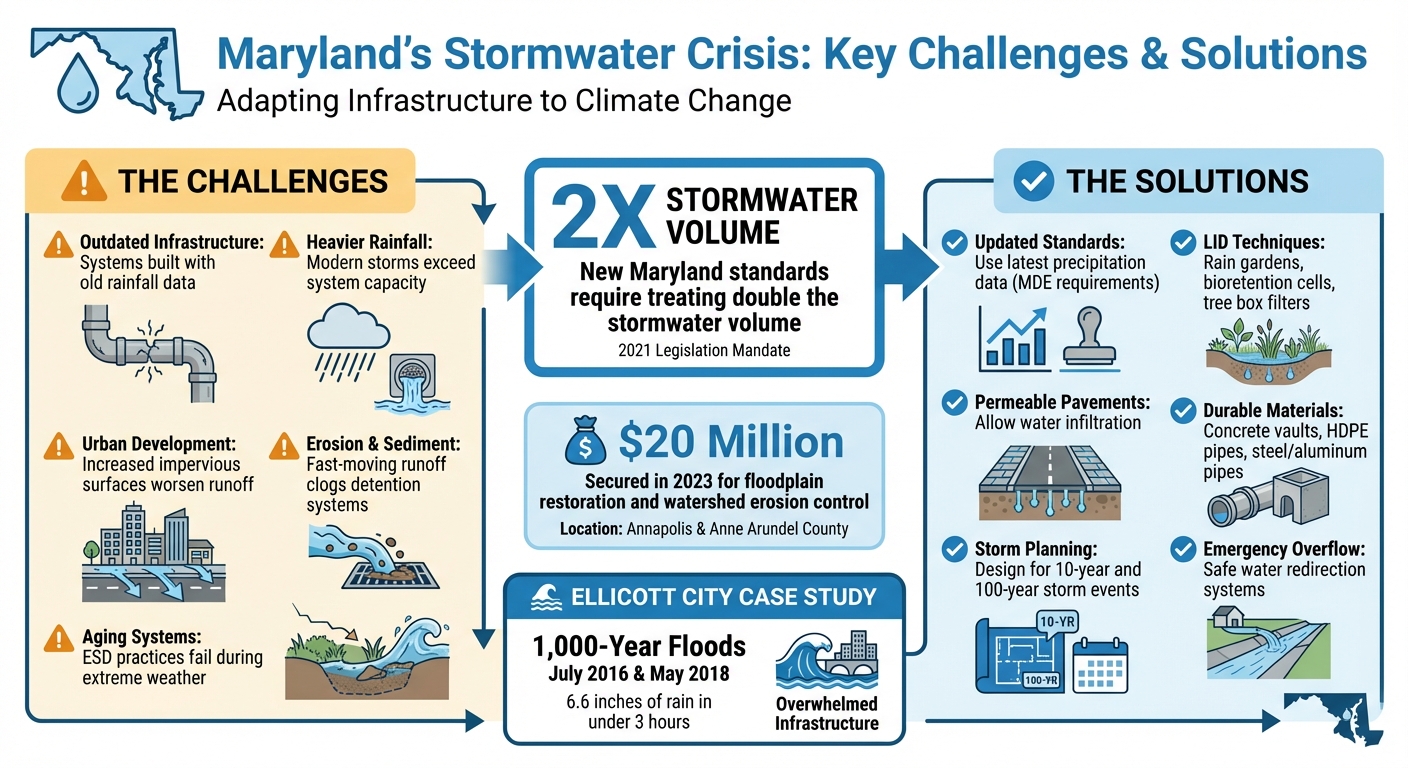
Maryland faces increasing challenges with stormwater management due to heavier rainfall, rising sea levels, and outdated infrastructure. The state’s aging systems struggle to handle modern weather patterns, leading to flooding, erosion, and water pollution. Recent legislation now requires updated stormwater standards, emphasizing the need for systems designed with current precipitation data and effective drainage solutions. Key points include:
- Heavier rainfall: Older systems, built with outdated data, fail to manage today’s storms.
- Erosion and sediment issues: Runoff from intense storms clogs systems, reducing effectiveness.
- Urban development: Increased impervious surfaces worsen runoff and overwhelm infrastructure.
- New standards: Maryland mandates systems to treat double the stormwater volume to handle intense storms.
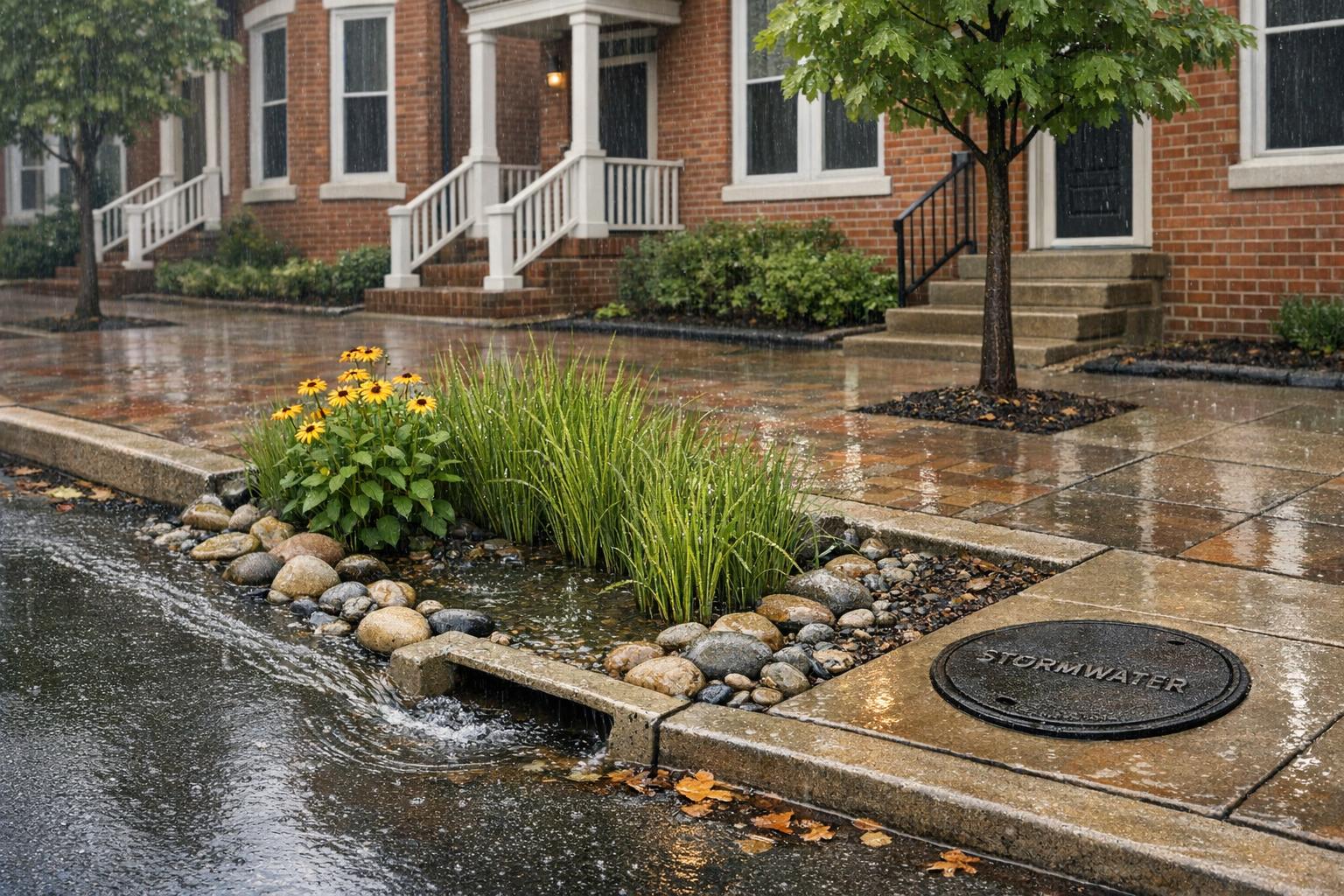
- Solutions: Combining underground systems with low-impact designs like rain gardens and permeable pavements improves performance.
Property owners and engineers must act now to modernize systems, ensuring resilience against future challenges.
Maryland Stormwater Management Challenges and Solutions
MDE Stormwater Regulations and Design Manual Updates Listening Session – October 28 (2025)
sbb-itb-843f8be
How Heavy Rainfall and Flooding Impact Underground Detention Systems
Maryland’s underground detention systems are struggling to keep up with the intense rainfall events of today. Built years ago with outdated weather data, these systems weren’t designed to handle the sheer volume of water modern storms bring. When storms exceed their capacity, water backs up, flooding streets, homes, and businesses, and overwhelming infrastructure that wasn’t meant for these conditions.
Pressure on Older Infrastructure
Maryland’s aging stormwater systems face mounting pressure from increasingly severe storms. While Environmental Site Design (ESD) practices are effective for lighter, more routine rainfall, they often fail during extreme weather. Rodgers Consulting highlights this limitation:
Even without climate change, ESD practices are often unable to handle the rainfall associated with anything but the most frequent and smallest storms [1].
This gap becomes particularly evident during short, high-intensity storms, which can overwhelm detention chambers. Recognizing this, state regulators are working to revise standards, including proposals to double the amount of stormwater treated on development sites [1]. These updates aim to address the challenges posed by an aging and overstressed infrastructure.
Erosion and Sediment Accumulation
Heavy rainfall doesn’t just bring water – it also carries sediment that can clog underground detention systems. Fast-moving runoff erodes nearby watersheds, depositing soil and debris into detention chambers, which reduces their capacity and effectiveness. In 2023, the Resilience Authority of Annapolis and Anne Arundel secured about $20 million to restore floodplains and address watershed erosion caused by these extreme weather events [2]. Without proper pre-treatment, sediment buildup increases maintenance demands and can even lead to system failure. Solutions like rain gardens and bioswales help by slowing and filtering runoff, reducing the amount of sediment that reaches detention systems.
Urban Development and Impervious Surfaces
Maryland’s growing urban areas exacerbate the problem by increasing impervious surfaces like roads and parking lots. These surfaces prevent water from naturally soaking into the ground, creating more runoff that rushes into detention systems, often at volumes far beyond their original designs. Charles County has taken steps to address this by converting an old parking lot into a "Stormwater Pocket Park", which replaces impervious surfaces with natural infiltration areas to manage flooding at its source [2].
Legislation passed in 2021 now requires Maryland to update stormwater standards using the latest precipitation data, moving away from outdated historical averages [1]. As urban development continues, detention systems must adapt to handle the increased runoff driven by modern rainfall patterns and urban expansion.
These challenges highlight the urgency of updating design standards and engineering approaches to meet today’s stormwater management needs.
Maryland Stormwater Design Manual Standards
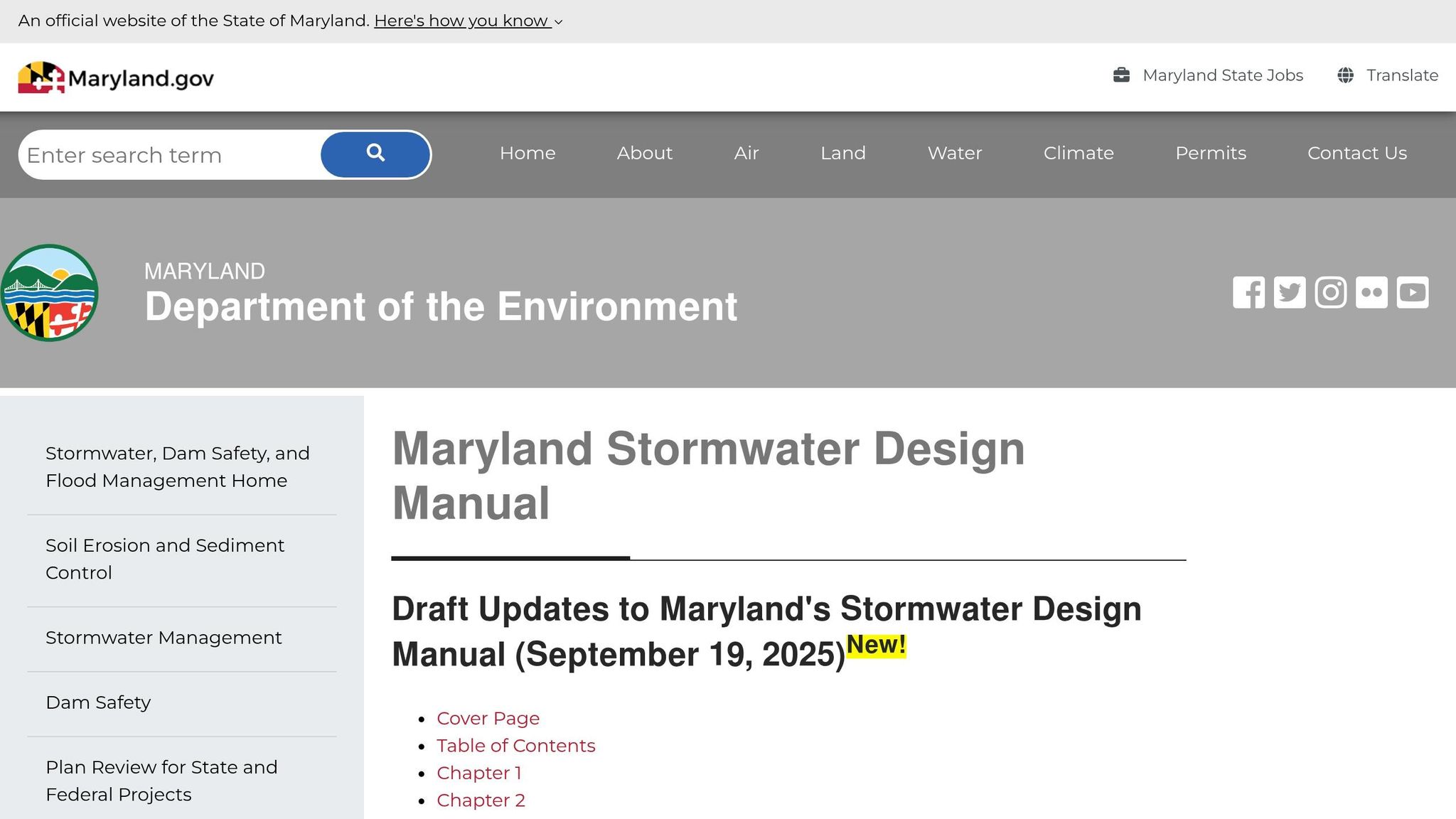
The Maryland Stormwater Design Manual (Volumes I and II) outlines statewide standards for stormwater management [4]. Following legislation passed in 2021, the Maryland Department of the Environment (MDE) is now required to update these standards using the most recent precipitation data, moving away from outdated historical averages [1]. This change reflects the reality of shifting rainfall patterns in Maryland, ensuring that stormwater systems are designed to handle current and future conditions.
Under the revised guidelines, development sites must now treat twice the stormwater volume using small-scale infiltration techniques [1]. This adjustment means that new projects will need to manage significantly more water during high-intensity storms. These updates aim to create stormwater systems that better align with Maryland’s changing climate and address the challenges posed by aging infrastructure and urban expansion.
Sizing Systems for Changing Rainfall Patterns
The updated standards require engineers to factor in more intense and frequent rainfall when designing stormwater systems. Instead of relying on outdated weather data, designers must now incorporate updated precipitation patterns provided in the latest MDE discussion drafts [1]. These drafts include revised rainfall data, which could substantially increase the size requirements for stormwater management practices.
This approach impacts not only underground detention systems but also the broader stormwater infrastructure. By accounting for current rainfall trends, engineers can integrate low-impact development (LID) techniques with traditional detention systems, creating a more comprehensive and effective stormwater management strategy.
Using Low Impact Development (LID) Techniques
Maryland’s regulations prioritize Environmental Site Design (ESD), a type of LID that uses small-scale practices to replicate natural water cycles. Popular LID methods include:
- Bioretention cells (rain gardens) in parking lots and median strips
- Tree box filters along curbsides to capture the initial runoff
- Permeable pavements that allow water to seep into the ground rather than flow off-site [5]
While LID techniques are effective for managing routine rainfall, their ability to handle larger storm events, like the 10-year and 100-year storms required by Maryland regulations, remains a topic of debate. These high-magnitude events often necessitate pairing LID methods with traditional underground detention systems. Additionally, the long-term success of these systems depends on robust maintenance plans, as local managers have raised concerns about their sustained performance over time [4].
Engineering Solutions for Underground Detention Design
With Maryland’s updated stormwater standards, engineers face the challenge of designing systems that can handle the unpredictable nature of modern rainfall patterns. Relying on historical rainfall data is no longer sufficient. Instead, systems must be built to manage the intense storms expected over a 50-year lifespan [6].
Choosing Durable Materials
The choice of materials plays a critical role in ensuring stormwater systems can endure severe weather conditions [6]. For instance:
- Concrete vaults: Ideal for complex geometries, these offer higher storage capacity relative to their cross-sectional area.
- Plastic pipes (HDPE): Known for modular and quick installation, these require proper anchoring to prevent flotation in areas with high water tables.
- Steel and aluminum pipes: Suitable for large-diameter needs, these materials must be carefully evaluated for soil corrosivity to ensure long-term durability.
Before deciding on materials, engineers need to analyze the site’s soil properties for corrosiveness and assess water table levels. In coastal regions of Maryland, where over 3,000 miles of shoreline face risks from sea-level rise and storm surges, materials must also resist saltwater intrusion and flooding. Additionally, systems should include accessible manholes – at least 72 inches in diameter near both intake and outlet points – to allow for mechanical sediment removal as erosion levels rise [2] [6]. These considerations are essential for creating systems that can handle both routine and extreme weather events.
Planning for 10-Year and 100-Year Storms
Once durable materials are selected, the next step is designing systems capable of managing both frequent and extreme storm events [6] [7]. Maryland’s 2021 legislation now requires stormwater systems to handle much larger volumes than before [1]. This means planning for routine 10-year storms as well as catastrophic 100-year events. The devastating "1,000-year" floods in Ellicott City in July 2016 and May 2018 – where 6.6 inches of rain fell in under three hours – highlight the need for this approach. These storms overwhelmed systems designed for standard 24-hour storm durations [7].
"Fixed-dimension gray infrastructure does not inherently possess the ability to adapt. In typical urban stormwater networks, vulnerabilities such as flooding arise as the capacity of components within the system are overwhelmed."
To prepare for extreme events, engineers can take several steps:
- Maximize pipe diameters: Doubling a pipe’s diameter increases its storage capacity fourfold at only double the cost [6].
- Emergency overflow systems: These components ensure excess water is safely redirected during major storms [6].
- Update design standards: For example, Virginia Beach has increased design rainfall intensities by 20% to account for future conditions, while other areas are revising Intensity-Duration-Frequency curves based on climate models [7].
- Erosion control: Adding rip-rap at outflow points helps minimize erosion caused by discharged water.
- Frequent maintenance: More regular upkeep addresses the increased sediment and pollutant loads resulting from intense rainfall [6] [7].
These strategies work together to create robust systems capable of managing the realities of current and future stormwater challenges.
Pro Landscapes MD: Stormwater Management and Landscaping Services

Complete Stormwater Management Services
Pro Landscapes MD tackles Maryland’s increasing stormwater challenges with drainage solutions tailored to the state’s unique climate. With heavier rains and rising flood risks becoming more frequent due to a warming climate, property owners in central Maryland need systems capable of managing these changes effectively [8].
The company specializes in drainage installation, French drains, grading, land leveling, and stormwater management. Every project is customized to suit the specific water table, soil type, and drainage conditions of the area. These personalized solutions align with Maryland’s efforts to modernize its stormwater infrastructure to address shifting environmental conditions.
Eco-Friendly Design Practices
In addition to structural solutions, Pro Landscapes MD incorporates environmentally conscious practices that align with Maryland’s Environmental Site Design principles. The state emphasizes small-scale infiltration techniques to treat stormwater directly at development sites [1]. The company installs features like environmental pavers, dry riverbeds, and rain gardens, which complement traditional drainage systems. These additions help reduce flooding risks while also supporting ecosystem restoration efforts [2].
Their designs blend functionality with aesthetics, using permeable materials and natural landscaping elements to slow water runoff and encourage infiltration. This approach not only manages urban runoff but also creates outdoor spaces that are both practical and sustainable.
Serving Maryland Communities
Pro Landscapes MD serves a wide range of residential and commercial clients throughout central Maryland and Washington, DC. Their service areas include Aspen Hill, Annapolis, Baltimore, Bethesda, Bowie, Brookeville, Catonsville, Chevy Chase, Clarksburg, Clarksville, Columbia, Damascus, Dayton, Edgewater, Eldersburg, Elkridge, Ellicott City, Gaithersburg, Germantown, Glenwood, Highland, Jessup, Laytonsville, Kensington, Montgomery Village, Mount Airy, New Market, North Bethesda, North Potomac, Olney, Owings Mills, Potomac, Reisterstown, Severna Park, Silver Spring, Sykesville, Towson, West Friendship, Wheaton, and Woodbine. Whether it’s basic grading or intricate systems designed to meet Maryland Department of the Environment standards, their team handles projects of all sizes [1].
Conclusion: Building Better Stormwater Systems for Maryland
Maryland’s changing climate is reshaping the way we think about stormwater management. With more intense rainfall, rising sea levels, and frequent flooding, the old methods just don’t cut it anymore. Property owners across the state are feeling the urgency to upgrade their drainage systems, as the storms we face today are far more intense and unpredictable than those of the past [1].
Fortunately, Maryland is stepping up. With updated regulations and funding initiatives – like the $20 million allocated for ecosystem restoration – communities are finding ways to modernize their stormwater infrastructure [2]. These efforts show how collaboration and shared resources can address large-scale challenges that extend beyond individual properties or jurisdictions. These regulatory and funding changes are setting the stage for immediate, localized action.
For property owners, taking proactive steps now is essential. Resilient drainage systems not only safeguard homes, businesses, and infrastructure from severe weather but also ensure critical services remain functional during storms [3]. Modern solutions blend traditional drainage methods with nature-inspired practices, such as bioretention systems, permeable surfaces, and floodplain restoration.
Pro Landscapes MD is here to help. They specialize in advanced drainage solutions that combine effective stormwater management with eco-friendly designs. Their services include French drains, grading, land leveling, and stormwater systems that incorporate features like environmental pavers and dry riverbeds. Whether you’re solving an immediate issue or planning a system that meets Maryland Department of the Environment standards, their focus is on creating infrastructure that holds up against today’s challenges and tomorrow’s uncertainties.
The time to act is now. Maryland’s increasing rainfall and stronger storms make stormwater system upgrades a necessity, not a luxury. Investing in well-designed drainage solutions not only protects your property but also contributes to the state’s larger efforts to combat climate challenges and enhance resilience.
FAQs
How do I know if my stormwater system is undersized?
Your stormwater system could be too small if it can’t handle peak runoff during a 10-year storm event. Signs of trouble include frequent flooding, sediment accumulation, or debris blockages, especially during heavy rain or winter weather. These problems may indicate the system doesn’t align with Maryland’s stormwater sizing standards.
What maintenance prevents underground detention systems from clogging?
To keep underground detention systems running smoothly and prevent clogs, it’s important to stay on top of regular maintenance. This includes removing debris and litter, managing overgrown vegetation, and clearing out sediment buildup. Also, make sure access points remain clear so inspections and maintenance can be done without hassle. These simple steps go a long way in preserving the system’s performance and extending its lifespan.
What site upgrades reduce runoff without major excavation?
Rain gardens and permeable pavement are smart upgrades for managing stormwater. They work by absorbing and filtering water right where it falls, cutting down on runoff without the need for major digging. These solutions not only improve water management but also ease the burden on existing drainage systems.
Chat with Us