









- bhavya gada
- No Comments
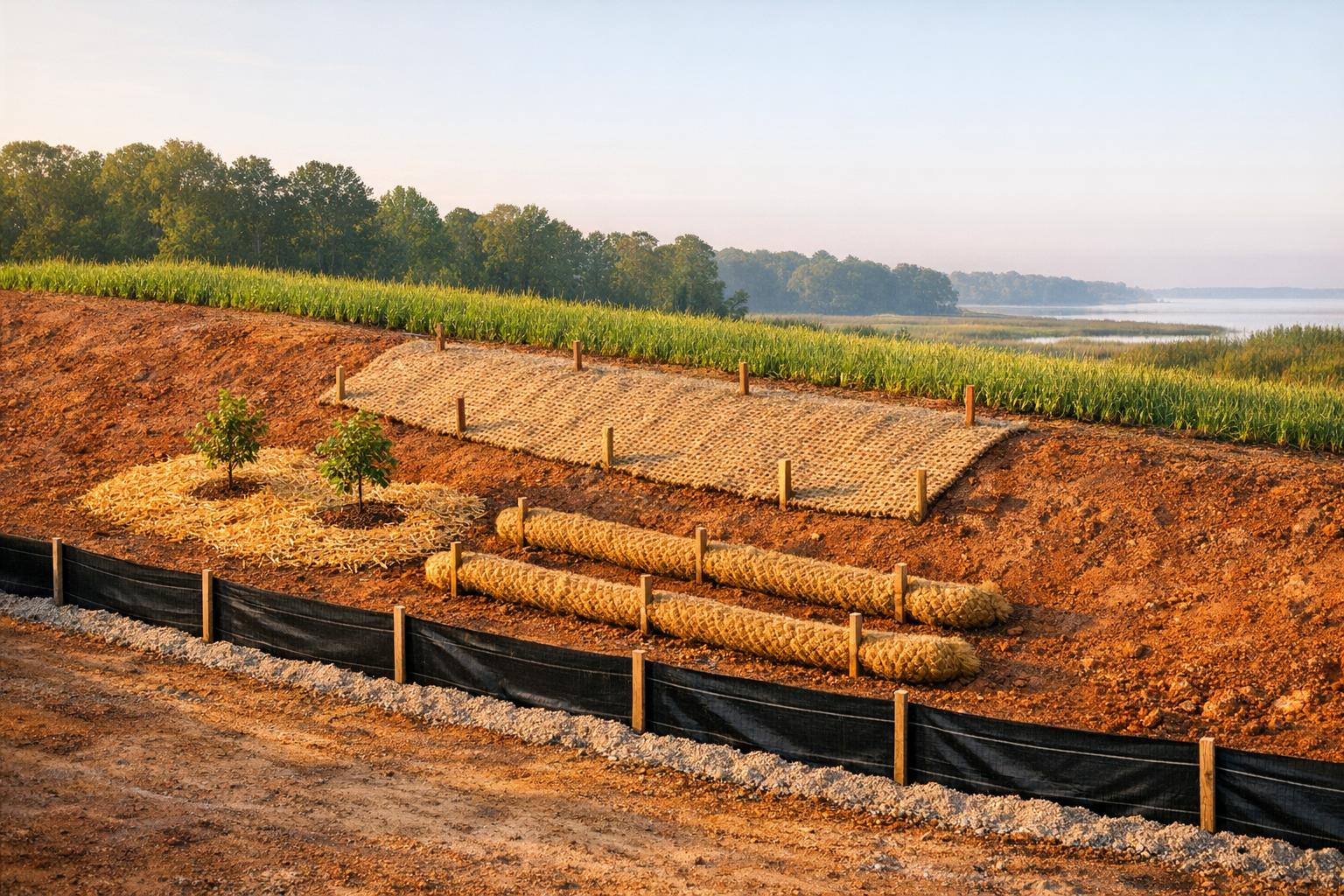
Soil erosion during construction can cause costly damage and harm local ecosystems. Temporary erosion control methods help stabilize exposed soil, reduce runoff, and prevent sediment from contaminating nearby waterways. Here are the five most effective solutions:
- Vegetative Cover: Fast-growing plants stabilize soil with roots and foliage. Reduces erosion by up to 90.53%.
- Erosion Control Blankets: Protective mats provide immediate soil stabilization and promote seed growth. Ideal for steep slopes.
- Mulching: Organic or synthetic materials shield soil, retain moisture, and reduce erosion by up to 98%.
- Straw Wattles and Fiber Logs: Barriers slow water flow and trap sediment, especially on slopes.
- Silt Fences: Geotextile barriers contain sediment on-site and reduce soil loss by up to 90%.
For Maryland projects, combining these methods ensures better performance, especially in areas with heavy rainfall or clay-heavy soils. Each method addresses specific site conditions, from steep slopes to flat terrains.
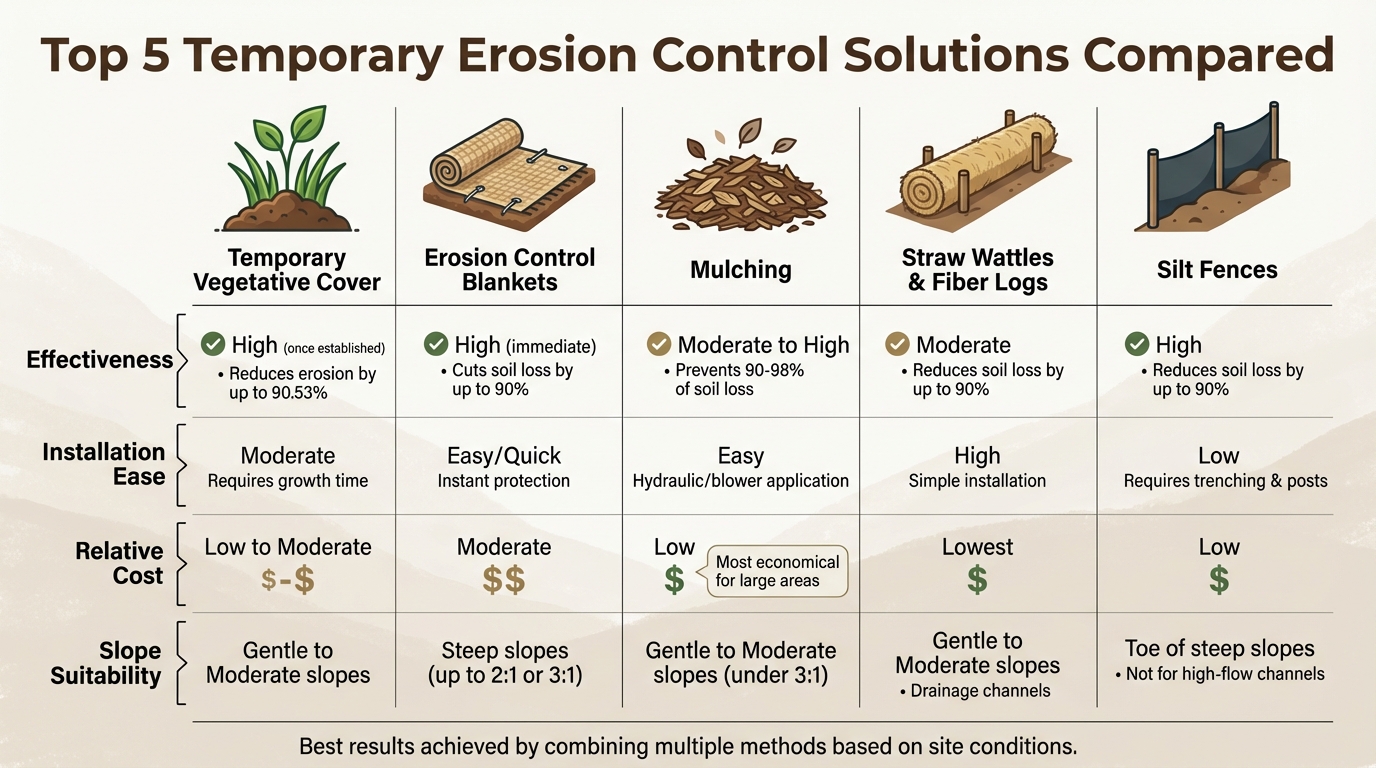
Comparison of 5 Temporary Erosion Control Methods: Effectiveness, Cost, and Slope Suitability
A Comprehensive Introduction to Erosion and Sediment Control
sbb-itb-843f8be
1. Temporary Vegetative Cover
Temporary vegetative cover uses fast-growing annual plants to stabilize soil during construction breaks. These plants work twofold: their roots bind soil particles, while their foliage shields the ground from the impact of raindrops – a leading cause of soil erosion. Common choices include annual ryegrass, winter wheat, oats, and millet, selected based on the season and local climate.
Effectiveness in Reducing Erosion
Temporary seeding can cut erosion rates by about 90.53% [4]. Even maintaining just 30% plant cover on a site can reduce soil erosion by up to 50% [2]. As Valor explains:
"Seeding has been proven to improve ground infiltration, while establishing firm roots that keep soil intact during heavy water runoff." – Valor [1]
Additionally, it delays runoff onset by 57%–233% [4].
Ease of Installation
For large or hard-to-reach areas, hydroseeding is a practical option. This technique sprays a mix of seeds, fertilizers, and tackifiers directly onto slopes, promoting rapid germination. On flatter terrain, traditional broadcast seeding is effective but often requires mulching afterward to protect the seeds during their early stages. Seasonal considerations matter – winter rye thrives in cold weather, while millet is better suited for summer.
Cost-Effectiveness
Path Light Pro highlights the economic benefits:
"The easiest and most cost-effective way to protect bare slopes from erosion is to plant vegetative cover." – Path Light Pro [3]
Temporary seeding is less expensive upfront compared to permanent vegetation or structural methods. For projects with tight budgets, applying vegetative cover to the bottom 25% of a slope can still deliver over 89% of the runoff and sediment reduction benefits of full-slope coverage [4]. However, it’s important to follow up with permanent species once construction concludes.
Suitability for Different Slopes or Terrains
Temporary vegetative cover is ideal for graded areas awaiting final landscaping and moderate slopes where runoff poses a threat to soil stability. On steep terrains, combining seeding with erosion control blankets can prevent seeds from washing away before germination. Regular inspections – weekly or after heavy rain – help identify and address bare patches. For more challenging terrains, pairing vegetative cover with additional measures like erosion control blankets can enhance effectiveness.
2. Erosion Control Blankets
Erosion control blankets are rolled mats made from natural fibers like jute and coir or synthetic materials such as polypropylene. These blankets provide a protective layer over exposed soil, offering complete coverage and immediate stabilization – a step up from seeding alone, which leaves soil vulnerable while vegetation takes root [2].
Effectiveness in Reducing Erosion
When installed correctly, erosion control blankets can cut soil loss by up to 90% [2]. They create a microenvironment that helps retain moisture and stabilize soil temperature, fostering better seed germination than bare soil. Acting as a physical shield, these blankets prevent raindrops from dislodging soil particles and reduce runoff. Synthetic options last over five years, while natural fiber blankets have shorter lifespans – typically 45 days to 12 months [6][7]. Coconut (coir) fiber blankets stand out, offering protection for up to three years, making them ideal for long-term erosion control on slopes [5].
Ease of Installation
For these blankets to work effectively, proper installation is key. Start by grading and smoothing the soil surface, removing any rocks or debris [5]. Pre-seed and fertilize the area to anchor seeds beneath the blanket. When rolling out the blanket, follow the slope downhill to prevent water from catching and lifting the edges. Overlap edges by 3–6 inches and seams by 6–12 inches [5]. Use metal staples or wood stakes every 3 to 5 feet along the edges and seams, adding extra anchors on steep slopes or in drainage areas to ensure the blanket stays in place.
Cost-Effectiveness
Although erosion control blankets cost more upfront than hydroseeding, they require less maintenance and watering over time. Designed to withstand environmental challenges like heavy runoff, these blankets are a reliable choice for high-risk areas. They also provide instant protection, unlike other methods that depend on vegetation growth. Many blankets are made from biodegradable materials, which naturally break down and enrich the soil, eliminating the need for removal and adding long-term value.
Suitability for Different Slopes or Terrains
Erosion control blankets excel on steep slopes where loose soil might otherwise slide away. Short-term blankets are effective for slopes with gradients up to 2:1 or 3:1 [7]. Single-net straw blankets work well on gentle slopes and flat areas, lasting 9–12 months. For moderate slopes and drainage channels, double-net straw blankets provide durability for 12–24 months [5]. Coconut fiber blankets are the go-to option for steep slopes in areas with heavy rainfall, offering the longest-lasting protection. Additionally, they perform better in high-velocity zones – like drainage ditches – where loose materials like straw or mulch would be easily displaced [5][8].
3. Mulching
Mulching is a practical and flexible method for temporary erosion control. It creates a protective layer over exposed soil, reducing the impact of raindrops and minimizing runoff. When done properly, mulching can prevent 90–98% of soil loss [14]. It also helps suppress weeds, giving new seeds a better chance to grow. This approach works well alongside vegetative cover and erosion control blankets, offering an extra layer of protection during the early stages of construction.
Effectiveness in Reducing Erosion
Hydromulch delivers impressive results, achieving up to 99% effectiveness in laboratory tests for erosion control. On the other hand, straw mulch typically requires 1 to 2 tons per acre to provide at least 85% soil coverage [10][12][14]. For hydromulch to be fully effective, it generally needs 24–48 hours after application [14].
Ease of Installation
For smaller areas, straw mulch is an easy option – you can spread it by hand or use commercial blowers for larger spaces [10]. Hydromulching, which involves high-powered pumps, is better suited for expansive projects or steep slopes [10][12]. This method uses 5,000–10,000 gallons of water per acre, so having a nearby water source is essential [10]. Since straw is lightweight, it needs to be anchored securely with tackifiers or by crimping it into the soil [10].
Cost-Effectiveness
Straw mulch is the most budget-friendly choice for construction sites [10]. Hydromulch costs vary – cellulose (recycled paper) is the cheapest option, while engineered wood fiber with additives is more expensive [10]. Compost tends to be pricier than other temporary erosion control methods [10]. However, mulching is generally less expensive than repairing damage caused by erosion or replacing lost topsoil [3]. Keep in mind that organic mulches decompose over time and may need to be replenished annually to maintain their effectiveness [9].
Beyond the financial benefits, mulching works well across different terrains, making it a reliable choice for a variety of site conditions.
Suitability for Different Slopes or Terrains
For flat or gentle slopes (less than 3:1), straw and compost are effective options. For moderate to steep slopes (3:1 or greater), shredded bark, wood chips, or high-performance hydromulch are better suited [9][10][11][12]. In areas with high water flow, inorganic materials like gravel may be a more practical choice [9][13].
4. Straw Wattles and Fiber Logs
Straw wattles and fiber logs act as natural barriers, functioning like check dams in drainage channels that form on sloped terrain. Their primary role is to slow stormwater runoff, giving sediment time to settle before the water moves off-site. To make the most of their sediment-trapping abilities, they should be installed along the contour of the slope [3].
Effectiveness in Reducing Erosion
These barriers slow water flow, preventing the formation of small channels and larger gullies. They also encourage water to seep into the ground within drainage channels. By protecting these vulnerable areas, they reduce soil loss by up to 90% while providing temporary stability until permanent solutions like vegetation or riprap are in place [2] [3].
Ease of Installation
The process is straightforward: dig a trench 2 to 5 inches deep along the slope’s contour, place the wattles so they make full contact with the ground, and secure them with wooden stakes in a criss-cross pattern. Fiber logs, while effective, demand more attention and regular maintenance to remain functional.
Cost-Effectiveness
Fiber logs are a budget-friendly option for temporary erosion control. While their initial costs are low, they do require weekly inspections, particularly after heavy rainfalls, to ensure they remain effective [3].
Suitability for Different Slopes or Terrains
Fiber logs are especially useful on sloped hills and banks where rainwater naturally channels into drainage paths. They work well in these areas by trapping sediment and reducing the force of runoff. For the best results, pair fiber logs with vegetative cover. This combination provides immediate erosion control through the logs while allowing plants to establish roots for long-term stabilization. Together, they create a layered approach to erosion control, working alongside other temporary measures to stabilize sediment until vegetation takes hold.
5. Silt Fences
Silt fences are a practical and budget-friendly option for temporary erosion control. These geotextile barriers are designed to trap sediment, preventing soil-laden runoff from contaminating drainage systems or nearby water bodies. Commonly installed along the edges of construction sites or disturbed areas, they help keep sediment contained on-site [18].
Effectiveness in Reducing Erosion
Silt fences are highly effective at slowing water flow, giving displaced soil particles time to settle. This process can reduce soil loss by as much as 90% [2] [17]. They are especially valuable during active construction phases when exposed soil is most susceptible to erosion.
Ease of Installation
Installing a silt fence is relatively straightforward. It involves digging a trench about 6 inches deep and 4–6 inches wide along the land’s contours. The bottom edge of the fence is buried in the trench, and posts are driven 12–18 inches deep at intervals of 6–10 feet [15]. The fabric is then stretched tightly and attached to the posts using staples, zip ties, or wire. For areas with steep slopes or high water flow, wire-backed versions with metal mesh offer additional strength [17]. To ensure proper performance, the fence should follow the natural contours of the land without sharp bends [15] [16]. These simple steps make silt fences an affordable and effective solution.
Cost-Effectiveness
Silt fences are among the most economical sediment control measures available for construction sites [2] [18]. Installation costs are low, and they typically remain effective for 6 to 12 months, depending on weather conditions and upkeep [15] [17]. Maintenance includes weekly inspections and clearing sediment when it reaches one-third of the fence’s height [15] [17].
Suitability for Different Slopes or Terrains
Silt fences are versatile, working well on a range of terrains. Standard silt fences are ideal for small to medium slopes with sheet flow conditions. For steeper slopes or locations with heavier sediment loads, Super Silt Fences – featuring high-tensile fabric and reinforced frames – offer better durability [15] [17]. However, they are not suitable for rocky or impermeable soils where trenching is impractical. Additionally, silt fences should never be placed in high-flow water channels or storm drains, as concentrated runoff can cause them to fail [15]. In Maryland, from coastal regions like Severna Park to urban hubs like Baltimore, silt fences play a key role in meeting Clean Water Act requirements and local stormwater regulations [18].
Comparison Table
The table below outlines five temporary erosion control methods, comparing their effectiveness, ease of installation, cost, and suitability for slopes:
| Method | Effectiveness | Installation Ease | Relative Cost | Slope Suitability |
|---|---|---|---|---|
| Temporary Vegetative Cover | High (once established) | Moderate (requires growth time) | Low to Moderate | Gentle to Moderate |
| Erosion Control Blankets | High (immediate) | Easy/Quick | Moderate | Steep |
| Mulching / Hydromulching | Moderate (immediate) | Easy (hydraulic/blower application) | Low (economical for large areas) | Gentle to Moderate |
| Straw Wattles | Moderate (filters fine particles) | High | $ (Lowest) | Gentle to Moderate |
| Silt Fences | High (sediment detention/ponding) | Low (requires trenching & posts) | $ (Low product cost) | Toe of Steep Slopes |
This summary highlights the unique advantages of each method and helps pinpoint the best approach for different site conditions.
For immediate stabilization, erosion control blankets and silt fences are excellent options, particularly when rapid protection is critical. Mulching offers moderate, immediate protection and is highly effective when coverage is sufficient – just 20% mulch coverage can reduce soil erosion by 40%, while 80% coverage can cut erosion by up to 90% [19]. Even partial vegetative cover plays a significant role in minimizing erosion, as discussed earlier.
As described in previous sections, each method is tailored to address specific erosion challenges. While straw wattles and silt fences are budget-friendly and effective in specific scenarios, they are often used alongside more comprehensive solutions like vegetative cover, blankets, or mulching. Use this table to quickly identify which method aligns with your site’s needs.
Conclusion
Using temporary solutions can help set the stage for long-term stability in erosion-prone areas. A layered approach works best: vegetative cover helps anchor soil with its root systems while shielding the ground from raindrop impact. Mulching offers immediate protection against wind and water erosion while also retaining moisture in the soil. For steep slopes, erosion control blankets provide stability until vegetation takes hold, and silt fences are effective at trapping sediment.
Rather than relying on a single method, combining biological, mechanical, and structural techniques ensures better results. For example, pairing temporary seeding with permanent vegetation ensures continuous soil protection. This integrated approach minimizes soil loss and provides coverage throughout every stage of development.
For projects in Maryland, expert evaluations are especially helpful. Maryland’s clay-heavy soils, which tend to amplify runoff, require tailored solutions based on professional site assessments. These evaluations ensure both temporary and permanent methods are effectively applied.
Pro Landscapes MD specializes in erosion control and drainage services throughout central Maryland, including Howard, Montgomery, Carroll, Frederick, Prince George’s, and Baltimore counties. Their team performs detailed site evaluations to assess slopes, soil types, and drainage patterns, offering customized solutions. Services include erosion control blankets combined with native vegetation for immediate and lasting stability, as well as French drains, corrective grading, and stormwater management to safeguard your landscape from water-related damage.
FAQs
Which erosion control method is best for steep slopes?
Retaining walls and terraced slopes are among the most effective ways to manage erosion on steep slopes. These methods work by stabilizing the soil and controlling water runoff, which helps to prevent the loss of soil on steep inclines.
How long do erosion control blankets and silt fences last?
Erosion control blankets usually remain effective for 1 to 3 years, though their lifespan can vary based on the materials used and the conditions of the site. On the other hand, silt fences typically last 6 months to 1 year, but this can change depending on factors like sediment accumulation or physical damage. Proper maintenance and the specific conditions of the site play a big role in determining how long these measures will last.
What works best in Maryland’s clay soils and heavy rain?
Deep-rooted native grasses and plants are an excellent choice for Maryland’s clay soils, especially in areas prone to heavy rain. These plants act as a natural shield, stabilizing the soil, minimizing runoff, and effectively preventing erosion.
Chat with Us