









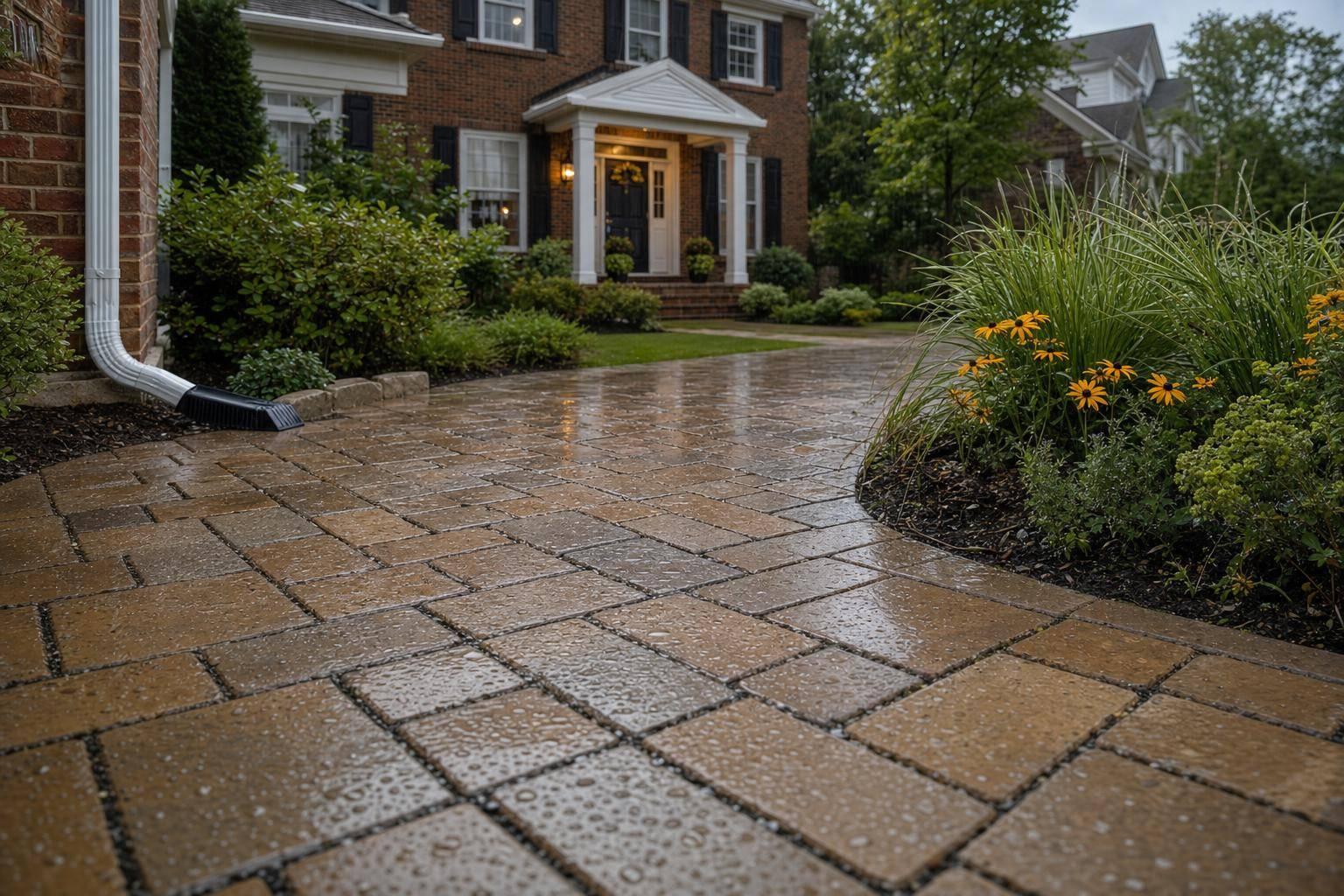
- bhavya gada
- No Comments
If rain runs down your driveway and ends up by your house, the surface is part of the problem. In Maryland, hard surfaces send water downhill fast, which can lead to ponding, erosion, basement leaks, ice near entries, and runoff that carries oil, salt, and sediment into storm drains.
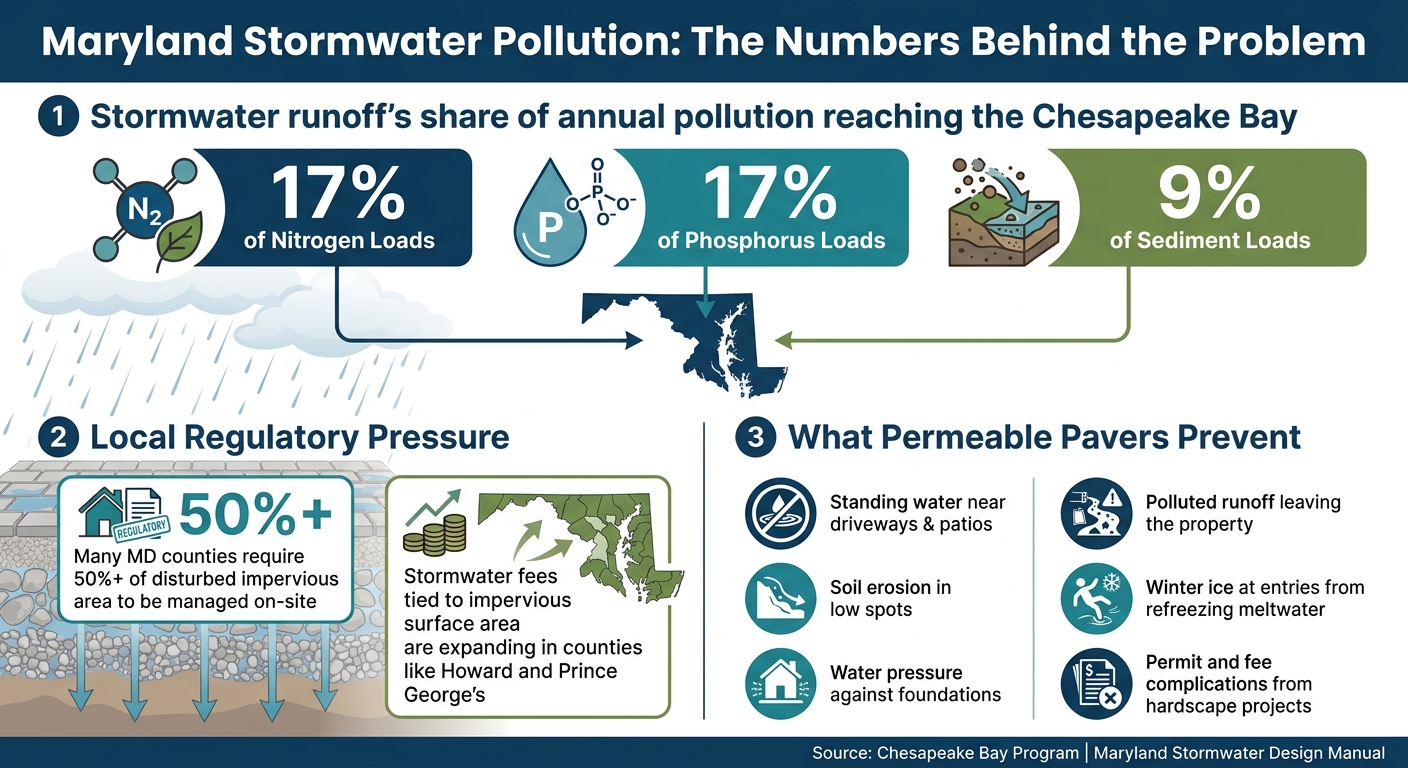
Here’s the short answer: permeable pavers help by letting water move through the surface and into the stone base and soil below. That slows runoff, keeps more water on-site, and can help lower stress on yards, foundations, and drainage paths. This matters even more in Maryland, where stormwater rules now affect many home projects and runoff to the Chesapeake Bay remains a major issue. Stormwater contributes about 17% of nitrogen, 17% of phosphorus, and 9% of sediment loads to the Bay.
What this means for you:
- Less standing water near driveways, patios, and walkways
- Less erosion in low spots and planting beds
- Less water pressure around the house base
- Cleaner runoff leaving the property
- Fewer winter slick spots from refreezing meltwater
- Better odds of meeting local project rules for hardscaping projects
In plain terms, this type of surface does more than look good. It helps deal with water where it lands. But it only works well when the site, slope, soil, and drainage plan are handled the right way.
The rest of this article explains the runoff problem, how these systems work, where they fit best, and what Maryland homeowners should know before installation.
Stormwater@Home – Episode 4: Permeable Pavement
sbb-itb-843f8be
The problem: How impervious paving worsens flooding, erosion, and pollution
How Permeable Pavers Reduce Stormwater Pollution in Maryland
On Maryland driveways and patios, rain doesn’t soak into the ground when it hits a hard surface. It runs off instead. That water heads for low spots, gutters, and storm drains, picking up oil, fertilizer, sediment, and de-icing salts on the way.[7][8] So this isn’t just a case of wet pavement. It’s polluted runoff leaving your property.
Now zoom out from one driveway to a whole neighborhood. Those small flows add up fast, and even moderate storms can push swales and storm drains past what they can handle. The Chesapeake Bay Program says stormwater runoff is the fastest-growing source of pollution to the Chesapeake Bay. It contributes about 17% of nitrogen loads, 17% of phosphorus loads, and 9% of sediment loads that reach the estuary.[3] Hardscaping in neighborhoods feeds that problem directly. For homeowners, though, the first signs usually show up much closer to home: at the edge of the yard, near the garage, or along the foundation.
How runoff damages yards, driveways, and foundations
The first damage is usually easy to spot once you know where to look. Runoff from impervious paving often collects at low points – near garage doors, along foundation walls, and at the edges of planting beds. Over time, that repeated moisture can lead to basement seepage, mulch washouts, and soil erosion in places you’ve already put time and money into landscaping.
Winter adds another layer of trouble. Meltwater runs off hard surfaces and then refreezes at edges and entrances – steps, garage entries, and walkways. That creates slick spots and speeds up cracking. Freeze-thaw cycles wear down pavement edges faster when water has nowhere to go, which often means more patching, more regrading, and higher maintenance costs year after year.[5][8]
Why local regulations and watershed goals are relevant to homeowners
In Maryland, stormwater is no longer treated as only a city or county issue. The Maryland Stormwater Design Manual sets the statewide framework for managing runoff on new and redeveloped sites. It requires Environmental Site Design to the Maximum Extent Practicable so runoff impacts are handled on-site.[2][4]
That matters for homeowners more than many people think. In many Maryland counties, driveway expansions, patio additions, and other hardscaping projects now have to account for stormwater. Some jurisdictions require 50% or more of disturbed impervious area to be managed on-site.[2][6][9] Stormwater fees tied to impervious surface area are also showing up more often in counties such as Howard and Prince George’s.[10][11] In plain terms, the way a pavement surface handles water can affect permits, fees, and whether a project gets approved. The surface can’t just push water away. It has to help manage it.
How permeable pavers manage stormwater
Permeable pavers are built to deal with runoff at the source. Instead of shoving rain across the surface, they let it soak down into the ground. Water passes through joints filled with small, angular crushed stone, moves into the stone base below, and then filters into the soil underneath.
How the surface, joints, stone base, and soil work together
Each layer in a permeable paver system has a clear job. The joints let water in. The stone base holds that water for a period of time. Then the water infiltrates into the soil below. For that to work well, the system needs to fit the site, especially the soil type and the slope.[1]
How slower infiltration reduces peak runoff
Because the system releases water more slowly, it helps cut the sudden rushes that can swamp low spots and drainage lines. On sloped sites, it should be paired with drainage design. That controlled flow helps protect yards, foundations, and outdoor living spaces.
Benefits for Maryland homes: drainage control, property protection, and water quality
That infiltration cuts runoff in three main ways. Permeable pavers reduce runoff, limit ponding, and keep more water on-site. For homeowners, that usually means better drainage, less risk of property damage, and cleaner runoff.
Less ponding, erosion, and water near foundations
The first win is simple: the system helps stop water from collecting where it can cause problems. Standard driveways and patios tend to push water downhill fast. Permeable pavers break up that flow at the surface, so less water ends up near foundations, low spots, and areas that erode easily.
Cleaner runoff and support for Chesapeake Bay water quality
On a standard driveway, rain can move fast into storm drains. A permeable system slows that flow before it gets there, which helps keep local waterways cleaner. In central Maryland, permeable pavers are a primary recommendation for residential stormwater management [1].
Better outdoor living spaces and curb appeal
Permeable pavers work well for driveways, walkways, and patios. So you can fix drainage issues without giving up a polished, finished hardscape look.
Installation and long-term performance in Maryland
Where permeable pavers work best on residential properties
Permeable pavers can work very well in central Maryland and across the Chesapeake Bay watershed, especially when they replace asphalt driveways that push runoff downhill. But the payoff depends on one thing up front: proper installation.
This kind of system isn’t plug-and-play. Its performance comes down to site conditions such as soil type, infiltration capacity, slope, and the amount of drainage area feeding the surface [1]. University of Maryland Extension makes the point clearly: whether a permeable driveway works well depends on the site itself.
When the site is a good fit, drainage planning becomes the next big piece. That planning shapes how well the system handles runoff over time. If water already moves toward the house, permeable pavers should be paired with drainage controls [1].
Why professional design and drainage planning matter
Long-term performance depends on proper design and installation. The system needs to match the site’s soil type, infiltration capacity, slope, and drainage area so it can keep working the way it’s supposed to over time [1].
For homeowners in central Maryland, Pro Landscapes MD installs environmental pavers and pairs them with grading and drainage solutions. It’s also smart to look for contractors certified by the Concrete Masonry and Hardscape Association (CMHA) or listed in the Chesapeake Bay Landscape Professional (CBLP) database [1].
Maintenance matters too. To keep drainage working, the system needs to stay clear. Vacuuming or sweeping from time to time helps keep the joints open and supports infiltration [1].
Conclusion: Permeable pavers as a long-term stormwater investment
When installed the right way, permeable pavers can turn runoff from a property problem into an on-site drainage solution.
FAQs
Are permeable pavers right for my yard?
Permeable pavers are a solid choice for Maryland homeowners who want to deal with stormwater, cut down on flooding, and help stop pollution. Instead of sending water into storm drains, they let it soak into the ground.
They can work well for driveways, patios, and walkways. But they aren’t a one-size-fits-all fix. The best setup depends on your site’s conditions. If you have steep slopes, slow-draining soil, or a high water table, you may need professional design and qualified installation.
Do permeable pavers need special maintenance?
Yes. Permeable pavers need regular upkeep to keep water flowing through them the way they should.
Routine care usually includes using a heavy-duty wet/dry vacuum twice a year, ideally in the spring and fall, to clear out sand, sediment, and plant debris before they clog the system. It also helps to check drainage after heavy storms to make sure water is still moving through the surface as expected.
If you have interlocking concrete pavers, you may also need to add more joint material after sweeping, since some of it can wear away over time.
Can permeable pavers help with Maryland permits?
Yes. In Maryland, permeable pavers are a recognized Best Management Practice (BMP) for stormwater compliance. They help cut runoff, filter pollutants, and protect local watersheds.
Because they manage and treat stormwater on-site, they can also help support municipal and permit requirements, including goals tied to the MS4 permit program.
Chat with Us