









- bhavya gada
- No Comments
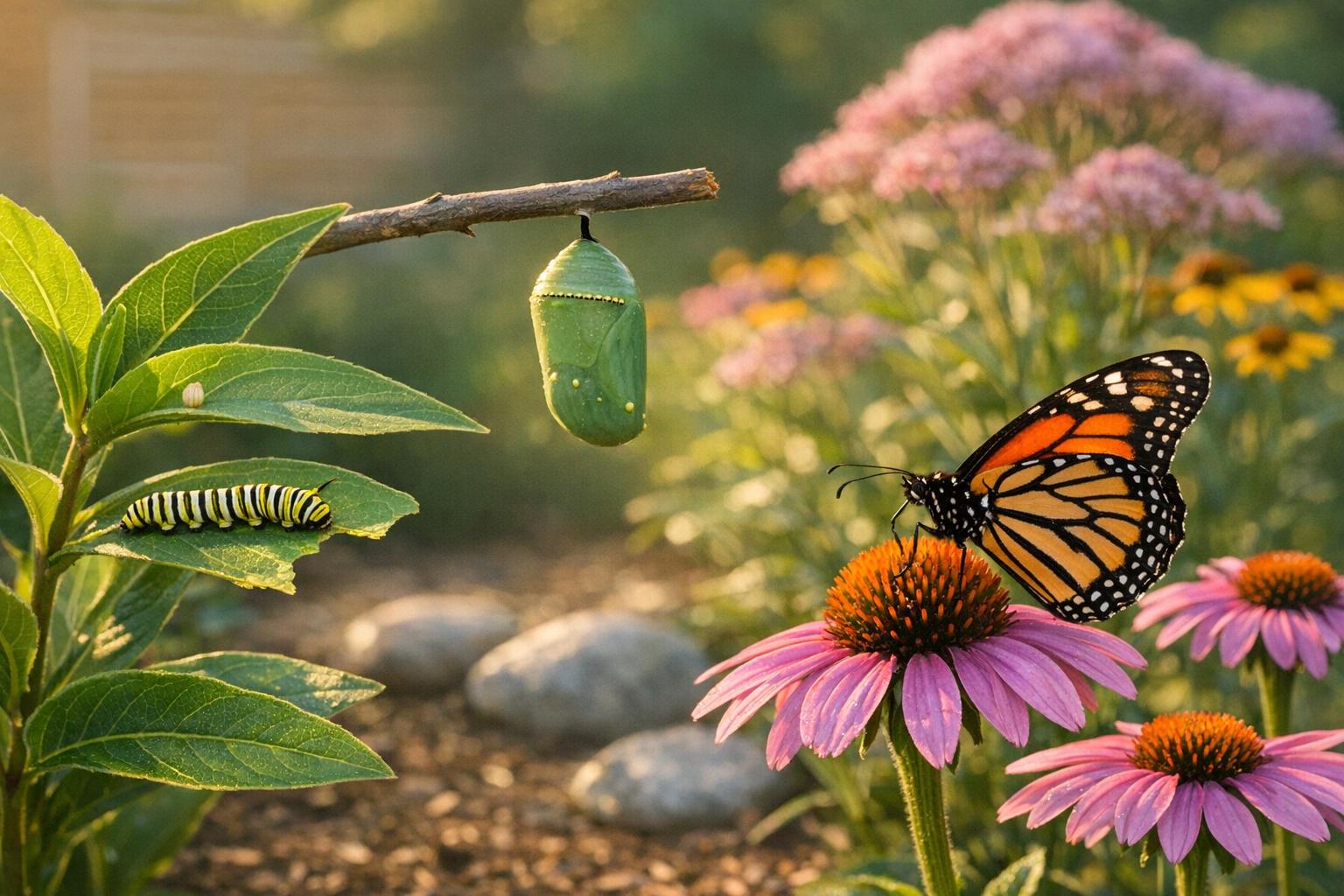
Creating a butterfly-friendly garden involves planting host plants and nectar plants, each serving a different purpose in the butterfly life cycle. Host plants are where butterflies lay eggs, and they provide food for caterpillars. Nectar plants, on the other hand, fuel adult butterflies with energy-rich nectar for flying, mating, and migration.
Key Points:
- Host Plants: Essential for caterpillar growth and reproduction. Examples in Maryland include milkweed for Monarchs and pawpaw for Zebra Swallowtails.
- Nectar Plants: Provide energy for adult butterflies. Examples include goldenrod, asters, and Joe-Pye-Weed.
- Why Both Are Needed: Without host plants, caterpillars can’t survive. Without nectar plants, adults lack energy. A garden needs both for butterflies to thrive.
By planting native species suited to Maryland’s climate as part of our professional landscaping services, like black-eyed Susan and spicebush, you can support butterflies at every stage of their life cycle while avoiding harmful chemicals like pesticides.
Quick Comparison:
| Feature | Host Plants | Nectar Plants |
|---|---|---|
| Purpose | Food for caterpillars, egg-laying site | Energy for adult butterflies |
| Users | Caterpillars (larvae) | Adult butterflies |
| Examples in Maryland | Milkweed, pawpaw, spicebush | Goldenrod, asters, Joe-Pye-Weed |
To help butterflies thrive, plant a mix of host and nectar plants, avoid pesticides, and choose native species that cater to local butterflies.
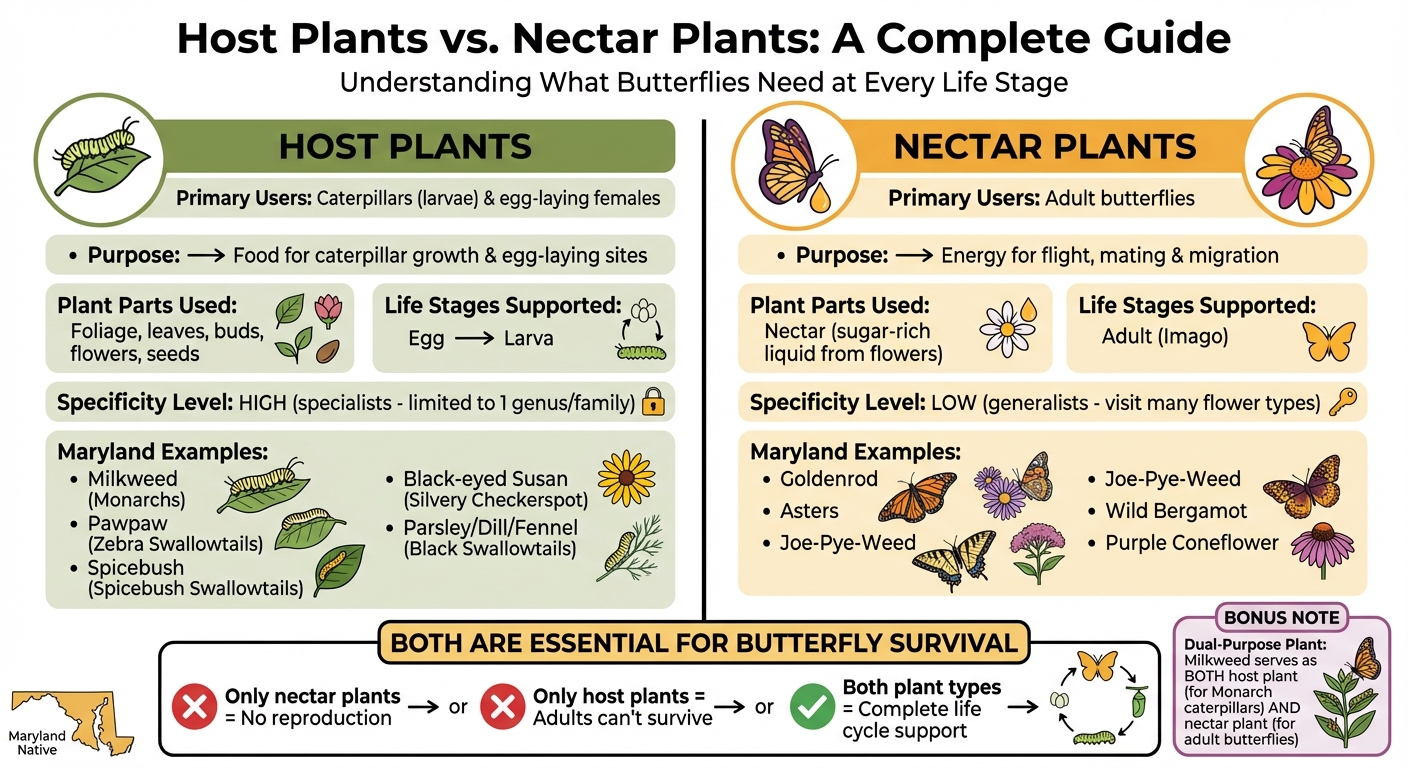
Host Plants vs Nectar Plants: Complete Comparison for Butterfly Gardens
25 PRETTY HOST PLANTS That BUTTERFLIES & MOTHS Can’t Live Without – Ep. 263
What Are Host Plants?
Host plants are specific plants that female butterflies choose to lay their eggs on. While nectar plants provide energy for adult butterflies, host plants serve a different, crucial role: they are the only food source for caterpillars. Without these plants, caterpillars wouldn’t survive, making them indispensable for butterfly reproduction.
Female butterflies are incredibly picky when it comes to selecting host plants. They use special taste sensors located on their forelegs and feet to "drum" on leaves, testing if a plant is suitable for their offspring[2]. This careful selection is vital because many butterfly species are specialists, meaning their caterpillars can only eat and process the chemicals from a very limited range of plants. For instance, Monarch caterpillars can only survive on milkweed; parsley or any other plant simply won’t do[4].
Characteristics of Host Plants
Host plants play a vital role in supporting caterpillars as they grow through several stages over the course of weeks[2]. Beyond providing food, some host plants also offer additional benefits. Milkweed, for example, contains toxins that Monarch caterpillars absorb, making them distasteful to predators. Other species find physical protection from their host plants: Common Checkered Skipper caterpillars fold leaves around themselves, while Painted Lady larvae spin silky shelters on the foliage[2].
The close connection between butterflies and their host plants means that losing these plants can have devastating effects. Habitat destruction, particularly the removal of these specific plants, often leads to declining butterfly populations. For species like the endangered Karner blue butterfly, which depends entirely on sundial lupine (Lupinus perennis), the disappearance of their host plant could be catastrophic[2].
Maryland Host Plant Examples
Maryland is home to a variety of native plants that support different butterfly species. Monarchs rely exclusively on milkweed (Asclepias syriaca, A. tuberosa, A. incarnata), while Zebra Swallowtail caterpillars feed on Pawpaw (Asimina triloba). Spicebush (Lindera benzoin) and Sassafras (Sassafras albidum) are essential for Spicebush Swallowtails, and Eastern Tiger Swallowtails thrive on Tulip Poplar, Black Cherry, and Birch.
For gardeners, False Nettle (Boehmeria cylindrica) is a great choice, as it supports Red Admiral caterpillars. Black-eyed Susan (Rudbeckia) nourishes Silvery Checkerspot larvae, and herbs like Parsley, Dill, and Fennel attract Eastern Black Swallowtail caterpillars. Woody plants such as Oaks (Quercus) and Black Cherry (Prunus serotina) are especially valuable in the Mid-Atlantic region, hosting a wide variety of butterfly and moth species.
Next, we’ll delve into the role of nectar plants and how they work alongside host plants to support butterflies.
What Are Nectar Plants?
Nectar plants are flowering plants that produce nectar, which serves as a vital energy source for adult butterflies. This nectar provides the high-calorie fuel butterflies need for essential activities like flying, mating, and migrating [3]. In a way, nectar is like the "gasoline" that powers a butterfly’s daily life.
Butterflies have unique taste organs located on their forelegs and feet, which they use to evaluate nectar quality [2]. Interestingly, not all butterflies depend solely on nectar from flowers. Some species, like the Red-spotted Purple and the Question Mark, also draw energy from other sources such as rotting fruit (like bananas and peaches) or tree sap [1].
Characteristics of Nectar Plants
Nectar plants attract butterflies with their bright, clustered flowers, which signal the availability of energy-rich nectar [3]. Planting clusters of these flowers makes it easier for butterflies to find food. In Maryland, native nectar plants are especially beneficial because they are well-adapted to the local environment. They’re hardy, require less upkeep and maintenance, and have evolved alongside local butterfly species. Plus, these plants often bloom in sync with the times butterflies need them most, ensuring a steady food supply throughout the growing season.
Maryland Nectar Plant Examples
Maryland gardeners are fortunate to have a wide range of native nectar plants that support butterflies from spring through fall. For instance:
- Goldenrod (Solidago): A key late-season nectar source for Monarchs, Skippers, and Sulphurs.
- Asters (Symphyotrichum): Known for their fall blooms, they attract butterflies like Pearl Crescents, Painted Ladies, and Monarchs.
- Wild Bergamot (Monarda fistulosa): A favorite of larger butterflies such as Pipevine Swallowtails and Eastern Tiger Swallowtails.
- Joe-Pye-Weed (Eutrochium): Supports a variety of pollinators, including Monarchs and Silver-spotted Skippers.
- Milkweed (Asclepias): Serves a dual purpose as a host plant for Monarch caterpillars and a key nectar source.
Other excellent native options include Ironweed (Vernonia), Mountain Mint (Pycnanthemum), Black-eyed Susan (Rudbeckia), Buttonbush (Cephalanthus occidentalis), and Purple Coneflower (Echinacea) [1].
These plants not only provide nectar but also complement host plants, playing a crucial role in maintaining butterfly populations.
Host Plants vs. Nectar Plants: Key Differences
Both host plants and nectar plants play vital roles in a butterfly’s life, but they fulfill entirely different needs. Recognizing these differences is crucial when designing butterfly-friendly spaces. Let’s break down how these two plant types contribute to the butterfly life cycle.
One of the most striking differences lies in their level of specificity. Butterflies are notoriously selective when it comes to host plants. Many species rely exclusively on a single genus or family of plants for reproduction and caterpillar nourishment. On the other hand, adult butterflies are far less picky about nectar sources and will feed from a wide variety of flowering plants.
Female butterflies use specialized chemoreceptors located on their forelegs and feet to identify suitable host plants. This ensures their eggs are laid on plants that will provide the exact nutrients their caterpillars need to thrive. Monarch caterpillars, for example, not only feed on Milkweed but also absorb its toxins, which make them unpalatable to predators.
Comparison Table: Host Plants and Nectar Plants
| Feature | Host Plants | Nectar Plants |
|---|---|---|
| Primary Users | Caterpillars (Larvae) and Egg-laying Females | Adult Butterflies (Imago) |
| Purpose | Nutrition for growth and development; reproductive site | Energy for flight, mating, and migration |
| Plant Parts Used | Foliage (leaves), buds, flowers, and seeds | Nectar (sugar-rich liquid) |
| Butterfly Life Stages | Egg and Larva | Adult |
| Level of Specificity | High (Specialists); often limited to one genus or family | Low (Generalists); adults visit many flower types |
| Maryland Examples | Pawpaw (Asimina triloba), Spicebush (Lindera benzoin), Milkweed (Asclepias) | Joe-Pye-Weed (Eutrochium), Ironweed (Vernonia), Aster (Symphyotrichum) |
To create a thriving butterfly habitat, it’s essential to include both plant types. Some plants, like Milkweed, even serve a dual purpose. Monarch caterpillars depend on it as their sole host plant, while its flowers provide nectar for adult butterflies such as Swallowtails, Skippers, and Fritillaries [1].
sbb-itb-843f8be
Why Both Plant Types Are Necessary
Butterflies need both host plants and nectar plants to thrive throughout their life cycle. Host plants serve as essential sites for laying eggs and as food for caterpillars, while nectar plants provide adult butterflies with the energy they need for activities like flying, mating, and reproduction.
If a landscape has only nectar plants, it offers limited support. Adult butterflies may stop to feed, but without host plants, they have nowhere to lay eggs, which halts the development of future generations. On the flip side, a garden with only host plants leaves adult butterflies without the energy they need to survive, mate, and locate places to reproduce [3]. This imbalance is especially harmful to specialist species that depend on specific plants.
Take the Monarch butterfly, for instance. Monarchs rely solely on milkweed (Asclepias) for laying eggs and feeding their caterpillars. Without milkweed, Monarchs cannot complete their life cycle – a major factor behind their population decline across North America [2]. Similarly, the endangered Karner blue butterfly depends exclusively on sundial lupine (Lupinus perennis). When these host plants disappear, so does the Karner blue [2].
To create a sustainable habitat for butterflies, Maryland landscapes must include a mix of both host and nectar plants. This balance ensures that butterflies can complete every stage of their life cycle.
Adding Host and Nectar Plants to Maryland Landscapes
Create a butterfly-friendly space in Maryland by choosing native host and nectar plants that thrive in the region’s soil and climate.
Planting and Maintenance Tips
Choose plants that suit your soil. For example, Black-eyed Susans (Rudbeckia fulgida) are well-suited to Maryland’s heavy clay soils, making them perfect for many residential gardens. On the other hand, Sundial Lupine (Lupinus perennis) needs sandy, well-drained soil to avoid root rot [2]. Most butterfly-friendly plants, like Butterfly weed, flourish in full sun [2].
Eliminate all pesticides and herbicides, even organic ones. These chemicals, including neem oil and pyrethroids, can be just as harmful to butterflies and their larvae as they are to pests [2]. Sherri Ribbey from Garden Gate Magazine explains:
"The best thing you can do to help butterflies is to avoid using pesticides and herbicides (even organic solutions, such as neem oil or pyrethroids). They’re just as deadly to butterflies and their young as they are to insect pests" [2].
Many native plants need cold stratification for seeds to germinate. For instance, Butterfly weed (Asclepias tuberosa) seeds should be planted in the fall or refrigerated for 2–3 months before spring planting to mimic winter conditions [2]. Once plants are established, deadheading flowers can extend their bloom time and ensure a steady supply of nectar [2]. Applying 1–2 inches of organic mulch around sensitive plants like Purple passionflower helps retain moisture and keeps roots cool during warmer months [2].
Plant in clusters and use species with staggered bloom times to ensure nectar is available throughout the season [1][2]. If you’re considering butterfly bushes (Buddleia), select sterile, non-invasive varieties like ‘Miss Pearl’ or the ‘Lo & Behold’ series, which have a germination rate of less than 2%, preventing unwanted spreading [5].
Skip heavy fall cleanup, as many swallowtail butterflies overwinter as chrysalises on dry stems or leaves. Removing these areas can disrupt their life cycle [2].
For those who want to bring these ideas to life but need assistance, expert landscaping services are available.
Pro Landscapes MD‘s Butterfly-Friendly Landscaping Services

Pro Landscapes MD brings butterfly habitat concepts to life with their professional landscaping services. They specialize in designing and planting pollinator-friendly gardens across central Maryland, serving areas like Howard, Montgomery, Carroll, Frederick, Prince George’s, and Baltimore Counties. Communities such as Ellicott City, Columbia, Bethesda, Silver Spring, and Towson benefit from their expertise.
Their services include crafting garden layouts that combine host plants – like milkweed, spicebush, and pawpaw – with nectar plants such as Joe-pye-weed, goldenrod, and asters. Their team of experienced horticulturists ensures proper plant selection, placement, and care, avoiding harmful chemicals while encouraging biodiversity and enhancing the beauty of outdoor spaces in Maryland and Washington, DC.
Conclusion
The success of a butterfly habitat hinges on maintaining a balance between host and nectar plants. Both are vital for butterfly populations to thrive. Host plants act as nurseries, providing food for caterpillars as they grow, while nectar plants supply adult butterflies with the energy they need for flight and reproduction. As Sherri Ribbey from Garden Gate Magazine aptly puts it:
"If you grow the host plants that specific butterflies love, you can support them through the entire life cycle" [2].
Butterfly populations are facing steep declines due to habitat loss across the country. In Maryland, homeowners can make a difference by establishing "waystations" – gardens designed to support butterflies at every stage of their life cycle, from egg to adult [2][3]. A garden that includes only nectar plants might draw in passing butterflies, but it won’t sustain them long-term without host plants for breeding.
Even adaptable species like the Painted Lady, which can feed on over 100 different plants, still require specific host plants to lay their eggs and nurture caterpillars [2]. By incorporating both host and nectar plants and following the planting tips shared earlier, Maryland homeowners can help combat habitat loss and support butterflies through each phase of their development.
Native plants such as Black-eyed Susans, milkweed, and goldenrod are especially effective. They’re not only better suited to Maryland’s environment but also preferred by local butterfly species, making them a smart and low-maintenance choice [3].
Start small – plant a mix of native host and nectar plants – and take the first step toward creating a butterfly-friendly garden.
FAQs
How do I know which host plants match the butterflies in my yard?
To attract butterflies to your yard, start by identifying the species you want to welcome. Once you know which butterflies you’re targeting, look for resources that provide details on the plants they need. Guides such as "Host Plants for Different Butterfly Species" or "Nectar and Host Plants for Selected Mid-Atlantic Butterflies and Moths" are excellent tools. These can help you pick plants that will nurture their entire lifecycle.
What should I plant so butterflies have nectar all season?
Planting a variety of native nectar plants that bloom across different times of the growing season is a great way to support butterflies. For instance, milkweed (Asclepias spp.) offers nectar during the summer, while other plants bloom in early spring or late fall. This approach ensures butterflies have access to nectar no matter the time of year. Native plants are particularly important because they help sustain local butterfly populations.
How can I garden for butterflies without using pesticides?
To create a butterfly-friendly garden without pesticides, focus on planting native nectar and host plants that naturally support their life cycle. For instance, nectar plants like Wild Bergamot provide nourishment for adult butterflies, while host plants offer a safe environment for caterpillars to develop. Steer clear of chemical pesticides, as these can harm butterflies in every stage of their life. Instead, cultivate a healthy and diverse garden that welcomes beneficial insects, ensuring a thriving and sustainable habitat for butterflies.
Chat with Us