









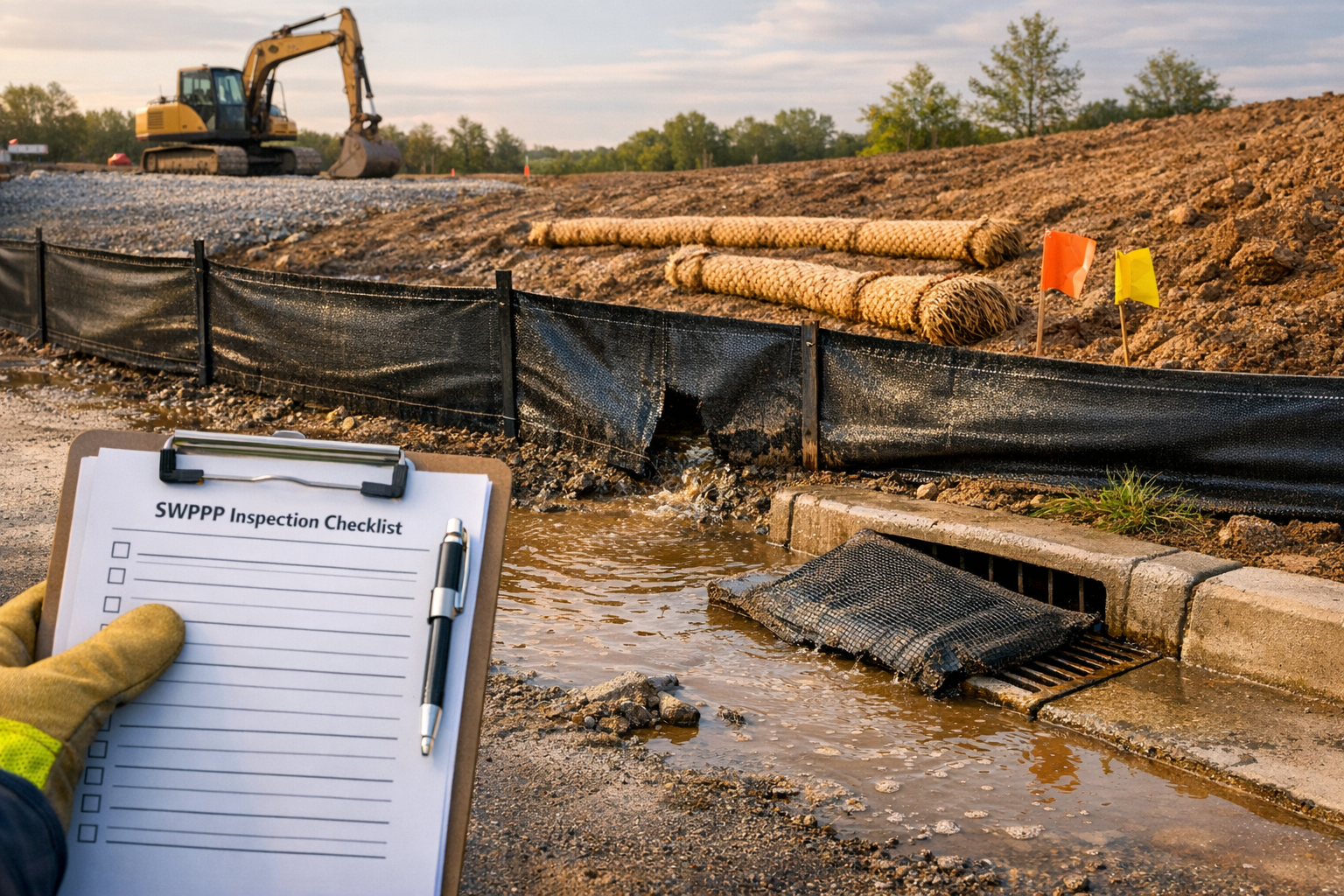
- bhavya gada
- No Comments
Construction sites in Maryland often face recurring issues during SWPPP inspections. These violations can lead to fines, legal trouble, and harm to local waterways, including the Chesapeake Bay. Here’s what you need to know:
- Incomplete Records: Missing or vague inspection logs are a frequent problem. Proper documentation of self-inspections and corrective actions is critical.
- Neglected Erosion Controls: Silt fences, sediment basins, and other BMPs often fail without regular maintenance, reducing their effectiveness.
- Sediment Runoff: Poorly maintained systems can lead to pollutants entering streams and storm drains, especially when hazardous materials are improperly stored.
How to Stay Compliant:
- Conduct inspections every 7–14 days or after rain, and document all findings.
- Maintain erosion controls like sediment basins and silt fences regularly.
- Train workers on SWPPP requirements and proper waste handling.
- Work with local stormwater experts for complex issues.
Keeping your site compliant protects water quality, avoids penalties, and ensures smoother project operations.
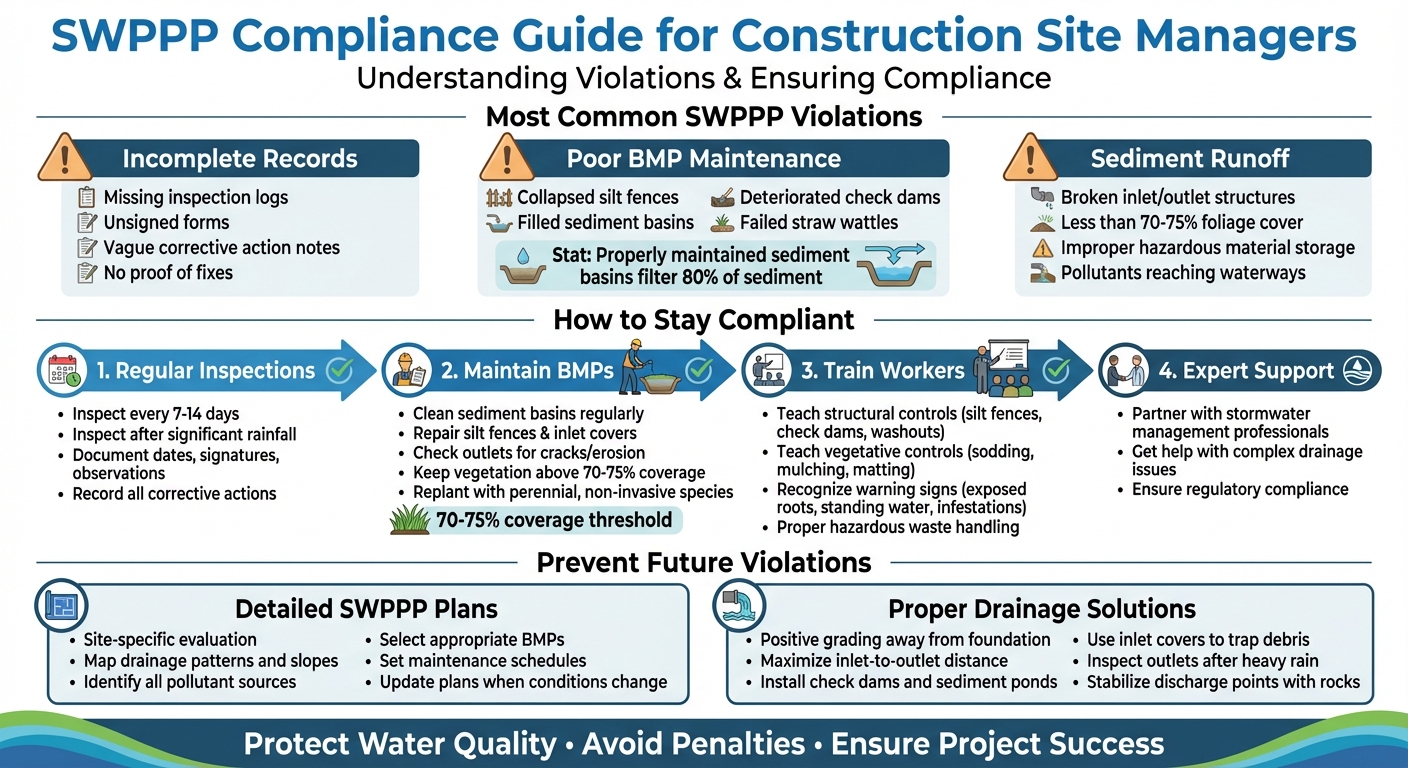
4-Step Guide to Fixing and Preventing SWPPP Violations at Construction Sites
What Are Common Stormwater Violations? – Civil Engineering Explained
Common SWPPP Violations Found During Inspections
Inspectors often come across recurring compliance issues at construction sites in Maryland. Knowing these common problems can help site operators take proactive steps to prevent costly penalties or harm to nearby ecosystems. Addressing these frequent missteps is crucial for staying compliant and avoiding enforcement actions.
Incomplete Inspection Records
Lack of proper documentation is one of the most common violations flagged during SWPPP inspections. Many sites either skip required self-inspections altogether or fail to maintain accurate records. Common issues include unsigned forms, missing dates, or vague notes that don’t clearly outline corrective actions taken to resolve problems. Without detailed records, there’s no proof that inspections or fixes were ever carried out. This challenge has grown more significant since the EPA retired its Compliance Assistance Centers on December 31, 2025, leaving fewer centralized resources to guide site operators on proper documentation practices [2].
Poor Maintenance of Erosion and Sediment Controls
Neglected best management practices (BMPs) are another frequent issue. Silt fences can collapse, become undercut, or fail entirely, while sediment basins often fill up and lose their effectiveness if not cleaned regularly. Other controls, like check dams and straw wattles, also deteriorate without routine maintenance, reducing their ability to slow stormwater runoff and trap sediment. Regular upkeep is essential – when properly maintained, sediment basins can filter out up to 80% of sediment particulates [1].
Sediment Runoff and Pollutant Discharges
Uncontrolled discharges happen when maintenance lapses allow pollutants to reach nearby waterways. For example, broken inlet structures can lead to sediment clogging infiltration basins, while damaged outlet structures fail to manage discharge velocity, allowing contaminants to flow directly into streams or storm drains. Sites with less than 70–75% foliage cover lose their natural ability to filter runoff, making the problem worse [1]. Additionally, improper storage of hazardous materials – like concrete washout, oils, or paint – can result in these substances mixing with stormwater during rain. Failing to maintain barriers or neglecting to sweep roads and sidewalks regularly can also lead to sediment spilling onto public areas.
How to Fix SWPPP Violations
When SWPPP (Stormwater Pollution Prevention Plan) violations occur, addressing them promptly is crucial to avoid fines and protect local waterways. Here’s how you can take action to resolve these issues effectively.
Conduct Regular Inspections and Keep Records
Perform inspections every 7–14 days or after significant rainfall events. Document everything – dates, inspector signatures, observations, and any corrective measures taken. For example, if a silt fence is damaged or a sediment basin is clogged, record the issue and describe how you fixed it. Keeping detailed records not only helps you stay organized but also demonstrates your commitment to proper stormwater management practices.
Maintain Erosion and Sediment Control Systems
Your Best Management Practices (BMPs) need consistent attention. Regularly clean and repair sediment basins to keep them working efficiently. Check inlet covers to ensure they’re filtering debris properly, and inspect outlet structures for cracks or signs of erosion. If an outlet is damaged, use rocks to regrade it and slow down water discharge.
For vegetation, monitor plant coverage carefully – if it falls below 70–75%, replant with perennial, non-invasive species to help the soil absorb runoff. When areas will remain undisturbed for a few weeks, stabilize them with straw or mulch. For longer idle periods (over a month), temporary seeding is a better option [1].
Train Construction Workers on SWPPP Requirements
Your crew plays a key role in maintaining compliance. Use the SWPPP as a training guide to educate workers on site-specific BMPs. Break these down into two types: structural controls (like silt fences, check dams, and concrete washouts) and vegetative controls (such as sodding, mulching, and erosion matting). Teach workers to recognize warning signs of potential issues, such as exposed roots, standing water after storms, or insect infestations.
Additionally, make sure everyone knows proper waste management protocols. Hazardous materials like oil, cement, and paint should be stored securely and clearly labeled to prevent contamination. A well-trained team is your first line of defense against future violations.
Work with Local Stormwater Management Professionals
Sometimes, tackling SWPPP violations requires expert assistance. Partnering with professionals who specialize in stormwater management can make compliance easier, especially when dealing with complex drainage or erosion issues. For example, Pro Landscapes MD offers a range of services in central Maryland, including drainage installation, French drains, dry riverbeds, grading, and land leveling. Their expertise in erosion and sediment control ensures construction sites can address violations effectively while implementing sustainable strategies for the future.
Pro Landscapes MD serves areas like Howard County, Montgomery County, Carroll County, Frederick County, Prince George’s County, Baltimore County, and Washington, DC. Their familiarity with Maryland’s regulatory requirements provides the guidance you need to stay compliant and avoid further issues.
sbb-itb-843f8be
How to Prevent Future SWPPP Violations
Addressing stormwater issues early through thoughtful planning and effective drainage systems is crucial for staying compliant. By combining thorough preparation with smart infrastructure choices, you can tackle potential problems before they escalate.
Create Detailed SWPPP Plans
Start by crafting a site-specific SWPPP tailored to your project’s unique needs. Begin with a complete evaluation of your site, including its topography, soil characteristics, and nearby water bodies. Use maps to illustrate drainage patterns, slopes, and areas where soil may be disturbed [3][4]. Identify and document every possible pollutant source – this could include sediment from erosion, oils and grease from equipment, or chemicals from construction materials [3].
"Planning ahead is the most effective way to minimize erosion and sedimentation during construction and reduce project costs." – Minnesota Stormwater Manual [5]
Choose Best Management Practices (BMPs) that align with your site’s specific conditions and establish clear maintenance schedules. Include post-rain inspection protocols to ensure everything stays in check [3][4]. Be ready to update your SWPPP whenever site conditions change [4][5].
Pairing detailed planning with solid drainage systems can further reduce the risk of violations.
Install Proper Drainage Solutions
Effective drainage systems are essential for managing runoff and avoiding compliance issues. Start with positive grading, which directs stormwater away from your site’s foundation and toward designated outlets. This prevents standing water and erosion [1]. When designing your drainage system, maximize the distance between inlets and outlets to improve dewatering and filtration.
Incorporate structural solutions like check dams, sediment ponds, and outlet control structures to regulate both runoff volume and speed. Protect all inlets with covers to trap debris and sediment before it enters the drainage system. A well-maintained sediment basin can filter out as much as 80% of sediment particulates [1]. Regularly inspect outlets for cracks or erosion, especially after heavy rainfall, and use rocks to stabilize any damaged discharge points.
For construction sites in central Maryland, Pro Landscapes MD offers expert drainage solutions, including French drains, dry riverbeds, grading, and land leveling. Their services help sites across Howard County, Montgomery County, Carroll County, Frederick County, Prince George’s County, Baltimore County, and Washington, DC comply with Maryland’s regulations while safeguarding the Chesapeake Bay watershed from sediment and nutrient pollution.
Conclusion
Meeting SWPPP requirements calls for consistent attention and careful management. The best way to stay on track is by conducting inspections every 7–14 days, keeping detailed records, and addressing any problems as soon as they appear. This approach highlights the need for proactive stormwater management.
To succeed, it’s crucial to strike a balance between erosion prevention and sediment control. Overlooking sediment capture can result in costly failures. Regularly maintain BMPs, provide proper training for your team, and ensure waste materials are securely managed to avoid penalties.
FAQs
What are the most common SWPPP violations found during construction site inspections?
During construction site inspections, erosion and sediment control, stormwater management, and permit compliance often emerge as problem areas. Some frequent issues include:
- Damaged or poorly installed silt fences: These can fail to prevent sediment runoff effectively.
- Insufficient grading: Poorly graded sites can lead to uncontrolled erosion.
- Ineffective vegetation management: Without proper vegetation, exposed soil is more likely to erode and pollute nearby water sources.
Stormwater-related problems are another major concern. Blocked drains, debris-filled retention ponds, and neglected drainage systems can cause flooding or contamination. On top of that, permit violations – such as missing documentation, improper waste disposal, or outdated SWPPP plans – can significantly increase environmental risks.
The best way to avoid these pitfalls is by staying proactive. Regular site inspections, proper maintenance of stormwater systems, and adherence to approved best management practices (BMPs) are key. These steps not only ensure compliance but also help protect the environment from unnecessary harm.
What steps can construction sites take to maintain effective erosion and sediment controls?
To keep erosion and sediment controls working efficiently, construction sites need a consistent inspection and maintenance routine. Here’s what that looks like:
- Before major rain events: Check that measures like silt fences, sediment basins, and inlet protections are in good condition and ready to handle increased water flow.
- After rain events: Inspect the site within 48 hours to spot and fix any damage. This helps prevent runoff and sediment from becoming an issue.
Documentation is key. Keeping detailed records of inspections, repairs, and maintenance activities is essential – not just for regulatory compliance but also for protecting the environment. This includes noting site conditions, sediment levels, and any corrective actions taken.
Another important step? Training your team. When construction crews understand why these controls matter and how to maintain them, it sets the stage for long-term success.
By sticking to these practices, construction sites can reduce their environmental footprint, protect nearby waterways, and meet regulatory requirements.
Why are detailed inspection records important for SWPPP compliance?
Keeping detailed inspection records for your SWPPP (Stormwater Pollution Prevention Plan) is crucial for ensuring that stormwater management measures are functioning as intended and meeting regulatory standards. These records play a vital role in identifying potential issues like erosion, blocked drains, or other maintenance concerns before they escalate into serious problems or violations.
Beyond site management, thorough records are your best defense during regulatory inspections. They act as proof that your site is actively managing stormwater runoff and following permit requirements. This proactive approach can help you avoid hefty penalties – such as fines that can reach up to $100,000 per day in Maryland – while also protecting nearby waterways from pollution linked to construction activities.
In essence, maintaining accurate inspection records is more than just a compliance requirement. It’s a practical way to protect the environment and ensure your site remains safe and well-managed.
Chat with Us