









- bhavya gada
- No Comments
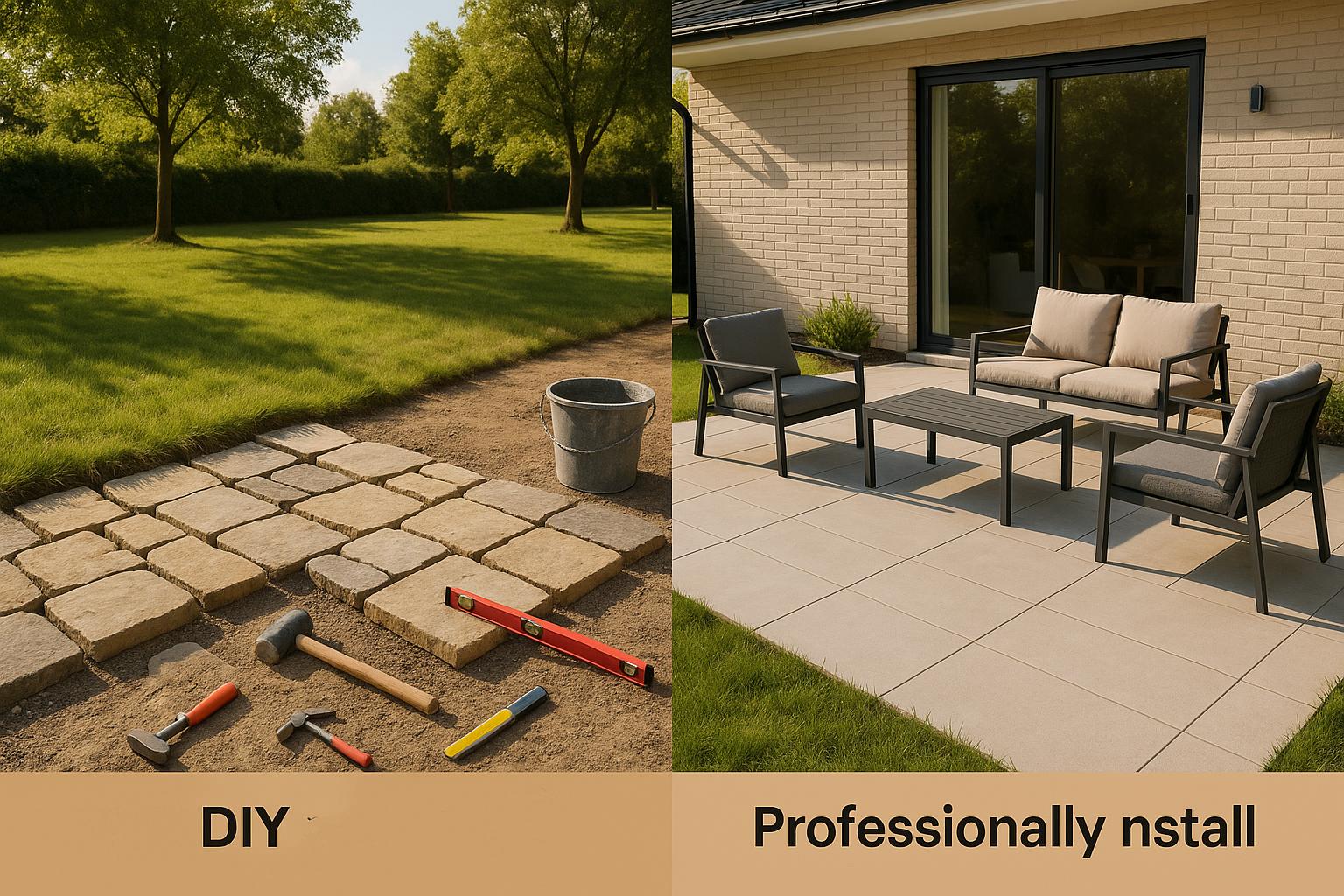
If you’re considering adding a patio to your Maryland home, the choice between DIY and professional installation depends on your budget, skills, and project complexity. Here’s a quick summary:
- DIY Installation: Costs $8–$20 per square foot. You’ll save on labor but must account for tools, materials, permits, and potential mistakes. Expect to spend 60–80 hours on a 300 sq ft patio. Risks include uneven surfaces, drainage issues, and higher repair costs.
- Professional Installation: Costs $15–$35 per square foot. Includes labor, materials, warranties, and permits. Professionals handle complex tasks like drainage and site preparation, ensuring durability and compliance. Projects are completed in 2–3 days, saving time and reducing risks.
Quick Comparison:
| Factor | DIY Installation | Professional Installation |
|---|---|---|
| Cost (300 sq ft) | $2,950–$7,500 | $7,500–$16,500 |
| Time Required | 60–80 hours (3–5 weekends) | 2–3 days |
| Permits | Your responsibility | Handled by contractor |
| Warranty | None | 1–3 years on workmanship |
| Risk of Repairs | High | Low (covered by warranty) |
For simple designs and flat terrain, DIY may work. For intricate designs, uneven ground, or if you’re short on time, hiring professionals is the safer option. While DIY saves money upfront, professional installation ensures quality, longevity, and peace of mind.
How to Build Your Own Paver Patio (Full Backyard DIY Project)
DIY Patio Installation: What You’ll Pay
Tackling a patio installation yourself can save money, but it’s important to account for all the expenses involved – not just the materials. Here’s a breakdown of the main cost factors you’ll need to consider.
Material Costs
Your choice of paver material will have the biggest impact on your budget. Concrete pavers are typically the most budget-friendly option, while natural stone is on the pricier side, offering durability and a more distinctive look. Brick pavers fall somewhere in the middle, and flagstone is another premium choice for those willing to spend more.
But it’s not just about the pavers. You’ll also need materials for the foundation. This includes a gravel base for stability, a sand layer to ensure proper leveling, and landscape fabric to keep weeds at bay. The total cost will depend on the size of your patio and the materials you choose.
Tools and Equipment
Installing a patio requires more than just a few basic tools. You may need to rent specialized equipment like a plate compactor for compacting the base and a wet saw for cutting pavers. Additionally, you’ll need to purchase tools like a rubber mallet, level, measuring tape, string line, and a wheelbarrow. Don’t forget safety gear, such as knee pads, gloves, and safety glasses – you’ll be glad you have them during the more labor-intensive parts of the project.
Time and Skill Requirements
Building a patio isn’t just physically demanding – it also takes a good deal of precision. From excavating the site to preparing the base, laying the pavers, and adding the finishing touches, every step requires careful attention to detail. Mistakes in areas like grading or cutting pavers can lead to costly do-overs. Plus, the time commitment can be significant, so be prepared to dedicate several days – or even weeks – depending on the size and complexity of your project.
Hidden or Unexpected Costs
Even with meticulous planning, unexpected expenses can arise. For instance, you might encounter tree roots or challenging soil conditions that require extra work. Local regulations could add costs too, such as permit fees or approvals for patios near property lines or on sloped ground.
Mistakes during installation, like improper base preparation or cutting errors, could mean additional costs for redoing sections of the project. Weather delays might extend the time you need rented tools, and you may need to buy extra materials like tarps to protect the worksite. And while DIY projects are meant to save money, the physical demands might lead you to hire extra help, which can eat into your savings.
When planning your DIY patio, it’s crucial to budget for these potential surprises. While it can be rewarding, the process is often more complex than it first appears.
Professional Patio Installation: What You’ll Pay
In Maryland, where local codes and weather conditions can complicate outdoor projects, hiring a professional can simplify the process. These experts handle everything from navigating local regulations to ensuring the work is done right. When you bring in a contractor, you’re paying for skilled labor, quality materials, and peace of mind through guaranteed workmanship. Professional services cover every step – from design and material selection to thorough site preparation and quality checks.
Labor and Material Costs
The cost of professional patio installation depends on the complexity of the project and the materials you choose. Most contractors base their pricing on a per-square-foot rate, which reflects both the material and the difficulty of the work. More affordable options, like concrete pavers, are on the lower end of the price range. On the other hand, materials such as brick, natural stone, or flagstone can increase costs significantly. Labor expenses typically include site evaluation, excavation, and cleanup.
Professional contractors also have access to commercial-grade materials and benefit from bulk pricing, which ensures proper quantities are ordered and delivered on schedule. These savings, combined with value-added services, contribute to the overall cost but also enhance the quality and longevity of the finished patio.
Additional Services and Benefits
Professional installation goes beyond laying down materials. For instance, companies like Pro Landscapes MD include comprehensive site preparation in their services. They evaluate your property’s drainage patterns and implement solutions like French drains, improved grading, or permeable pavers to prevent issues like water pooling or soil erosion.
Another perk is design consultation. Professionals help you choose materials that not only match your home’s style but also perform well in Maryland’s climate. They understand how different materials handle the region’s weather and can recommend options that hold up over time. Many contractors also offer warranties – typically one to three years on workmanship – with some extending warranties on materials. This means any problems with the installation can be addressed without extra cost.
Permit Handling and Quality Assurance
Professional contractors don’t just focus on the physical installation – they also manage the necessary permits and ensure compliance with local building codes. Permit requirements in Maryland vary depending on the county. For example, in Montgomery or Howard counties, permits may be necessary for patios exceeding certain sizes or those that impact drainage. Professionals handle these applications, ensuring your patio meets setback rules, drainage regulations, and any neighborhood or HOA guidelines, avoiding potential delays or compliance issues.
Quality assurance is another key advantage. Experienced contractors follow industry best practices to create a patio that’s built to last. From compacting the base properly to ensuring precise joint spacing and secure edge restraints, their methods help maintain stability and durability. They also use specialized tools, like commercial-grade compactors, to achieve the necessary base density. Whether it’s cutting natural stone or ensuring consistent spacing with pavers, their expertise ensures a polished, long-lasting result.
While professional installation may cost more upfront than a DIY project, the added durability, reduced risk of future repairs, and peace of mind make it a worthwhile investment in the long run.
sbb-itb-843f8be
Cost Comparison: DIY vs. Professional
When deciding between a DIY or professional approach for patio installation in Maryland, it’s important to consider more than just the upfront material costs. DIY projects typically range from $8–$20 per square foot, excluding potential mistakes and the value of your time. On the other hand, professional installation costs between $15–$35 per square foot, which includes expertise and warranties.
For a 300-square-foot patio, a DIY project could take 3–5 weekends, while a professional team can complete the same project in just 2–3 days. That means professionals not only save you time but also allow you to enjoy your outdoor space much sooner.
Mistakes are a common pitfall with DIY projects. Issues like poor base preparation, improper drainage, or uneven surfaces can lead to costly repairs within a few years. In contrast, professional installations often come with warranties, giving you peace of mind and protecting your investment. With a DIY project, any errors or repairs fall entirely on you.
Comparison Table
| Cost Factor | DIY Installation | Professional Installation |
|---|---|---|
| Materials (300 sq ft) | $2,400 – $6,000 | $4,500 – $10,500 (includes markup) |
| Tools & Equipment | $300 – $800 (rental/purchase) | Included in service |
| Labor | Your time (60-80 hours) | $3,000 – $6,000 |
| Permits | $50 – $200 (your responsibility) | Handled by contractor |
| Drainage Solutions | $200 – $500 (if needed) | Included in site preparation |
| Warranty | None | 1-3 years on workmanship |
| Total Project Cost | $2,950 – $7,500 | $7,500 – $16,500 |
| Risk of Repairs | High (100% your cost) | Low (covered by warranty) |
Beyond the numbers, several other considerations can tip the scales. Professional contractors often get better pricing on materials through bulk purchasing and trade relationships, which helps offset some of their markup. They also calculate precise material quantities, minimizing waste and the need for extra trips to the store – something that could add $200–$400 to a DIY budget.
Maryland’s seasonal weather can also play a role. DIY projects, often limited to weekends, may stretch across months, increasing the chance of weather delays and exposing materials to damage. Professionals, however, work efficiently within weather windows and store materials properly, avoiding these risks.
The complexity of the project is another deciding factor. A straightforward rectangular patio with basic pavers might be manageable for a DIYer. But for more intricate designs – like irregular shapes, drainage systems, or premium materials such as flagstone – professional expertise becomes essential. Companies like Pro Landscapes MD handle these complexities as part of their standard service, ensuring a smoother process and fewer risks.
Finally, think long-term. Professionally installed patios typically last 15–20 years, while DIY patios often require repairs or replacement within 5–10 years. This difference in durability can significantly impact the overall value of your investment.
Factors That Affect Patio Installation Costs in Maryland
When planning a patio project in Maryland, understanding local regulations and other cost-influencing factors is crucial. Local permit requirements, material choices, and site preparation all play a role in shaping your budget and timeline.
Local Permit Requirements
Permit rules in Maryland vary depending on the county and the specifics of your project. For example, in Prince George’s County, patios under 500 sq ft that are built at ground level typically don’t require a permit[2]. However, if your patio is 500 sq ft or larger, or includes features like stairs or ramps, you’ll need to obtain one[2].
Properties with private wells or septic systems face additional checks. Even smaller patios on such properties must be reviewed by the Quality and Septic Systems Program to confirm they meet clearance requirements[2].
Working with a professional, like Pro Landscapes MD, can simplify the permit process. They’ll ensure your project complies with local regulations, saving you time and helping you avoid unnecessary delays.
Impact of Material Selection
Site Preparation and Drainage Needs
Choosing the Right Option for Your Maryland Home
When deciding on the best installation method for your Maryland patio, there are three key factors to consider: your construction skills, local permit rules, and the level of site preparation required.
Skill Assessment
Installing a patio isn’t as simple as laying down some pavers – it involves precise work like grading, leveling, and cutting materials [3][4][5]. If these tasks aren’t done correctly, you could end up with uneven surfaces, costly repairs, or even safety hazards [3][4][5]. Take a moment to evaluate your experience in these areas. If you’re unsure, it might be better to leave it to the pros. Also, don’t forget to check local permit regulations, as they can directly impact whether a DIY project is even feasible.
Local Permit Requirements
In Maryland, patio projects often require permits, especially if the patio is over 16 inches tall, larger than 120 square feet, or located in flood-prone or historic areas [1]. Permit fees can range from $50 to $300, and the process can take time [3]. Professional contractors are well-versed in navigating these requirements, ensuring compliance with local building codes and any HOA guidelines [1][3][5]. This can save you a lot of headaches down the road.
Site Preparation
The cost of preparing your site depends on the terrain. For flat areas, expect to spend between $1 and $4 per square foot. Sloped terrain requiring extensive excavation can push costs up to $5–$15 per square foot [3]. Skimping on proper site preparation can lead to problems like settling, erosion, or water pooling [3][6]. Professional contractors take care of these details, including installing drainage systems and stable foundations, to ensure your patio stands the test of time [6].
DIY vs. Professional Installation
If you have a solid background in construction, a simple design, and a flat worksite, a DIY project might be a good fit. But for more intricate designs, uneven terrain, or if you’re not confident in your skills, hiring professionals is the smarter choice [4][5][7]. Companies like Pro Landscapes MD handle everything – from securing permits to ensuring proper drainage – so your patio not only complies with local codes but also looks great and lasts for years.
While DIY might seem like a money-saving option upfront, mistakes, delays with permits, and the time investment can quickly eat into those savings. A professionally installed patio not only avoids these pitfalls but also adds long-term value to your Maryland home.
FAQs
What are the risks and hidden costs of installing a patio yourself?
Taking on a DIY patio project might seem like a great way to save money, but it comes with its fair share of risks and unexpected expenses. Without the right planning or experience, you could run into problems like poor drainage, uneven surfaces, or shifting pavers. These issues can result in water pooling, trip hazards, and even long-term structural damage.
On top of that, hidden costs can quickly pile up. You might need to rent specialized tools, buy extra materials to fix mistakes, secure permits, or even repair damage to existing structures. And here’s the kicker – if the installation isn’t done correctly, you could end up spending even more on expensive repairs down the road. That’s why hiring professionals can be a smarter choice. Companies like Pro Landscapes MD deliver expertly designed patios that are not only stunning but built to last, ensuring your outdoor space is both functional and worry-free.
How do different materials affect the cost and durability of a patio?
The materials you select for your patio significantly impact both the cost and how well it holds up over time. High-end options like natural stone or interlocking pavers usually cost between $5 and $30 per square foot. These materials are prized for their durability and sophisticated look. If you’re looking for a more economical choice, poured concrete is an option, typically costing $6 to $10 per square foot. However, it may need more upkeep over time to address issues like cracking or general wear.
Spending more on premium materials often pays off, as they tend to handle weather and frequent use much better. When deciding, think about your budget and how much wear and tear your patio is likely to face.
What should I consider when choosing between DIY and professional patio installation in Maryland?
When weighing your options between tackling a patio installation yourself or hiring professionals in Maryland, the project’s complexity should be your first consideration. While straightforward designs might be doable on your own, intricate layouts, proper drainage systems, and a solid foundation often call for the expertise of seasoned professionals.
Another crucial factor is cost. While a DIY approach might save you money on labor, any mistakes can lead to expensive fixes down the line. In contrast, professional services not only deliver quicker results but often come with warranties, giving you added confidence in the work.
Lastly, think about the time, effort, and skills involved. DIY projects demand a lot of physical labor and know-how, whereas hiring professionals lets you skip the hassle and enjoy a top-notch patio without lifting a finger. For those aiming for a durable and visually appealing outdoor space, services like Pro Landscapes MD can help bring your vision to life.
Chat with Us