









- bhavya gada
- No Comments
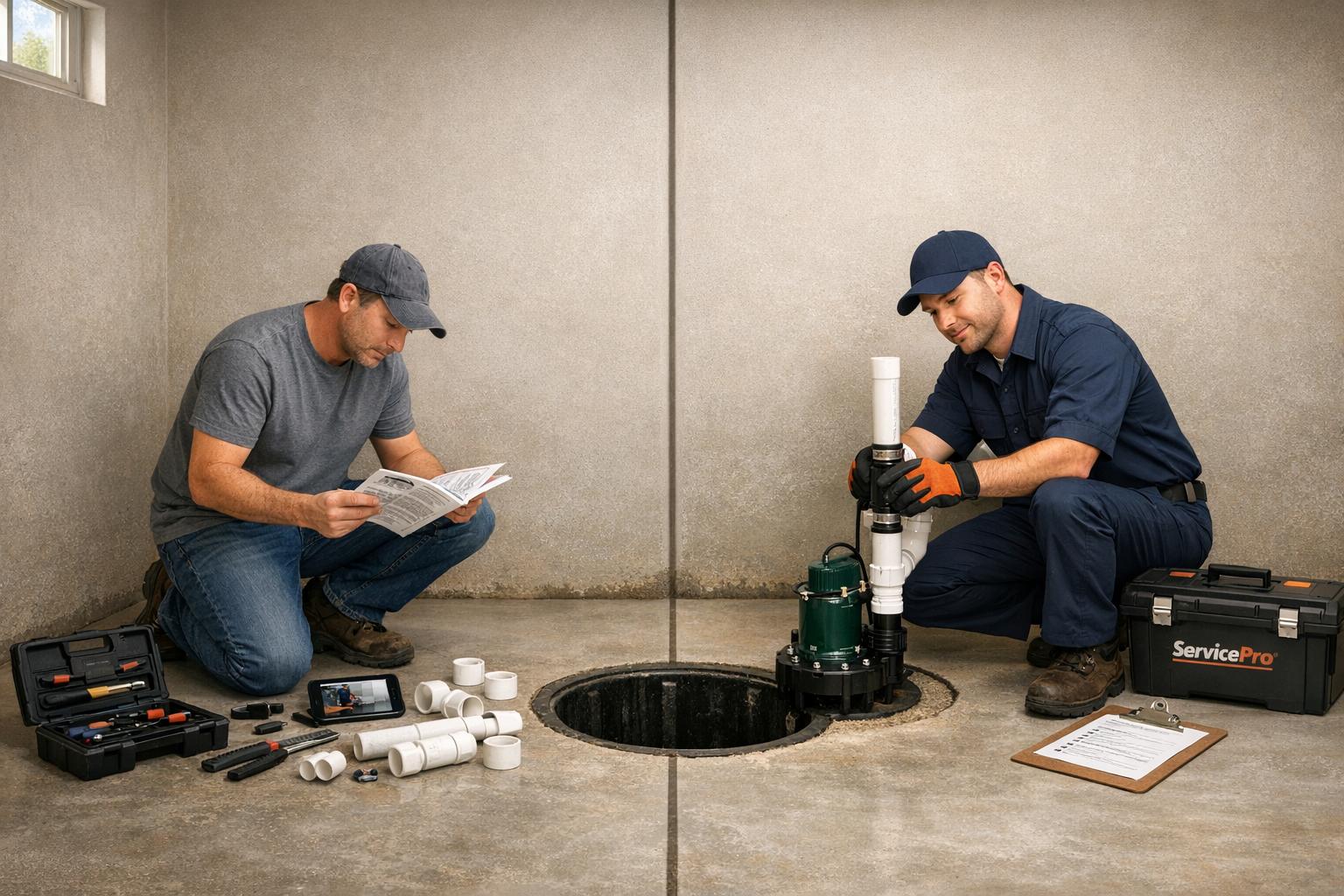
Installing a sump pump is crucial for protecting your basement from flooding, especially in areas like Maryland with frequent rainfall and high water tables. You can choose to install it yourself or hire a professional, but each option has its pros and cons.
- DIY Installation: Saves money on labor (around $300–$800) and offers control over the process. However, it requires skills in plumbing, electrical work, and concrete cutting, along with tools like a jackhammer and drill. Mistakes, like poor placement or improper drainage, can lead to pump failure. Costs range from $250–$1,900 for materials and tools.
- Professional Installation: Costs more upfront ($500–$3,000+), but ensures proper setup, compliance with building codes, and includes a workmanship warranty. Professionals handle complex tasks like pit excavation, electrical connections, and drainage integration, reducing risks of future issues.
Key Takeaway: DIY is suitable for simple replacements if you have the skills and tools. For new installations or complex setups, hiring a professional ensures reliability and long-term performance.
What You Need for DIY Sump Pump Installation
Required Tools and Materials
Getting ready for a DIY sump pump installation means gathering a mix of basic tools and specific plumbing materials. You’ll need tools like a drill, shovel, and level to properly position the sump basin. If you’re dealing with a concrete basement floor, a jackhammer is essential [4][5]. On the materials side, the list includes a sump pump unit (costing anywhere from $150 to $1,500), a pit liner or basin, gravel for drainage, PVC piping, a check valve, and concrete mix [2][4].
Don’t forget about power – install a GFCI outlet or a dedicated electrical source to safely operate the pump in a damp environment [4]. When choosing a pump, submersible models ($300 to $900) are known for their durability and efficiency, while pedestal pumps ($150 to $400) are easier to maintain but less robust [2]. Plan to spend an extra $100 to $300 on items like sump pit liners, discharge pipes, and fittings [2]. The project typically takes 4 to 8 hours, depending on your skill level and the layout of your basement [4]. Once you have your tools, materials, and time set aside, assess whether you’re ready to handle the technical aspects of the job.
Skills and Knowledge Needed
Even with the right tools and materials, a successful sump pump installation depends on your technical abilities. This project often involves tasks like electrical wiring, concrete cutting, and precise plumbing work. As Mr. Handyman explains:
While some homeowners may be tempted to try this as a DIY project, sump pump installation often involves electrical work, concrete cutting, and precision plumbing – making it a task best handled by a licensed professional [5].
To tackle this yourself, you’ll need a solid grasp of plumbing systems, electrical wiring, and local building codes. For instance, installing components like check valves and discharge lines requires precision [4][5]. You’ll also need to understand your home’s foundation and how water naturally flows to pinpoint the best spot for the sump pit [5]. Comfort with heavy tools like jackhammers and the ability to correctly route discharge lines away from your home’s foundation are also critical [5]. Make sure you check for any necessary permits and evaluate your readiness for both the physical and technical demands of the installation.
Common DIY Mistakes
To avoid costly errors, be aware of these common pitfalls during installation:
- Overlooking the check valve, which can cause water to flow back into the pit and force the pump to run continuously [4].
- Improperly sloping the discharge line, leading to water draining back toward your home’s foundation [4].
- Leaving debris in the sump pit or failing to remove old components, which can clog the system and cause pump failure [2].
- Neglecting routine maintenance, which reduces the pump’s lifespan and increases the chance of failure during heavy storms when it’s needed most.
sbb-itb-843f8be
Why Hire a Professional for Sump Pump Installation
Professional Knowledge and Building Code Requirements
When it comes to sump pump installation, licensed professionals bring the expertise and safety measures that DIY attempts often lack. These plumbers have the necessary training to handle tasks like wiring GFCI outlets – an essential step in damp environments. Depending on the complexity, this can cost anywhere from $300 to $4,000 [3].
Another critical factor is pump sizing. Professionals ensure the pump is matched to your home’s specific water volume and foundation needs. Too small a pump could overwork and fail, while one that’s too large wastes energy and money [1][3]. As Harris Plumbing puts it:
A licensed journeyman plumber is the best choice to install your sump pump properly and safely [1].
Professionals also handle permits, which typically cost between $50 and $300, ensuring your installation complies with local codes. This not only protects your investment but also preserves your home’s resale value and insurance eligibility. Alex Riza from Mr. Pipey emphasizes:
Hiring a qualified plumber is your best defense against the common mistakes that can happen with a DIY job… which could lead to electrical hazards or the very basement flood you’re trying to prevent [3].
Their expertise doesn’t stop at installation – they also ensure your sump pump integrates seamlessly with your home’s drainage system.
Connecting to Existing Drainage Systems
Professionals excel at connecting sump pumps to existing drainage systems, ensuring everything works together efficiently. They determine the best pit placement by analyzing your home’s natural water flow [1][5].
Discharge lines are routed properly, and check valves are installed to prevent backflow, with the discharge terminating far enough from your foundation to avoid water damage [3]. For homes with more complex setups, professionals can tie the sump pump into French drains, floor drains, or dry wells, creating a more comprehensive water management system [1][5].
Labor costs for a standard installation range from $255 to $377, but if system integration is required, expenses can climb to $1,000 to $2,500 [2][3]. Hiring a professional ensures everything is done right the first time, saving you from costly mistakes and potential water damage.
Beginner’s Guide to Installing and Piping a Sump Pump Correctly | Basement and Flood Prevention
DIY vs. Professional Installation Comparison
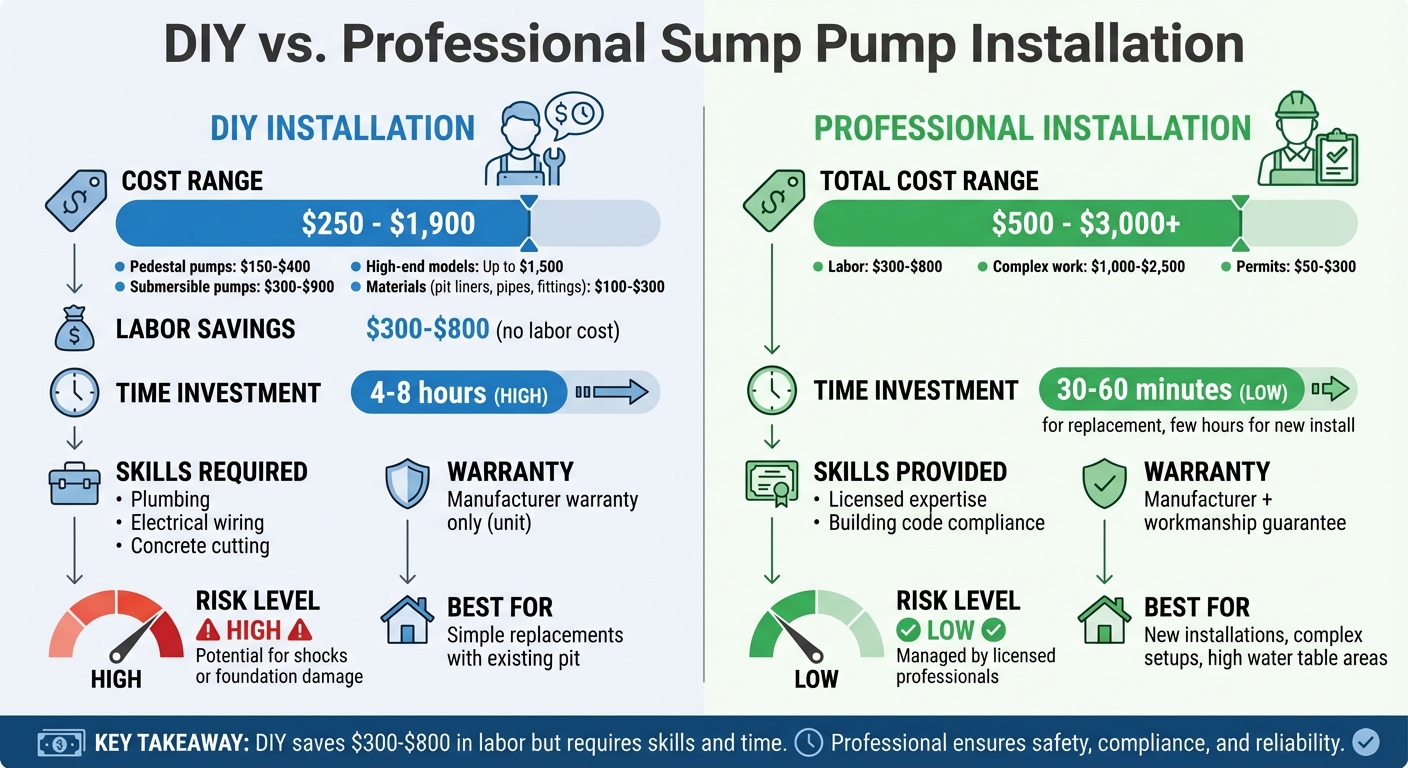
DIY vs Professional Sump Pump Installation Cost and Time Comparison
Cost, Time, and Reliability Breakdown
When deciding between DIY and professional installation, it’s important to weigh the upfront savings against potential long-term risks. While skipping labor costs – usually between $300 and $800 – can make DIY appealing, errors during installation could lead to significant problems later on [2].
Here’s a breakdown of the key differences in cost, time, and reliability:
| Feature | DIY Installation | Professional Installation |
|---|---|---|
| Estimated Cost | $250 – $1,900 (unit + materials) | $500 – $3,000+ (unit + materials + labor) |
| Time Investment | High; involves digging, plumbing, and wiring | Low; completed in just a few hours |
| Required Skills | Plumbing, electrical wiring, concrete cutting | Licensed expertise and knowledge of building codes |
| Warranty Coverage | Unit only (manufacturer warranty) | Manufacturer warranty plus workmanship guarantee |
| Safety Concerns | Risk of shocks or foundation damage | Managed by licensed professionals following safety codes |
| Long-term Performance | May fail early due to poor placement | Optimized with proper sizing and thorough testing |
This table underscores the importance of proper installation to avoid issues like water damage or foundation problems.
DIY installations may save you money upfront but require significant time, effort, and technical knowledge. On the other hand, professional services handle the job quickly, ensure compliance with safety codes, and include both labor and manufacturer warranties for added peace of mind.
Additionally, professional installers perform thorough testing, such as checking float switches and backup systems, to ensure the setup can handle heavy storms reliably [1].
Installation Costs: DIY vs. Professional
DIY Installation Expenses
When you opt to tackle the installation yourself, your primary expenses will revolve around materials and tools – there’s no labor cost to factor in. Here’s a quick breakdown of material costs:
- Pedestal pumps: $150–$400
- Submersible pumps: $300–$900
- High-end models (with Wi-Fi monitoring or battery backup): Up to $1,500
On top of the pump itself, you’ll need additional materials like pit liners, discharge pipes, and fittings, which can add $100 to $300 to your total. If you don’t already own the necessary tools, expect to spend several hundred dollars more. In total, DIY installation costs can range from $250 to $1,800, depending on the type of pump and any added features.
Professional Installation Pricing
Hiring a professional means factoring in labor costs, which typically range from $300 to $800, bringing the total to $500 to $3,000 on average. However, several variables can push costs higher:
- Excavating a new pit or rerouting discharge pipes: $1,000–$2,500
- Cleanup and disposal: $100–$500
- Additional disposal fees: $50–$200
If you’re in areas like Baltimore or the DC suburbs, labor costs can climb up to 30% higher than the national average due to the higher cost of living [2].
Want to save a bit? Clearing the area around the sump pit and moving furniture before the technician arrives can cut $50 to $200 off your final bill [2]. While professional installation comes with a higher upfront cost, the added expertise can ensure a more reliable system in the long run.
Choosing Between DIY and Professional Installation
The decision between tackling a sump pump installation yourself or hiring a professional often boils down to the complexity of the job and your comfort with the technical requirements.
When DIY Makes Sense
DIY is a great option for straightforward tasks, like replacing an old pump in an accessible basement. If you’ve got basic plumbing tools – think a drill, pipe cutter, and wrench – and a bit of know-how with simple electrical work, you could save $300 to $800 in labor costs [2]. These projects typically involve swapping out the old pump for a new one without needing to alter the sump pit or discharge lines.
Before diving in, it’s worth double-checking whether the pump actually needs replacing. Sometimes, the problem is as simple as a tripped circuit breaker, a loose plug, or a clogged inlet screen [3]. If everything else in the setup is functioning properly, DIY can be a cost-effective choice for homeowners who feel confident handling minor plumbing and electrical tasks.
That said, once the project becomes more involved, it’s often better to call in the pros.
When to Hire a Professional
Professional installation is the way to go for more challenging projects, like creating a brand-new sump pit. This type of work may involve breaking through concrete or working in cramped spaces, both of which can be tricky and even risky for a DIYer. Attempting such a project without proper expertise could lead to foundation damage or ineffective drainage.
Homes in areas with high water tables or frequent heavy rainfall also benefit from professional installation. A licensed plumber can ensure your sump pump integrates seamlessly with your home’s drainage system, routing water far enough from your foundation to prevent recycling back into the sump pit [1]. As Harris Plumbing explains:
A licensed journeyman plumber is the best choice to install your sump pump properly and safely [1].
If your project involves complicated electrical work, like setting up a battery backup system, or if local building codes require permits (which can cost $50 to $300 [3]), hiring a professional is a safer bet. The added expertise and safeguards they bring to the table can make the extra cost well worth it. By weighing these considerations, you’ll be better equipped to decide the right approach for your sump pump installation.
Pro Landscapes MD Drainage Services

Complete Drainage Services
Pro Landscapes MD provides a wide range of drainage solutions designed to tackle water problems across your property. Their services go far beyond just installing sump pumps – they focus on keeping your basement dry while safeguarding your foundation and landscape from potential long-term water damage.
Their process begins with a thorough site assessment to identify problem areas where water tends to collect. From there, they excavate an 18-inch sump pit, carefully lined with a durable basin and gravel, and install PVC discharge lines equipped with check valves to direct water safely away from your foundation [5][1].
What sets them apart is their integrated approach. They combine sump pumps with French drains, grading adjustments, and stormwater management systems. They also offer battery backup systems to ensure your drainage setup continues functioning during power outages – an essential feature for handling Maryland’s heavy storms [1]. These comprehensive solutions reflect Pro Landscapes MD’s dedication to protecting homes from water damage.
Maryland Service Areas
Understanding local conditions is crucial for effective drainage solutions, and Pro Landscapes MD has extensive experience in central Maryland. They serve Howard, Montgomery, Carroll, Frederick, Prince George’s, and Baltimore Counties, with regular service in cities like Ellicott City, Columbia, Bethesda, Silver Spring, Gaithersburg, Towson, and surrounding areas.
Their local expertise allows them to address Maryland’s specific drainage challenges, such as the clay-heavy soils in Howard County or fluctuating water table levels in different neighborhoods. Whether you’re in Potomac, Annapolis, or even Washington, DC, their team knows how to manage water issues influenced by regional soil types and weather patterns.
Conclusion
Deciding between a DIY approach and hiring a professional for sump pump installation boils down to your skillset, the complexity of the job, and how much risk you’re willing to accept. If you’re an experienced homeowner comfortable with plumbing and electrical work, handling a straightforward replacement could save you anywhere from $300 to $800 in labor costs [3]. However, when the project involves tasks like creating a new sump pit, cutting through concrete, or upgrading electrical systems, it’s best to leave it to the pros to avoid costly errors.
Professionals can typically complete standard sump pump replacements in just 30 to 60 minutes, while a DIY attempt might take 2 to 4 hours – or even longer [3]. Mistakes like faulty wiring, improper pump placement, or an insufficient discharge slope can lead to serious issues, including electrical hazards and basement flooding. These risks make professional installation a safer and more reliable choice [3].
Hiring professionals also brings peace of mind through benefits like workmanship warranties, adherence to building codes, and seamless integration with your home’s drainage system. This is especially crucial in Maryland, where understanding local conditions plays a key role in effective water management.
For homeowners in central Maryland – whether you’re in Howard County, Baltimore County, or nearby areas – Pro Landscapes MD offers drainage solutions that go beyond just sump pump installation. Their services include integrating French drains and battery backup systems, ensuring your basement stays dry even during the region’s heaviest storms. From managing water challenges in Ellicott City’s tricky terrain to tackling stormwater issues in Silver Spring, their local expertise helps safeguard your home for the long haul.
FAQs
Do I need a permit to install a sump pump in Maryland?
Yes, if you’re in Maryland, you’ll usually need a permit to discharge sump pump water into public rights-of-way. To make sure you’re following local rules, reach out to the Montgomery County Department of Permitting Services for detailed guidance and requirements.
What size sump pump do I need for my basement?
The right sump pump size largely depends on how much water your basement usually accumulates and the specific conditions of your property. For most residential basements, a pump with a capacity of 1,000 to 2,000 gallons per hour (GPH) is sufficient. However, if your home is in an area prone to heavy water intrusion, you may need a pump with a higher capacity. Key factors to consider include the size of your basement, how much water enters during heavy rainfall, and the dimensions of your sump pit. To ensure your pump is properly sized for effective performance and flood protection, it’s a good idea to consult a professional.
Where should the discharge line drain to avoid foundation problems?
To protect your home’s foundation, the discharge line needs to channel water away from the base of the house. Pooling water near the foundation can cause serious damage over time. Make sure the water is directed to a safe spot, like a drainage ditch or a sloped area, to prevent issues and maintain the foundation’s integrity.
Chat with Us