









- bhavya gada
- No Comments
Homeowners in Maryland often face basement flooding due to clay-heavy soil, frequent rainstorms, and high water tables. To protect your home, it’s essential to implement effective drainage solutions that address these challenges. Here are four key options:
- Interior Perimeter Drainage Systems: Redirect water inside the basement before it causes damage. Cost: $2,500–$7,000.
- French Drains (Exterior): Divert subsurface water away from the foundation. Cost: $3,200–$9,000.
- Sump Pumps: Remove water collected in a basement pit, especially during storms. Cost: $800–$2,500 (backup systems recommended).
- Exterior Drainage Systems: Prevent water from reaching your home using grading, swales, or catch basins. Cost: $1,500–$18,000+.
Each system has its strengths and maintenance needs. Combining multiple systems often provides the best protection for Maryland’s challenging weather and soil conditions.
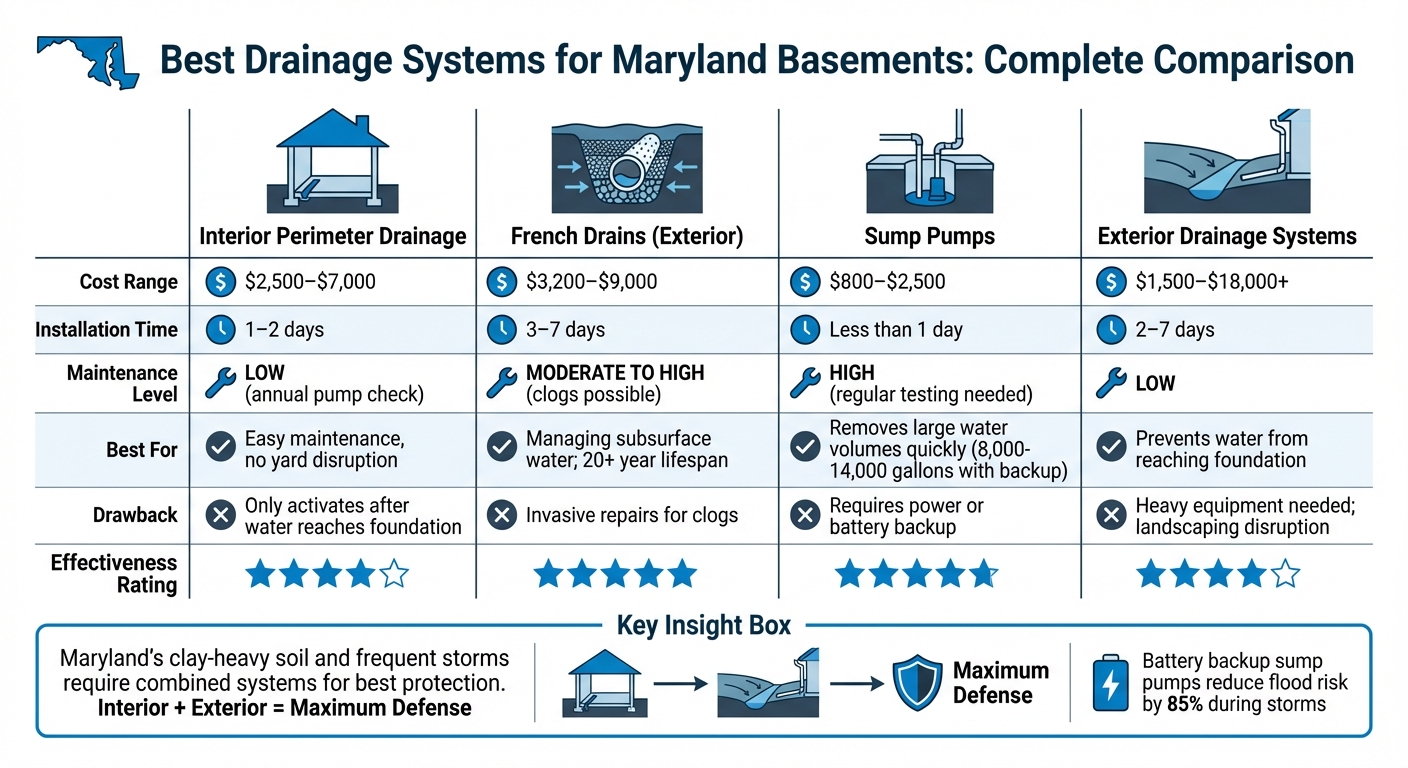
Maryland Basement Drainage Systems Comparison: Cost, Installation & Maintenance
What is the Best Basement Drainage System?
sbb-itb-843f8be
1. Interior Perimeter Drainage Systems
An interior perimeter drainage system works by intercepting groundwater at the basement floor-wall joint and channeling it away before it can seep into your home. Instead of attempting to block water from the outside, this system provides a controlled path for water to flow safely. As Oriole Basement Waterproofing puts it, "An interior system doesn’t fight hydrostatic pressure head-on; it outsmarts it. Instead of trying to block water outside, it creates a controlled path for it on the inside." [4]
The installation process is relatively straightforward. It involves digging a narrow trench along the perimeter of the basement, laying specially designed piping that resists clogging, and backfilling with clean gravel. Afterward, the concrete is re-poured for a smooth finish. Components include a perforated drainage channel, a membrane to handle wall seepage, clean gravel for filtration, and a sump pump to discharge water away from the house. Most systems can be installed in just one to two days [3][4].
Cost
In Maryland, the cost for an interior basement drainage system typically ranges from $2,500 to $7,000 [4].
Effectiveness in Maryland Climate
These systems perform well in Maryland due to the state’s clay-heavy soil, which tends to retain water and drain slowly against foundations [1][2]. Unlike exterior French drains, which can become clogged with mud and silt, interior systems are installed above the foundation footing, reducing the risk of blockages [3][4].
Maryland’s freeze-thaw cycles can also pose challenges, but interior systems can be equipped with features like IceGuard, which allows water to escape even if exterior discharge lines freeze [5]. Additionally, because storms in Maryland often cause power outages, having a battery-operated backup sump pump is essential. These pumps can handle between 8,000 and 14,000 gallons of water during an outage, offering peace of mind during severe weather [3].
With proper care, these systems provide dependable protection against Maryland’s demanding climate.
Maintenance Requirements
Compared to exterior solutions, interior drainage systems require less upkeep. The sump pump should be cleaned annually, and drainage lines can be flushed occasionally through accessible ports to prevent sediment buildup [3][4][5]. To maintain warranties and ensure the system functions properly, homeowners should schedule yearly inspections [4]. Battery backups should be checked regularly and replaced every three to five years to ensure they remain fully charged and ready to operate during emergencies [3].
2. French Drains
French drains are designed to manage subsurface water by using perforated pipes placed in gravel-filled trenches to redirect water away from your foundation. Instead of attempting to block water entirely, these drains create a controlled path for groundwater, preventing pressure buildup against basement walls. As Ed from Hawkins Landscaping explains, "French drains are one of the most effective drainage solutions for Maryland homes with clay soil." [1]
The installation process involves digging a trench near the foundation or at the base of slopes, lining it with gravel, and placing a perforated pipe wrapped in a filter. The most critical aspect of this system is the outlet, where the collected water is discharged. TLC Incorporated highlights this importance: "A French drain… is useless if the water has nowhere to go. That’s why we ALWAYS design outlet-first." [2] Common discharge points include pop-up emitters, dry wells, or daylight outlets where the pipe naturally exits.
Cost
The cost of installing a French drain in Maryland depends on the system’s length and complexity. A standard 50–75 ft system typically costs between $3,200 and $5,500. Larger systems over 100 ft with a well-designed outlet range from $6,000 to $9,000. For more extensive properties needing comprehensive solutions, such as a quarter to half-acre yard, costs can climb from $9,000 to over $18,000. [2]
For example, in December 2025, TLC Incorporated addressed a foundation pooling issue in Anne Arundel County. They installed a French drain paired with grading and a pop-up emitter for $5,800, reducing drainage time from days to just a few hours after heavy rain. [2]
Installation Complexity
Installing a French drain requires precise planning, especially in Maryland’s clay-heavy soil. The trench must be sized correctly and filled with enough gravel to prevent sediment from clogging the pipe. Wrapping the perforated pipe in filter cloth is crucial to block silt while allowing water to pass through.
The outlet design is equally vital. It must ensure proper slope and discharge capacity to avoid water backups. This approach of diverting water proactively is a key difference from interior systems and complements other flood prevention methods.
Effectiveness in Maryland Climate
French drains work particularly well in Maryland, where clay soils often retain water and drain poorly. When installed correctly, these systems can last over 20 years. Additionally, Maryland’s freeze-thaw cycles make proper drainage critical to prevent water from freezing near foundations or hardscapes, which could cause cracking and structural damage. [2]
Maintenance Requirements
One drawback of exterior French drains is their tendency to clog over time due to silt buildup, which may require excavation for repairs. Floodbusters Basements notes, "As time goes by and silt clogs up the system from flowing properly through it. To fix a clogged drain pipe you would need to dig out the foundation up to the footing." [3]
The most common failure points are poorly designed or blocked outlets. Homeowners should routinely check pop-up emitters for debris, watch for standing water or damp odors that could signal clogs, and keep gutters clear to reduce the water volume entering the system. Unlike interior perimeter systems, which can be flushed out more easily, exterior French drains often demand yard excavation for major repairs.
Proper installation by experts can maximize the lifespan and performance of a French drain, making it a reliable option for managing Maryland’s challenging drainage conditions.
3. Sump Pumps
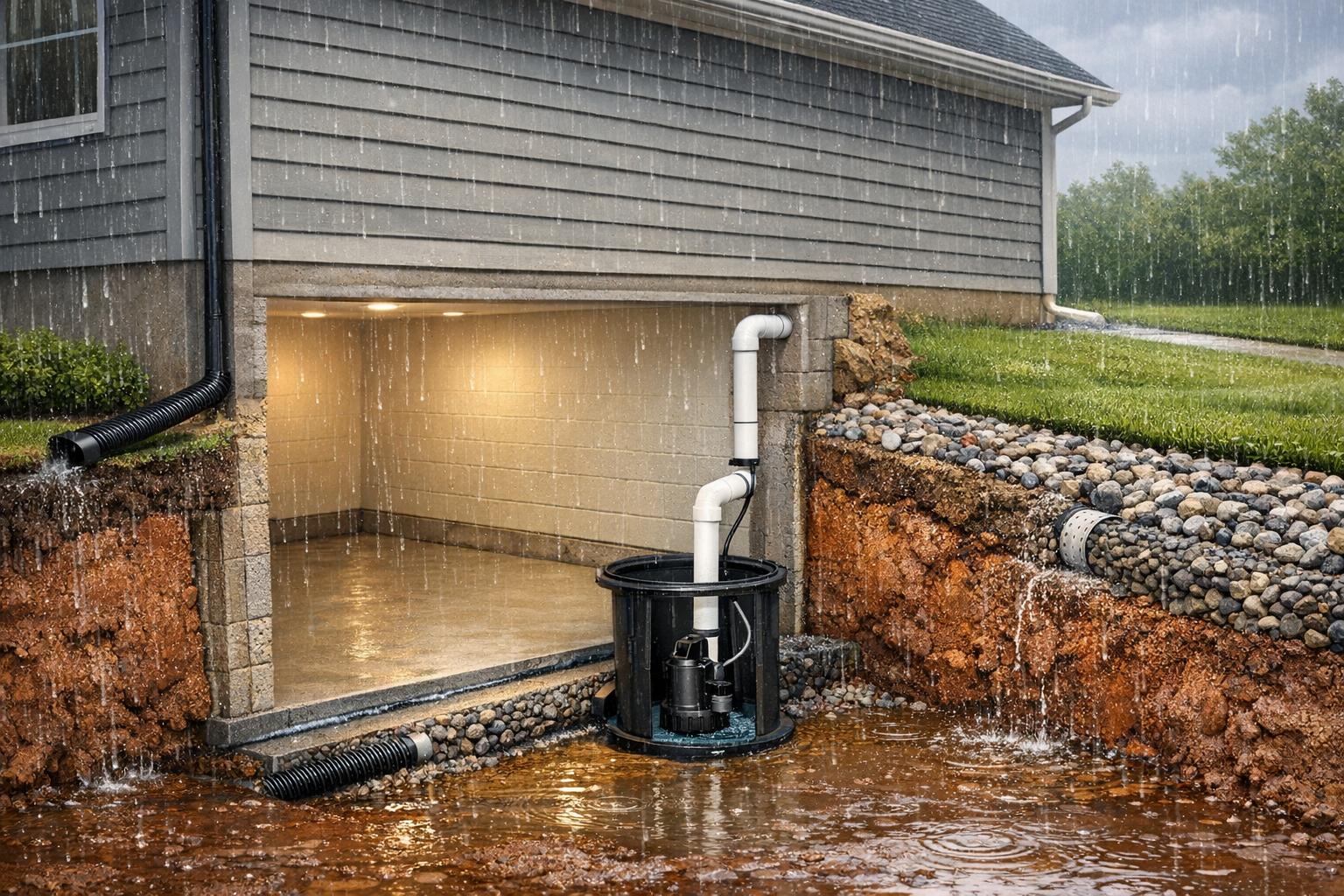
Sump pumps play a central role in keeping Maryland basements dry, working tirelessly to move water away from foundations. Installed in a pit that collects water from interior drains, these pumps automatically activate to expel water. As Floodbusters Basements aptly describes it, "The heart of our waterproofing system is the sump pump." [3]
This system is especially useful in Maryland, where clay-heavy soil tends to drain slowly and creates ongoing hydrostatic pressure against basement walls.
Cost
Sump pump systems are usually part of a larger waterproofing solution rather than standalone installations. In Maryland, a complete system – featuring a sump pump and interior perimeter drains – typically costs between $6,000 and $9,000 for standard setups. For homes requiring dual pumps or battery backups, the price can climb toward the upper end of that range. [2]
While battery backups add to the expense, they’re critical during power outages. A standard backup pump can manage 8,000 to 10,000 gallons of water on a single charge. Dual-battery setups extend that capacity to 12,000 to 14,000 gallons, offering extra peace of mind. [3]
Installation Complexity
Professional installation of a sump pump system generally takes less than two days. [3] The process includes cutting a pit into the basement floor, installing the pump basin, connecting it to the perimeter drainage system, and running a discharge line to a proper outlet. Maryland’s specific soil conditions and building codes make professional installation the best choice for most homeowners.
The discharge line must direct water far enough from the foundation to prevent it from re-entering the home. Common solutions include pop-up emitters or downhill daylight exits. To combat winter challenges like frozen discharge lines, systems often incorporate freeze protection features such as IceGuard vents. These vents allow water to escape even if the main line is blocked by ice, ensuring the system remains functional during Maryland’s unpredictable winters. [7]
Effectiveness in Maryland Climate
Sump pumps are indispensable in Maryland, where heavy rains, spring snowmelt, and freeze-thaw cycles put added pressure on foundations. These pumps, paired with interior drainage, help manage the state’s challenging weather conditions. However, as Floodbusters Basements points out:
"Sump pumps usually run out of your home’s electric power. The same storms, however, that are known to flood basements also tend to knock the power off. Without a battery backup, your sump pump will be down, just when you need it most." [3]
This makes battery backup systems a must-have for Maryland homeowners. Dual pump setups (primary and backup) significantly reduce the risk of flooding, lowering the likelihood of basement water damage by 85% during severe storms. [6] Investing in these systems is cost-effective, as every dollar spent on flood prevention saves approximately $7 in potential restoration costs. [6]
Maintenance Requirements
Regular upkeep is essential to keep sump pumps working efficiently. Annual professional maintenance is recommended, but homeowners should also test their systems ahead of Maryland’s rainy spring and late-summer hurricane seasons. Modern sump pumps come with access ports, allowing for easy cleaning of mud and debris without the need for major excavation. [7]
Key maintenance tasks include:
- Testing the pump’s automatic float switch
- Checking the battery backup system
- Inspecting the discharge line for clogs or freeze damage
- Cleaning debris from the pump basin
Placing the pump on a stone bed instead of mud helps prevent clogging. [7] Installing a high-water alarm can also provide early warnings of system failure or overwhelming water flow. Unlike exterior French drains, which may require yard excavation for repairs, interior sump pump systems are easier to service, making them a practical, long-term solution for Maryland homes. [8]
4. Exterior Drainage Systems
When it comes to protecting your home from water damage, exterior drainage systems act as the first line of defense by stopping water before it reaches your foundation. Unlike interior solutions that deal with water after it has entered the basement, these systems redirect water away from the home entirely. For Maryland homeowners, particularly those with clay-heavy soil that drains poorly, exterior drainage systems offer a proactive way to prevent flooding and water-related issues.
Some common exterior solutions include:
- Grading and regrading: Reshaping the soil to slope away from the foundation.
- French drains: Perforated pipes buried in gravel trenches to handle subsurface water.
- Surface drains and catch basins: Designed to capture water from surfaces like patios and driveways.
- Swales and dry creek beds: Channels, often lined with rocks, that direct runoff away from the property.
- Downspout extensions: Simple yet effective pipes that carry roof water away from the foundation.
In many cases, combining several of these methods provides the best results for flood prevention.
Cost
The cost of exterior drainage systems can vary significantly based on the size and complexity of the project. Here’s a general breakdown:
- Grading or re-sloping: $1,500 to $3,000
- Surface swales: $1,800 to $5,000 for installations ranging from 20 to 100 feet
- Dry creek beds: $4,800 to $15,000 or more for 40- to 80-foot installations
- Catch basins and surface drains: $700 to $2,500 per zone
- Dry wells: $1,200 to $3,000
For larger properties (around a quarter- to half-acre), a hybrid system incorporating grading, French drains, catch basins, and downspout extensions can range from $9,000 to $18,000 or more. For example, a December 2025 project in Howard County involved a $12,600 hybrid system that resolved slope issues, protected the foundation, and restored lawn usability.
Installation Complexity
Installing exterior drainage systems is a labor-intensive process that often requires heavy machinery, making it ideal for new builds or major landscaping projects. Proper grading, for instance, needs skilled operators to ensure water flows away from the home. Poorly executed grading can lead to the opposite effect – water pooling near the foundation.
Maryland’s clay soil poses additional challenges. Its poor drainage and tendency to retain water mean that exterior systems must be carefully designed to handle the resulting hydrostatic pressure. French drains, for example, require a well-planned outlet to ensure water is effectively discharged. If footing drains – installed at the base of the foundation – become clogged with silt, repairs can be costly and invasive. As one expert from Floodbusters Basements explained:
"To fix a clogged drain pipe you would need to dig out the foundation up to the footing."
– Floodbusters Basements
Effectiveness in Maryland Climate
Exterior drainage systems are particularly well-suited to Maryland’s demanding climate. The state’s clay soil, heavy spring rains, intense summer storms, and freeze-thaw cycles all contribute to foundation stress. By diverting water before it saturates the soil around your home, these systems help prevent the buildup of hydrostatic pressure that can force water through foundation walls.
In one notable case from December 2025 in Ellicott City, a homeowner installed a $9,200 dry creek bed with riprap and a swale. The project not only stopped rainwater erosion on a sloped backyard but also added a visually appealing landscape feature. Proper drainage is especially critical in Maryland’s climate, as water freezing in the soil can lead to ground shifts that crack driveways, patios, and walkways.
Maintenance Requirements
Like interior systems, exterior drainage setups need regular maintenance to stay effective. Here are a few key tasks:
- Gutters and downspouts: Keep them clear of debris to ensure proper water flow.
- Catch basins and surface drains: Regularly remove leaves and sediment, especially during fall and after storms.
- Downspout extensions: Ensure they discharge water several feet away from the foundation.
- Yard inspections: After heavy rains, check for pooling or erosion, which may indicate blockages.
While grading and swales require minimal maintenance once installed, French drains are more prone to clogging over time. Repairs often involve significant yard excavation, especially in Maryland’s clay-heavy soil. The area’s freeze-thaw cycles and frequent storms make regular system inspections a must to avoid costly damage.
For homeowners in central Maryland, Pro Landscapes MD offers a range of professional exterior drainage services, including French drains, grading, dry creek beds, and stormwater management across Howard County, Montgomery County, Carroll County, Frederick County, Prince George’s County, and Baltimore County.
Advantages and Disadvantages
Here’s a breakdown of the key benefits and challenges of various drainage systems, helping Maryland homeowners decide which option fits their flood prevention needs.
Interior perimeter drainage systems are a long-term solution with easy access for maintenance. You can flush these systems to prevent clogs without disturbing the foundation. However, they only activate after water has already reached your foundation, and they rely on a working sump pump to remove the water.
French drains are particularly effective in managing Maryland’s clay soil and subsurface water. When installed correctly, they can last over 20 years and maintain your yard’s appearance since they’re buried underground. On the downside, these systems can accumulate silt over time, and fixing blockages can be invasive and expensive.
Sump pumps are a powerhouse for flood control, capable of moving thousands of gallons of water during storms. With battery backups, they remain operational even during power outages. Floodbusters Basements calls them "the heart of a waterproofing system." [3] However, they demand regular testing and upkeep, as a malfunction during a storm could lead to significant flooding.
Exterior drainage systems, like grading and swales, take a proactive approach by diverting water away from your foundation before it becomes an issue. These systems typically require minimal maintenance once installed. That said, their installation can be disruptive, requiring heavy machinery and significant excavation, making them better suited for new builds or large-scale renovations.
| System | Cost Range | Installation Time | Maintenance | Best Advantage | Main Drawback |
|---|---|---|---|---|---|
| Interior Perimeter Drain | $2,500–$7,000 | 1–2 days | Low (annual pump check) | Easy to maintain; no yard disruption | Activates only after water reaches foundation |
| French Drain (Exterior) | $3,200–$9,000 | 3–7 days | Moderate to High (clogs possible) | Manages subsurface water; durable | Invasive repairs for clogs |
| Sump Pump | $800–$2,500 | Less than 1 day | High (regular testing needed) | Removes large amounts of water quickly | Requires power or battery backup |
| Exterior Drainage (Grading/Swales) | $1,500–$18,000+ | 2–7 days | Low | Prevents water from reaching foundation | Heavy equipment needed; landscaping may be affected |
For Maryland homeowners facing challenges like clay-heavy soil and frequent rain, combining multiple systems often yields the best protection. Pro Landscapes MD specializes in creating tailored drainage solutions for properties in Howard County, Montgomery County, and nearby areas, ensuring each system meets the unique needs of the site.
Conclusion
Combining advanced techniques with a hybrid approach is essential to safeguard your Maryland basement from flooding. Maryland’s unpredictable weather calls for drainage systems that work together effectively. A full-perimeter interior drainage system, complemented by a dependable sump pump, forms the backbone of any waterproofing strategy. As Floodbusters Basements explains, "The best way to fix a wet basement is to have a full-perimeter drainage system installed in your basement." [3] This interior method not only simplifies maintenance but also avoids the excavation challenges often associated with older exterior systems.
That said, relying solely on interior solutions isn’t enough. Maryland’s clay-heavy soil generates hydrostatic pressure, making exterior measures just as critical. Techniques like grading, French drains, and downspout extensions help divert water away from the foundation before it becomes an issue. A well-designed outlet system – featuring pop-up emitters or dry wells – ensures water is discharged efficiently [2].
Given Maryland’s storm patterns, having a battery backup for your sump pump is non-negotiable. Modern systems can handle between 8,000 and 14,000 gallons during power outages [3], offering peace of mind when severe weather strikes.
If you’re a homeowner in Howard County, Montgomery County, Carroll County, Frederick County, Prince George’s County, or Baltimore County, Pro Landscapes MD provides tailored drainage solutions to meet Maryland’s unique challenges. Their services include French drain installation, grading, drainage repair, and stormwater management. By addressing both surface and subsurface water concerns, they ensure your basement stays dry and protected for years to come. With expert assessment and proper installation, integrating interior and exterior strategies creates a strong defense against flooding.
FAQs
Do I need interior drains, exterior drains, or both?
When deciding between interior and exterior drainage systems, it all comes down to your property’s specific conditions and how you need to manage water. Interior drainage systems work best for tackling issues like basement flooding or groundwater seepage in existing homes. On the other hand, exterior solutions – such as French drains or regrading – focus on controlling water at its source, keeping it away from your foundation. In many cases, using both systems together provides the most effective protection, especially in Maryland, where frequent rain and clay-heavy soils can create persistent drainage challenges.
How do I know where my drain system should discharge?
To figure out where your drain system should release water, pick an outlet that safely directs it away from your home’s foundation and basement. Some common choices include dry wells, stormwater management areas, or sloped drainage zones. For underground systems, such as French drains, make sure the discharge point is located far enough from your house to avoid water pooling. Steer clear of releasing water onto neighboring properties or spots that are prone to erosion or excessive water buildup.
What’s the best sump pump backup for power outages?
When it comes to protecting your basement during power outages, a battery backup system is your best bet. Systems like the UltraSump® Battery Back-up operate without electricity and can pump thousands of gallons of water before requiring a recharge. This gives you peace of mind, knowing your basement remains safe even during prolonged outages.
Chat with Us