









- bhavya gada
- No Comments
Planting drought-tolerant shrubs is a smart way to conserve water and create a thriving landscape. These shrubs, especially Maryland-native varieties like Northern Bayberry and Adam’s Needle Yucca, require less irrigation once established and support local wildlife. Here’s the step-by-step process:
- Assess Your Site: Check sunlight, soil drainage, and compaction. Test soil pH and nutrients before planting.
- Choose the Right Shrubs: Pick younger, native plants that match your soil and light conditions.
- Plant Properly: Dig a wide, shallow hole, keep the root flare exposed, and backfill with native soil.
- Water and Mulch: Water deeply and consistently for the first two years. Apply 2–3 inches of mulch, keeping it away from the trunk.
- Care for the Long Term: After two years, most shrubs rely on rainfall. Use drip irrigation for efficiency and minimize pruning.
Follow these steps to build a water-efficient yard that thrives even in droughts.
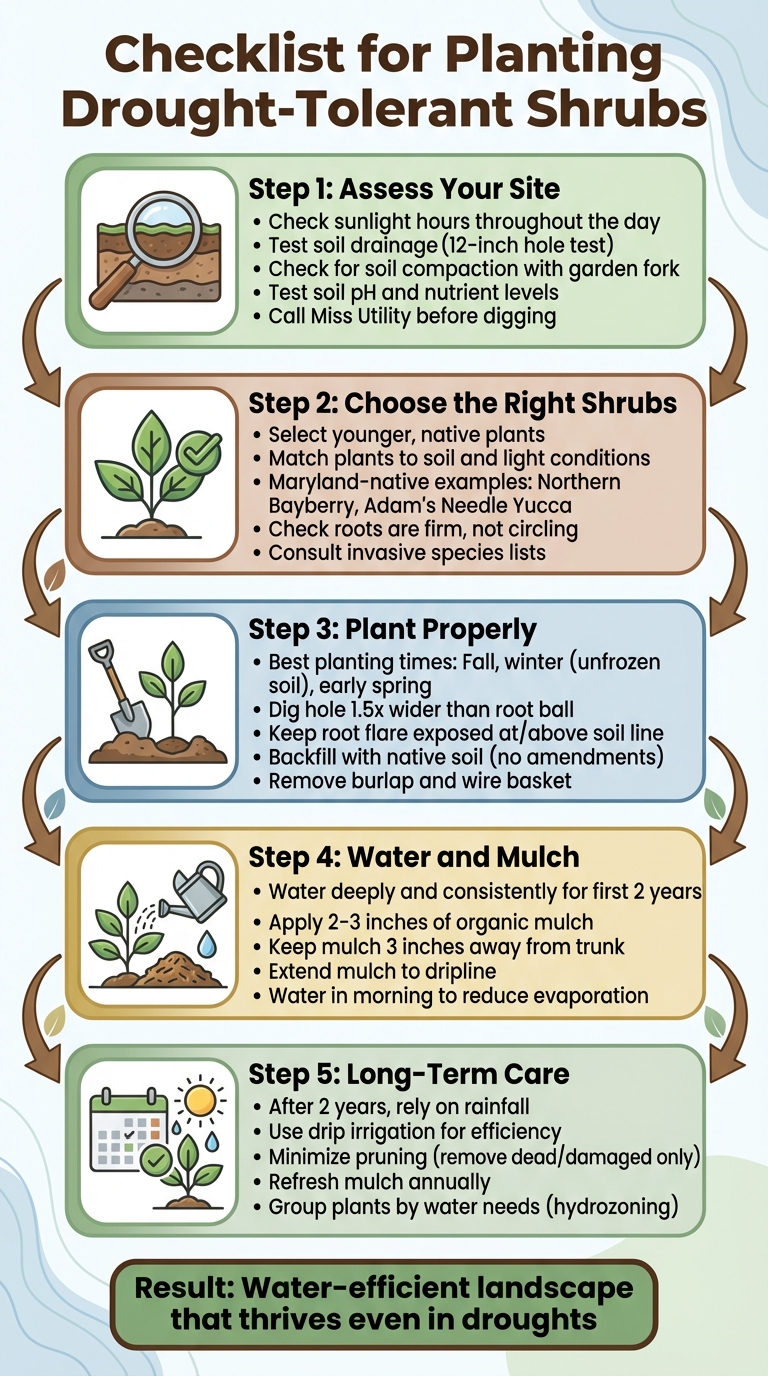
5-Step Process for Planting Drought-Tolerant Shrubs in Maryland
Preparation Checklist
Assessing Site Conditions
Before buying any shrubs, take a walk around your property to evaluate the areas where you plan to plant. Start with sunlight – track how many hours of direct sun each spot gets throughout the day. The University of Maryland Extension advises:
Begin by choosing the appropriate tree or shrub for the amount of sunlight the site will receive [1].
Next, check the drainage of your soil. To do this, dig a 12-inch-deep hole and fill it with water. If the water drains within a few hours, the site is likely suitable. Poor drainage, however, can lead to root rot. As the Extension explains:
Most trees need well-drained soil and are susceptible to root rot on wet sites [1].
You’ll also want to check for soil compaction by using a garden fork, and take note of any microclimates – for example, areas near south-facing walls or paved surfaces that might retain extra heat or moisture. Don’t forget to call Miss Utility before digging to locate any underground utility lines [1]. Once you’ve assessed these factors, you can move on to testing and improving your soil.
Soil Testing and Amendments
Testing your soil’s pH and nutrient levels is a crucial step before planting. The University of Maryland Extension recommends:
Check the soil pH and nutrient levels by testing the soil before planting [1].
If your soil isn’t compacted but could use improvement, spread 2–3 inches of compost over the area and mix it into the top 6 inches. This method helps roots grow outward instead of staying confined to a small, enriched area [1]. Adding organic material regularly also enhances your soil’s ability to retain water and nutrients, which is especially important given Maryland’s increasing drought conditions [2]. Once your soil is prepared, you’re ready to choose shrubs that will thrive in your specific environment.
Selecting the Right Shrubs
Using your site and soil assessment as a guide, choose shrubs that match your property’s sunlight and drainage conditions. Make sure the location can accommodate the shrub’s full mature size [1]. Smaller, younger shrubs are often a better choice, especially Maryland-native varieties like Northern Bayberry (Myrica pensylvanica) and Adam’s Needle Yucca (Yucca filamentosa). When buying container-grown plants, inspect the roots to ensure they’re firm and not circling inside the container.
Prioritizing Maryland-native shrubs not only supports local wildlife but may also make you eligible for state rebates in some areas [1]. Lastly, consult local invasive species lists to avoid planting anything that could harm Maryland’s ecosystem [1].
sbb-itb-843f8be
10 DROUGHT-TOLERANT SHRUBS TO BOOST YOUR GARDEN’S RESILIENCE 🌺🌞🌳 // Gardening Ideas
Planting Checklist
With your soil prepped and your shrubs selected, follow these steps to ensure strong growth and drought resistance.
Choosing the Right Time to Plant
The best times to plant in Maryland are fall, winter (as long as the soil isn’t frozen), and early spring. The University of Maryland Extension highlights this:
Fall, winter (soil should not be frozen), and early spring are the best times to plant trees and shrubs [1].
Avoid planting in summer, as shrubs with full leaves don’t transplant well [1]. For broadleaf evergreens, spring is typically the safest, though species like boxwoods and hollies can be planted in early fall if you’re ready to commit to consistent deep watering and mulching [1].
Once you’ve nailed the timing, it’s time to focus on preparing the planting hole.
Digging and Preparing the Planting Hole
Start by finding the root flare – this is where the roots meet the trunk. Gently remove some of the nursery soil from the top of the root ball to expose it. Measure from the top-most root to the bottom of the root ball; this will determine how deep to dig the hole [3].
Dig a hole that’s 1.5 times wider than the root ball, but match the depth exactly so the root flare stays at or slightly above the soil line [1]. According to the University of Maryland Extension, adding organic matter to the planting hole can actually hinder root development and, in some cases, harm young plants [1].
- For container plants: Loosen any circling roots.
- For balled-and-burlapped shrubs: Remove all twine and cut away at least the top 12 inches of burlap and the wire basket after positioning the plant [1].
Watering and Soil Backfilling
Once your shrub is in place, it’s time to backfill and water correctly. Use the native soil from the hole to fill in around the root ball. Skip tamping down the soil; instead, use a gentle stream of water to settle it and eliminate air pockets [1]. For the first watering, an open hose end or showerhead nozzle works best – avoid sprinklers [4].
Water thoroughly until runoff appears, then reapply to ensure the roots are deeply soaked [4]. Watering in the morning helps reduce evaporation [4]. Lastly, make sure the root flare remains visible and slightly above the soil surface – planting it too deeply is a common reason shrubs fail to thrive [1]. These steps not only conserve water but also help roots establish properly, setting the stage for a healthy, drought-tolerant plant.
Initial Care and Mulching
Once your shrubs are planted, the first growing season is all about helping them develop a strong root system. This involves proper mulching and watering techniques.
Applying Mulch
Spread a 2–3 inch layer of organic mulch – such as wood chips, shredded bark, pine needles, or leaves – around your shrubs. This helps the soil retain moisture and promotes gradual water absorption. Keep the mulch at least 3 inches away from the shrub’s trunk and extend it out to the dripline. As the mulch breaks down, it will naturally enrich the soil with nutrients [2].
Mulching out to the dripline also reduces competition from grass, which would otherwise steal water from the shrub during dry spells. Before you apply mulch, ensure the soil around the plant and root ball is well-moistened. Avoid piling mulch against the trunk; the root flare should remain visible.
Watering Practices
Even drought-tolerant shrubs need consistent care during their first two years. Deep, infrequent watering helps roots grow deeper into the soil, instead of staying near the surface [1][2]. Check the soil several inches down; water only when it feels dry [1].
Use tools like a rain gauge to measure rainfall and adjust your watering schedule as needed [2]. Soaker hoses or drip irrigation systems are ideal because they deliver water slowly and directly to the root zone, reducing waste [2]. Water early in the morning to minimize evaporation and reduce the risk of diseases that thrive on wet foliage [2].
Monitoring Plant Health
Keep an eye on your shrubs for early signs of stress. Wilting is often the first indicator of water stress, signaling that the plant is losing water faster than it can absorb it [2]. Other symptoms to watch for include leaves curling or rolling upward, yellowing or browning edges, undersized leaves, and slow shoot growth [2]. For evergreens, look for interior needle or leaf drop [2].
Stressed plants are more prone to pests like borers and spider mites, as well as diseases like Botryosphaeria [2]. If you notice these issues, increase watering and check that your mulch layer is still 2–3 inches deep. During droughts, prioritize watering young shrubs over lawns or annual flowers [2]. By staying vigilant, you can help your shrubs build resilience for the long term.
Long-Term Maintenance
After the initial establishment phase, the focus shifts to keeping your shrubs healthy with minimal effort while taking advantage of natural rainfall. By the time your drought-tolerant shrubs hit the two-year mark, they’re usually well-rooted and need much less care, leaving nature to handle most of the work.
Reducing Watering Needs
Once your shrubs are established, they can often thrive on rainfall alone. To help the soil hold onto moisture, regularly add organic matter and refresh mulch each year. Mulch not only keeps the soil cool but also slows down evaporation. If you’re still using sprinklers, consider switching to drip irrigation or soaker hoses. These options deliver water directly to the roots, cutting down on waste. Don’t forget to manage weeds – they’ll compete with your shrubs for water, which can be especially problematic in dry conditions. [2]
Pruning and Fertilization
Drought-tolerant shrubs don’t need much fertilization, especially in the first few years after planting. In fact, adding nitrogen early on can actually hinder root development rather than help. Keep pruning to a minimum – focus on removing dead, damaged, or diseased branches. Over-pruning can put unnecessary stress on the plant, so it’s best to keep it light. These small changes can make a big difference in reducing maintenance and improving the plant’s ability to handle dry spells. [1]
Hydrozoning for Efficiency
Hydrozoning is a smart way to group plants based on their water needs. By clustering drought-tolerant shrubs together, you can rely mostly on rainfall for irrigation. Meanwhile, plants that need more water, like vegetables or annuals, can be placed in separate zones with targeted watering. This setup makes it easier to manage different watering schedules and use the right equipment for each area. During drought conditions, prioritize watering young trees and shrubs while cutting back on irrigation for established lawns and annual plants. [2]
Benefits of Professional Landscaping Services
Professional landscaping services can take your drought-resistant landscape to the next level by refining every step of the process.
Expert Site Assessment and Planning
The foundation of a successful drought-tolerant landscape starts with understanding the site conditions. Pro Landscapes MD conducts thorough evaluations, checking soil pH, nutrient levels, and drainage before planting begins. Ensuring proper drainage is key to preventing root rot, and their attention to these details makes a big difference. They also collaborate with Miss Utility to locate underground utility lines, avoiding potential damage to electrical, gas, or water systems during excavation [1].
Custom Plant Selection and Installation
Choosing the right plants is essential for a thriving landscape. Pro Landscapes MD’s horticulturists focus on Maryland-native species like Northern Bayberry and Arrowwood Viburnum, which are naturally suited to the local climate. They also select disease-resistant varieties to promote healthier, longer-lasting growth [1] [2].
Installation is another area where professionals excel. They carefully identify the root flare – the point where the roots meet the trunk – and ensure it stays at or slightly above the soil level. This prevents issues like oxygen deprivation, girdling roots, and bark diseases. Such precision during planting lays the groundwork for plants to thrive over the long term [1].
Ongoing Maintenance and Support
Proper planting is just the beginning. Pro Landscapes MD offers ongoing care to help plants adapt and flourish in Maryland’s unpredictable climate. They monitor root establishment and adjust watering based on the specific needs of each plant. This tailored approach is especially important, as drought-stressed plants are more vulnerable to pests and diseases [2].
For long-term water efficiency, they can design hydrozoning systems, which group plants with similar water requirements. This reduces water waste and ensures plants receive the care they need, even as drought conditions become more frequent in Maryland. Trees and shrubs, often labeled as "High Priority" during droughts due to their replacement costs and importance in the landscape, benefit greatly from this professional attention [2].
Conclusion
Planting drought-tolerant shrubs in Maryland takes careful planning, precise planting techniques, and ongoing attention. Start by testing your soil, choosing shrubs native to Maryland, and ensuring the root flare remains exposed during planting [1]. Even drought-tolerant plants need consistent watering during their first two years to support healthy root development [1].
Using mulch effectively, grouping plants with similar water needs (hydrozoning), and watering early in the day can help reduce upkeep while maximizing water use. In times of drought, focus your watering efforts on young shrubs rather than established turf – shrubs are a long-term investment and take years to replace [2]. This approach not only saves water but also helps maintain Maryland’s native ecosystems.
By following these steps, you can create a landscape that’s both resilient and water-efficient. If you need expert guidance, Pro Landscapes MD offers comprehensive services, including soil testing, native plant selection, and installing water-efficient irrigation systems. Their team serves communities across Howard, Montgomery, Carroll, Frederick, Prince George’s, and Baltimore Counties, as well as Washington, DC.
Whether you take a DIY approach or partner with Pro Landscapes MD, these strategies will help your drought-tolerant shrubs thrive with less water and effort.
FAQs
How can I tell if my soil drains well enough for shrubs?
To check how well your soil drains, try a percolation test. This simple method measures how fast water moves through the soil. Proper drainage is key because it prevents water from sitting around and damaging plant roots. If it takes hours for water to drain, it might be time to adjust the soil or improve drainage to keep your shrubs thriving.
What’s the easiest way to water new shrubs without wasting water?
The simplest way to water new shrubs effectively is to use deep, infrequent watering techniques like soaker hoses or drip irrigation systems. These methods focus on delivering water straight to the roots, which helps reduce both evaporation and runoff. To further conserve moisture, you can add mulch around the base of the shrubs. Mulch helps the soil retain water, meaning you won’t need to water as often. This combination encourages healthy root development while keeping water usage efficient.
When should I switch from regular watering to rainfall only?
Once your drought-tolerant shrubs have developed strong root systems – usually within a few weeks to a few months after planting – you can start relying on natural rainfall for their water needs. Keep an eye on local rainfall patterns to ensure your plants are getting enough water. If dry spells or droughts occur, you may need to provide extra watering until the shrubs are completely established and can withstand extended periods without additional water.
Chat with Us