









- bhavya gada
- No Comments
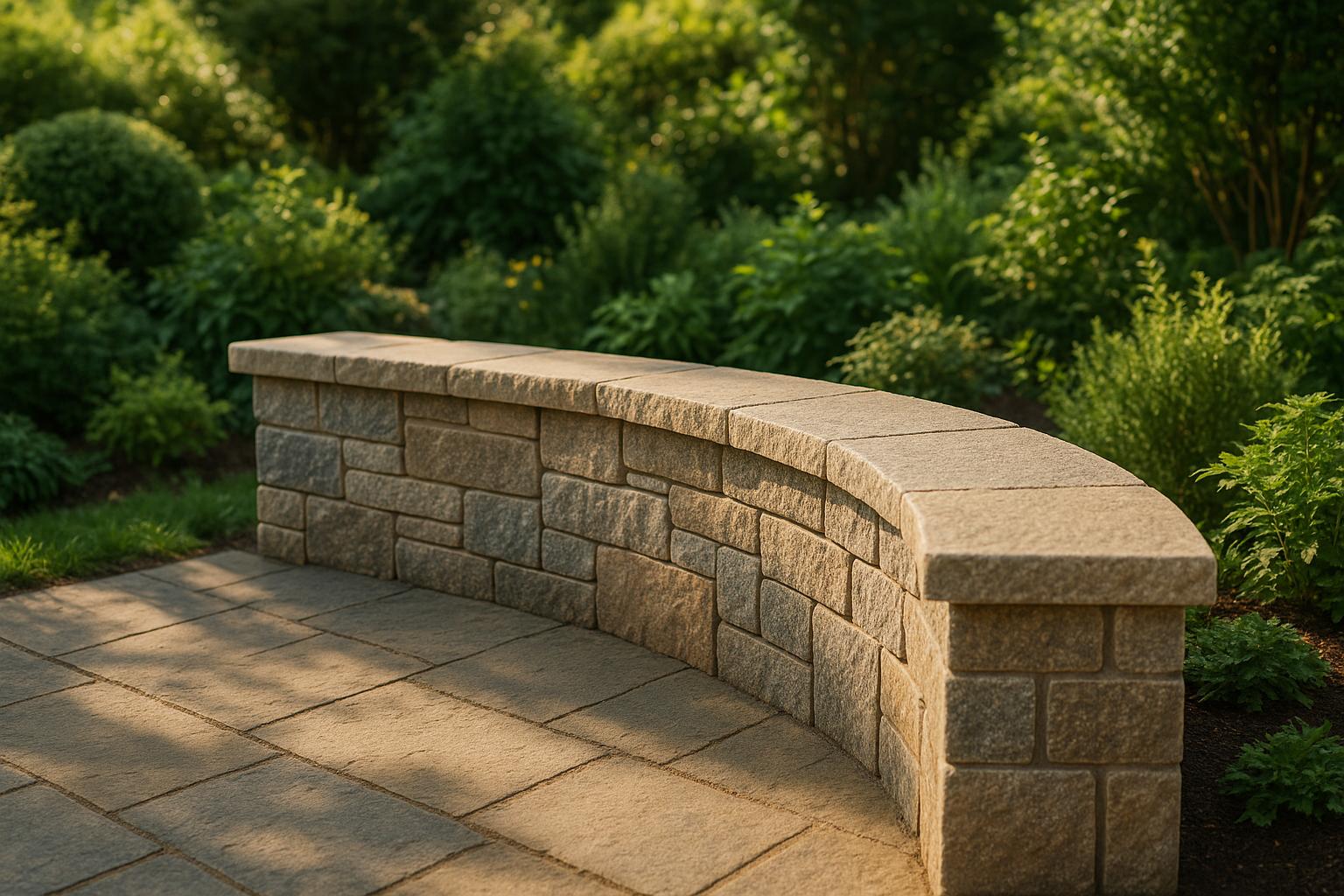
Seating walls are a practical and stylish addition to outdoor spaces, offering both functionality and design appeal. Choosing the right material is critical, especially in Maryland, where freeze-thaw cycles, heavy rain, and fluctuating temperatures can cause damage. Here’s a quick guide to three durable options:
- Natural Stone: Extremely long-lasting (50–100+ years), with a classic look. Materials like granite and bluestone resist weathering but require skilled installation. Costs: $25–$40/sq ft.
- Concrete: Strong and versatile, lasting 25–50 years. Can be customized for various styles but needs professional installation for durability. Costs: $20–$30/sq ft.
- Pavers: Affordable and customizable, lasting 25–50 years with proper installation. Modular design makes repairs easy. Costs: $10–$20/sq ft.
Each material has strengths and trade-offs, so your choice should depend on your budget, style preferences, and maintenance expectations. For Maryland’s climate, durability and proper installation are key to ensuring your seating wall lasts for years.
Finishing a Curved Paver Patio & Building a Sitting Wall
1. Natural Stone
Natural stone is a go-to choice for seating walls, offering enduring strength and timeless charm. Popular options include granite, bluestone, limestone, sandstone, and slate [3].
Durability
Natural stone is built to last. Granite, bluestone, and limestone walls often endure for 50 years or more, with granite installations sometimes exceeding a century when properly built and maintained [3][5]. Its natural toughness makes it well-suited for Maryland’s freeze-thaw cycles and rainy conditions.
Granite stands out as the most durable option, resisting weathering and wear exceptionally well. Bluestone offers excellent grip and holds up against harsh weather, while limestone, though softer, is easier to work with and still highly durable. Over time, natural weathering can even enhance the stone’s character, adding to its appeal.
Aesthetics
Natural stone brings a classic, elegant look that complements a variety of landscape styles. With its wide range of colors, textures, and shapes, it can achieve both rustic and formal designs. For instance, flagstone creates a sleek, polished look ideal for modern patios, while fieldstone works beautifully for natural, curved garden walls.
Each type of stone has its own visual appeal. Granite offers a sophisticated, refined look with consistent patterns. Bluestone showcases classic gray tones with subtle variations. Limestone brings warm, earthy colors and a smooth finish. Sandstone provides rich textures and a diverse palette, while slate features fine-grained surfaces that naturally split into attractive shapes. While the beauty and durability of natural stone are undeniable, expert installation is key to achieving the best results.
Installation Complexity
Building a natural stone seating wall is no small task. The material’s weight and irregular shapes require skilled labor and specialized tools. This makes the process more intricate compared to manufactured materials, often involving careful planning to ensure stability and proper drainage.
Dry-stacked stone walls offer flexibility and natural drainage, allowing them to adjust to ground movement – an important feature in areas with freeze-thaw cycles. Mortared stone walls, on the other hand, provide extra stability and a more formal appearance but require more intensive work and advanced masonry skills.
For Maryland homeowners, Pro Landscapes MD brings the expertise needed to construct natural stone walls that last for decades. With professional installation, these walls require minimal upkeep, making them a durable and stylish investment.
Maintenance
Natural stone seating walls are relatively low maintenance. A quick rinse with water or gentle scrubbing is usually all it takes to keep them looking clean and free of dirt, leaves, or moss.
Dry-stacked walls should be checked occasionally for loose or shifted stones, especially after severe weather, and any displaced stones can be repositioned as needed. Mortared walls may need occasional repointing if the mortar joints show signs of wear, though this is a rare occurrence.
Proper drainage around the wall is essential to prevent water damage and ensure the structure’s longevity. With minimal upkeep and long-lasting durability, natural stone remains a smart choice for seating walls that stand the test of time.
2. Concrete
Concrete is a strong and adaptable choice for seating walls. It can be shaped into almost any form and finished to suit various landscaping styles, whether you’re aiming for a sleek, modern look or a more rustic garden vibe. Plus, its durability makes it a reliable option for Maryland’s unpredictable weather.
Durability
Maryland’s climate can be tough, but concrete holds up well thanks to its engineered composition. With proper installation and care, concrete seating walls can last anywhere from 25 to 50 years [3]. While it doesn’t outlast natural stone, it still offers excellent longevity for hardscaping projects.
Concrete gets its strength from both its material makeup and how it’s installed. Poured concrete is one of the most durable options for retaining walls [2], which also makes it a great choice for seating walls. When reinforced with rebar or mesh and cured correctly, concrete can handle everything from freeze-thaw cycles to heavy rain. Add proper drainage and sealing, and you’ll extend its lifespan even further in areas with big temperature swings.
Aesthetics
One of concrete’s standout features is its design flexibility. It can be dyed, textured, and molded to match nearly any landscape style. Unlike materials with fixed appearances, concrete can be customized with colors, patterns, and finishes [8]. It’s also perfect for creating dramatic curves or unique shapes [1], making it easy to achieve flowing, organic designs or sharp, modern lines.
Contemporary landscaping often leans on concrete for its clean look and ability to adapt to modern aesthetics [7][8]. Homeowners who want the feel of natural materials without the higher price tag often turn to concrete. Custom finishes and textures can mimic more expensive materials, adding visual appeal without breaking the bank. However, achieving these effects requires skilled craftsmanship, which is covered in the next section.
Installation Complexity
Building concrete seating walls isn’t a simple DIY project. It involves forming, pouring, and curing the material on-site, all of which require precision and expertise [7]. For larger or load-bearing walls, hiring professionals is the best way to ensure the structure is safe and long-lasting [7].
The complexity increases if you’re going for custom shapes, decorative finishes, or features like built-in lighting or planters. Professional installation not only ensures the wall is structurally sound but also enhances the overall look. Pro Landscapes MD specializes in handling these projects in central Maryland, bringing the expertise needed for proper reinforcement, drainage, and finishing techniques.
Maintenance
Once installed, concrete seating walls are relatively low-maintenance compared to options like wood or natural stone [7]. Cleaning is as simple as using water and a mild detergent to remove dirt, leaves, or stains. Unlike natural stone, which may need moss removal, or pavers that can shift over time, concrete tends to stay in place and maintain its appearance.
Applying a sealant every few years helps protect against staining and weather damage, especially in areas prone to freeze-thaw cycles [7]. If repairs are needed, they’re usually straightforward and less expensive than replacing individual stones or pavers.
sbb-itb-843f8be
3. Pavers
Pavers strike a great balance between natural stone and concrete. These interlocking units, crafted from concrete or stone, are designed for both durability and style. Homeowners often choose them to achieve the high-end look of natural materials without the steep costs or complexities of natural stone installation. Plus, they offer a combination of toughness and design flexibility that works well in Maryland’s unpredictable climate.
Durability
When installed correctly, paver seating walls can last anywhere from 50 to 100 years [9]. Their interlocking design and built-in drainage gaps make them especially suited for Maryland’s challenging weather conditions. These features help prevent water buildup and reduce hydrostatic pressure, which is crucial in areas with fluctuating weather patterns. Top-tier brands like Techo-Bloc and Allen Block are frequently used in central Maryland, and Pro Landscapes MD has a proven track record of installing paver walls that endure heavy rainfall and freeze-thaw cycles without losing their integrity.
Aesthetics
One of the biggest draws of pavers is their versatility in color, shape, and texture. Unlike poured concrete, which often needs custom finishing to achieve different looks, pavers come ready-made in a variety of styles that can mimic natural stone or create sleek, modern designs. This adaptability makes them suitable for both classic and contemporary landscapes. Pavers also shine when it comes to creating cohesive outdoor spaces, as they can easily match patios, walkways, or driveways. Their modular design opens up possibilities for creative features like built-in planters, lighting, or decorative accents.
Installation Complexity
The installation process is another important consideration. Building a paver seating wall is moderately complex – manageable for seasoned DIYers but often best left to professionals for optimal results. The process involves precise site preparation, including excavation, leveling, and base compaction. Tools like a plate compactor and masonry saw are essential for ensuring the interlocking units fit perfectly. Pro Landscapes MD brings specialized expertise to this process, ensuring proper alignment, effective drainage, and the use of polymeric sand to secure the joints. This attention to detail helps maintain the wall’s stability and prevents issues like settling or shifting over time.
Maintenance
Pavers are relatively low-maintenance, making them a practical choice for seating walls. Routine care typically involves occasional cleaning with water and mild detergent, checking for any shifting or settling, and replenishing joint sand as needed. Repairs are straightforward thanks to their modular design – you can replace a single paver without disturbing the entire structure. This ease of maintenance, combined with their durability and design flexibility, makes pavers a cost-effective option that outshines basic concrete solutions. For Maryland homeowners, pavers deliver a winning mix of style, resilience, and practicality.
Advantages and Disadvantages
To help you weigh your options, let’s break down the pros and cons of the materials discussed earlier. Each type of seating wall material offers its own set of strengths and challenges, so understanding these can guide your decision-making process.
Natural Stone stands out for its durability and timeless beauty. Granite, for instance, can last over 100 years, while most natural stone walls endure for 50 years or more[3]. Its natural variations create a one-of-a-kind look that blends seamlessly with outdoor settings. However, this elegance comes at a price – natural stone is costly, both in terms of materials and the skilled labor needed for installation. Its irregular shapes and heavy weight also make the construction process more complex and time-consuming[6].
Concrete is a strong contender when it comes to structural integrity and versatility. It can be shaped into various forms and finished to resemble other materials, making it suitable for a range of design styles, from modern to classic. Concrete offers dependable, long-lasting support with minimal upkeep[7]. On the downside, installation can be expensive, especially if professional expertise is required to ensure proper construction. Additionally, plain concrete may lack the visual appeal of stone unless enhanced with decorative finishes[7].
Pavers offer a practical middle ground with plenty of design options. Available in numerous colors, shapes, and sizes, they allow for creative customization and are generally easier to install than natural stone. Repairs are also straightforward since individual pavers can be replaced if damaged[10]. However, pavers have a shorter lifespan compared to natural stone and may shift or settle over time if not installed correctly.
Here’s a quick comparison to summarize these trade-offs:
| Material | Durability | Aesthetics | Installation Complexity | Maintenance |
|---|---|---|---|---|
| Natural Stone | 50–100+ years | Timeless, unique | High (labor-intensive) | Minimal |
| Concrete | 25–50 years | Modern, versatile | Medium to High | Low |
| Pavers | 25–50 years | Customizable, varied | Low to Medium | Moderate |
Maryland’s weather, especially its freeze–thaw cycles, adds another layer of complexity to your choice. These conditions can impact the longevity of your wall, making the durability of natural stone and well-installed concrete particularly valuable[4]. Pro Landscapes MD’s expertise in central Maryland ensures that their installations can withstand these challenges while maintaining visual appeal.
Lastly, let’s talk about cost. Natural stone requires the highest upfront investment but offers unmatched longevity and low maintenance. Concrete falls in the middle, with moderate to high initial costs and strong long-term value. Pavers are usually the most budget-friendly option, offering a balance of affordability and performance[5]. Ultimately, your choice should align with your site conditions, design preferences, and maintenance expectations.
Conclusion
When choosing a seating wall material, it’s essential to balance your budget, design preferences, and Maryland’s unique weather challenges. Natural stone, priced at $25–$40 per square foot, brings timeless elegance. Concrete, at $20–$30, offers flexibility in design, while pavers, at $10–$20, provide an affordable yet reliable option.
Maryland’s freeze-thaw cycles can be tough on outdoor structures, so selecting materials that resist cracking and shifting is critical. Natural stone and well-installed concrete have stood the test of time in these conditions, offering dependable durability.
Each material also shines in specific design contexts. Natural stone complements organic, nature-inspired landscapes. Concrete works beautifully in modern settings with its ability to be molded into custom shapes. Pavers, on the other hand, allow for creative expression with a variety of colors and patterns. Once you’ve chosen the right material, precise and compliant installation becomes the next priority.
Professional installation ensures your seating wall is structurally sound, properly drained, and meets local codes. Pro Landscapes MD specializes in crafting seating walls across central Maryland, using top-tier materials like Techo-Bloc, Allen Block, and El Dorado Stone to deliver long-lasting beauty and strength.
"We work with premium materials like Techo-Bloc, Allen Block, and El Dorado Stone to ensure durability and lasting beauty in every project."
With expert craftsmanship, your seating wall will not only endure Maryland’s demanding climate but also enhance your outdoor space for years to come.
Pick the material that fits your budget, style, and maintenance preferences – and trust professionals to bring your vision to life.
FAQs
What should I consider when selecting the best material for a durable and attractive seating wall in Maryland?
When selecting a material for a seating wall, it’s important to weigh durability, appearance, and budget. Natural stone is a classic choice, offering an elegant look and excellent longevity, making it perfect for high-end designs. If you’re looking for a more budget-friendly option, concrete delivers strength and can be finished to resemble other materials. Pavers, on the other hand, provide flexibility with a wide range of colors and styles, striking a good balance between cost and visual appeal.
Keep Maryland’s climate in mind when deciding, as your materials need to handle the region’s seasonal shifts and temperature changes. Consulting with a professional landscaper can help you make the best choice, ensuring your seating wall is built to last and enhances your outdoor space.
How does Maryland’s freeze-thaw cycle impact the durability of seating wall materials?
Maryland’s freeze-thaw cycle can take a toll on seating wall materials, impacting their durability over time. Here’s how it works: during colder months, water sneaks into tiny cracks or pores in the material. When temperatures dip below freezing, that water turns to ice and expands, which can lead to cracks or weaken the structure over time.
Some materials, like natural stone and concrete pavers, are better equipped to handle this cycle. Their durability and ability to expand and contract with minimal damage make them a smart choice. But here’s the thing – installation matters just as much as the material. Proper drainage and a stable foundation are essential to reduce freeze-thaw damage. With the right setup, your seating wall can stay strong and look great for years to come.
What kind of maintenance does each seating wall material need to stay durable and attractive?
The upkeep for seating walls varies based on the material you choose. Natural stone stands out for its durability, needing only occasional cleaning and sealing to guard against weather effects. Pavers are another low-maintenance option, though you might need to replace individual pieces or refresh the joint sand periodically to keep everything stable and looking good. Concrete, while robust, can develop cracks over time; regular sealing can help prevent this and maintain its appearance.
With a little routine care, your seating wall can stay functional and attractive for years.
Chat with Us