









- bhavya gada
- No Comments
Erosion on sloped land can lead to soil loss, landslides, and damage to ecosystems. To tackle this, three main solutions are often used: pollinator plants, mulches, and engineered fixes like jute netting. Each has strengths and weaknesses depending on the slope, soil, and budget.
Here’s a quick breakdown:
- Pollinator Plants: These plants stabilize soil with deep roots and also support biodiversity. They are cost-effective long-term but take time to establish.
- Mulches: Provide immediate surface protection but lack deep-root anchoring. They’re cheap but require frequent reapplication.
- Jute Netting: Offers instant slope stability and works well with plants. It’s pricier upfront but requires less maintenance.
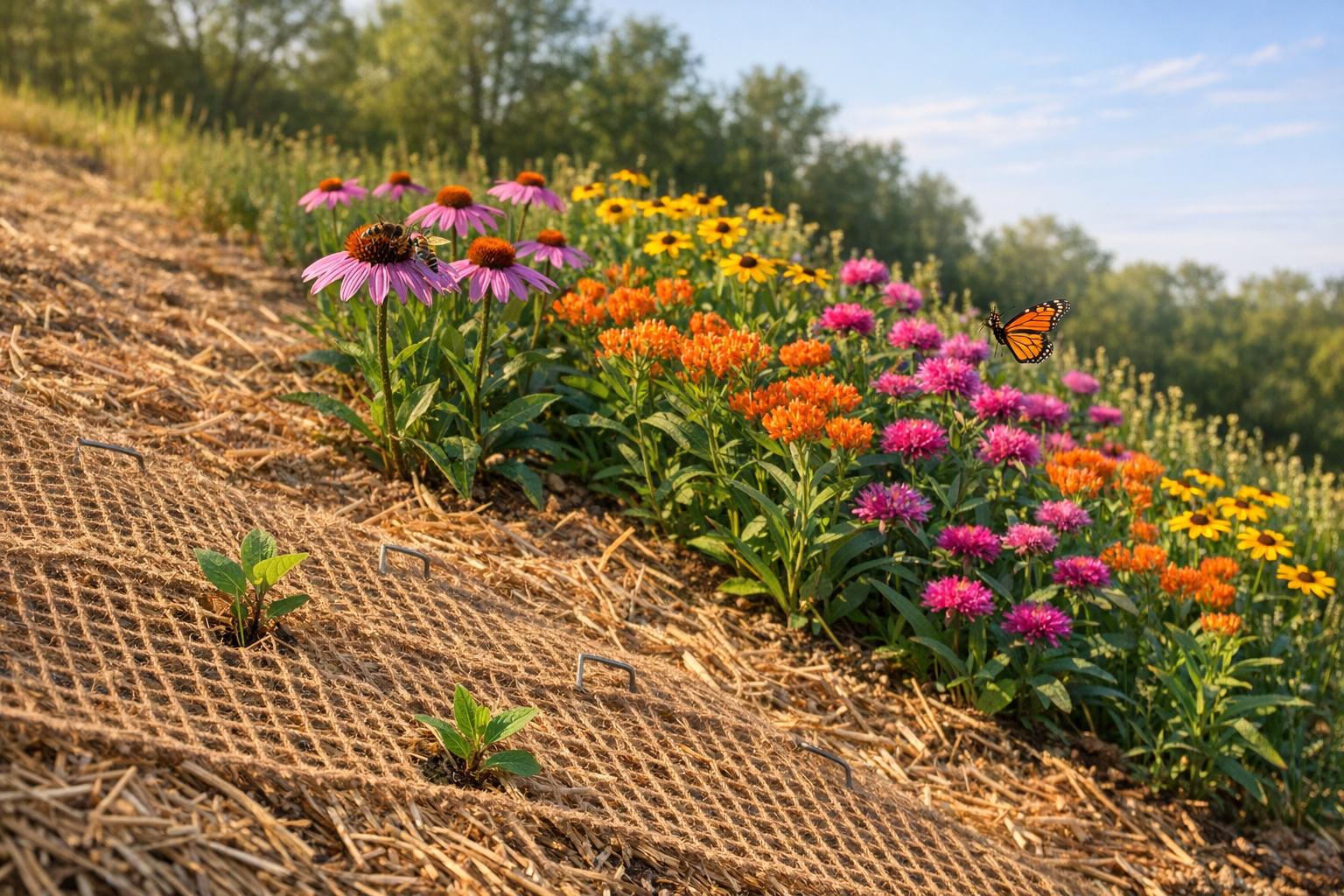
Quick Tip: Combining methods often works best. For example, use jute netting for immediate stability while pollinator plants grow for lasting protection.
Below, we’ll explore how these options compare and which might work best for your needs.
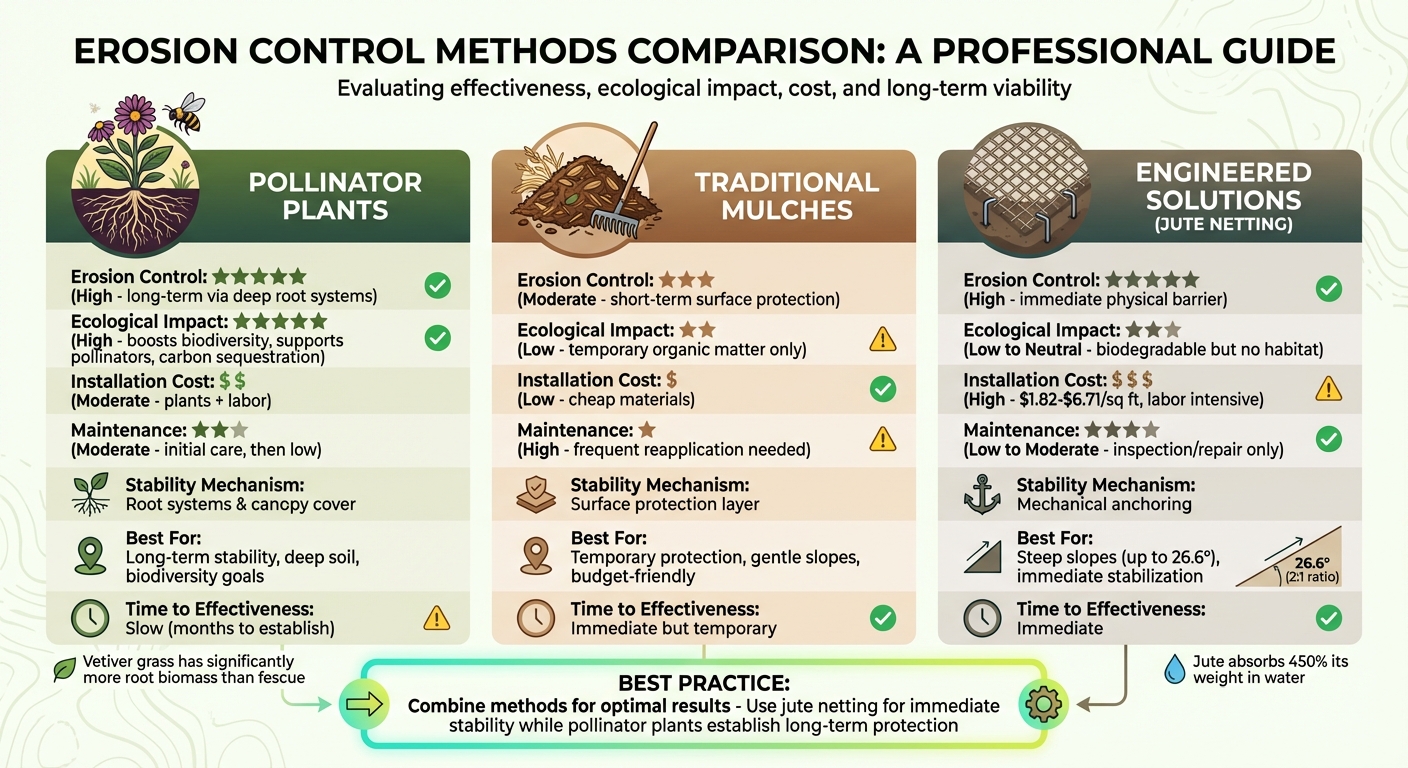
Comparison of Erosion Control Methods: Pollinator Plants vs Mulches vs Jute Netting
Best Plants for Erosion Control: Slopes, Riverbanks, Sites that Flood
sbb-itb-843f8be
1. Pollinator Plants
Pollinator plants stand out as a natural solution for erosion control, offering both soil stability and ecological advantages. Unlike traditional mulches or engineered fixes, these plants provide a lasting and integrated approach to managing erosion.
Erosion Reduction Effectiveness
Pollinator-friendly plants help combat erosion by intercepting rainfall, slowing down water runoff with sturdy stems, and improving water absorption through their extensive root systems. Native prairie plants, in particular, develop deep and intricate root networks that outperform the shallow roots of turfgrass, making them a better option for stabilizing slopes. Fibrous roots secure the topsoil, while deep taproots, like those found in perennials such as Baptisia, strengthen the soil’s structure over time.
As Alessandra Francini and colleagues explain:
"The soil around the roots is hydrologically and mechanically more stable and the consequences of this are easier infiltration, better physical and chemical properties of the soil, and higher shear strength" [3].
For year-round erosion control, evergreen grasses like Sorghastrum nutans play a vital role by intercepting rainfall and slowing runoff, even during winter when deciduous plants are dormant. Meanwhile, plants that spread through rhizomes or self-seeding – such as Conoclinium coelestinum – help quickly cover bare spots that are especially vulnerable during storms.
But these plants don’t just stabilize soil – they also bring a host of ecological benefits.
Ecological Benefits
Pollinator plants contribute to healthier ecosystems in numerous ways. They help sequester carbon, enrich the soil with organic matter, and support a variety of life forms, including pollinators, birds, and helpful soil microorganisms. According to the Natural Resources Conservation Service:
"Managing soil using healthy practices results in soil that reduces erosion, requires less nutrient inputs, manages the effects of flood and drought, and reduces nutrient and sediment loading to streams and rivers" [4].
These plants also improve water quality by filtering pollutants and trapping sediment. As their roots grow and die, they form natural drainage channels, reducing soil pressure and lowering the risk of landslides. Native species like mountain mint (Pycnanthemum) and bee balms (Monarda) not only stabilize soil but also create habitats for wildlife.
Installation Cost
Pollinator plants offer an effective balance between performance and cost [3]. While the initial investment depends on factors like plant species, maturity, and slope preparation, certain measures can boost success. For example, on steep or clay-heavy slopes, adding compost and topsoil and securing them with temporary stabilizers like jute mesh can help roots establish more effectively. Increasing plant density and combining deep-rooted species like Baptisia with fibrous-rooted plants such as Packera or Pycnanthemum ensures better soil coverage.
Although installation requires thoughtful planning, the long-term benefits and reduced upkeep make these plants a worthwhile choice.
Maintenance Needs
Maintaining slopes can be tricky, especially since mowing or trimming on inclines poses safety risks [4]. Replacing high-maintenance turf with low-maintenance pollinator plants, like mountain mint, can significantly cut down on labor. However, some level of management is still needed to ensure these plants continue to provide effective erosion control.
Choosing fast-growing species helps prevent soil washout during heavy rains. Pairing plants with their ideal moisture conditions – drought-tolerant varieties for upper slopes and moisture-loving species like Juncus effusus or Carex for wetter lower areas – maximizes their effectiveness. For regions with heavy rainfall and landslide risks, evergreen shrubs or trees are a smart choice, as they continue to absorb water and stabilize soil throughout the winter months [3].
2. Traditional Mulches
Traditional mulches offer a quick, temporary solution for soil protection, especially during the early stages of vegetation establishment. For example, straw mulch is often applied during the first three weeks to shield bare soil while plants begin to grow [2]. It absorbs the impact of rainfall, reducing surface runoff and protecting the soil from erosion. However, unlike living plants, mulches don’t contribute to long-term stability since they lack the root systems that anchor soil over time.
Erosion Reduction Effectiveness
Mulches act as a physical shield, minimizing the force of raindrops on exposed soil [3]. This protection is immediate but short-lived. Heavy rains can displace mulch before vegetation has a chance to establish, especially on steep slopes exceeding 25° [2]. In these cases, even combining mulch with turf grass may fail to prevent shallow landslides due to the lack of deep roots [2].
While mulches offer some erosion control, their limitations become apparent under challenging conditions.
Ecological Benefits
Some mulches, like compost, can improve soil health by increasing water retention and adding nutrients as they decompose [3]. This process also enhances soil structure over time. However, mulches don’t provide the same benefits as living plants, such as transpiration to manage excess water or creating habitats for pollinators and other wildlife [3]. Their ecological contributions are therefore more limited.
Installation Cost
Traditional mulches may seem cost-effective at first, but their benefits are often short-term. On steep slopes, additional measures like jute mesh, branches, or rocks are often needed to keep the mulch in place until vegetation takes root [1]. These extra steps can significantly add to the overall cost, diminishing the initial savings.
Maintenance Needs
Using mulch in combination with turf grass demands ongoing care. For instance, mowing steep slopes can create ruts that lead to shallow landslides [2]. Additionally, because mulch decomposes or washes away over time, it requires regular reapplication. This recurring need for labor and materials makes it a more maintenance-heavy option compared to pollinator plantings, which don’t require such upkeep.
3. Engineered Solutions (e.g., Jute Netting)
Engineered solutions like jute netting provide an immediate and practical way to stabilize slopes, especially during the critical early stages. Unlike pollinator plants, which need time to grow, or mulches that can be displaced by rain, jute netting delivers instant coverage. Once installed, it shields the soil by intercepting raindrops traveling at speeds up to 20 MPH [10]. This makes it an effective partner to pollinator plants and mulches, offering immediate protection while other measures take root.
Erosion Reduction Effectiveness
Jute netting works by slowing water movement and holding soil in place. Its open-weave design can absorb over 450% of its weight in water [10], reducing surface runoff and preventing soil erosion. Suitable for slopes with gradients up to 2:1 (26.6°) [10], it provides temporary support by biodegrading within 6 to 24 months [10]. This time frame is long enough for vegetation to establish the deep roots needed for lasting stability.
Ecological Benefits
Crafted from renewable plant fibers, jute netting decomposes naturally, enriching the soil with organic material as it breaks down [5][8]. Its "leno" weave design minimizes risks of wildlife entanglement, unlike plastic alternatives [7]. The mesh also creates a favorable environment for seed germination by retaining moisture and regulating soil temperature. When paired with native wildflower or grass seed mixes, it prevents seeds from washing away, allowing their root systems to take over erosion control duties [8].
Installation Cost
The cost of professional jute netting installation ranges from $1.82 to $6.71 per square foot. For a 500-square-foot area, expenses can total between $909 and $3,357. Labor accounts for the majority of the cost, running between $763 and $2,884 for approximately 25 hours of work. Materials are more affordable, costing about $0.17 per square foot, with additional supplies adding $23 to $26 per 500 square feet [9][10]. Installation involves site preparation tasks like debris removal, grading, and digging 6-inch trenches for anchoring the netting [9][10].
Maintenance Needs
Jute netting requires little upkeep after installation. It should be secured with landscape staples every 2 to 3 feet to prevent water from flowing underneath [10]. Once grass grows through the mesh, mowing is safe and easy. After storms or high winds, it’s important to check for loose staples or sections that may have lifted [6]. The netting naturally degrades as vegetation grows, leaving behind a stable, self-sustaining landscape.
Pros and Cons
Erosion control methods for sloped landscapes come with their own sets of strengths and challenges. Let’s break it down:
Pollinator plants are fantastic for long-term stabilization. Their deep roots and canopy cover work together to secure soil effectively. For instance, species like vetiver grass have significantly more root biomass compared to standard fescue [2]. However, these plants take time to develop their root systems, leaving the soil vulnerable during the early stages.
Traditional mulches are a quick, cost-effective way to protect the soil surface. They’re especially useful during the initial phases of vegetation growth. But they aren’t ideal for steep slopes – they can wash away without reinforcement, don’t stabilize deeper soil layers, and need frequent reapplications to remain effective.
Engineered solutions, such as jute netting, provide immediate stabilization. They work as a physical barrier, anchoring soil in place while vegetation establishes itself. The downside? These solutions tend to be more expensive and don’t offer much in terms of ecological benefits.
Often, the best results come from combining these methods. For example, using jute netting to secure soil and compost while pollinator plants grow allows for a smooth transition from short-term mechanical support to long-lasting biological stability. This mix not only stabilizes the landscape but also encourages biodiversity with pollinator-friendly plants.
Here’s a quick comparison of the three approaches:
| Feature | Pollinator Plants | Traditional Mulches | Engineered Solutions |
|---|---|---|---|
| Erosion Control | High (long-term via roots) | Moderate (short-term surface) | High (physical barrier) |
| Ecological Impact | High (boosts biodiversity) | Low (temporary organic matter) | Low to Neutral (biodegradable but no habitat) |
| Cost | Moderate (plants + labor) | Low (cheap materials) | High (installation + materials) |
| Maintenance | Moderate (initial care) | High (frequent reapplication) | Low to Moderate (inspection/repair) |
| Stability Mechanism | Root systems & canopy | Surface protection | Mechanical anchoring |
Conclusion
Choosing the right erosion control method depends on your site’s specific conditions and your long-term plans. Pollinator plants can provide lasting slope stability if the soil is deep enough and there’s time for roots to establish. As the Natural Resources Conservation Service explains:
"Managing soil using healthy practices results in soil that reduces erosion, requires less nutrient inputs, manages the effects of flood and drought, and reduces nutrient and sediment loading to streams and rivers" [4].
For quick, temporary protection on gentle slopes, traditional mulches work well. Just be cautious not to apply mulch too thickly, as it can harm ground-nesting bees and smother new plants. Keeping the soil loose and uncompacted helps improve water absorption.
On steeper slopes or in rocky areas with shallow soil, engineered solutions like jute netting offer immediate stabilization. These materials provide essential mechanical support while vegetation establishes its hold, bridging the gap until plants can fully secure the area.
In Maryland’s climate – which includes wet winters and occasional summer droughts – evergreen pollinator plants are especially useful. Dr. Alessandra Francini’s research highlights the benefits of evergreens on landslide-prone slopes, as their active root systems remain effective during winter rains [3].
A combination of methods often works best. Pairing immediate mechanical solutions, like jute netting or mulch, with long-term biological strategies ensures both stability and biodiversity. For expert advice on sustainable erosion control and landscaping in Maryland, contact Pro Landscapes MD.
FAQs
How long do pollinator plants take to control erosion on a slope?
Pollinator plants typically need 3 to 5 years to fully establish themselves and effectively manage erosion on slopes. During this period, their root systems grow deep and strong, anchoring the soil in place. This helps minimize runoff and gradually reduces erosion.
What are the best pollinator plants for steep slopes in Maryland?
Native plants such as red osier dogwood and black locust are excellent choices for steep slopes in Maryland. Thanks to their deep root systems, they not only help prevent soil erosion but also provide essential support for local pollinators. These species thrive in the region’s conditions, making them a natural solution for stabilizing sloped areas.
Do I need jute netting if I’m planting pollinator plants?
Jute netting isn’t mandatory when planting pollinator plants for erosion control. Still, it can be a helpful tool for stabilizing soil on slopes during the plants’ initial growth stage, giving them a better chance to establish roots and grow successfully.
Chat with Us