









- bhavya gada
- No Comments
Struggling with erosion in Maryland’s clay-heavy soil? Native plants offer a natural, low-maintenance solution.
Clay soil, common in Maryland, is prone to erosion due to poor drainage, compaction, and freeze-thaw cycles. Heavy rains worsen runoff, stripping away topsoil and nutrients. Native plants, with their deep root systems, stabilize soil, improve water absorption, and thrive in local conditions.
Key Takeaways:
- Clay Soil Challenges: Poor drainage, compaction, and erosion during heavy rains.
- Why Native Plants Work: Deep roots hold soil, reduce runoff, and require less maintenance.
- Top Native Plants: Summersweet, New England Aster, Black Haw, and Bottlebrush Buckeye.
- Planting Tips: Prepare soil with compost, avoid over-tilling, and water deeply but infrequently.
For severe erosion or steep slopes, professional help ensures effective solutions. Native plants not only control erosion but also add lasting beauty to your landscape.
Clay Soil Problems and Erosion Issues
How Clay Soils Work
Clay soils can be a real headache for homeowners trying to maintain their yards. These soils are made up of fine mineral particles that hold onto water, nutrients, and organic matter[1][2]. While that might sound like a good thing, trouble starts when clay makes up more than a third of the soil composition.
Here’s the issue: when clay soils get wet, they turn sticky and clingy, but when they dry out, they harden like concrete[1][2]. This constant cycle between sticky and rock-hard makes them tough to manage. But the real problem lies in their poor drainage. The tightly packed particles in clay soil make it nearly impossible for water to soak in and move downward[1][2]. Instead of absorbing rainfall, these soils let water sit on the surface or run off, which can lead to big problems – especially when the soil gets compacted.
Compaction is another major challenge with clay soils. Everyday activities like walking, driving over the lawn, or using heavy equipment press the soil particles together, squeezing out air and reducing pore spaces[1]. Once compacted, the soil becomes even less permeable, making drainage worse and increasing surface runoff. This runoff often leads to erosion, setting the stage for significant issues in residential landscapes.
Erosion Problems in Maryland Yards
Maryland is particularly prone to erosion issues, thanks to its clay-rich soils and sloped terrain. Heavy rains in the state’s Coastal Plain region make the situation even worse, as water struggles to penetrate compacted clay and instead flows across the surface, carrying away soil and nutrients[1][3].
Surface runoff is the main driver of erosion in Maryland. When rain hits bare or sloping clay soil, it doesn’t soak in – it just rushes across the surface. Along the way, it picks up soil particles and nutrients, leaving the land stripped and barren[1]. And it’s not just the runoff that causes problems. The impact of raindrops on clay soils breaks apart soil aggregates, making it even easier for the soil to wash away[1].
Maryland’s weather patterns make things worse. Intense rainstorms and extreme weather events are becoming more common, putting more pressure on already vulnerable landscapes. The University of Maryland Extension highlights this growing concern:
"Climate change is expected to bring more extreme storms and intense rainfall exacerbating erosion issues. Design and plant now with these future impacts in mind."[1]
The effects of erosion go far beyond just losing soil. Topsoil loss strips away the most fertile layer, making it harder for plants to grow. Slope instability can threaten hillsides and embankments, while water ponding becomes a recurring issue. After heavy rains, water often sits on the surface for days, depriving plant roots of oxygen and potentially killing vegetation[1].
Erosion also has environmental consequences. Sediment from eroded clay soils gets into local waterways, harming water quality and aquatic life. For homeowners, this means constant maintenance headaches, reduced curb appeal, and potential damage to foundations and hardscaping.
To make matters worse, compacted clay soils don’t just struggle with drainage – they also make it hard for plants to grow. Roots can’t penetrate the dense soil, leading to shallow root systems that don’t hold the soil in place. This creates a vicious cycle: poor plant growth leaves more bare soil, which erodes even faster during the next big storm[1].
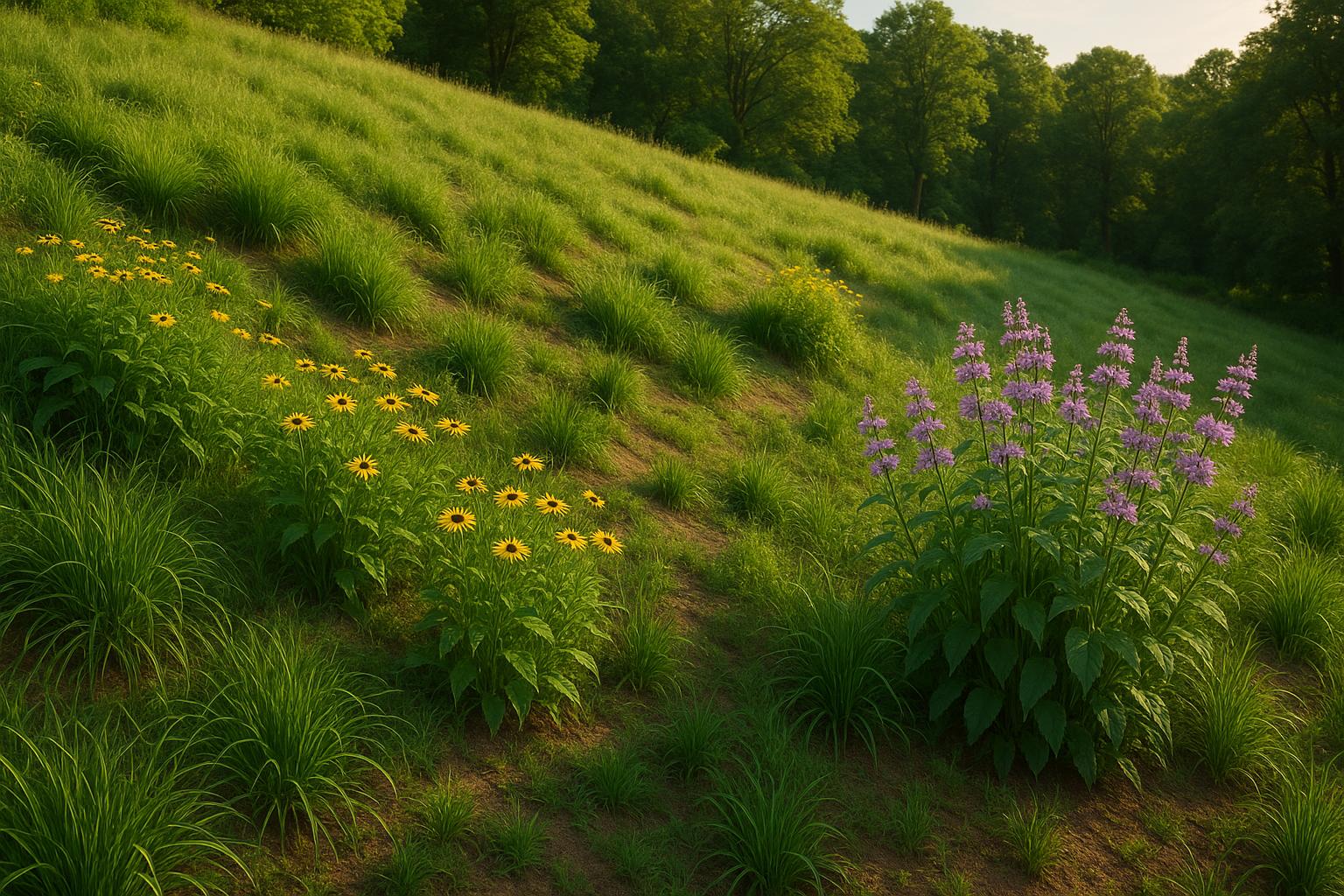
Use These Plants on your Slope to Prevent Erosion, Stabilize Soil, and look AMAZING!
Why Native Plants Stop Erosion
Native plants provide an effective, natural solution to tackling clay soil erosion. Instead of relying on short-term fixes, these plants work in harmony with Maryland’s environment to create erosion control that becomes more effective over time.
Deep Roots Keep Soil Stable
One of the standout features of native plants is their deep, fibrous root systems. These roots act like nature’s anchors, holding soil in place and improving water absorption. For example, plants like Switchgrass and Lead Plant have tap roots that dig deep and hold soil particles together, even during heavy rain[5]. Similarly, species like Soft Rush and Tussock Sedge develop dense, fibrous root networks that combat surface runoff and erosion[5]. This natural reinforcement not only keeps the soil intact but also reduces the risks of flooding and washouts.
Perfectly Suited for Maryland’s Climate
Native plants thrive in Maryland’s challenging weather, from summer storms to winter freeze-thaw cycles. Their extensive roots allow them to access water deep underground during dry spells, making them more drought-resistant. Once established, they require minimal upkeep compared to non-native plants and only grow stronger over time. For example, Pennsylvania Sedge (Carex pensylvanica) is uniquely suited to Maryland’s clay-heavy soils and fluctuating moisture levels[5]. Beyond erosion control, these plants also support local ecosystems by providing food and shelter for native birds, butterflies, and beneficial insects.
The Edge Over Conventional Options
When it comes to erosion control, native plants outperform typical ground covers like turf grass. Turf grass has shallow roots that don’t hold soil effectively, while native species develop deep tap roots and dense fibrous systems that secure soil in place[4]. Native trees, in particular, excel at stabilizing slopes with their extensive root systems[4]. Even during droughts, their deep roots can access moisture that shallow-rooted plants simply can’t reach. This makes native plants a more reliable and sustainable choice for long-term erosion management.
Choosing Native Plants for Maryland Clay Soils
Selecting native plants that thrive in Maryland’s clay soils is a smart way to manage erosion effectively. These plants are naturally adapted to the region’s soil conditions, making them ideal for stabilizing the ground. Let’s dive into some of the best options for clay soil and where to find them.
Best Native Plant Species for Clay
Summersweet (Clethra alnifolia) is a dependable shrub for clay-rich areas. Growing between 4 and 8 feet tall, it produces fragrant white flower spikes during summer. Its fibrous roots take full advantage of clay’s moisture retention, making it a great choice for damp areas prone to erosion after heavy rains.
New England Aster (Symphyotrichum novae-angliae) shines with its striking purple blooms in the fall. This perennial grows 3 to 6 feet tall and spreads naturally, forming dense colonies that help anchor soil on slopes.
Black Haw (Viburnum prunifolium) is a versatile shrub or small tree, reaching 12 to 15 feet in height. Its deep taproot system is excellent for stabilizing soil on steeper banks. Plus, its white spring flowers and dark blue berries add seasonal charm.
Bottlebrush Buckeye (Aesculus parviflora) thrives in partial shade and Maryland’s clay soils. It forms dense colonies through underground runners, creating a strong root mat that effectively holds soil in place. Its stunning white flower spikes in summer are an added bonus.
| Plant Species | Root Type | Light Requirements | Mature Size | Clay Tolerance | Control Rating |
|---|---|---|---|---|---|
| Summersweet | Fibrous | Partial sun to shade | 4–8 feet | Excellent | High |
| New England Aster | Spreading rhizomes | Full sun | 3–6 feet | Very Good | High |
| Black Haw | Deep taproot | Full sun to partial shade | 12–15 feet | Excellent | Very High |
| Bottlebrush Buckeye | Spreading runners | Partial shade | 8–12 feet wide | Good | High |
Other great options include Cardinal Flower (Lobelia cardinalis), which thrives in wet clay areas. Its vibrant red blooms in summer attract hummingbirds while its roots stabilize streambanks and drainage zones. Spicebush (Lindera benzoin) is another excellent choice for shaded areas. This understory shrub develops a dense root system that prevents erosion beneath tree canopies where grass struggles to grow.
Where to Buy Native Plants
Once you’ve decided on the right plants, sourcing them from reliable vendors is key. Look for local garden centers that specialize in native species tailored to Maryland’s clay soils. Purchasing from trusted sources ensures you get healthy, high-quality plants.
For expert advice and help with planting, consider reaching out to Pro Landscapes MD. Their team of horticulturists can guide you in choosing the best plants and preparing your clay soil for optimal growth.
sbb-itb-843f8be
How to Plant and Care for Native Plants
Getting native plants to thrive in clay soil takes some extra effort, but the results are worth it. Clay’s unique characteristics require a slightly different approach compared to sandy or loamy soils. Once established, native plants can create a strong and lasting system to control erosion.
Preparing Clay Soil for Planting
Clay soil needs to be handled at just the right moisture level. Work it when it’s slightly damp – neither waterlogged nor completely dry. The perfect time is when the soil crumbles easily in your hand instead of sticking together in a clump. In Maryland, this usually means waiting a couple of days after heavy rain before starting.
Start by breaking up any compacted layers. Tools like a pickaxe or mattock can help penetrate hardpan layers that block root growth. Be careful not to over-till, as that can create a surface that hardens like concrete.
To improve the soil structure, mix in 2-3 inches of aged compost or leaf mold. Avoid adding sand unless you’re combining it with equal parts organic matter – mixing just sand and clay can lead to a cement-like texture.
If drainage is a problem, consider creating shallow swales, berms, or even installing French drains for more severe issues.
Testing the pH of your soil is also key. Maryland’s clay soils often range from 6.0 to 7.5, which works well for most native plants. If the pH is above 7.5, you can lower it gradually by adding sulfur at a rate of 1 pound per 100 square feet.
Once the soil is ready and drainage concerns are addressed, you’re set to plant in a way that protects these improvements.
Planting Native Plants the Right Way
When digging holes for planting, focus on width rather than depth. Make the holes twice as wide as the root ball but no deeper. Deep holes can trap water, which may harm the roots. The top of the root ball should sit level with or slightly above the surrounding soil.
For backfilling, mix the excavated clay soil with compost at a 2:1 ratio. This creates a gradual transition zone for roots to spread into the surrounding soil. Avoid making the backfill too different from the native clay, as this can cause water to pool around the roots, creating a "bathtub effect."
Water deeply but slowly to ensure proper absorption. A good routine is to water for 10-15 minutes, pause to let it soak in, and repeat as needed. During dry periods, aim for 1–1.5 inches of water per week. Since clay absorbs water slowly, quick watering sessions often lead to runoff instead of soaking.
Apply 2-3 inches of organic mulch around your plants, but keep it about 2 inches away from the stems. Shredded hardwood mulch or aged wood chips work best, as they decompose slowly and continue to improve the soil over time. Avoid rubber mulch or landscape fabric, which can block beneficial soil activity.
For faster ground coverage and better erosion control, plant native species closer together – about 20-30% closer than standard spacing recommendations. This also helps establish beneficial fungal networks that improve the soil’s condition over time.
Caring for Native Plants Over Time
Proper care after planting ensures your initial efforts pay off.
Because clay holds water well, it’s better to water less often but more deeply. During dry spells, water new plants once or twice a week, applying 1–1.5 inches each time.
Weeds can be an issue in clay soil, so remove them by hand when the soil is slightly moist. This helps pull out the entire root system, which is especially useful for stubborn weeds like Canada thistle and bindweed. Avoid using tools like hoes, as they can damage the shallow roots of native plants.
Watch for signs of stress that are specific to clay soil. Yellowing leaves often point to poor drainage rather than disease. If plants seem stressed in their first growing season, check the soil moisture 4-6 inches below the surface. Clay can look dry on top while still being waterlogged underneath.
Fertilizers are rarely needed once the plants are established. Clay soil usually has plenty of nutrients but releases them slowly. If growth seems poor after the first year, add a thin layer of compost around the base instead of using chemical fertilizers, which can promote top growth at the expense of roots.
In late fall, apply another layer of mulch and check the plants monthly during winter. Clay’s freeze-thaw cycles can push young plants out of the ground, so gently press them back into place if needed.
After about 18-24 months, native plants will have developed deep root systems that adapt to the clay soil. At this point, they’ll require minimal maintenance and will create the erosion control network you’ve been working toward. The effort you put into preparation and early care will pay off for years as these plants grow and spread naturally.
Adding Erosion Control to Your Maryland Landscape
Incorporating native plants into your Maryland landscape design is a smart way to manage erosion while enhancing the overall appearance of your property. By seamlessly blending these plants with your existing hardscaping, you can create a landscape that’s both functional and visually appealing. It’s also worth knowing when to call in professionals for those tricky spots that need extra attention.
Making Native Plants Work for Your Yard
Native plants used for erosion control don’t have to look messy or unplanned. With thoughtful placement, they can add structure and beauty to your yard.
- Pairing plants with hardscaping: Native grasses like little bluestem and switchgrass are perfect for softening the edges of patios and walkways while preventing erosion. Planting them 18–24 inches away from paved surfaces gives them room to grow without overcrowding.
- Retaining walls and slopes: Retaining walls combined with native plants are excellent for stabilizing slopes. Deep-rooted plants help filter runoff, while shorter species like wild ginger or coral bells cover the area above the wall, keeping the view open.
- Dry riverbeds: These are not just practical for managing water flow but also an opportunity to showcase native plants. Sedges and rushes, which thrive in both wet and dry conditions, can line the edges of a dry riverbed, slowing down water, trapping sediment, and adding year-round texture and color.
- Outdoor living spaces: Fire pits and outdoor kitchens benefit from taller native plants like elderberry or serviceberry. Planted 8–10 feet away, they act as windbreaks, provide privacy, and stabilize soil on nearby slopes.
- Seasonal appeal: Plan for year-round interest by mixing plants that shine in different seasons. Grasses can add structure in winter, early bloomers like Virginia bluebells brighten up spring, and late bloomers like New England aster keep things lively well into fall.
When to Call in the Experts
Sometimes, a DIY approach isn’t enough to tackle tough erosion problems. If your property has challenging terrain or drainage issues – especially with compacted clay soils – it’s time to bring in professional help.
Pro Landscapes MD specializes in creating tailored erosion control solutions that balance practicality with aesthetics. They take a comprehensive approach, analyzing water flow, soil conditions, and how different parts of your property interact during storms.
- Drainage solutions with native plants: Techniques like French drains can redirect water to areas where native plants can slow its movement. Proper grading ensures water flows toward planted zones instead of creating new erosion channels. Stormwater management systems can also help by capturing runoff and releasing it gradually into native plant beds, allowing roots to stabilize the soil.
- Integrated designs: Pro Landscapes MD combines hardscaping and native plantings to create cohesive solutions. They can install retaining walls that work with native plants, construct dry riverbeds to manage water and support plant growth, and develop grading plans to direct water to the right areas.
- Planting expertise: Native plants need the right start, especially in challenging clay soils. Pro Landscapes MD ensures proper soil preparation, selects plants suited to microclimates on your property, and spaces them optimally for erosion control and healthy growth.
- Addressing underlying issues: Compacted clay, pooling water, or steep slopes often require professional interventions like yard leveling or drainage repairs before planting can succeed. Combining these fixes with well-placed hardscaping and plants ensures both immediate and long-term results.
- Ongoing maintenance: Professional maintenance plans keep your erosion control efforts effective over time. This includes replacing plants as needed, adjusting drainage systems as roots grow, and adding hardscaping elements when necessary.
For Maryland properties dealing with clay soils, steep slopes, or poor drainage, professional expertise can make all the difference. Pro Landscapes MD’s experience across central Maryland – including areas like Howard, Montgomery, and Carroll Counties – equips them to handle even the most complex erosion challenges. By combining thoughtful design with skilled execution, they deliver solutions that protect your property while enhancing its beauty.
Conclusion: Fix Erosion Problems with Native Plants
Native plants provide Maryland homeowners with a natural and effective way to manage erosion in tough clay soils. These plants are perfectly suited to Maryland’s climate, thriving through cold winters, hot and humid summers, and periods of drought. Their ability to adapt to these conditions makes them a smart choice for tackling erosion issues.
One of their biggest strengths is their deep, fibrous root systems. These roots not only stabilize clay soils but also require very little maintenance once the plants are established. They anchor the soil in place and help bind soil particles together, reducing the risk of erosion. Many native plant varieties are well-suited to Maryland’s clay-heavy soils and can thrive in a range of site conditions.
For homeowners facing more severe challenges – like steep slopes, water drainage issues, or heavily compacted clay – working with professionals can make a big difference. Pro Landscapes MD specializes in understanding Maryland’s unique soils and climate. Their approach combines proper site preparation, smart plant selection, and additional features like retaining walls and drainage systems to create a complete solution.
Beyond erosion control, native plants also save time and money in the long run. They conserve water, thrive in clay soils, and help create landscapes that not only protect your property but also boost its curb appeal.
FAQs
Why are native plants better for controlling erosion in clay soils?
Native plants are excellent for controlling erosion in clay soils because their root systems are naturally suited to the local environment. These roots grow deep and spread out extensively, anchoring the soil firmly in place. This not only reduces water runoff but also minimizes the risk of erosion. Over time, the dense root networks help improve the soil’s structure, making it better equipped to handle heavy rain or strong winds.
Unlike non-native species, native plants are well-adapted to the specific conditions of local clay soils. They require less upkeep and offer long-term stability, making them especially useful in areas with steep slopes or persistent drainage problems. By using native plants, you can create a landscape that’s both durable and better suited to handle environmental challenges.
What mistakes should I avoid when using native plants for erosion control in clay soil?
When planting native species in clay soil to combat erosion, steer clear of plants that require well-drained soil, as they won’t thrive in heavy clay. Instead, go for species that naturally adapt to clay conditions. Prioritize plants with dense, fibrous root systems – these are essential for holding the soil together and minimizing erosion. Be cautious about overloading the soil with compost or fertilizers, as this can interfere with the growth of native plants and weaken soil stability. The key lies in choosing the right plants and allowing their natural growth to fortify your landscape.
How do I know if I need professional help to address erosion issues in clay soil?
If you’re seeing cracks in your foundation, uneven ground, noticeable soil loss, or water pooling around your property, it’s probably a good idea to call in an expert. Clay soil, in particular, tends to struggle with runoff and erosion, and if left unchecked, it can cause serious, lasting damage.
A professional can evaluate your property and suggest specific solutions, like planting native plants or setting up drainage systems, to help manage erosion and safeguard your landscape.
Chat with Us