









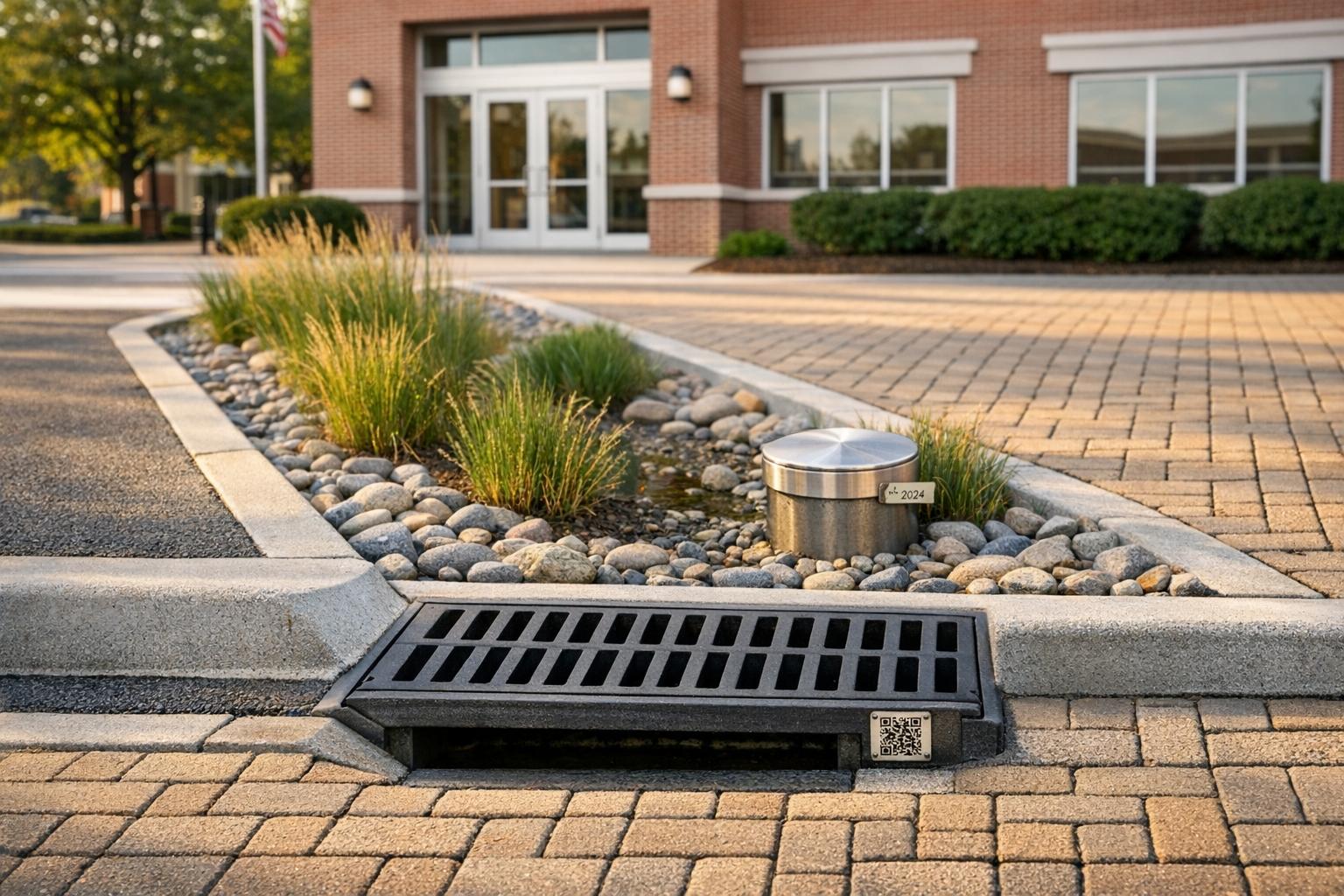
- bhavya gada
- No Comments
Maryland’s 2026 updates to Environmental Site Design (ESD) regulations bring new requirements for managing stormwater. These changes emphasize using small-scale, natural methods like rain gardens and permeable pavements to control runoff near its source. Key updates include stricter data verification processes, new maintenance responsibilities for property owners, and expanded compliance deadlines.
Key Takeaways:
- New ESD Requirements: Focus on localized stormwater management to align with natural water flow.
- Maintenance Rules: Property owners must maintain stormwater systems, with inspections every three years.
- Data Verification: Certified professionals must verify compliance annually and log details for records.
- Planning Ahead: Early project planning is critical to meet updated guidelines and avoid delays.
These updates aim to improve stormwater management practices while increasing accountability for property owners. Early preparation and expert guidance are essential to ensure compliance and avoid penalties.
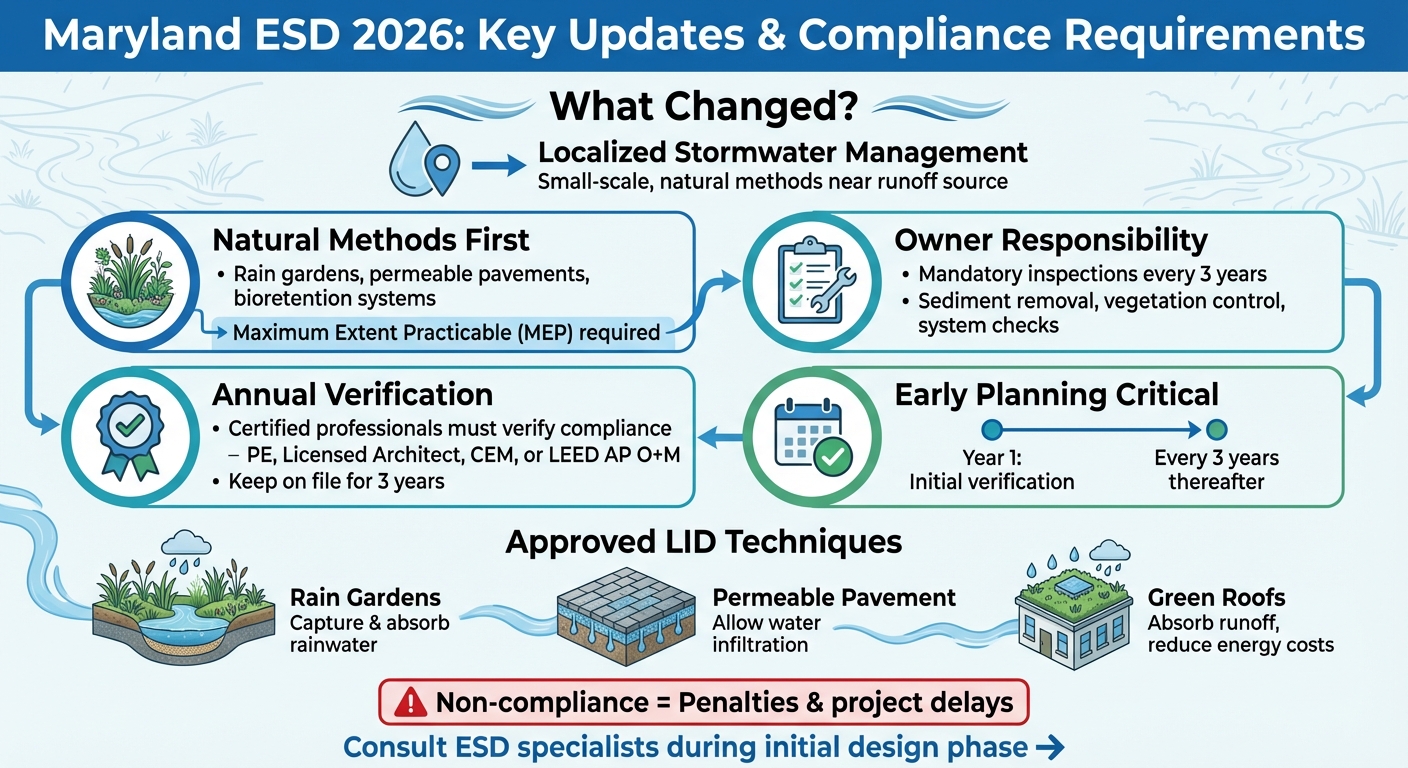
Maryland ESD 2026 Compliance Timeline and Requirements
2026 Legislative Changes to ESD Regulations
New Requirements in the Legislation
In 2026, Maryland introduced changes to its Environmental Site Design (ESD) regulations. The updated Stormwater Design Guidance remains the definitive standard for ensuring compliance [1]. The Maryland Department of the Environment continues to oversee and enforce these standards.
Effects on Development and Redevelopment Projects
The revised regulations do not offer specific details on how project timelines or design plans should be adjusted. This leaves property owners and developers responsible for carefully reviewing the updated guidance to ensure their projects align with Maryland’s ESD requirements. Adapting to these changes is essential for meeting the state’s compliance expectations.
sbb-itb-843f8be
Maryland – Micro-bioretention Facility Demonstration
Core ESD Requirements for Stormwater Management
Maryland’s updated stormwater regulations place a strong emphasis on localized, natural processes, marking a shift from traditional practices like large detention ponds. These updated Environmental Site Design (ESD) guidelines focus on small-scale, non-structural methods that mimic natural water flow. Overseen by the Maryland Department of the Environment, the goal is to manage stormwater as close to its source as possible, preserving natural runoff patterns. For all new development projects, Maryland requires ESD to be implemented to the Maximum Extent Practicable (MEP). Only when these methods have been fully explored can more conventional structural approaches be considered. These principles form the foundation of the 2026 updates and pave the way for detailed low-impact development (LID) strategies.
Low-Impact Development Strategies
The ESD regulations center on low-impact development (LID) techniques that align with natural processes. For example, micro-scale bioretention systems use soil and vegetation to filter and absorb stormwater, while permeable pavements allow water to pass through surfaces and infiltrate into the ground. These approaches are prioritized over large-scale structural measures, ensuring that natural infiltration and filtration are integrated from the outset.
Alignment with Stormwater Compliance Standards
By incorporating LID strategies, ESD practices align with Maryland’s broader stormwater compliance goals. These methods aim to replicate the absorption and filtration processes found in undisturbed forested areas, often referred to as maintaining "woods in good condition" hydrology. Managing stormwater at its source through distributed, small-scale practices ensures that a site’s hydrologic behavior closely resembles natural conditions, supporting sustainable stormwater management.
Changes to ESD Review and Approval Processes
Maryland’s 2026 ESD updates introduce stricter data verification requirements in the review process. These changes build on previous revisions, focusing on tighter compliance measures and improving the accuracy of stormwater management data.
Updated Review Criteria
The updated regulations set higher standards for verifying stormwater management compliance. These changes ensure that ESD practices are fully documented and consistently maintained throughout the duration of a project.
2026 Benchmarking and Reporting Deadlines
Property owners are required to complete data verification in the first year and every three years after that. This process must be carried out by a certified verifier, such as a Professional Engineer (PE), Licensed Architect, Certified Energy Manager (CEM), or LEED AP Operations + Maintenance professional. The verifier will confirm building profiles and meter data using a standardized checklist, which must be kept on file for three years. Additionally, owners are required to log verifier details – including name, organization, designation, and license number – into Portfolio Manager. For buildings with at least six months of ENERGY STAR certification during the benchmark year, an alternative compliance path is available [2].
What the Updated ESD Regulations Mean for Property Owners
Maryland’s 2026 ESD updates bring both financial responsibilities and opportunities for property owners to improve stormwater management. By understanding these changes, you can plan for compliance while safeguarding your property.
Cost and Maintenance Requirements
Under the updated regulations, property owners are responsible for maintaining and repairing stormwater systems. For instance, in Baltimore County, private stormwater facilities must be maintained and repaired at the owner’s expense, including addressing issues found during mandatory inspections conducted every three years [6].
Key maintenance tasks include sediment removal, vegetation control, and regular inspections to ensure systems remain compliant [3][6]. Failing to meet these requirements can lead to penalties, mandatory corrective actions, or delays in permitting processes [3].
Some counties, like Montgomery County, offer programs to ease these responsibilities. Through the Maintenance Transfer Program, property owners can transfer maintenance duties for specific stormwater facilities to the county. Additionally, the county funds water quality initiatives through its Water Quality Protection Charge, collected via property taxes. This program supports efforts to reduce runoff and improve stream health [5].
For property owners, integrating eco-friendly landscaping practices can not only meet ESD requirements but also improve system efficiency and reduce long-term costs.
Options for Eco-Friendly Landscaping
Decentralized, non-structural techniques like rain gardens and permeable pavements offer a practical way to meet ESD goals while promoting sustainability. These small-scale solutions manage runoff at its source and blend seamlessly into existing landscapes [3][4]. Examples include:
- Rain gardens: Designed to capture and absorb rainwater, reducing runoff.
- Permeable pavement: Allows water to seep through, minimizing surface water accumulation.
- Green roofs: Absorb rainwater and provide insulation, reducing runoff and energy costs.
For property owners in central Maryland, companies like Pro Landscapes MD specialize in stormwater management solutions that align with Maryland’s ESD standards. Their services include installing French drains, dry riverbeds, and environmental pavers, as well as grading and land leveling. Upgrading systems with modern rainfall data and ESD practices ensures compliance while enhancing both functionality and visual appeal [3][4].
Preparing for Compliance with Maryland’s ESD Updates
Getting ready for Maryland’s 2026 ESD compliance starts with early planning and expert advice. By bringing in ESD specialists during the initial design phase, property owners and developers can identify practical and cost-efficient ways to incorporate low-impact development before construction begins. This forward-thinking approach helps avoid expensive redesigns and increases the chances of passing regulatory reviews on the first attempt.
Early preparation also lays the groundwork for the detailed technical execution required by the updated regulations. These updates mandate that stormwater management features be implemented "to the maximum extent practicable", which involves precise calculations and thorough site evaluations. Specialists combine these technical requirements with eco-friendly designs – like rain gardens, bioswales, and permeable surfaces – to enhance both functionality and visual appeal while making the regulatory approval process smoother.
For projects in central Maryland, local expertise is readily available. Property owners in Howard County, Montgomery County, Carroll County, Frederick County, Prince George’s County, and Baltimore County can turn to Pro Landscapes MD for tailored stormwater solutions that meet Maryland’s specific standards. Their services include installing French drains, environmental pavers, grading, and land leveling to ensure compliance while also improving a property’s usability and appearance. They serve a wide range of communities, including Ellicott City, Bethesda, Columbia, Annapolis, and nearby areas.
Securing a professional maintenance contract for ESD features is equally important. Routine maintenance, such as sediment removal, vegetation control, and system inspections, keeps these features compliant and functioning efficiently. These efforts not only meet regulatory requirements but also help maintain your property’s environmental performance over the long term.
FAQs
Does my property need to meet the 2026 ESD rules?
If your property is undergoing development, redevelopment, or stormwater management projects, you may need to meet the 2026 ESD regulations. Maryland mandates the use of Environmental Site Design (ESD) practices to the Maximum Extent Practicable (MEP). Additionally, structural Best Management Practices (BMPs) must be implemented when necessary to comply with these updated requirements.
What stormwater features count as ESD on my site?
Maryland’s updated regulations classify several stormwater features as Environmental Site Design (ESD). These include infiltration practices, vegetated disconnection of impervious areas, permeable pavements, rain gardens, and micro-scale filtering practices. Each of these methods plays a crucial role in reducing pollutants and managing runoff volume efficiently.
What happens if I miss inspections or verification?
Missing inspections or verification in Maryland can lead to serious consequences. State regulations mandate timely action to address any issues, and failing to comply can result in fines, stop-work orders, or formal violations. These penalties don’t just affect compliance – they can also disrupt the proper functioning of stormwater systems, undermining efforts to protect natural resources. Staying on schedule is critical to sidestep these risks and ensure systems operate as intended.
Chat with Us