









- bhavya gada
- No Comments
Water damage is a major concern for Maryland homeowners, especially with the region’s clay-heavy soil and frequent heavy rainfall. Poor drainage can lead to foundation cracks, basement flooding, and costly repairs. Here’s what you need to know:
- Clay Soil Problems: Expands when wet, shrinks when dry, causing pressure on foundations.
- Weather Impact: Maryland averages 40–45 inches of rain annually, with intense storms adding strain to drainage systems.
- Drainage Solutions: Options include French drains, swales, berms, dry riverbeds, and rain gardens.
- Regulations: Maryland requires drainage plans for certain projects to prevent runoff issues.
- Maintenance Tips: Regular inspections, debris removal, and professional upkeep can prevent system failures.
Investing in a well-designed drainage system protects your home from structural damage and ensures proper water management. Whether it’s regrading, sump pumps, or natural solutions, professional expertise is key to long-term success.
How to Build a Foundation French Drain to last FOREVER
sbb-itb-843f8be
Drainage Problems Maryland Homeowners Face
Maryland’s combination of clay-heavy soil and frequent heavy rainfall creates challenging drainage issues that can seriously affect property conditions. From water pooling in yards to potential foundation damage, the state’s unique environment makes water management a significant concern.
How Maryland’s Clay Soil Affects Drainage
Clay-heavy soil is notorious for its density and low water absorption. When wet, it becomes nearly impermeable, and once dry, it hardens, further hindering water flow. This creates a cycle where rainwater lingers on the surface for hours, unable to drain properly [2].
In urban and suburban areas like Ellicott City, Columbia, and Bethesda, the situation is often worse. Construction and regular foot traffic compact the soil, reducing the tiny spaces between particles that allow water to seep through. This compaction makes it even harder for water to move away from home foundations. A simple percolation test – filling a 12-inch hole with water – often reveals drainage rates of less than one inch per hour in these areas [2].
"Soils high in clay (more than 50%) feel sticky, don’t drain well, and become rock hard when dry." – University of Maryland Extension [2]
Maryland’s challenging soil is only part of the story – its unpredictable weather adds another layer of complexity.
Seasonal Rainfall and Water Management
Maryland’s weather, particularly in spring and summer, brings intense storms that often overwhelm drainage systems. Heavy rain can clog areas near driveways, gardens, and home foundations with debris [3]. Saturated soil expands, sometimes shifting underground rocks and roots, which can damage pipes [3].
Sewer systems, whether municipal or private septic tanks, often struggle to keep up during these intense rainfalls. When these systems are overloaded, wastewater and debris can back up into homes through sinks, showers, and toilets. If you hear gurgling sounds in your plumbing after a storm, it could be a warning sign of this issue [3]. Sump pumps, while helpful, are not foolproof. They can fail under excessive strain during heavy rains, leading to basement flooding at the worst possible time.
"When rainwater overloads the sewer system, it can push debris and waste back up through the pipes, causing a backup in your home." – Apollo Plumbing [3]
Addressing these drainage problems often requires expert solutions. As Pro Landscapes MD explains, drainage issues in the Baltimore and Washington, D.C. metro areas are complex and need tailored strategies based on the specific terrain and soil conditions of each property [1]. DIY attempts or hiring inexperienced contractors can turn manageable problems into costly disasters, emphasizing the importance of customized drainage solutions for Maryland homeowners.
Types of Exterior Drainage Systems
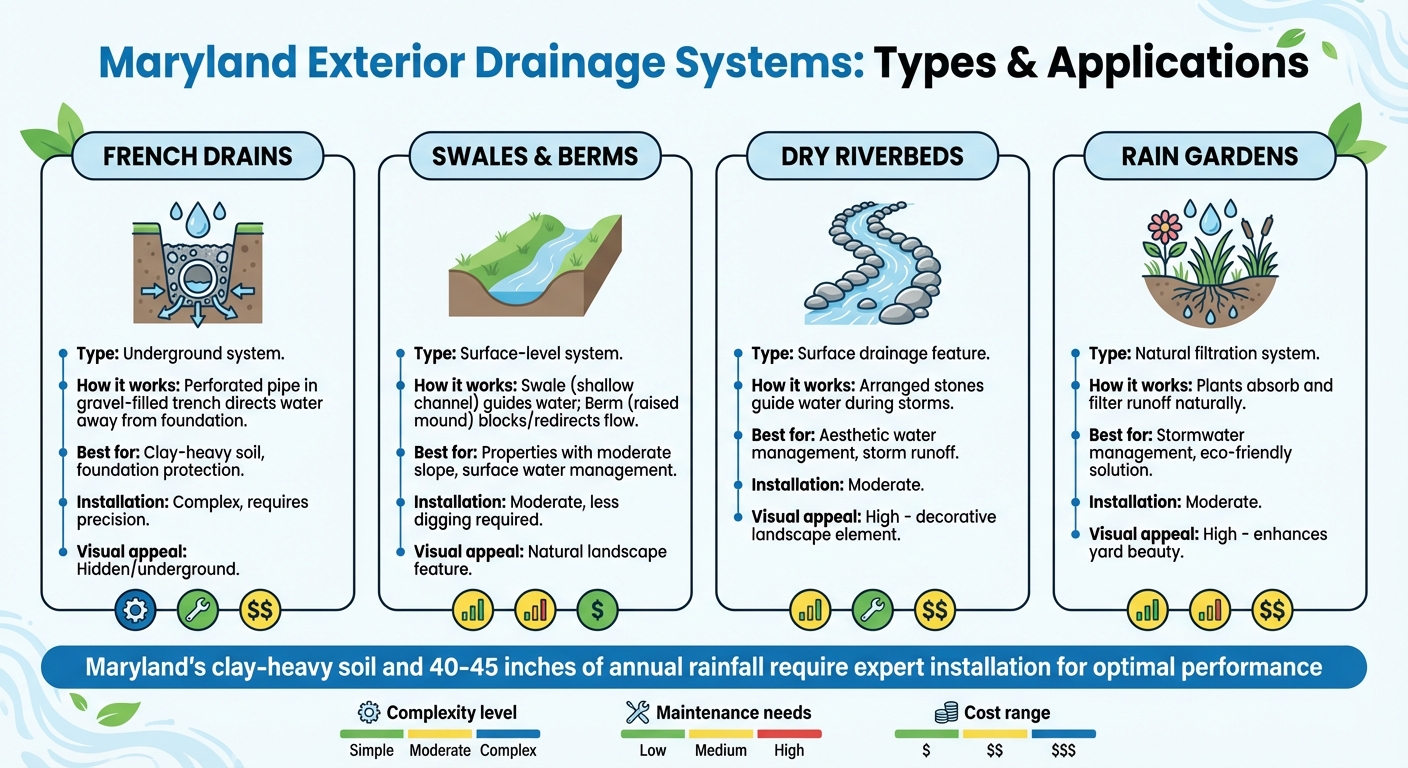
Maryland Exterior Drainage Systems Comparison Guide
Exterior drainage systems are designed to address specific water management challenges, offering homeowners in Maryland effective solutions tailored to their property’s unique conditions like soil type and slope.
French Drains
French drains are underground systems built to protect your home’s foundation by directing water away from it. These systems consist of a trench filled with gravel and a perforated pipe that collects and moves water to a safe discharge point. Given the slow-draining clay soil common in Maryland, French drains are particularly effective as they bypass the surface layer to handle water efficiently. However, installation requires precision. As Pro Landscapes emphasizes, "Drainage problems are tricky; expertise is essential" [1].
Surface Swales and Berms
For a simpler, surface-level approach, swales and berms offer practical water management solutions. A swale is a shallow channel that guides water across your yard, while a berm is a raised mound that blocks or redirects its flow. These systems work well together to direct rainwater away from buildings. Perfect for properties with moderate drainage challenges and enough slope, swales and berms provide effective control without the need for extensive digging. They take advantage of Maryland’s natural topography to manage water flow and reduce potential issues.
Dry Riverbeds and Rain Gardens
Dry riverbeds and rain gardens combine functionality with visual appeal. A dry riverbed uses carefully arranged stones to guide water during storms, while a rain garden features plants that naturally absorb and filter runoff. Pro Landscapes MD has successfully implemented these systems throughout Maryland. For instance, in Columbia, a combined dry riverbed and rain garden system not only manages stormwater through natural filtration but also enhances the yard’s overall look. These options are designed to handle Maryland’s frequent heavy rains while adding charm to your outdoor space.
What to Consider Before Installing a Drainage System
Before starting a drainage project, Maryland homeowners need to address both regulatory guidelines and the physical characteristics of their property. Taking these factors into account ensures your system works efficiently and complies with local laws.
Maryland Stormwater Regulations
In Maryland, specific regulations govern drainage projects, especially in areas like Montgomery County. For example, if you’re adding more than 400 square feet to your home’s footprint on lots smaller than 15,000 square feet, you’ll need a drainage plan. Similarly, any new detached accessory dwelling unit requires a formal drainage plan, no matter its size [4]. Larger projects – those involving over 5,000 square feet of earth movement or 100 cubic yards of excavation – require a sediment control permit. The review process for drainage plans usually takes about a week, and fees are often included in your building permit [4].
Maryland also enforces the "safe conveyance" rule, which mandates that your drainage system must manage runoff in a way that doesn’t negatively impact neighboring properties. In some cases, you’ll need to certify that your system was built according to approved plans and effectively handles water without causing issues for nearby homes. It’s essential to contact a Sediment Control inspector at least 48 hours before construction begins and to keep your approved plans on-site during the project [4].
Once regulatory requirements are addressed, the next step is ensuring your yard’s slope and grading are properly designed.
Proper Slope and Grading
Beyond meeting local regulations, the slope of your yard plays a critical role in how well your drainage system performs. As Sam Forline, Founder of Blue Collar Scholars, puts it:
"The grade of your yard will determine how well it drains, so it’s the one thing you need to get right for everything else to work as it should" [5].
Maryland homes typically require a slope of 2% to 3% – equivalent to a 2–3 inch drop over 10 feet – to direct water away from the home effectively [5]. In areas with heavy clay soil, like parts of Montgomery County, you might need an even steeper grade to prevent water from pooling. Most grading projects for residential properties are completed within 1–3 days. For best results, aim to start these projects in early fall (September–October) or spring (April–May), as these seasons provide ideal conditions for establishing grass within 4–6 weeks [5].
Addressing these foundational steps is key to creating a drainage system that safeguards your home and yard from water damage.
How to Maintain Your Drainage System
Once your drainage system is installed, keeping it in good shape requires regular upkeep. Maryland’s clay-heavy soil and unpredictable rainfall put constant strain on drainage components, leading to debris buildup, sediment accumulation, and water flow challenges. Without consistent maintenance, even the most well-designed system can fail when you need it most.
Routine Inspections and Cleaning
To avoid blockages, make it a habit to inspect your drainage system weekly, especially during the fall or after heavy storms. This includes clearing leaves, soil, and moss from drain covers and grates to ensure water flows freely [7].
On a monthly basis, check catch basins for sediment buildup and flush your drain pipes with a garden hose. This helps confirm there are no restrictions and that water moves without pooling [6][7]. Keep cleanout caps visible and accessible – don’t bury them under mulch, as you may need quick access during emergencies [6]. For a deeper look, schedule an annual camera inspection of your main drainage lines. This can help spot hidden problems like tree root intrusion or pipe collapses before they turn into major headaches [6].
Here’s a quick maintenance checklist for reference:
| Maintenance Task | Recommended Frequency | Purpose |
|---|---|---|
| Debris Removal (Grates/Covers) | Weekly / After Storms | Prevents surface blockages [7] |
| Flow Testing (Hose Flush) | Monthly | Checks for internal restrictions [7] |
| Catch Basin Cleaning | Monthly | Removes sediment and silt [6] |
| Professional Camera Inspection | Annually | Detects root intrusion and cracks [6] |
Staying on top of these tasks can help you catch small problems before they escalate into costly repairs.
Fixing Problems Early
If your routine checks uncover potential issues, it’s important to act quickly. Catching problems early not only protects your foundation but also saves you from expensive repairs down the line. Keep an eye out for warning signs like slow-draining areas, gurgling sounds, water stains in your basement, or patches of grass that are suddenly greener than the rest of your lawn – these could indicate trouble brewing in your drainage system [6][7].
Maryland drainage systems often include features like French drains, swales, berms, and sump pumps. Because of this, any problems require specialized solutions [1].
"Drainage problems are tricky, you won’t want to hire your ‘lawn guy’, or just any contractor for these issues. These are easy things to screw up when someone with a lack of experience tries their hand at these things." – Pro Landscapes MD [1]
For anything beyond simple debris removal, it’s best to call a Maryland drainage professional. They’ll ensure your system gets the right fix the first time, protecting your home’s foundation and preventing water damage [1][6].
Pro Landscapes MD: Drainage Solutions for Maryland

If drainage issues are putting your Maryland home’s foundation at risk, you need solutions designed specifically for your property. Pro Landscapes MD specializes in addressing these challenges, offering expert drainage services tailored to the unique stormwater demands and clay-heavy soils found in central Maryland. Below, you’ll find an overview of their services, service areas, and dedication to delivering top-tier results.
Drainage Services Offered
Pro Landscapes MD provides a wide variety of drainage and landscaping solutions to meet homeowners’ needs. Their services include:
- French drains, box and pipe drain systems, and grate and channel drains for effective water redirection.
- Natural solutions like berms, swales, dry riverbeds, and rain gardens, which not only manage runoff but also enhance the beauty of your landscape.
- Regrading services to fix improper slopes and ensure proper water flow.
- Sump pump installations for properties dealing with basement flooding concerns.
Every project starts with a complimentary site visit and a free proposal, ensuring the solution is customized to your property’s specific requirements.
Service Areas in Maryland
Pro Landscapes MD serves a broad area across the Baltimore and Washington, DC metro regions. They’ve completed projects in communities such as Columbia, Glenwood, and Rockville. Their service area includes Howard County, Montgomery County, Frederick County, Baltimore County, Carroll County, and Prince George’s County. From Annapolis to Towson and Bethesda to Ellicott City, they’re ready to help homeowners throughout central Maryland. [1]
Quality Work and Customer Service
What sets Pro Landscapes MD apart is their dedication to quality and expertise. Their team, which includes professional horticulturists and landscape designers, brings the technical knowledge needed to tackle Maryland’s tricky soil and drainage challenges. By using high-quality materials from trusted brands and incorporating eco-friendly practices like native plantings, they deliver solutions that are built to last. Whether it’s a small project or a large-scale drainage overhaul, Pro Landscapes MD ensures your property is protected for years to come. [8]
Conclusion
Maryland’s clay-heavy soil and regular rainfall make exterior drainage systems a must-have for protecting your foundation, basement, and yard. Without proper drainage, you could face serious issues like foundation cracks, basement flooding, and soil erosion. Fixing these problems isn’t cheap – foundation repairs can run between $2,300 and $6,800, while basement waterproofing may cost anywhere from $6,000 to $18,000[9]. Plus, most standard homeowner’s insurance policies won’t cover damage caused by groundwater or flooding[9].
To tackle these challenges, you’ll need a drainage solution tailored to your property. Whether it’s French drains, berms, swales, or regrading, the key is creating a system that addresses your specific water flow issues.
Precision is everything. For example, pipe slopes should generally be about 1 inch per 10 feet, and using the right filter fabrics is essential. As Pro Landscapes emphasizes:
"Drainage problems are tricky, you won’t want to hire your ‘lawn guy’, or just any contractor for these issues. These are easy things to screw up when someone with a lack of experience tries their hand at these things"[1].
When installed by experts and properly maintained, a well-designed drainage system can last 30 to 40 years[9]. This investment not only protects your home’s structure but also helps maintain the beauty of your yard. Consider scheduling a professional site visit to get a custom proposal tailored to your property’s needs – it’s a smart first step toward keeping your Maryland home safe from water damage.
FAQs
How do I know which drainage system my yard needs?
To figure out the best drainage system for your yard, start by identifying the specific water problems you’re dealing with. Are you noticing standing water, poor drainage, or even erosion? Pay attention to trouble spots like pooling near your home’s foundation or areas with heavy surface runoff.
Once you’ve pinpointed the issues, solutions like French drains, dry riverbeds, or even grading adjustments can help manage the water effectively. To ensure the job is done right, it’s a good idea to consult a professional. They can evaluate essential factors like your yard’s slope, soil type, and water flow patterns, providing a solution designed specifically for your yard’s needs.
Do I need a permit or drainage plan for my project in Maryland?
In Maryland, tackling drainage projects might require a permit or a drainage plan. It’s crucial to stay on top of local regulations to ensure everything is done by the book. Consulting a professional can make this process much smoother. Companies like Pro Landscapes MD specialize in drainage and stormwater management, offering guidance to help you navigate local requirements and meet any specific needs in your area.
What are the warning signs of a failing drainage system?
Pooling water in your yard, erosion caused by water runoff, and persistently soggy soil around your property are all warning signs of a drainage system that’s not working properly. These issues can point to poor drainage, and if left unaddressed, they might lead to more serious problems. It’s often a good idea to consult a professional to tackle these concerns before they escalate.
Chat with Us