









- bhavya gada
- No Comments
When choosing between stone and metal fire pits, the decision comes down to durability, cost, and flexibility. Stone fire pits are permanent, long-lasting, and can increase property value, but they require professional installation and come with higher upfront costs. Metal fire pits are portable, affordable, and easier to maintain initially, but they may need more frequent upkeep to prevent rust and damage.
Key Points to Consider:
- Stone Fire Pits: Durable, weather-resistant, and visually appealing. Ideal for permanent setups but expensive and immovable.
- Metal Fire Pits: Lightweight, portable, and budget-friendly. Great for flexibility but prone to rust and heat conduction risks.
Quick Comparison Table:
| Factor | Stone Fire Pits | Metal Fire Pits |
|---|---|---|
| Durability | Lasts generations | Long-lasting with proper care |
| Cost | $15,000–$30,000+ | $1,000–$20,000 |
| Installation | Requires professional installation | Simple; often DIY or pre-assembled |
| Portability | Fixed; immovable | Easy to move or store |
| Maintenance | Occasional sealing needed | Regular rust prevention required |
| Aesthetics | Natural, luxurious look | Sleek, modern designs |
Choose stone for a permanent, elegant addition to your outdoor space or metal for affordability and flexibility. Both options have pros and cons, so prioritize what aligns best with your needs and property style.
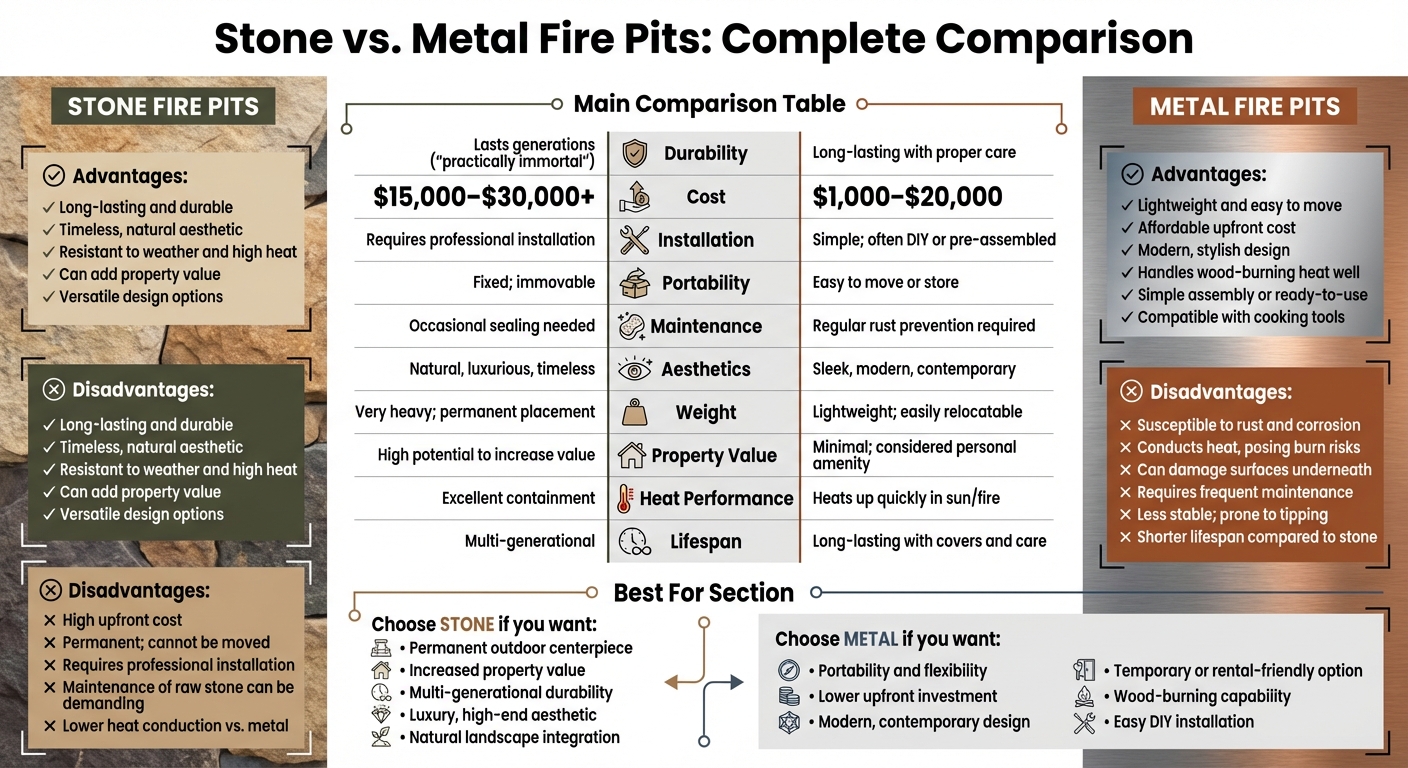
Stone vs Metal Fire Pits: Complete Comparison Guide
Stone Fire Pits: Pros and Cons
Benefits of Stone Fire Pits
Stone fire pits are built to last. Materials like granite, bluestone, and fieldstone can endure decades of use, making them a reliable option for outdoor spaces. They handle Maryland’s freeze-thaw cycles with ease and resist damage from humidity and heavy rainfall. As Fire Pit Outfitter explains:
"The advantage of a stone fire pit is that it is practically immortal. It can be used for generations and has the potential to increase the real estate value of the property." [1]
Another standout feature is their natural beauty. Stone fire pits complement both modern and rustic designs, offering homeowners the option to choose between sleek, polished cuts for a contemporary vibe or rugged, stacked arrangements for a more rustic charm. This versatility allows them to seamlessly integrate into a wide range of backyard aesthetics while serving as a permanent centerpiece.
Stone’s heat resistance is another strong point. Unlike metal, which can warp or rust over time, stone holds up against high temperatures and daily use without losing its structural integrity.
While stone fire pits have plenty of advantages, they aren’t without their challenges.
Drawbacks of Stone Fire Pits
One of the biggest downsides is the cost. Quality materials and professional installation can make stone fire pits a pricey investment. Proper foundation work and skilled labor are essential to ensure the structure’s durability and safety, which adds to the overall expense.
Their weight and permanent nature also limit flexibility. Once installed, moving or removing a stone fire pit is not a simple task. This fixed placement can be a drawback if you decide to change your outdoor layout in the future.
Improper installation can lead to issues like cracking, uneven heat distribution, or even safety hazards. DIY attempts may not provide the proper foundation or fireproof layering required to meet local safety codes. Without professional expertise, the risk of structural problems increases significantly.
To make things clearer, here’s a quick breakdown of the pros and cons:
Stone Fire Pits: Pros and Cons Summary Table
| Advantages | Disadvantages |
|---|---|
| Long-lasting and durable | High upfront cost for materials and installation |
| Timeless, natural aesthetic | Permanent; cannot be moved |
| Resistant to weather and high heat | Requires professional installation for safety |
| Can add property value | Maintenance of raw stone can be demanding |
| Versatile design options for modern or rustic styles | Lower heat conduction compared to metal |
sbb-itb-843f8be
Metal Fire Pits: Pros and Cons
Benefits of Metal Fire Pits
Metal fire pits are known for their portability and versatility. Thanks to their lightweight build, they’re easy to move around your yard, store during harsh weather, or even take along if you move. This makes them a great option for renters or anyone who likes to rearrange their outdoor spaces throughout the year.
Their modern, streamlined look – especially in stainless steel – adds a stylish touch to outdoor settings. Plus, stainless steel resists rust and corrosion, making it a good choice for urban or minimalist designs.
Another big advantage is their ability to handle the high heat of wood fires without warping. Catherine Traschenko, Fire Products Design Specialist at DreamCast, highlights this strength:
"The greatest benefit for metal fire pits is if you are planning to use wood as your fuel. Concrete is strong, but it can not take the constant high heat generated by wood embers. Exposure to this kind of heat long term will cause the concrete to spall, which is essentially cracking."
Metal fire pits are also budget-friendly and often come ready to use or require minimal assembly. Many models include features like grills for cooking or electronic ignition systems for gas-fueled setups, adding even more functionality.
Still, these benefits come with a few downsides.
Drawbacks of Metal Fire Pits
One of the main issues with metal fire pits is their vulnerability to rust and corrosion. Steel and iron models, when exposed to rain, humidity, or temperature changes, can start to degrade over time. Even powder-coated finishes only offer temporary protection; once the coating chips, rust can set in quickly.
Another downside is how metal conducts heat. The surfaces can become extremely hot, posing a burn risk and potentially damaging the area beneath the fire pit, like a deck or grass. Using protective barriers or ensuring the design provides enough clearance can help reduce this risk.
Their lightweight nature, while convenient, also makes them more prone to tipping over in strong winds or from accidental bumps. This means placement in a stable, secure area is essential, especially in open spaces.
Finally, metal fire pits require consistent maintenance to prevent rust, repair paint chips, and address wear and tear. Without regular upkeep, their lifespan can be significantly shortened compared to other materials like stone or concrete.
Metal Fire Pits: Pros and Cons Summary Table
| Advantages | Disadvantages |
|---|---|
| Lightweight and easy to move | Susceptible to rust and corrosion |
| Affordable upfront cost | Conducts heat, posing burn risks |
| Modern, stylish design | Can damage surfaces underneath |
| Handles wood-burning heat well | Requires frequent maintenance |
| Simple assembly or ready-to-use | Less stable; prone to tipping |
| Compatible with cooking tools | Shorter lifespan compared to stone |
Best Materials For Fire Pits
Stone vs. Metal Fire Pits: Side-by-Side Comparison
Choosing between stone and metal fire pits comes down to weighing the factors that matter most to you. Stone fire pits are a permanent addition to your outdoor space. They’re heavy, require professional installation, and cost anywhere from $15,000 to over $30,000 [5]. On the other hand, metal fire pits are more affordable and flexible, with prices starting at about $1,000 for portable options and going up to $20,000 for high-end prefab models [5]. Durability is another key consideration when comparing these two materials.
Stone fire pits are known for their unmatched durability, often lasting for generations [1]. Metal fire pits, especially those made from stainless steel, are also durable but depend on protective finishes to resist rust and corrosion over time [3].
Maintenance is another critical factor. Stone fire pits require periodic sealing to prevent cracks caused by moisture and weather exposure. Meanwhile, metal fire pits may need treatments like powder coating or rust prevention to maintain their appearance and structural soundness [3]. Additionally, metal fire pits can heat up quickly in direct sunlight, which could pose a safety concern [3].
When it comes to aesthetics, the choice hinges on your design preferences. Stone fire pits deliver what Cooke Furniture describes as a "timeless, luxurious, and architectural feel", blending seamlessly with modern landscaping and hardscaping trends [3]. In contrast, metal fire pits offer a sleek, modern look. Ultimately, your decision will depend on whether you value permanence and increased property value or prefer the flexibility and lower upfront cost of metal. Check out the table below for a quick comparison of these two options.
Stone vs. Metal Fire Pits: Comparison Table
| Factor | Stone Fire Pits | Metal Fire Pits |
|---|---|---|
| Durability | Extremely high; multi-generational [1] | High; depends on finish and metal type |
| Lifespan | "Practically immortal" [1] | Long-lasting with proper care and covers |
| Cost | $15,000–$30,000+ for full installations [5] | $1,000–$20,000 depending on quality [5] |
| Installation | Complex; requires professional contractors [1] | Simple; often portable or DIY-friendly [1] |
| Weight | Very heavy; permanent placement | Lightweight; easily relocatable [1] |
| Maintenance | Requires sealing to prevent cracking [3] | May need rust-prevention or coating [3] |
| Aesthetics | Timeless, natural, luxurious [3] | Sleek, modern, contemporary [3] |
| Heat Performance | Excellent containment [3] | Heats up quickly in sun/fire [3] |
| Portability | None; built-in structure [1] | High; can be moved or stored [1] |
| Property Value | High potential to increase value [1] | Minimal; considered personal amenity [1] |
When to Choose Stone Fire Pits
Stone fire pits are perfect for permanent outdoor setups, especially when durability and enhancing property value are top priorities. On larger properties with sprawling gardens or open spaces, a stone fire pit can become a stunning centerpiece – particularly when placed to take advantage of a scenic view. As Fire Pit Outfitter highlights:
"The advantage of a stone fire pit is that it is practically immortal. It can be used for generations and has the potential to increase the real estate value of the property" [1].
These fire pits are an excellent choice for high-end and luxury environments. Cooke Furniture emphasizes this point:
"Stone remains the gold standard for properties prioritizing prestige and permanence" [3].
From upscale homes to resorts, country clubs, and hospitality venues, stone fire pits bring a sense of architectural elegance and timeless charm that few materials can match.
Stone fire pits also work well across a variety of landscape styles, blending seamlessly into both rustic and modern designs. Chris Darr from Xscape 2 Nature notes:
"Natural stone is a timeless choice for outdoor fire pits and fireplaces. It blends beautifully with patios, walkways, and landscaping, creating a cohesive, organic look" [2].
Whether you lean toward rugged, stacked fieldstone or sleek, modern-cut granite, stone fire pits naturally complement hardscaping elements like paver patios and stone pathways, creating a unified outdoor aesthetic.
For those looking to design a private retreat that feels intimate and enduring, stone’s natural texture and longevity make it an excellent choice. However, professional installation is non-negotiable. Due to their weight, stone fire pits require a proper foundation, ventilation, and fireproof layering. Additionally, periodic sealing is necessary to maintain their integrity. These technical considerations ensure that a stone fire pit not only enhances your outdoor space but also serves as a lasting investment.
When to Choose Metal Fire Pits
Metal fire pits shine when flexibility and portability are key. Whether you’re renting a home, living in a temporary space, or simply enjoy the option to rearrange your outdoor setup, metal fire pits are a smart, practical choice. Catherine Traschenko, Fire Products Design Specialist at DreamCast, highlights their versatility:
"Metal fire pits can be a good option if you need something lightweight, portable, or more budget-friendly upfront. They’re also great for temporary setups, camping, or renters who want something they can take with them." [4]
Beyond their practicality, metal fire pits bring a sleek, modern aesthetic that pairs well with urban and contemporary designs. Stainless steel models, for example, are a favorite for rooftop terraces, chic hospitality spaces, and stylish patios. Unlike the timeless yet rustic vibe of stone, metal fire pits offer a clean, industrial look that aligns with today’s design preferences.
When it comes to performance, metal fire pits are particularly well-suited for wood burning. They handle high, concentrated heat without the risk of spalling – an issue often seen with concrete fire pits under similar conditions [4]. Plus, their ability to incorporate accessories like grill grates makes them a multifunctional addition, perfect for hosting backyard barbecues and casual gatherings. Many models are also compatible with electronic ignition systems and advanced controls, adding convenience to their list of benefits.
With a lower upfront cost, metal fire pits are an appealing option for those who want a high-quality outdoor fire feature without overspending. Their adaptability and ease of accessorizing make them a standout choice. Up next, we’ll explore how their maintenance and durability stack up against stone fire pits.
Maintenance and Lifespan: Stone vs. Metal
When it comes to durability, stone fire pits stand out as the long-term champions. As Fire Pit Outfitter explains:
"The advantage of a stone fire pit is that it is practically immortal. It can be used for generations and has the potential to increase the real estate value of the property." [1]
Granite fire pits, in particular, can last for decades with only minimal care [7]. On the other hand, metal fire pits often need more frequent attention due to their vulnerability to rust and corrosion [6]. While both materials are strong, their longevity depends heavily on proper maintenance routines.
Maintenance Requirements
Stone fire pits are relatively low-maintenance but do require occasional cleaning. A simple mix of water and muriatic acid can effectively remove soot and debris [6]. To protect against moisture and weather damage, professional sealing is recommended [3]. Metal fire pits, however, demand more consistent care. Regular cleaning with a wire brush and heavy-duty soap, followed by applying a protective clear coat or powder coating, helps prevent rust from forming [3][6].
Ash Management and General Care
Managing ashes is critical for both stone and metal fire pits. Allow at least 24 hours for ashes to cool completely before handling them [6]. Once cooled, store the ashes in a sealed metal container to avoid staining stone surfaces or speeding up corrosion on metal [6].
Another key tip: avoid temperature shock. Pouring cold water onto a hot fire pit can cause significant damage to both materials. Let fires extinguish naturally instead [6]. For added protection, use a weatherproof cover during the off-season and clean any cooking surfaces immediately after use [3][6].
Pro Landscapes MD Fire Pit Services

Pro Landscapes MD offers customized fire pit solutions across central Maryland, covering areas like Annapolis, Gaithersburg, Columbia, and Bethesda. Their expertise in hardscaping extends to both stone and metal fire pits, designed to endure Maryland’s unpredictable weather.
For stone fire pits, the focus is on durability and blending seamlessly with natural surroundings. They use materials like granite, bluestone, fieldstone, traditional brick, and modular concrete pavers. To ensure longevity, their installations often include steel or copper inserts, which protect the inner surfaces from intense heat while maintaining a natural appearance[2]. Additionally, they address critical structural needs, such as proper foundations, ventilation, and specialized fireproof layers, to prevent cracking during the area’s freeze-thaw cycles – a common issue with DIY setups[2].
For those interested in metal fire pits, Pro Landscapes MD offers options like stainless steel fire tables and propane-fueled units. These are perfect for homeowners dealing with HOA restrictions on wood-burning or those looking for a low-maintenance alternative[2][3]. They take care to match fire pit materials with existing hardscapes, whether it’s pairing with flagstone patios for a natural look or using concrete and metal for a modern aesthetic[2].
Their professional installation process is tailored to Maryland’s demanding climate, ensuring the use of heat-resistant materials and creating durable structures that can increase property value.
Pro Landscapes MD goes beyond just installing fire pits – they design complete outdoor living areas. By coordinating fire pits with patios, walkways, and outdoor kitchens, they create cohesive spaces where the fire pit becomes a central feature. Their services extend across Howard, Montgomery, Carroll, Frederick, Prince George’s, and Baltimore counties, as well as Washington, DC, ensuring your backyard is both functional and visually stunning.
Conclusion
When deciding between stone and metal fire pits, think about what suits your space, budget, and lifestyle best. Stone fire pits offer timeless beauty and become a permanent part of your outdoor space, though they require a larger upfront investment. On the other hand, metal fire pits are more budget-friendly and portable, with options ranging from economical designs to high-end smokeless models.
Maintenance is another important factor. Stone fire pits are low-maintenance once installed, while metal fire pits need covers and proper storage to prevent rust and extend their life. If you’re using a metal fire pit on a deck, protect the surface with a stand or stone pavers to avoid heat damage. Keep in mind how your local climate and regulations might affect your choice. For example, metal fire pits – especially propane models – work well in areas with wood-burning restrictions, while stone fire pits need proper foundations and drainage to handle freeze-thaw cycles.
For those in Maryland, Pro Landscapes MD can help with expert installation and custom designs to ensure your fire pit is safe and built to last. Whether you choose stone or metal, pick the option that complements your property and meets your needs.
FAQs
Which fire pit material is safer around kids and pets?
Stone fire pits tend to be a safer option for households with kids and pets. Their built-in design makes them stable and less prone to tipping, which reduces the risk of accidents. Plus, their sturdy construction adds an extra layer of security. On the other hand, metal fire pits, while convenient due to their portability, can be hazardous if children or pets accidentally tip or move them. To enhance safety, always supervise the area and consider using raised fire pits with protective barriers.
How do I prevent a metal fire pit from rusting?
To keep your metal fire pit in good shape and avoid rust, make sure it’s dry and shielded from moisture. You can store it in a covered spot or use a weatherproof cover when you’re not using it. Adding a protective coating or applying paint designed for metal can also provide extra protection. Don’t forget to clean it regularly to get rid of dirt and any moisture buildup, as these can speed up rusting.
Do I need a permit for a stone fire pit in Maryland?
In Maryland, portable, non-built-in stone fire pits usually do not require a permit. However, if you’re considering a built-in stone fire pit, you might need one depending on your area’s specific regulations and safety codes. It’s always a good idea to consult your local authorities to make sure you’re following the rules.
Chat with Us