









- bhavya gada
- No Comments
Struggling with waterlogged shade gardens in Maryland? Here’s how to fix it.
Shade gardens often face poor drainage due to compacted clay soil, dense tree canopies, and seasonal rainfall. These conditions can suffocate plants and create soggy environments. To solve these issues, you need to address both soil and water flow challenges with season-specific solutions.
Key Solutions:
- Spring: Install French drains, create swales, and mix compost into the soil to handle heavy rain and thaw.
- Summer: Use rain gardens, adjust slopes, and add dry riverbeds to manage stormwater.
- Fall: Rake leaves into beds, clear drainage grates, and aerate soil to improve water absorption.
- Winter: Redirect downspouts, install dry wells, and level uneven ground to prevent ice damage.
For severe drainage problems, professional services like French drains, grading, and stormwater management can make a big difference.
How To Improve Garden Drainage | The BEST Soil Drainage Solutions
sbb-itb-843f8be
Common Drainage Problems in Shade Gardens
Shade gardens in Maryland often struggle with drainage issues due to the region’s soil composition, extensive tree coverage, and seasonal rainfall. Tackling these challenges head-on is key to fostering a thriving garden.
Poor Soil Permeability from Compacted Clay Soils
A significant issue in Maryland is its clay-heavy soil, which can account for over 50% of the soil’s makeup. This type of soil drains water at a frustratingly slow rate – less than 1 inch per hour – leading to standing water after heavy rains [2].
"When soil becomes compacted it is physically changed (less space between soil particles). This reduces root growth and the uptake of plant nutrients (chemicals), and reduces biological activity, as soil organisms will have less oxygen and less room to move and reproduce." – University of Maryland Extension [2]
Healthy soil should have about 50% pore space for air, but compacted clay leaves little room for roots to breathe. This suffocates plants and stifles their growth [3]. Adding to the challenge, dense tree canopies further exacerbate drainage problems.
Water Accumulation Due to Dense Shade Canopy
Thick tree canopies in Maryland shade gardens slow down evaporation, keeping the ground damp throughout the year [1]. While this moisture benefits certain native plants like Sensitive fern (Onoclea sensibilis) and Golden groundsel (Packera aurea), it limits the variety of plants that can thrive in these conditions [1].
Excess surface water, if unchecked, creates a soggy environment that most plants cannot tolerate. Before implementing any seasonal drainage fixes, it’s essential to address these underlying issues to create a balanced, adaptable garden.
Seasonal Drainage Solutions for Shade Gardens
Maryland’s shade gardens face unique drainage challenges throughout the year, requiring specific strategies for each season. Tackling these issues at the right time helps prevent water buildup and keeps your garden healthy. Here’s how to handle the moisture challenges that come with each season.
Spring: Preparing for Heavy Rains and Thaw
Spring in Maryland often brings snowmelt and heavy rains, which can overwhelm the already compacted clay soil found in many shade gardens. To manage this:
- Install French drains: These gravel-filled trenches help redirect excess water and prevent pooling in vulnerable areas.
- Create shallow swales: Following the natural contours of your garden, swales channel runoff without requiring major digging.
Another simple yet effective step is adding organic matter to the soil. Mix 2–3 inches of compost into the top 6 inches of soil around your plants. This not only improves drainage but also supports the soil’s ecosystem, helping it absorb and manage water better.
Summer: Managing Humidity and Storms
Summer storms can dump significant amounts of rain in a short time, making quick drainage essential. Consider these solutions:
- Plant rain gardens: These shallow depressions are perfect for capturing runoff. Fill them with moisture-tolerant native plants like cardinal flower or swamp milkweed, which thrive in both wet and dry conditions.
- Adjust slopes: Grade your garden to ensure water flows away from structures and planting beds. A 2% slope – about a 2-inch drop over 100 inches – works well.
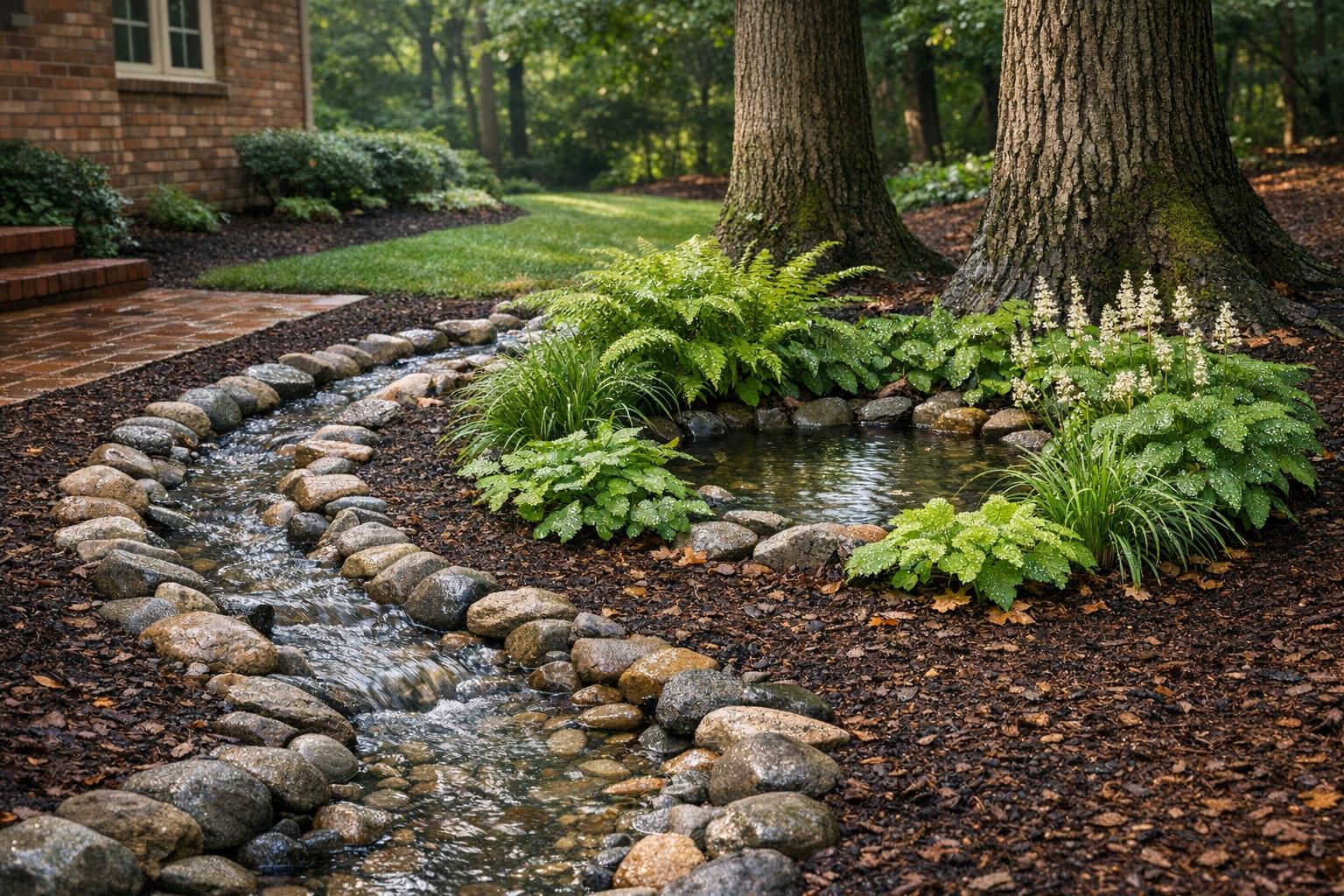
- Add dry riverbeds: Lining channels with river rocks not only manages stormwater but also enhances the garden’s appearance.
These techniques work together to handle summer’s intense rain while keeping your shade garden visually appealing.
Fall: Controlling Leaf Litter and Cooling Rains
Fall brings its own set of challenges, from heavy rains to piles of fallen leaves. Instead of bagging up every leaf, rake them into garden beds or around tree bases. This benefits the soil while keeping hard surfaces and drainage systems clear.
"A thin layer of leaves is actually healthy for grass, but the leaves also don’t need to be left exactly where they fall. You can rake them into garden beds, around tree bases, or into other designated areas." – Xerces Society [4]
To further protect your garden:
- Clear drainage grates and sewer heads: This prevents leaf mats from blocking water flow [5].
- Use strong-stemmed perennials: Plants like ferns or bugbanes can grow through 2–6 inches of leaf litter, helping to break it down naturally [5].
- Loosen compacted soil: Use a garden fork to gently aerate the soil, allowing cooling rains to soak in. Be mindful of ground-nesting bees, which rely on undisturbed soil for winter survival [4].
Winter: Preventing Ice Damage and Erosion
Winter may seem like a quiet season for your garden, but preparation is key to avoiding issues during the freeze-thaw cycles. Start by redirecting downspouts away from your shade garden. Use underground drain pipes or splash blocks to extend them at least 6 feet from your foundation.
Other winter strategies include:
- Installing dry wells: These gravel-filled pits collect runoff from hard surfaces, releasing it slowly to prevent ice buildup on paths or in garden beds.
- Leveling uneven ground: Smooth out low spots to prevent water from freezing and expanding, which can damage roots and create a mess during the spring thaw.
Pro Landscapes MD Drainage Solutions for Shade Gardens

Maryland’s compacted clay soil and dense tree cover can make drainage a real headache for shade gardens. But with expert help, these challenges can be turned into opportunities for creating a lush, thriving outdoor space. Pro Landscapes MD specializes in solving drainage issues throughout Howard County, Montgomery County, Carroll County, Frederick County, Prince George’s County, and Baltimore County. From Bethesda to Ellicott City, they offer tailored solutions to meet the unique needs of shaded landscapes.
Custom French Drains and Dry Riverbeds
One standout approach to managing water in shade gardens is the use of custom French drains and dry riverbeds. French drains are gravel-filled trenches designed to channel water away from areas prone to pooling. Pro Landscapes MD carefully designs these systems to work with your property’s natural contours, protecting both planting beds and home foundations from water damage.
Dry riverbeds bring a dual benefit – they’re practical and visually appealing. These rock-lined channels not only control stormwater runoff but also add a decorative touch that blends seamlessly with shaded environments. Built to handle Maryland’s heavy rains and spring snowmelt, these features are often paired with professional grading to further optimize water flow.
Professional Grading and Yard Leveling
Grading is another crucial tool in managing water flow. Pro Landscapes MD reshapes uneven terrain to create gentle slopes that direct water away from plants and structures. This is especially useful in shade gardens, where clay soil tends to resist water absorption. For areas with mild slopes (under 5%), they can also install rain gardens at least 30 feet from foundations to naturally absorb runoff [8].
Stormwater Management for Maryland Properties
Maryland’s shade gardens often require creative stormwater management to address persistent drainage problems. Pro Landscapes MD offers a range of solutions designed to protect both your property and nearby waterways [8]. These include:
- Underground soakaways that slowly filter water into the soil [6]
- Dry wells that collect and gradually release excess runoff [9]
- Surface drains with catch basins to handle standing water in flat areas [7]
For eco-conscious homeowners, they also provide options like permeable pavers and redirecting downspouts underground [9]. Each system is customized to handle the challenges of Maryland’s clay soil and the unique conditions of shaded gardens.
Comparison of Drainage Solutions for Shade Gardens

Comparison of Drainage Solutions for Shade Gardens: Costs, Benefits, and Best Seasons
Comparison Table
When it comes to drainage solutions for shade gardens, your choice will hinge on factors like budget, soil type, and how quickly you’re looking to see results. Each method comes with its own set of advantages and challenges, especially when dealing with Maryland’s heavy clay soil.
| Solution | Pros | Cons | Best Season | Pro Recommendation |
|---|---|---|---|---|
| French Drains | Provides immediate subsurface water relief; handles both surface and groundwater; requires minimal maintenance [10][14] | Higher initial cost (around $10–$100 per linear foot); labor-intensive to install [10][16] | Spring or Fall [14] | Ideal for severe water pooling near foundations or low areas. Use rigid PVC pipes wrapped in landscape fabric for durability [11][14][15]. |
| Dry Riverbeds (Swales) | Affordable (about $3–$4 per square foot); adds a natural aesthetic; manages heavy surface runoff [10][16] | Needs significant yard space; occasional landscaping is required [10] | Any dry weather period | Best for properties with sloped runoff. Add moisture-loving plants like ferns or hostas for a functional and attractive solution [13][14]. |
| Dry Wells | Great for dispersing large volumes of water in specific areas; prevents waterlogging for trees [10][11] | Limited to small areas; professional installation can cost up to $5,000; requires regular maintenance [10][16] | Fall (before winter rains) [16] | Perfect for specimen trees in clay soil. Can also serve as an endpoint for other drainage systems [11][16]. |
| Grading/Yard Leveling | Fixes pooling by creating natural slopes for water flow [16] | Labor-intensive; requires maintaining a 4-inch clearance from siding [16] | Spring or Fall [16] | Crucial for uneven terrain. Often paired with French drains for better results. |
| Core Aeration with Compost | Inexpensive (around $270 for large lawns); boosts soil health and oxygen flow over time [12][16] | Takes years to see major results; only effective for minor compaction issues [12][16] | Spring or Fall [14] | Works well for clay gardens. Apply 2–3 inches of compost annually on top of the soil rather than mixing it in. |
"French drains may have a higher upfront cost, but they require less maintenance over time compared to some other methods." – Shazam Ramjohn, Author [10]
This table highlights the pros and cons of each drainage method, helping you weigh your options based on Maryland’s specific soil challenges and seasonal conditions.
In Maryland’s dense clay soils, subsurface drainage systems like French drains and dry wells excel at redirecting trapped water, providing a more permanent solution. On the other hand, surface approaches like swales effectively manage runoff but need regular landscaping upkeep. Your decision should balance your budget, site-specific needs, and seasonal considerations. For severe water pooling, professional installation of French drains can save plants and protect your home’s foundation.
Conclusion
Tackling seasonal drainage challenges now ensures your garden stays protected throughout the year. Effective drainage safeguards not only your plants but also your investment in your outdoor space. Each season brings its own set of obstacles, and addressing them with tailored strategies is key to maintaining healthy plants and a beautiful landscape.
By aligning your drainage approach with Maryland’s seasonal weather patterns, you can prevent issues before they arise. Whether it’s managing heavy spring rains, summer downpours, fall leaf buildup, or the winter freeze-thaw cycle, proactive planning keeps your yard in top shape.
For severe pooling or persistent drainage problems, professional help may be necessary. When DIY methods aren’t enough, expert solutions become critical. Pro Landscapes MD offers specialized drainage services across central Maryland, including French drains, dry riverbeds, grading, yard leveling, and stormwater management tailored to your needs.
Take the next step in protecting your landscape. Schedule a consultation with Pro Landscapes MD to get expert drainage solutions designed specifically for Maryland’s soil and climate.
FAQs
How can I tell if my shade garden needs a French drain?
If your shade garden struggles with standing water or soggy soil that lingers after rain, it might be time to consider a French drain. Persistent pooling often points to poor drainage, which could mean your garden needs a stormwater management solution to stay healthy and avoid potential water damage.
Will improving drainage harm my trees’ roots?
Improving drainage, when done carefully, is unlikely to harm your trees’ roots. The key is to avoid over-compacting the soil, as this can restrict water and air flow. Make sure the soil allows for proper water absorption to support healthy root systems. Incorporating native plants and adopting smart stormwater management techniques can also safeguard tree roots while enhancing drainage.
Which plants can handle soggy shade in Maryland?
Plants that thrive in Maryland’s damp, shaded areas include Virginia bluebells (Mertensia virginica), foam flower (Tiarella cordifolia), and maidenhair fern (Adiantum pedatum). These native perennials and ferns are well-adapted to moist, low-light conditions, making them ideal for such spots.
Chat with Us