









- bhavya gada
- No Comments
When designing outdoor spaces, choosing between flagstone and pavers comes down to the look you want to achieve. Here’s a quick breakdown:
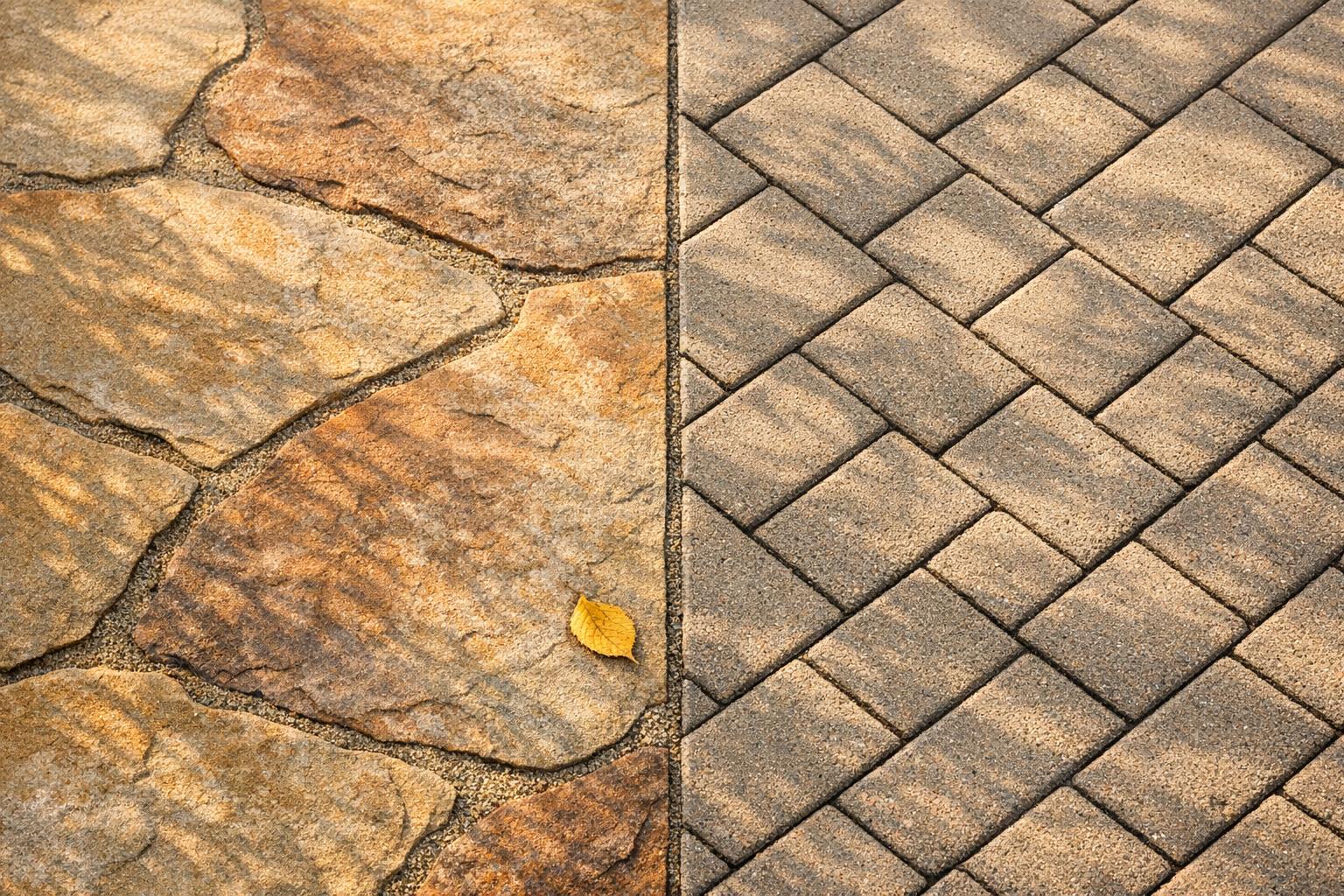
- Flagstone offers a natural, rustic appearance with irregular shapes, textured surfaces, and earthy tones like gray, tan, and blue. It’s great for relaxed, garden-like settings and pairs well with traditional homes.
- Pavers deliver a clean, polished look with uniform shapes and a wide range of colors and patterns. They suit modern, structured designs and are ideal for contemporary homes.
Quick Comparison:
| Feature | Flagstone | Pavers |
|---|---|---|
| Shape | Irregular, natural | Uniform, geometric |
| Color Options | Earthy tones (gray, tan, blue) | Wide range (neutral to bold) |
| Texture | Rugged, natural | Smooth, tumbled, or embossed |
| Design Style | Rustic, organic | Modern, structured |
| Best For | Garden paths, rustic patios | Driveways, formal walkways |
Your choice depends on whether you prefer a relaxed, natural vibe or a sleek, modern aesthetic.
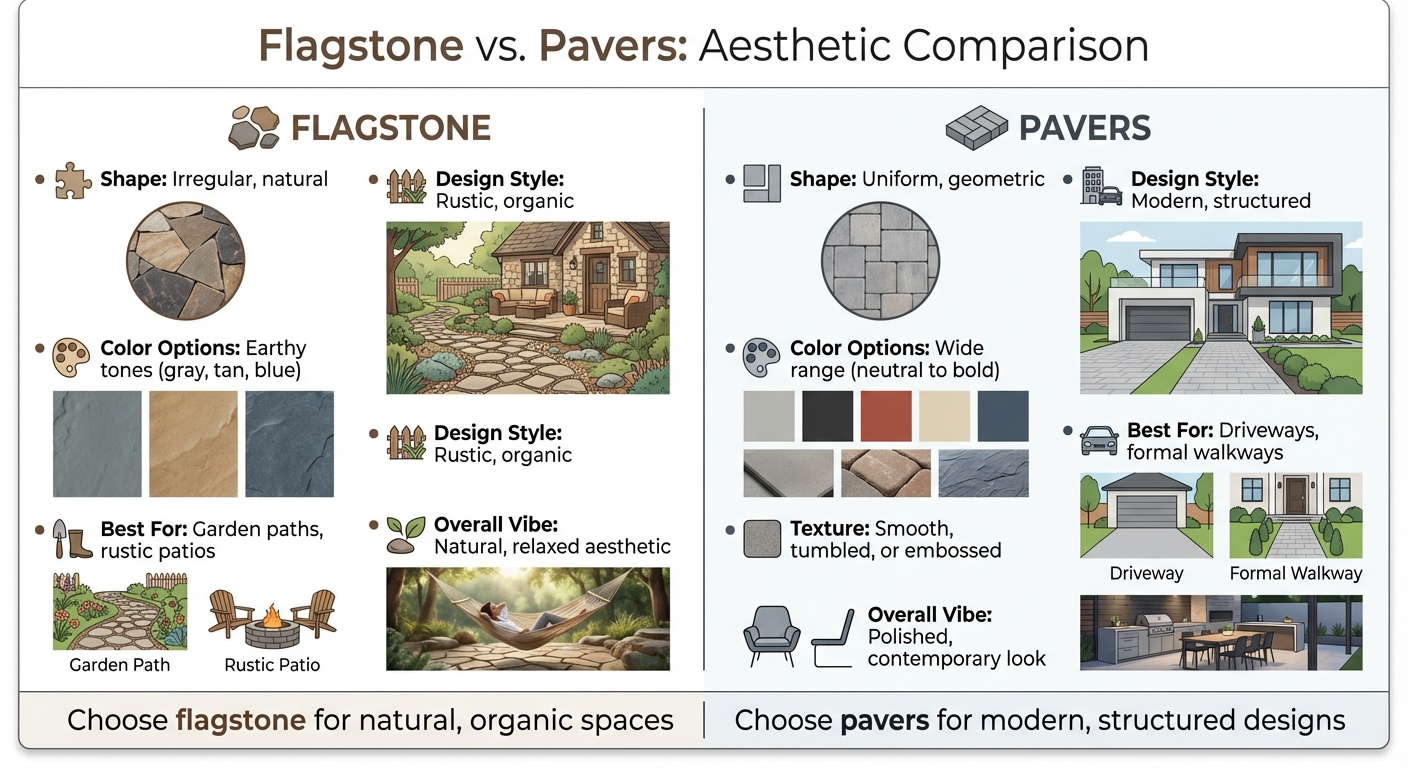
Flagstone vs Pavers: Visual Comparison Chart for Outdoor Spaces
Flagstone vs Pavers: Which is Best for Your Patio?
sbb-itb-843f8be
How Flagstone Looks
Flagstone is celebrated for its raw, natural beauty. Each piece is unique, offering a charm that synthetic materials just can’t match. As Hardscape Genius explains:
Flagstone looks natural because it is natural. The irregular shapes, varied thicknesses, and color variations create a one-of-a-kind appearance that manufactured products can’t replicate. [2]
Natural Shapes and Textures
One of the standout features of flagstone is its irregular edges and textured surfaces, which give it an effortlessly organic feel. Each stone’s unique shape requires thoughtful placement during installation, resulting in a layout that feels both artistic and intentional. This handcrafted touch adds a sense of movement and character to outdoor spaces. Beyond its aesthetics, the natural texture of flagstone provides a slip-resistant surface, making it a practical choice for areas like walkways and pool decks where safety is a priority. Unlike uniform pavers, which can feel predictable, flagstone’s imperfections create an engaging visual flow that naturally draws the eye.
Color Variations
Flagstone comes in a rich palette of earthy tones. Sandstone offers warm browns and tans, limestone features cool grays and off-whites, and bluestone delivers rich blue-gray hues. There are also multi-colored slates with layered tones for a more vibrant look. For Maryland homeowners, Pennsylvania bluestone is a popular choice, offering a refined blue-gray shade that complements the region’s traditional and colonial-style homes [2]. These natural color variations ensure that no two patios or walkways look alike, adding depth and harmony to outdoor spaces that lean toward natural or rustic designs.
Where Flagstone Works Best
Flagstone is ideal for designs that embrace a natural, relaxed aesthetic. It’s often used in cottage gardens, rustic patios, and meandering garden paths, where it blends seamlessly with plants and surrounding greenery. The material complements traditional and rustic homes beautifully, though it might feel out of place with sleek, ultra-modern architecture. In Maryland, where freeze-thaw cycles are common, a dry-laid, gravel-based installation is recommended. This method allows the stones to adapt to temperature changes without cracking [2]. Many homeowners enhance the organic look by planting creeping groundcovers like thyme or sedum between the stones, softening the edges and adding bursts of color [4].
How Pavers Look
Pavers offer a visual contrast to the natural, uneven charm of flagstone by delivering a polished, engineered aesthetic. As Hardscape Genius puts it:
Pavers look manufactured because they are. The uniform shapes, consistent colors, and perfect edges create a clean, orderly appearance. [2]
This precise and structured look appeals to homeowners who prefer contemporary design with defined lines.
Uniformity and Customization
One of the standout features of pavers is their consistent shape and size. Each piece is manufactured to exact specifications, ensuring a smooth, even surface when installed. Unlike flagstone, which often requires meticulous fitting like solving a puzzle, pavers align predictably, making installation quicker and less complicated. This uniformity provides a formal, structured aesthetic that’s hard to replicate with irregular natural stone.
Pavers also offer incredible flexibility in design. They can be made to resemble natural stone, brick, or tile, giving homeowners a variety of styles to choose from [1][2]. Their precise dimensions make it easier to experiment with colors and patterns, allowing for a highly customized look.
Color and Pattern Options
Pavers come in a wide range of colors, from neutral tones like beige and sand to bold shades such as charcoal and slate gray, which pair well with modern architecture [6]. Multi-toned blends add depth and character, while warm reds can create a Mediterranean-inspired vibe. For pool areas, light-colored pavers are a practical choice as they remain cooler underfoot [6][8].
The uniform dimensions of pavers open up a world of pattern possibilities. Popular designs include geometric layouts like herringbone, running bond, and chevron, all of which add a refined touch [5][6][7]. However, one thing to keep in mind is that concrete pavers may fade over time due to UV exposure. To keep their colors vibrant, applying a sealer every 2–3 years is recommended [2].
Where Pavers Work Best
Thanks to their versatility, pavers shine in spaces that require both style and practicality. They’re a perfect choice for modern, structured environments, such as contemporary patios, sleek driveways, and formal walkways where clean lines are a priority [1][2]. Pool decks also benefit from pavers, as they offer excellent slip resistance and cooler surface options compared to darker natural stones [2].
In areas like Maryland, where homes range from traditional to modern, pavers work well for both new builds and renovations. Their durability and ease of maintenance make them especially appealing for high-traffic areas. If a section gets damaged, individual units can be replaced without disrupting the surrounding layout [1][2]. For those who value a neat, tailored appearance with minimal upkeep, pavers provide a practical and stylish solution that stands apart from the organic nature of flagstone.
Flagstone vs. Pavers: Side-by-Side Comparison
Comparison Table
Here’s a quick look at how flagstone and pavers differ in terms of aesthetics:
| Feature | Flagstone | Pavers |
|---|---|---|
| Shape Uniformity | Irregular and random shapes | Uniform sizes and geometric shapes |
| Color Variety | Natural earthy tones (blue, gray, green, tan) | Wide range of manufactured colors and fades |
| Texture Options | Naturally cleft and rugged | Smooth, tumbled, or embossed |
| Pattern Flexibility | Organic, puzzle-like, or random | Structured, modular, and geometric |
| Overall Vibe | Rustic, organic, and natural | Modern, formal, and structured |
Flagstone brings a rustic, natural feel with its irregular shapes and earthy tones, while pavers deliver a clean, symmetrical look with a variety of colors and finishes. Your choice depends on whether you want a natural, organic aesthetic or a polished, architectural design.
What to Consider for Maryland Homes
Maryland’s diverse landscapes and architectural styles play a big role in choosing between flagstone and pavers. In areas like Howard, Carroll, and Frederick counties, where wooded settings and garden-focused properties are common, flagstone’s rugged, natural look complements traditional or cottage-style homes beautifully. Its earthy tones blend seamlessly with these serene environments.
In contrast, urban and suburban neighborhoods in Montgomery County, Prince George’s County, and Baltimore County often feature modern landscaping and hardscaping trends. Here, pavers shine with their structured, uniform appearance, offering clean lines that align with modern architecture. They’re especially fitting for formal layouts or urban spaces where symmetry is key.
One material that stands out in Maryland is Pennsylvania Bluestone. Known for its durability and natural beauty, it’s a favorite among homeowners in the region [1]. However, it’s worth noting that darker materials, whether bluestone or dark-colored pavers, tend to absorb more heat during Maryland’s humid summers. This can make them less comfortable for bare feet, particularly on patios or poolside areas [1][9].
Which Material Fits Your Maryland Patio Design
Flagstone in Rustic and Garden Settings
Flagstone is a fantastic choice for Maryland’s wooded and garden-focused areas. Its irregular shapes and earthy tones naturally complement traditional cottages, ranch-style homes, and landscapes filled with mature trees [11]. This stone’s organic texture works beautifully for winding garden paths and patios that blend seamlessly into the surrounding environment [10][11]. Plus, flagstone stays cool during Maryland’s hot summers, making it comfortable for walking barefoot. For an added touch, you can plant low-growing greenery between the stones, which not only improves drainage but also creates a fresh, eco-conscious vibe [10].
Pavers for Modern and Structured Spaces
In urban and suburban areas like Baltimore, Bethesda, Silver Spring, and Montgomery Village, pavers are a go-to option for their clean lines and precise design [12]. Their uniform shapes fit perfectly with modern home styles, offering endless possibilities for geometric patterns. Whether it’s a classic herringbone or basket-weave design – or even a custom mosaic with contrasting borders – pavers provide a polished look [12]. While darker pavers might retain more heat during Maryland’s humid summers, lighter shades can strike a balance between style and comfort [1]. These designs are brought to life by skilled local professionals who understand the needs of the area.
Pro Landscapes MD Expertise

Pro Landscapes MD has a wealth of experience installing both flagstone and paver patios across central Maryland, from Annapolis to Gaithersburg and Towson to Frederick County. They address Maryland’s unique climate challenges by ensuring proper drainage (≈1/8-inch drop per foot) and sturdy foundations (6-inch excavation with 3–4 inches of compacted gravel) [10]. Whether you’re drawn to the natural charm of flagstone or the sleek appeal of pavers, their team delivers expert installations that handle issues like stormwater management and temperature changes. They also offer environmentally friendly pavers, providing sustainable options that manage runoff effectively while maintaining visual appeal [13].
Choosing Based on Your Style Preferences
Flagstone and pavers each bring their own charm and functionality to outdoor spaces. Deciding between them comes down to your personal style and how well the material aligns with your property’s aesthetic. If you’re drawn to a rustic or natural vibe – think winding garden paths or cottage-style homes – flagstone’s irregular shapes and earthy hues might be the perfect match. On the other hand, pavers are ideal for modern, symmetrical designs, offering clean lines and geometric precision.
For a cohesive look, consider how the material complements your home’s architecture. Flagstone’s organic, “puzzle-like” appearance works beautifully with traditional or nature-inspired settings. Meanwhile, pavers enhance the structured appeal of contemporary designs.
Practicality also plays a role. Flagstone stays cooler under direct sunlight and provides natural slip resistance, making it a great choice for barefoot areas like pool decks [1]. Pavers, while generally easier to maintain and repair, can absorb more heat – especially darker shades – during Maryland’s humid summers [1]. These functional details can help refine your decision based on how you plan to use the space.
Professional guidance can make a big difference. According to Stone Universe Inc:
Professional installation may be necessary for materials [like] flagstone. Despite the higher initial cost, it is advisable to make an investment in long-lasting materials for good return in future
[3]. Pro Landscapes MD also assists Maryland homeowners in choosing materials that suit both their style and the specific conditions of their property [3][1].
The right choice transforms your outdoor space into a seamless extension of your home, blending beauty and functionality effortlessly.
FAQs
Which option looks more natural: flagstone or pavers?
Flagstone offers a more natural vibe thanks to its irregular shapes and earthy tones, making it a great match for outdoor spaces that aim to complement their surroundings. Pavers, in contrast, bring a uniform look with consistent shapes and sizes, delivering a tidy, formal aesthetic. If you’re leaning toward something organic and closer to nature, flagstone might be the way to go.
Can pavers work with a traditional-style home?
Pavers are an excellent choice for complementing a traditional-style home. With a wide range of design options, they can effortlessly match classic aesthetics, boost curb appeal, and maintain a timeless charm.
What color should I choose to keep a patio cooler in summer?
Opting for a lighter-colored flagstone is a smart way to keep your patio cooler during the summer months. Lighter shades do a better job of reflecting sunlight, which means they absorb less heat compared to darker materials. This simple choice can make a noticeable difference in creating a more comfortable outdoor space.
Chat with Us