









- bhavya gada
- No Comments
Heavy rain can wreak havoc on patios, causing water pooling, erosion, and structural damage. French drains are a practical solution to redirect water away from your patio, protecting its foundation and appearance. These systems use a perforated pipe, gravel, and geotextile fabric to efficiently manage surface and subsurface water. Here’s the key takeaway:
- How It Works: French drains collect water in a sloped trench and guide it away using gravity.
- Why It’s Needed: Prevents cracking, shifting pavers, and mold growth caused by standing water.
- Installation Basics: Requires proper grading (1/4 inch per foot slope), a perforated pipe, and gravel for filtration.
- Maintenance: Regular debris removal and flushing can extend its lifespan to 30–40 years.
- Eco-Friendly Option: Can direct water to rain gardens or dry wells, reducing runoff and supporting groundwater recharge.
For Maryland homeowners, French drains are especially effective in managing heavy seasonal rains and clay-heavy soils, ensuring long-term patio durability and functionality.
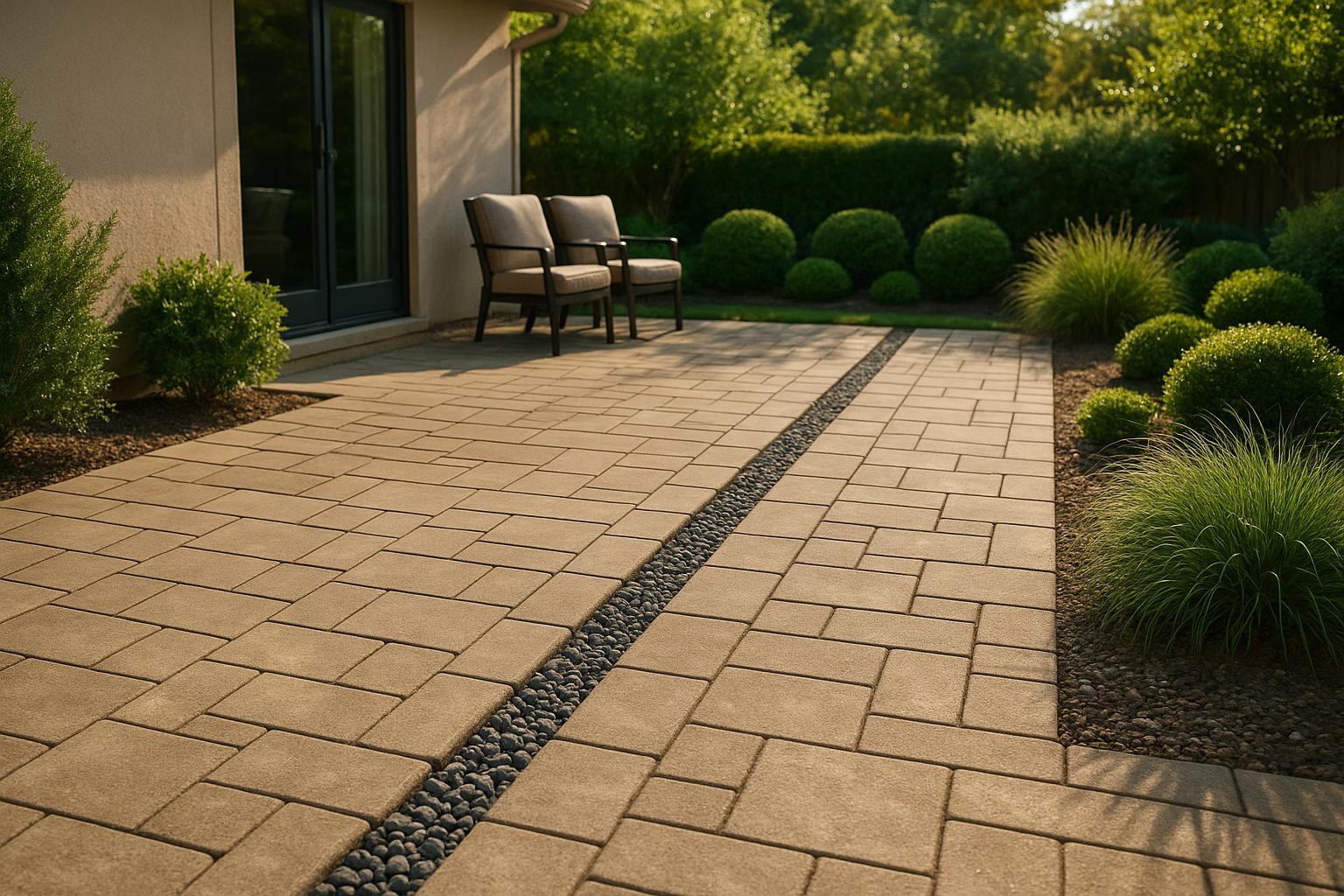
Building a French Drain around a paver patio
How French Drains Work
French drains use gravity to guide water away from problem areas. These underground systems intercept water before it can collect around your patio, channeling it below the surface. Unlike surface drainage options that only tackle visible water, French drains handle both surface runoff and the moisture moving through the soil. This dual action prevents the patio damage we discussed earlier.
Think of it as creating an "underground highway" for water. Water naturally flows toward paths of least resistance, and a well-installed French drain provides a clear route to move it away from your outdoor space. This design works seamlessly with your patio’s needs, managing both surface and subsurface water efficiently.
French Drain Components
A French drain system relies on three key elements that work together to ensure effective drainage:
- Perforated Pipe
Typically 4 inches in diameter for residential patios, this pipe collects and channels water through the system. - Gravel or Aggregate
Round rocks or screened crushed stone (about 1.5 inches in diameter) provide a stable base for the pipe. These materials filter out larger debris and create open pathways so water can flow freely. - Geotextile Fabric
This fabric wraps around the gravel and pipe assembly, preventing fine soil particles from clogging the system. It allows water to pass through while keeping the flow clear, even during heavy storms.
How French Drains Protect Patios
French drains tackle water problems at their source, stopping damage before it starts. By intercepting water that would otherwise pool around patio edges, the system reduces excess moisture, which can lead to cracking or shifting.
When installed with the right slope – typically a gradient of about 1 in 80 – French drains ensure steady water movement away from your patio. This continuous drainage minimizes the effects of freeze-thaw cycles, which are notorious for causing structural issues in poorly drained areas.
One of the best features? French drains are hidden underground, so they don’t disrupt the appearance of your patio. Unlike surface channels or gutters, they work invisibly while delivering powerful protection.
They also prevent soil erosion around your patio’s foundation. By managing water flow in a controlled way, French drains reduce the risk of soil washout or edge destabilization, keeping your outdoor space secure.
For those in Maryland, where clay-heavy soils and high water tables often trap moisture near the surface, French drains offer a dependable way to direct excess water away, regardless of seasonal fluctuations.
Pro Landscapes MD has installed French drain systems across central Maryland, helping homeowners in areas like Columbia and Bethesda protect their patios from water damage.
The value of French drains becomes especially clear during heavy rains. While surface drainage solutions may struggle to keep up, French drains continue to manage both visible runoff and hidden subsurface water. This long-term approach not only safeguards your patio but also supports better water management for the environment. Up next, discover the step-by-step process for installing this effective drainage solution.
Installing a French Drain: Step-by-Step Guide
Putting in a French drain around your patio takes careful planning and execution. Each step plays a crucial role in ensuring your drainage system protects your outdoor space effectively for years to come.
Site Assessment and Planning
Before you even think about digging, you need to figure out how water behaves on your property. After a heavy rain, walk around your patio and mark any spots where water pools or lingers for hours. These areas are prime candidates for a French drain.
The type of soil on your property is a big factor in how your drain will work. For example, clay soil – common in central Maryland – holds water and often needs more aggressive drainage solutions. On the other hand, sandy soil drains naturally but may require different gravel sizes. To test your soil, dig a 12-inch-deep hole and fill it with water. If it takes more than 24 hours to drain, you’ll likely need a more robust drainage system.
Take note of your property’s natural slope by observing how water flows during rain. Your French drain should follow this natural path, directing water away from your patio. A consistent slope of 1/4 inch per foot is essential to keep water moving through the system using gravity.
Before starting, check local building codes. In Maryland, some counties require permits for drainage work, especially if your system connects to storm drains or impacts neighboring properties. Reach out to your local county office to avoid any surprises. Also, some areas have rules about where you can discharge water, so plan your outlet location carefully.
Don’t forget about underground utilities – they can pose serious safety risks. Call 811 (Miss Utility) at least 48 hours before you start digging to have utility lines marked. It’s a free service and can save you from dangerous accidents or costly repairs.
Installation Process
Once you’ve done your prep work, it’s time to install the drain. Start by marking the drain’s path with spray paint, following the natural slope from problem areas to the outlet.
Excavation is key, and precision matters. Dig a trench that’s 6 inches deep and 2 feet wide, maintaining a 1/4 inch per foot slope. Use a string line and level to ensure accuracy. A trench that’s too shallow won’t handle heavy rain, while one that’s too deep wastes time and materials.
Next, add a 2–3-inch layer of gravel to the bottom of the trench. This base stabilizes the perforated pipe and starts the filtration process. Use round gravel or crushed stone about 1.5 inches in diameter for optimal water flow.
Line the entire trench with geotextile fabric, making sure it extends up the sides. This fabric filters out soil particles, preventing clogs. Overlap fabric seams by at least 6 inches to avoid gaps where soil could sneak in.
Place a 4-inch perforated pipe on the gravel bed with the holes facing down. It might seem odd, but this setup prevents debris from entering while still collecting water. Secure the pipe sections with couplers, ensuring tight joints to block soil infiltration.
Wrap the pipe in geotextile fabric before adding more gravel. This step creates a protective barrier around the system. Backfill the trench with gravel, leaving a 2–3-inch gap from the surface. Top it off with a thin sand layer to keep soil from washing into the gravel.
For the outlet, make sure water exits safely. Options include connecting to a dry well, storm drain, or a designated discharge area at least 10 feet from your home’s foundation. The outlet must be lower than the starting point of the drain to maintain proper flow.
After securing the drain, blend it into your landscape. A well-installed French drain not only protects your patio but also enhances its overall appearance.
Improving Drainage and Appearance
A French drain doesn’t have to be an eyesore. Cover the top layer with decorative gravel or river rock that complements your patio’s design. This allows water to filter through while adding a polished look.
For a more formal touch, consider laying matching pavers or stones over the drain. Install them on a sand base to maintain water penetration while keeping the design cohesive. This way, the drain becomes a seamless part of your outdoor space.
If you’re looking for eco-friendly options, try planting ground cover or incorporating the drain into garden beds. Native Maryland plants like wild ginger or pachysandra thrive in the moist conditions near French drains and can even help with natural filtration.
Pro Landscapes MD often pairs French drains with permeable paver systems for a comprehensive water management solution. These systems handle both surface runoff and subsurface water while keeping your patio visually appealing.
Another sustainable option is connecting your French drain to a rain garden. Instead of sending water to storm drains, you can channel it to planted areas designed to handle occasional flooding. This not only helps recharge groundwater but also eases the burden on municipal drainage systems.
The key is to think of your French drain as part of your overall landscape design rather than an afterthought. When installed and finished properly, it blends into your yard so well that you’ll barely notice it – until the next downpour proves its worth.
French Drain Maintenance
Keeping a French drain in good working condition requires regular maintenance to avoid clogs and sediment buildup. According to NDS, the most common reason French drains fail is neglect, with debris and sediment being the primary culprits[1].
With proper care, a French drain can last 30–40 years. On the other hand, skipping maintenance could shorten its lifespan to just 5–10 years[1]. That’s a big difference, and it’s why routine upkeep is so important.
Regular Maintenance Tasks
After storms, check the drain inlets and outlets for visible debris like leaves, soil, or mulch, and clear them away. If water backs up during your annual hose flush, it’s a sign of a potential clog that needs attention[1][2]. This quick test can save you from costly repairs down the road.
Be on the lookout for clogs throughout the year. Signs like water pooling near your patio, slow drainage, or water backing up at the inlet often point to blockages[1][2]. Start by clearing surface debris, then flush the pipe with your garden hose. Don’t forget to check the outlet for any obstructions.
Roots from nearby trees and shrubs can also become a problem over time. These plants naturally grow toward moisture, which can lead to clogs. Trim vegetation around the drain regularly, and keep an eye out for unusually lush plant growth along the drain line – it could mean a leak is providing extra water to the plants[1].
Another issue to watch for is soil settling or erosion above the drain. Depressions or washouts may signal a hidden clog or even a collapsed pipe[1]. Address these problems quickly to avoid more extensive damage.
| Maintenance Task | Maintenance Frequency | Professional Needed? | Notes |
|---|---|---|---|
| Debris removal | 2–4x/year | No | Use gloves, garden tools |
| Flushing with water | 1–2x/year | Sometimes | Hose or pressure washer |
| Root/vegetation control | 1–2x/year | Sometimes | Large roots may need a pro |
| Camera inspection | As needed | Yes | For persistent or hidden clogs |
Seasonal Maintenance in Maryland
Maryland’s changing seasons require adjustments to your maintenance routine. Winter’s freeze/thaw cycles and heavy spring and summer rains can lead to soil movement, sediment buildup, and even ice blockages[2]. Tailoring your schedule to these seasonal challenges is essential.
Before winter, clean out all debris from the system, confirm that water flows freely from the inlet to the outlet, and check the grading around your patio. Ice in a clogged drain can cause serious damage when temperatures fluctuate. These precautions will help keep the system running smoothly through the colder months.
Once winter ends, inspect for freeze-related damage. Look for cracks in exposed pipes, soil heaving, or new depressions that might indicate underground settling[2]. Maryland’s freeze/thaw cycles can wreak havoc on drainage systems, making spring inspections a must.
During spring and early summer, when heavy rainfall is common, monitor your French drain closely[2]. After storms, check for debris or standing water. While even a well-maintained system can be temporarily overwhelmed by heavy rain, water should drain within a few hours.
Fall is another critical time for maintenance. Falling leaves can quickly clog your drain inlets and outlets. A homeowner in Howard County shared how monthly debris removal and biannual flushing helped prevent water pooling and kept their patio dry during heavy spring rains. They also replaced worn filter fabric every three years to maintain the system’s efficiency.
Professional Maintenance
Sometimes, DIY maintenance isn’t enough. Hiring a professional for French drain cleaning or inspection typically costs $150–$500 per visit in the United States, depending on the system’s size and complexity[1]. Neglecting maintenance, however, can lead to major repairs or replacements costing $2,000–$6,000 or more[1]. Investing in regular upkeep is far more cost-effective.
For homeowners in central Maryland, Pro Landscapes MD offers expert drainage repair and French drain maintenance services. Their team specializes in inspections, cleaning, and system upgrades tailored to Maryland’s climate. With their local expertise, they can identify and address potential problems before they escalate into expensive repairs.
sbb-itb-843f8be
Benefits of French Drains for Patios
French drains are a smart choice for homeowners looking to protect their patios while also embracing environmentally conscious landscaping. These systems tackle water management issues right at the source, offering both immediate protection and long-term stability for outdoor spaces. Here’s a closer look at why French drains are such a valuable addition to patio design.
Preventing Water Damage and Erosion
Excess water can wreak havoc on patios, leading to shifting, cracking, and expensive repairs. French drains act as a preventative measure by capturing and redirecting surface runoff and groundwater before it can cause damage. This is especially critical for patios made of pavers or concrete slabs, as well as those located in areas with heavy clay soil, high water tables, or at the base of a slope. A properly designed system can manage up to 140 gallons per minute per square foot[3], significantly reducing the risk of water-related issues. By lowering the water table around the patio’s foundation, these drains not only protect structural integrity but also remain discreet, preserving your patio’s aesthetic appeal. It’s a practical solution that pairs well with diligent installation and maintenance efforts.
Supporting Eco-Friendly Landscaping
French drains don’t just protect your patio – they also promote sustainable water management. By minimizing surface runoff, they help reduce the amount of pollutants and sediments that enter nearby waterways. When the system’s outflow is directed to features like rain gardens or dry wells, water can naturally seep back into the ground, replenishing local aquifers and easing the strain on municipal stormwater systems.
"We prioritize eco-friendly solutions that conserve water, use native plants, and promote a healthy ecosystem in your outdoor space." – Pro Landscapes MD
This approach not only improves water management on your property but also contributes to healthier ecosystems. For homeowners in areas like central Maryland, French drains offer a dual benefit: they protect patios from water damage while supporting broader environmental efforts, such as safeguarding the Chesapeake Bay watershed.
Why Choose Pro Landscapes MD for French Drains

When it comes to safeguarding your patio investment with a French drain system, picking the right contractor is crucial. Pro Landscapes MD stands out for their deep understanding of Maryland’s unique drainage challenges. Their team includes professional horticulturists with formal training, offering insights into how water, soil, and hardscaping interact.
"Very few other landscapers will have gone to college for landscape design/horticulture, which puts our business and skill set ahead of the competition."
- Pro Landscapes MD
This specialized knowledge allows them to address the root causes of water issues effectively. Serving central Maryland and Washington, DC, they bring expertise in local soil, rainfall patterns, and topography to every project.
For example, in Ellicott City, they tackled a patio suffering from erosion and foundation concerns caused by poor drainage. Their team designed a custom French drain that blended seamlessly with the patio and surrounding walkways, using eco-friendly materials that harmonized with the landscape. The result? Improved drainage that not only protected the patio but also enhanced its overall appearance. This balance of technical precision and aesthetic design sets them apart.
Drainage and Hardscaping Services
Pro Landscapes MD takes an integrated approach to French drains, combining them with broader hardscaping projects. Rather than treating drainage as an afterthought, they design systems that complement patios, walkways, driveways, and other outdoor features from the start. This ensures your French drain not only works efficiently but also enhances the beauty of your outdoor space.
Their hardscaping services include flagstone and paver patios, natural stone walkways, retaining walls, and outdoor kitchens. When installing a French drain, they carefully consider how it interacts with these elements, ensuring proper grading, smooth water flow, and cohesive design. For instance, they might route a French drain beneath a patio during construction or align it with the materials and finishes used in surrounding structures.
"With years of experience in landscaping, hardscaping, and drainage solutions, we bring unmatched expertise to every project. From concept to completion, we ensure that every detail is perfectly executed."
- Pro Landscapes MD
They also prioritize quality materials like Techo-Bloc, Allen Block, and El Dorado Stone, ensuring durability and timeless appeal. When paired with well-engineered French drain systems, these materials create outdoor spaces that are both functional and visually stunning. This comprehensive approach guarantees that your French drain not only protects your investment but also elevates the design of your property.
Pro Landscapes MD’s Eco-Friendly Solutions
Pro Landscapes MD is committed to environmentally conscious drainage solutions. Their French drains are designed not just to manage water but to support broader ecological goals – an especially important consideration in Maryland’s Chesapeake Bay watershed region.
"We prioritize eco-friendly solutions that conserve water, use native plants, and promote a healthy ecosystem in your outdoor space."
- Pro Landscapes MD
Their methods often include recycled materials and native plantings, which contribute to sustainable water management. For instance, they direct French drain outflow to rain gardens or dry riverbeds, allowing water to infiltrate naturally. This approach protects your patio from water damage while recharging local aquifers and reducing pollution in nearby waterways.
Pro Landscapes MD also takes care to minimize disruption during installation. They conduct detailed site assessments to reduce excavation and preserve existing vegetation. Additionally, they often recommend native plantings that complement the drainage system while boosting local biodiversity. By combining effective water management with ecological sensitivity, they ensure your French drain supports both your property and the surrounding environment.
Conclusion
French drains offer a reliable and long-term solution to protect patios from water-related damage. By efficiently redirecting excess water, they help prevent common issues like shifting pavers, foundation erosion, and structural problems.
When installed correctly, French drains can reduce surface water by over 80% [3], which not only extends the life of your patio but also cuts down on upkeep. Unlike more visible drainage options, these systems operate discreetly below ground and require little maintenance.
They also contribute to eco-friendly landscaping by channeling water into rain gardens or dry riverbeds, replenishing aquifers, and reducing harmful runoff. This makes them a practical and environmentally conscious choice for managing water around your property.
For homeowners in central Maryland, professional services like Pro Landscapes MD provide tailored solutions that address local soil conditions, rainfall patterns, and other environmental factors. Their experts combine knowledge of water flow, soil, and hardscaping to design drainage systems that not only protect your patio but also enhance your property’s overall appearance and ecological balance.
With proper installation and minimal upkeep, French drains ensure your patio remains functional and visually appealing while promoting sustainable water management.
FAQs
How can I tell if my patio needs a French drain for better water drainage?
If you’ve noticed water pooling around your patio or signs of erosion creeping in, it might be a good idea to look into installing a French drain. Over time, these issues can weaken the structure and longevity of your patio. A French drain works by channeling excess water away, ensuring your outdoor space stays dry and better protected. For expert help with installation and drainage solutions, Pro Landscapes MD offers professional services throughout central Maryland and Washington, DC.
How can I maintain a French drain to keep it working effectively?
Keeping your French drain in good working order requires regular upkeep. Begin by checking the drain pipe every so often for clogs or debris – things like dirt, leaves, or sediment can build up and block water flow. Clearing these out promptly helps maintain proper drainage.
Also, take a look at the area around the drain. If you notice erosion or pooling water, it could signal a problem with the system. Tackling these minor issues early can save you from expensive repairs down the line and ensure your French drain keeps safeguarding your patio and landscaping for the long haul.
Can a French drain be added to an existing patio without ruining its appearance?
Yes, you can add French drains to an existing patio without disrupting its appearance. By aligning the drainage system with the patio’s design and materials, you can effectively manage water while maintaining a polished and unified look.
Experts, such as the team at Pro Landscapes MD, specialize in creating drainage solutions that not only work efficiently but also blend seamlessly with your patio, ensuring it stays protected and lasts for years.
Chat with Us