









- bhavya gada
- No Comments
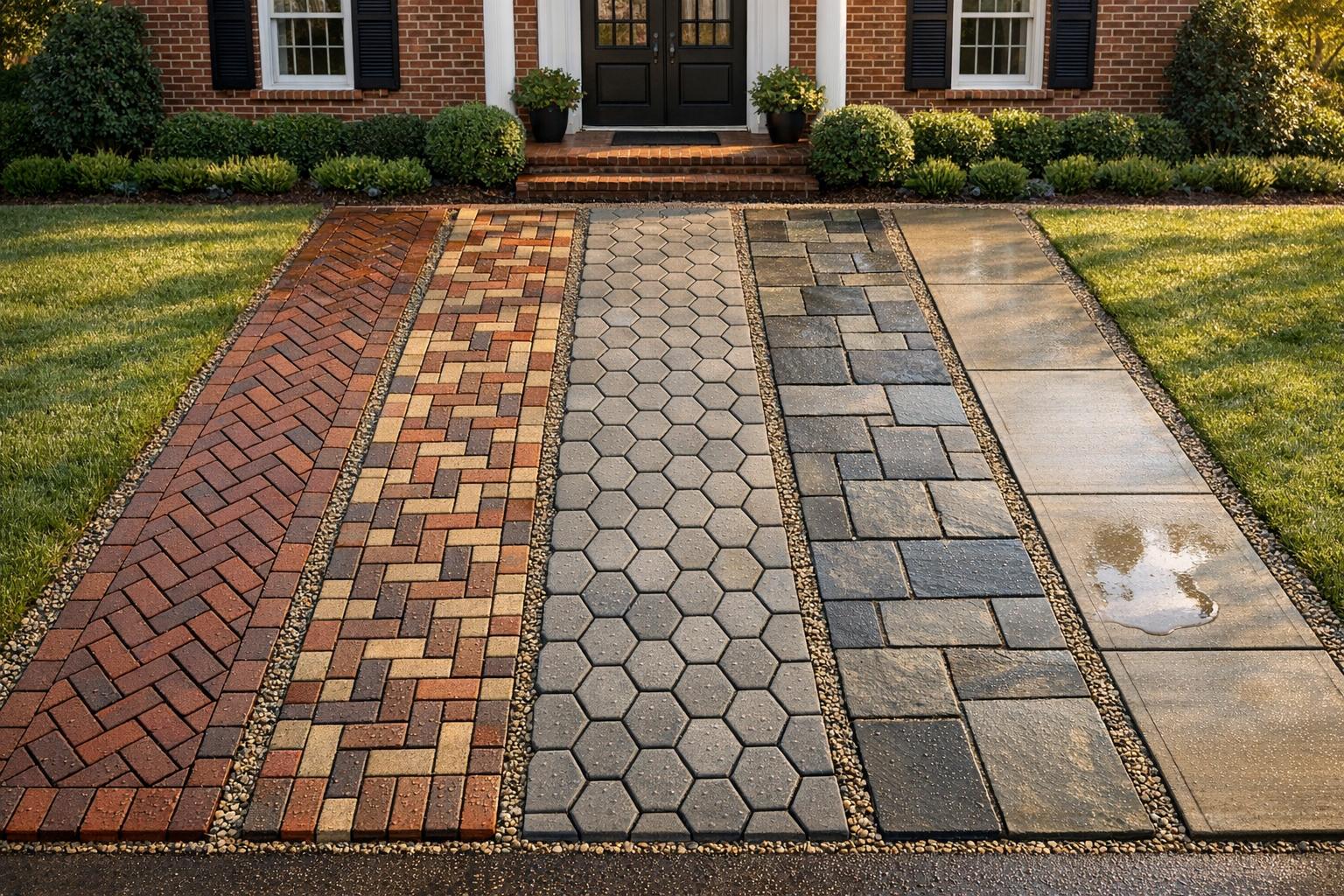
Geometric walkway designs combine style and durability, making them ideal for Maryland homes. With options like herringbone, basket weave, hexagonal, staggered rectangular pavers, and scored concrete, these designs handle Maryland’s freeze-thaw cycles while enhancing curb appeal. Here’s what you need to know:
- Herringbone: Strong zigzag pattern, great for weather resistance, higher cost.
- Basket Weave: Woven look, durable, fits various styles, moderate cost.
- Hexagonal: Modern honeycomb design, flexible, mid-range cost.
- Staggered Rectangular: Simple and versatile, easy to install and repair, affordable.
- Scored Concrete: Budget-friendly, sleek patterns, requires careful drainage.
Quick Tip: Pavers offer better drainage and repair flexibility, while scored concrete is cost-effective but prone to cracking without proper installation.
For Maryland’s climate, professional installation ensures long-lasting results. Choose a design that balances durability, maintenance, and cost.
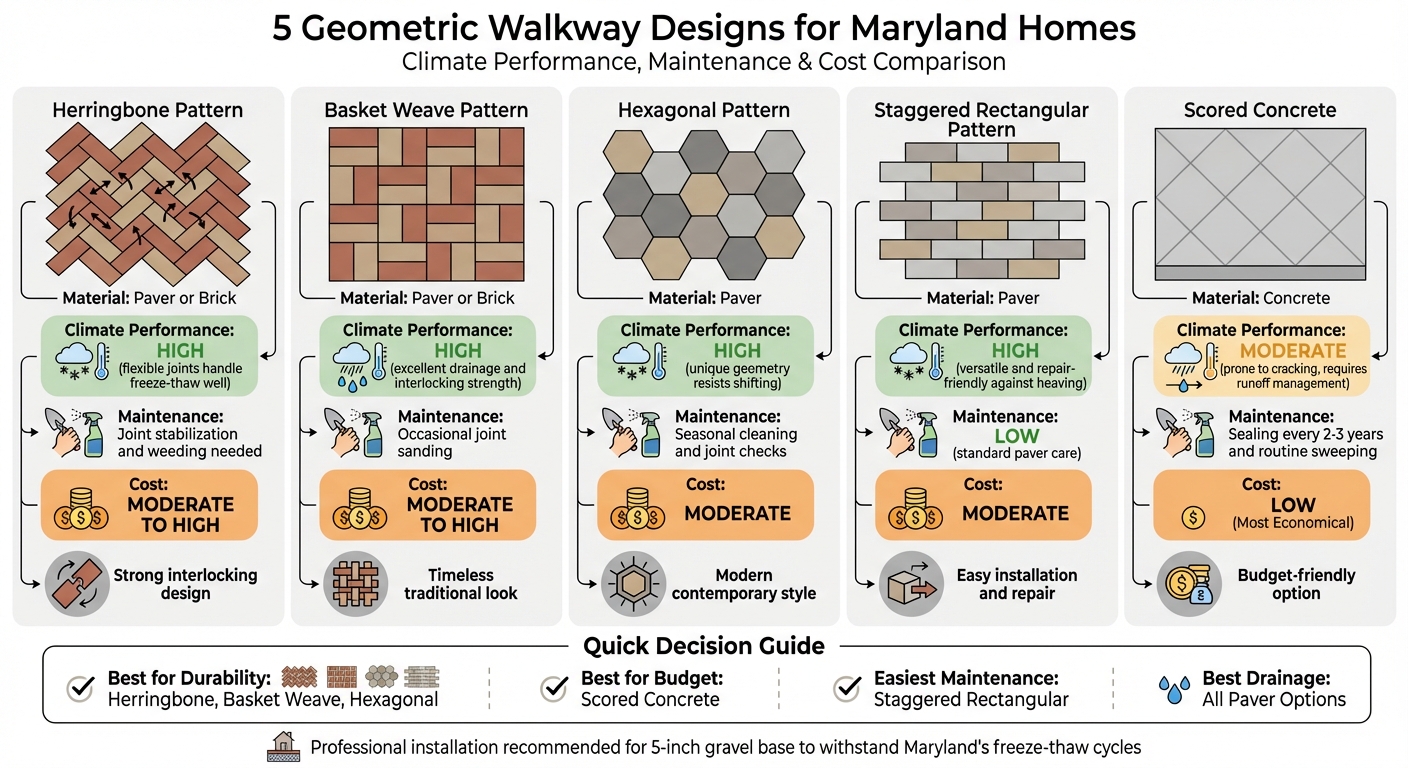
Comparison of 5 Geometric Walkway Designs for Maryland Homes
Top 5 Paver Patterns | The Strongest Pattern is…
sbb-itb-843f8be
1. Herringbone Pattern Walkways
The herringbone pattern, with its 45-degree zigzag design, combines strength and style. This interlocking layout is particularly suited for Maryland properties because the pavers fit tightly together, reducing the chance of cracking – something more common with continuous concrete surfaces [6]. Its ability to handle Maryland’s fluctuating weather makes it both a practical and attractive option.
Climate Suitability
Maryland winters can be tough on walkways, with constant ground expansion and contraction. The herringbone pattern excels here, thanks to the natural drainage properties of paver systems. Water easily seeps through the joints during heavy rains, helping to avoid the heaving and settling issues often seen in solid concrete installations [1].
Maintenance Requirements
To keep a herringbone walkway in top shape, regular maintenance is key. Applying a sealant every 2–3 years protects against weather damage, while polymeric sand between the joints prevents weed growth and sand loss during storms [7][8]. After winter, check for any pavers that may need resetting due to freeze-thaw cycles. For better durability, Maryland homeowners are advised to use a gravel base of at least 5 inches, which surpasses the standard 4-inch depth [5].
Aesthetic Style
The herringbone pattern isn’t just functional – it’s a design statement. Its timeless look pairs well with Maryland’s diverse home styles, from colonial to modern [6]. The precise geometry of the pattern creates a welcoming flow, perfect for connecting driveways to front doors [1]. While brick pavers offer a classic charm, concrete pavers in a herringbone layout can provide a similarly elegant look at a more budget-friendly price [1].
Cost Range
The herringbone pattern does come with a higher price tag compared to standard paver layouts. Brick pavers are generally more expensive than concrete, but both remain more affordable than natural stone options like flagstone or slate. The complexity of the pattern often requires professional installation to ensure proper groundwork and edge restraints, which helps avoid issues like uneven surfaces or low spots – common problems with DIY attempts [1].
2. Basket Weave Pattern Walkways
Unlike the zigzag layout of the herringbone, the basket weave pattern creates a woven appearance by arranging pairs of pavers at right angles. This timeless design is both durable and versatile, making it a great alternative to solid concrete. It works well with brick or concrete pavers, offering options for different budgets and architectural styles. Let’s take a closer look at how it performs in various aspects like climate adaptability, upkeep, visual appeal, and cost.
Climate Suitability
Maryland’s freeze-thaw cycles can be tough on rigid surfaces like solid concrete. The basket weave pattern handles these conditions better because its interlocking pavers can shift slightly to accommodate ground expansion and contraction [1][3]. Plus, the gaps between pavers allow rainwater to seep into the ground, reducing the risk of water pooling near your home’s foundation – a key factor in avoiding weather-related damage.
Maintenance Requirements
Keeping basket weave walkways in good shape involves regular cleaning and occasional resealing [3]. Seasonal inspections are recommended, and every few years, you should reseal the surface and replenish the joint sand to maintain its durability and appearance [8].
Aesthetic Style
This pattern offers a timeless charm that pairs beautifully with traditional and colonial-style Maryland homes [1]. It also fits well with modern or industrial designs, thanks to its clean, geometric look that adds visual interest without overwhelming the overall aesthetic. For those on a budget, incorporating brick accents or edging around a concrete walkway can achieve a similar look at a lower cost [1].
Cost Range
Brick pavers used in a basket weave design tend to be more expensive than standard concrete options, especially when regular maintenance is factored in [1]. However, concrete pavers can be a cost-effective alternative without losing the distinctive basket weave appearance. Professional installation is highly recommended to ensure a proper gravel base, which is crucial for withstanding Maryland’s harsh winters [1][3][5].
3. Hexagonal Paver Walkways
Hexagonal pavers bring a fresh, modern twist to classic patterns like herringbone and basket weave. Their six-sided, honeycomb design adds a sleek, contemporary feel to Maryland homes while offering the practicality of interlocking edges. This combination delivers both structural stability and a visually striking appearance. For homeowners looking to update their outdoor spaces, hexagonal pavers strike the perfect balance between style and durability, especially suited to Maryland’s changing weather conditions.
Climate Suitability
Maryland’s freeze-thaw cycles can wreak havoc on solid concrete surfaces, but hexagonal pavers are designed to adapt. Their flexibility allows them to shift slightly with ground movement during winter, minimizing the risk of cracks. The small gaps between the pavers also encourage rainwater to drain into the soil, reducing the chance of water pooling near your home’s foundation. For best results, experts recommend a 5-inch gravel base beneath the pavers [1][5]. This setup ensures durability and simplifies maintenance, even in Maryland’s unpredictable climate.
Maintenance Requirements
Taking care of hexagonal pavers is straightforward. Regular sweeping and occasional rinsing keep them clean, while resealing helps maintain their durability over time. If a paver gets damaged or stained, it can be replaced individually – saving time and money compared to repairing a full concrete slab. However, because the layout requires precise subgrade preparation, professional installation is highly recommended to prevent issues like uneven surfaces or drainage problems [1][3].
Aesthetic Style
The geometric elegance of hexagonal pavers adds a touch of sophistication to any outdoor space. Their clean, uniform lines complement modern and mid-century styles beautifully. For added flair, homeowners can mix colors or incorporate accent borders to create eye-catching focal points. Even traditional Maryland homes can benefit from the contrast these sleek patterns provide, blending timeless charm with modern design. This makes hexagonal pavers a practical yet stylish choice.
Cost Range
Hexagonal paver walkways are a budget-friendly option for many Maryland homeowners. They typically cost less than natural stone or full brick installations while offering better durability than plain concrete. Beyond their affordability, they enhance curb appeal, increase property value, and provide a safe, even surface for daily use.
For professional installation and expert craftsmanship, homeowners can turn to Pro Landscapes MD. Known for their comprehensive hardscaping services across central Maryland, they can help bring this modern design to life with precision and care.
4. Staggered Rectangular Paver Walkways
Staggered rectangular pavers, also known as running bond pavers, offer a practical and versatile solution for Maryland homes. This pattern arranges rectangular pavers in offset rows, creating clean, straight lines that naturally guide guests from the driveway to the front door. Its simple yet effective design works equally well for modern homes with sleek aesthetics and colonial-style residences seeking a classic look. Thanks to its straightforward layout, this pattern is among the easiest to install and repair compared to more complex designs like herringbone or basket weave [6]. It strikes a balance between durability and style, making it a reliable choice for Maryland’s varying weather conditions.
Climate Suitability
The staggered layout stands out for its simplicity and structural strength, particularly in Maryland’s challenging freeze-thaw cycles. While concrete slabs often crack under pressure, interlocking pavers adapt to ground movement, reducing the risk of breakage [1]. To ensure long-term durability, a compacted gravel base of 4–5 inches is recommended [5]. This foundation helps prevent heaving during winter and keeps the surface level throughout the year.
Maintenance Requirements
This design is not only easy to install but also straightforward to maintain. Routine sweeping and occasional pressure washing keep the pavers looking fresh [7]. Applying a protective sealant every 2 to 3 years guards against stains and weather-related wear [7]. If repairs are needed, individual pavers can be replaced without much hassle. To manage weeds in the joints, homeowners can use fresh joint sand or herbicides. Seasonal inspections are also helpful for catching minor issues early, preventing costly repairs down the line [7][8].
Aesthetic Style
The staggered pattern seamlessly blends modern and traditional styles, offering homeowners plenty of room for customization. For contemporary homes, neutral-toned concrete pavers create sleek, minimalist lines, while colonial-style residences can achieve a timeless look with pavers resembling classic brick or natural stone at a fraction of the cost [1]. Personal touches like alternating colors or adding accent borders can further enhance the design.
"A nice, inviting flow to the front door makes it natural for the person to easily come walk inside"
– Chesapeake Landscapes [1]
Cost Range
Staggered rectangular paver walkways are an affordable yet durable option. While they cost more than plain concrete, they are significantly less expensive than natural stone or reclaimed brick installations [1][2]. This cost-efficiency makes them a popular choice for residential projects across Maryland [1]. Most projects are completed within 3–7 days [4]. For professional installation, including proper grading, base preparation, and edge restraints, Pro Landscapes MD serves central Maryland, ensuring walkways that look great and last for years.
5. Scored Concrete Geometric Walkways
Scored concrete walkways give Maryland homeowners a budget-friendly option to achieve striking geometric designs without the expense of individual pavers. By using saw cuts or stamps, patterns like diamonds, grids, or linear shapes are etched directly into the concrete surface. This approach mimics the appearance of pricier materials while keeping costs in check [1]. Plus, the continuous surface is easy to clean and maintain, making it a practical choice for busy households. However, since water can’t drain between joints like it does with pavers, careful drainage planning is crucial [1]. Proper installation is also vital to help the walkway endure Maryland’s tough winters.
Climate Suitability
Concrete holds up well in Maryland’s climate but faces challenges during the winter freeze-thaw cycles. Unlike pavers, which can adjust to ground movement, concrete may crack if water seeps underneath and freezes [1]. To combat this, a 5-inch compacted gravel base is essential to handle the stresses of freeze-thaw conditions [5][9].
"Concrete is extremely durable and has a long life span. It can crack over time, especially in Maryland where freeze/thaw occurs in wintertime. To overcome that it is especially important to ensure good drainage, install a proper subgrade and finish the concrete the right way to reduces chances of cracking."
– All Your Landcare [1]
Maintenance Requirements
Keeping scored concrete looking fresh is straightforward. Pressure washing effectively removes dirt and grime, restoring its texture [7]. Applying a sealant every 2–3 years helps protect the surface from stains caused by Maryland’s humid weather and frequent rain [7][9]. Unlike pavers, where damaged units can be swapped out, repairing concrete requires more effort, making regular maintenance crucial. Seasonal inspections can catch minor issues early, preventing them from escalating into costly repairs. These small steps go a long way in preserving both the walkway’s appearance and functionality.
Aesthetic Style
Geometric scoring delivers a sleek, modern look with crisp lines and sharp angles, making it a great match for contemporary Maryland homes [6]. Homeowners can choose patterns that suit their style, from simple grids to intricate diamond designs. Finishes like paints and sealants can further enhance the aesthetic, allowing for a customized appearance [1]. For those who want the elegance of natural stone or brick without the hefty price tag, scored concrete offers a practical alternative with a polished, high-end feel.
Cost Range
Scored concrete stands out as a cost-effective choice for Maryland walkways, offering a custom look at a lower price than interlocking pavers [1]. For medium-sized paths (about 30 feet long and 4–5 feet wide), professional installation typically costs between $5,000 and $10,000+ [9]. Larger, more elaborate designs for luxury entrances can range from $10,000 to $25,000+ [9]. If your property includes sloped terrain requiring stone steps, expect an additional $3,000 to $8,000 [9]. While these prices exceed those of plain concrete, they remain far below the cost of natural stone or brick, all while delivering a tailored and sophisticated design.
Comparison of Geometric Walkway Designs
Selecting the perfect geometric walkway for your Maryland home involves balancing several important factors. Popular options like herringbone, basket weave, hexagonal, and staggered rectangular paver designs are well-suited for Maryland’s freeze-thaw cycles due to their interlocking joints. On the other hand, scored concrete offers a budget-friendly solution but is more vulnerable to cracking during harsh winters [1][4]. Let’s break down the differences in drainage, maintenance, and cost to help you decide.
When it comes to drainage, paver patterns shine. Their joints allow rainwater to seep into the ground, helping to reduce runoff around your home’s foundation [1]. In contrast, scored concrete forms a solid, non-porous surface that depends on precise grading to direct water away – an important factor during Maryland’s frequent rainstorms and spring thaws [1]. These drainage features play a big role in determining the overall functionality of each option.
Maintenance is another area where these designs differ. Pavers require occasional joint stabilization and weed control, but damaged units are easy to replace. Scored concrete, on the other hand, needs sealing every 2–3 years and regular sweeping to maintain its appearance and durability [1][4]. For those seeking longevity, natural stone walkways with geometric patterns can last over 25 years when cared for properly [10].
In terms of cost, scored concrete is the most affordable choice for Maryland homeowners [1]. Paver-based designs fall into a moderate price range, offering a balance between cost and performance. Brick walkways – commonly used in herringbone and basket weave patterns – are more expensive but add a classic touch that complements Maryland’s traditional architectural styles [1]. The table below provides a quick comparison of these key factors.
| Design Pattern | Material Type | MD Climate Performance | Maintenance Needs | Typical Cost |
|---|---|---|---|---|
| Herringbone | Paver or Brick | High; flexible joints handle freeze-thaw well | Joint stabilization and weeding | Moderate to High |
| Basket Weave | Paver or Brick | High; excellent drainage and interlocking strength | Occasional joint sanding | Moderate to High |
| Hexagonal | Paver | High; unique geometry resists shifting | Seasonal cleaning and joint checks | Moderate |
| Staggered Rectangular | Paver | High; versatile and repair-friendly against heaving | Low; standard paver care | Moderate |
| Scored Concrete | Concrete | Moderate; prone to cracking and requires runoff management | Sealing every 2–3 years and routine sweeping | Low (Economical) |
Conclusion
Each geometric walkway design comes with its own set of advantages, perfectly suited to Maryland’s climate and aesthetic preferences.
When choosing a walkway, aim for a design that balances durability, upkeep, and cost. Options like interlocking paver patterns – such as herringbone, basket weave, hexagonal, or staggered rectangular styles – offer flexibility and are easy to repair if individual pavers shift or crack. For those prioritizing affordability, scored concrete provides a sleek and modern appearance, though it may require more maintenance. Proper drainage and runoff management are essential to protect your foundation from pooling water, damage, or uneven settling caused by Maryland’s heavy rains and seasonal freezes.
Professional installation is crucial for a walkway that lasts. This includes thorough base preparation, accurate grading, and the use of high-quality materials to withstand local weather extremes. Pro Landscapes MD offers custom walkway design and installation services across central Maryland – including Howard, Montgomery, Carroll, Frederick, Prince George’s, and Baltimore Counties. Their expertise in drainage and hardscaping ensures solutions tailored to the region’s unique climate challenges.
Whether you’re drawn to the timeless elegance of herringbone brick, the contemporary feel of hexagonal pavers, or the cost-effective simplicity of scored concrete, a well-planned and expertly installed walkway enhances your home’s curb appeal while offering reliable functionality. With the right design and professional craftsmanship, your walkway becomes a durable and visually appealing feature that adds value and stands strong against Maryland’s changing seasons.
FAQs
Which walkway pattern is best for heavy foot traffic?
Paver walkways work great for areas with heavy foot traffic. They offer excellent drainage, fit together snugly for added durability, and are simple to install and maintain. These qualities make them a reliable and long-lasting option for busy pathways.
Do I need a 5-inch gravel base in Maryland?
A 5-inch gravel base is often suggested for pathways and driveways in Maryland. This depth supports proper drainage, enhances stability, and boosts durability. It also helps minimize shifting and erosion – issues frequently caused by the region’s climate and soil characteristics.
How do I prevent water from pooling on my walkway?
To keep water from pooling on your walkway, make sure it has a slight slope that directs water toward designated drainage areas. Adding edging materials, like stone or concrete borders, can also help channel water efficiently. For paver walkways, consider using methods and materials that encourage proper runoff. Options include gentle slopes, French drains, or gravel beds beneath the pavers. Consulting a professional landscaper is a smart move, especially to design a walkway that can handle Maryland’s unique weather patterns and freeze/thaw cycles.
Chat with Us