









- bhavya gada
- No Comments
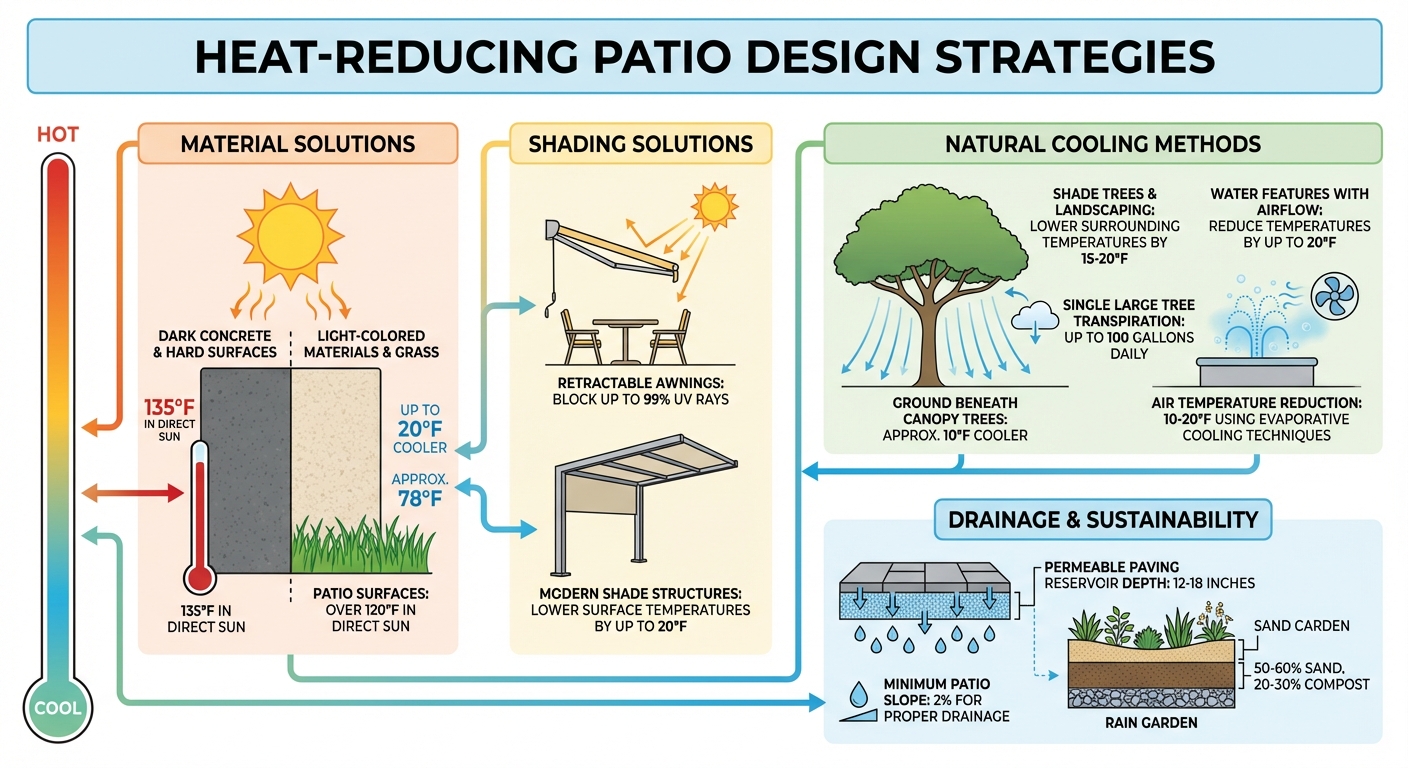
- Use light-colored materials like UV-reflective pavers or tiles to reduce surface temperatures by up to 20°F.
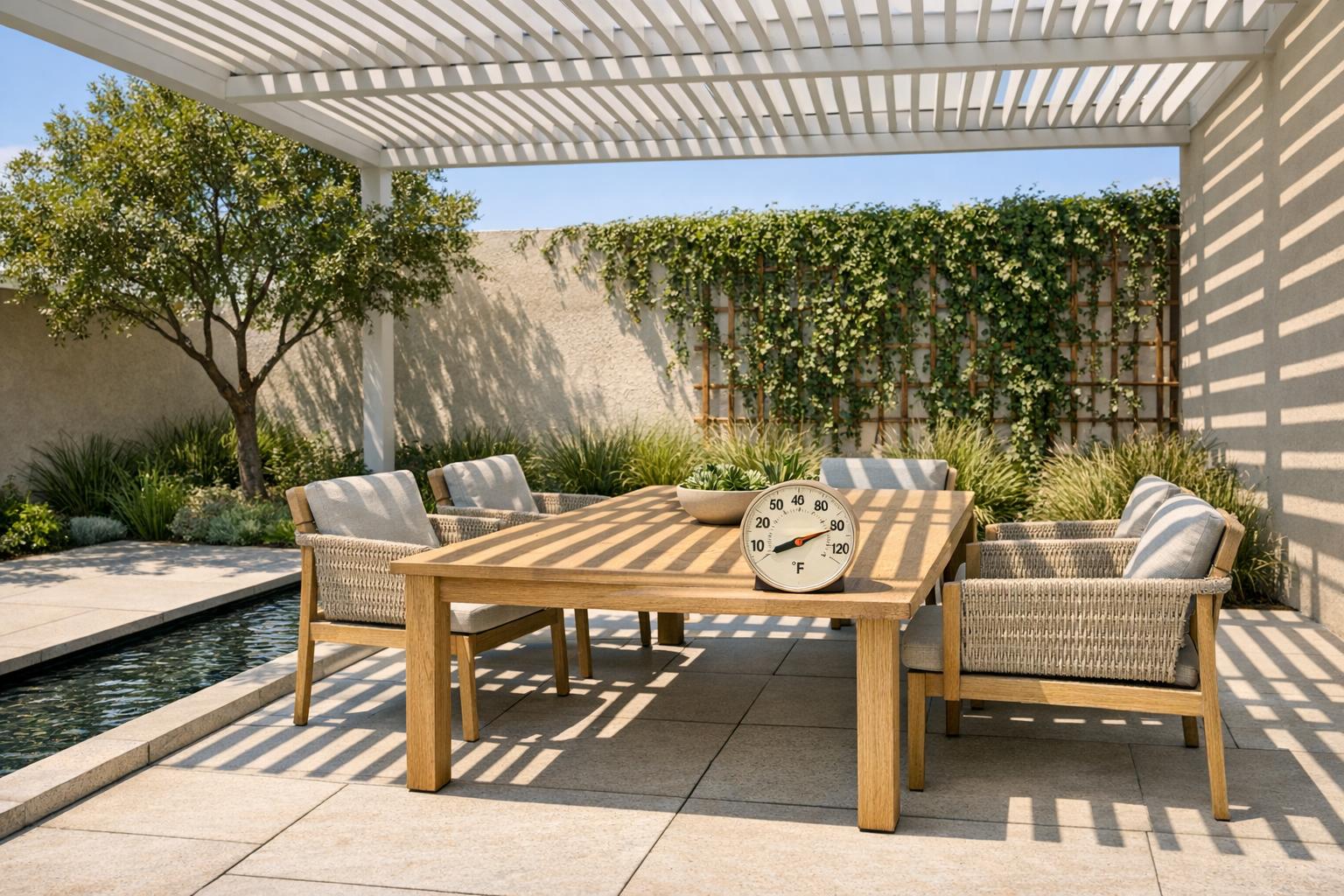
- Incorporate shade with pergolas, retractable awnings, or shade sails to block up to 99% of UV rays.
- Position your patio strategically – north or east-facing placements minimize direct afternoon sun, while shade trees or screens help with west-facing patios.
- Leverage natural cooling by using water features and optimizing airflow with lattice panels or shrubs.
- Select low-thermal-mass materials and permeable pavers to prevent heat buildup and improve drainage.
- Add smart landscaping like deciduous trees, ground covers, and vertical gardens to lower surrounding temperatures by 15–20°F.
Pro Landscapes MD specializes in designing patios that stay cool and comfortable, combining these techniques to tackle Maryland’s summer heat. Whether you’re in Columbia, Bethesda, or surrounding areas, their custom solutions turn your patio into a relaxing outdoor retreat.
Heat-Reducing Patio Design: Temperature Reduction Methods and Benefits
Patio Orientation and Site Planning
Understanding how the sun moves across your yard is key to deciding where your patio should go and how to prioritize shading. Generally, the south-facing side of a property gets the most direct sunlight, while the east and west sides heat up more during the peak of summer [3][4]. West-facing areas, in particular, bear the brunt of the afternoon heat, making them prime candidates for additional shading solutions. These observations lay the groundwork for more specific placement strategies discussed below.
"In the middle of summer, the east and west walls and windows of a home will receive the most solar heat." – Building America Solution Center [4]
Positioning for Shade and Reduced Sun Exposure
If you place your patio on the north or east side of your home, the structure itself will naturally block the harshest afternoon sun, keeping the area cooler. However, if your patio sits on the west side and can’t be relocated, you’ll need to think creatively. Adding shade trees or vertical screens can help mitigate the intense afternoon sunlight [4]. Deciduous trees are especially helpful – they provide shade in the summer and let sunlight through in the winter. Shannon Porteous, Owner and Principal Designer at Sow Home, highlights this approach:
"The south-facing side of properties usually gets the most direct sun throughout the day. Adding sun-loving shade trees on this side of your garden can create shade where it’s most impactful." [3]
Using Wind Patterns for Natural Ventilation
Orientation isn’t just about sun exposure – wind patterns also play a role in creating a comfortable patio environment. Position your patio to take advantage of summer breezes, which can naturally cool the space. Avoid using solid barriers that block airflow; instead, go for wind-permeable options like lattice panels or screens to maintain both ventilation and privacy [1]. Tall shrubs or evergreens can also help guide cooling breezes toward your patio [5].
Water features can amplify this cooling effect. Placing them upwind allows breezes to cool as they pass over the water, reducing temperatures by as much as 20°F. A single large tree can transpire up to 100 gallons of water daily [4]. When paired with water features, this process can lower air temperatures by 15°F to 20°F before the breeze even reaches your patio [5]. By combining smart placement with airflow optimization, you can create a naturally cooler and more inviting outdoor space.
sbb-itb-843f8be
Material Selection for Cooler Patios
The materials you pick for your patio surface play a huge role in how hot it gets during summer. In direct sunlight, patio surfaces can hit temperatures over 120°F. Choosing materials that reflect sunlight instead of absorbing it is essential for creating a more comfortable outdoor space. Let’s look at some options that help keep things cool.
Light-Colored Pavers and Tiles
Light-colored materials are excellent for combating heat buildup. Shades like white, cream, and light gray work well to reflect UV rays and reduce surface temperatures. As Marygrove puts it:
"Dark surfaces retain heat; lighter decking or reflective paint can lower surface temps dramatically." – Marygrove [1]
Traditional materials such as concrete, tile, and stone tend to hold onto heat, continuing to radiate warmth long after the sun sets. On the other hand, light-colored options cool down much faster. If you’re installing or resurfacing a patio, look for materials labeled "cool-toned" or "UV-reflective" to maximize heat reduction.
Permeable Pavers and Low Thermal Mass Materials
Low thermal mass materials are another great choice – they absorb and store less heat, staying cooler during the day and cooling off quickly in the evening. This can make a big difference in how comfortable your patio feels, even on the hottest days.
Permeable pavers are also worth considering. They not only reduce heat retention but also improve drainage, allowing water to flow through and preventing puddles. This is especially useful if you plan to use features like misters for evaporative cooling. Together, these materials contribute to creating a naturally cooler outdoor space.
High-Albedo Concrete Sealers and Paints
If your patio is already made of concrete or stone, you don’t need to start from scratch to make it cooler. UV-reflective sealers and paints can significantly improve the solar reflectance of these surfaces. By reducing heat absorption, these coatings lower surface temperatures and create a more comfortable environment.
For natural stone patios, reflective sealers offer a dual benefit – they protect the material while also keeping it cooler. This approach is not only effective but also budget-friendly, making it a smart choice for existing patios that get too hot during summer.
Each of these material options plays a role in designing a patio that stays comfortable, even under the summer sun.
Shading Solutions for Patios
Once you’ve chosen materials that stay cool underfoot, adding overhead shade is the next step to keep your patio comfortable. Modern shade structures not only block UV rays but can also lower surface temperatures by as much as 20°F [1]. From automated louvers to stylish sails, these solutions combine functionality with comfort.
Pergolas and Adjustable Louvers
Automated louver systems bring a new level of control to patio shading. Unlike fixed-slat pergolas, these systems allow you to rotate the slats to adjust for sunlight and airflow. On sweltering days, you can slightly open the slats to let hot air escape – this "chimney effect" helps maintain a cooler space while still blocking direct sunlight. Plus, these louvers can fully close to protect against rain. With automation features, you can schedule adjustments or control them remotely, eliminating the need for constant manual tweaks.
Shade Sails and Retractable Awnings
Retractable awnings are a versatile option, capable of blocking up to 99% of UV rays [1]. Many models include wind sensors that automatically retract the awning during severe weather, helping to prevent damage. Shade sails, on the other hand, bring a sleek, modern aesthetic to your patio. These tensioned fabric options can be either permanent or seasonal, offering customizable coverage. While both are excellent for adjustable shading, retractable awnings typically provide more advanced automation and weather-resistance features.
Reflective Roof Coatings and Overhangs
To maximize cooling, consider pairing shade structures with reflective materials. For existing pergolas or covered patios, applying UV-reflective paint or sealers can significantly reduce heat absorption. Light-colored coatings on beams, rails, and fences work to minimize heat bounce-back. Adding side or front screens can also block low-angle sunlight during mornings and evenings when overhead shade alone isn’t enough. Combining structural shade with reflective surfaces creates a more comfortable outdoor environment throughout the day.
Landscaping for Natural Cooling
To complement your choices in materials and shading, smart landscaping can play a huge role in cooling down your patio. By carefully planning your greenery, you can lower your patio’s microclimate temperature by as much as 15°F to 20°F [5]. Plants and trees not only provide shade but also naturally cool the air through transpiration, a process where water evaporates from leaves. This natural cooling effect works hand-in-hand with the benefits of tree transpiration already mentioned [4].
Shade Trees and Plant Selection
A well-thought-out cooling strategy blends tall canopy trees, mid-level shrubs, and dense ground covers to trap cool air around your patio. Deciduous trees like oaks and maples are excellent for Maryland properties because they provide shade during the summer while letting in sunlight during the colder months. Planting these trees on the south and west sides of your patio is especially effective, as they block the most intense sunlight. In fact, the ground beneath a single large canopy tree can be roughly 10°F cooler compared to unshaded areas [4].
When designing your patio, try to incorporate existing trees and flower beds into your Baltimore hardscaping layout. This way, they feel like part of the design rather than obstacles [2]. Preserving mature trees not only enhances the aesthetic but also ensures you’re maximizing natural shade.
Ground Cover Plants and Vertical Gardens
Beyond trees, ground covers and vertical gardens are key to reinforcing natural cooling. Hard surfaces like concrete can get as hot as 135°F in direct sun, but grass and ground covers usually stay at a much cooler 78°F [5]. Swapping out heat-absorbing hardscapes with native ground covers, such as creeping thyme or sedges, can prevent the surrounding area from turning into a heat trap.
Vertical gardens are another great option, particularly for smaller spaces. Shannon Porteous, Owner and Principal Designer at Sow Home, explains:
"Vertical features really maximize your space and make the garden feel larger… they provide essential shade and cooling along walls and fences" [3].
Using trellises with climbing plants like jasmine or clematis on south-facing walls can block intense sunlight while still allowing air to circulate. To boost cooling, opt for dense plant species like ivy or ferns, which release more moisture through transpiration [1]. Pair these vertical gardens with water features placed where summer breezes can carry the cooled air across your patio seating area for an extra refreshing effect.
Eco-Friendly Features and Pro Landscapes MD‘s Services

Integrating smart water management with heat-reducing techniques creates a well-rounded patio design strategy.
Environmental Pavers and Drainage Solutions
Pairing heat-reducing materials with sustainable water management ensures a cooler and more environmentally friendly patio. Permeable paving systems are a standout solution, allowing rainwater to seep through the patio surface into a crushed stone reservoir – typically 12 to 18 inches deep. This setup recharges groundwater while eliminating standing water issues [7]. Pro Landscapes MD employs these permeable systems along with a minimum 2% slope to direct water away from structures, reducing puddles and keeping the patio cooler [7]. They also recommend permeable hardscapes, like stepping stones surrounded by softscape, which help retain water onsite while naturally cooling the soil [6].
For properties with ongoing water challenges, French drains can redirect excess water to rain gardens or dry wells. These systems promote a sustainable water cycle by filtering pollutants through a specialized soil mix (50–60% sand, 20–30% compost) and native plants [7]. Pro Landscapes MD offers a comprehensive range of drainage services, including installation, repair, stormwater management, grading, and yard leveling. By combining these drainage solutions with heat-reducing materials, they help prevent water pooling, which can make patios humid and uncomfortable during Maryland’s heavy rains, while also ensuring long-term durability and easier maintenance.
These drainage strategies form the foundation for patio designs that are both functional and comfortable, even in Maryland’s challenging climate.
Custom Heat-Reducing Patio Installations
Pro Landscapes MD takes patio design a step further by integrating heat-reducing materials, shading solutions, and efficient drainage into their custom installations. Their process begins with a detailed assessment of sun exposure and wind patterns to determine the best materials for Maryland’s climate [2]. Proper installation is key – this includes meticulous excavation and a compacted gravel or crushed stone base to ensure stability and prevent shifting during freeze-thaw cycles [2].
They also design patios with distinct "zones", such as dining and lounging areas, to make the most of shaded spaces [2]. These designs incorporate elements that actively lower surface temperatures, ensuring comfort even during the hottest days. Serving communities across Howard County, Montgomery County, Carroll County, Frederick County, Prince George’s County, and Baltimore County – including cities like Annapolis, Columbia, Ellicott City, and Bethesda – Pro Landscapes MD transforms outdoor spaces into beautiful, functional environments that stay cool and inviting throughout Maryland’s summer heat.
Conclusion
Designing a patio that stays cool in the heat involves layered solutions rather than relying on just one approach. The best results come from combining adjustable shade structures, reflective light-colored materials, and active cooling methods. Together, these strategies can drop surface temperatures by up to 20°F and lower air temperatures by 10–20°F using evaporative cooling techniques [1]. This approach ensures comfort even when patio surfaces hit over 120°F under direct sunlight [1].
Key elements of this approach include pairing heat-reducing materials with adjustable shading options like louvered pergolas or retractable awnings, which can block up to 99% of UV rays [1]. Adding features such as strategically placed shade trees, vertical gardens, and natural ventilation enhances cooling by promoting airflow and transpiration [1].
Pro Landscapes MD specializes in integrating these elements into their custom patio designs across central Maryland. Their process starts with a thorough analysis of sun exposure and wind flow, ensuring every feature aligns with Maryland’s climate [2]. By combining expert excavation, grading, and stable base installation with heat-reducing materials and eco-friendly options like permeable pavers, they create outdoor spaces that stay comfortable even during the hottest days of summer.
Whether you’re in Columbia, Ellicott City, Bethesda, or other areas in Howard County, Montgomery County, and beyond, Pro Landscapes MD delivers patios that are not only cool and inviting but also built to last through the peak summer heat.
FAQs
What’s the fastest way to cool down an existing patio?
The fastest way to make a patio more comfortable is to focus on shade and water-based cooling techniques. Adding features like umbrellas, shade sails, or overhead covers can block direct sunlight, helping to lower the surface temperature. For cooling the air, misting systems or fans with evaporative cooling are highly effective. By combining both shade and misting, you can create an immediate cooling effect, making your outdoor space much more enjoyable.
Which patio surface stays coolest in full sun?
Natural stone surfaces such as flagstone or travertine are excellent choices for outdoor areas exposed to full sun. These materials reflect heat instead of absorbing it, helping them stay cooler even on scorching days. This makes them a great option for designing a more comfortable outdoor space.
How do I add shade without blocking airflow?
To create shade while keeping the air flowing, consider options like pergolas, open-sided canopies, or fabric sails. These structures can be designed with raised angles or intentional gaps to let breezes move freely. Place them strategically to match the direction of prevailing winds. This way, you can enjoy a shaded, cooler outdoor area without sacrificing ventilation.
Chat with Us