









- bhavya gada
- No Comments
Choosing between a fire pit and a fireplace depends on your space, budget, and how you plan to use it. Fire pits are portable, cost-effective (starting at $200), and ideal for casual gatherings with 360° heat coverage. Fireplaces, on the other hand, are permanent structures, more expensive (starting at $2,000), and better for focused heat and windy conditions. Here’s a quick breakdown:
- Fire Pits: Portable or permanent, cost $300–$5,000, quick setup (15 minutes to 5 days), great for social settings.
- Fireplaces: Fixed structures, cost $8,000+ on average, require permits and professional installation, ideal for formal, wind-protected spaces.
Quick Comparison
| Feature | Fire Pits | Fireplaces |
|---|---|---|
| Cost | $300–$5,000 | $8,000–$25,000+ |
| Installation Time | 15 minutes–5 days | 1–3 weeks |
| Heat Output | 360° heat, 6–8 ft radius | Directed heat, 8–12 ft in front |
| Portability | Portable or permanent | Permanent |
| Maintenance | Low (ash cleanup, occasional gas line check) | Higher (annual inspections, repairs) |
| Best For | Casual, social gatherings | Formal, wind-protected settings |
Fire pits are great for flexibility and larger groups, while fireplaces offer a refined, permanent centerpiece. Both add warmth and value to your outdoor space – choose based on your needs, space, and budget.
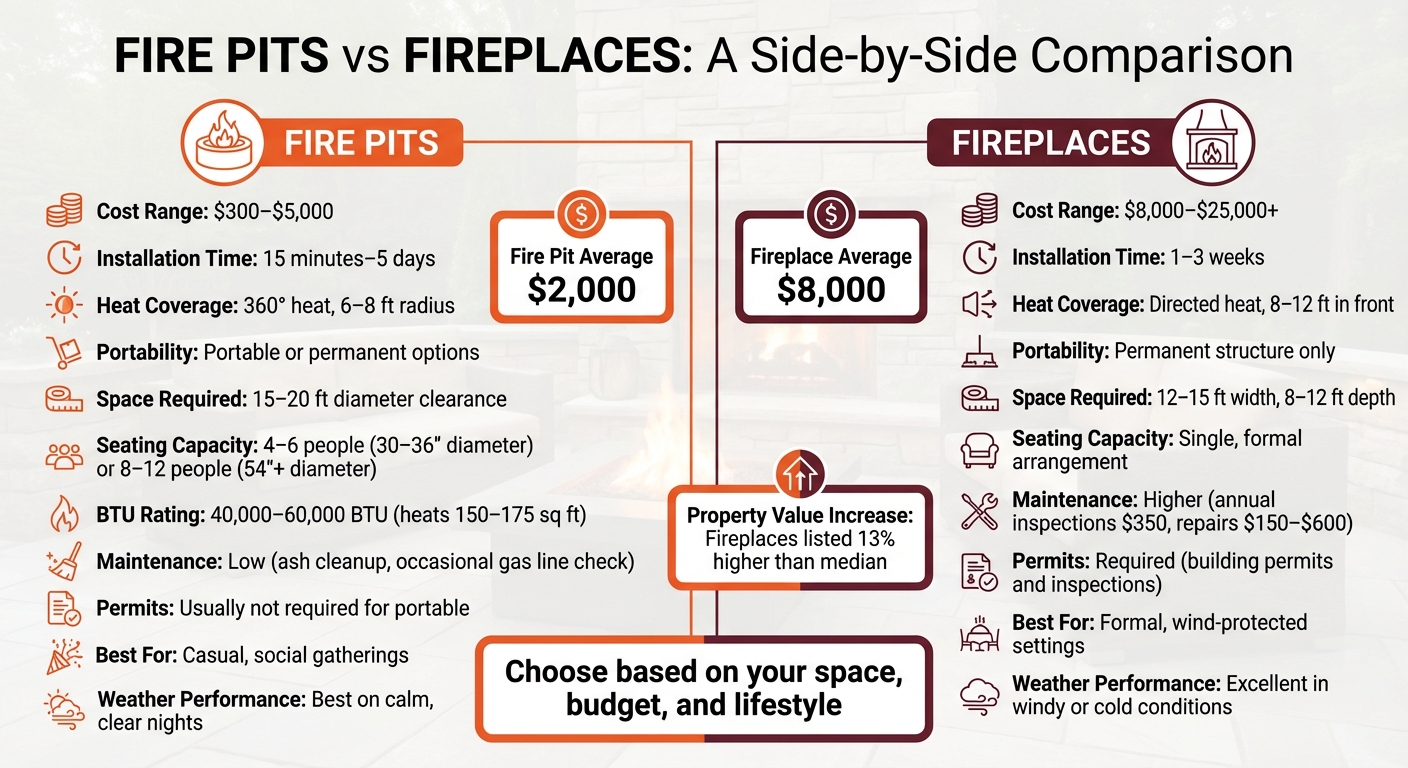
Fire Pits vs Fireplaces: Cost, Installation, and Features Comparison
Structure and Installation Requirements
Fire Pits: Flexible and Simple to Install
Fire pits are freestanding structures that offer plenty of choices when it comes to placement and style. You can go with portable options that are easy to move around or opt for custom-built, permanent designs anchored to your patio. For portable fire pits, all you need is a level, non-combustible surface like concrete, stone, or metal to ensure safe use. The setup is quick and straightforward, typically taking anywhere from 15 minutes to 2 hours.
If you’re leaning toward a permanent fire pit, the process is a bit more involved but still less complex than installing a fireplace. Professional installation usually includes creating a concrete pad foundation and, if it’s a gas-powered unit, running gas lines. This process generally takes 2 to 5 days. To ensure safety, fire pits require a 15–20-foot diameter clearance, which provides enough room for both the fire pit and a safe seating area.
Fireplaces: Permanent Built-In Structures
Outdoor fireplaces, on the other hand, are permanent, built-in features that include a firebox, chimney, and damper system to manage airflow and smoke. These structures need a full concrete foundation to handle the weight of the masonry and provide long-term stability. Additionally, the chimney requires a cap to direct smoke upward and keep debris out.
Fireplaces take up more space, typically requiring a 12–15-foot width and an 8–12-foot depth. Construction times range from 1 to 3 weeks, depending on the design and materials. Costs vary widely, with prefab models priced between $3,000 and $8,000, while custom-built fireplaces can range from $8,000 to $25,000, plus $3,000–$15,000 for labor. These factors also impact permitting and the overall complexity of the installation.
What to Know About Installation
Installing a permanent fireplace involves building permits and inspections, while portable fire pits usually don’t require these steps. The difference in complexity is notable – many fire pits can be tackled as DIY projects, but fireplaces demand licensed contractors to meet structural and safety standards. Both options need a minimum 10-foot clearance from buildings, trees, and any flammable materials. These considerations play a key role in deciding between the flexibility of fire pits and the permanence of fireplaces.
Pro Landscapes MD offers expertise in designing and installing custom fire pits and outdoor fireplaces as part of their hardscaping services in central Maryland. They handle every detail, from laying the foundation to adding the finishing touches.
sbb-itb-843f8be
Heat Output and Practical Use
360-Degree Heat from Fire Pits
Fire pits provide 360° heat coverage, extending warmth up to 6–8 feet from the unit [2]. This makes them a great fit for larger gatherings, where people can sit around the fire in a circle, much like a traditional campfire. Smaller fire pits, typically 30–36 inches in diameter, comfortably accommodate 4–6 people, while larger ones, measuring 54 inches or more, can host 8–12 people [2].
The heat output of a fire pit largely depends on its fuel source and BTU rating. Wood and gas fire pits can produce temperatures exceeding 1,000°F, while a gas unit with a 40,000–60,000 BTU rating can effectively heat an area of about 150 to 175 square feet [3]. However, fire pits come with a drawback – wind. Their open design makes them more susceptible to gusts, which can disrupt heat distribution and blow smoke toward guests.
Focused Heat from Fireplaces
Outdoor fireplaces, in contrast, deliver directed and concentrated heat, warming areas within 8–12 feet in front of the firebox [2]. The enclosed design, combined with a chimney, helps reflect heat outward and improve heat retention. This makes fireplaces more efficient at holding warmth compared to fire pits, but seating is limited to a single, formal arrangement in front of the fire.
The heat output of a fireplace depends on factors like the fuel type, size, design, and BTU rating. Fireplaces are particularly effective in windy conditions, thanks to their structure, which shields the flames and directs smoke upward through the chimney. This makes them a solid choice for covered patios or areas where the weather can be unpredictable.
Performance in Different Weather Conditions
Weather plays a key role in how well each option performs. Fireplaces excel in windy or cold conditions, as their enclosed design minimizes wind interference and helps maintain a steady flame. The chimney also ensures smoke is directed away from the seating area, which is especially helpful on breezy evenings or under covered structures.
Fire pits, however, shine on calm, clear nights, when there’s little risk of wind scattering embers or blowing smoke into the gathering area. In regions prone to high winds, fireplaces are the more dependable option for consistent heat and flame stability. For those in warmer climates or areas with fire bans, gas-powered options for both fire pits and fireplaces allow precise control over heat, making them suitable for year-round use regardless of the season.
Cost Comparison: Installation and Maintenance
Upfront Installation Costs
Installing a fire pit typically costs around $2,000 on average [4]. However, the price can vary widely depending on the type and design. Portable fire pits start as low as $200, while custom, permanent designs can exceed $5,000 [5]. The material you choose also has a big impact on the cost:
- Metal fire pits: $75–$300
- Concrete models: $150–$800
- Brick designs: $300–$1,500
- Natural stone options: $500–$4,000 [5]
Outdoor fireplaces, on the other hand, are a more premium investment, with average installation costs sitting at $8,000 [4]. High-end, custom designs using luxury materials can push that figure beyond $24,000.
Benjamin Lewis from Kansas City Hardscapes explains: "The average fireplace install is around $8,000, while the average fire pit install is around $2,000. So, if you are on a strict budget… the fire pit is definitely the more cost effective option" [4].
Additional costs to consider include running gas lines, which typically adds $500–$1,500, and permit fees for permanent fire features, which range from $25 to $150 [5]. If you’re planning to build a patio area around your fire pit, expect to spend an extra $1,500 to $5,000 [5]. Labor costs for fire pit construction average $50 per hour, with total labor expenses ranging from $200 to $5,000 depending on the complexity of the project [5]. For homeowners in central Maryland, companies like Pro Landscapes MD specialize in custom fire pit installations, offering expert craftsmanship and ensuring all necessary permits are handled.
Once installed, ongoing maintenance costs are another important factor to weigh.
Ongoing Maintenance Expenses
Fireplaces – particularly gas models – require more structured and regular maintenance [4][6]. Annual professional inspections are necessary to prevent soot buildup and ensure that mechanical components remain in good working order [6]. A standard service call costs about $350 (as of 2026), while cleaning and debris removal typically range from $200 to $300 [6].
Repair costs for gas fireplaces depend on the specific issue. Common repairs include:
- Pilot light fixes: $100–$250
- Thermocouple replacements: $120–$300
- Igniter replacements: $150–$350
- Control valve repairs: $300–$600
- Blower motor repairs: $250–$1,000
On average, gas fireplace repairs fall between $150 and $600 nationally [6].
Fire pits are simpler structures, meaning they come with fewer maintenance demands. Wood-burning models do require regular firewood purchases and ash cleanup, while gas fire pits involve fuel costs and occasional gas line inspections [5]. Adding a custom cover or top can help protect your fire pit from weather damage and reduce cleaning needs [4].
Property Value and Return on Investment
Beyond installation and maintenance, it’s worth considering how these fire features can increase your property’s value. While fireplaces and fire pits differ in upfront and upkeep costs, their impact on resale value can vary significantly.
Fireplaces tend to deliver stronger returns in terms of property value. Homes with fireplaces are listed for an average of 13% more than the national median sale price [7]. Additionally, 70% of real estate agents and 77% of home buyers agree that fireplaces add value [7]. Listings with fireplaces also attract more attention, averaging 733 views – the highest among the top 10 most popular home features [7].
Candace Tillery from Redfin highlights: "Most agents estimate that a fireplace adds between $1,000 and $5,000 in value, yet only about 35% of buyers agree" [7].
However, the return on investment (ROI) may be limited if the installation costs are too high compared to the resale value boost.
Fire pits, while offering a modest value boost, are seen as a more flexible but less luxurious upgrade compared to fireplaces. Gas and electric fire pits tend to attract buyers due to their ease of use and low maintenance, whereas wood-burning options – while charming – may deter buyers who prefer less upkeep. Climate also plays a role; in colder regions, fire features are often viewed as essential, which can significantly enhance their ROI.
Smoke Control and Visual Design
How Each Option Manages Smoke
Fireplaces rely on a chimney and damper system to channel smoke upward, keeping the surrounding seating areas clear [1]. To ensure they work efficiently, it’s important to keep the damper fully open when in use and clean the chimney regularly to remove soot and creosote buildup. Adding a well-made chimney cap can also help keep the flue free of debris [1].
Fire pits, on the other hand, allow smoke to disperse freely into the open air, making them more susceptible to changes in wind direction [8]. Modern smokeless fire pits address this issue with a double-wall design that includes bottom vents and top rim openings. This setup facilitates secondary combustion, which burns off smoke particles [8]. For these models, it’s crucial to keep logs below the rim to maintain proper airflow [8].
Both fireplaces and fire pits produce more smoke when burning green or damp wood. To minimize smoke, stick to seasoned hardwood [1][8]. For those with asthma or allergies, gas or electric models are excellent alternatives, as they release far fewer particulates [1].
Beyond managing smoke, the design of your fire feature plays a key role in shaping your outdoor experience.
Design Options and Customization
Fireplaces are permanent, vertical structures often built with materials like stone, brick, or stucco, designed to complement the architecture of your home. These typically include a chimney, firebox, and sometimes a mantel or hearth, creating a formal aesthetic that feels like an extension of your indoor space [2][9]. Customization options allow homeowners to match the fireplace’s materials to their home’s design.
Fire pits, in contrast, offer a more casual and versatile option. They can range from portable metal models starting at $150 to permanent stone constructions that cost between $2,000 and $10,000 [2]. Modern fire pits and fire bowls often double as decorative focal points, even when not in use, adding a sculptural element to your outdoor area [2][9]. Their open design provides a 360-degree view of the flames, fostering a relaxed and communal vibe [9].
"Fireplaces tend to have a more formal and architectural look. They often resemble indoor fireplaces and can be designed with stone, brick, or stucco to match the style of your home", explains Unlimited Landscapes, Inc. [9]
Creating Atmosphere and Visual Interest
The design of your fire feature not only impacts its appearance but also influences the overall ambiance and how you use the space. Fireplaces create a formal seating arrangement, with a fixed focal point that’s perfect for intimate gatherings [2][9]. They also provide more concentrated heat and better wind protection, making them a practical choice in breezy conditions [9].
Fire pits, on the other hand, encourage a circular seating arrangement with their 360-degree flame visibility, making them ideal for casual and social gatherings [2][9]. Their laid-back design invites a relaxed and communal atmosphere, perfect for spending time with family and friends.
For homeowners in central Maryland interested in a custom fire pit that enhances their outdoor space, Pro Landscapes MD offers expert craftsmanship in both flagstone and paver fire pit installations.
Outdoor Fireplace vs Fire Pit: What’s the Better Choice for Your Backyard?
How to Choose the Right Option
Now that you’ve got a handle on the design and performance differences, the next step is figuring out which option fits your outdoor space and lifestyle best.
Evaluating Your Outdoor Space
Start by considering the size and layout of your yard. As mentioned earlier, both fire pits and fireplaces need specific clearance distances for safe installation, so your available space will play a big role in your decision. If you’re working with a smaller patio or limited square footage, a fire pit might be the better choice – it offers more flexibility in placement and can even be portable.
On the other hand, outdoor fireplaces require more space and are better suited for larger yards. They can act as a stunning architectural centerpiece. Plus, if your yard tends to be windy, a fireplace provides a structural barrier and delivers more controlled heat, while a fire pit might be harder to manage in breezy conditions.
"Fireplaces work especially well when trying to hide an eyesore or create a divider for privacy or between spaces for a cozy outdoor room!"
– Alderwood Landscaping [10]
Matching Your Lifestyle and Usage
Think about how you plan to use your outdoor space. Fire pits are great for casual, social gatherings, offering circular seating that encourages interaction. They create a campfire vibe, making them perfect for activities like roasting marshmallows or simply enjoying the company of a large group [11].
Fireplaces, in contrast, cater to a more formal setup. With one-sided seating, they’re ideal for smaller groups or quiet evenings. They also retain and direct heat efficiently, which makes them a better option for extending your outdoor season into chillier nights. If smoke management is a concern, fireplaces have the advantage of a chimney, while fire pits leave smoke at the mercy of the wind [11].
"Fire pits are more casual, allowing people to gather all the way around them. This makes them excellent for larger gatherings and establishing a campfire ambiance."
– Carl Trinkle, Gallivan Companies [11]
Once you’ve aligned your outdoor activities with the right design, it’s time to weigh in on budget and installation needs.
Budget and Installation Planning
Your budget might ultimately steer your decision. As noted in the cost comparison, fire pits typically cost around $2,000 to install, whereas fireplaces average $8,000, with custom designs costing even more [4][11]. For those with tighter budgets, fire pits are often the go-to choice.
Don’t forget to factor in ongoing maintenance costs. Gas fireplaces need yearly professional inspections, while wood-burning fire pits involve manual cleaning but come with lower upkeep expenses. If you’re leaning toward a fireplace, consult with experts like Pro Landscapes MD to ensure you meet any necessary permits and building codes [11].
Conclusion
When deciding between fire pits and fireplaces, it all comes down to design, functionality, and installation needs. Fire pits, typically priced around $2,000 [4], provide 360° seating, making them ideal for casual gatherings and activities like roasting marshmallows or grilling. On the other hand, fireplaces, with an average cost of $8,000 [4], act as a vertical focal point, offering focused heat and better smoke control – perfect for smaller groups and creating a refined outdoor ambiance. If flexibility and budget are your main concerns, a fire pit might be the better choice. However, if you’re looking for a permanent, eye-catching centerpiece, a fireplace could be the way to go.
Pro Landscapes MD specializes in designing and installing fire features tailored to your space, lifestyle, and budget. From the initial design consultation to the technical installation, their team handles it all. Whether you’re envisioning a wood-burning fire pit with built-in seating or a gas fireplace with integrated wood storage, they can bring your ideas to life. Serving central Maryland – including Howard, Montgomery, Carroll, Frederick, Prince George’s, Baltimore Counties, and Washington, DC – Pro Landscapes MD is known for its craftsmanship and attention to detail.
Ready to elevate your outdoor space? Pro Landscapes MD can create custom fire features that perfectly align with your vision and budget. Let them help you turn your outdoor dreams into reality.
FAQs
Do I need a permit for my fire feature?
Permit requirements for fire features can vary widely depending on where you live and the type of fire feature you plan to install. It’s essential to reach out to your local building authority or fire department to understand the specific regulations in your area. This ensures your setup complies with local codes and safety standards.
Which option works better on a windy patio?
A fireplace tends to work better on a windy patio because its structure protects the flames and helps keep the heat concentrated. On the other hand, fire pits have exposed flames that can flicker or even go out in strong winds, which can make them less safe and less effective. If you’re looking for steady warmth and reliable performance in breezy conditions, an outdoor fireplace is usually the better option.
What fuel type is best for low-smoke fires?
Propane stands out as a great choice for low-smoke fires due to its ability to burn cleanly and efficiently. Its combustion process produces minimal smoke, making it perfect for those who want a fire without the heavy haze.
Chat with Us